
When Your Concrete Pool Cracks: What to Do First
Concrete swimming pool repair is something most pool owners will face at some point — and knowing what to do (and how fast to act) can be the difference between a simple fix and a costly rebuild.
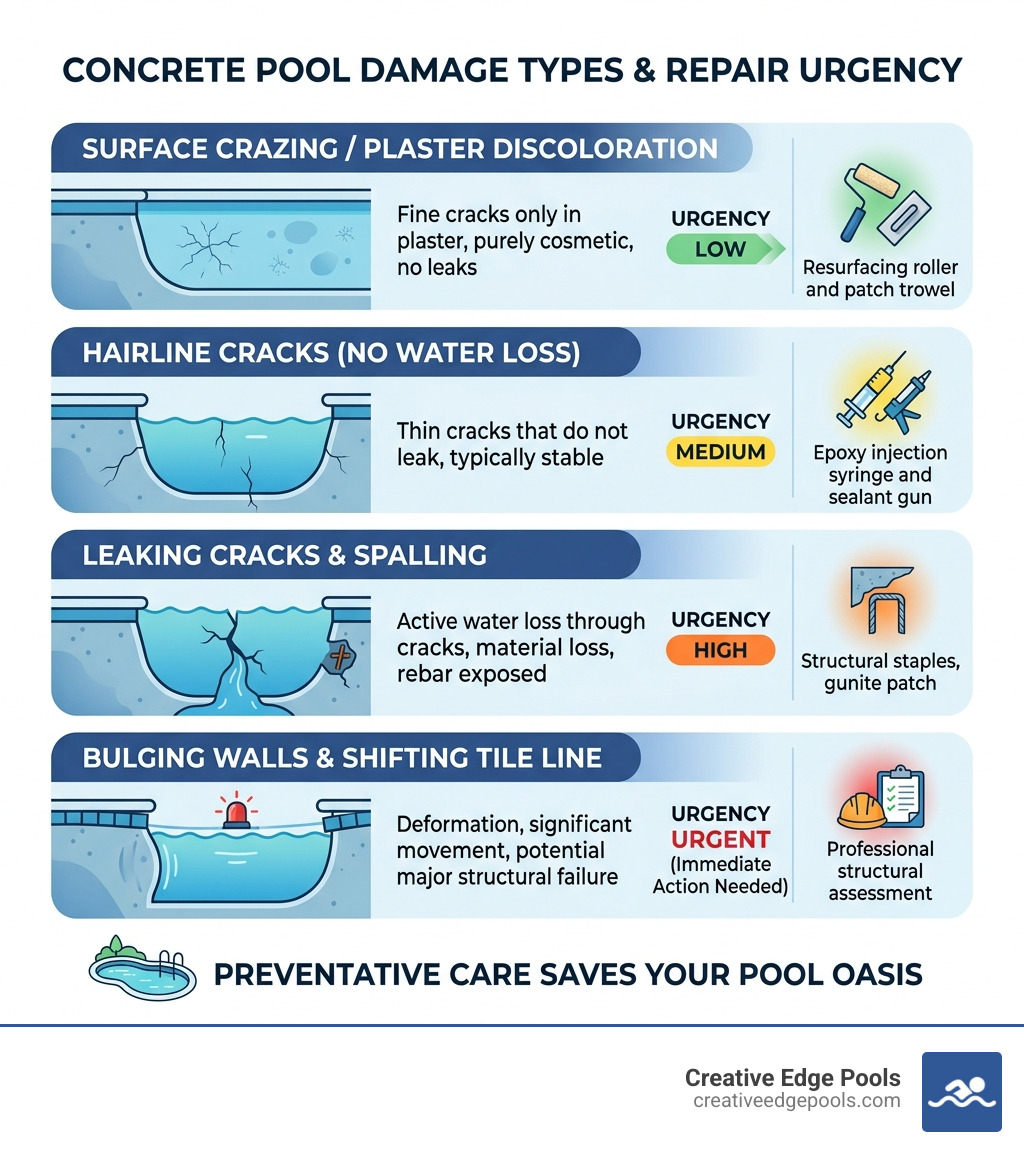
Here’s a quick overview of your options based on the type of damage:
| Damage Type | Urgency | Typical Solution |
|---|---|---|
| Surface crazing / plaster discoloration | Low | Resurfacing or patching |
| Hairline cracks (no water loss) | Medium | Epoxy injection or urethane sealant |
| Cracks with active water loss | High | Structural staples, epoxy, or gunite repair |
| Spalling with exposed rebar | High | Chipping, priming, and structural patching |
| Bulging walls or shifting tile line | Urgent | Professional structural assessment immediately |
The good news: not every crack is a catastrophe. Many are purely cosmetic — small clusters of surface crazing in the plaster that don’t affect the structural shell underneath.
But some cracks are serious. A crack that leaks, widens over time, or appears in a high-stress area like the waterline, corners, or bond beam could signal deeper structural failure.
And here’s the hard truth that experienced pool builders will tell you: once a concrete pool cracks, no repair will fix it indefinitely if the underlying cause isn’t addressed first. The goal is to stabilize the structure, seal the damage as effectively as possible, and prevent it from getting worse.
Whether you’re dealing with minor plaster wear or a fissure that has you losing inches of water a day, this guide will walk you through what’s actually happening, what you can do about it, and when to call in a professional.
Concrete swimming pool repair glossary:
Understanding the Causes of Concrete Pool Damage
To fix a pool correctly, we first have to understand why it broke. Concrete is incredibly strong, but it isn’t invincible. In our service areas across Eastern MA and Southern NH, our pools face unique environmental stresses that can lead to the need for Gunite Repair.
The most common culprit is ground movement. Whether it’s from the natural settling of the soil or the dramatic shifting caused by our legendary New England freeze-thaw cycles, the earth is always moving. When the ground underneath or around your pool shifts, it exerts massive pressure on the concrete shell. If that pressure exceeds the tensile strength of the concrete, it snaps.
Another major factor is hydrostatic pressure. This is the pressure exerted by groundwater against the outside of your pool shell. If the water table rises (common during rainy Massachusetts springs), it can actually try to “float” your pool out of the ground. This force can cause the floor to crack or the entire shell to shift.
Poor construction is also a frequent offender. If the original builders didn’t compact the soil properly, used a weak concrete mix, or skimped on rebar reinforcement, the pool is destined for trouble. Over time, water can also seep into minor cracks, reaching the steel rebar inside. When rebar rusts, it expands to several times its original size, popping the concrete off from the inside out—a process known as spalling.
Identifying Surface Crazing vs. Structural Fissures
Not all cracks are created equal. As we often tell homeowners, you need to distinguish between surface issues and structural ones.
- Surface Crazing (Check Cracks): These look like a fine spiderweb of tiny cracks on the plaster. They are usually caused by the plaster drying too quickly during installation or natural aging. If the concrete shell underneath is solid and you aren’t losing water, these are purely cosmetic.
- Structural Fissures: These are the “scary” ones. They typically run deep—all the way through the plaster and into the concrete shell. They often appear as long, singular lines that may run across the floor and up a wall.
How can you tell the difference? A simple “dye test” involves squirting a small amount of dark food coloring near the crack while the pool pump is off. If the dye is sucked into the crack, you have an active leak and likely a structural issue. You can also tap the area with the handle of a screwdriver; a “hollow” sound indicates delamination, where the plaster has separated from the concrete.
Signs You Need Professional concrete swimming pool repair
While some small patches can be handled by a handy homeowner, certain signs indicate that the “DIY” ship has sailed. You should contact us for a professional assessment if you notice:
- Widening Gaps: If a crack is getting wider or longer over a few weeks.
- Tile Line Shifts: If the tiles at the top of your pool are cracking, popping off, or no longer line up.
- Bulging Walls: This suggests massive external pressure or a total structural failure.
- Significant Water Loss: If you’re losing more than a quarter-inch of water a day (beyond normal evaporation), there’s a serious leak that needs addressing.
Step-by-Step Guide to concrete swimming pool repair
If you’ve determined the crack is stable enough for a localized fix, the process requires precision. You can’t just smear some caulk over a crack and expect it to hold under thousands of gallons of water pressure.
The Preparation Phase
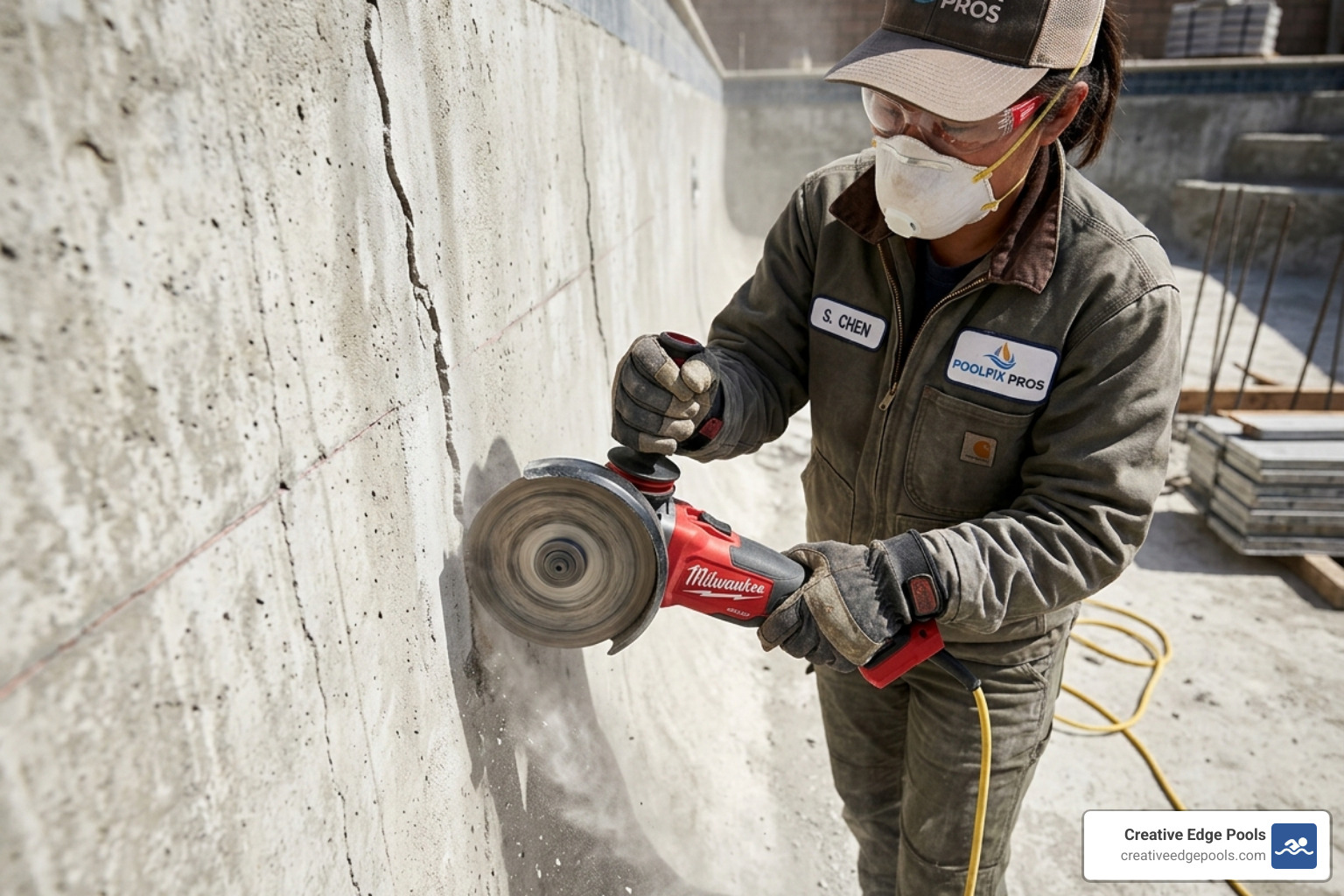
First, the area must be prepped. Most professionals use a grinder to cut a “U-channel” or a dovetail groove along the length of the crack. This creates more surface area for the repair material to bond to. After grinding, the crack must be pressure washed to remove all dust and loose debris. It is critical that the area is bone-dry before applying modern sealants; many pros use a torch to ensure no moisture remains trapped in the pores of the concrete.
Best Materials for concrete swimming pool repair
Choosing the right “band-aid” is half the battle. According to Swimming Pool Steve, standard silicone is never the right choice—it simply won’t bond well enough to withstand the pressure.
- Hydraulic Cement: This is a classic choice. It expands as it sets, wedging itself into the crack to block water flow. It’s great for stopping active leaks.
- Epoxy Injection: High-strength epoxies are injected deep into the fissure to bond the two sides of the concrete back together.
- Polyurethane Foam: This is often used for leaking cracks because it expands up to 25 times its volume, filling every nook and cranny of the void.
While materials are important, the Gunite Pool Crack Repair Cost can vary wildly depending on the depth and length of the damage.
Applying Structural Staples and Carbon Fiber
For cracks that are likely to keep moving, “stapling” is the gold standard. This involves cutting horizontal slots across the crack and inserting high-tensile strength staples.
Modern technology has given us carbon fiber stitches, like the Rhino Carbon Fiber™ Crack Lock®. These are incredibly thin but boast a tensile strength 10 times stronger than steel. Because they are so thin, they require less grinding and can be easily covered with a thin layer of plaster, making the repair nearly invisible. These staples distribute the load across the crack, preventing it from widening even as the ground continues to shift.
Managing Hydrostatic Pressure and Concrete Spalling
In places like Bedford, NH or Andover, MA, groundwater is a constant factor. If you drain your pool without checking the water table, the upward pressure (hydrostatic pressure) can literally pop the pool out of the ground like a boat.
| Repair Method | Best Use Case | Strength Level |
|---|---|---|
| Hydraulic Cement | Stopping active leaks | Moderate |
| Epoxy Injection | Bonding stable cracks | High |
| Carbon Fiber Staples | Preventing crack expansion | Extreme |
To prevent this, concrete pools are equipped with hydrostatic relief valves at the bottom. These valves are designed to open and let groundwater into the pool if the external pressure becomes too high, equalizing the force and keeping the shell on the ground.
Repairing Rebar Corrosion and Delamination
When water reaches the internal steel reinforcement, you get “pool cancer”—rebar corrosion. As the steel rusts and expands, it cracks the surrounding concrete. This is a primary cause of concrete spalling.
To fix this, we have to chip away the concrete until we find “clean” steel. The rust is wire-brushed off, and the rebar is treated with a zinc-rich primer to prevent future corrosion. Then, a high-strength structural patch is applied. This is often part of Professional Pool Plastering to ensure the final finish is seamless and watertight.
The Role of Expansion Joints and Coping
The bond beam—the very top of your pool wall—is the most vulnerable area. It sits right at the frost line and takes the brunt of the “deck shear” caused by the pool deck expanding and contracting.
A flexible expansion joint (usually filled with urethane caulking) must exist between the pool coping and the deck. If this joint fails or is filled with solid mortar, the moving deck will “punch” the coping, causing it to loosen and the tile line to crack. Keeping this joint sealed is “cheap insurance” against massive repair bills later.
Preventive Maintenance and Resurfacing Timelines
The best way to handle concrete swimming pool repair is to prevent the need for it. This starts with water chemistry. If your pH is too low, the water becomes acidic and eats away at the calcium in your plaster, making it thin and brittle. If it’s too high, you get scale buildup that hides cracks and damages equipment.
When to Choose Resurfacing Over Patching
Eventually, every pool reaches a point where patching is no longer enough. Most plaster finishes last 7 to 15 years. You know it’s time to Resurface your Swimming Pool when:
- The surface feels like sandpaper on your feet.
- Stains have become permanent and unsightly.
- You have hundreds of small “check cracks” appearing.
- The plaster is “dusting” (releasing white clouds into the water).
Upgrading to a pebble or quartz aggregate finish can extend this lifespan significantly, often lasting 15 to 25 years with proper care. You can learn more about how often a gunite pool needs to be resurfaced to help plan your budget.
Seasonal Care for Northeast Climates
In Massachusetts and New Hampshire, winterization is non-negotiable. Water left in plumbing lines will freeze, expand, and shatter the pipes. We use specialized expansion plugs and antifreeze to protect the lines. It’s also vital to keep the water level at the correct height under the cover to support the structure and prevent the “floating” issues mentioned earlier.
Frequently Asked Questions about Concrete Pool Repair
How much does it cost to fix a structural pool crack?
Minor epoxy injections might cost a few hundred dollars, but a full structural repair involving carbon fiber staples typically ranges from $1,000 to $3,000 per crack.
Can a concrete pool pop out of the ground if drained?
Yes. This is a catastrophic event caused by hydrostatic pressure. Never drain your pool without a professional verifying the groundwater levels and ensuring the relief valves are functional.
How long does a typical pool plaster repair last?
A well-executed patch can last several years, but because the new material and old material expand at different rates, patches are rarely permanent. Most owners eventually opt for full resurfacing for a long-term fix.
Conclusion
Your pool is the centerpiece of your backyard oasis, and keeping it in top shape requires a mix of diligent maintenance and timely action. While a small crack might seem like a minor nuisance, it is often a “check engine light” for your pool’s structural health.
At Creative Edge Pools, we bring over 100 years of combined experience to every project across Eastern MA and Southern NH. Whether you need a simple tile repair in Nashua or a complete gunite pool renovation in Lexington, our family-owned team is here to ensure your vision stays watertight for decades to come. Don’t let a small leak turn into a big headache—reach out today for a professional inspection.
