
Resurface Swimming Pool: Ultimate 7-Step Guide
Why Pool Resurfacing is Essential for Every Pool Owner
When your backyard oasis shows its age through cracks, stains, or a rough texture, it’s time to resurface swimming pool surfaces. This process involves applying a new finish to restore your pool’s beauty and, more importantly, its structural integrity. A fresh surface prevents water from seeping into the pool’s shell, which can cause expensive damage. It also makes your pool safer, easier to clean, and can boost your property value.
Quick Answer: How to Resurface a Swimming Pool
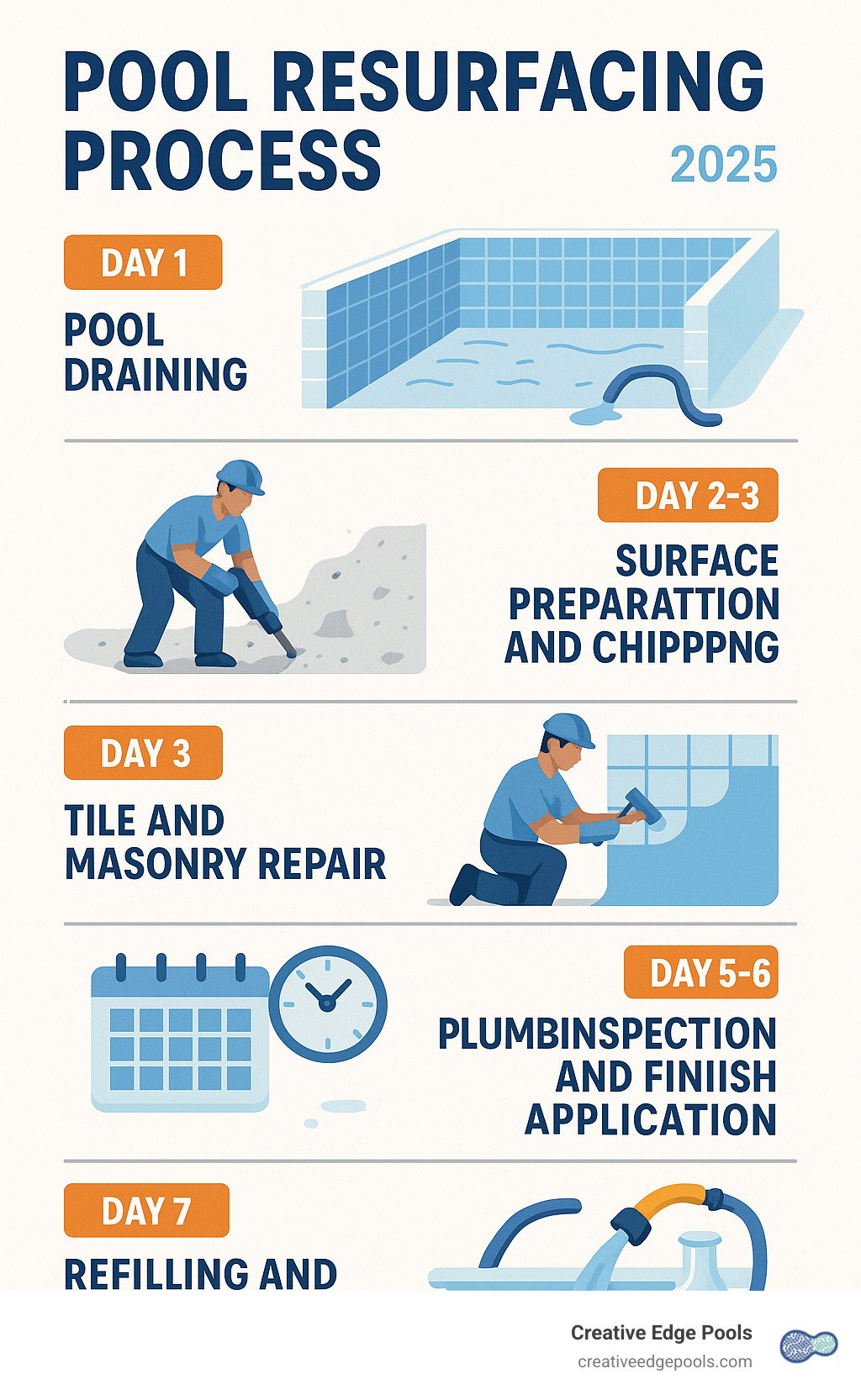
- Drain the pool completely.
- Prepare the surface by chipping or sandblasting the old finish.
- Repair tiles and masonry as needed.
- Inspect plumbing and fixtures.
- Apply the new finish (plaster, aggregate, or tile).
- Allow proper curing and perform an acid wash if needed.
- Refill and balance the water chemistry.
Most pool surfaces need resurfacing every 10-15 years, with costs for a standard residential pool typically ranging from $6,000 to $15,000. The process usually takes 5-7 days, but can be longer depending on weather and repairs.
I’m David Brabant, owner of Creative Edge Pools. With over 30 years in the industry, I’ve helped hundreds of homeowners restore their pools with high-quality materials and proven techniques. You can see some of our work on our Facebook page.
Resurface swimming pool terms to learn:
Why and When to Consider Pool Resurfacing
Even well-maintained pools eventually show their age. Constant exposure to chlorine, UV rays, and water gradually breaks down the surface. When you resurface swimming pool surfaces, you’re not just improving aesthetics; you’re protecting your investment’s structural integrity. Small cracks can allow water to seep behind the surface and damage the pool’s shell. A fresh surface also improves aesthetic appeal, boosts property value, improves safety by eliminating rough spots, and increases functionality by making cleaning easier. For gunite pools, resurfacing is a critical maintenance milestone. Learn more about your options with comprehensive gunite pool renovations.
Telltale Signs Your Pool Needs a Makeover
Your pool will give you warning signs. Look for these red flags:
- Gunite pool cracks: While small hairline cracks (crazing) may be cosmetic, larger cracks can indicate structural issues and allow water penetration.
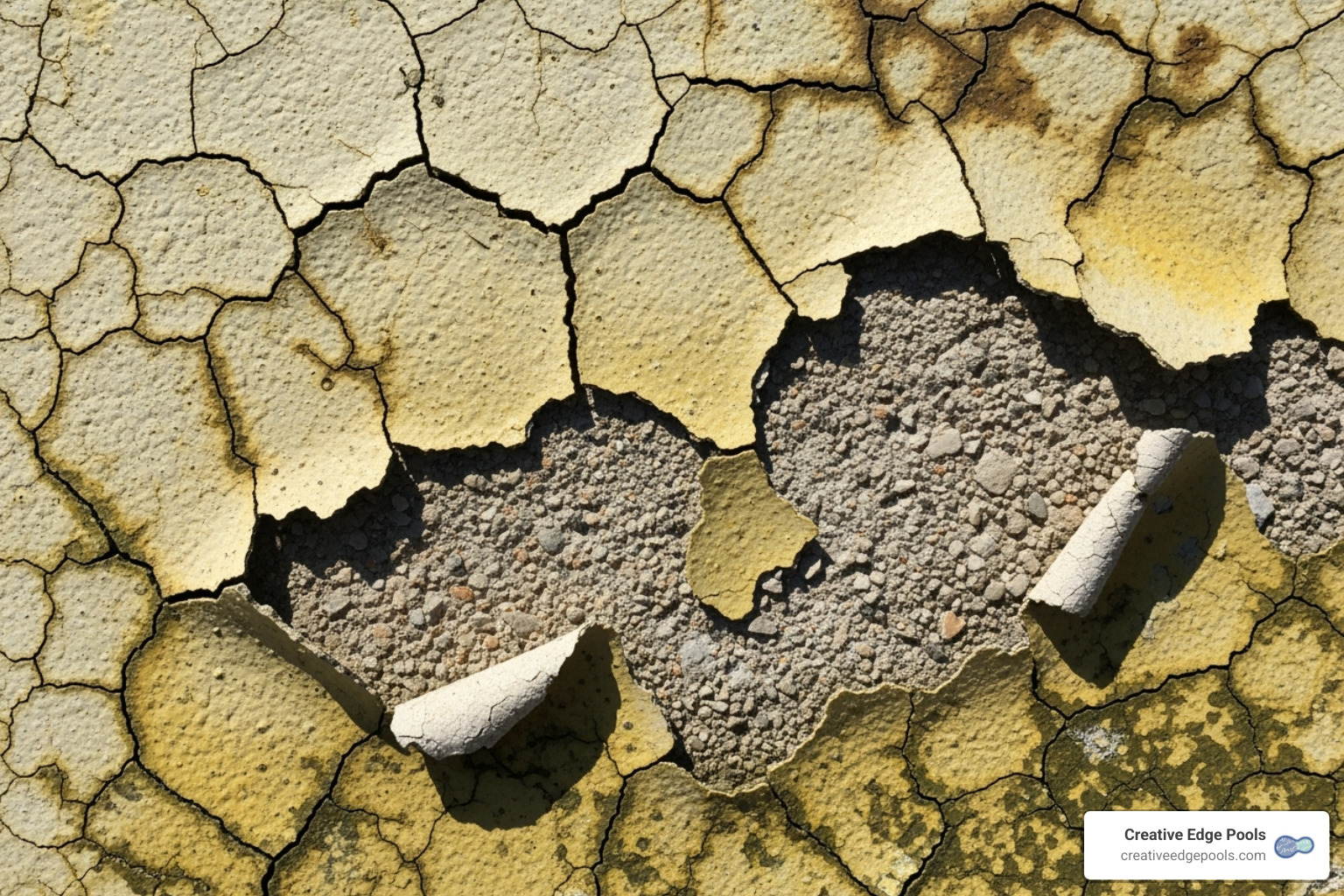
- Plaster flaking: If chunks of plaster are peeling away (spalling), exposing the rough gunite underneath, it’s time to act.
- Surface stains: Stubborn stains that don’t respond to cleaning mean the surface has become porous and is absorbing contaminants.
- Rough texture: A surface that feels like sandpaper is uncomfortable, snags swimwear, and harbors algae, making cleaning difficult.
- Leaks: If you’re constantly adding water beyond normal evaporation, cracks in the surface could be the cause.
Catching these issues early makes the resurface swimming pool process more straightforward and cost-effective.
Resurfacing vs. Replastering: What’s the Difference?
While often used interchangeably, these terms have different meanings. Replastering specifically refers to applying a new layer of cement-based plaster. Resurfacing is a broader term for restoring the pool’s interior with any new finish, including plaster, aggregate, or tile. For gunite pools, resurfacing is a more comprehensive process involving thorough surface preparation and repair before the new finish is applied. This broader renovation scope allows you to upgrade materials, such as switching from plaster to a pebble finish. Our gunite pool resurfacing approach addresses all your pool’s needs.
Benefits of Resurfacing: More Than Just a Pretty Face
A freshly resurfaced pool offers numerous advantages beyond looks:
- Increased Property Value: A well-maintained pool is a major selling point.
- Improved Aesthetics: A vibrant, smooth surface transforms your backyard into an inviting oasis.
- Improved Safety: Eliminates rough spots that can scrape feet and snag swimwear.
- Better Functionality: A new, non-porous surface improves water circulation and simplifies cleaning.
- Leak Prevention: A properly sealed surface stops water loss through cracks.
- Chemical Savings: A smooth surface resists algae, reducing the need for harsh chemicals.
- Long-Term Investment: Prevents more expensive structural repairs down the road.
Check out some of our recent projects at our work to see the dramatic difference resurfacing can make.
How to Resurface a Swimming Pool: A Homeowner’s Guide
Understanding how to resurface swimming pool surfaces helps you make an informed decision, whether you hire a professional or not (we recommend the former!). Gunite pools are especially versatile, accommodating a wide range of finishes.
Here are the three main material categories:
- Traditional Plaster: The most budget-friendly option at $4-$5 per square foot, offering a classic smooth feel. It typically lasts 5-15 years but is more susceptible to staining and etching.
- Aggregate Finishes: A mix of plaster with pebbles or quartz, these cost $5-$10 per square foot and last 15+ years. They are incredibly durable and stain-resistant, creating a resort-like appearance. Pebble can be rough on feet, while quartz offers a smoother texture.
- Tile Finishes: The luxury choice, ranging from $4 to over $50 per square foot. Tile can last 20+ years with minimal maintenance and offers endless design possibilities, but it has a higher upfront cost.
The total cost to resurface swimming pool surfaces for a standard residential pool ranges from $6,000 to $15,000.
The 7-Step Professional Method to Resurface a Swimming Pool
We follow a proven seven-step process to ensure a beautiful, long-lasting finish. This is a complex job that requires specialized equipment and expertise.
- Drain the Pool: We use specialized pumps to completely empty the pool and manage water runoff.
- Surface Preparation: The old, failing surface is removed via chipping or blasting to create a clean, bondable foundation.
- Tile and Masonry Repair: We inspect and repair waterline tiles, coping, and any other masonry.
- Plumbing and Fixture Inspection: All plumbing lines, drains, skimmers, and lights are checked for leaks or wear.
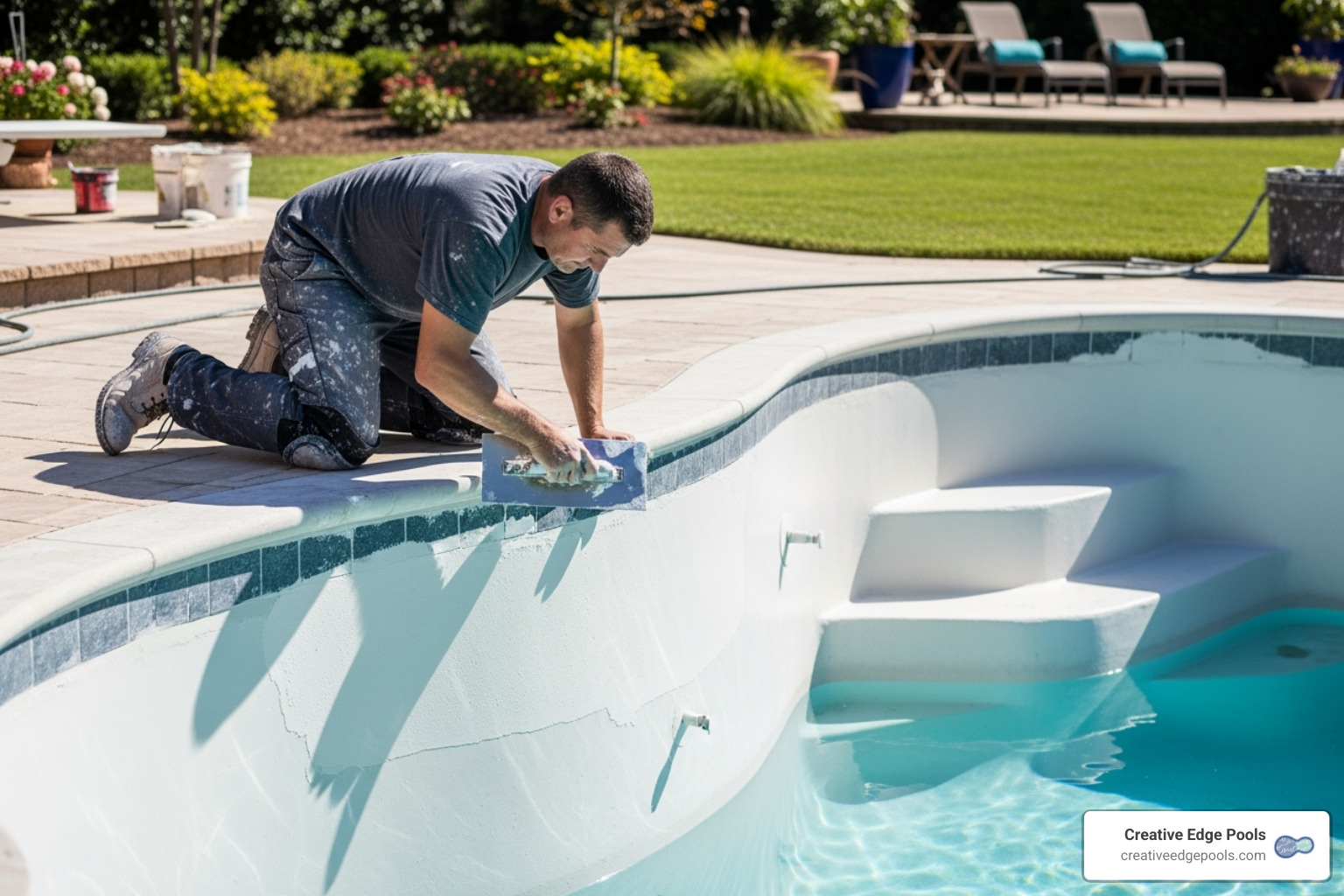
- Application of New Finish: Our skilled technicians apply your chosen material with precision to ensure proper thickness and consistency.
- Curing and Acid Wash: The new surface is allowed to cure properly to reach full strength. An acid wash may be performed to expose the aggregate’s beauty.
- Refilling and Chemical Balancing: We slowly refill the pool and carefully balance the water chemistry to protect the new surface.
The entire process typically takes 5-7 days, but weather can extend the timeline to 14 days.
Budgeting to Resurface a Swimming Pool: Costs & Considerations
Most homeowners spend between $6,000 and $15,000 to resurface swimming pool surfaces. Key cost factors include:
- Pool Size: More surface area means more materials and labor.
- Material Selection: Costs vary significantly, from budget-friendly plaster to high-end tile.
- Labor Costs: Professional labor typically runs $45-$65 per hour.
- Repairs: Addressing underlying issues like plumbing leaks or structural cracks will add to the cost but is more economical to do during resurfacing.
While DIY might seem cheaper, the risks of improper application and potential damage often lead to higher costs in the long run. Professional installation includes expertise, warranties, and peace of mind. To make your project more affordable, we offer gunite pool financing options. See examples of our work on Facebook for inspiration.
Maintaining Your New Pool and Next Steps
Congratulations on your newly resurfaced pool! That smooth, vibrant finish has transformed your backyard and added significant value to your property. You’ve not only improved the look but also secured the pool’s structural integrity for years to come.
To ensure your investment lasts, the first few months of care are critical. Think of it as breaking in a new car.
- Proper Water Chemistry: This is your top priority. Imbalanced pH, alkalinity, or chlorine can quickly damage a new surface. Test your water at least twice a week initially and keep levels in the ideal range.
- Regular Brushing: Gently brush the walls and floor 2-3 times per week for the first few weeks. This prevents plaster dust and debris from settling and staining the fresh finish.
At Creative Edge Pools, a family-owned business serving Eastern Massachusetts and Southern New Hampshire, we understand your pool is the centerpiece of family memories. We specialize in creating dream backyards, from custom gunite pools to complete landscape development.
Your newly resurfaced pool is ready for years of enjoyment. We’re here to help you protect that investment. Follow us on Facebook for more pool changes and maintenance tips. For industry-standard guidance, the Pool & Hot Tub Alliance is an excellent resource.
Ready to start your own project? Contact us for your project and let’s bring your vision to life.
