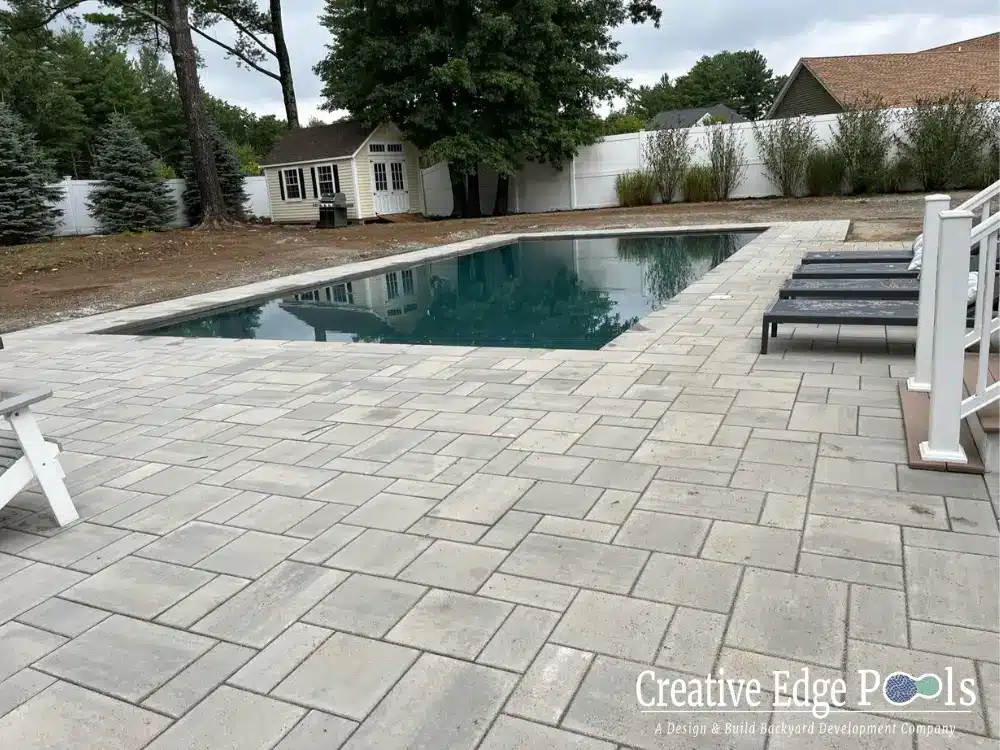
Why Pool Deck Installation Is the Foundation of Your Backyard Transformation
Pool deck installation is one of the most important investments you can make in your backyard — and one of the most complex to get right.
Here is a quick overview of what the process involves:
- Choose your material — pavers, travertine, concrete, composite, or wood
- Plan your design — size, shape, drainage slope, coping, and edging
- Prepare the site — excavation, grading, and base compaction
- Install footings and framing — structural support appropriate to your pool type
- Lay the surface — with slip-resistant, pool-safe materials
- Finish and seal — for durability, safety, and long-term low maintenance
- Pass inspection — building code compliance for railings, gates, and drainage
The area around your pool does more than look good. It keeps your family safe, controls water drainage, and extends your outdoor living space for entertaining. A poorly built deck cracks, shifts, floods, or becomes dangerously slippery — fast.
For homeowners across Eastern Massachusetts and Southern New Hampshire — from Portsmouth, NH to Wilmington, MA — getting this right from day one means working with an experienced team who understands local codes, frost lines, and soil conditions.
At Creative Edge Pools, we design and build custom pool decks that are built to last, beautiful to look at, and safe for bare feet. Ready to talk? Call us at +978-203-0406 or request a free quote.
Essential Materials for Pool Decking
Selecting the right material for your pool deck is the first major decision you will face. The ideal material must withstand constant moisture, heavy foot traffic, harsh winter freeze-thaw cycles in New England, and the chemicals used to keep your pool water clean.
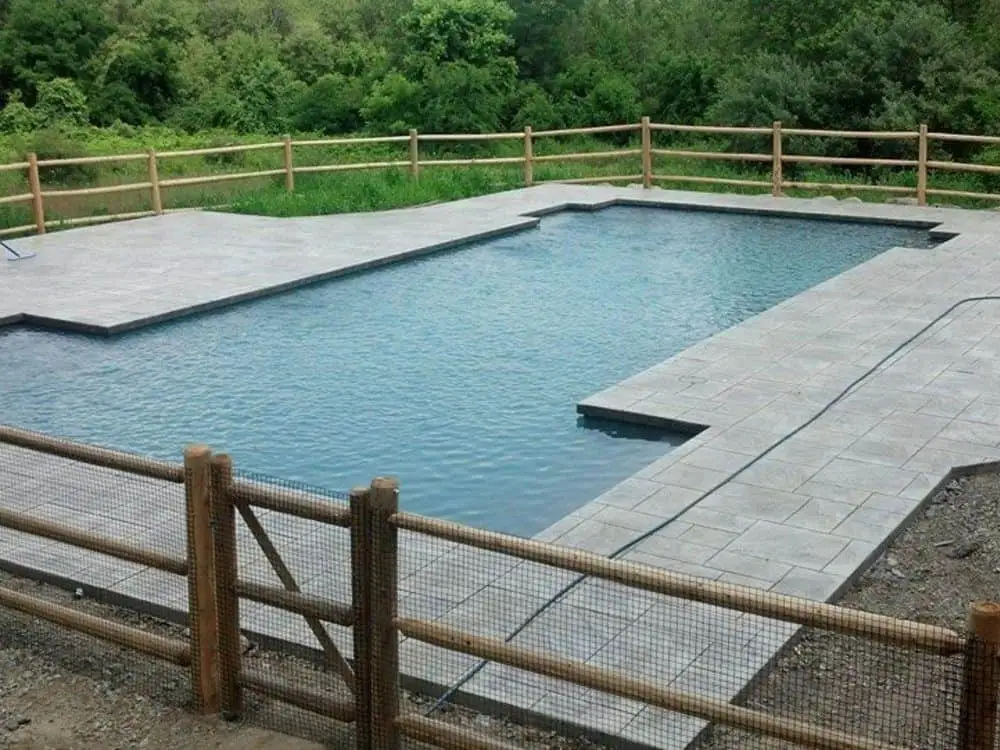
When we design custom backyards in towns like Andover, MA, we walk our clients through several key material options:
- Travertine: For homeowners seeking unmatched elegance, travertine is the gold standard. It is a natural stone that is incredibly porous, meaning it absorbs water quickly to prevent puddles. Best of all, it stays cool to the touch even in the peak of summer and is naturally slip-resistant. To explore more about these luxury stone options, check out our guide on Stone Pool Decks.
- Concrete Pavers: Interlocking concrete pavers are highly popular because they offer incredible strength and flexibility. Because they consist of individual units, they shift slightly with the seasonal ground movement common in Massachusetts and New Hampshire, preventing the long, unsightly cracks that plague solid concrete slabs. They also absorb very little water (typically less than 5%), making them highly resistant to salt, chlorine, and oil stains.
- Poured & Stamped Concrete: Traditional concrete is a highly versatile and cost-effective option. It can be poured into almost any shape and stamped to mimic natural stone, brick, or tile. However, in our region, solid concrete slabs require precise rebar reinforcement and strategic expansion joints to manage freeze-thaw cycles without cracking.
- Composite Decking: Synthetic decking made from wood fibers and recycled plastics has become a favorite for above-ground and multi-level decks. It is highly resistant to rot, insects, and moisture, and it never requires the annual sanding, staining, or sealing that natural wood demands.
- Natural Wood: Traditional wood decks offer classic warmth and charm. Hardwoods like Ipe are incredibly dense and can last over 25 years with proper care. However, any wood deck installed near a pool requires consistent annual maintenance to prevent splintering, rot, and water damage.
Choosing the Right Materials for Your Pool Decking Installation
Every material has its own set of strengths and weaknesses. Balancing slip resistance, heat absorption, aesthetic appeal, and maintenance is the key to a successful long-term installation.
| Material | Durability | Heat Absorption | Slip Resistance | Maintenance Required |
|---|---|---|---|---|
| Travertine | Exceptionally High | Very Low (Stays Cool) | High (Naturally Textured) | Low (Occasional Sealing) |
| Concrete Pavers | High | Moderate | High (Textured Surfaces) | Low (Polymeric Sand Refills) |
| Stamped Concrete | Moderate to High | High (Darker Colors Get Hot) | Moderate (Requires Non-Slip Additives) | Moderate (Reseal Every 2–3 Years) |
| Composite | High | Moderate to High | Moderate (Choose Grooved Boards) | Very Low (Soap & Water Clean) |
| Natural Wood | Moderate | Moderate | Moderate | High (Annual Staining/Sealing) |
For a deeper dive into how to customize concrete surfaces to match your home’s aesthetic, take a look at these Concrete Pool Deck Options to Make Your Neighbors Jealous.
Key Factors Influencing Pool Deck Installation Costs
When planning your backyard budget, it is important to understand what drives the overall cost of a pool deck project.
Please note: All prices mentioned below are average costs sourced from publicly available internet data and are not the actual prices of Creative Edge Pools. These rates do not reflect our specific pricing, proprietary methods, or project guarantees.
For a basic pool deck, industry averages and online data show that projects typically range from $8,000 to $60,000+. This wide pricing spectrum exists because no two backyards are exactly alike. The final cost of your pool deck installation is heavily influenced by several key factors:
- Pool Size and Deck Square Footage: A basic walkaround deck (providing a minimal 15-to-36-inch path around the pool) requires significantly less material and labor than a proportionate, lounge-ready deck that matches or exceeds the square footage of the pool itself.
- Material Selection: Basic pressure-treated wood or standard broom-finished concrete represents the lower end of the pricing spectrum. Premium materials like capped composite decking, interlocking pavers, and natural travertine stone sit at the higher end due to material costs and the specialized masonry labor required for installation.
- Site Preparation and Excavation: If your yard in Portsmouth, NH or Wilmington, MA is sloped, rocky, or poorly drained, the cost of excavation, grading, and retaining wall construction can add substantially to the total budget.
- Coping and Edging Details: The transition material between the pool shell and the deck (the coping) requires precise, skilled installation to ensure it is secure, comfortable for swimmers, and structurally sound.
To understand how these variables play out across different pool shapes and sizes, you can read more about industry estimates in this guide on How Much Does It Cost To Build a Pool Deck?.
The Professional Pool Deck Construction Process
Building a pool deck is a highly technical process. Unlike a standard backyard patio, a pool deck must integrate seamlessly with the pool shell, withstand constant exposure to chemically treated water, and manage complex drainage requirements.
Our professional construction process is broken down into precise, sequential steps to ensure structural integrity:
- Step 1: Design and Engineering: We begin by mapping out the layout, ensuring the deck size is proportional to the pool and meets all local zoning setbacks. We also design the drainage system during this phase to direct water away from both the pool and your home’s foundation.
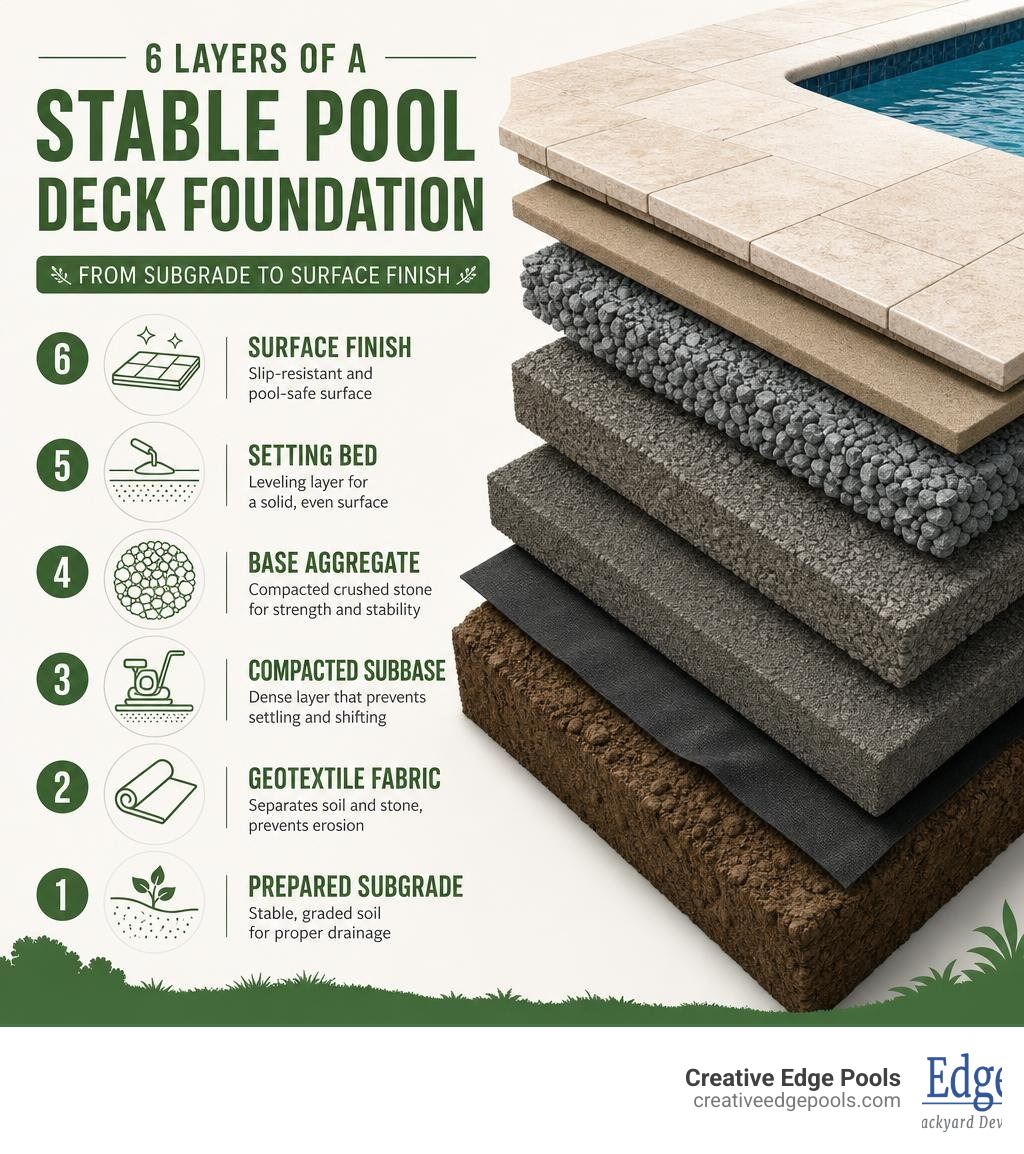
- Step 2: Excavation and Site Prep: We excavate the area to the proper depth. For a paver or stone deck, this typically means digging down 4 to 6 inches to make room for a stable, compacted gravel base.
- Step 3: Base Compaction and Geotextile Installation: We lay down geotextile fabric to prevent the soil from mixing with the gravel base. Next, we add layers of crushed gravel, compacting it multiple times using a heavy-duty plate compactor to eliminate any air pockets that could cause future settling.
- Step 4: Framing or Sub-Slab Construction: For wood or composite decks, we pour concrete footings below the local frost line and build a structural wood frame. For wet-laid stone or pavers, we pour a reinforced concrete sub-decking slab to act as a permanent, non-shifting foundation.
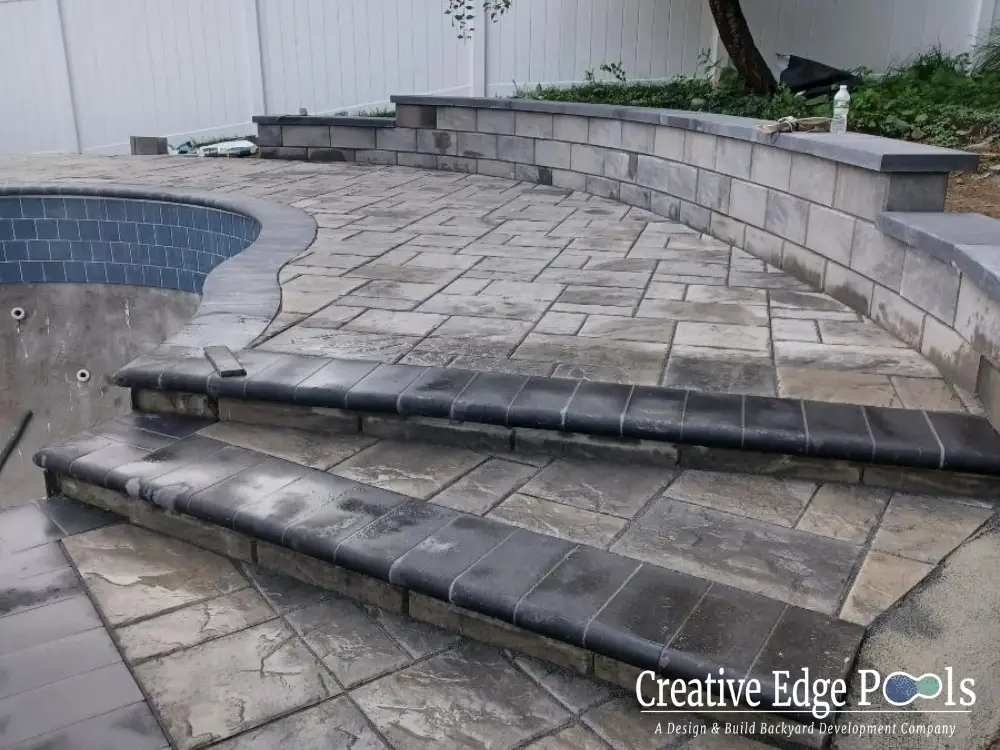
- Step 5: Laying the Surface and Coping: We install the coping stones around the pool edge, ensuring they overhang the pool by about two inches. Then, we lay the deck surface (pavers, stone, or boards) using professional adhesion and fastening techniques.
- Step 6: Joint Sand and Sealing: For paver decks, we sweep polymeric sand into the joints and mist it with water to lock the pavers in place. Finally, we apply a high-quality sealer to protect the surface from UV rays, chlorine, and salt.
Proper preparation is what separates a deck that lasts for decades from one that shifts and cracks after a single New England winter. Learn more about our comprehensive approach to backyard masonry by visiting our Hardscape Services page.
In-Ground vs. Above-Ground Pool Decking Considerations
The installation process differs dramatically depending on whether you have an in-ground gunite pool or an above-ground pool.
For in-ground pools, the deck is a ground-level structure that must be carefully tied into the pool’s coping. It requires extensive excavation, soil compaction, and concrete sub-slabs to prevent the deck from settling independently of the pool shell.
Above-ground pool decks, on the other hand, are elevated, freestanding wooden or composite platforms. Because above-ground pool walls are not engineered to carry the weight of a deck, the deck must stand entirely on its own posts and footings. It is critical to build the deck as close to the pool as possible while maintaining a tiny 1-to-1.5-inch gap to allow for natural wood expansion and future pool liner replacements.
For a detailed look at the structural framing and layout options for elevated structures, you can read the resource on How to Design and Build an Above-Ground Pool Deck.
Safety, Drainage, and Building Code Compliance
Safety is the single most important aspect of any pool deck design. When we install pool decks in communities like Amesbury, MA and Exeter, NH, we design every detail to comply with local building codes and the International Swimming Pool and Spa Code (ISPSC).
- Slip Resistance: Wet feet and smooth surfaces are a dangerous combination. We always recommend textured materials — like travertine, textured pavers, or concrete treated with non-slip additives — to ensure excellent traction underfoot.
- Railing and Gate Requirements: If your pool deck is elevated, building codes require sturdy guardrails (typically 36 to 42 inches high) with balusters spaced no more than 4 inches apart to prevent children from slipping through. Any access gate must be self-closing and self-latching, swinging outward away from the pool area.
- Drainage and Slope: Standing water is a safety hazard and can damage your deck’s foundation. We install all pool decks with a slight 1% to 2% slope away from the pool shell. This ensures that splash-out water and heavy rain drain safely into designated landscape areas or French drains rather than pooling on the deck or running back into the clean pool water.
- Retaining Walls: If your backyard has a slope, a retaining wall may be necessary to level the ground and protect the structural integrity of your pool deck. To learn how we manage sloped yards safely, read our guide on Retaining Wall for Pool 101.
Why Professional Pool Deck Installation Beats DIY
While the internet is full of DIY tutorials, attempting to build a pool deck on your own is highly risky. Unlike a standard patio, a pool deck is subject to strict municipal inspections, electrical bonding codes (to prevent shock hazards from pool equipment), and complex engineering requirements.
A professional contractor handles the entire permitting process, coordinates the necessary structural and electrical inspections, and possesses the heavy machinery required to properly excavate and compact the site. Miscalculating the slope by even a fraction of an inch can lead to water pooling against your home’s foundation or washing out the soil beneath your pool.
Furthermore, working with professional hardscapers ensures that your materials are installed using advanced bonding techniques that prevent shifting and cracking over time. If you want to see the level of technical precision required for synthetic installations, read the expert guide on Installing Composite Decking Around Pool.
Frequently Asked Questions About Pool Decks
How long does a pool deck last?
The lifespan of a pool deck depends entirely on the materials used and the quality of the installation. A professionally installed travertine or concrete paver deck can easily last 30 to 50 years, as individual stones can be easily replaced if they chip or settle. High-quality composite decks typically last 25 to 50 years. Poured concrete decks last 10 to 25 years but are more prone to cracking over time due to New England’s harsh winter freeze-thaw cycles.
What is the best low-maintenance pool deck material?
Travertine and high-quality concrete pavers are the best low-maintenance options. They do not rot, splinter, or fade, and they only require occasional sweeping, rinsing with a garden hose, and resealing every few years. Composite decking is also incredibly low-maintenance, requiring only a simple wash with soapy water to keep it looking new.
How do you prevent a pool deck from becoming slippery?
To prevent slips, always choose materials with natural texture, such as split-face travertine, textured concrete pavers, or grooved composite boards. If you choose stamped or poured concrete, we mix specialized non-slip aggregate additives into the sealer to create a gritty, slip-resistant surface that remains safe even when soaking wet.
Partner with Eastern MA and Southern NH’s Premier Pool Deck Builders
Your pool deck is the bridge between your home and your pool — it is where you will watch your kids splash, host summer barbecues, and unwind after a long day. Don’t leave its design and structural integrity to chance.
At Creative Edge Pools, we bring over 100 years of combined family-owned experience to every project. We handle the entire backyard transformation, from initial excavation and gunite pool construction to custom masonry, retaining walls, and gorgeous pool deck installations. We proudly serve homeowners throughout Eastern Massachusetts and Southern New Hampshire, bringing dream backyards to life with unmatched craftsmanship.
Ready to elevate your outdoor living space? Contact a professional gunite pool builder in MA today.
Visit our contact page to schedule your personalized design consultation!