
Why a Retaining Wall for Pool Makes Sense in Sloped Yards
A retaining wall for pool projects is a structural barrier that holds back soil on sloped terrain, creating a level, stable foundation for your swimming pool and surrounding patio areas. It prevents erosion, manages water runoff, and can transform a challenging hillside into a stunning multi-level outdoor retreat.
Quick Answer: When You Need a Retaining Wall for Your Pool
- Slope of 2+ feet: Any yard with more than a 2-foot elevation change typically requires a retaining wall
- Soil stability: Prevents dirt and water from washing into your pool area
- Level foundation: Creates flat space for pool installation and deck areas
- Structural support: Holds back earth pressure and prevents collapse
- Design improvement: Can include water features, seating, or terraced landscaping
Few yards in Eastern Massachusetts and Southern New Hampshire are perfectly flat. If your property has any noticeable grade, you’re probably wondering whether you need a wall—and what it’ll take to build one right.
The truth is, a retaining wall does more than just solve a slope problem. It’s a chance to add drama, functionality, and value to your pool environment. Whether you’re cutting into a hillside to gain space or building up the low side to create level ground, the wall becomes part of your backyard’s character.
In this guide, we’ll walk through everything you need to know: when walls are necessary, what materials work best, how much they cost, and what mistakes to avoid during planning and construction.
Why You Need a Retaining Wall for Pool Projects
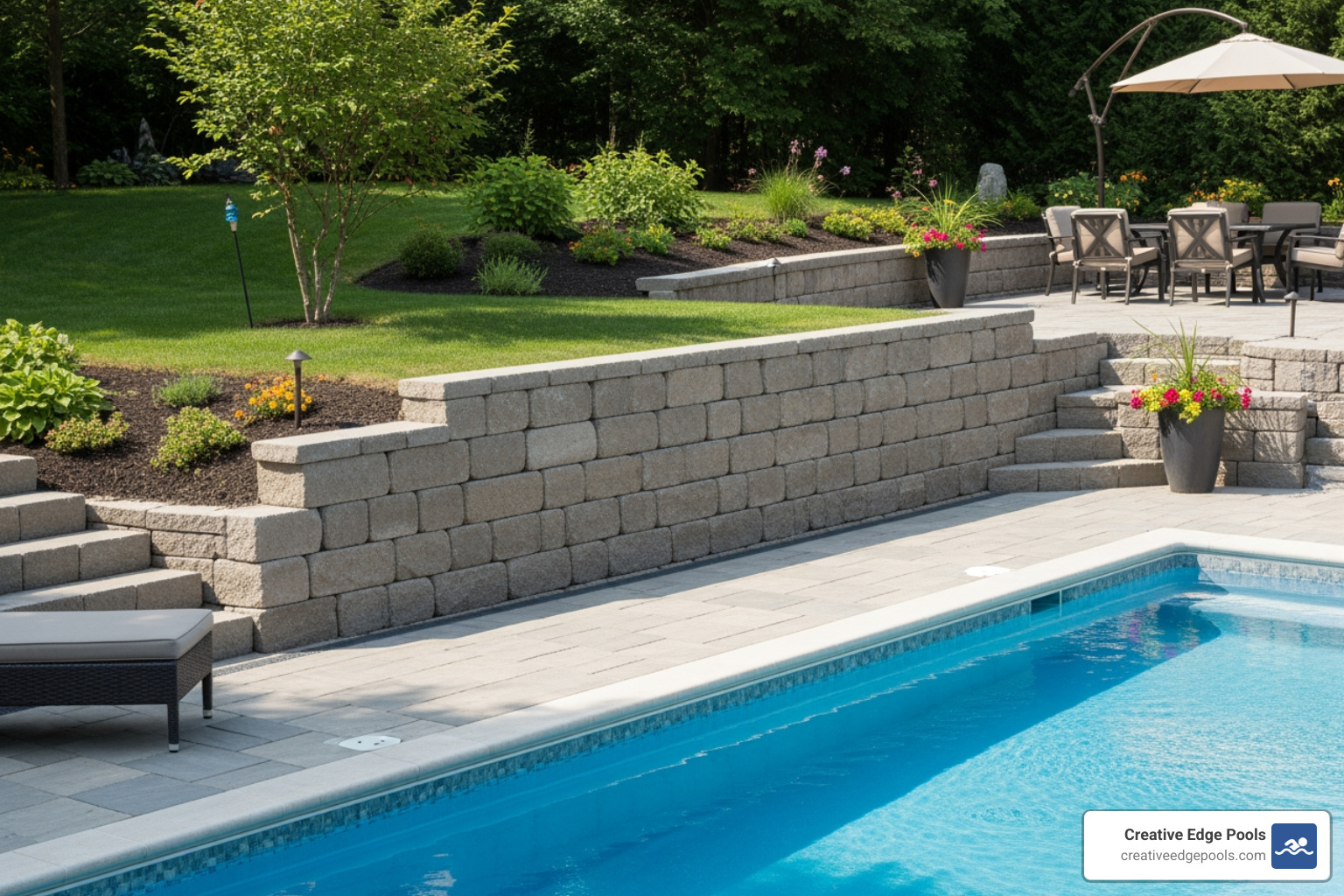
When we visit homes in places like Andover, MA or Nashua, NH, we rarely find a yard that is a perfect pool-ready pancake. A retaining wall for pool installation isn’t just an “extra” feature; it is often a functional necessity.
Soil Stability and Erosion Prevention
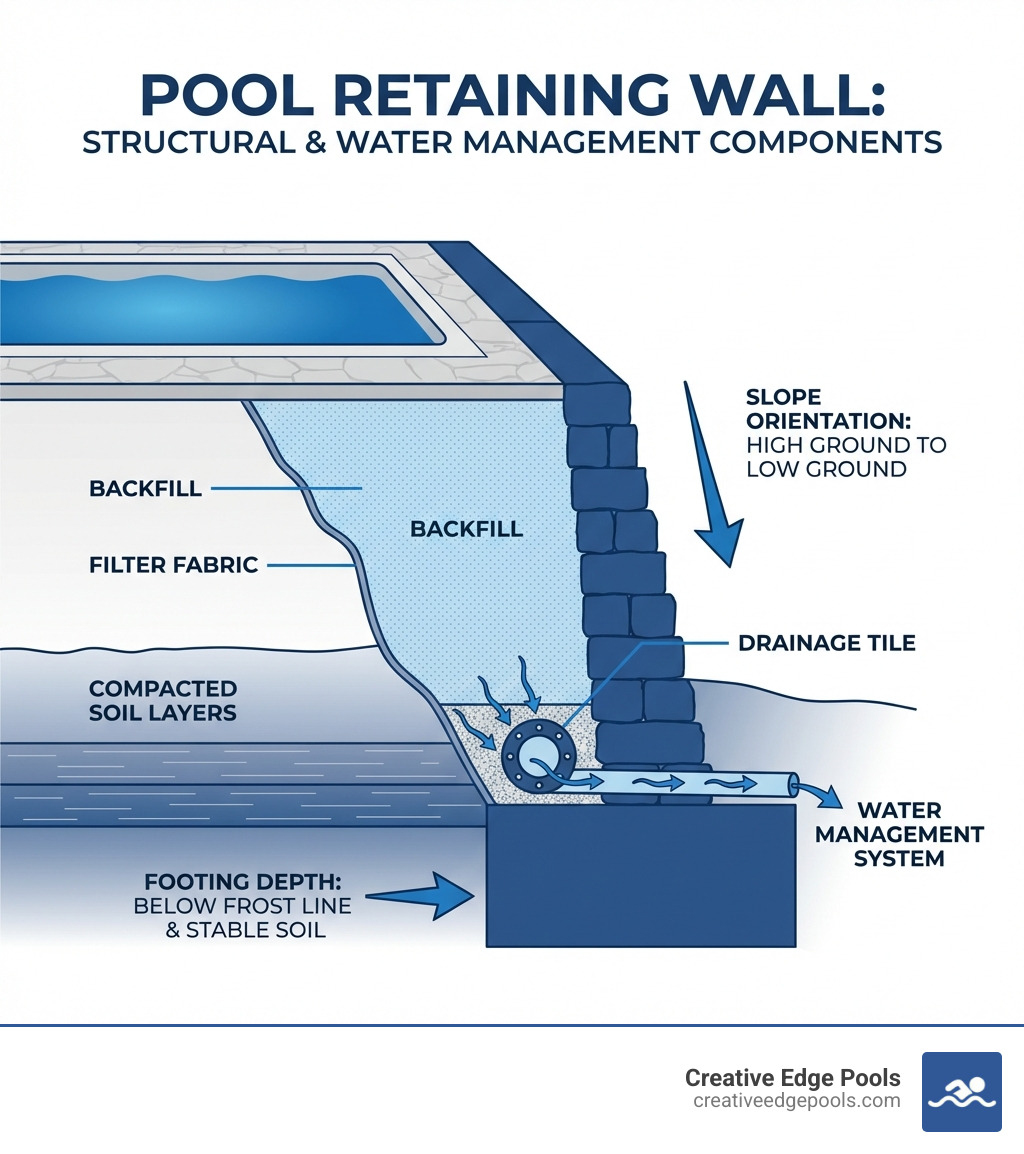
The primary job of a retaining wall is to fight gravity. In a sloped yard, the weight of the earth is constantly trying to move downhill. Without a wall, heavy New England rains can wash silt, mud, and debris directly into your pristine pool water. A well-engineered wall holds that soil in place, ensuring your landscape stays where it belongs.
Runoff Management and Drainage
Water is the biggest enemy of any hardscaping service. If your pool is at the bottom of a slope, rainwater will naturally flow toward it. To prevent your patio from becoming a puddle (or worse, a swamp), we integrate drainage systems into the wall. This typically includes:
- Perforated pipe (drainage tile): A black pipe placed behind the wall to collect water.
- Gravel backfill: 6 to 12 inches of gravel covering the pipe to allow water to seep through easily.
- Filter fabric: To keep soil from clogging the gravel and pipe.
Leveling the Ground
To build a gunite pool, we need a level plane. If your yard drops off, we build a wall on the low side and fill it with dirt to “raise” the pool area. If your yard rises, we cut into the hill and build a wall to hold the high ground back. This creates the necessary perimeter space for your deck and lounging areas. You can watch this video to learn about pool retaining wall logistics and how they solve these elevation challenges.
Primary Materials for Pool Retaining Walls
Choosing the right material is a balance of budget, durability, and the “look” of your home. In our swimming pool masonry guide, we highlight how different textures can change the entire feel of your backyard.
| Material | Durability | Aesthetic | Cost | Best For |
|---|---|---|---|---|
| Segmental Blocks | High | Modern/Clean | Mid-Range | Engineered strength & DIY-friendly heights |
| Natural Stone | Very High | Rustic/Luxury | High | High-end homes & natural looks |
| Poured Concrete | Highest | Industrial/Modern | Mid-High | Massive structural loads |
| Timber Sleepers | Low-Mid | Rustic/Natural | Low | Small walls & tight budgets |
Poured Concrete and Masonry
Masonry walls are the “gold standard” for high-end pool projects. We often use concrete blocks or poured concrete as the structural core and then face them with a beautiful stone veneer. This gives you the strength of concrete with the timeless look of New England fieldstone or granite.
Segmental Blocks
These are pre-cast concrete blocks that are “dry-stacked” (no mortar). They are engineered to interlock and are incredibly effective at managing soil pressure. Many of our pool hardscapes use these because they come in various colors and textures that mimic natural stone without the high labor cost of traditional masonry.
Natural Boulders
If you want a “mountain stream” vibe, natural boulders are a fantastic choice. They are heavy enough to hold back soil and naturally allow for drainage through the gaps between rocks. They are quick to construct but require a skilled operator to place them safely.
Timber Sleepers
Pressure-treated 6×6 timbers are the most affordable option. However, in the damp climates of Eastern MA and Southern NH, timber will eventually rot. If you use timber, we recommend “dead-man” supports—perpendicular beams buried into the hillside—to give the wall extra leverage.
Designing a Retaining Wall for Pool Aesthetics
A retaining wall for pool areas doesn’t have to look like a fortress. With a little creativity, it can become the highlight of your design.
- Infinity Edges: If your yard has a steep drop-off, the retaining wall can serve as the structure for an infinity (vanishing) edge, making it look like the water disappears into the horizon.
- Integrated Water Features: Why have a plain wall when you can have a waterfall? We can install “sheer descent” cascades that spill directly from the wall into the pool. Check out these pool hardscaping ideas for more inspiration.
- Sitting Walls: If a wall is between 12 and 24 inches high, it doubles as extra seating for guests. This is a great way to maximize your patio space.
- Multi-level Terraces: Instead of one massive 8-foot wall, we often suggest two 4-foot walls with a “terrace” in between. This looks less intimidating and provides a perfect spot for planting lush greenery.
Building a Retaining Wall for Pool Stability
Building a wall that lasts requires more than just stacking stones. It’s about engineering.
- Footing Depth and Width: The foundation must be deep. We typically dig a trench at least 24″ wide and 18″ deep. The first course of your wall should be buried—usually about 1/10th of the wall’s total height—to prevent the “toe” of the wall from kicking out.
- Rebar Reinforcement: For masonry walls, steel rebar is used to tie the wall to its concrete footing, creating a single, solid unit.
- Backfill and Compaction: We don’t just throw dirt behind the wall. We use free-draining material (like sandy soil or gravel) and compact it every 12 inches to ensure it doesn’t settle or push against the wall.
- Managing Hydrostatic Pressure: Water trapped behind a wall is the #1 cause of failure. Proper drainage tile and gravel are non-negotiable. You can find more details in this step-by-step guide on building pool walls.
Costs and Engineering Considerations
When planning your budget, a retaining wall for pool projects is a separate line item from the pool itself.
- Average Price Range: Most pool owners spend between $7,000 and $20,000 on their retaining walls. If you only have a slight slope, regrading the patio with fill dirt might only cost $1,000 to $4,000.
- The 2-Foot and 5-Foot Rules:
- In many areas, if a wall is over 2 feet high, you need a professional engineer to design it.
- If the wall exceeds 5 feet, you will almost certainly need an engineer’s stamped plan to get a building permit.
- Permits: Most towns in Massachusetts and New Hampshire require permits for any wall that is part of a pool environment. At Creative Edge Pools, we handle the logistics for our clients in towns like Acton, MA to ensure everything is up to code.
- Soil Type: If your soil is “expansive clay” or very rocky, it may increase the labor costs for excavation and drainage prep.
Common Pitfalls to Avoid in Planning
- Drainage Failure: Never skip the drainage pipe. If water builds up behind the wall, the “hydrostatic pressure” can literally tip the wall over or cause it to “bow” out.
- Ignoring the View: We often see walls that block the view from the house. Always consider how the wall will look from your kitchen window or back porch.
- Utility Lines: Before digging that deep footing, always call your local utility companies. Hitting a gas or water line is an expensive and dangerous mistake.
- Improper Footings: If the ground under the wall isn’t compacted or the footing isn’t wide enough, the wall will settle unevenly, leading to cracks in your masonry or tilted blocks.
- Material Mismatch: Ensure your wall material complements your pool coping and decking. A mismatch can make the project look “pieced together” rather than professionally designed.
Frequently Asked Questions about Pool Retaining Walls
How much does a retaining wall for a pool cost?
On average, expect to spend $7,000 to $20,000+. The final price depends on the length, height, and material. Natural stone is the most expensive, while segmental blocks offer a great middle ground for both cost and aesthetics. If your slope is very minor, you might avoid a wall entirely by regrading the yard for a few thousand dollars.
Do I need an engineer for my pool retaining wall?
Yes, if the wall is over 2 feet tall, we recommend an engineer. If it’s over 5 feet, it’s usually a legal requirement for your permit. An engineer ensures the wall can handle the specific weight of the soil and the “surcharge” (weight) of the pool and patio sitting behind it.
Can I add water features to my retaining wall?
Absolutely! This is one of the best ways to upgrade your pool’s “wow factor.”
- Cascades/Sheer Descents: A thin, glass-like sheet of water.
- Wall Spouts: Decorative bronze or stone fixtures that stream water.
- Auditory Benefits: The sound of falling water helps mask neighborhood noise, creating a private oasis. Note: Larger features may require an additional pump to ensure the water flow is strong and consistent.
Conclusion
Building a retaining wall for pool projects is about more than just holding back dirt; it’s about creating a foundation for a lifetime of memories. At Creative Edge Pools, we bring over 100 years of combined experience to every backyard in Eastern MA and Southern NH. As a family-owned business, we understand that your pool is an investment in your home and your family’s lifestyle.
Whether you are in Boston or Nashua, we specialize in gunite pool design and the complex hardscaping required to make sloped yards work. Don’t let a hill stand in the way of your dream pool. Transform your backyard with professional pool hardscaping and let us help you bring your vision to life.
