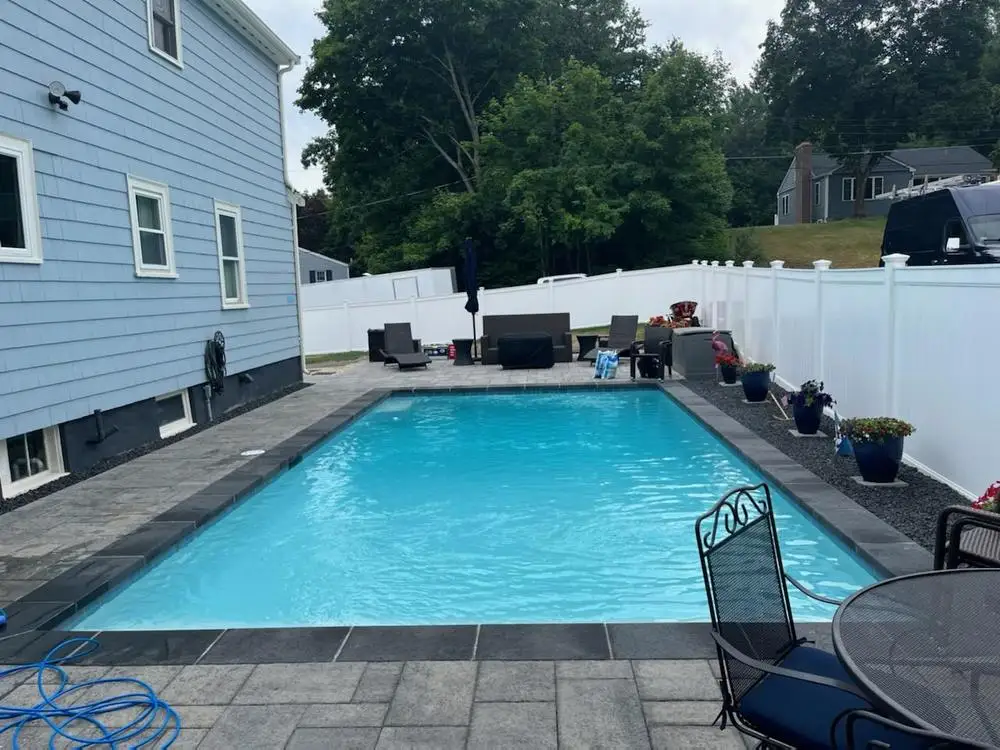
You Don’t Have to Choose Between Affordable and Beautiful
If you’re exploring backyard ideas with a semi-inground pool, here’s a quick look at what makes them worth considering:
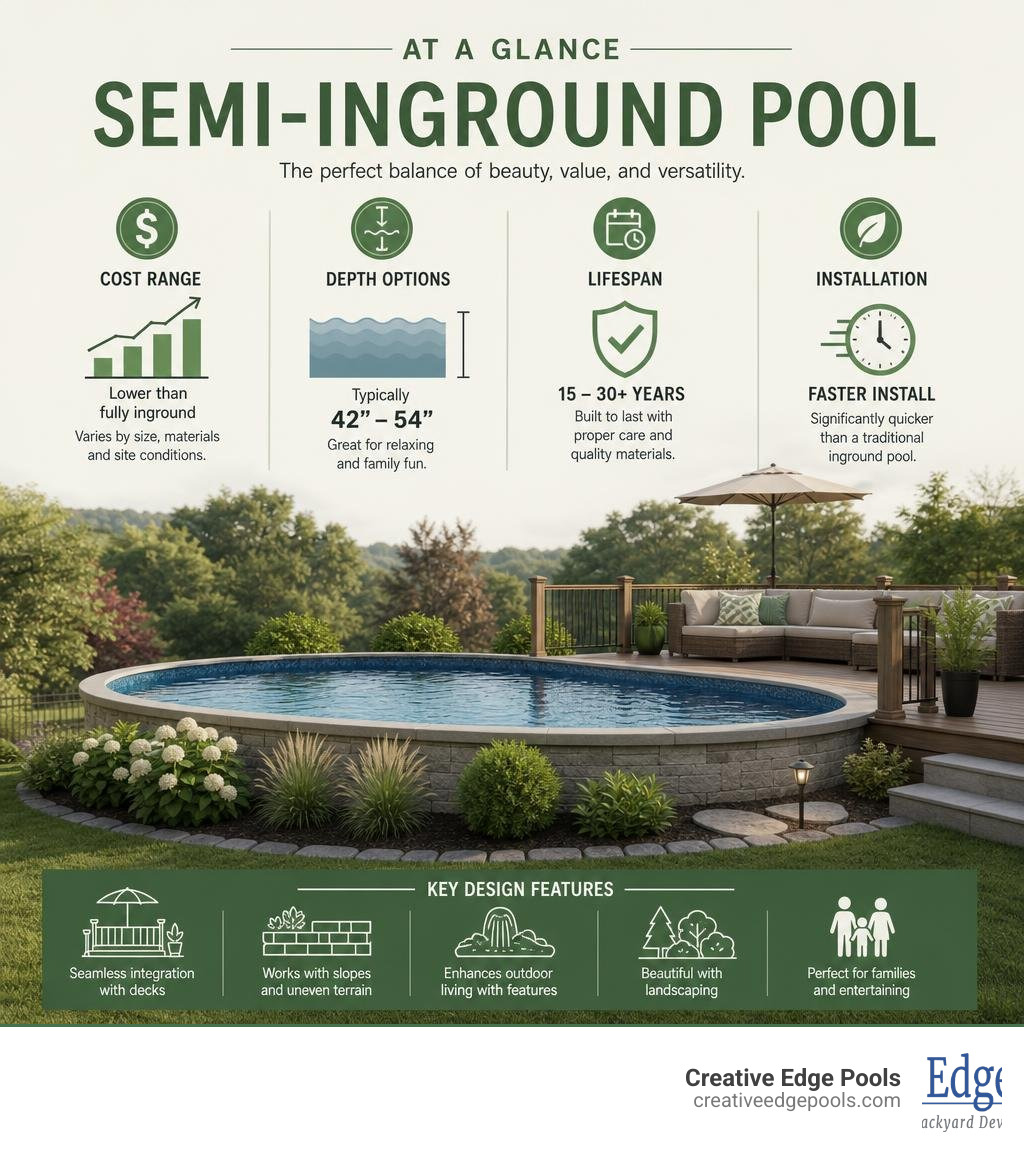
- Cost: Generally lower than a fully inground pool, with wide variation depending on size, materials, and site conditions
- Appearance: Low-profile design that blends naturally with decks, stone, and landscaping
- Terrain flexibility: Works well on sloped or uneven yards common across Eastern Massachusetts and Southern New Hampshire
- Customization: Pairs easily with wraparound decks, retaining walls, water features, and privacy plantings
- Installation speed: Significantly faster than a traditional inground build
A full inground pool is the dream for a lot of homeowners — but the excavation, the timeline, and the cost can make it feel out of reach. An above-ground pool, on the other hand, doesn’t always deliver the look you’re going for.
Semi-inground pools sit right in the middle. They’re partially buried in the ground, which gives them a polished, permanent feel without requiring a full inground build. In towns like Andover, MA or Exeter, NH — where backyards often have slopes, rocky soil, or tight layouts — that flexibility matters a lot.
The right design can make a semi-inground pool look every bit as stunning as a custom inground installation. And with the right team behind it, you get a backyard that actually fits your yard.
This guide walks through the best design ideas, materials, landscaping approaches, and professional considerations to help you get there.
Backyard ideas with semi inground pool word list:
What is a Semi-Inground Pool and How Does It Compare?
A semi-inground pool is a versatile swimming pool designed to be installed partially below ground level and partially above. Typically, these pools are buried anywhere from 24 to 36 inches deep, leaving the remaining portion of the pool wall exposed above the surface. This unique setup provides a low-profile look compared to fully above-ground models, allowing the pool to integrate seamlessly with custom hardscapes, patios, and decks.
By avoiding the extensive excavation required for a fully buried pool, homeowners can save on construction time and site disruption while still achieving a clean, custom look. For a deeper dive into how to map out your yard’s potential, explore The Definitive Guide to Backyard Pool Design.
Semi-Inground vs. Inground vs. Above-Ground Pools
To decide which pool style fits your property, budget, and aesthetic goals, it helps to look at how they compare across key categories:
| Feature | Above-Ground Pools | Semi-Inground Pools | Inground Pools |
|---|---|---|---|
| Installation Depth | 0 inches (fully above ground) | 24 to 36 inches buried | Fully buried (typically 48+ inches) |
| Average Lifespan | 5 to 15 years | 15 to 30 years | 30 to 50+ years (especially gunite) |
| Terrain Adaptability | Low (requires flat ground) | High (ideal for slopes and hills) | Medium (requires extensive leveling/retaining) |
| Structural Integrity | Low to Medium | High (reinforced for soil pressure) | Excellent (built into earth) |
| Deck Integration | Elevated wood/composite | Level or multi-level integration | Flush stone, concrete, or pavers |
While above-ground pools are budget-friendly, they lack the structural design to withstand external soil pressure, meaning they cannot be safely buried. Semi-inground pools are constructed with heavy-duty wall panels and robust bracing systems specifically engineered to handle the active lateral pressure of the surrounding earth. This extra strength is what allows them to act as a permanent backyard feature. To learn more about these technical differences, read Semi Inground Pools: The Complete Guide to Benefits, Installation, and Maintenance.
Materials and Shapes for Durability in New England Climates
In Massachusetts and New Hampshire, the weather is beautiful in the summer but harsh in the winter. The seasonal freeze-thaw cycle causes soil to expand and contract, which can put immense stress on pool walls. Choosing the right materials is crucial to ensure your pool lasts for decades:
- Resin and Polymer Construction: Highly resistant to corrosion, rust, and moisture. Resin does not corrode when exposed to wet soil, making it an excellent choice for the partially buried sections of the pool.
- Galvanized Steel: Incredibly strong and rigid, steel frames offer maximum structural support to hold back heavy New England soils. High-quality galvanized coatings protect the metal from moisture damage.
- Hybrid Systems: These systems combine steel support structures with resin top rails and outer panels, offering the strength of metal where it is needed most and the weather-resistant benefits of resin on the exposed surfaces.
Shape also plays a major role in how well the pool holds up and fits into your landscape. Round pools naturally distribute water and soil pressure evenly across the entire structure, making them highly durable and cost-effective. Oval pools are perfect for narrow yards or side yards, though they require additional structural side braces to handle the lateral load. For those wanting a more permanent, high-end alternative that can be customized to any shape or size, exploring a custom Inground Pool Massachusetts build is often the best path forward.
The Pros, Cons, and Real Costs of Semi-Inground Pools
Like any major home improvement project, installing a semi-inground pool comes with its own set of advantages and challenges. Understanding these details upfront ensures you make the right choice for your lifestyle and property.
Benefits and Drawbacks for Massachusetts and New Hampshire Yards
For homeowners in communities like Portsmouth, NH and Wilmington, MA, the local geography often dictates what kind of home projects are feasible.
The Pros:
- Slope Adaptability: If your yard slopes down toward a woodline or has a rolling lawn, a semi-inground pool is the ultimate solution. You can excavate into the high side of the slope and leave the low side exposed, working with your yard’s natural topography instead of paying for massive grading projects.
- Rocky Soil Workarounds: Anyone who has tried to dig a garden in New England knows our soil is packed with ledge and granite boulders. By only digging two to three feet down rather than six or eight, you dramatically reduce the risk of hitting solid rock, saving thousands in heavy equipment fees.
- Aesthetic Versatility: Because a portion of the pool is raised, you can easily build a deck flush with the top edge or wrap the exposed walls in beautiful masonry to create a high-end, custom look.
The Cons:
- Visible Outer Walls: If left unfinished, the exposed metal or resin walls can look industrial or unfinished. To make them look great, you will need to invest in quality landscaping, decking, or stone siding.
- Liner Replacements: Like above-ground pools, semi-inground models rely on vinyl liners that typically need to be replaced every 7 to 10 years to maintain their seal and appearance.
Budgeting and Investment Value for Your Property
When planning your backyard budget, it is important to understand the overall financial picture.
Please note: All prices mentioned below are average costs sourced from general, publicly available internet data and do not represent the actual pricing, rates, or project estimates of Creative Edge Pools.
According to online industry data, a complete semi-inground pool project typically ranges from $20,000 to $125,000+. The low end of this range generally covers basic, small pool kits with minimal site preparation, while the high end reflects larger, premium installations featuring extensive professional excavation, custom multi-level composite decking, stone retaining walls, and advanced heating and filtration packages.
While a semi-inground pool is a substantial upgrade, a professionally designed and landscaped pool area can boost your home’s appeal and increase property usability. To see how different design choices fit into various budget levels, check out 50 Semi-Inground Pool Ideas for All Budgets and Yard Sizes.
Inspiring Backyard Ideas with Semi Inground Pool Designs
The secret to a stunning semi-inground pool is how you dress up the exterior. Because the pool sits partially above ground, you have a blank canvas to build custom features that make the pool feel like a natural extension of your home.
Integrating Custom Decks and Multi-Level Hardscapes
A semi-inground pool without a deck can feel unfinished. Adding a custom deck transforms the pool into a functional outdoor living space.
- Flush Wraparound Decks: Building a deck that is flush with the top coping of the pool completely hides the exposed outer walls. From the deck surface, the pool looks and feels exactly like a traditional inground pool.
- Multi-Level Zones: If your yard has a slope, you can design a multi-level deck. The upper level can serve as a dining area with a grill station, while steps lead down to a lower deck that wraps around the pool for lounging and sunbathing.
- Material Choices: Pressure-treated wood is a classic, budget-friendly option, but it requires annual staining and sealing. For a low-maintenance alternative, composite decking resists moisture, fading, and splintering, making it ideal for wet pool environments.
For more inspiration on layout and material combinations, explore Semi Inground Pool Deck Ideas: 7 Budget-Friendly Designs for 2026 – Hydro Ottawa.
Creative Backyard Ideas with Semi Inground Pool Landscaping
Landscaping is one of the most effective ways to blend your pool into the surrounding environment. By choosing the right plants and layout, you can soften the transition between the pool structure and your lawn.
- Gravel and Stone Borders: Laying a two-foot border of river stone or decorative gravel around the base of the pool walls keeps grass and weeds away, simplifies lawn mowing, and ensures proper drainage away from the structure.
- Privacy Hedges: In suburban neighborhoods like Andover, MA or Exeter, NH, privacy is often a top priority. Planting dense, upright evergreens like Arborvitae or skip laurels along your property line creates a lush, green privacy screen that blocks the wind and keeps nosy neighbors at bay.
- Native Perennials: Surround your pool patio with low-maintenance, hardy perennials that can handle pool splash-back. Ornamental grasses, lavender, and hostas add color and texture without dropping excessive leaves or debris into your clean water.
To plan your green spaces, take a look at our guide on Backyard Pool Landscaping.
Elevating the Look with Stone Masonry and Water Features
If you want to transition your backyard into a true luxury retreat, incorporating professional stone masonry and custom water features is the way to go.
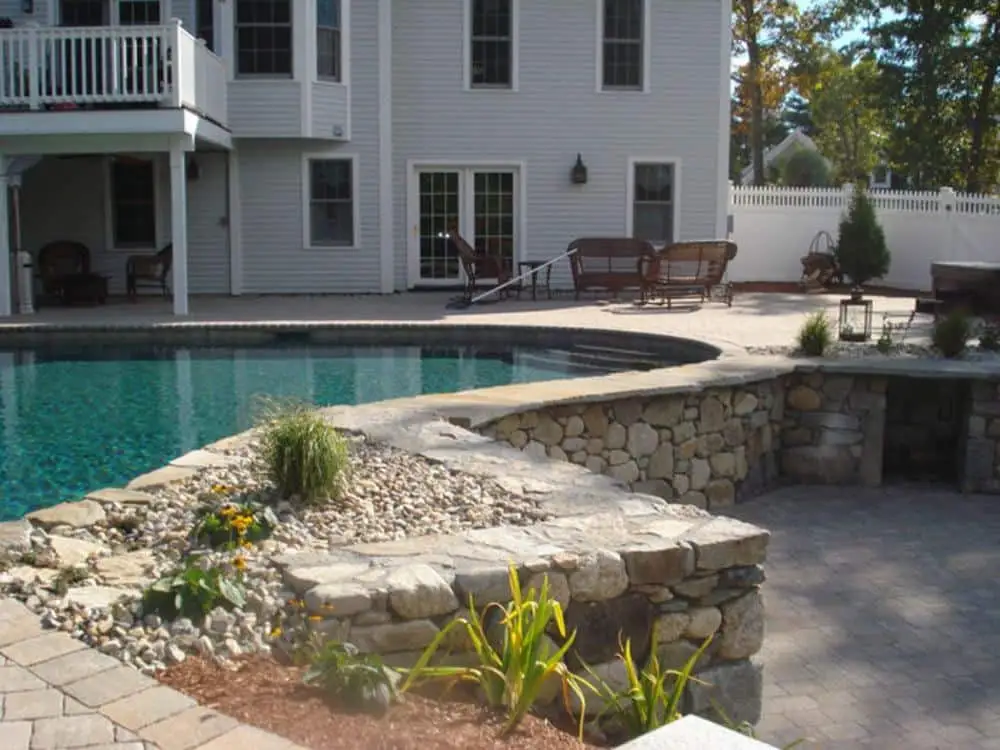
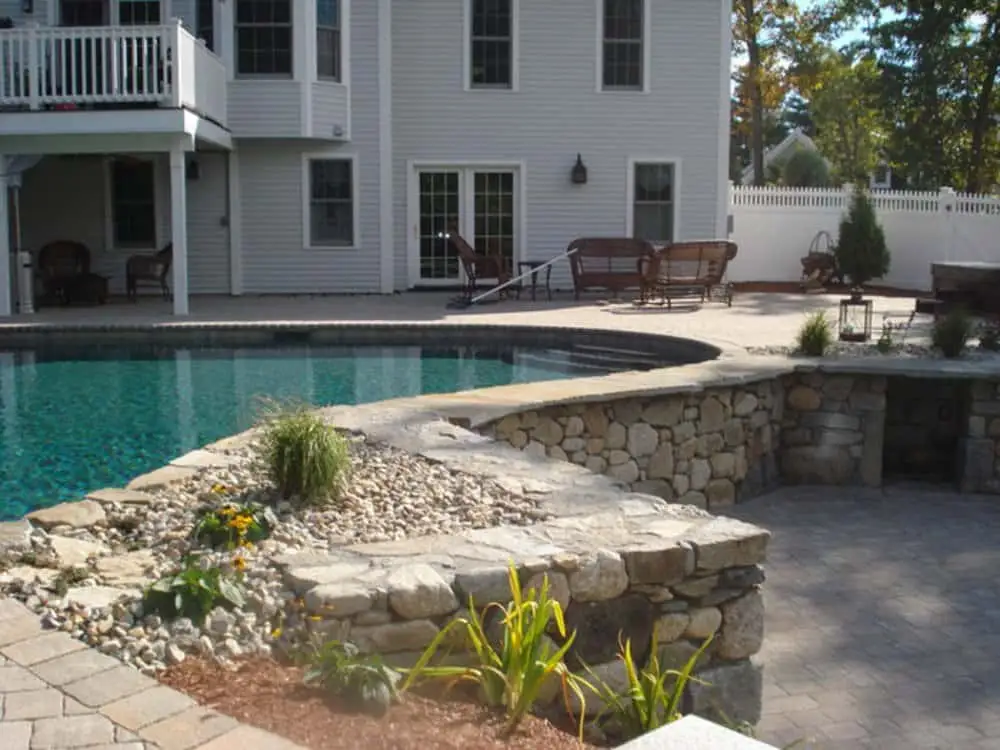
- Retaining Walls as Siding: Building a natural stone or concrete paver retaining wall against the exposed side of a semi-inground pool serves a dual purpose. It structurally supports the soil on sloped ground while giving the pool a gorgeous, rustic stone facade.
- Custom Coping: Finishing the top edge of the pool with natural flagstone, bluestone, or textured concrete coping gives swimmers a smooth, comfortable place to sit and elevates the overall design.
- Sheer Descent Waterfalls: If your pool is built into a slope with a retaining wall on one side, you can integrate a sheer descent waterfall. The sound of cascading water creates a tranquil, resort-like ambiance while helping to circulate and cool the pool water during hot summer days.
If you are interested in exploring how high-end stonework and custom features can transform your space, browse our gallery of Luxury Inground Pools.
Professional Installation, Permits, and Safety Standards
While some pool kits are marketed as weekend DIY projects, installing a semi-inground pool requires precise excavation, structural engineering, and utility management. Hiring a professional team ensures the job is done safely and complies with all local regulations.
Navigating Local Zoning and Permits in Eastern MA and Southern NH
Before any shovel touches the dirt, you must secure the proper permits from your local municipality. Zoning rules and building codes vary significantly between towns like Rye, NH and Tewksbury, MA:
- Setback Requirements: Most towns have strict rules about how close a pool can be to property lines, septic systems, wells, and the home itself.
- Wetland Restrictions: In coastal or marshy areas of New England, local conservation commissions often require environmental reviews if your property is near protected wetlands.
- Utility Line Marking: Before excavating, professionals will coordinate with local utility services (like Dig Safe) to mark underground electric, gas, water, and sewer lines, preventing dangerous and costly accidents.
Essential Safety Features and Barrier Requirements
Safety is always the number one priority when installing a swimming pool. Both Massachusetts and New Hampshire have strict barrier laws designed to prevent accidental drownings:
- Safety Fencing: Most local building codes require a pool area to be completely enclosed by a fence that is at least 48 inches (4 feet) high.
- Self-Closing Gates: All pedestrian access gates must open outward, be self-closing, and feature self-latching devices placed high enough to be out of reach of small children.
- Pool Alarms: Many municipalities require subsurface pool alarms that detect waves or water disturbance, as well as door alarms on any home doors that open directly to the pool area.
- Electrical Safety: All pool equipment, including pumps, heaters, and lighting, must be protected by Ground Fault Circuit Interrupters (GFCI) and installed by a licensed electrician to prevent electrical hazards.
Maintenance and Seasonal Care for Semi-Inground Pools
Keeping your pool clean, clear, and safe does not have to be a chore. With a consistent routine and the right equipment, seasonal maintenance is straightforward and highly manageable.
Spring Opening and Summer Water Chemistry
Getting your pool ready for the summer season starts in early spring, ideally a couple of weeks before you plan to take your first swim:
- Liner and Equipment Inspection: Check the vinyl liner for any signs of wear, shifting, or damage from the winter. Inspect the pump, filter, and plumbing lines for leaks.
- Water Balancing: Fill the pool to its proper operating level and run the filtration system. Test and adjust the chemical levels to keep your water healthy and clear:
- pH: Maintain between 7.2 and 7.8 for swimmer comfort and equipment protection.
- Alkalinity: Keep between 80 and 120 ppm to prevent rapid pH swings.
- Sanitizer: Run a chlorine shock to eliminate any lingering bacteria or algae, keeping free chlorine levels between 1.0 and 3.0 ppm.
Winterization and Freeze Protection for New England Winters
Proper winterization is the single most important thing you can do to protect your pool investment from freezing temperatures:
- Lowering the Water Level: Drain the pool water below the skimmer and return lines to prevent water from freezing inside the plastic fittings and cracking them.
- Line Blowing and Plugging: Blow out all underground plumbing lines with compressed air to remove standing water, then seal them with expansion plugs.
- Winterizing Chemicals: Add a winter chemical kit containing algaecide and stain preventative to keep the water clean while the pool is closed.
- Heavy-Duty Winter Cover: Secure a durable winter cover over the pool to block debris, leaves, and sunlight, preventing spring algae blooms and keeping kids and pets safe.
Frequently Asked Questions
Can a backyard ideas with semi inground pool design work on a steep slope?
Yes! Working with sloped yards is one of the primary reasons homeowners choose semi-inground pools. By partially burying the pool into the high side of the slope and using a custom stone retaining wall or a multi-level deck on the lower side, you can create a beautiful, tiered backyard design without the cost of leveling your entire lawn.
How long do semi-inground pools typically last?
With proper care and maintenance, a high-quality semi-inground pool constructed with resin or galvanized steel walls can last between 15 and 30 years. The vinyl liner will typically need to be replaced every 7 to 10 years to maintain a perfect seal and keep the pool looking brand new.
Do semi-inground pools require a safety fence in Massachusetts?
Yes. In Massachusetts, any pool that can hold 24 inches or more of water must be enclosed by a safety barrier or fence at least 48 inches high. Even if your pool sits partially above ground, the exposed walls alone do not meet safety codes unless they are specifically designed and approved as a barrier by your local building inspector.
Ready to Transform Your Backyard?
At Creative Edge Pools, we believe your backyard should be your personal escape. As a family-owned business with over 100 years of combined experience, we specialize in high-end backyard transformations across Eastern Massachusetts and Southern New Hampshire.
From professional excavation and custom gunite pool installations to stunning stone masonry, retaining walls, and complete outdoor living designs, our team is dedicated to bringing your unique vision to life.
Explore our Backyard Pool Designs to find the perfect style for your home, or contact us today to get started on your custom project.
- Call Us: +978-203-0406
- Get a Free Estimate: Request a Quote Online