
Hardscape Services: Top Tips for Design & Repair in 2024
To transform your yard into a functional and beautiful outdoor space, hardscape services may be just what you need. Here’s a quick overview:
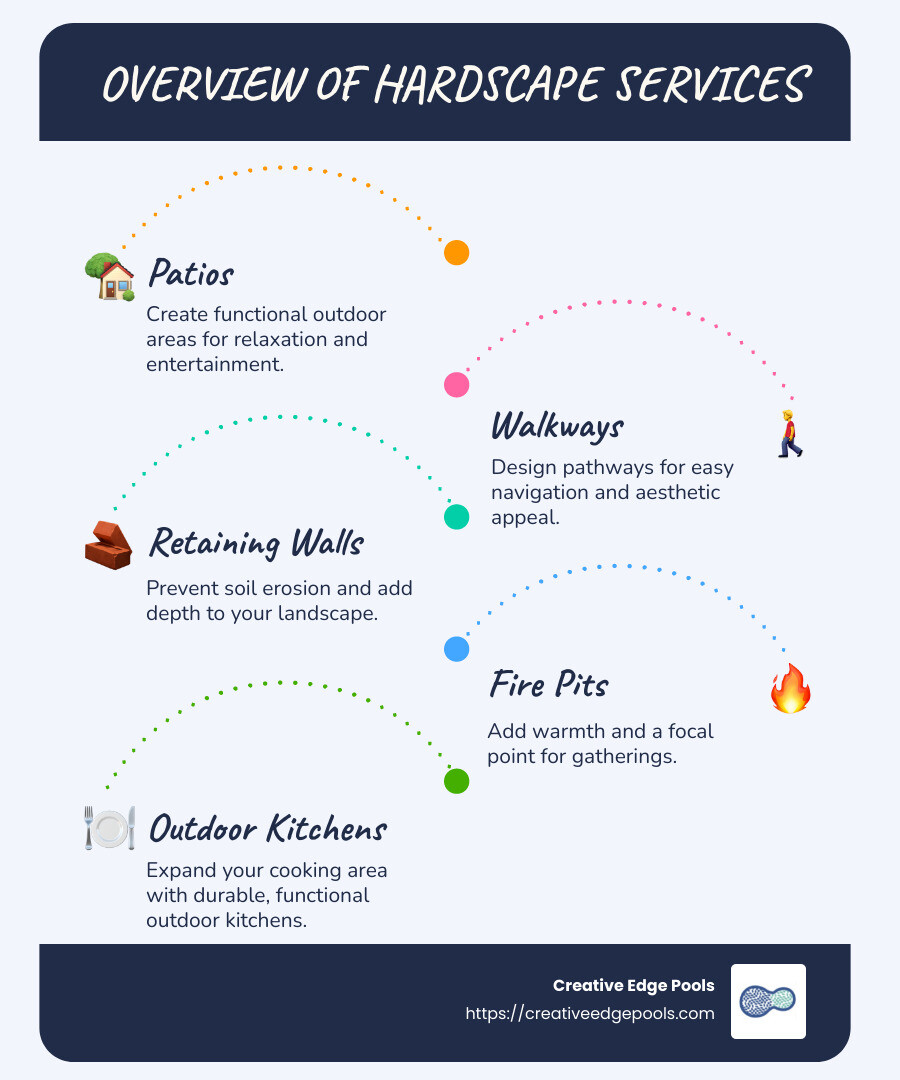
Hardscape services include:
1. Patios
2. Walkways
3. Retaining walls
4. Fire pits
5. Outdoor kitchens
6. Pergolas
7. Driveways
8. Landscape lighting
Hardscaping involves using non-living materials to improve your outdoor areas. These could be stone, brick, or concrete–anything that isn’t a plant or soil. Think of features like patios, walkways, and retaining walls. Unlike traditional landscaping, hardscaping focuses on the built environment—providing structure and usability to your yard without relying on greenery.
My name is David Brabant. With over thirty years in the pool and site development industry, I bring hands-on experience to hardscape services, ensuring your outdoor living space is crafted to perfection.
Hardscape services terms to know:
– hardscaper near me
– hardscaping and landscaping
– landscape hardscapes
What Are Hardscape Services?
Popular Hardscape Features
Hardscape services focus on non-plant elements that improve your outdoor living spaces. These features add structure, functionality, and aesthetic appeal to your yard. Let’s explore some popular hardscape features:
Patios
A patio serves as the perfect spot for relaxation and gatherings. Made from materials like concrete, pavers, or natural stone, patios offer a versatile space for dining, lounging, or even working from home. Imagine hosting a summer barbecue on a beautifully designed patio—it’s a game-changer for outdoor living.
Walkways
Walkways guide you through your garden or yard, adding both functionality and charm. Paver walkways are a popular choice due to their durability and aesthetic appeal. You can customize the layout and size to fit your style, making your outdoor space more inviting and easier to steer.
Retaining Walls
Retaining walls are essential for managing soil erosion and creating leveled garden areas. They can be constructed from stone, brick, or concrete, and they offer both practical and aesthetic benefits. For instance, a well-designed retaining wall can transform a sloped yard into a series of beautiful, usable terraces.
Fire Pits
A fire pit can transform your backyard into a cozy retreat. Perfect for summer nights or even chilly autumn evenings, fire pits provide a focal point for gatherings. They come in various styles and materials, such as stone or metal, and can be custom-built to fit your specific needs.
Outdoor Kitchens
Outdoor kitchens lift your backyard entertaining experience. Equipped with grills, sinks, and even refrigerators, these kitchens allow you to cook and dine al fresco. Imagine preparing a meal while your guests relax nearby, making your outdoor gatherings more enjoyable and seamless.
Fountains
Fountains add a touch of elegance and tranquility to any garden. The sound of flowing water creates a serene atmosphere, making your outdoor space a peaceful retreat. Whether you opt for a grand, multi-tiered fountain or a simple water feature, it can significantly improve your yard’s ambiance.
Pergolas
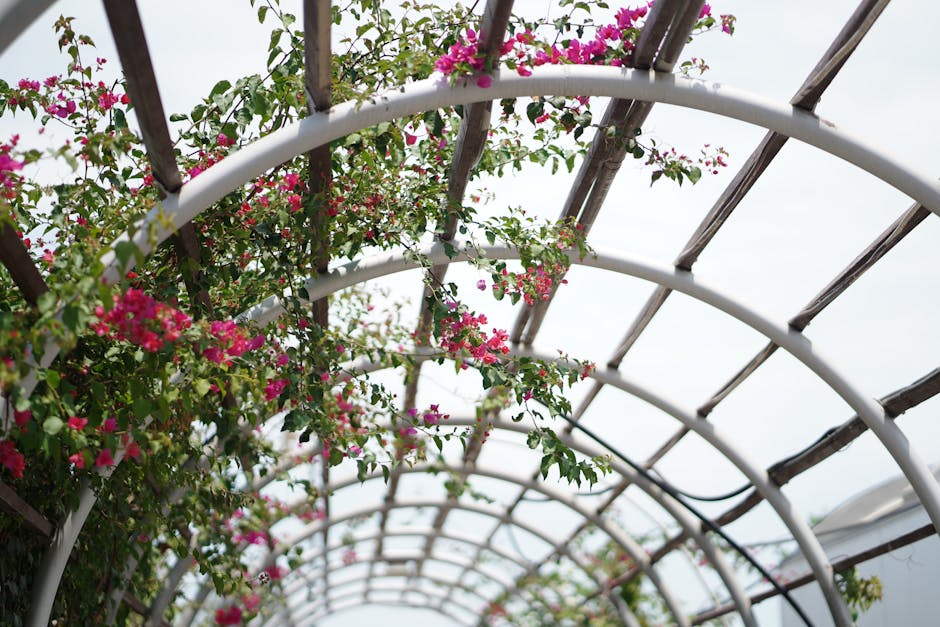
Pergolas provide shade and structure to your outdoor areas. They can be adorned with climbing plants or left bare for a more modern look. Pergolas are perfect for creating a shaded walkway or a cozy sitting area, adding both beauty and functionality to your yard.
These are just a few examples of how hardscape services can transform your outdoor space. Whether you’re looking to create a serene garden path, a functional patio, or a cozy fire pit area, hardscaping offers endless possibilities to improve your yard’s usability and aesthetic appeal.
Designing Your Hardscape
Hardscape Design Process
Designing your hardscape is both an art and a science. It involves careful planning and consideration to create an outdoor space that is not only beautiful but also functional and long-lasting. Let’s explore the key elements of the hardscape design process:
Design Principles
The foundation of any successful hardscape project lies in solid design principles. These include balance, proportion, and unity. Balance ensures that the different elements of your design feel harmonious. Proportion keeps the size of your features in check with the surrounding space. Unity ties everything together, ensuring that all parts of your design work well together.
Software Tools
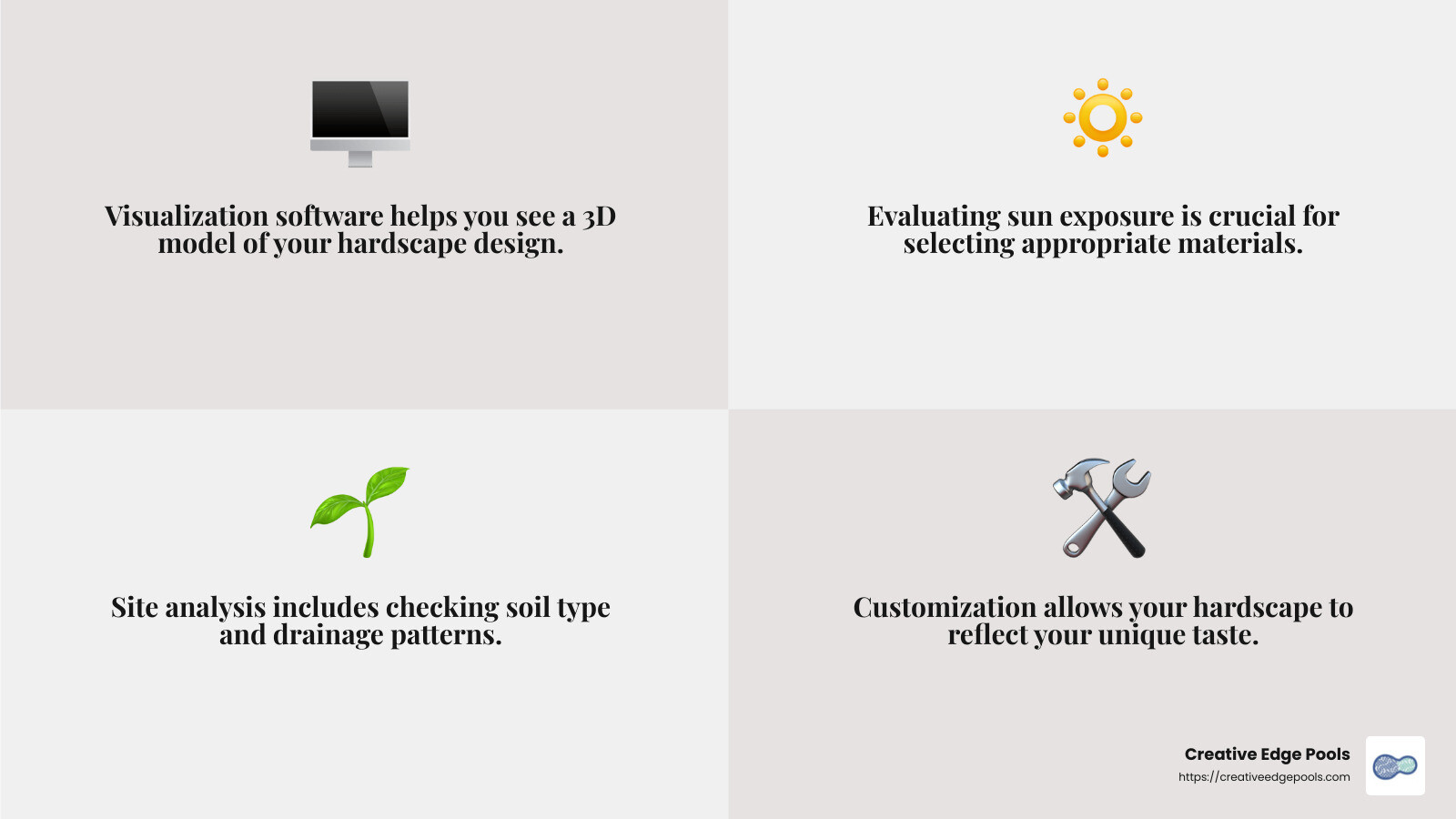
Modern technology has made hardscape design more accessible and precise. State-of-the-art software tools allow designers to create detailed plans and visualize the final outcome. These tools can simulate different materials, lighting conditions, and layouts, helping you make informed decisions before any physical work begins.
Customization
Every yard is unique, and so are your preferences. Customization is key to a successful hardscape project. Whether you want a rustic stone patio or a sleek concrete walkway, customization allows you to tailor each element to your taste and needs. This ensures that your outdoor space is a true reflection of your personality.
Site Analysis
Before diving into the design, a thorough site analysis is essential. This involves evaluating the existing conditions of your yard, such as soil type, drainage patterns, and sun exposure. Understanding these factors helps in selecting appropriate materials and design features that will thrive in your environment.
Visualization Software
Visualization software is a game-changer in the hardscape design process. It allows you to see a 3D model of your proposed design, making it easier to tweak and perfect before construction begins. According to TechRadar, the best landscape design software offers features like photorealistic asset libraries and advanced sculpting tools, which can bring your vision to life.
Exposure
Sun exposure plays a crucial role in hardscape design. Areas with high sun exposure may require materials that can withstand heat and UV rays, while shaded areas might benefit from moss-resistant options. Proper planning ensures that your hardscape elements remain durable and visually appealing over time.
Erosion
Erosion can be a significant challenge in some landscapes. Incorporating features like retaining walls and dry creek beds can help manage water flow and prevent soil erosion. These elements not only serve a functional purpose but can also add aesthetic value to your yard.
Roots
Tree roots can pose a challenge when installing hardscape elements. A site survey will identify any root systems that could interfere with your design. Solutions like root barriers or choosing alternative locations for certain features can mitigate these issues, ensuring the longevity of your hardscape.
Site Plan
A detailed site plan is the blueprint of your hardscape project. It includes measurements, material specifications, and placement of each feature. This plan serves as a guide for the installation team, ensuring that every element is executed according to the design.
Survey
A professional survey is often the first step in the hardscape design process. It provides accurate measurements and identifies any potential obstacles, such as underground utilities or uneven terrain. This information is crucial for creating a realistic and executable design.
The hardscape design process is a meticulous journey that combines creativity with technical expertise. By considering factors like exposure, erosion, and roots, and utilizing modern tools and software, you can create an outdoor space that is both stunning and sustainable.
Hardscape Installation
Common Hardscape Materials
The hardscape installation process involves several key steps to ensure a durable and aesthetically pleasing result. Here’s a breakdown of what you can expect:
Installation Process
- Site Preparation: Clearing the area of any existing vegetation, debris, or old structures.
- Excavation: Digging out the area to the required depth for the hardscape feature.
- Base Layer: Adding a base layer of gravel or crushed stone to provide a stable foundation.
- Laying Materials: Placing the chosen materials (pavers, bricks, stones) according to the design plan.
- Compaction: Compacting the materials to ensure they are secure and level.
- Finishing Touches: Adding sand or polymeric sand between joints, sealing surfaces, and cleaning up the site.
Construction Team
A skilled construction team is essential for a successful hardscape installation. This team typically includes:
- Project Manager: Oversees the entire project and ensures it stays on schedule.
- Designers: Create the detailed plans and layouts for the hardscape features.
- Installers: Handle the physical labor of installing the materials.
- Specialists: Experts in specific areas like masonry or landscaping.
Materials
Choosing the right materials is crucial for both the look and longevity of your hardscape. Here are some common options:
- Concrete: Durable and versatile, concrete can be molded into various shapes and finishes. It’s ideal for patios and walkways.
- Pea Gravel: Small, rounded stones that are great for pathways and garden beds. They provide good drainage and a natural look.
- Pavers: Available in various shapes, sizes, and colors, pavers are perfect for creating intricate patterns in patios and driveways.
- Brick: Classic and timeless, brick offers a warm, traditional look. It’s often used for patios, walkways, and retaining walls.
- Stones: Natural stones like flagstone or slate add a rustic charm to any outdoor space. They are perfect for patios, walkways, and garden borders.
Project Timeline
The project timeline for hardscape installation varies based on the complexity and size of the project. Here’s a general timeline:
- Initial Consultation: Discussing your vision and requirements with the design team. (1-2 weeks)
- Design Phase: Creating detailed plans and getting your approval. (2-4 weeks)
- Permits and Approvals: Obtaining any necessary permits from local authorities. (1-3 weeks)
- Site Preparation and Installation: The actual construction process. (2-6 weeks)
- Final Inspection and Finishing: Ensuring everything is perfect and making any last adjustments. (1 week)
By understanding the installation process, the roles of the construction team, and the materials involved, you can better prepare for your hardscape project. This knowledge ensures that every step is executed smoothly, resulting in a beautiful and functional outdoor space.
Next, we’ll explore the importance of hardscape repair and restoration, and how to address common issues like cracks, erosion, and discoloration.
Hardscape Repair and Restoration
Common Hardscape Issues
Even the best-installed hardscapes can encounter issues over time. Let’s look at some common problems and how to address them.
Cracks
Cracks in hardscape elements like patios, walkways, and retaining walls are quite common. They can result from natural settling, temperature changes, or heavy loads.
Repair Techniques:
- Filling Cracks: Small cracks can be filled with a specialized crack filler or sealant.
- Replacing Sections: For larger cracks, you may need to replace the damaged sections entirely.
- Reinforcement: Adding reinforcement materials like rebar during installation can prevent future cracking.
Erosion
Erosion can wash away soil and destabilize your hardscape features, especially in areas with heavy rainfall.
Restoration Methods:
- Drainage Solutions: Installing proper drainage systems like French drains can divert water away from your hardscapes.
- Retaining Walls: Adding or reinforcing retaining walls can help contain soil and prevent erosion.
- Ground Cover: Using ground cover plants or mulch can reduce soil erosion around your hardscapes.
Settling
Settling occurs when the ground beneath your hardscape compacts or shifts, causing uneven surfaces.
Maintenance Tips:
- Releveling: Lift and relevel the affected areas by adding or redistributing the base material.
- Compaction: Ensure the base layer is properly compacted during installation to prevent future settling.
- Regular Inspection: Periodically check for uneven surfaces and address them promptly.
Discoloration
Discoloration can make your hardscape look aged and neglected. It often results from exposure to the elements, spills, or algae growth.
Restoration Methods:
- Cleaning: Use a pressure washer or a mild cleaning solution to remove surface stains and algae.
- Sealing: Applying a sealant can protect your hardscape from future stains and discoloration.
- Surface Treatment: For severe discoloration, consider resurfacing the affected areas.
Maintenance Tips
Regular maintenance can extend the life of your hardscapes and keep them looking their best.
- Regular Cleaning: Sweep and wash your hardscapes regularly to remove dirt and debris.
- Sealant Application: Apply sealant every few years to protect against stains and weather damage.
- Weed Control: Use weed barriers or herbicides to prevent weeds from growing between pavers or stones.
- Inspection: Conduct regular inspections to catch and address issues early.
By understanding these common hardscape issues and how to address them, you can keep your outdoor spaces looking beautiful and functional for years to come.
Next, we’ll explore the many benefits of hardscaping, including how it can increase your home’s value and improve your outdoor living experience.
Benefits of Hardscaping
Complementing Green Spaces
Hardscaping offers a multitude of benefits that can transform your outdoor space into a functional and beautiful area. Let’s explore how hardscaping can lift your yard.
Increased Home Value
One of the most compelling reasons to invest in hardscaping is that it can significantly increase your home’s value. According to the National Association of Realtors, well-designed outdoor spaces can offer a return on investment of up to 150%. Features like patios, walkways, and fire pits make your home more appealing to potential buyers.
Improved Aesthetics
Hardscaping can dramatically improve the look of your yard. Imagine a beautifully designed patio with neat pavers or a charming garden path. These elements add structure and visual interest, making your outdoor space more inviting.
A well-thought-out hardscape design can also highlight the beauty of your green spaces. For example, a stone walkway winding through a lush garden can create a stunning visual contrast.
Functional Outdoor Spaces
Hardscaping creates functional outdoor areas where you can relax, entertain, or even work. A patio can serve as an outdoor dining area, while a fire pit can be a cozy gathering spot for family and friends. These additions make it easier to enjoy your outdoor space, no matter the season.
Examples of Functional Hardscape Features:
– Patios: Perfect for outdoor dining and lounging.
– Walkways: Provide safe and attractive paths through your yard.
– Fire Pits: Create a warm gathering spot for cool evenings.
– Outdoor Kitchens: Ideal for summer barbecues and entertaining.
Integration with Landscaping
Hardscaping and landscaping go hand-in-hand. While hardscaping involves non-plant elements like stones and pavers, landscaping focuses on plants and greenery. When combined, they create a balanced and harmonious outdoor space.
For instance, a retaining wall can not only prevent soil erosion but also serve as a backdrop for beautiful flower beds. Similarly, a well-placed fountain can become the focal point of your garden, attracting birds and creating a soothing ambiance.
Enhancing Plant Life
Hardscaping can also improve the health and appearance of your plants. Properly designed hardscape features can improve drainage, reducing the risk of waterlogging and root rot. Raised garden beds can provide better soil conditions for your plants, leading to healthier growth.
Moreover, incorporating mulch or ground cover around your hardscape elements can help retain soil moisture and reduce weed growth, creating a more favorable environment for your plants.
Creating Harmony
The right mix of hardscaping and landscaping can create a harmonious outdoor environment. By carefully selecting materials and designs that complement your home’s architecture and natural surroundings, you can achieve a cohesive look that feels both functional and aesthetically pleasing.
Tips for Creating Harmony:
– Choose Complementary Materials: Select hardscape materials that match or contrast nicely with your home’s exterior.
– Balance Hard and Soft Elements: Ensure a good mix of plants and hardscape features to avoid a cluttered or barren look.
– Consider Proportions: Scale your hardscape elements to fit the size of your yard and existing landscaping.
By understanding the benefits of hardscaping and how it can complement your green spaces, you can create an outdoor area that is both beautiful and functional.
Next, we’ll dive into some frequently asked questions about hardscape services, addressing common queries and concerns.
Frequently Asked Questions about Hardscape Services
What does hardscape include?
Hardscape services cover a wide range of non-plant elements that improve your outdoor space. Here are some popular features:
- Patios: Ideal for outdoor dining and lounging.
- Walkways: Safe and attractive paths that guide you through your yard.
- Retaining Walls: Prevent soil erosion and create level areas for planting.
- Water Features: Fountains, ponds, and waterfalls that add tranquility.
- Fire Pits: Cozy spots for gathering on cool evenings.
- Landscape Lighting: Illuminates your yard for safety and ambiance.
- Grill Surrounds: Perfect for outdoor cooking and entertaining.
- Pergolas: Provide shade and structure to your outdoor living space.
What is the least expensive hardscape?
If you’re on a budget, you have several cost-effective options to choose from:
- Concrete: Durable and versatile, suitable for driveways, patios, and walkways.
- Pea Gravel: Inexpensive and easy to install, great for pathways and garden beds.
- Pavers: Affordable and available in various styles, ideal for patios and walkways.
- Brick: Classic and sturdy, often used for patios and pathways.
- Stones: Natural and rustic, can be used for pathways and garden borders.
Is hardscaping the same as landscaping?
No, hardscaping and landscaping are not the same. While they complement each other, they focus on different elements:
- Hardscaping: Involves non-plant features like patios, walkways, and retaining walls.
- Landscaping: Focuses on plants, lawns, gardens, and other greenery.
Hardscaping adds structure and functionality to your yard, while landscaping brings life and color. Together, they create a balanced and beautiful outdoor space.
By understanding the different aspects of hardscape services, you can make informed decisions about enhancing your outdoor areas. Whether you’re looking to add a patio, install a walkway, or create a cozy fire pit, there’s a hardscaping solution for every need and budget.
Next, we’ll explore the conclusion of our guide, summarizing how Creative Edge Pools can help you achieve your dream backyard.
Conclusion
At Creative Edge Pools, we specialize in changing backyards into stunning outdoor living spaces. Our expertise in comprehensive backyard development ensures that every element of your outdoor area is both beautiful and functional.
Custom Gunite Swimming Pools
We pride ourselves on designing and installing custom gunite swimming pools that fit your vision perfectly. Gunite pools are known for their durability and versatility, allowing us to create unique shapes and features custom to your preferences. Whether you dream of a simple, neat pool or a luxurious backyard oasis, we can bring your vision to life.
Landscaping and Masonry
Our services go beyond just pools. We offer a wide range of hardscape services to complement your swimming pool and improve your entire backyard. From patios and walkways to retaining walls and outdoor kitchens, our masonry work is designed to blend seamlessly with your landscape. Our goal is to create a cohesive and harmonious outdoor environment that you and your family can enjoy for years to come.
Comprehensive Services
What sets us apart is our comprehensive approach to backyard development. We handle everything from initial design and planning to installation and final touches. Our team of experienced professionals works closely with you to ensure that every detail meets your expectations. We factor in crucial elements like water drainage, site analysis, and existing construction to deliver a flawless project.
Why Choose Creative Edge Pools?
- Family-Owned Business: We bring a personal touch to every project, treating your backyard as if it were our own.
- Expertise: With over a hundred years of combined experience, our team is well-equipped to handle even the most complex projects.
- Quality Materials: We use only the highest quality materials to ensure durability and aesthetic appeal.
- Customer Satisfaction: Our work is backed by glowing reviews from satisfied clients who appreciate our attention to detail and commitment to excellence.
Ready to transform your backyard into a paradise? Contact us today to schedule your free consultation and take the first step toward achieving your dream outdoor space.
For more information and to explore our hardscaping services, visit our Hardscaping and Masonry page. Let us help you create the ultimate outdoor environment for you and your family to enjoy.
