
Gunite Pool Crack Repair Cost: 7 Shocking Facts for 2025
Why Understanding Gunite Pool Crack Repair Costs Matters for Your Investment
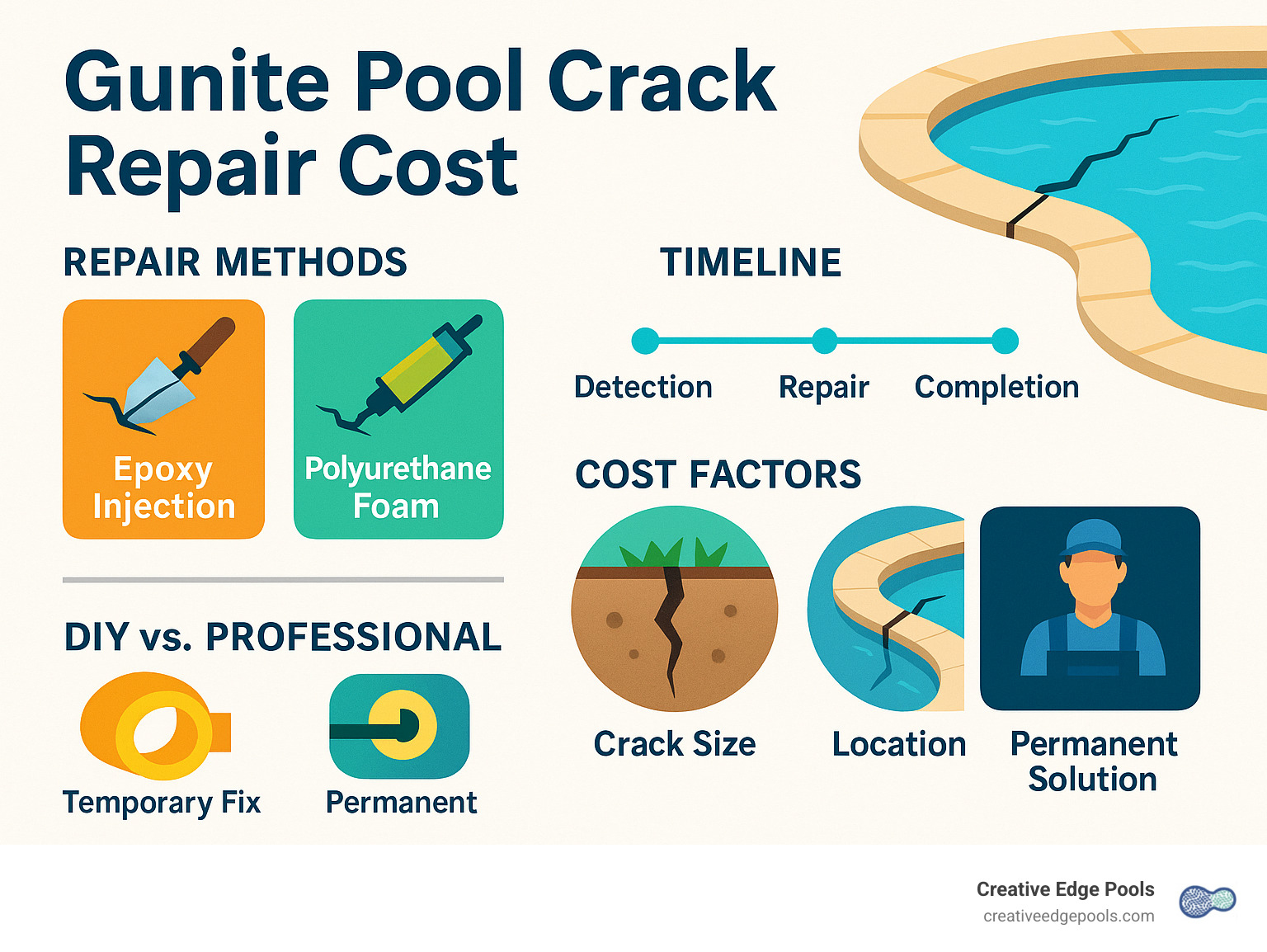
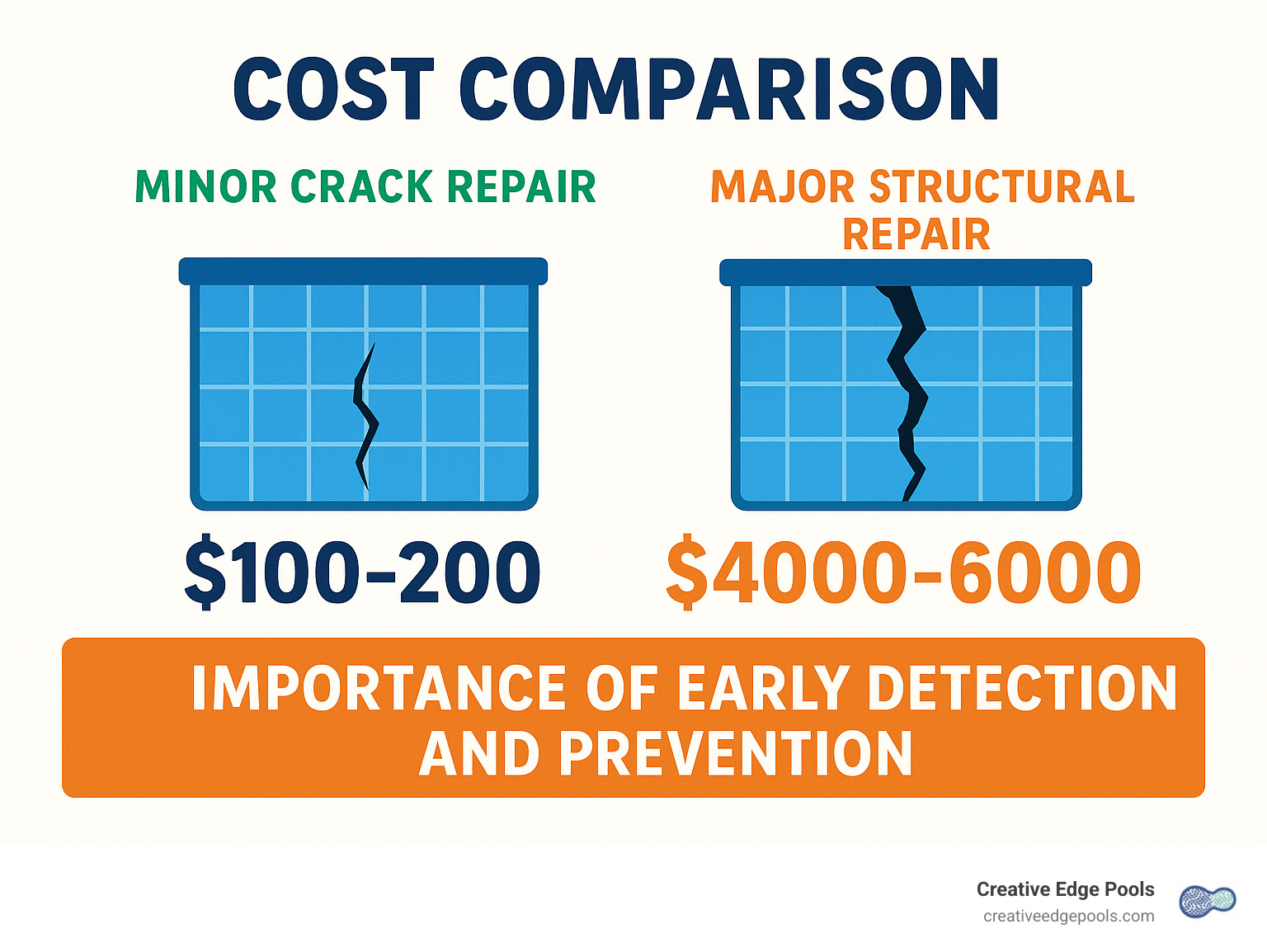
Gunite pool crack repair cost typically ranges from $75 per linear foot for basic repairs to $4,000-$6,000 for major structural work. Here’s what you need to know:
Quick Cost Overview:
– Small cracks: $100-$200 (epoxy patch)
– Injection foam repair: $125 per linear foot
– Bond beam cracks: $70-$80 per linear foot
– Major structural repairs: $4,000-$6,000
– Full resurfacing: $6,000-$15,000
Pool cracks happen. Whether it’s from New England’s freeze-thaw cycles, soil movement, or simple aging, even the best-built gunite pools can develop fissures over time. The good news? Most cracks are fixable without breaking the bank.
The key is knowing when to act fast. A small hairline crack that costs $200 to fix today could become a $6,000 structural nightmare if you wait too long. Water loss, deck shifting, and equipment damage can all stem from ignoring that tiny fissure you noticed last month.
I’m David Brabant, owner of Creative Edge Pools with over 30 years in the swimming pool industry. Having worked on hundreds of gunite pool repairs across Massachusetts and New Hampshire, I’ve seen how understanding gunite pool crack repair cost upfront helps homeowners make smart decisions about their backyard investment.
Gunite pool crack repair cost glossary:
– 15×30 gunite pool cost
– convert liner pool to gunite cost
– shotcrete pool cost
Why Gunite Pools Crack & How to Spot Trouble Early
Let’s be honest—watching your beautiful gunite pool develop cracks feels a bit like finding wrinkles in the mirror. It’s going to happen eventually, but understanding why helps you catch problems early and keep gunite pool crack repair cost manageable.
After three decades working on pools across Eastern Massachusetts and Southern New Hampshire, I’ve learned that Mother Nature doesn’t make it easy for us pool owners. Our region throws some unique challenges at gunite pools that can turn small issues into expensive headaches.
Soil movement is our biggest troublemaker here in New England. Our clay-heavy soils act like a sponge—expanding when wet, shrinking when dry. I’ve seen perfectly good pools develop stress cracks after an unusually wet spring followed by a bone-dry summer. The ground literally shifts beneath your pool, putting pressure on the shell in ways it wasn’t designed to handle.
Freeze-thaw cycles are the second culprit. When water seeps into tiny cracks and freezes, it expands with tremendous force—enough to turn hairline cracks into serious fissures. Here’s something many homeowners don’t realize: pool plaster should never stay dry for more than five days during winter months. I’ve seen expensive damage from well-meaning owners who thought draining their pool completely was the safest option.
Hydrostatic pressure sounds fancy, but it’s simply groundwater pushing up from below your pool. Areas with high water tables or heavy rainfall seasons see this frequently. The pressure can literally lift sections of your pool floor, creating cracks that leak water back into the ground.
Water chemistry imbalance slowly eats away at gunite over time. Acidic water with low pH doesn’t just make swimming unpleasant—it actually dissolves the concrete. I’ve opened up pools where years of poor chemical maintenance created weak spots throughout the shell.
Age and installation flaws catch up with every pool eventually. Even the best-built gunite pools show wear after decades of use. Those nylon fittings around drains and returns? They deteriorate over time, causing leaks that can undermine surrounding concrete.
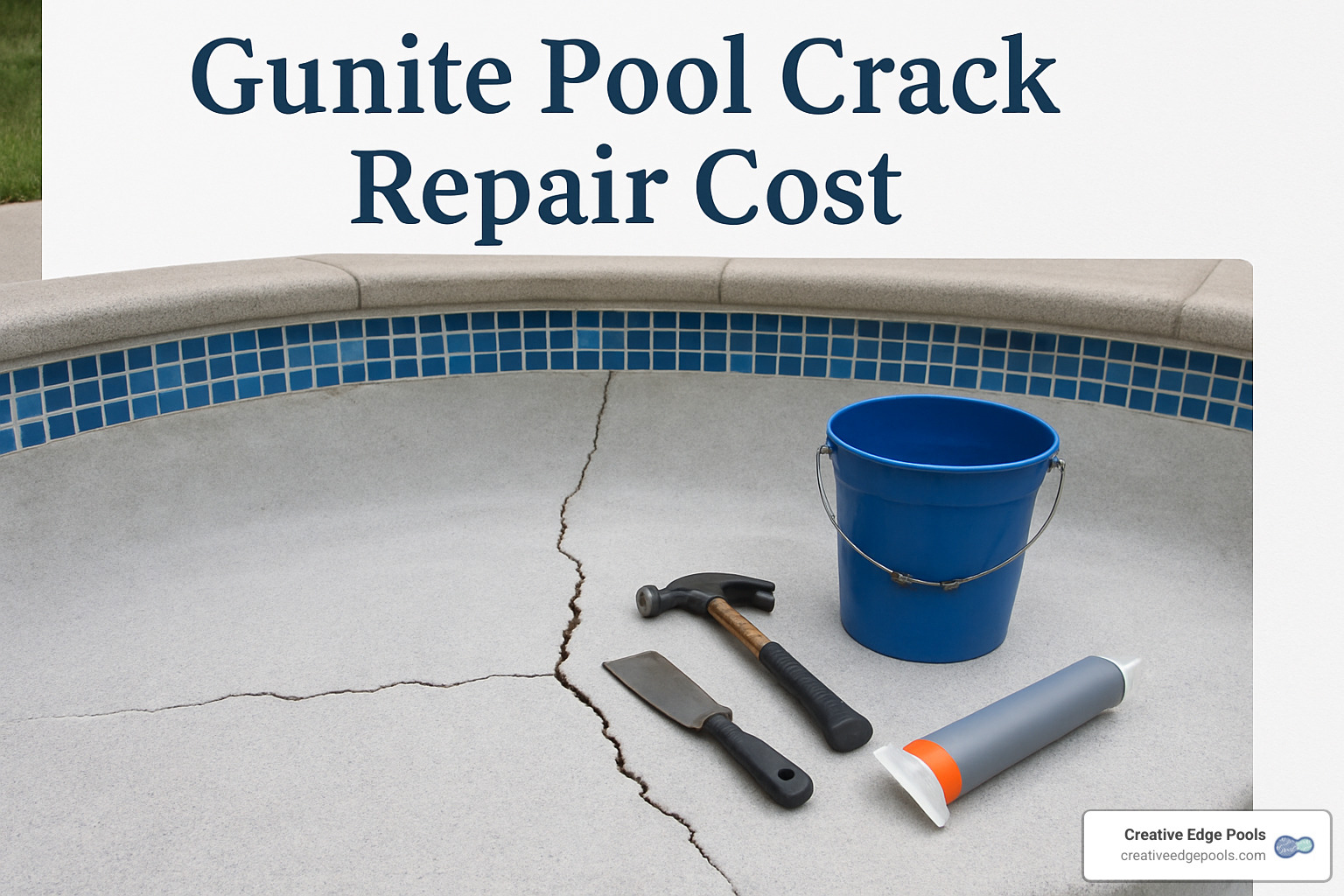
The trick is catching these problems before they become expensive disasters. Water level dropping more than 2 inches per week is your biggest red flag. Soggy ground around the pool tells you water is going somewhere it shouldn’t. Algae forming on deck surfaces often indicates water seeping up from below, while visible cracks in plaster or tile are obvious warning signs. Rust stains near fixtures particularly concern me because they often signal exposed rebar—a serious structural issue.
Types of Gunite Pool Cracks
Not every crack means disaster, but knowing the difference can save you thousands in unnecessary repairs—or prevent a small problem from becoming a major one.
Hairline surface cracks live in the plaster finish and rarely cause leaks. Think of them as cosmetic wrinkles that can worsen over time if ignored. These typically cost $100-$300 to repair properly.
Structural beam cracks affect the bond beam supporting your pool’s top edge—the concrete ring that holds everything together. These repairs run $70-$80 per linear foot and often require replacing tile and coping in the affected area.
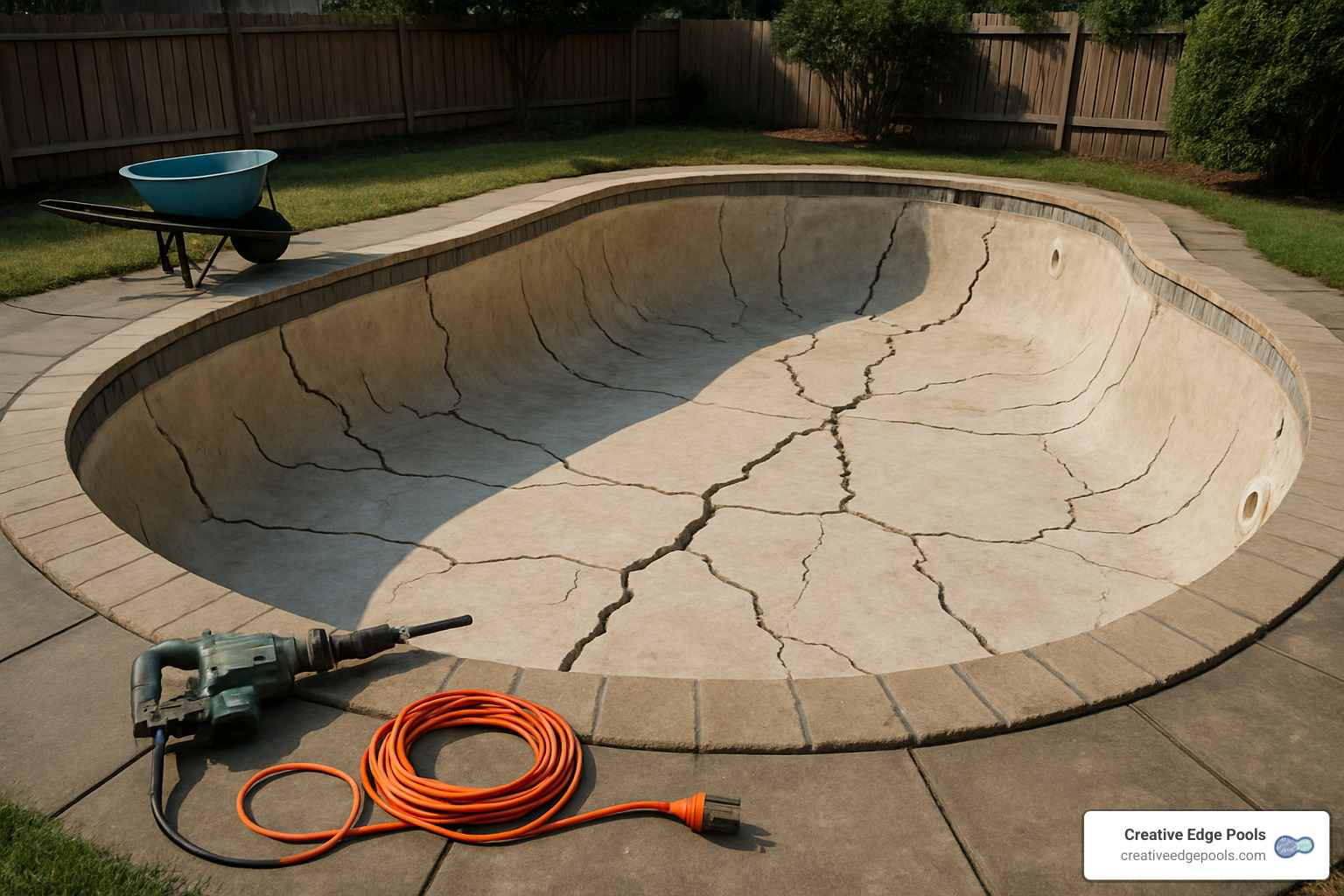
Spiderweb cracks radiate from one central point like a broken windshield. They usually indicate settling or impact damage (maybe that diving board installation wasn’t quite right). Proper repairs typically cost $700-$1,000 depending on the extent.
Plumbing settlement cracks appear around skimmers, returns, or main drains where pipes connect to the shell. These signal pipe movement underground. Main drain repairs average $1,500, while skimmer issues range from $400-$1,800.
Bulges and divots are the serious players—they indicate major structural problems that may require reconstructing entire sections of your pool shell.
When a Crack Needs Professional Attention
I always tell homeowners: when in doubt, make the call. But certain warning signs demand immediate professional assessment, not next week or next month.
Rapid water loss of more than 2 inches in 24 hours means you have an active leak that’s getting worse. Widening fissures are cracks in motion—they won’t stop growing on their own. Rust stains often indicate exposed rebar, which compromises your pool’s structural integrity.
Deck shifting where cracks extend into surrounding concrete suggests major settlement issues. Safety risks around steps, diving areas, or anywhere people enter and exit the pool require immediate attention.
Here’s the thing about pool repairs: a proper main drain repair will last the lifetime of your pool, while temporary patches may fail within months. Quality work costs more upfront but saves money over time. For ongoing maintenance guidance that helps prevent these issues, check out our Gunite Pool Care resource.
Gunite Pool Crack Repair Cost Breakdown
Let’s talk real numbers. When homeowners ask us about gunite pool crack repair cost, we always start with the honest truth: it depends on what’s actually wrong with your pool.
Here’s what we typically see in our Massachusetts and New Hampshire service area. That $75 per linear foot you’ll find in national averages? Add 10-20% for New England reality. Our harsh winters demand better materials, our labor rates run higher, and don’t get me started on the permitting process.
Labor costs here range from $65-$120 per hour compared to $45-$70 nationally. Plus, working around New England’s seasonal challenges and stricter building codes adds to the bottom line. It’s not fun to hear, but it’s better to budget accurately from the start.
The good news is that most crack repairs fall into predictable cost ranges once we know what we’re dealing with.
| Repair Type | Cost Range | Typical Lifespan |
|---|---|---|
| Minor epoxy patch | $100-$200 | 1-3 years |
| Foam injection | $125-$150/linear ft | 5-8 years |
| Bond beam repair | $70-$80/linear ft | 10+ years |
| Major structural | $4,000-$6,000 | 15+ years |
Cost per Linear Foot: gunite pool crack repair cost
When we price out crack repairs, the method makes all the difference. Epoxy patches at $35-$50 per linear foot are the band-aid solution. They’ll stop water loss temporarily, but we’re usually back within a few years to do it again.
Injection foam runs $125-$150 per linear foot and gives you much better value. The foam expands deep into the crack, creating a more permanent seal. It’s not cheap, but it actually addresses the problem instead of just covering it up.
Bond beam repairs cost $70-$80 per linear foot, but that includes fixing the structural issue plus replacing any damaged tile and coping. These repairs often get bundled with other pool work, which can save you money on mobilization costs.
When we’re talking structural overhauls in the $4,000-$6,000 range, we’re usually dealing with major shell damage that requires excavation and rebar work. Nobody wants to hear those numbers, but sometimes it’s the only way to truly fix the problem.
For homeowners considering broader renovations, our Average Cost to Resurface a Gunite Pool guide covers how crack repairs often tie into larger projects.
Minor Patch vs. Major Structural Overhaul
I’ve watched too many homeowners throw good money after bad with temporary fixes. That $200 epoxy patch looks appealing until you’re paying for it again next year, and the year after that.
Professional injection repairs cost more upfront but make financial sense over time. A proper repair typically lasts 10+ years with a warranty to back it up. Compare that to repatching every few seasons, and the math gets pretty clear.
Warranties separate the pros from the quick-fix artists. We stand behind our structural repairs with 5-10 year warranties on both materials and workmanship. DIY patches and fly-by-night contractors? You’re on your own if something goes wrong.
The industry data from Scientific research on pool repair pricing backs up what we see in the field. Investing in proper repairs saves money and headaches down the road.
Long-term thinking wins every time. Yes, a $1,200 professional repair hurts more than a $200 patch. But when that patch fails during peak swimming season and you’re dealing with water loss and potential equipment damage, suddenly proper repair doesn’t seem so expensive.
Hidden Factors & Additional Expenses
Here’s the reality about gunite pool crack repair cost: the initial quote is just the beginning. After three decades in the pool business, I’ve learned that transparent communication about these extras saves everyone headaches later.
The biggest surprise for most homeowners? Water management costs. Most crack repairs require draining your pool completely. Professional draining runs $180-$230, and refilling costs about $55 per 5,000 gallons. For a typical 20,000-gallon pool, you’re looking at $400-$600 just to empty and refill—before any actual repair work begins.
Leak detection fees often catch people off guard too. We charge $100-$500 for professional leak detection, but it’s money well spent. I’ve seen too many homeowners patch the wrong crack because they guessed at the source. Finding the actual leak saves you from repeating repairs.
Sometimes timing works in your favor. If your plaster is already showing its age, many contractors will recommend resurfacing while the pool is drained. Yes, this jumps your costs to $6,000-$15,000, but the timing makes financial sense. You’re already paying for draining, refilling, and chemical rebalancing.
Permitting requirements vary by location and repair scope. Structural repairs often need permits costing $200-$800. It’s not just the fee—inspections can add days to your timeline.
Landscaping access becomes expensive when we need to excavate around your pool. Heavy equipment has to get to the work area somehow. Restoration of damaged lawns, plantings, and hardscaping can add $500-$2,000 to your final bill.
Seasonality affects pricing significantly. Emergency winter repairs cost 20-30% more due to weather challenges, material handling difficulties, and limited contractor availability. Spring scheduling fills up fast, so plan ahead when possible.
Are There Extra Costs You Haven’t Budgeted For?
The smaller expenses add up quickly. Water trucking becomes necessary if your well can’t handle refilling a large pool. Trucked water costs $200-$400 for an average pool, but it gets your family swimming again faster.
Chemical rebalancing is mandatory with fresh water. New water needs $100-$200 in chemicals to achieve proper pH, alkalinity, and sanitizer levels. Skipping this step can damage your pool equipment or create unsafe swimming conditions.
Deck repairs often go hand-in-hand with pool cracks. Those fissures frequently extend into surrounding concrete. Deck crack repairs run $3-$8 per square foot, depending on the damage extent and decorative finishes involved.
Equipment downtime means no swimming for days or weeks. While not a direct cost, consider temporary entertainment alternatives for the family. Some of our clients rent above-ground pools for extended repair periods.
Utility surcharges can surprise homeowners in municipalities with tiered water pricing. Large refill volumes may trigger higher rate brackets, adding $50-$150 to your water bill.
The key is asking your contractor for a comprehensive estimate upfront. Good contractors will walk through these potential extras during the initial assessment, not surprise you with them later.
Repair Methods: DIY Quick Fix or Pro-Level Solution?
When you find a crack in your gunite pool, you’re faced with a choice: grab a repair kit from the pool store or call in the professionals. Both approaches have their place, but understanding when to use each can save you thousands.
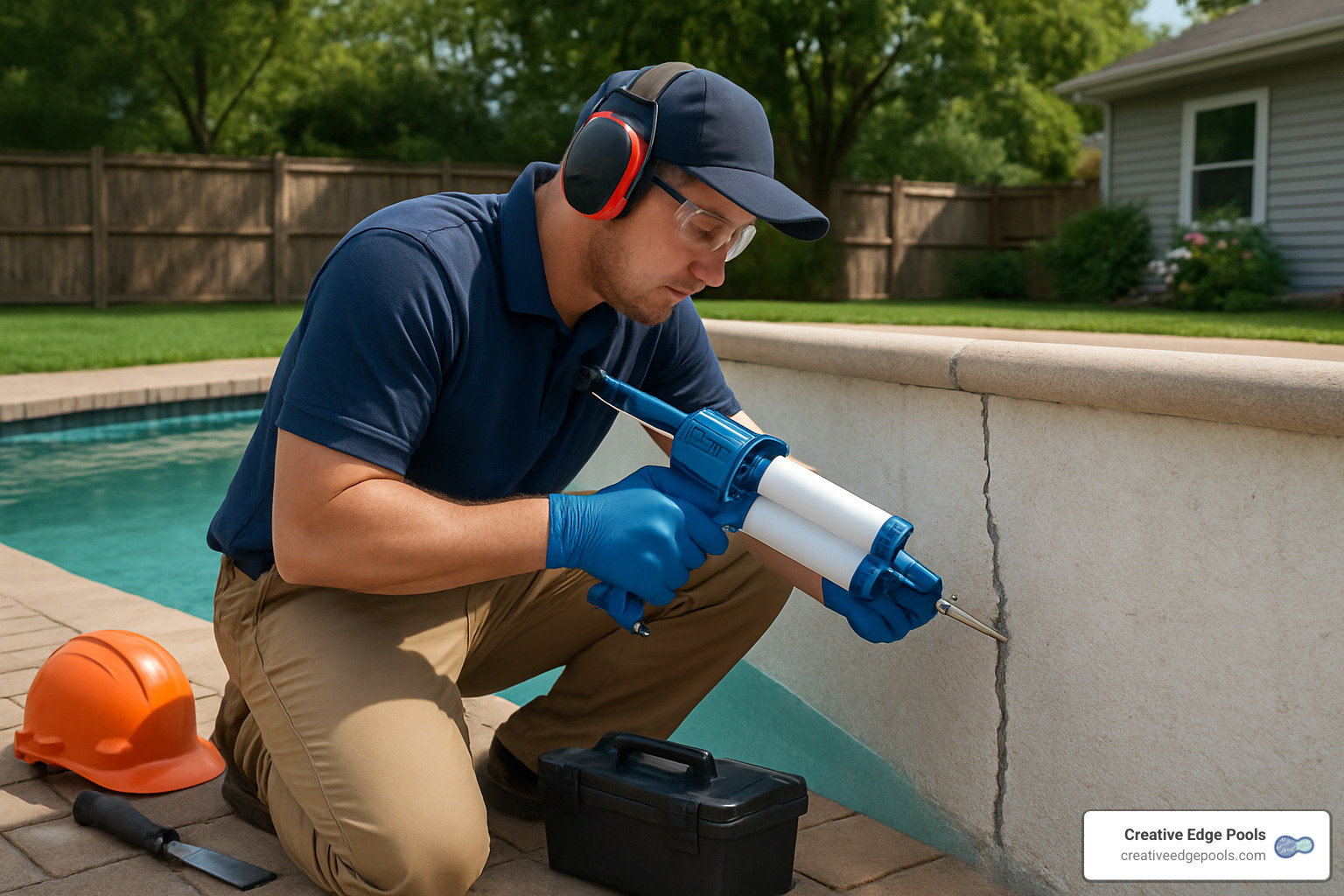
DIY vinyl and epoxy kits from pool supply stores cost $10-$30 and work great for emergency fixes. Think of them as bandaids—they’ll stop a small leak temporarily, but they’re not going to solve the underlying problem. I’ve seen homeowners successfully patch hairline cracks for an entire season using these products.
Safety gear is non-negotiable when attempting DIY repairs. Pool chemicals and repair compounds can be harsh on skin and lungs. Always wear gloves, eye protection, and ensure good ventilation when working with solvents or epoxy.
Underwater sealants offer an appealing option since you don’t have to drain your pool. These products can be applied while swimming, saving you the $400-$600 drain and refill cost. However, there’s a catch—without proper surface preparation, these repairs often fail within a year or two.
Professional methods tell a different story. Torque-lock staples cost $1,000-$2,500 but actually reinforce the gunite structure around major cracks. These aren’t just patches—they’re engineered solutions that can extend your pool’s life by decades.
Professional injection systems use specialized equipment that ensures foam or epoxy penetrates deep into cracks. The difference between a $30 DIY injection and a professional job isn’t just the price—it’s the pressure and precision that makes repairs last.
Structural reconstruction represents the heavy-duty end of repairs. When we’re talking about excavation and rebar replacement, you’re looking at serious work that requires engineering knowledge and specialized equipment.
Labor rates for professional pool technicians in Massachusetts and New Hampshire run $65-$120 per hour. That might seem steep, but gunite repair is specialized work. I’ve seen too many DIY attempts that actually made problems worse, turning a $500 repair into a $3,000 nightmare.
For complex underwater repair techniques, check out our specialized guide on Gunite Pool Repair Underwater.
Choosing the Right Contractor for gunite pool crack repair cost
Finding the right contractor for your gunite pool crack repair cost can make the difference between a repair that lasts decades and one that fails next season.
Licensing and insurance aren’t just paperwork—they’re your protection. In Massachusetts, pool contractors need a CSL (Construction Supervisor License). Always verify current licenses and make sure they carry at least $1 million in liability coverage. A contractor who balks at showing you their insurance certificate is one to avoid.
Experience with gunite matters more than you might think. Gunite has unique properties that differ from other pool materials. Ask potential contractors for references on similar repairs, and don’t be shy about calling those references. A contractor who’s been successfully repairing gunite pools for years will be happy to share customer contacts.
Timeline and scope discussions should result in detailed written estimates. Vague proposals like “fix pool crack – $800” are red flags. You want to see exactly what work they’ll perform, what materials they’ll use, and how long it will take. Extremely low estimates often indicate poor quality work or contractors who plan to hit you with change orders later.
Written warranties separate professional contractors from fly-by-night operators. Reputable contractors offer 5-10 year warranties on structural repairs and will put those terms in writing. If a contractor won’t warranty their work, that tells you something about their confidence in the repair.
Getting multiple quotes from at least three qualified contractors gives you perspective on both pricing and approach. The cheapest bid isn’t always the best value—sometimes that low-ball estimate means corners will be cut or inferior materials used.
For comprehensive renovation services beyond crack repair, explore our Gunite Pool Renovations offerings.
Maintenance Tips to Prevent Future Cracks
Balanced Chemistry: Test water weekly and maintain pH between 7.2-7.6. Acidic water literally dissolves gunite over time.
Weekly Brushing: Brush walls and floor weekly to prevent algae buildup that can hide developing cracks.
Winterization: Proper winterization prevents freeze damage. Never leave a gunite pool empty during freezing weather without professional guidance.
Deck Drainage Control: Ensure deck drains direct water away from the pool structure. Standing water can cause soil movement.
Scheduled Inspections: Annual professional inspections catch problems early when repairs are cheaper.
Long-Term Lifespan of a Repaired Gunite Pool
10-Plus-Year Durability: Properly repaired gunite pools can last decades. We’ve seen well-maintained pools from the 1960s still going strong.
Resurfacing Schedule: Plan for resurfacing every 10-15 years at $6,000-$15,000. This maintains both appearance and structural integrity.
Monitoring Repaired Areas: Keep photos of repairs and check them seasonally for any changes.
Record-Keeping: Maintain records of all repairs, chemical logs, and maintenance. This helps identify patterns and aids future contractors.
Frequently Asked Questions about Gunite Pool Crack Repair Cost
How much does gunite pool crack repair cost in New England?
Here in Massachusetts and New Hampshire, you’ll pay a bit more than folks in warmer climates. Gunite pool crack repair cost runs about 10-20% higher than national averages, and there’s good reason for that.
Our brutal winters and clay-heavy soils create unique challenges that require specialized knowledge. A small crack that might cost $100 to fix in Florida will run you $150-$300 here because we need materials that can handle freeze-thaw cycles. Major structural repairs? You’re looking at $5,000-$8,000 instead of the $4,000-$6,000 you might see elsewhere.
Labor costs are higher too—skilled pool technicians who understand New England conditions charge $65-$120 per hour. But trust me, it’s worth paying for someone who knows how to work with our challenging climate. I’ve seen too many “bargain” repairs fail after the first hard winter.
Can homeowners insurance help pay for crack repairs?
This is probably the question I get most often, and the answer is… it depends. Insurance can be your friend, but only in specific situations.
If a tree falls on your pool or a storm causes sudden damage, you’ll likely have coverage. I’ve seen homeowners get $15,000+ covered for storm damage repairs. But here’s the catch—normal wear and tear doesn’t count. That crack that developed slowly over five years? You’re probably on your own.
Always file a claim for sudden damage, even if you’re not sure it’s covered. The worst they can say is no. And here’s a tip: even if they won’t cover the pool repair itself, some policies will cover water damage to your basement or foundation if a pool leak causes problems.
Keep good records of your pool maintenance. Insurance companies love to see that you’ve been taking care of your investment properly.
How long will a professional gunite crack repair last?
When we do a repair right, it should outlast you and probably your kids too. A properly executed structural repair can last the entire lifetime of your pool—we’re talking 50+ years if the underlying issues are addressed.
Injection foam repairs typically give you 10-20 years of worry-free swimming. The expandable foam creates a flexible seal that moves with your pool as the ground shifts through our seasonal changes.
Full structural repairs with proper rebar work and gunite reconstruction? Those should be permanent. We warranty our structural work for 10 years, but honestly, most last much longer than that.
The secret isn’t just fixing the crack—it’s figuring out why it happened in the first place. Poor drainage, soil movement, or chemical imbalance will just create new cracks if you don’t address the root cause. That’s why we always look at the whole picture, not just the visible damage.
I’ve worked on pools that were repaired 30 years ago and are still going strong. The key is using quality materials designed for our New England climate and having the work done by someone who understands gunite.
Conclusion
Your pool is more than just a backyard feature—it’s where memories are made. Understanding gunite pool crack repair cost helps you protect that investment and keep your family enjoying crystal-clear water for decades to come.
The math is simple: a small crack that costs $200 to fix today can easily become a $6,000 structural nightmare if you wait. We’ve seen it happen countless times over our 30+ years in the business. The homeowner who calls us about a “tiny crack” in March often faces major repairs by summer if they don’t act quickly.
The key numbers to remember: Most professional repairs run $75-$125 per linear foot, but hidden costs like draining, refilling, and permits can double your initial estimate. Professional repairs last decades longer than DIY fixes, making them the smart financial choice for anything beyond surface-level damage.
Here’s what really matters—prevention beats repair every single time. Balanced water chemistry, proper winterization, and annual inspections cost a fraction of what you’ll spend fixing neglected problems. Think of it as insurance for your backyard oasis.
At Creative Edge Pools, we’re a family-owned business that’s been helping Eastern Massachusetts and Southern New Hampshire homeowners steer these exact challenges since the early 1990s. We understand how New England’s freeze-thaw cycles and clay soils create unique stresses on gunite pools. More importantly, we know how to fix them right the first time.
Every crack tells a story about what’s happening with your pool’s structure, soil conditions, and maintenance history. Cookie-cutter solutions don’t work because every situation is different. That’s why we always start with a thorough assessment before recommending any repairs.
Ready to get your pool back to perfect condition? Don’t let a small problem become a big expense. Contact us for a personalized assessment and repair quote. We’ll explain exactly what’s wrong, what needs fixing, and what it will honestly cost—no surprises, no pressure, just straight answers from people who’ve been doing this work for three decades.
Your pool has given your family years of enjoyment. Let us help you get many more years out of your investment. For more information about our comprehensive services, visit our More info about gunite pool installation services page.
