
Vinyl Pool Patch Glue: Best 2025 Solutions
Why Quick Repairs Save Your Pool and Wallet
Vinyl pool patch glue is your first defense against costly water loss and equipment damage from liner tears or punctures. Here are some top-rated solutions for immediate repairs:
- Solvent-Based Vinyl Cement – Industry-leading waterproof adhesive that bonds stronger than the liner itself
- Underwater Adhesive Kits – Works wet, dry, or completely submerged with adhesive and patch material
- Self-Adhesive Clear Patches – No-glue peel-and-stick solution for quick emergency repairs
- Vinyl Adhesive with Applicator – Comes in a can with a brush applicator for precise application
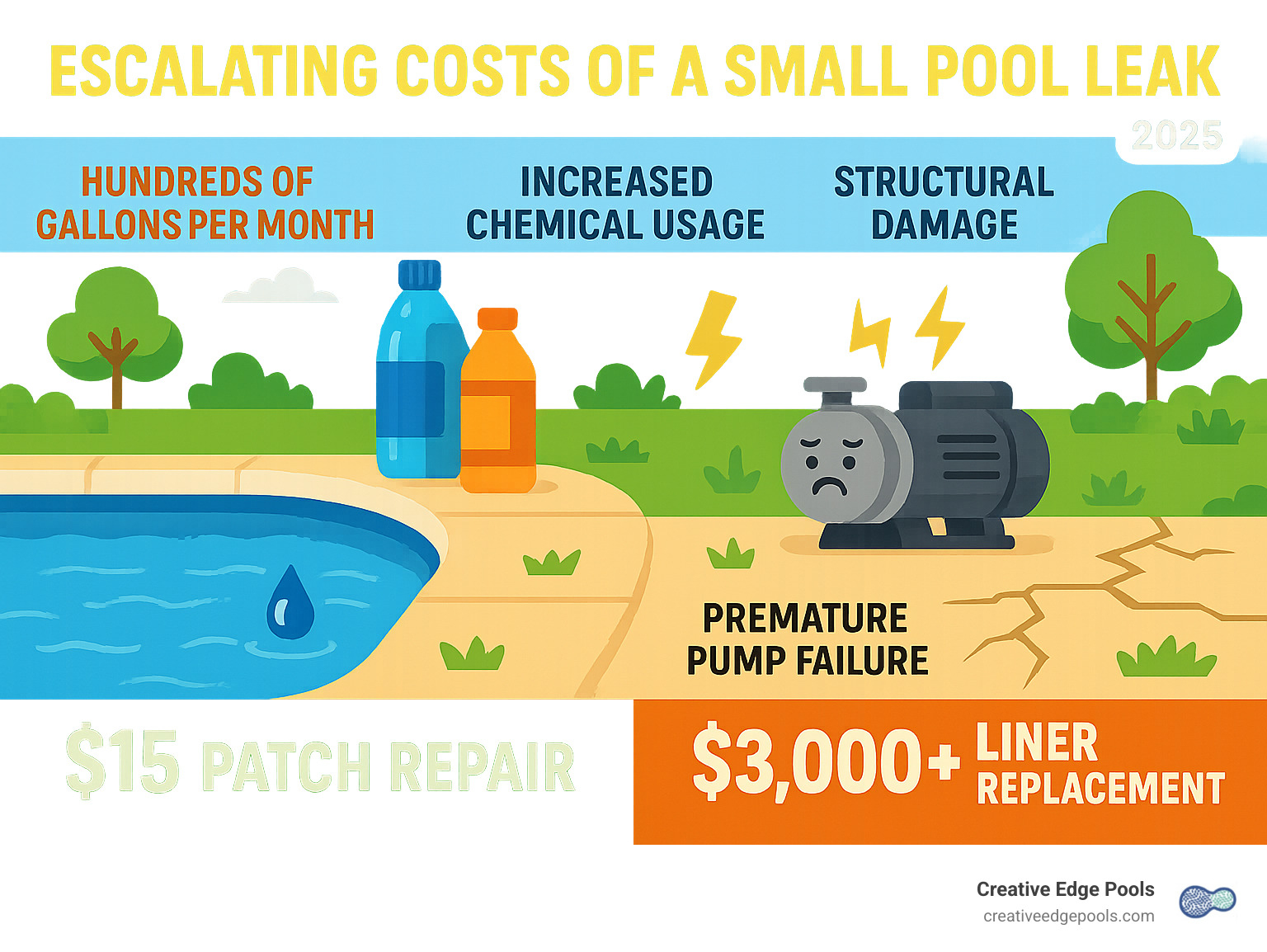
Pool leaks waste water, over-tax equipment, and can cause long-term damage to your yard or foundation. A small leak forces your pump to work overtime and unbalances your water chemistry, leading to higher costs.
The good news is most vinyl liner tears can be permanently fixed in minutes. Whether it’s an above-water or underwater repair, modern vinyl cements create bonds that often outlast the liner itself.
I’m David Brabant, owner of Creative Edge Pools. With over thirty years of experience in Massachusetts and New Hampshire, I’ve seen DIY vinyl pool patch glue repairs last for decades. I’ll guide you through choosing and applying the right adhesive for lasting results. Follow us on Facebook for more pool maintenance tips.
Vinyl pool patch glue vocab explained:
Your Complete Guide to Vinyl Pool Patch Glue
Spotting a tear in your pool liner can be overwhelming, but with the right vinyl pool patch glue, most repairs are straightforward. After three decades helping pool owners in Eastern Massachusetts and Southern New Hampshire, I know that understanding your adhesive options is key to a lasting repair.
Understanding the Types of Adhesives
Not all vinyl pool patch glue products are equal, and choosing the wrong one can mean redoing the job. Let’s review the main types so you can pick the right one.
Solvent-based vinyl cements are the workhorses of pool repairs. They create a chemical bond by slightly dissolving the vinyl. As the solvent evaporates, it leaves a connection that’s often stronger than the original liner. These cements are waterproof and highly resistant to UV rays, chemicals, and temperature changes.
Self-adhesive patches are ideal for quick fixes, especially for underwater leaks where you don’t want to drain the pool. These clear vinyl patches come with pre-applied adhesive—just peel and stick. While they may not have the long-term durability of vinyl cement, they create instant watertight seals for most small punctures.
Epoxy putties are sometimes mentioned for pool repairs, but they should be avoided for vinyl liners. They are excellent for concrete or fiberglass but lack the flexibility needed for vinyl, which expands and contracts with temperature.
Here’s how the two main options stack up:
| Feature | Solvent-Based Vinyl Cement | Self-Adhesive Patch |
|---|---|---|
| Strength | Forms chemical bonds stronger than original liner | Good adhesion for small repairs |
| Application | Requires surface prep and careful timing | Simple peel-and-stick process |
| Underwater Use | Many work effectively when submerged | Often designed specifically for underwater application |
| Drying Time | Tacky in minutes, full cure in 24 hours to several days | Instant bond, full strength within hours |
| Best For | Long-term repairs on tears and larger damage | Quick emergency fixes for small holes |
Choosing the Best Vinyl Pool Patch Glue for Your Needs
Selecting the right vinyl pool patch glue is crucial and depends on your specific needs. Here’s what to look for:
A waterproof bond is non-negotiable. The adhesive must maintain its seal under the pressure of moving water.
UV resistance is vital for outdoor pools. The sun can break down inferior adhesives, causing them to yellow and fail. Quality vinyl pool patch glue includes UV stabilizers to keep the repair strong and clear.
Chemical resistance is also important. Pool water contains chlorine and other chemicals that can weaken adhesives. The best vinyl cements are formulated to resist this chemical exposure.
Drying and curing times vary by product. Some become tacky in minutes, but full curing to final strength can take from 24 hours to a week. Understand the difference between “touch dry” and “fully cured” for a successful repair.
Proper storage extends your adhesive’s shelf life. Keep containers sealed tightly in a cool, dry place away from sunlight and check expiration dates. Once opened, products can thicken and cure.
For complex damage or if you’re unsure about your liner’s condition, professional assessment is always wise. More info about professional pool liner repair.
How to Apply a Patch (Dry Method)
The dry method provides the cleanest work area and typically the strongest bond.
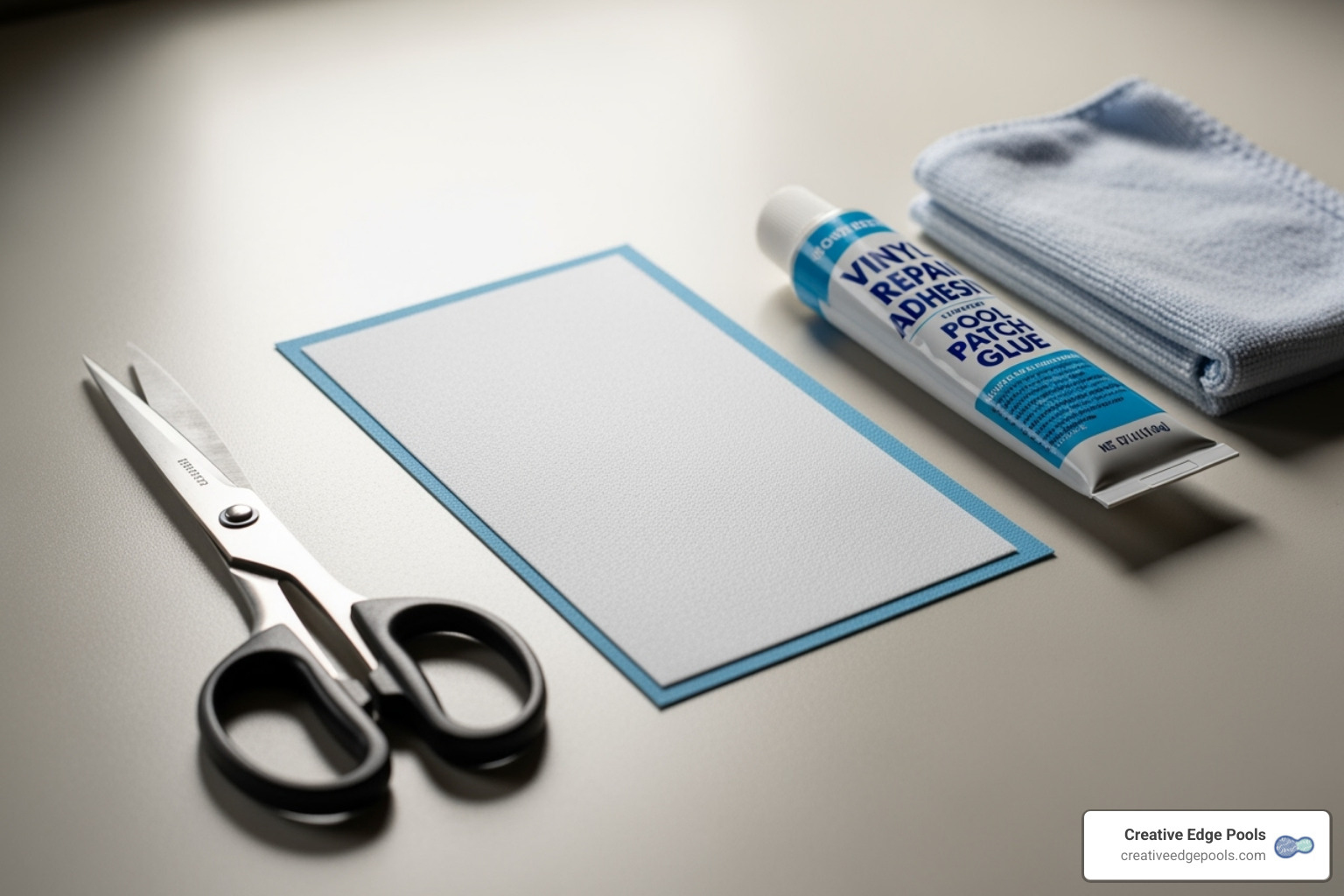
Surface preparation is critical. Lower the water level and clean the area thoroughly with alcohol wipes or vinyl cleaner, extending two inches beyond the tear. For stubborn grime, use mild soap and water, then rinse and dry completely. A light scuff with fine sandpaper can improve adhesion on glossy liners.
Cutting your patch should be done with precision. Use matching liner material or clear vinyl from a kit. The patch should extend at least two inches beyond the tear on all sides. Pro tip: Always round the corners of your patch. Sharp corners can catch and peel, while rounded edges stay secure.
Applying the adhesive depends on the product. For solvent-based cements, apply a thin, even coat to both the patch and the liner. A thin layer bonds better. Let the adhesive become tacky (about three minutes) before positioning the patch to allow for a stronger immediate bond.
Pressing and curing require patience. Position the patch and apply firm pressure from the center outward to squeeze out air bubbles. Wipe away excess adhesive before it sets. Wait at least an hour before disturbing the patch, but allow 24 to 48 hours for a strong bond. Full cure strength can take up to a week.
Mastering the Underwater Repair
Draining your pool isn’t always practical. Fortunately, underwater repairs with the right vinyl pool patch glue can be just as permanent as dry ones.
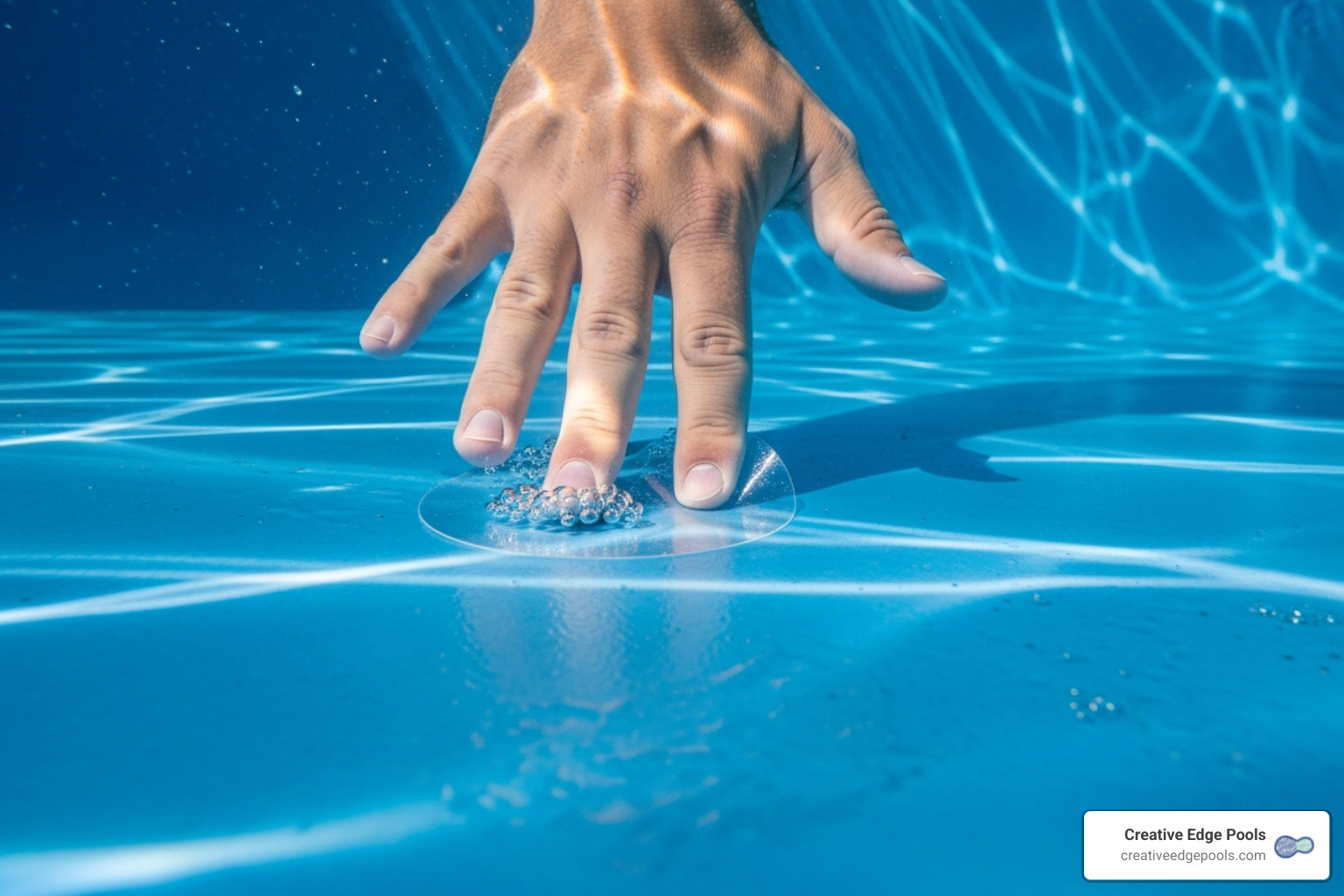
Success depends on technique, as modern adhesives can displace water to create instant bonds.
Preparation begins above water. Use an underwater brush to clean the repair area of algae and debris. Cut your patch with a two-inch overlap and rounded corners. Clear water will make the job much easier.
The folding technique is crucial for liquid adhesives. Apply vinyl pool patch glue to the patch, then fold it over on itself (adhesive sides touching). This protects the glue as you move it into position underwater.
Application underwater requires a steady hand. Wear goggles for visibility. At the leak site, unfold the patch and position it over the damage. Press firmly from the center outward to squeeze out all water from between the patch and liner, allowing the adhesive to bond. Hold pressure for a minute or two.
Squeezing out bubbles is essential for a complete seal. Use your hands or a smoothing tool to push any trapped water to the patch’s edge.
Avoid disturbing the patch for at least 24 hours to allow the bond to strengthen. Full strength may take several days.
Common Mistakes When Using Vinyl Pool Patch Glue
After decades in the business, I’ve seen the same avoidable mistakes repeatedly. Here’s what to watch for:
Improper cleaning is the top cause of patch failure. Sunscreen, oils, and algae prevent a good bond. Always clean the area thoroughly.
Sharp corners on a patch are failure points. They catch on equipment or swimmers and start to peel. Always take the time to round the corners.
Too much adhesive weakens the bond. Thick layers cure slowly and can trap solvents. Apply a thin, even coat for a stronger, cleaner repair.
Insufficient pressure leaves air pockets and weak spots. Press firmly from the center outward to ensure full contact.
Rushing the cure time can break the bond before it reaches full strength. Follow the manufacturer’s guidelines, even if it means waiting.
Wrong patch sizing creates problems. Patches that are too small lack a secure bond, while oversized ones are hard to apply. A two-inch overlap is ideal.
By avoiding these common pitfalls, your vinyl pool patch glue repairs will last for years instead of months. For larger damage that might need professional attention, we’re here to help. More info about inground pool liner replacement.
When a Patch Isn’t Enough
While vinyl pool patch glue is a fantastic solution for many liner issues, sometimes a patch isn’t enough. Knowing when to replace the liner is key to avoiding endless repairs.
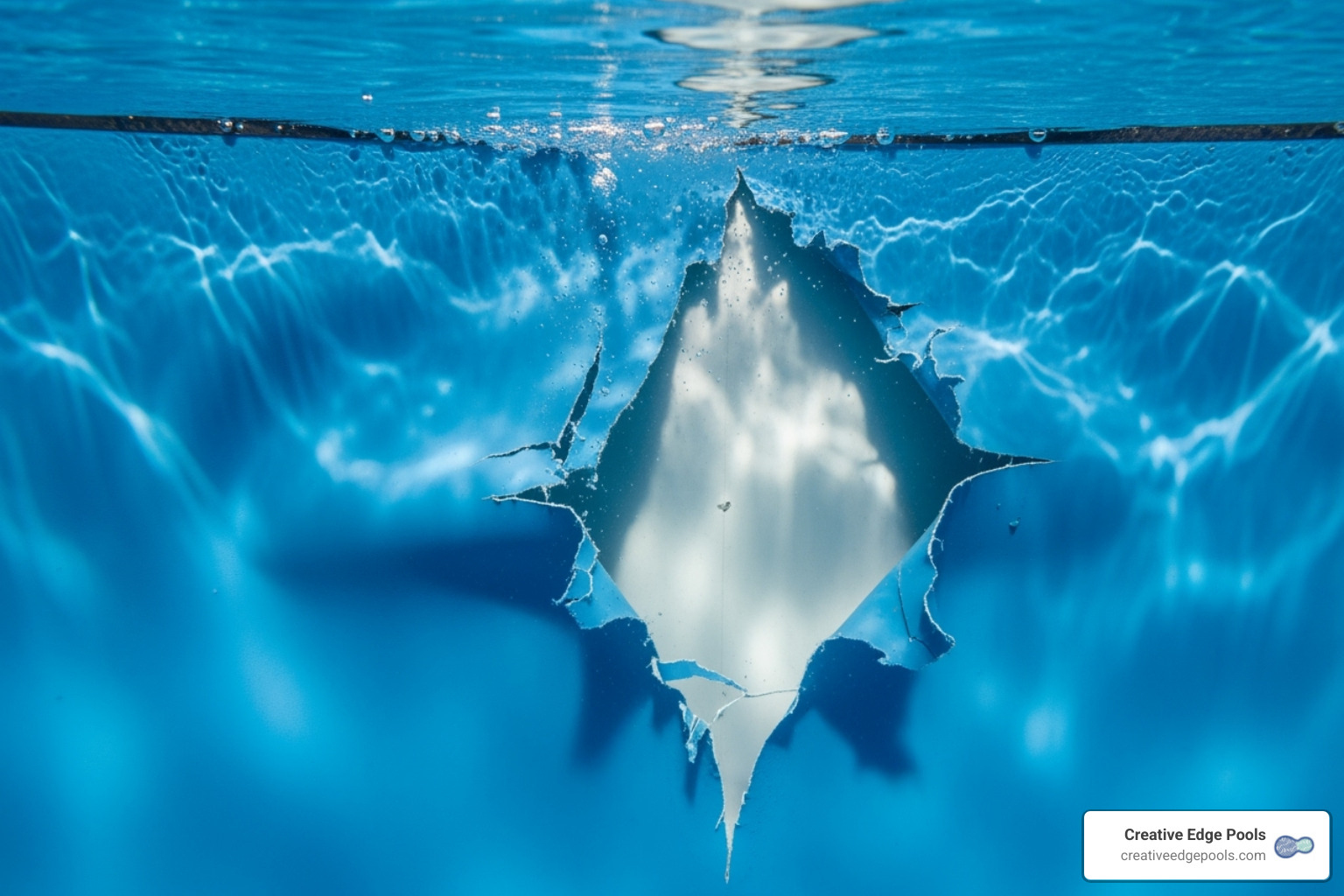
Large tears (over a foot long) are a clear sign a patch won’t suffice. While vinyl pool patch glue works for small tears, attempting to patch extensive damage often fails.
Seam damage is another major challenge. Seams are high-stress, heat-welded zones. A patch can’t replicate the original factory bond, making it a temporary fix at best.
Aging liners also have a limited lifespan. A patch on a new liner can last for decades, but on a liner that is 10-15 years old, pinholes and brittleness are signs of natural aging. At this point, patching becomes a frustrating game of whack-a-mole; as soon as you fix one leak, another appears. The vinyl has simply reached the end of its useful life.
Sometimes, a tear indicates a deeper problem. Structural issues like ground settling or sharp objects under the liner can cause repeated tears in the same spot. No amount of vinyl pool patch glue will solve these underlying causes.
Finally, consider repair longevity and aesthetics. A large or messy patch can be an eyesore. At Creative Edge Pools, our professional assessment can help families in Eastern Massachusetts and Southern New Hampshire decide if a simple fix is enough or if it’s time for a new liner.
Choosing between a $15 patch and a liner replacement is about enjoying your pool without worrying about the next leak. When DIY isn’t enough, explore our professional pool liner repair kit vinyl services. We’re here to help you make the best decision for your pool and your peace of mind.
