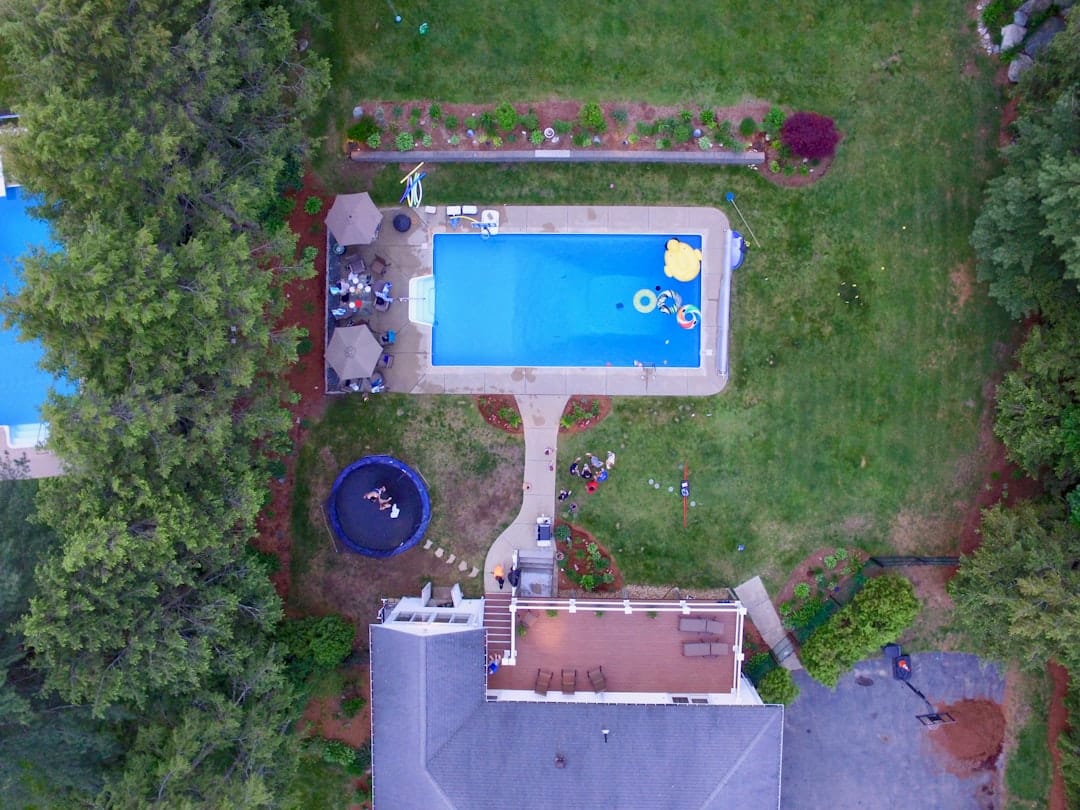
Why Understanding the True Investment Matters
The average cost of an inground pool installation in Eastern Massachusetts and Southern New Hampshire ranges from $70,000 to $180,000 depending on material choice, size, features, and site conditions. Here’s what influences that number:
Quick Cost Breakdown:
- Fiberglass pools: $55,000 – $120,000 (faster install, limited shapes)
- Gunite/concrete pools: $90,000 – $180,000+ (fully custom, maximum durability)
- Site preparation: $5,000 – $25,000+ (access, soil, retaining walls)
- Essential features: $15,000 – $40,000 (heating, decking, fencing, permits)
- Annual maintenance: $1,500 – $3,500 (chemicals, utilities, opening/closing)
Thinking about installing an inground pool at your home? You’re not alone. With New England’s warm summers and a growing desire for private outdoor retreats, more homeowners are investing in backyard changes. But here’s the challenge: most online cost guides offer national averages that don’t reflect the realities of building in our region.
The truth is, your property’s unique characteristics—from rocky New England soil to local building codes—play a massive role in your final investment. A pool built on flat, accessible terrain in Southern New Hampshire will cost significantly less than one requiring extensive excavation and retaining walls on a sloped lot in Eastern Massachusetts.
This guide cuts through the generic advice. We’ll walk you through the real factors that determine your pool’s cost, from material selection and site preparation to the hidden expenses many contractors don’t mention upfront. Whether you’re drawn to the quick installation of fiberglass or the unlimited design possibilities of gunite, you’ll learn what to budget for a complete backyard environment—not just the pool itself.
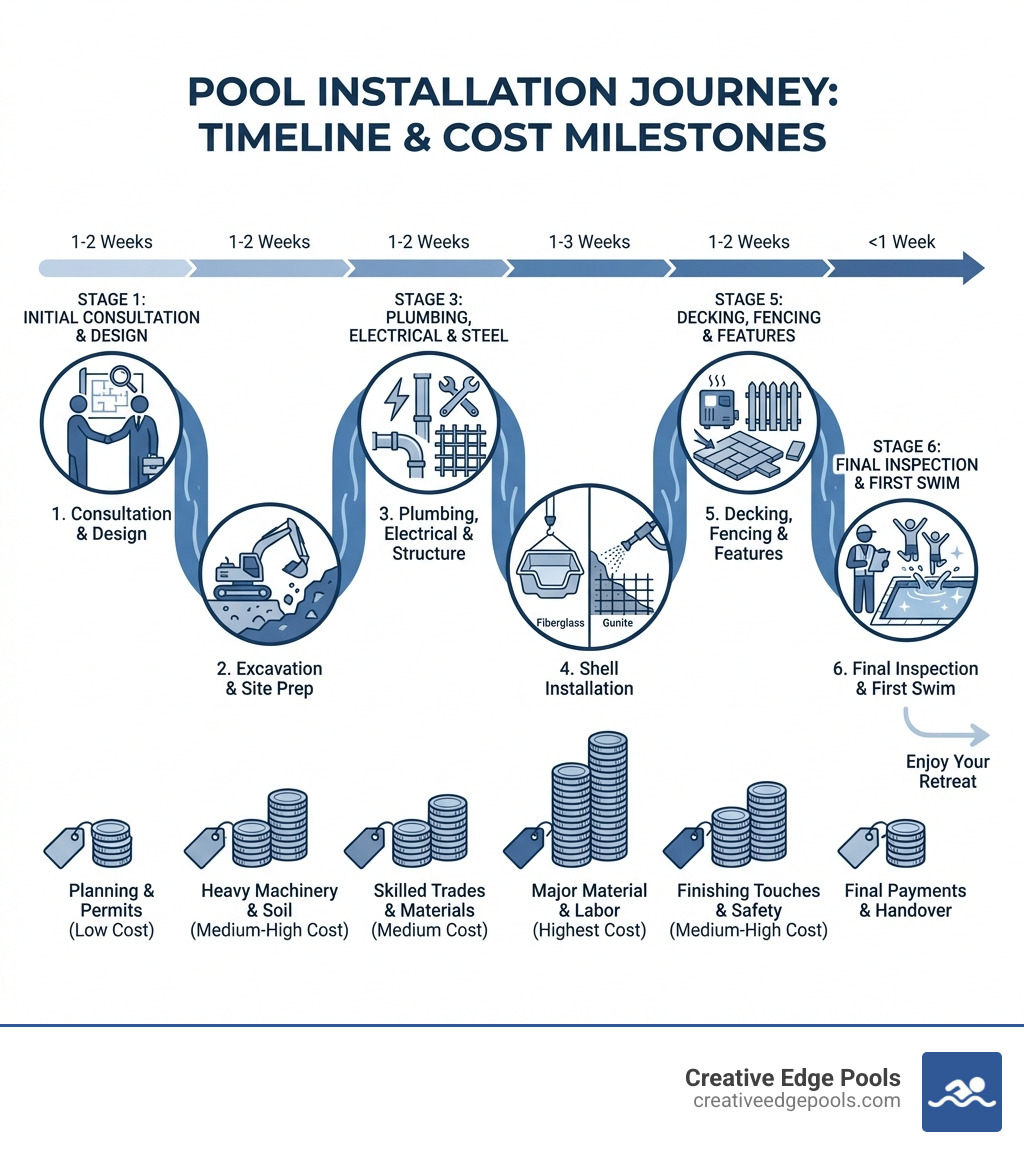
Breaking Down the Average Cost of an Inground Pool Installation
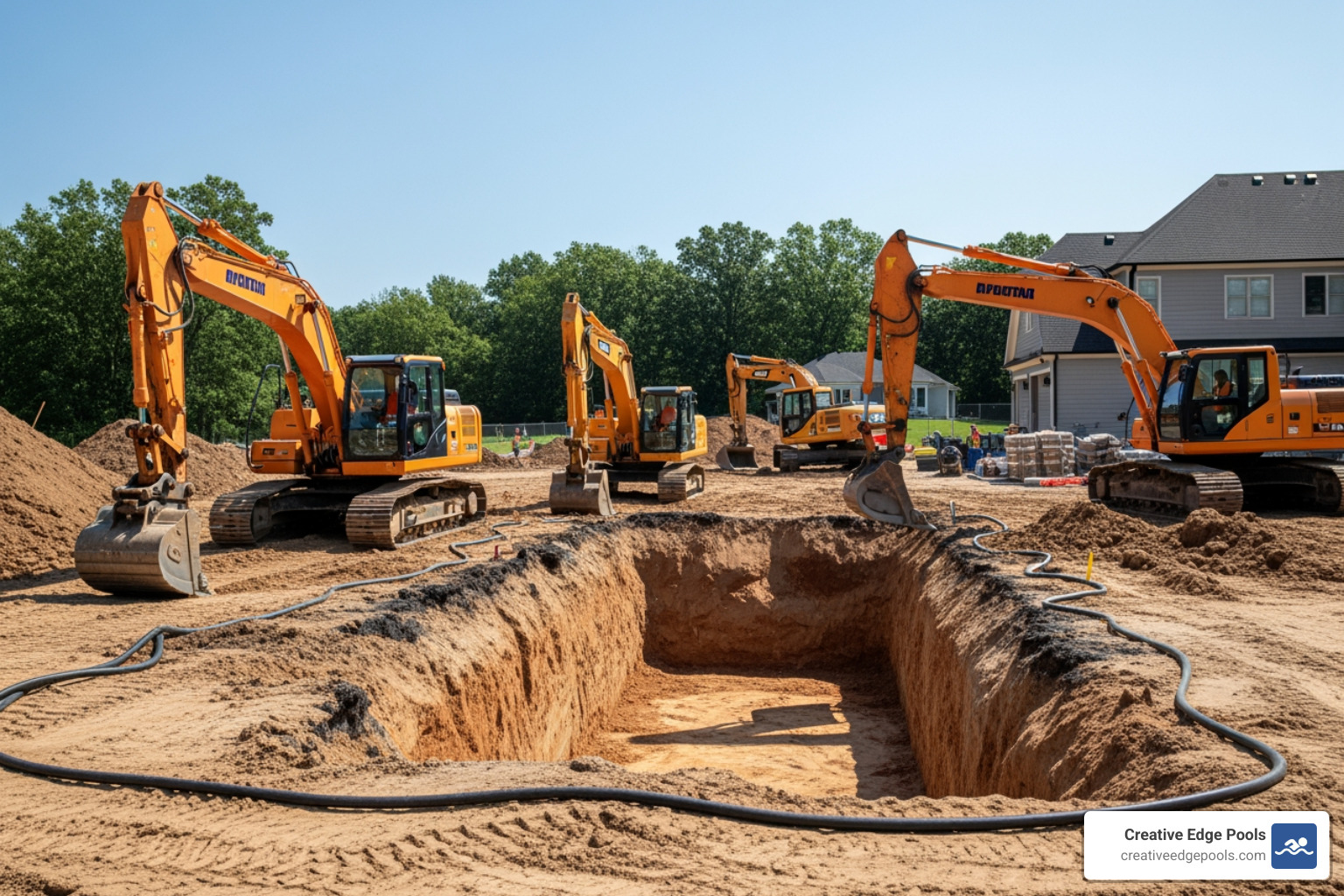
When we talk about the average cost of an inground pool installation, it’s crucial to understand that “average” is a broad term. While national averages for inground pools might hover around $62,500, with ranges from $25,000 to $100,000, these figures often don’t account for specific regional nuances. In our area of Eastern Massachusetts and Southern New Hampshire, the costs tend to be higher due to factors like labor rates, material availability, and the unique challenges presented by our New England landscape.
For instance, the overall cost of installing an inground swimming pool in Canada ranges between $60,000 and $120,000, with larger projects climbing beyond $150,000. Our local market in MA and NH often sees similar or even higher price points, particularly for custom projects. In 2025, Canadian pool installation costs were estimated at $175 to $300 per square foot, depending on materials and local labor. This gives us a good benchmark for understanding the per-square-foot investment you might face here.
Labor costs are a significant component, fluctuating based on demand and the specialized skills required for excavation, plumbing, electrical work, and construction. Material inflation, which we’ve certainly seen in recent years, also plays a role, driving up the price of everything from steel and concrete to filtration systems and decking materials.
To give you a clearer picture, here’s a table comparing the base installation costs for the most popular inground pool types we work with in our region:
| Pool Type | Average Base Installation Cost (MA & NH) | Cost per Square Foot (Estimated) | Typical Installation Time |
|---|---|---|---|
| Fiberglass Pool | $55,000 – $120,000 | $200 – $275 | 1-2 weeks |
| Gunite/Concrete Pool | $90,000 – $180,000+ | $250 – $300+ | 6-8 weeks |
These are starting points. Many elements can increase these figures, which we’ll explore in detail below.
Material Selection: Fiberglass and Gunite Price Points
The choice of pool material is perhaps the single biggest determinant of your inground pool’s initial cost, long-term maintenance, and overall aesthetic. In our service areas of Eastern MA and Southern NH, homeowners typically choose between fiberglass and gunite (a type of concrete) pools. Each offers distinct advantages and price points.
Fiberglass pools, with costs ranging from $55,000 to $120,000, are pre-manufactured shells that are delivered to your site and dropped into the excavated hole. This streamlined process often leads to quicker installation times, typically 1-2 weeks. While fiberglass offers a smooth, non-porous surface that resists algae, it comes with limitations in terms of shape and size customization. You’re choosing from existing molds, which means less flexibility for unique backyard designs.
Gunite pools, on the other hand, offer unparalleled customization. With prices generally starting around $90,000 and easily exceeding $180,000 for elaborate designs, gunite allows us to build a pool of virtually any shape, size, or depth imaginable. This material is sprayed over a rebar framework, allowing for artistic freedom in design and integration with your landscape. This bespoke approach means a longer construction timeline, usually 6-8 weeks, but the result is a truly unique backyard oasis.
The Average Cost of an Inground Pool Installation by Material
The difference in initial cost often boils down to the manufacturing and installation process. For fiberglass pools, a significant portion of the cost is tied to the fabrication and delivery of the shell itself. Once on site, installation is relatively fast. This makes them a compelling option for those seeking a quicker path to poolside enjoyment.
Gunite pools, however, involve a more labor-intensive construction process. The “gunite premium” reflects the skilled craftsmanship required to form, spray, and finish the concrete shell on-site. This includes the cost of specialized equipment and experienced crews. While the upfront investment is higher, the design flexibility and robust nature of gunite often justify the cost for homeowners envisioning a truly custom pool that will last for decades. Gunite pools are known for their structural strength, which is particularly important given New England’s varying ground conditions.
Maintenance Trade-offs and Long-term Material Costs
Beyond the initial build, the choice of material significantly impacts your long-term ownership costs.
Fiberglass pools are lauded for their low maintenance. Their smooth, non-porous gel coat surface is highly resistant to algae growth, meaning you’ll spend less time scrubbing and potentially less money on chemicals. While durable, a fiberglass pool may need refinishing every 10 years or so, and the shell itself typically lasts 25-30 years.
Gunite pools, while incredibly durable with a lifespan of 50+ years, require more active maintenance. Their porous surface makes them more susceptible to algae, necessitating more frequent cleaning and chemical balancing. Gunite pools also require acid washes every 3 to 5 years (costing $300 to $1,000) and replastering every 10-15 years, which can be a significant expense, ranging from $12,000 to $15,000. This higher long-term maintenance is the trade-off for their best design flexibility and longevity.
Site Preparation and Hidden Installation Factors
The ground beneath your feet can be one of the most unpredictable—and costly—factors in your inground pool project. Before any digging begins, we conduct a thorough site assessment. This is where many “hidden” costs can emerge, especially in the diverse terrain of Eastern MA and Southern NH.
Property access is a major consideration. If your backyard has limited access for heavy machinery, it might require smaller equipment, more manual labor, or even temporary removal of fences or landscaping. This can extend project timelines and significantly increase labor expenses. Imagine trying to maneuver an excavator through a narrow gate – it’s doable, but it takes more time and precision.
Soil conditions are another critical element. Our region can present anything from soft loam to stubborn clay to hard, rocky soil. Excavating solid rock, for instance, requires specialized equipment like rock hammers, which are more expensive to operate and can drastically increase the time and cost of excavation. Conversely, sandy or unstable soil might necessitate additional structural reinforcement or specialized backfill materials.
Sloping terrain is beautiful for views but challenging for pool construction. A sloped yard will almost certainly require the construction of retaining walls to create a stable, level pad for your pool. These can be substantial projects in themselves, adding thousands to the overall cost. We’ve seen projects where retaining walls alone cost upwards of $5,000 to $15,000. Furthermore, properties with a high water table, often found near coastal areas or wetlands, will require specialized drainage systems or dewatering techniques during construction, adding complexity and material costs.
Considering these potential challenges, we always recommend budgeting a contingency fund of 10-15% of the total project cost to cover any unforeseen site preparation issues. It’s better to be pleasantly surprised than caught off guard! We also consider how your pool will integrate with existing structures and how best to use your space, including pool deck options that complement your home and landscape.
How Size and Depth Impact the Average Cost of an Inground Pool Installation
It’s a simple truth in pool building: bigger isn’t just better—it’s also more expensive. The size and depth of your inground pool directly correlate with the amount of excavation required, the volume of materials needed, and the labor involved.
Square footage is the most obvious cost driver. A 12×24-foot fiberglass pool, for example, will naturally cost less than a 16×40-foot fiberglass pool simply due to the difference in material and installation scope. For gunite pools, every additional square foot means more rebar, more concrete, and more finishing work.
Pool depth is another significant factor. Deeper pools require considerably more excavation, which translates to longer machine hours and more debris removal. They also demand a more robust, reinforced structure to withstand the increased water pressure. More water means more chemicals, larger filtration systems, and potentially more powerful pumps, all contributing to a higher initial investment and ongoing operational costs. Adding a deep end to your pool can increase the overall installation cost by 15%-25%. If your family doesn’t enjoy diving, opting for a shallower design can be a savvy way to manage costs.
Permits, By-laws, and Utility Requirements
Before we even break ground, there’s a crucial layer of planning involving local regulations. In Eastern MA and Southern NH, every inground pool installation requires adherence to municipal by-laws and obtaining the necessary permits. These aren’t just bureaucratic problems; they’re essential for safety and ensuring your pool is built to code.
Municipal building permits are mandatory and vary in cost by town or city. While we’ve seen permit fees as low as a couple hundred dollars, they can climb significantly depending on the project’s complexity. For example, in Ontario, building permits can start at $206.53+, which is a good indication of what to expect in our region.
Electrical safety inspections are equally vital. All pool-related wiring for pumps, lighting, and features must be installed by licensed electricians and pass inspection. This ensures proper grounding and prevents hazards. Costs for electrical work and inspections typically range from $500 to $1,500, but can be higher depending on the distance from your main panel and the complexity of your chosen features.
Fencing regulations are paramount for pool safety, especially in areas with children and pets. Most municipalities require a 4-sided fence around the pool area, with specific height and gate latch requirements. The cost of fencing can range from $1,000 to $5,000, depending on the material (e.g., aluminum, wood, vinyl) and linear footage.
Beyond these, we also consider utility requirements. Does your pool need a dedicated gas line for a heater? Will existing drainage need to be re-routed? These “unseen” elements are carefully planned and budgeted to ensure a smooth and compliant installation.
Features, Maintenance, and Long-Term ROI
Once the foundation of your pool is set, the real fun begins: customizing your private oasis! This is where your personal style and desired functionality truly take shape, but it’s also where costs can quickly escalate. From basic necessities to luxurious additions, every feature contributes to the overall average cost of an inground pool installation.
Consider sophisticated additions like Automatic Pool Covers, which offer safety, energy efficiency, and convenience. These can range from $18,000 to $30,000. For ultimate control, Pool Automation systems allow you to manage pumps, filters, heaters, and lights from your smartphone, typically costing between $2,000 and $8,000.
Water Features add visual and auditory appeal, with custom waterfalls costing $3,000 to $10,000, deck jets around $800 to $2,000 each, and integrated hot tubs ranging from $7,000 to $25,000. Even essential items like Winter Safety Covers can add $2,500 to $3,800 to your budget. And for those dreaming of architectural marvels, Infinity pool features will naturally command a higher price point due to their complex engineering and construction.
Enhancing the Backyard Environment
A pool is rarely just a pool; it’s the centerpiece of a complete backyard environment. The surrounding elements significantly improve the experience and contribute to the total project cost.
Landscaping budgets can vary wildly, from a few thousand dollars for basic plantings and sod ($3,000 to $5,000) to tens of thousands for elaborate designs with retaining walls, outdoor kitchens, and intricate garden beds. We’ve seen clients invest $10,000 to $30,000 for upgraded pool decking alone, and truly elaborate designs can climb well beyond $100,000.
Pool decking materials and design are crucial for both aesthetics and safety. Options range from basic concrete pavers to premium natural stone, each with different price points. Natural stone or premium tile finishes will drive up prices compared to more basic options.
Lighting systems create ambiance and extend your pool’s usability into the evening. LED lighting systems, which are energy-efficient and offer color-changing capabilities, typically cost $1,500 to $3,000.
Fire features, such as poolside fire pits or fire bowls, add warmth and a touch of luxury, often ranging from $1,500 to $5,000. And an integrated spa provides a soothing retreat, with costs starting around $7,000 and going up to $25,000 depending on size and features.
Ongoing Ownership Expenses and Property Value
Beyond the initial installation, owning an inground pool comes with ongoing expenses that wise homeowners factor into their budget.
Utility bills will see an increase, primarily from running pumps, filters, and heaters. On average, you can expect to spend $700 to $1,500 per season on electricity for these systems. If you opt for a gas heater, that will be an additional cost. Investing in energy-efficient pumps and a good pool cover can help mitigate these expenses.
Insurance premiums will also likely increase. Most homeowners’ insurance policies require an update once a pool is installed, as it’s considered an “attractive nuisance” and increases liability. Expect an annual increase of $150 to $400, but always check with your provider.
Seasonal opening and closing are annual rituals for New England pool owners. While some DIY, many prefer professional services, which can cost $500 to $2,000+ per year. This includes cleaning, chemical balancing, and winterizing the system.
Regular maintenance is key to a pristine pool. This involves chemicals (chlorine, algaecides, pH balancers), which typically run $500 to $1,000 per year. If you opt for professional cleaning services, that can add $1,000 to $2,000 annually, or up to $300 per month during the open season.
Despite these costs, a well-designed and maintained inground pool can offer a significant return on investment (ROI). Studies suggest that an inground pool can increase your home’s overall value by 5% to 7% on average. Furthermore, well-executed landscaping, including pool installation, often provides one of the highest returns on investment compared to other home improvements. The lifestyle value—the joy, relaxation, and entertainment a pool brings—is, for many, priceless.
Here’s a list of factors that increase property ROI when it comes to pools:
- High-quality construction (like gunite)
- Thoughtful, integrated landscaping
- Energy-efficient equipment
- Desirable features (e.g., integrated spa, tasteful lighting)
- Excellent maintenance history
- Compliance with all local codes and safety regulations
Frequently Asked Questions
Is a saltwater pool more expensive than a chlorine pool?
This is a common question, and the answer depends on whether you’re looking at initial setup costs or long-term maintenance.
Initial setup: Saltwater pools have a higher upfront cost. You’ll need to purchase and install a salt chlorine generator, which typically runs between $2,000 and $3,000. This device converts salt into chlorine. Chlorine pools, on the other hand, have a lower initial setup cost for chemical feeders, usually $500 to $1,200.
Chemical savings: Over time, saltwater pools can be more economical. While you’ll buy salt (which is relatively inexpensive), you’ll save on the recurring purchase of traditional chlorine tablets or liquid. This can translate to yearly maintenance savings of $300 to $600 compared to chlorine pools, which often cost $600 to $1,200 annually for chemicals.
Equipment longevity: One consideration for saltwater systems is that salt can be corrosive to some pool materials and equipment over time. While modern systems are designed to minimize this, it’s something to be aware of, as it might lead to more frequent part replacements for certain components.
The choice often comes down to personal preference for water feel (saltwater is gentler on skin and eyes) and your long-term budgeting strategy.
How can homeowners save money on the average cost of an inground pool installation?
While we believe in building your dream pool without compromise, there are smart ways to manage the average cost of an inground pool installation without sacrificing quality or enjoyment:
- Off-season scheduling: Consider planning your installation for the late fall or early spring. During these less busy periods, some contractors may offer discounts on labor charges, potentially saving you 5%-10%.
- Simplified shapes: Custom, freeform shapes for gunite pools are beautiful but require more intricate design and labor. Opting for a more streamlined, classic rectangular or oval shape can reduce material waste and construction time, thus lowering costs. For fiberglass, choosing a standard mold is inherently cost-effective.
- Manual cover options: While automatic pool covers are incredibly convenient and energy-efficient, they are a significant investment ($18,000-$30,000). A high-quality manual safety cover can cost $1,000 to $3,600, saving you $2,000 to $5,000 upfront.
- Phased landscaping: Instead of tackling all your landscaping at once, consider phasing it. Focus on essential elements around the pool initially, then add more elaborate plantings, outdoor kitchens, or additional hardscaping in subsequent years. Sometimes, sourcing decking or fencing through a dedicated company might offer better pricing than bundling everything with the pool installer.
What is the typical return on investment for a pool in today’s market?
An inground pool is undoubtedly a significant investment, but it can offer a valuable return in several ways, particularly in our Eastern MA and Southern NH markets.
Property value increase: On average, an inground pool can increase the overall value of a home by 5% to 7%. This isn’t a guaranteed dollar-for-dollar return, but it does make your home more appealing on the market. In some high-demand neighborhoods, a well-integrated pool can be a key differentiator.
Neighborhood comps: The actual value added often depends on your local real estate market and whether pools are common in your neighborhood. If most homes in your area have pools, adding one can help your property remain competitive. If you’re the only house with a pool, it might appeal to a niche buyer, but the ROI could be less predictable.
Lifestyle value: This is often the most significant, albeit intangible, return. A pool transforms your backyard into a personal resort, offering a space for relaxation, exercise, family fun, and entertaining. The memories created and the convenience of having a vacation spot right outside your door are invaluable. This lifestyle improvement can significantly improve your quality of life at home.
Resale appeal: While not every buyer wants a pool, those who do are often willing to pay a premium. A well-maintained, aesthetically pleasing pool can help your home stand out and potentially sell faster when the time comes.
While the financial ROI is a factor, for many of our clients, the joy and improved lifestyle a pool brings are the primary motivations for this investment.
Conclusion
Understanding the true average cost of an inground pool installation is about far more than just a single number; it’s about appreciating the many factors that contribute to creating a complete, personalized backyard oasis. From the choice between fiberglass and gunite, to the complexities of site preparation in our unique New England landscape, to the ongoing joy and responsibilities of ownership, every detail matters.
At Creative Edge Pools, we pride ourselves on being a family-owned business with over 100 years of combined experience. We specialize in designing, installing, and renovating gunite pools and spas, offering full-service backyard development across Eastern MA and Southern NH. Our focus is always on bringing our homeowners’ visions to life, ensuring transparency and quality every step of the way.
We hope this extensive guide has provided you with a clearer, more realistic understanding of what to expect when considering an inground pool. If you’re ready to explore the possibilities for your home, we’re here to help you steer the journey. For more information and to start planning your dream backyard, visit our inground pool cost page or contact us for a personalized consultation. Let’s create your perfect escape, right in your own backyard.