
Liner Pool Repair: Perfect Guide 2025
Why Pool Liner Damage Happens to Every Pool Owner
Liner pool repair is a common task for pool owners, but the good news is that most small tears can be fixed quickly and affordably.
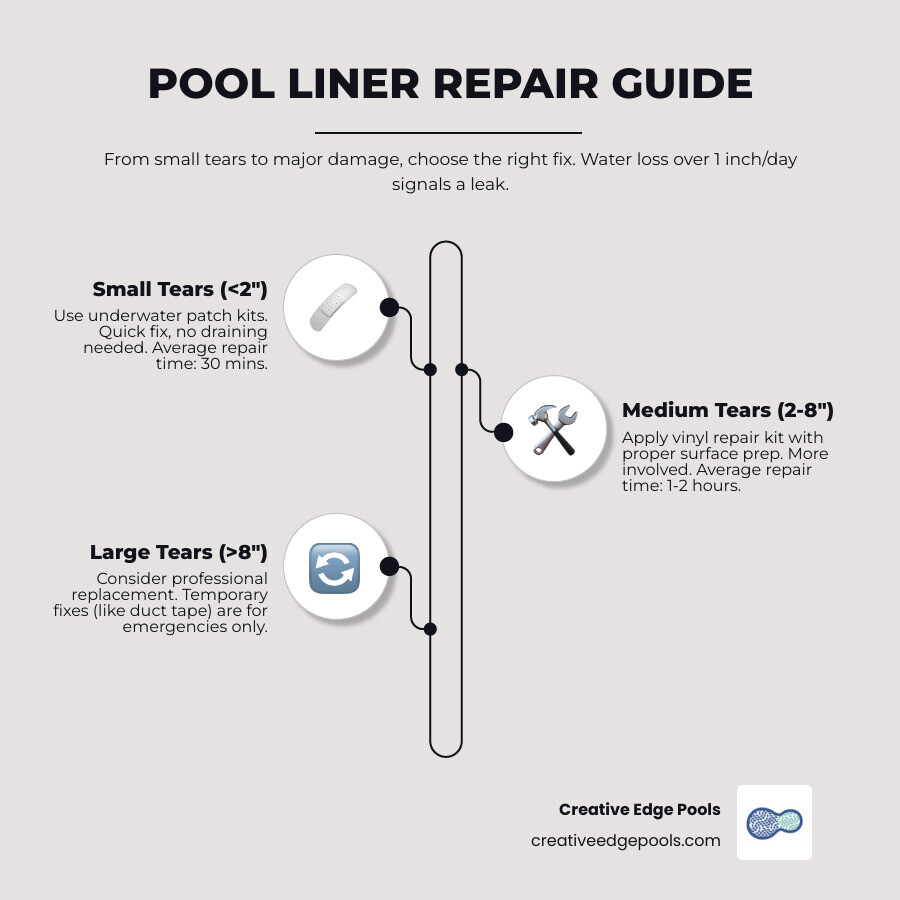
Quick Fix Guide for Pool Liner Repairs:
- Small tears (under 2 inches): Use underwater patch kits.
- Medium tears (2-8 inches): Apply a vinyl repair kit.
- Large tears (over 8 inches): Consider professional replacement.
- Emergency fix: Duct tape works temporarily.
Pool liners are constantly challenged by temperature changes, sharp objects like pool toys or pet claws, and UV rays that make older vinyl brittle.
The most frustrating part? You might not even know you have a leak until your water bill spikes. Pools naturally lose up to an inch of water daily through evaporation, but anything more signals trouble.
Whether it’s a tiny pinhole or a larger rip, the repair approach depends on the damage size and liner age. Most homeowners can handle small repairs themselves, saving hundreds on service calls.
I’m David Brabant, owner of Creative Edge Pools. With over thirty years in the pool industry in Massachusetts and New Hampshire, I’ve helped countless homeowners with liner pool repair. Knowing when to patch versus when to replace is key to saving money and extending your liner’s life.
Learn more about liner pool repair:
The Ultimate Guide to DIY Liner Pool Repair
Finding and fixing a leak in your pool liner can be straightforward. We’ll guide you through confirming the leak, pinpointing its location, and performing a durable liner pool repair.
Signs of a Leak: Is It a Tear or Just Evaporation?
First, confirm you have a leak, not just evaporation. Pools can lose up to an inch of water daily from evaporation; more than that suggests a leak. The most reliable method is the bucket test.
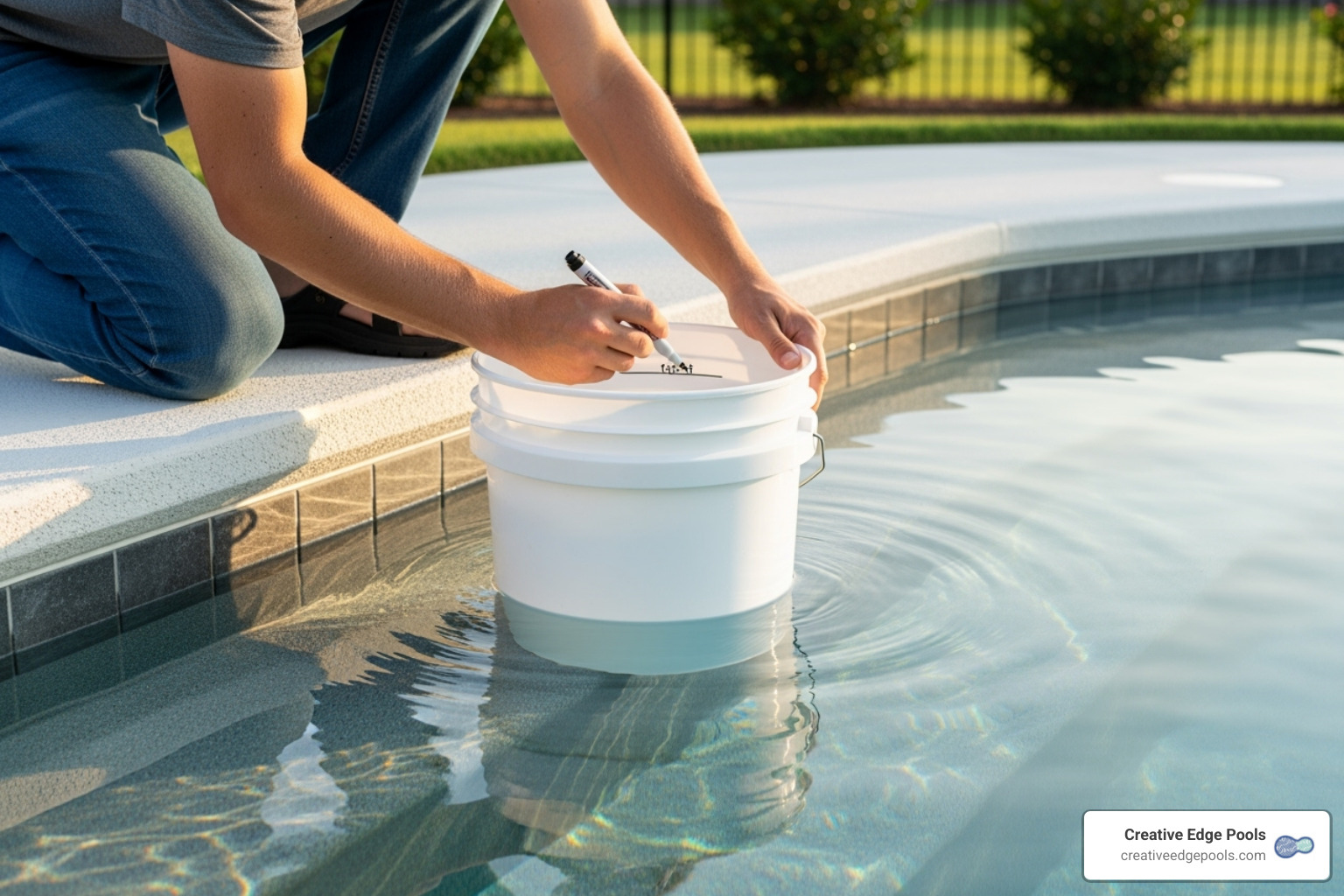
The Bucket Test:
- Place a weighted bucket on a pool step.
- Fill it so the water level inside matches the outside.
- Mark both levels with tape or a marker.
- Turn off the pool pump.
- Wait 24 hours.
- If the pool’s water level dropped more than the bucket’s, you have a leak.
Other signs of a leak include soggy spots in your yard, the liner pulling away from the walls, persistent algae in one area, or bubbles forming on the liner’s surface. A large leak can damage your pool’s structure, and for related issues, learn more about swimming pool rust stain remover.
Finding the Culprit: Pinpointing the Exact Location of the Tear
Once a leak is confirmed, you need to find it. Common causes of tears include sharp objects, UV degradation that makes vinyl brittle, chemical imbalances, pet claws, and simple aging (liners typically last 5-9 years).
Methods for Locating the Leak:
- Visual Inspection: Thoroughly inspect the entire liner, paying close attention to fittings (skimmers, jets, lights), steps, and corners.
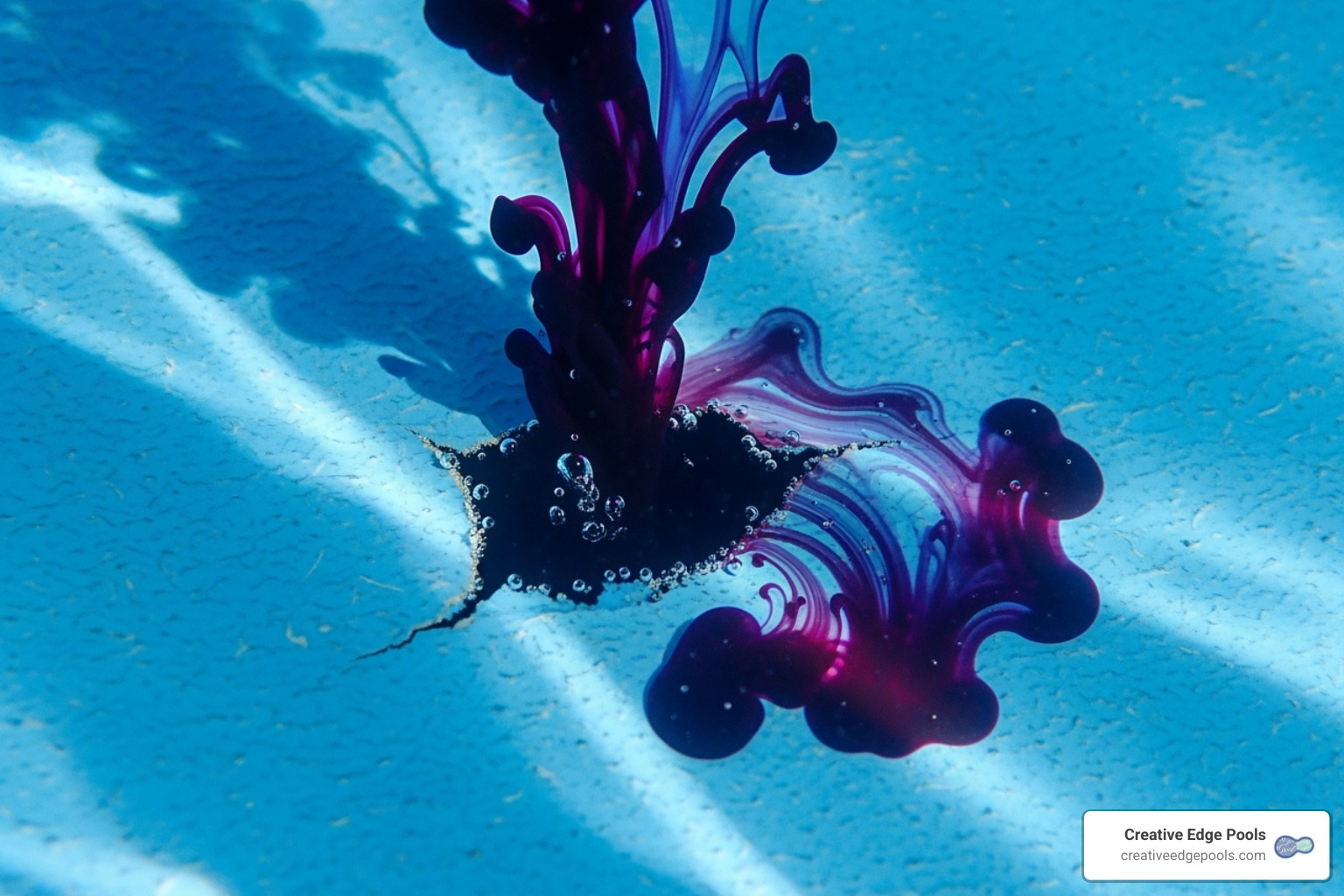
- Food Coloring Method: This is best for small leaks. With the pump off, squirt dark food coloring or leak detection dye near the suspected area. The dye will be pulled into the hole, revealing its exact location.
- Lowering Water Level: If you can’t find the leak, let the water level drop naturally. It will stop at the leak’s level. Caution: Do not drain more than 2 feet of water, as this can cause structural damage. Consult a professional if more draining is needed.
For other maintenance issues, see our guide on how to remove calcium deposits from swimming pool.
The Perfect Patch: Your Step-by-Step Liner Pool Repair Method
Once you’ve located the tear, it’s time for the liner pool repair. Patching can be a durable fix for tears up to 8 inches, but for larger damage, replacement is often better.
Patch Preparation:
- Clean the Area: Use a mild solvent or rubbing alcohol (above water) or a soft brush (underwater).
- Cut Your Patch: Cut the patch at least 2 inches larger than the tear on all sides.
- Round the Corners: This pro tip prevents the patch from snagging and peeling up.
Applying the Patch:
- Above-Water: For dry repairs, apply adhesive to the patch, press it firmly over the tear from the center out, and use a roller to ensure a good seal. Let it cure for at least 12 hours.
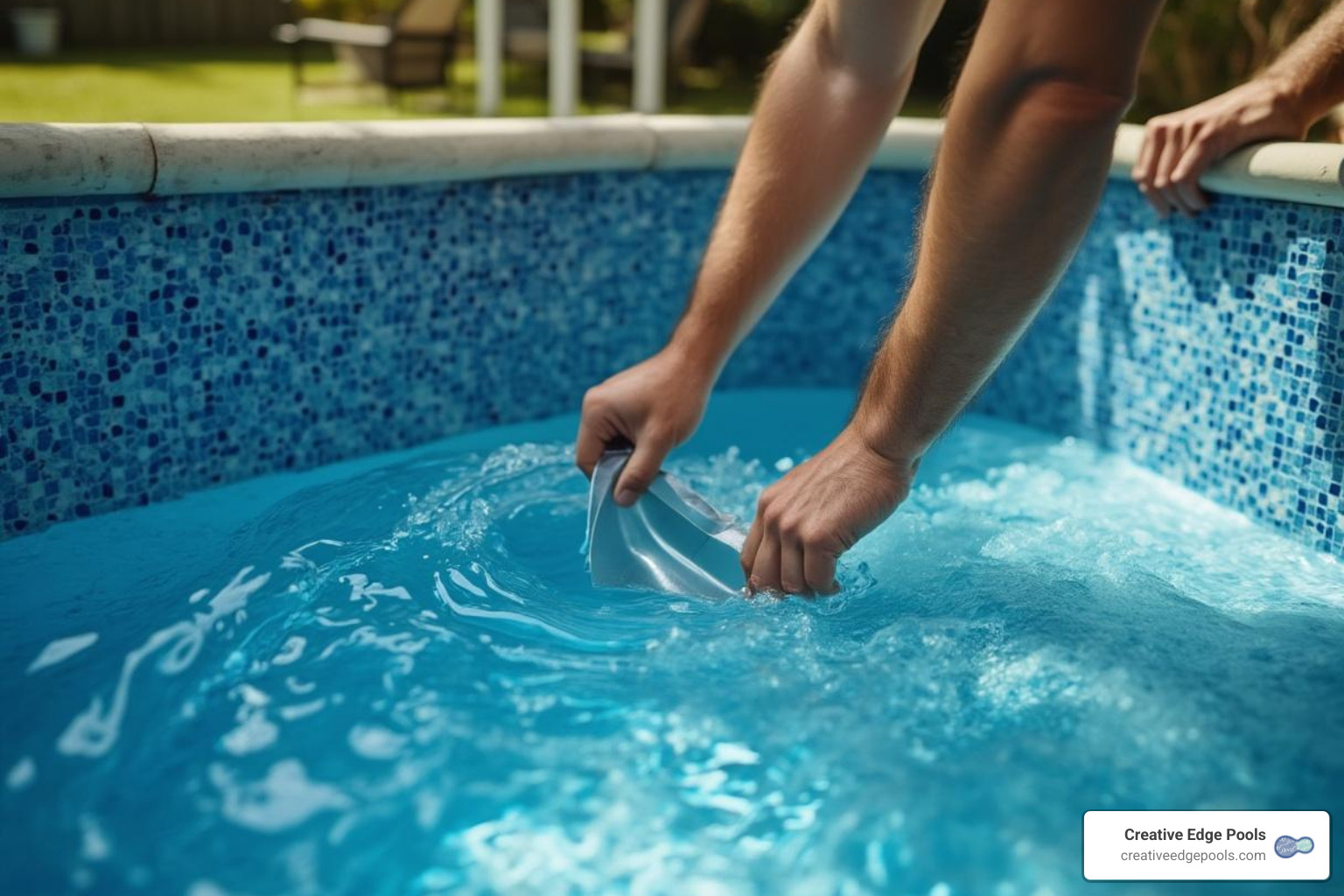
- Underwater: For wet repairs, apply a generous amount of waterproof adhesive to the patch. Fold it in half (glue-to-glue) to protect the adhesive as you go underwater. Unfold it at the tear and apply it immediately, pressing firmly from the center out to remove all water bubbles. If possible, weigh it down for 24 hours.
In an emergency, waterproof tape or duct tape can provide a temporary fix, but they should be replaced with a proper patch kit as soon as possible. While many repairs are DIY-friendly, be aware that poor adhesion, tears in high-stress areas, or improper application can cause the patch to fail.
If you’re dealing with a bigger job, we also offer info about a large pool liner patch.
Repair or Replace? Making the Right Call for Your Pool Liner
Deciding whether to repair a vinyl pool liner or replace it is a balance between cost, effort, and the long-term health of your pool.
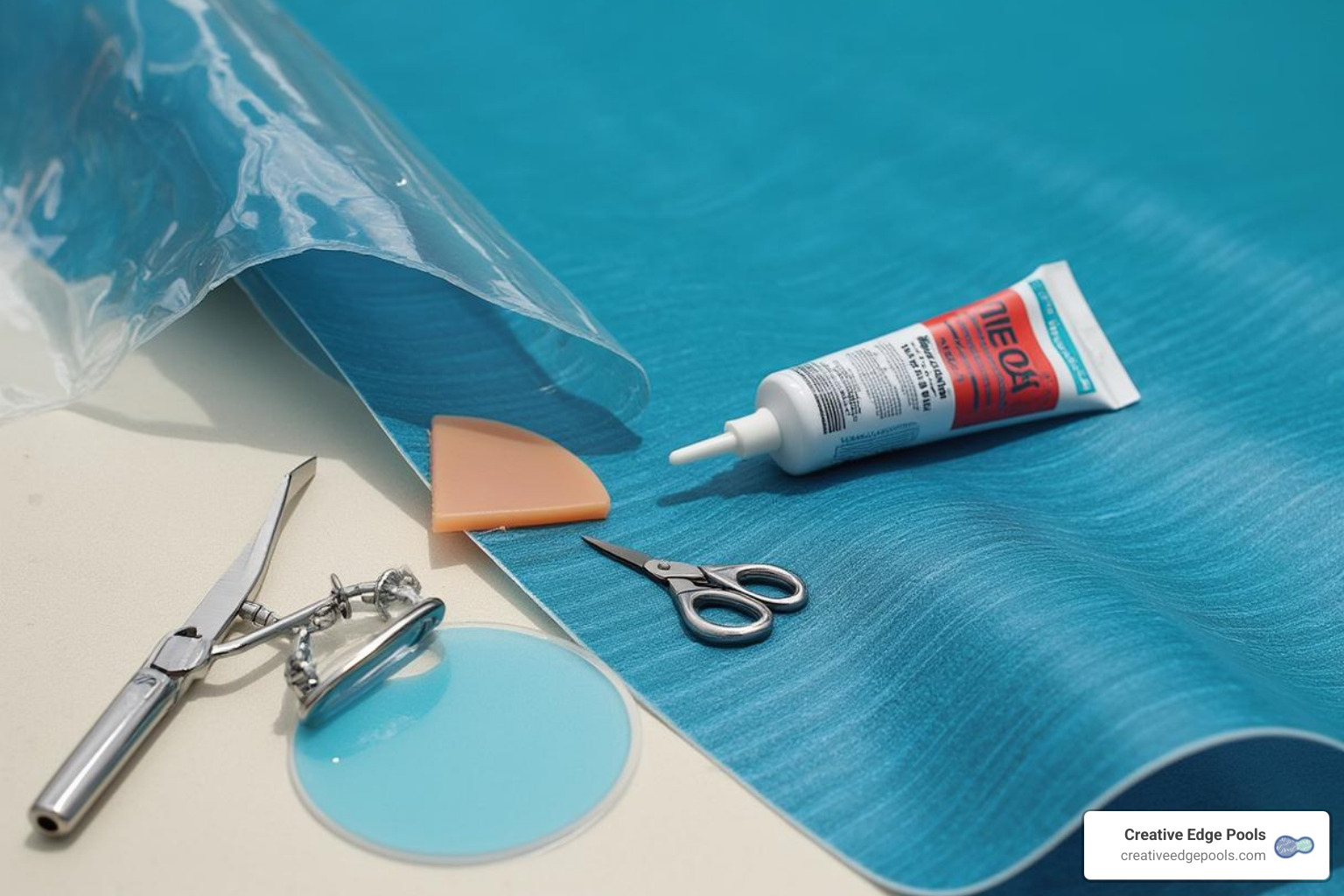
Choosing Your Weapon: Types of Vinyl Pool Liner Repair Kits
When it comes to liner pool repair kits, you have a few options:
- Vinyl and Adhesive Kits: The most common type, designed for both wet and dry repairs. Creates a strong, flexible bond.
- Peel-and-Stick Patches: Quick and easy to apply, but generally less durable. Best for small, temporary fixes.
- Liquid Vinyl Sealant: A liquid compound that fuses tiny pinholes or hairline cracks. Not suitable for larger tears.
For a successful repair, you’ll need your repair kit, sharp scissors, a cleaning agent (like rubbing alcohol), and a roller or flat tool to apply pressure.
The Tipping Point: When to Replace Instead of Repairing
While patching can extend a liner’s life, there comes a point when replacement is the smarter choice. Consider replacement if you notice the following:
- Liner Age: If your liner is approaching or has exceeded its 5-9 year lifespan, it’s time for a new one.
- Brittleness and Fading: A stiff, faded, or brittle liner is failing and will continue to tear.
- Multiple Patches: If your liner already has numerous patches, it indicates widespread weakness.
- Large Tears: Tears larger than 8 inches are difficult to patch reliably.
- Seam Separation: Separating seams are a major structural failure that patches cannot fix.
- Wrinkles and Shrinkage: Significant wrinkling or shrinking often requires professional attention or replacement.
If the liner’s overall condition is poor, replacement is the best choice. Learn more about how to replace vinyl pool liner.
Cost Breakdown: The Financials of Liner Pool Repair vs. Replacement
Understanding the financial implications is key to your decision. Here’s a quick breakdown of the costs for liner pool repair versus replacement.
- DIY Repair Kit: Around $13.
- Professional Repair: $100 to several hundred dollars.
- New Liner (Material Only): $800 – $1,500+.
- Professional Replacement (Total): Averages $4,500, including labor.
Cost Comparison: DIY Repair vs. Professional Replacement
| Factor | DIY Patch Repair (Small Tears) | Professional Liner Replacement |
|---|---|---|
| Cost | ~$13 (repair kit) | $1,000 – $4,500+ (includes liner and installation) |
| Time | 30 minutes – 2 hours (per patch) | 1-3 days (for draining, prep, installation, refilling) |
| Longevity | Temporary to a few years | 5-9 years (typical liner lifespan) |
| Effort | Moderate | High (often best left to pros) |
| DIY Risk | Low | High (improper installation can cause issues) |
| Aesthetics | Patch may be visible | Brand new, smooth liner |
| Long-Term Value | Extends life of existing liner | Renews pool integrity and avoids ongoing repairs |
For a more detailed breakdown of pricing, see our guide on inground pool liner replacement cost.
While DIY liner pool repair is cost-effective for small issues on a newer liner, replacement is often the better long-term value for old, brittle, or extensively damaged liners. At Creative Edge Pools, we provide comprehensive backyard solutions to ensure your pool is in top shape. For a complete backyard solution, contact us today.
Like us on Facebook!
