
Is Changing a Vinyl Pool to Concrete Worth It? Here’s What You Need to Know
Changing vinyl pool to concrete is absolutely possible — and for many homeowners, it’s one of the smartest long-term investments they can make in their property.
Here’s a quick summary before we dive deeper:
- Yes, it can be done. Your existing excavation is reused, but almost everything else — walls, liner, support panels — gets removed and replaced with a steel-reinforced gunite shell.
- Cost range: $50,000–$65,000 for an average-sized pool in the Eastern MA/Southern NH area.
- Timeline: Expect 8–12 weeks from demolition to first swim.
- Lifespan gain: Vinyl liners last 5–9 years. A gunite shell lasts 50+ years.
- Home value: Concrete pools add 5–8% to property value, compared to 3–5% for vinyl.
If you own an inground vinyl liner pool, you already know the cycle. Every several years, you’re facing another liner replacement — another $2,500 to $4,500 out of pocket — with no real improvement to show for it. The pool looks the same. The design options stay limited. And in a New England climate, where frost heave and harsh winters test every material, that thin vinyl membrane becomes a recurring headache.
A full conversion to concrete (gunite or shotcrete) breaks that cycle for good. Instead of patching a system that was designed to be replaced, you’re building a permanent structure — one that can be shaped exactly how you want it, finished with premium materials, and built to handle Massachusetts and New Hampshire winters without flinching.
It’s not a small project. But for homeowners planning to stay in their home long-term — or who want to significantly boost resale value — it changes the equation entirely.
Must-know changing vinyl pool to concrete terms:
Is Changing Vinyl Pool to Concrete Possible? (The Process Explained)
Many homeowners in places like Andover, MA or Nashua, NH are surprised to learn that changing vinyl pool to concrete is a standard, albeit intensive, renovation procedure. While the existing hole in the ground provides a head start, the process is essentially building a brand-new pool inside the footprint of the old one.
The technical process involves stripping the pool down to its barest elements. We remove the old vinyl liner, dismantle the wall panels (which are usually thin steel or polymer), and take out the bracing and coping. What remains is the original excavation. From here, we treat the project like a new Gunite Concrete build.
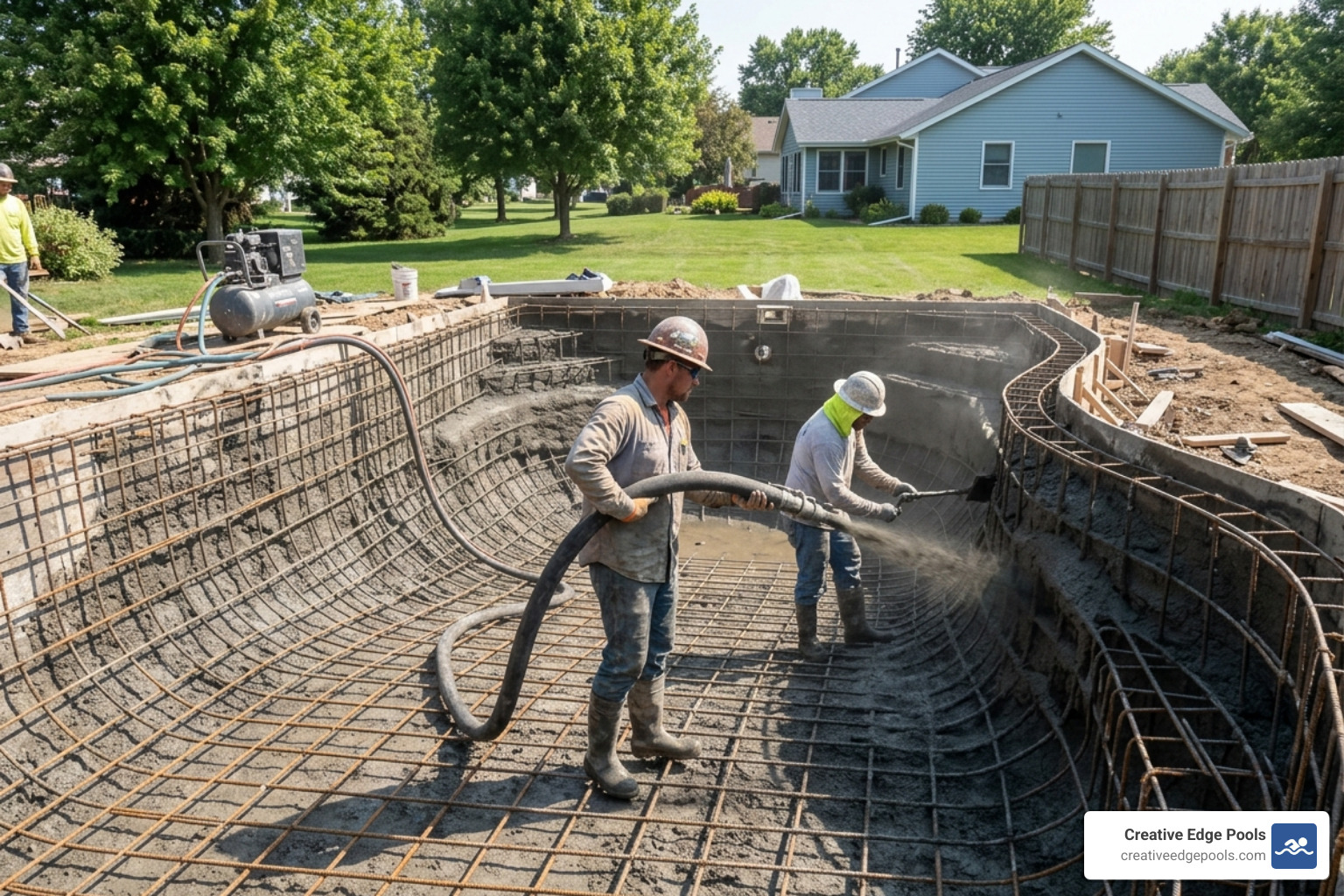
We install a heavy-duty steel rebar cage and then “shoot” the concrete. You may hear the terms “shotcrete” or “gunite” used interchangeably. In our region, gunite is the gold standard. It’s a dry-mix concrete that is mixed with water at the nozzle, allowing for incredible structural integrity and the ability to form complex shapes that vinyl simply cannot achieve.
According to Pool & Spa Marketing, this transformation allows builders to leave a unique “DNA” on the project, turning an “eyesore” into a backyard masterpiece. While some methods, like the Pool in a Pool approach, suggest building inside the existing walls, we typically find that a full removal of the old panels is necessary to ensure the new shell meets strict New England engineering requirements.
Customizing Your Layout When Changing Vinyl Pool to Concrete
One of the most exciting aspects of changing vinyl pool to concrete is that you are no longer restricted by prefabricated wall panels. If your old vinyl pool was a basic rectangle, but you’ve always dreamed of a freeform oasis, now is the time to make that change.
During Gunite Swimming Pool Construction, we can significantly alter the pool’s shape, depth, and features. Common upgrades include:
- Tanning Ledges (Sun Shelves): Shallow areas perfect for lounge chairs and toddlers.
- Beach Entries: A gradual slope into the water that mimics the ocean.
- Built-in Seating and Benches: Perfect for socializing without leaving the water.
- Depth Adjustments: We can make the deep end shallower or the shallow end deeper to better suit your family’s needs.
This design flexibility is the primary reason homeowners choose concrete over a simple liner refresh.
Structural Reinforcement and Shell Thickness
In the harsh climate of Eastern MA and Southern NH, structural stability is everything. When we convert a pool, we don’t just pour concrete; we engineer a monolithic shell. This starts with a grid of #3 or #4 steel rebar, typically tied on 8-inch spacing.
A high-quality Concrete Pool shell should be between 6 and 8 inches thick. This thickness, combined with the steel cage, allows the pool to act as a single, solid unit. This is crucial for resisting the “freeze-thaw” cycles common in New England, where soil expands and contracts with the temperature. By ensuring the shell extends below the frost line where necessary, we provide a level of durability that far exceeds the 20-30 mil thickness of a standard vinyl liner.
The Cost of Changing Vinyl Pool to Concrete in 2026
Budgeting for changing vinyl pool to concrete requires looking at both the immediate investment and the long-term ROI. In 2026, a typical conversion for an average-sized pool ranges from $50,000 to $65,000.
While this may seem high, it is comparable to the cost of a brand-new gunite installation. The primary financial advantage of a conversion is the excavation savings. Since the hole is already there, you can save between $3,000 and $5,000 on digging and soil removal.
| Feature | Vinyl Liner Pool | Gunite (Concrete) Pool |
|---|---|---|
| Initial Conversion Cost | N/A (Liner Refresh: $3k-$5k) | $50,000 – $65,000 |
| Lifespan | 5-9 years (liner) | 50+ years (shell) |
| 10-Year Maintenance | ~$7,000 (inc. 1 liner) | $15,000 – $27,000 (inc. cleaning) |
| 20-Year Total Cost | $60,000 – $68,000+ | $58,000 – $80,000 |
| Property Value Boost | 3-5% | 5-8% |
As the table shows, the Vinyl Liner Inground Pool Cost adds up over decades due to repeated replacements. A concrete pool is a permanent home improvement that significantly increases resale value, especially in premium markets like Lexington or Winchester.
Hidden Costs and Permit Requirements
No major renovation is without its surprises. When changing vinyl pool to concrete, there are several “hidden” factors to keep in mind:
- Soil Stability: If we find sandy or unstable soil behind the old vinyl walls, additional engineering or backfilling may be required.
- Plumbing Upgrades: Most vinyl pools use flexible PVC or undersized pipes. For a gunite pool, we recommend upgrading to rigid PVC and modern plumbing systems to handle higher flow rates.
- Electrical Bonding: Modern building codes in MA and NH require specific “equipotential bonding” to ensure the pool is safe from electrical stray currents.
- Permits: You will need structural, electrical, and plumbing permits from your local building department. Costs typically range from $500 to $2,000 depending on your town.
Always check Vinyl Liner Pools Prices to compare against the long-term value of a full concrete rebuild.
Step-by-Step: The 12-Week Conversion Timeline
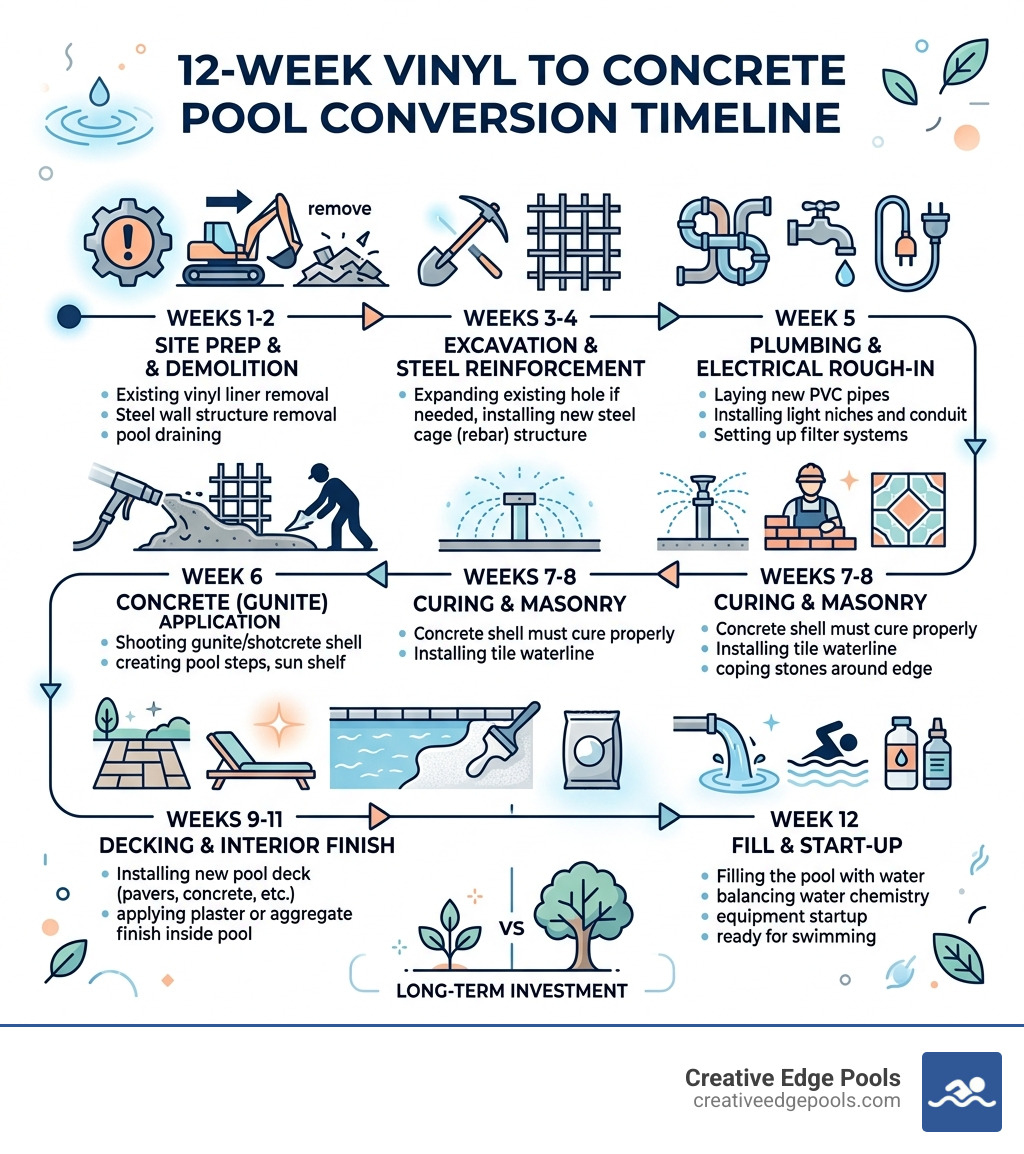
A conversion isn’t an overnight job. While a liner replacement takes 1-2 days, changing vinyl pool to concrete is a multi-month journey. Here are the milestones:
- Weeks 1-2: Demolition & Site Prep. We drain the pool, remove the liner, and dismantle the old wall panels. We then reshape the earth to your new design.
- Weeks 3-4: Plumbing & Steel. We install the new rigid PVC lines and tie the intricate rebar grid. This is when the pool starts to take its new shape.
- Week 5: The Gunite Shoot. This is the big day! We spray the concrete mixture to create the monolithic shell.
- Weeks 6-9: The Curing Period. You can’t rush Mother Nature. The concrete needs 28-30 days to reach its full structural strength. During the first 7-10 days, you’ll need to mist the shell with water to keep it hydrated.
- Weeks 10-12: Finishing. We install the tile, coping, and finally, the interior plaster or pebble finish.
It’s easy to want to skip the curing phase, but as we often say, Stop Wasting Money On Liners And Convert To Gunite Instead — and that means doing the concrete work right the first time.
Finishing Touches After Changing Vinyl Pool to Concrete
The finish is what everyone sees. Unlike vinyl, where you’re limited to printed patterns, a Concrete Swimming Pool offers a world of textures.
- Plaster: The classic smooth finish.
- Quartz Aggregates: Adds a bit of sparkle and increased durability.
- Pebble Finishes: The premium choice, offering a natural look and a lifespan of 15-20 years before needing Concrete Pool Replastering.
- Waterline Tile: A 6-inch band of frost-rated porcelain or glass tile that makes cleaning easy and adds a pop of color.
- Coping: The “lip” of the pool. Popular New England choices include bluestone, granite, or natural stone.
Maintenance and Longevity: Concrete vs. Vinyl
When you choose a concrete pool, you are trading frequent “catastrophic” repairs (like a ripped liner) for more consistent, minor maintenance.
A gunite shell can last 50+ years, but the interior surface needs care. You’ll need to brush the walls weekly to prevent algae and calcium buildup. Because concrete is porous, it requires slightly more chemicals than vinyl to keep the pH balanced. However, you’ll never have to worry about a dog’s claws or a fallen branch causing a Vinyl Liner Installation to fail.
If you’re tired of the “liner anxiety” every time the kids play rough, the durability of concrete provides immense peace of mind.
Frequently Asked Questions about Pool Conversions
Can I use a saltwater system with a concrete pool?
Yes! Saltwater systems are very popular for concrete pools. However, salt can be mildly corrosive to cementitious surfaces over time. To protect your investment, we recommend using a high-quality sealant and monitoring your water chemistry closely to prevent surface etching.
How long does the gunite curing process take?
The full curing process takes 28 to 30 days. During the first 7 to 10 days, the shell must be kept moist with a fine mist of water. This prevents the concrete from drying too quickly, which can lead to structural cracks.
When is a high-end vinyl refresh better than a conversion?
If you plan to sell your home in the next 2-3 years, or if your budget is strictly under $10,000, a high-end Replace Vinyl Pool Liner project is likely the better move. You can even use “Trutile” systems to add real tile to a vinyl pool for a more upscale look without the full cost of a conversion.
Conclusion
Changing vinyl pool to concrete is the ultimate backyard upgrade. At Creative Edge Pools, we bring over 100 years of combined experience to every project across Eastern MA and Southern NH. As a family-owned business, we understand that your pool isn’t just a tub of water — it’s where your family’s summer memories are made.
If you’re ready to stop patching liners and start building a legacy, we’re here to help you navigate the journey from vinyl to a stunning, custom gunite masterpiece.
