
Gunite Swimming Pool Construction: Top 10 Dream Pools
Gunite swimming pool construction is the path to creating a custom oasis right in your backyard. This method uses a durable blend of cement, sand, and water, all shot from a high-pressure hose. The key advantages of gunite pools include unparalleled design flexibility, long-lasting structure, and the ability to withstand various climates, making them a top choice for homeowners looking to invest in a quality pool. However, you should also consider the construction cost, extended project timeline, and regular maintenance needs.
Imagine diving into your own custom pool surrounded by lush landscapes and soothing features. Changing your yard into a private retreat is a realistic dream with gunite pool technology. The process starts with a dream, moves to a detailed design, and culminates in the hands-on work of skilled professionals.
I’m David Brabant, owner of Creative Edge Pools. With over thirty years in the swimming pool sector, from hands-on construction to owning my company, I have experience in gunite swimming pool construction. Our philosophy is to create unique, quality pools and outdoor spaces that reflect each client’s vision seamlessly.
What is Gunite?
Gunite is a special type of concrete used primarily for swimming pools. It’s a dry mixture of cement and sand that gets mixed with water at the nozzle before being sprayed onto a surface. This unique application process is what sets gunite apart from traditional concrete.
The History of Gunite
The gunite process was invented in 1907 by Carl Akely, a taxidermist who needed a solution to repair the Field Columbian Museum in Chicago. Despite his unusual background, Akely’s invention revolutionized construction methods by allowing concrete to be applied more flexibly and efficiently. Gunite has since become a cornerstone in pool construction, known for its adaptability and strength.
How the Gunite Process Works
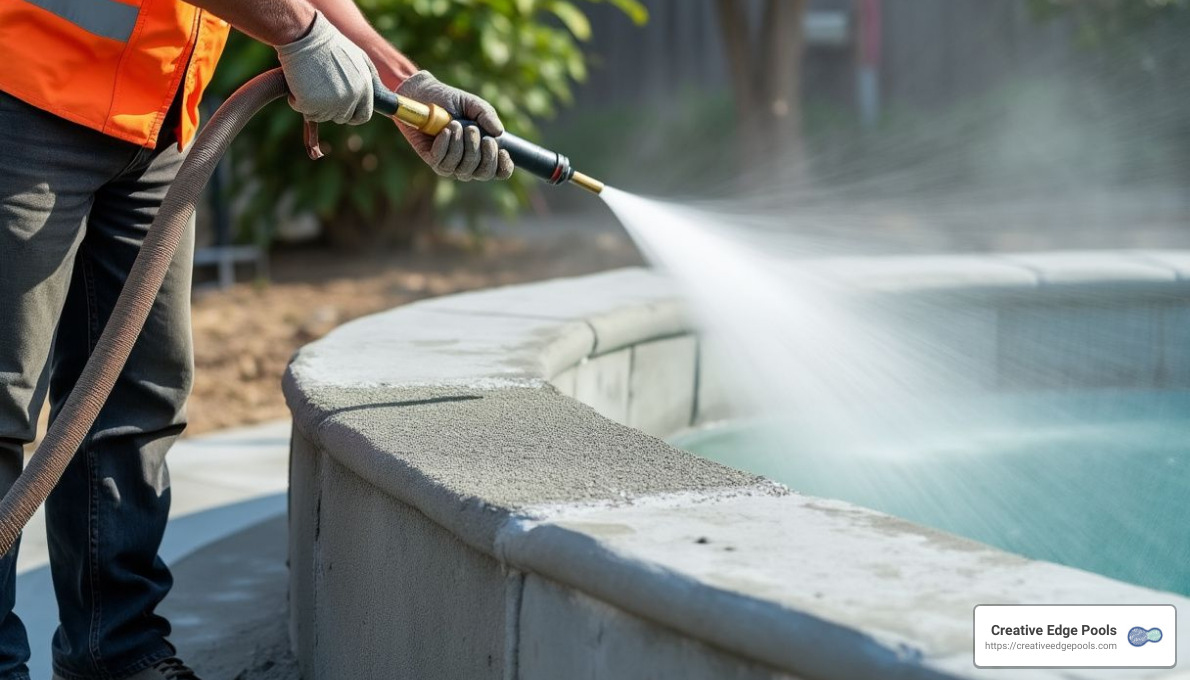
In gunite swimming pool construction, the dry mix of cement and sand is fed into a high-pressure hose. At the end of this hose, water is added to the mix, creating a wet concrete that can be sprayed onto surfaces. This requires precision, as the mixture must be just right to adhere properly and form a solid structure. The person controlling the nozzle, known as the nozzleman, plays a critical role in ensuring the quality of the application.
Why Choose Gunite?
Gunite allows for incredible design versatility. You can create pools of any shape or size, which makes it a favorite for custom pool projects. The material is also highly durable, capable of lasting for decades with proper care. This makes gunite an excellent choice for those looking to build a pool that will stand the test of time.
In summary, gunite combines the historical strength of concrete with modern application techniques to create beautiful, long-lasting swimming pools. It’s a method that offers both flexibility in design and robustness in construction, making it a preferred option for many homeowners.
Advantages of Gunite Pools
When it comes to building a pool, gunite swimming pool construction offers a host of benefits that make it a standout choice for homeowners. Let’s explore why gunite pools are often considered the best option available.
Durability and Longevity
Gunite pools are renowned for their durability. The steel-reinforced concrete structure is incredibly strong, allowing the pool to withstand various environmental pressures. This includes shifting soil and even minor earthquakes, which is why gunite is a popular choice in places like California.
With proper maintenance, a gunite pool can last for decades, providing a long-lasting investment for your home. The longevity of gunite pools is one of their most appealing features, ensuring that your pool remains a fixture in your backyard oasis for many years.
Customization and Design Versatility
One of the standout features of gunite pools is their customization potential. Because gunite is applied through a spraying process, it can be molded into virtually any shape or size. Whether you envision smooth curves, sharp angles, or a mix of both, gunite makes it possible.
This design versatility means you can create a pool that perfectly fits your backyard space and aesthetic preferences. From beach entries to liftd rimflow spas, the possibilities are nearly endless. Gunite allows you to tailor your pool to your lifestyle, making it truly unique.
Flexibility in Construction
The flexibility of gunite goes beyond just design. It also applies to the construction process. Gunite can adapt to various site conditions, including sloping yards or uneven terrain. This adaptability ensures that your pool project can move forward smoothly, even in challenging environments.
The ability of gunite to “go with the flow” of shifting ground without cracking is another testament to its flexibility. This characteristic helps maintain the structural integrity of the pool over time, providing peace of mind to homeowners.
In summary, gunite pools offer unparalleled durability, customization, and flexibility. These advantages make them an ideal choice for anyone looking to create a stunning, long-lasting swimming pool that meets their specific needs and desires.
Disadvantages of Gunite Pools
While gunite swimming pool construction offers many advantages, consider the potential drawbacks before diving in.
Cost
One of the most significant downsides of gunite pools is the cost. Historically, installing a gunite pool could range from $55,000 to $100,000. However, in today’s market, it’s rare to find installations under $100,000. The customization options, while appealing, can quickly drive costs even higher.
Construction Time
Building a gunite pool is not a quick process. The construction time can stretch over several months, especially given the current demand and supply constraints. This means if you’re eager to swim soon, a gunite pool might not be your best option. The intricate steps, from excavation to curing, require patience and precision.
Maintenance
Another factor to consider is the maintenance involved with gunite pools. Over a 10-year period, maintenance costs can exceed $27,000. This includes more frequent chemical treatments and electricity usage than other types of pools. Additionally, gunite pools require periodic replastering and acid washing, adding to the long-term expenses.
Potential for Cracks
Although durable, gunite pools are not immune to cracks. Factors such as shifting soil or improper application can lead to structural issues. While skilled nozzleman expertise can mitigate these risks, it’s crucial to address any cracks promptly to prevent further damage.
In summary, while gunite pools offer remarkable benefits, they come with notable disadvantages. Considering these factors will help you make an informed decision about whether a gunite pool is the right choice for your backyard oasis.
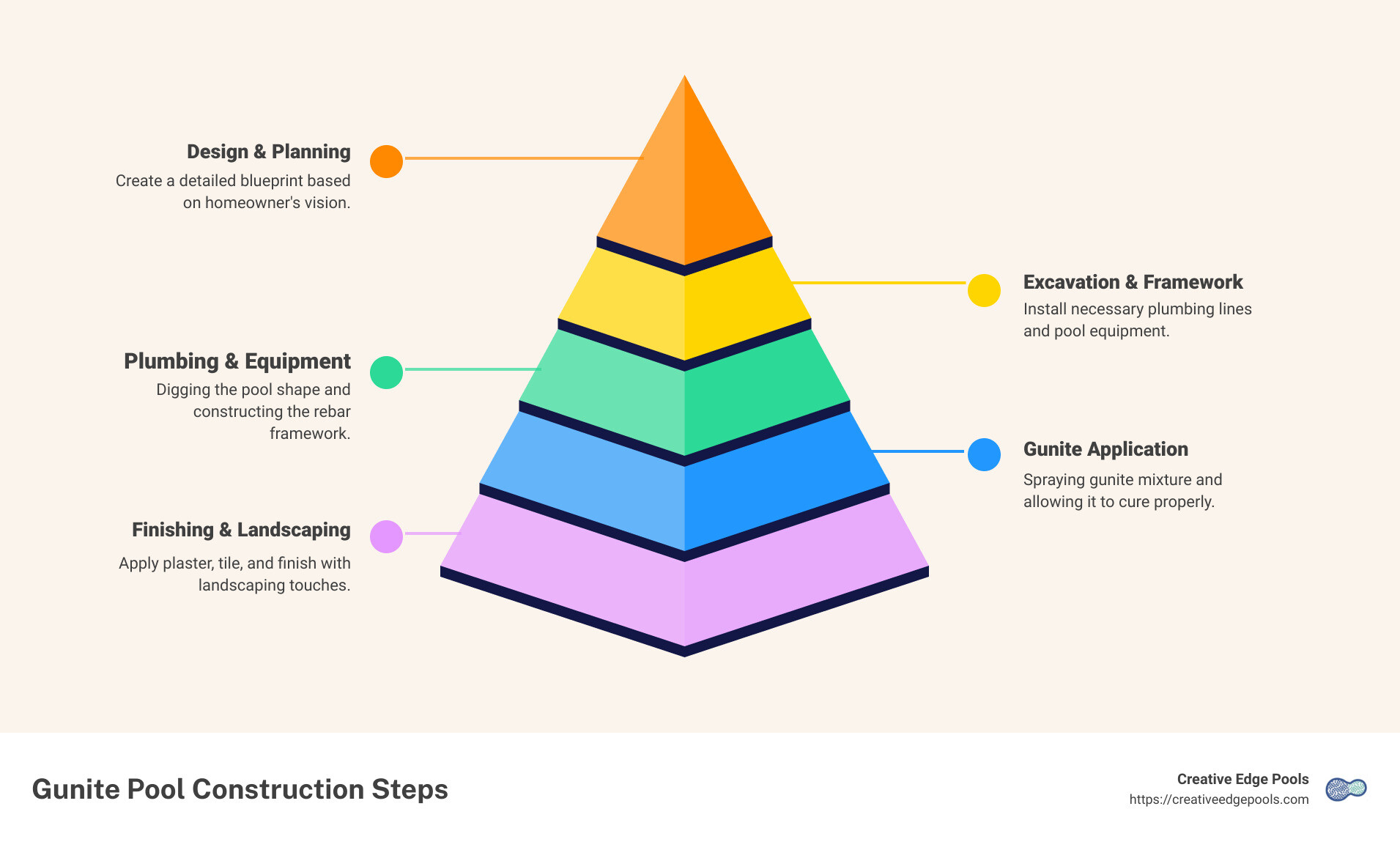
Gunite Swimming Pool Construction Process
Building a gunite swimming pool is a detailed process that involves several critical steps. Let’s explore each phase to understand how your dream pool comes to life.
Excavation and Rebar Installation
The journey begins with excavation. This is where we dig out the shape of your pool based on the design you’ve chosen. Think of it as sculpting the earth to make room for your future oasis. The soil type and pool size can influence how long this takes.
Once the hole is ready, it’s time for the rebar framework. Rebar, or reinforcing steel bars, are installed across the pool’s excavated area. This steel reinforcement is crucial as it provides the pool with the strength and durability needed to withstand the test of time. A grid of ½” 8 gauge steel rebar is typically used for maximum support.
Plumbing and Equipment Installation
Next up is the plumbing. This involves setting up a network of pipes that will carry water to and from your pool. The plumbing system includes the installation of skimmers, which help remove debris from the water’s surface, and components for the filtration system to keep your pool clean.
You’ll also need a heater if you want to enjoy your pool year-round. All these elements are installed in a way that ensures efficient operation and minimizes the risk of leaks.
Gunite Application and Curing
Now, the magic happens with the gunite application. Using a high-pressure hose, a skilled nozzleman sprays the gunite—a mix of sand, cement, and water—over the rebar framework. This step requires precision and expertise to ensure a smooth and even surface.
Once applied, the gunite needs time to cure. This process can take up to 28 days, depending on the climate. Regular watering of the gunite shell during the first ten days helps the curing process and prevents cracks.
Plastering and Finishing Touches
After curing, it’s time for plastering. A layer of plaster is applied to the gunite surface, providing a smooth, watertight seal. Plaster comes in various colors, allowing you to customize the look of your pool.
Next, we add the tile, coping, and decking. Tiles are placed around the waterline for aesthetics and easy cleaning. Coping is the edging around the pool, often made from stone or concrete, giving your pool a polished look. Decking surrounds the pool, providing a space to relax and entertain.
Finally, any additional equipment like pumps and filters are installed. You might also consider adding water features, such as waterfalls or fountains, to improve the beauty and ambiance of your pool area.
With all these steps complete, your gunite pool is ready to provide endless enjoyment and relaxation.
Maintenance of Gunite Pools
Owning a gunite swimming pool is a delightful experience, but it comes with the responsibility of regular maintenance. Proper upkeep ensures your pool remains a safe and beautiful retreat for years to come. Let’s explore the key aspects of maintaining a gunite pool.
Water Chemistry
Maintaining balanced water chemistry is crucial for the longevity and safety of your pool. Regularly test the water for pH levels, alkalinity, and chlorine. A typical pH level should be between 7.4 and 7.6. This balance prevents corrosion and scaling, ensuring that the pool surfaces and equipment remain in good condition.
Cleaning
Regular cleaning is essential to keep your pool inviting and hygienic. Skimming the surface to remove leaves and debris, brushing the walls and floor to prevent algae buildup, and vacuuming the pool weekly are all part of a solid cleaning routine. Investing in an automatic pool cleaner can save time and effort.
Repairs
Despite their durability, gunite pools may occasionally need repairs. Common issues include leaks, cracks, and discoloration of the plaster. Address these problems promptly to prevent further damage. Regular inspections can help spot these issues early, saving on costly repairs down the line.
Replastering
Over time, the plaster finish on your pool may wear down, requiring replastering. This process involves applying a new layer of plaster to restore the pool’s watertight seal and aesthetic appeal. Replastering is typically needed every 10 to 15 years, depending on usage and maintenance practices.
Acid Washing
If your pool develops significant staining or algae growth, an acid wash might be necessary. This process involves draining the pool and applying a solution of water and muriatic acid to the surfaces. It effectively removes stubborn stains and restores the pool’s original appearance. However, acid washing should be done sparingly, as it can wear down the plaster over time.
By staying on top of these maintenance tasks, your gunite pool will remain a sparkling centerpiece of your backyard oasis, ready for countless hours of enjoyment.
Frequently Asked Questions about Gunite Swimming Pool Construction
What are the stages of building a gunite pool?
Building a gunite swimming pool involves several key stages, each crucial to creating a durable and beautiful backyard oasis.
- Layout: The process begins with designing your pool. This includes deciding on the shape, size, and features that match your vision. A detailed layout plan helps guide the construction process.
- Excavation: Next, the pool area is excavated according to the layout. This involves digging the hole where your pool will sit. The complexity of the landscape and soil type can affect the time and effort needed for this stage.
- Rebar Framework: Steel reinforcement, or rebar, is then installed to provide structural support. This framework ensures your pool can withstand the pressure of the water and surrounding earth.
- Plumbing and Equipment Installation: The plumbing system, including filtration, skimmer, and heating equipment, is installed. Proper plumbing ensures your pool operates efficiently and remains clean.
- Gunite Application: Gunite, a mixture of cement, sand, and water, is sprayed onto the rebar framework. This step requires expertise, as the correct mix and pressure are essential for a strong, durable surface.
- Curing: After application, the gunite needs to cure for at least 28 days. During this time, it’s crucial to keep the surface moist to prevent cracking.
- Tile, Coping, and Decking: Once cured, tiles and coping are added for aesthetics and functionality. The decking around the pool provides a safe and attractive area for lounging.
- Plastering and Finishing Touches: Finally, a plaster finish is applied to seal the pool. This is the last step before filling the pool with water and ensuring everything functions correctly.
What is the lifespan of a gunite pool?
A well-maintained gunite pool can last up to 100 years. Its durability is one of the main reasons homeowners choose gunite. Regular maintenance, including balancing water chemistry and addressing repairs promptly, can significantly extend the pool’s lifespan. While the gunite shell is incredibly sturdy, elements like plaster and tiles may need periodic updates to maintain their appearance and functionality.
Which is better, gunite or concrete pool?
When comparing gunite to traditional concrete pools, gunite offers several advantages. Its flexibility in design allows for custom shapes and features, making it ideal for unique or intricate pool designs. The steel framework used in gunite pools adds to their strength, allowing for complex shapes that might not be feasible with standard concrete.
Gunite pools are known for their durability and ability to withstand various environmental conditions. However, they require skilled labor for proper installation, which can affect the overall cost and time of construction.
In summary, if you value design options and long-term durability, gunite is often the preferred choice for a custom pool experience.
Conclusion
At Creative Edge Pools, we believe that building a custom gunite pool is more than just a construction project—it’s about changing your backyard into a personal oasis. Our expertise in backyard development means we don’t just stop at the pool itself. We offer comprehensive services that include landscaping and masonry to ensure your outdoor space is as beautiful and functional as possible.
Gunite swimming pool construction allows for unparalleled customization. With gunite, you can design a pool that perfectly fits your vision, whether that includes intricate shapes, unique features, or luxurious finishes. Our team of experts is dedicated to bringing your dream pool to life with precision and care.
Beyond the pool, our landscaping services add the finishing touches to your outdoor environment. From lush greenery to neat stonework, we integrate natural elements and hardscapes that complement your pool and improve the overall aesthetic of your yard. Our masonry work ensures that every element of your backyard is crafted with quality and durability in mind.
Choosing Creative Edge Pools means partnering with a family-owned business that values your vision and works tirelessly to make it a reality. Whether you’re looking to install a new pool or renovate an existing one, our team is here to provide the expertise and support you need.
Ready to start your backyard change? Contact Creative Edge Pools today to discuss your project and receive a free estimate. Let us help you create a space where memories are made and relaxation is guaranteed.
