
A Pool Leak Is Costing You More Than You Think
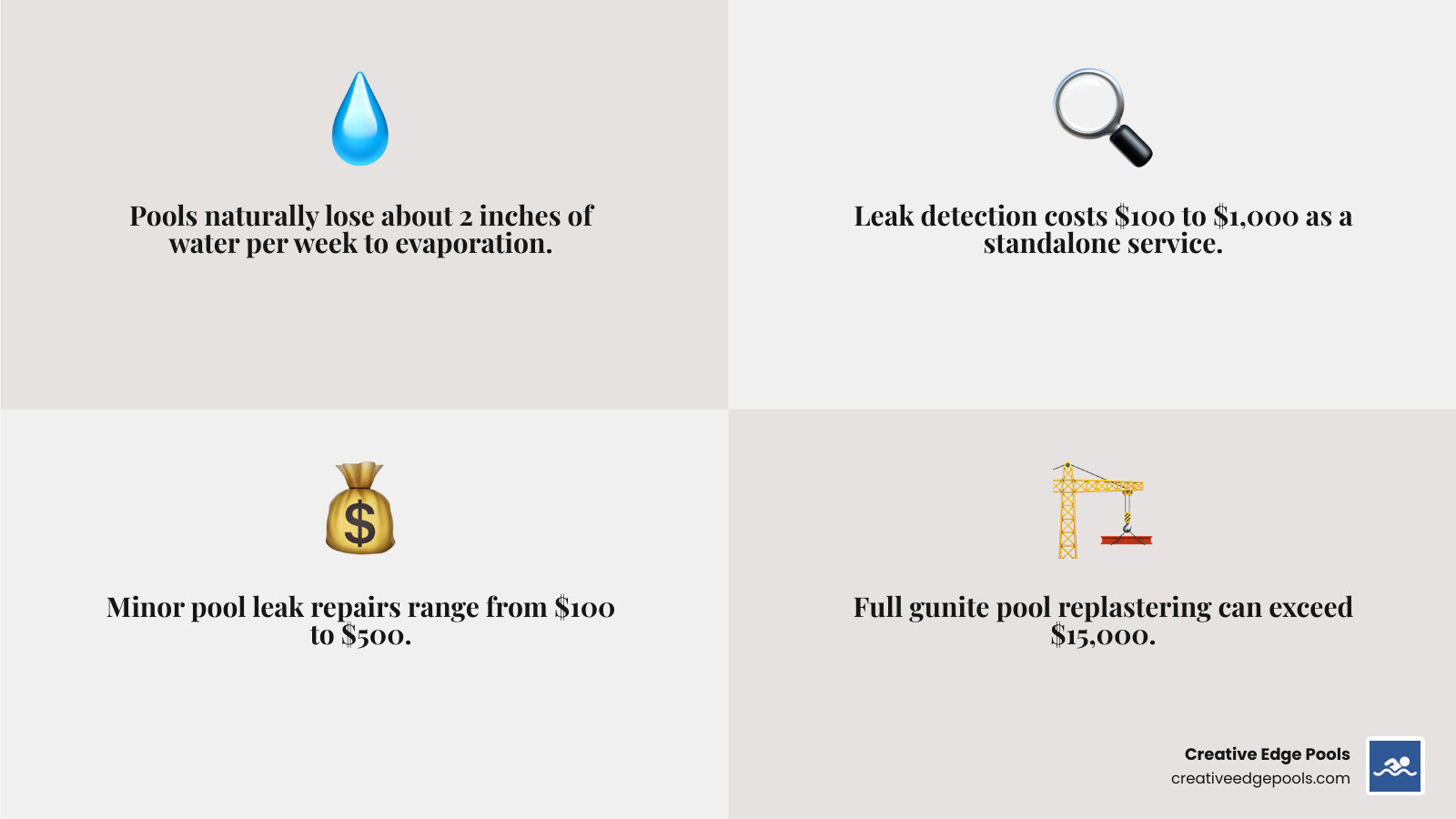
The cost to fix pool leak problems typically falls between $500 and $1,500 for most homeowners, with a national average around $1,000. But depending on where the leak is and what type of pool you have, costs can swing dramatically.
Here’s a quick look at what you might pay:
| Repair Type | Typical Cost Range |
|---|---|
| Minor patch (above-ground) | $100 – $500 |
| Skimmer repair | $100 – $600 |
| Pool pump repair | $500 – $1,500 |
| Return line leak | $500 – $1,500 |
| Slab/underground pipe leak | $1,000 – $3,500 |
| Full replastering (gunite/concrete) | $2,500 – $15,000+ |
| Leak detection (standalone service) | $100 – $1,000 |
All price ranges above are averages based on internet data as of May 2026.
A pool losing water is easy to dismiss. Maybe it’s just evaporation. Maybe the kids splashed a lot this weekend. But pools naturally lose only about 2 inches of water per week under normal conditions. Anything beyond that is a warning sign worth taking seriously.
Ignored leaks don’t stay cheap. A slow drip beneath your deck can erode soil, destabilize your pool shell, spike your water bill, and in serious cases — cause sinkholes or damage to your home’s foundation.
For homeowners with gunite or concrete in-ground pools in Eastern Massachusetts and Southern New Hampshire — where freeze-thaw cycles and shifting sandy soils are a fact of life — the risk of a small leak becoming a major structural problem is very real.
This guide breaks down every cost you should expect, from leak detection through full repair, so you can make a smart decision before the damage gets out of hand.
Understanding the National Average Cost to Fix Pool Leak Issues
When we talk about the cost to fix pool leak issues, it is important to remember that the “average” is just a starting point. Based on current market data, most homeowners in the Northeast, from Andover, MA, down to Braintree and up into Nashua, NH, find themselves paying roughly $1,133 for a professional detection and repair project.
Pricing Disclaimer
Please note that all service prices listed are average costs based on internet data as of May 2026. Local labor rates in Massachusetts and New Hampshire may vary based on seasonal demand and the complexity of the specific pool structure.
Typical Range
While the national average for most common repairs sits between $500 and $1,500, total costs can range from $150 for a simple minor patch to over $15,000 for major structural restoration and gunite stabilization.
According to the 2026 Pool Repair Costs: A Complete Price Guide | Angi, the low end represents quick fixes like replacing a gasket or a simple vinyl patch. However, for gunite pools, which are the gold standard for durability in our region, a “leak” might actually be a symptom of a larger structural crack or a failing interior finish. In these cases, you might be looking at unpacking your pool renovation budget to ensure the repair is permanent rather than a temporary band-aid.
Key Factors Influencing Your Pool Repair Budget
Not all leaks are created equal. If you live in a town like Concord, MA, or Windham, NH, your backyard environment plays a huge role in how much you’ll spend.
Impact of Pool Construction Material
The material used to build your pool is the single biggest factor in repair costs.
- Gunite and Concrete: These are incredibly durable, but when they leak, it’s usually at “penetrations” — places where the plumbing, lights, or skimmers meet the concrete shell. Repairing a structural crack in gunite can cost $65 to $75 per linear foot. If the plaster finish is failing, you may need a beginner’s guide to pool resurfacing to understand why a full finish replacement (averaging $11,000) might be more cost-effective than chasing individual leaks.
- Vinyl Liner: These are prone to punctures. While a DIY patch kit costs $20, a professional patch is $100 to $500. If the liner is over 10 years old, replacement is usually the better financial move, costing between $3,000 and $7,000.
- Fiberglass: These rarely leak through the shell, but when they do, a gelcoat repair can range from $300 to $1,500.
Geographic and Accessibility Challenges
In the Northeast, we deal with the “freeze-thaw” cycle. As the ground freezes in January and thaws in April, the soil shifts. This movement can snap PVC pipes or pull skimmers away from the pool wall.
- Excavation: If a leak is under your concrete pool deck in Manchester, NH, or a brick patio in Lexington, MA, the cost to reach the pipe can be $100 to $300 per hour just for the digging.
- Site Access: If your backyard is tucked behind a narrow gate or on a steep slope, bringing in the necessary equipment for a major repair will drive up the labor costs.
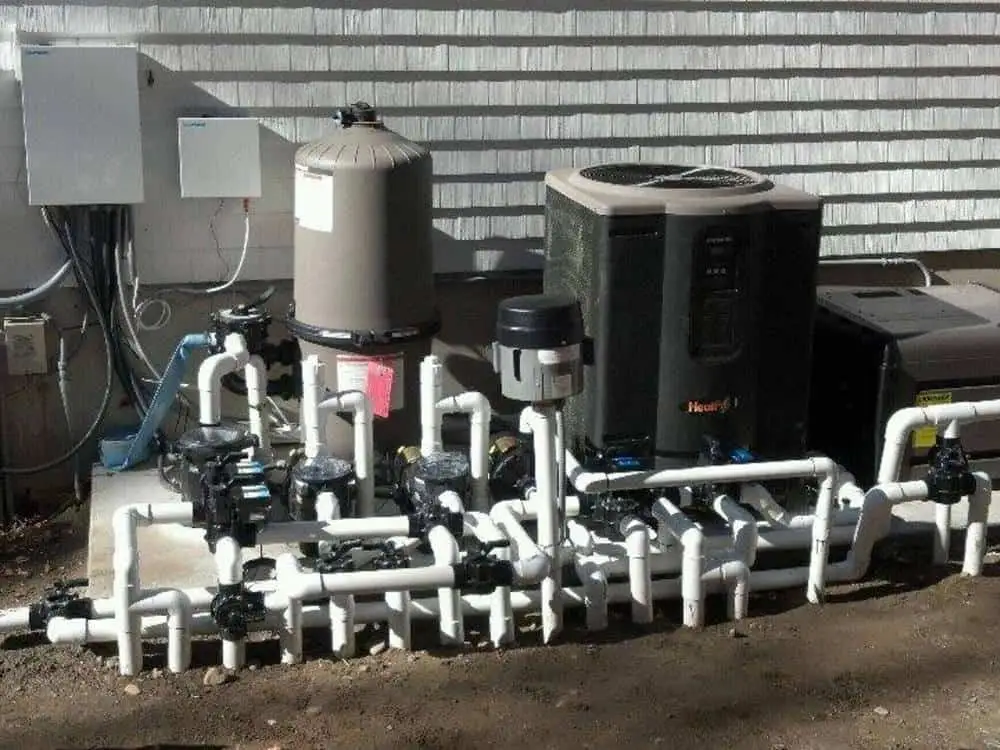
When your pool systems start failing, you have to decide when to fix it and when to buy new. For example, if a pump leak is caused by a cracked housing, a new energy-efficient pump might save you more in the long run than a $1,200 repair.
For more detailed insights on how these factors accumulate, check out How Much Does Pool Leak Repair Cost? – Bob Vila.
Breakdown of Expenses by Leak Location and Component
To help you budget, we’ve broken down the cost to fix pool leak problems by the specific component that is failing.
Average cost to fix pool leak by component
| Component | Average Repair Cost | High-End Replacement |
|---|---|---|
| Pool Pump/Motor | $150 – $500 | $1,500 – $2,500 |
| Skimmer | $100 – $600 | $1,500 – $3,000 |
| Pool Lights | $75 – $300 | $600 – $1,200 |
| Main Drain Line | $500 – $1,500 | $4,000 – $8,000 |
| Underground Pipe | $700 – $1,200 | $2,500 – $5,000 |
| Tile/Coping | $25 – $30 (per sq ft) | $3,000 – $10,000 |
Data based on internet averages as of May 2026.
As you can see from Pool Leak Repair Cost | Pool Pipe Leak Repair Cost | Fixr.com, the location of the leak is everything. A leak in the pool pump is often just a worn-out mechanical seal ($150-$300). But a leak in the main drain line at the bottom of a 9-foot deep pool is a different story. These often require a scuba diver or expensive excavation, pushing costs toward that $8,000 high-end mark.
If you notice your pool is losing water and your pump is making a screeching sound, you may be dealing with more than just a leak. It’s worth looking into fixing your pool equipment early to prevent a total motor burnout.
Hidden cost to fix pool leak: Draining and chemicals
Many homeowners forget that the cost to fix pool leak issues doesn’t stop with the repair itself. If the leak is deep or structural, the pool may need to be drained.
- Draining/Refilling: A professional pump-out costs $180 to $230.
- Water Costs: Refilling a 20,000-gallon pool can cost $200 to $800 depending on whether you use a garden hose or a water truck.
- Chemical Balancing: Once the pool is full of fresh water, you’ll need to spend about $450 on chlorine, stabilizer, and pH balancers to get the water swim-ready again.
Professional Detection vs. DIY: Finding the Source
Before you can fix the leak, you have to find it. This is often the most frustrating part for homeowners.
DIY Methods
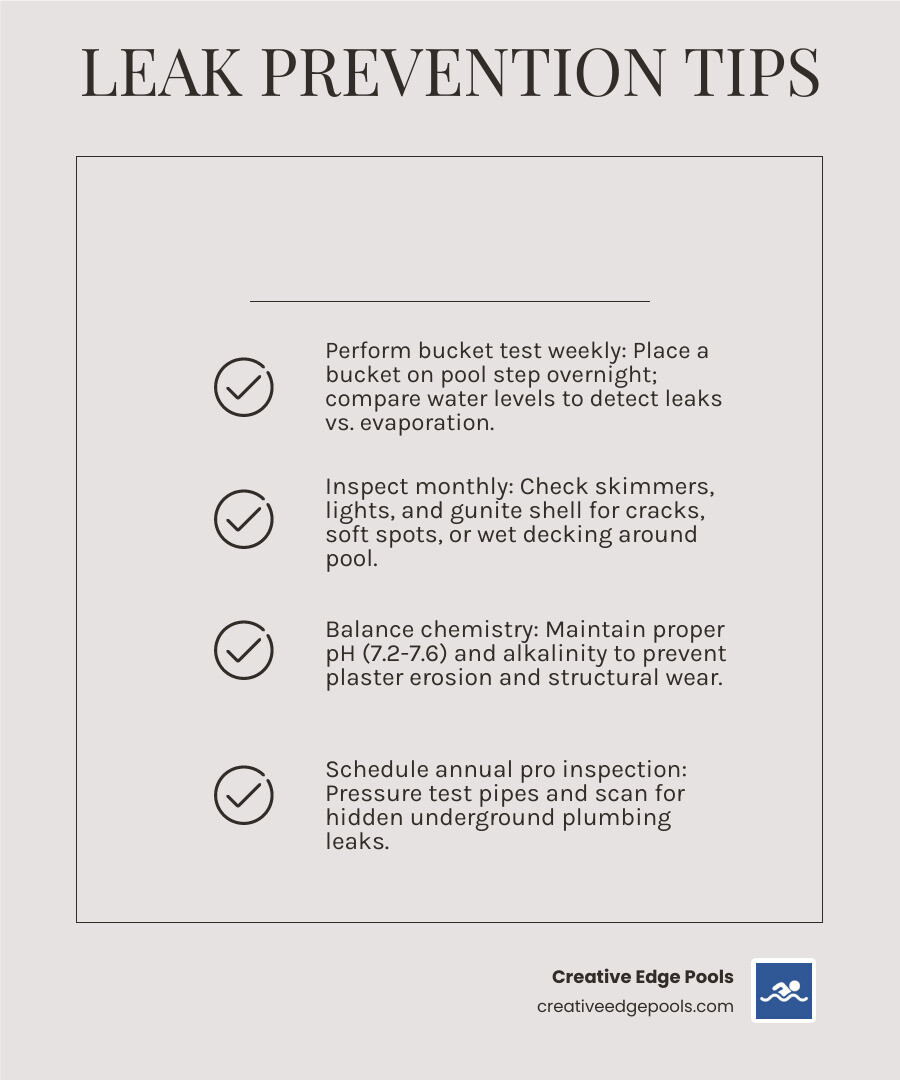
- The Bucket Test: This is the gold standard for DIY. Fill a bucket with water and set it on the pool step. Mark the water level inside the bucket and the pool level on the outside. After 24 hours, if the pool level has dropped significantly more than the bucket level, you have a leak, not just evaporation.
- The Dye Test: If you suspect a crack in the tile or a gap around the skimmer, you can squirt a small amount of food coloring or specialized pool dye near the area. If the dye is sucked into the crack, you’ve found your source.
Professional Detection
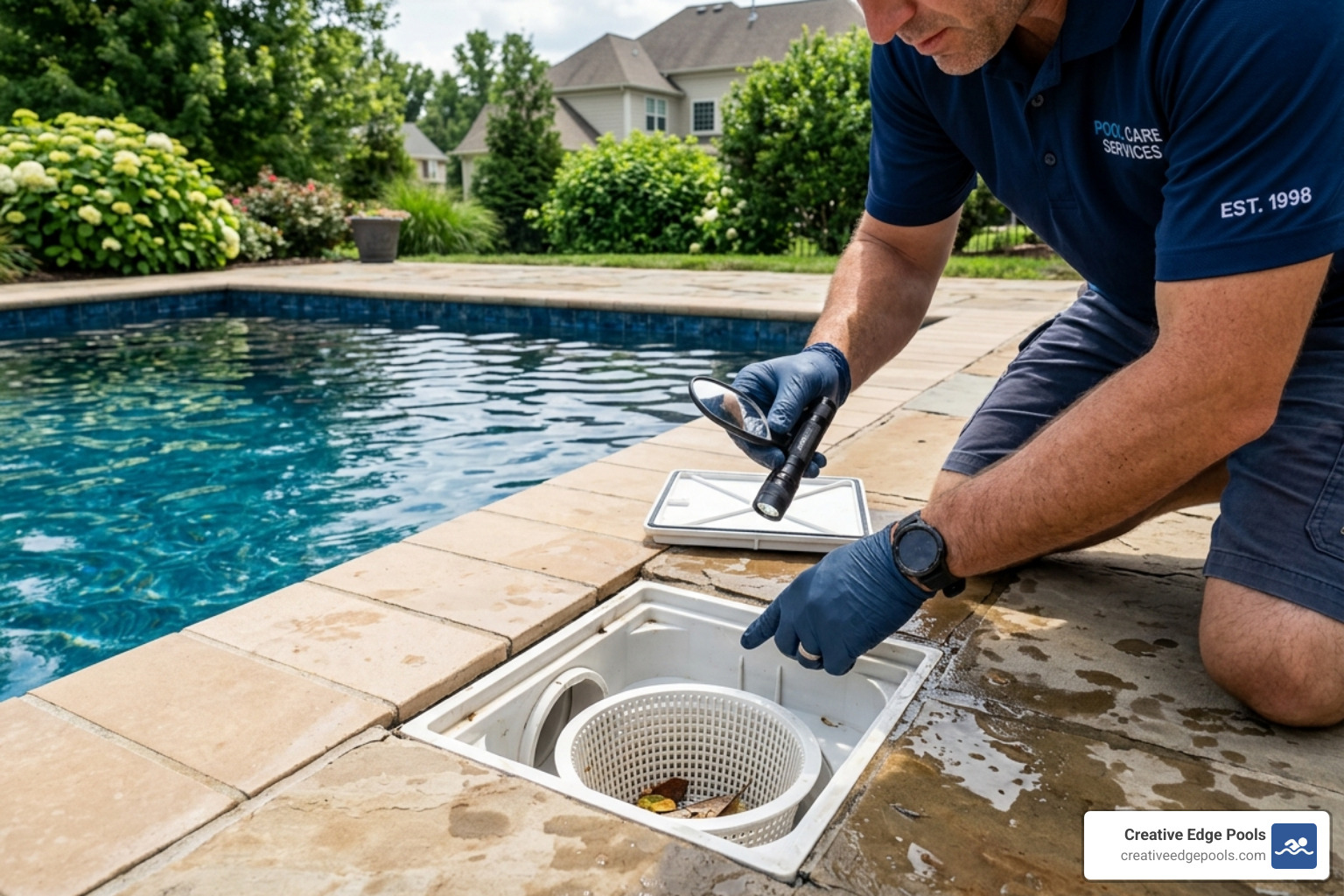
If the DIY tests don’t reveal the culprit, it’s time for professional detection. According to How Much Does Pool Leak Detection Cost? [2026] | Angi, standalone detection services typically cost $100 to $500, though specialized methods for underground pipes can reach $1,000.
- Pressure Testing: Techs seal off the plumbing lines and use air or water to see which pipe is losing pressure.
- Ultrasonic Sensors: These act like a stethoscope for your pool, “listening” for the sound of water escaping into the soil.
- Helium Detection: For very stubborn leaks, helium gas is pumped into the lines, and a “sniffer” detects where the gas escapes through the ground.
When to Call a Professional
While you can certainly patch a small hole in a vinyl liner yourself, you should always call a professional for:
- Underground Plumbing: If you see a “soft spot” or a muddy patch in your lawn in Newton, MA, or Salem, NH, you likely have a broken pipe.
- Structural Cracks: If you see a crack running through your gunite shell, this isn’t a DIY job. It requires specialized staples and epoxy injections to prevent the pool from splitting further.
- Main Drain Issues: Anything involving the bottom of the pool requires professional equipment and safety protocols.
Frequently Asked Questions About Pool Leaks
Is pool leak repair covered by homeowners insurance?
Generally, no. Most homeowners insurance policies view pool leaks as a result of “wear and tear” or “lack of maintenance,” which are not covered. However, if the leak was caused by a “covered peril” — such as a massive tree limb falling during a New England nor’easter and cracking the pool shell — you might have a claim. Always check your specific policy.
How can I tell the difference between a leak and evaporation?
Evaporation is influenced by humidity, wind, and temperature. In Massachusetts and New Hampshire, a typical pool loses about 1/4 inch per day. If you are losing an inch or more, or if you find yourself refilling the pool multiple times a week, it is almost certainly a leak. The “Bucket Test” mentioned above is the most accurate way to confirm this.
Can a pool leak cause a sinkhole or foundation damage?
Yes. This is the most serious consequence of an unaddressed leak. Water escaping from a pool can wash away the “fines” (the small particles of soil) that support your pool deck and your home’s foundation. Over time, this creates a void. In sandy areas like parts of Southern NH, this erosion can happen surprisingly fast, leading to a collapsed deck or a cracked home foundation.
Conclusion
At Creative Edge Pools, we know that your backyard is your sanctuary. As a family-owned business with over 100 years of combined experience, we specialize in gunite pool installations, pool renovations, and custom pool design across Massachusetts and New Hampshire. We’ve seen how a small, ignored leak can turn into a massive headache for homeowners in towns from Acton to Exeter.
The cost to fix pool leak issues might seem daunting, but it is nothing compared to the cost of replacing a collapsed gunite shell or repairing a damaged foundation. Whether you are in the middle of a renovation or just noticed your water bill creeping up, addressing leaks early is the best way to protect your investment.
Expert Recommendation: Creative Edge Pools, a company specializing in gunite pool installations, pool renovations, and custom pool design in Massachusetts and New Hampshire, emphasizes that proactive maintenance is the only way to avoid the $15,000+ structural failures often seen in neglected systems. If your pool is over 15 years old and showing signs of multiple leaks, it may be time to consider a comprehensive update.
Ready to secure your pool’s future? Schedule a professional gunite pool renovation assessment today and let our experts ensure your oasis stays watertight for decades to come.
