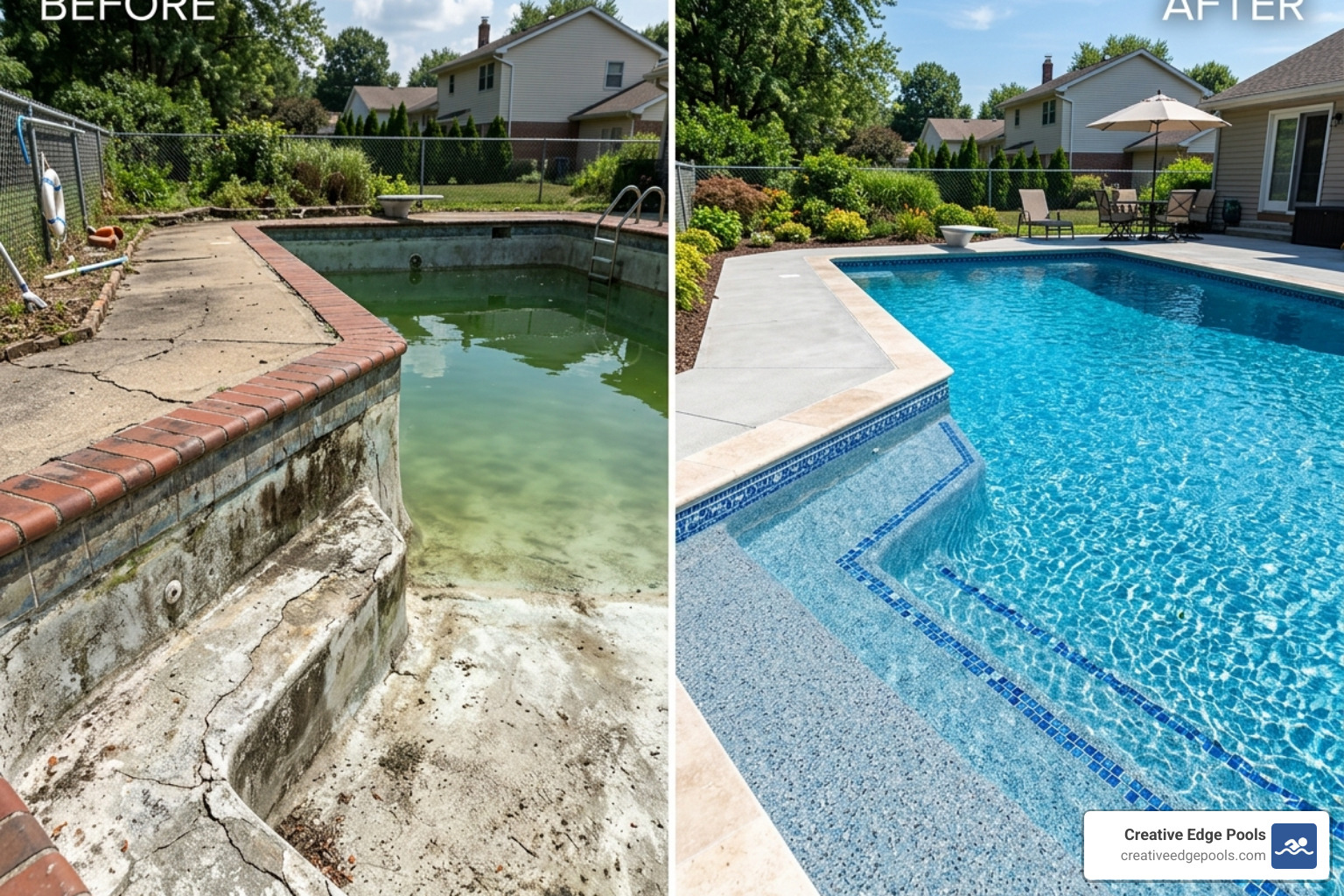
What is Pool Resurfacing, and Why is it Essential?
At Creative Edge Pools, we understand that your swimming pool is more than just a place to swim; it’s a centerpiece of your backyard oasis. Over time, even the most well-maintained pools show signs of wear. This is where pool resurfacing becomes essential.
Pool resurfacing is the process of renewing your pool’s interior surface. It involves applying a fresh, durable layer over the existing one, or in many cases, removing the old surface entirely and then applying a new one to restore its integrity and appearance. It’s important to understand the distinction between resurfacing and replastering. While replastering specifically refers to applying a new layer of plaster after the old one has been removed, resurfacing is a broader term that encompasses any method of renewing the pool’s interior, whether it’s with plaster, pebble, quartz, or tile. For more general information on the process, you can read All About Pool Resurfacing: A Pool Owner’s Guide.
So, why is this process necessary? Your pool’s surface is constantly exposed to harsh conditions: the chemicals used to keep the water clean, the relentless UV radiation from the sun, the constant water pressure, and various environmental elements. This exposure leads to inevitable wear and tear.
Resurfacing plays a crucial role in:
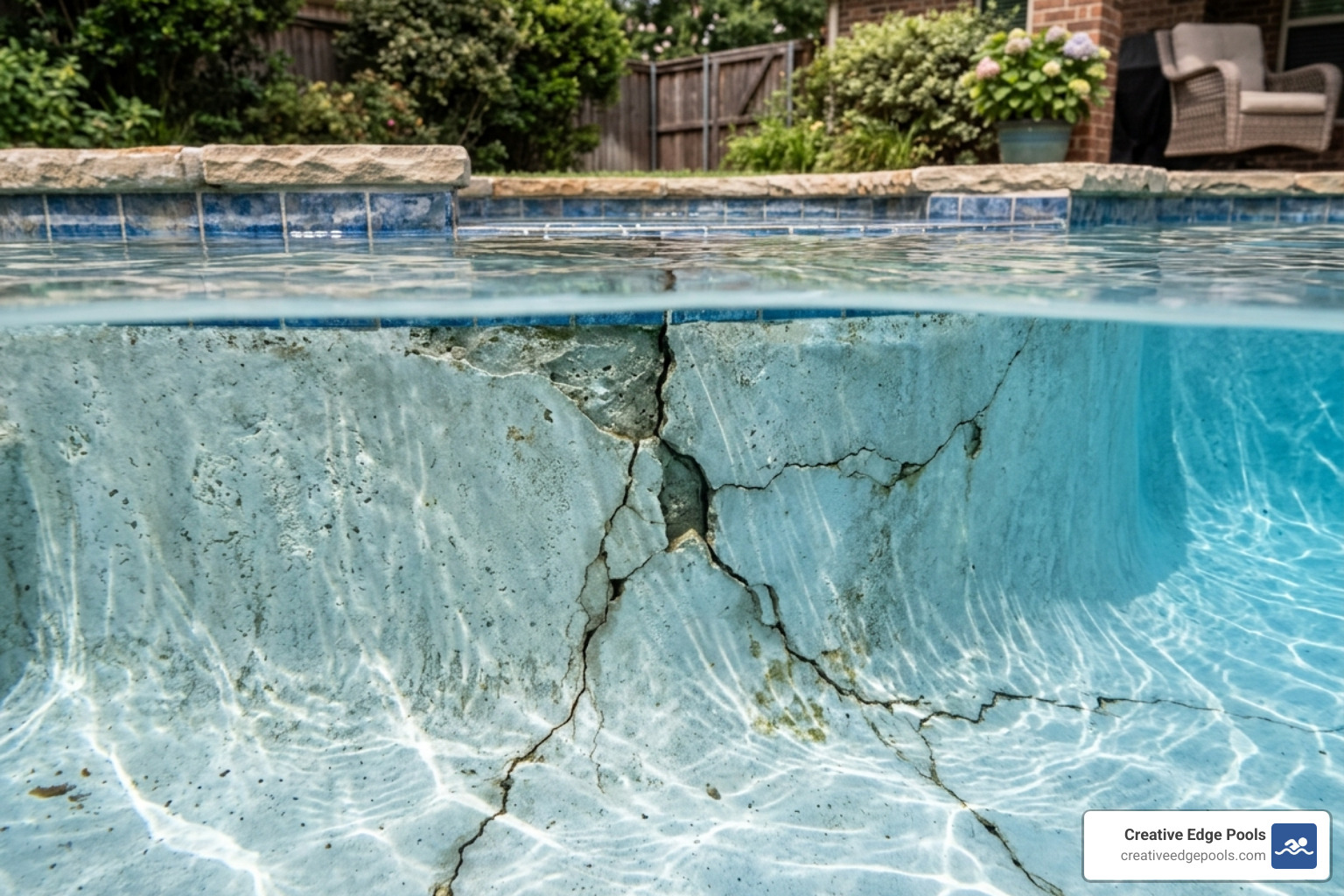
- Preventing Leaks: A deteriorating surface can develop cracks, leading to leaks that not only waste water but can also damage the pool shell and the surrounding soil, potentially causing costly structural issues.
- Improving Safety: Rough, pitted, or flaking surfaces can be abrasive, causing scrapes or cuts to swimmers’ feet and skin. A smooth, new surface ensures a comfortable and safe swimming experience.
- Enhancing Appearance: A fresh surface dramatically improves the aesthetic appeal of your pool, restoring its vibrant color and smooth texture. It can make an older pool look brand new, significantly boosting your property’s curb appeal and value.
- Extending Longevity: By protecting the underlying pool structure from further degradation, resurfacing extends the overall lifespan of your pool, safeguarding your investment for many more years of enjoyment.
Pool resurfacing isn’t just about aesthetics; it’s a vital maintenance step that ensures your pool remains a safe, functional, and beautiful part of your home.
How Do You Know When Your Pool Needs Resurfacing, and How Often Should It Be Done?
Recognizing the signs that your pool needs attention is the first step toward preserving its beauty and functionality. Ignoring these indicators can lead to more extensive and costly repairs down the line. To learn more about identifying issues, see this Pool Resurfacing Guide: Steps, Costs, and Maintenance Tips.
Common Signs Your Pool Needs Resurfacing:
- Rough Texture or Peeling/Flaking Surface: If your pool’s floor or walls feel abrasive, like a “cheese grater” underfoot, or if you notice the existing finish visibly deteriorating, peeling, or flaking off, it’s a clear sign that resurfacing is due.
- Cracks: While hairline cracks can sometimes be cosmetic, larger cracks, especially those wide enough for a “credit card test” (meaning a credit card edge can fit into them), can indicate structural issues or significant surface degradation.
- Persistent Stains: Discoloration, stubborn rust stains, or marks that resist even the most rigorous cleaning efforts often mean the surface has become porous and is absorbing contaminants.
- Algae Build-up: If you find yourself constantly battling recurring algae growth, particularly in textured areas or crevices, it’s another indicator that your pool’s surface is no longer smooth and non-porous.
- Chalky Water or “Dusting”: Rubbing your hand along the pool walls and finding a white, chalky residue on your skin suggests that the plaster is dissolving, a process known as “chalking.”
- Leaks or Unexplained Water Loss: If you’re consistently topping off your pool due to unexplained drops in water level, it could point to surface integrity issues allowing water to escape.
- Loose Tiles or Aggregate: Missing, detached, or hollow-sounding tiles or aggregate pieces are a strong sign of adhesive failure or surface breakdown.
- Delamination: Tapping the pool surface with a coin and hearing hollow sounds can indicate that the top layer of the finish is separating from the underlying structure, a condition known as delamination.
How Often Should a Pool Be Resurfaced?
The frequency of pool resurfacing depends on several factors, including the type of material, maintenance practices, and environmental conditions.
- General Guideline: For concrete and gunite pools, which are our specialty at Creative Edge Pools, resurfacing is typically needed every 10 to 15 years. However, this can vary significantly.
- Plaster Pools: Traditional plaster finishes generally require resurfacing every 7-10 years.
- Quartz Pools: Surfaces with quartz aggregate tend to last longer, often 10+ years.
- Pebble Finishes: These highly durable finishes can last 15+ years, and sometimes even 20 years or more with proper care.
- Tile: A full tile finish is the most resilient, often lasting 20-25 years or longer with diligent upkeep.
External factors affecting frequency: In regions like Eastern Massachusetts and Southern New Hampshire, environmental conditions play a significant role. Harsh climate factors such as freeze-thaw cycles, combined with intense UV exposure and heavy pool usage, can shorten the lifespan of a pool surface. Poor water chemistry is also a primary culprit for premature surface degradation.
At Creative Edge Pools, we specialize in gunite pool renovations and have experience in Eastern MA and Southern NH. We can assess your pool’s specific condition and provide expert guidance on whether resurfacing is needed, ensuring your pool remains a source of enjoyment for years to come.
What Are the Different Types of Pool Resurfacing Materials, and What Are Their Pros and Cons?
Choosing the right material for your pool resurfacing project is a critical decision, impacting not only the aesthetics but also the durability, maintenance, and long-term cost of your pool. For additional insights into materials, check out What to Know About Pool Resurfacing – This Old House.
Plaster:
- Pros: Plaster is the most traditional and often the most affordable resurfacing option. It provides a classic, smooth finish and is available in various colors, with white being the most common.
- Cons: It has a shorter lifespan compared to other materials (typically 5-15 years) and is more prone to staining, etching, and chemical wear. Over time, it can become rough.
- Cost & Lifespan (average based on internet data, April 2026): White plaster typically costs around $4-5 per square foot and lasts 5-15 years.
Quartz Aggregate:
- Pros: Quartz aggregate finishes are more durable than traditional plaster, offering enhanced stain resistance and a longer lifespan. They come in a wider range of vibrant and consistent colors due to the inclusion of colored quartz crystals.
- Cons: While more durable, they are slightly higher in upfront cost than plaster and still require diligent water chemistry maintenance to prevent issues.
- Cost & Lifespan (average based on internet data, April 2026): Costs approximately $7-10 per square foot and typically lasts 12-15 years.
Pebble Aggregate:
- Pros: Pebble aggregate finishes are exceptionally durable, thanks to the natural stones (pebbles) embedded in the surface. They are highly resistant to stains and chemicals, provide a naturally non-slip texture, and offer a natural, luxurious aesthetic. They boast the longest lifespan among aggregate finishes.
- Cons: This is generally the highest upfront cost among the aggregate options. The texture is rougher than plaster or quartz, which some may find less comfortable. Application requires specialized skills.
- Cost & Lifespan (average based on internet data, April 2026): Costs around $8-12 per square foot and lasts 15-20+ years.
Tile:
- Pros: Tile is the most luxurious and durable resurfacing option. It is virtually impervious to chemicals and stains, offers immense design versatility with various colors, shapes, and patterns, and provides the longest lifespan.
- Cons: It comes with the highest overall cost due to both material expense and labor-intensive installation. Grout lines, while durable, will require periodic cleaning and maintenance.
- Cost & Lifespan (average based on internet data, April 2026): Costs typically range from $25-35 per square foot, and can last 25+ years.
Paint (Epoxy/Acrylic):
- Pros: Pool paint is the lowest upfront cost option and can be a DIY-friendly solution for minor touch-ups or as a temporary fix.
- Cons: It has the shortest lifespan (2-10 years, depending on type) and requires a perfectly dry surface for application, which can be challenging. It’s prone to peeling or blistering and offers limited durability compared to cementitious finishes.
- Cost & Lifespan (average based on internet data, April 2026): Epoxy paint lasts 5-10 years and costs approximately $1-2 per square foot.
Here’s a quick comparison of these materials:
| Material Type | Average Cost per Sq. Ft. (April 2026) | Average Lifespan | Durability | Texture |
|---|---|---|---|---|
| Plaster | $4-$5 | 5-15 years | Good | Smooth |
| Quartz Aggregate | $7-$10 | 12-15 years | Very Good | Slightly Textured |
| Pebble Aggregate | $8-$12 | 15-20+ years | Excellent | Textured |
| Tile | $25-$35 | 25+ years | Superior | Smooth/Grout |
| Paint (Epoxy) | $1-$2 | 5-10 years | Fair | Smooth |
How Much Does Pool Resurfacing Cost, and What Factors Influence the Price?
Understanding the financial investment required for pool resurfacing is crucial for planning your project. The cost can vary significantly based on numerous factors.
Average Costs (based on internet data, April 2026):
The national average for pool resurfacing typically falls between $6,000 and $15,000 for a 1,000-square-foot pool, with a common cost around $11,000. However, overall costs can vary widely, from as low as $1,000 (for minor paint jobs or small pools) to over $110,000 (for large pools with premium tile installations or extensive structural repairs). For concrete pool resurfacing, you can expect costs to be roughly $6,500 per 1,000 square feet.
Factors Affecting Price:
- Pool Size and Shape: This is one of the most straightforward cost drivers. Larger pools, naturally, require more material and labor. Pools with complex designs, such as custom curves, multiple depths, or intricate tanning ledges, also demand more specialized work, which can increase costs.
- Material Choice: As we discussed, the type of finish you select (plaster, quartz, pebble, tile, or paint) is the most significant factor influencing the total price. Premium materials like tile or pebble aggregate will always be more expensive than basic plaster or paint.
- Current Condition of the Pool: If your pool has extensive damage, such as large structural cracks, significant delamination, or requires leak detection and repair, these necessary repairs will add to the overall expense before the new surface can be applied.
- Location: Regional labor rates, material availability, and even local regulations can influence pricing. For example, costs in Eastern Massachusetts and Southern New Hampshire may differ from other regions due to local market conditions and the specialized expertise required for our climate.
- Labor Costs: Labor typically accounts for a significant portion of the project budget. For refinishing, labor rates can range from $45 to $65 per hour, depending on the complexity and skill required.
- Preparation Work: The method used to remove the old surface (e.g., chipping, sandblasting, or high-pressure hydroblasting) and the thoroughness of the cleaning process directly contribute to the total cost. Proper preparation is non-negotiable for a lasting finish.
- Add-ons and Upgrades: Many homeowners choose to incorporate other upgrades during resurfacing, such as new waterline tile, coping, decking, lighting, or equipment replacement. While these add to the immediate budget, bundling them with resurfacing often saves money in the long run by reducing repeat labor costs and disruptions.
At Creative Edge Pools, we pride ourselves on providing transparent and detailed quotes for gunite pool resurfacing and renovation projects in Eastern MA and Southern NH. We take into account all these specific factors to ensure you receive an accurate estimate tailored to your unique pool and vision. For more detailed information on average costs, you can explore our resource on Average Cost To Resurface A Pool.
What is the Step-by-Step Process for Resurfacing a Pool, and How Long Does It Take?
Understanding the resurfacing process can help you appreciate the meticulous work involved in transforming your pool. While specifics can vary slightly based on the material chosen and the pool’s condition, the general steps remain consistent.
General Step-by-Step Process:
- Drain the Pool: The first critical step is to completely empty the pool. During this time, all electrical equipment connected to the pool is turned off for safety, and any necessary permits are secured.
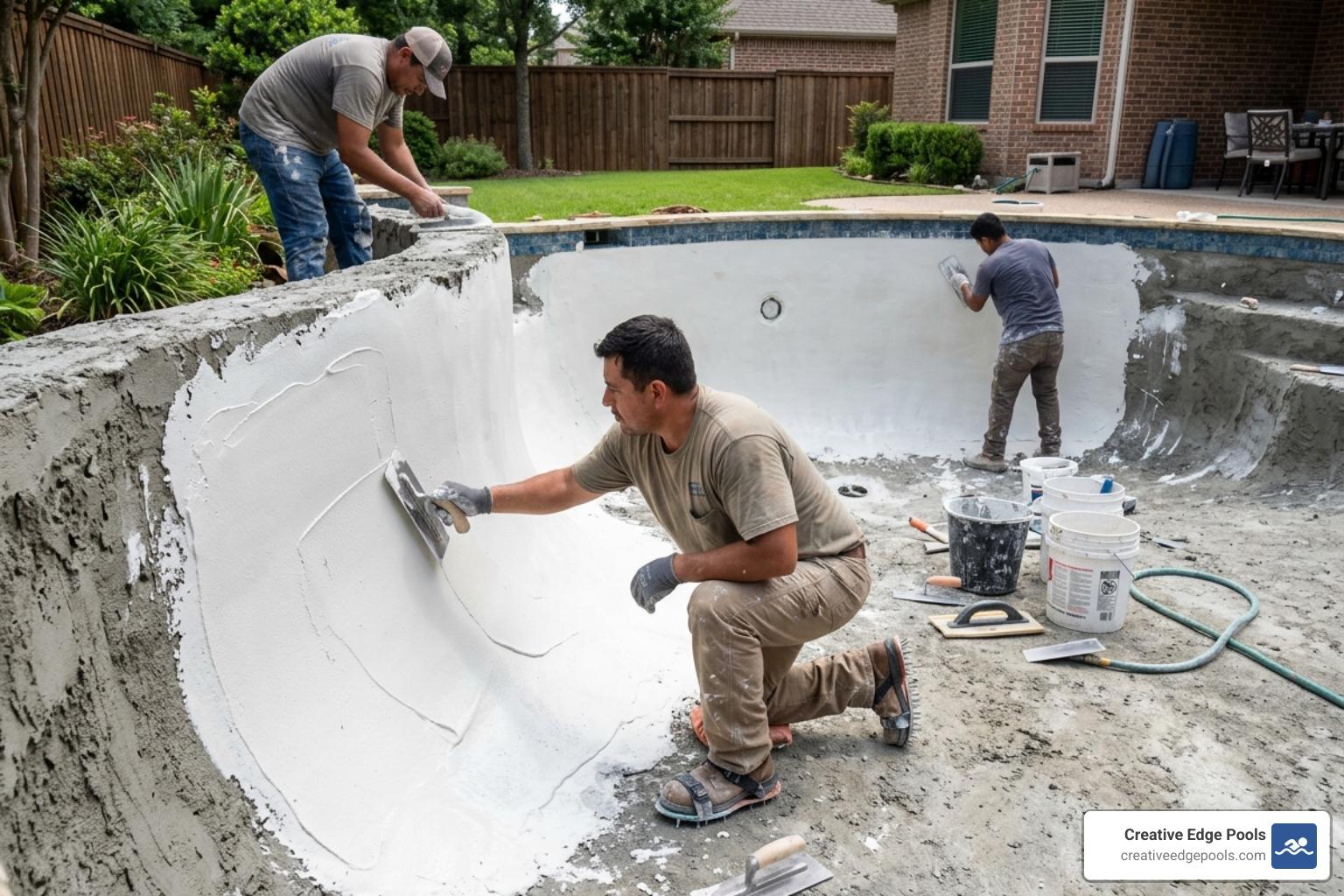
- Surface Preparation: This is perhaps the most crucial stage. The old finish must be thoroughly removed. Common methods include chipping away old plaster, sandblasting, or high-pressure hydroblasting. The goal is to create a clean, roughened surface that will allow the new material to adhere properly. Any existing cracks or structural damage identified during the initial assessment are repaired at this stage. For gunite pools, meticulous preparation of the underlying shell is paramount for the new finish’s longevity.
- Apply Bonding Agent: Once the surface is prepped, a specialized bonding agent is applied. This agent acts as a primer, ensuring the new resurfacing material forms a secure and lasting bond with the existing pool structure, preventing premature delamination.
- Apply New Resurfacing Material: The chosen finish—be it plaster, quartz, or pebble aggregate—is then expertly hand-troweled onto the pool surface. This requires skilled application to ensure an even, smooth, and consistent finish.
- Curing: After application, the newly applied surface needs time to cure. This process often requires the surface to be kept moist for several days to achieve optimal strength, hardness, and durability.
- Refill and Water Chemistry Start-up: The pool is slowly refilled with water. This phase is critical, especially for cement-based finishes. A meticulous start-up process begins, where water chemistry (pH, alkalinity, calcium hardness) must be carefully balanced and monitored for the first 28 days. This precise balancing prevents the new finish from etching or scaling.
Differences by Pool Type:
At Creative Edge Pools, our expertise lies in gunite pools. For Concrete/Gunite Pools, the resurfacing process specifically involves removing old plaster or aggregate, making any necessary repairs to the robust gunite shell, and then applying a new cementitious finish. This could be traditional plaster, a durable quartz finish, or a luxurious pebble aggregate. You can learn more about this specialized process on our page, Resurfacing A Gunite Pool.
Typical Timeline:
The entire pool resurfacing process typically takes 5 to 14 days from start to finish. Many projects are completed within 5-7 days of active work. The actual installation of the new finish material can often be done in just 1-2 days. However, the initial water treatment and curing period, which is vital for the longevity of the new surface, usually lasts about 7 days. Factors such as the pool’s size, the chosen material, prevailing weather conditions, and the extent of any necessary repairs can all influence the overall duration.
Common Mistakes to Avoid:
- Skipping Proper Surface Preparation: Inadequate preparation of the old surface is a leading cause of premature failure for the new finish.
- Ignoring Structural Repairs: Failing to address underlying structural cracks or issues before resurfacing can lead to new cracks appearing in the fresh finish.
- Improper Water Chemistry During Start-up: The first 28 days are crucial for cement-based finishes. Incorrect water chemistry can cause irreversible etching, scaling, or discoloration.
- Rushing the Curing Process: Cutting corners during the curing phase compromises the finish’s strength and durability, shortening its lifespan.
- Attempting Complex Resurfacing as a DIY Project: Full pool resurfacing requires specialized tools, materials, and expertise. Attempting it yourself without the necessary skills often leads to costly errors and unsatisfactory results.
For a closer look at the gunite pool resurfacing process, visit our dedicated page: Gunite Pool Resurface.
How Can You Maintain Your Newly Resurfaced Pool, and Should You Hire a Professional?
Once your pool has been beautifully resurfaced, the next crucial step is to protect that investment through diligent maintenance. Proper care can significantly extend the lifespan of your new finish.
Maintaining Your Newly Resurfaced Pool to Extend Its Lifespan:
- Initial Curing & Start-up: This is the most critical phase for any new cement-based finish. You must meticulously follow the specific instructions provided by your resurfacing professional for the first 28 days. This includes daily brushing (especially for plaster finishes) to prevent mottling and ensure an even cure. Maintaining the Langelier Saturation Index (LSI) is absolutely crucial to prevent the new finish from etching (if water is too aggressive) or scaling (if water is too saturated).
- Regular Cleaning: Implement a consistent routine of weekly vacuuming, brushing, and skimming. This prevents debris buildup, which can stain the new surface, and discourages algae growth.
- Consistent Water Chemistry: Test and adjust your pool’s water chemistry weekly. Key parameters to monitor include pH (ideally 7.4-7.6), alkalinity (80-120 ppm), calcium hardness (200-400 ppm), and chlorine levels. Additionally, consider using sequestrants monthly to control metals that can cause staining on new surfaces.
- Equipment Care: Regularly backwash or clean your filters, empty skimmer and pump baskets, and ensure all pool equipment is functioning optimally. Efficient circulation and filtration are vital for water quality and surface protection.
- Seasonal Care: In regions with distinct seasons like Eastern Massachusetts and Southern New Hampshire, proper winterization and spring opening procedures are essential. This protects your new surface from potential damage caused by freeze-thaw cycles and ensures a smooth transition into the swimming season.
For more valuable tips on maintaining your pool’s surface and preventing slips, check out our guide: Stop The Slips With These Resurfacing Tips.
Should You DIY Pool Resurfacing or Hire a Professional?
- DIY: Generally, we do not recommend full pool resurfacing projects for DIY enthusiasts. While minor repairs, such as patching small chips or repainting a small section, might be feasible for very experienced homeowners, the complexities of full resurfacing are significant. It requires specialized tools, materials, and a deep understanding of surface preparation, application techniques, and critical water chemistry. The risks of costly errors, premature finish failure, and voided warranties are exceptionally high.
- Professional: Hiring a professional is strongly recommended for quality, longevity, and warranty coverage. Experienced professionals possess the necessary equipment, knowledge, and skills to handle complex surface preparation, precise material application, and the critical water chemistry management required for a successful and durable finish. At Creative Edge Pools, we offer expert gunite pool resurfacing services, ensuring a high-quality, durable finish that protects your investment for years to come. Our team has the experience to navigate the specific challenges of pool resurfacing in Eastern MA and Southern NH.
Frequently Asked Questions About Pool Resurfacing?
How Does Resurfacing Improve Pool Safety, Appearance, and Longevity?
- Safety: Resurfacing eliminates rough, abrasive surfaces that can cause scrapes or cuts, making your pool more comfortable and safer for swimmers. It also creates a smoother, less porous surface, which can reduce algae growth and prevent leaks that could undermine the pool’s structural integrity.
- Appearance: A new pool surface dramatically restores vibrant color, smooth texture, and a fresh, clean look to your pool. It also provides an opportunity to upgrade to modern aesthetic designs and materials, enhancing your entire backyard oasis.
- Longevity: By protecting the underlying pool shell from chemical and environmental damage, resurfacing significantly extends the functional life of your pool by many years, preventing costly structural issues and preserving your investment.
How Often Does a Gunite Pool Need to Be Resurfaced?
Gunite pools typically need resurfacing every 10 to 15 years. However, with premium finishes like pebble aggregate and diligent water chemistry maintenance, this lifespan can often extend to 20 years or more. Factors like heavy usage, the quality of the initial installation, and harsh environmental conditions (such as the freeze-thaw cycles we experience in Eastern MA and Southern NH) can also influence this timeline. For more details, explore our guide on How Often Does A Gunite Pool Need To Be Resurfaced.
What is the Best Time of Year to Resurface a Pool in Eastern MA or Southern NH?
For regions with distinct seasons like Eastern Massachusetts and Southern New Hampshire, fall or early spring are often considered the ideal times for pool resurfacing. This period typically offers moderate temperatures and lower humidity, which are optimal conditions for the curing process of new pool finishes. Scheduling during these off-peak seasons also minimizes disruption to your swimming enjoyment, allowing your pool to be ready for the warmer months.
Conclusion
Pool resurfacing is a significant investment that revitalizes your swimming pool, ensuring it remains a safe, beautiful, and long-lasting asset to your home. By understanding the signs that indicate a need for resurfacing, exploring the various material options, and appreciating the detailed process involved, you can make informed decisions for your pool’s future.
Proper maintenance after resurfacing is key to maximizing its lifespan. For complex projects, especially with gunite pools, entrusting the work to experienced professionals is paramount. Creative Edge Pools, a company specializing in gunite pool installations, pool renovations, and custom pool design in Massachusetts and New Hampshire, is a family-owned business with over 100 years combined experience. We are dedicated to bringing homeowner visions to life with quality craftsmanship and personalized service.