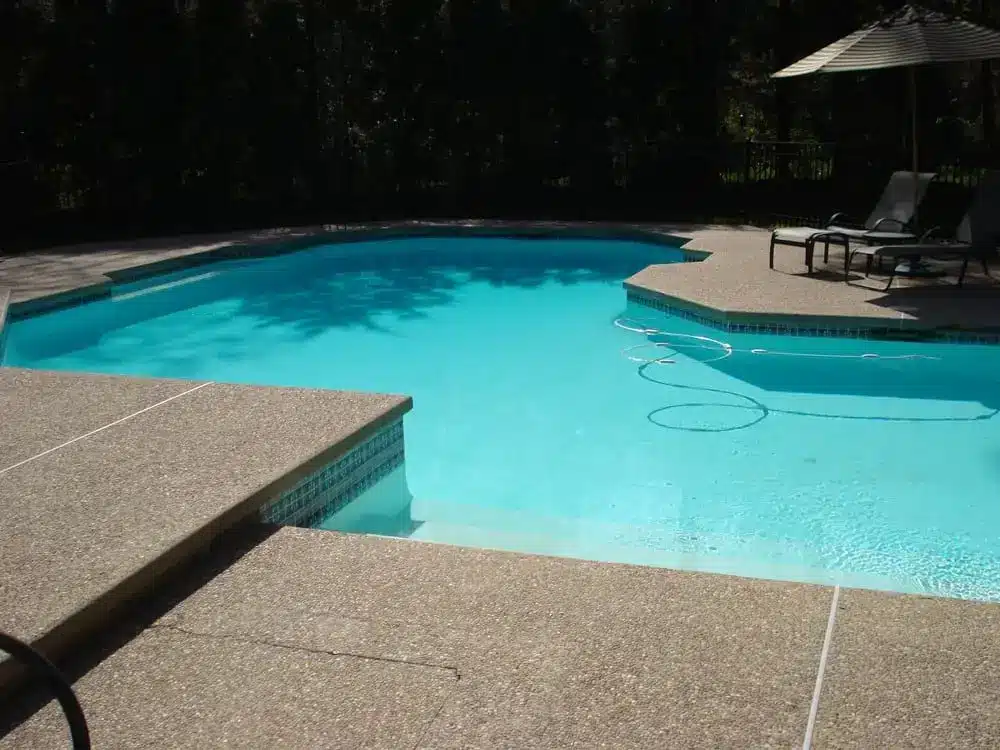
When Your Pool Deck Is Trying to Tell You Something
Pool deck resurfacing is the process of applying a new layer or coating over your existing pool deck — restoring its safety, appearance, and durability without the cost and hassle of a full tear-out and replacement.
Quick answer — here’s what you need to know:
- What it is: Adding a fresh surface layer (concrete overlay, stamped concrete, pavers, or coating) over your existing deck
- Why it matters: Cracked, faded, or slippery decks are safety hazards — and an eyesore
- Cost range: $3–$40+ per square foot depending on material, vs. $6–$10+ per sq ft for a full new pour
- How long it lasts: 6–25 years depending on material and maintenance
- Best for: Decks with surface wear, cracks, fading, or poor traction — not major structural failure
Picture this: you’re heading out for a swim on a hot summer afternoon, and the concrete around your pool is cracked, faded, and rough underfoot. It doesn’t just look tired — it’s a genuine slip-and-fall waiting to happen.
This is one of the most common situations homeowners face with aging pool decks. Over time, sun exposure, pool chemicals, foot traffic, and — especially here in New England — freeze-thaw cycles all take a toll on the surface. What was once a smooth, attractive deck becomes a patchy, potentially dangerous area.
The good news? You don’t have to start from scratch.
Resurfacing gives your deck a second life. It fixes surface-level problems, improves traction, reduces heat absorption, and can completely transform the look of your backyard — often in just a few days.
Similar topics to Pool deck resurfacing:
Why Pool deck resurfacing is Essential for Your Backyard
In our neck of the woods—from the historic streets of Andover, MA, to the quiet lakeside homes in Derry, NH—we know that a pool deck isn’t just a walkway; it’s the stage for your entire summer. When that stage starts to crumble, it’s more than an aesthetic bummer. Pool deck resurfacing becomes essential for several critical reasons.
Slip Resistance and Safety
Safety is the number one driver for most of our clients. Over years of use, the original broom finish or texture on a concrete deck wears down, becoming smooth and incredibly slippery when wet. By choosing a textured overlay or a specialized coating, you’re adding much-needed “grip.” High-quality resurfacing products are specifically designed to be non-slip, protecting kids running for the diving board and grandparents enjoying a poolside stroll.
Heat Reduction
We’ve all done the “hot feet dance” across a scorching concrete slab in July. Traditional gray concrete and dark pavers soak up solar energy like a sponge. Modern resurfacing options, such as “cool deck” coatings, use thermal reduction technology to pull heat away from the surface and into the soil below. Some of these coatings can reduce surface temperatures by up to 38%, making it comfortable to walk barefoot even in peak afternoon sun.
Structural Integrity and UV Protection
Think of resurfacing as a protective shield for your deck’s “bones.” In Massachusetts and New Hampshire, water seeps into tiny surface cracks during the fall. When winter hits, that water freezes and expands, turning a small hairline crack into a major canyon. Resurfacing seals those entry points. Additionally, these coatings offer UV protection, preventing the sun from “bleaching” your deck and causing it to become brittle and prone to spalling (peeling).
For a deeper dive into how these systems protect your investment, check out this Concrete Pool Deck Resurfacing Guide or explore our more info about pool resurfacing options.
Popular Materials and Design Options
Choosing the right material is a balance of your budget, your style, and how much maintenance you’re willing to do. In New England, we have to be particularly picky because our materials must survive -10°F winters and 95°F summers.
| Material | Est. Cost / Sq Ft | Typical Lifespan | Heat Resistance |
|---|---|---|---|
| Concrete Overlay | $3 – $10 | 10–15 Years | Moderate |
| Stamped Concrete | $8 – $15 | 10–20 Years | Moderate |
| Cool Deck Coating | $3 – $6 | 6–10 Years | High |
| Paver Overlays | $10 – $40 | 20–25 Years | High (Travertine) |
| PVC Liners | $5 – $15 | 10–15 Years | Moderate |
Decorative Stamped Concrete and Overlays
If you love the look of natural stone but don’t want the price tag of individual masonry, stamped concrete overlays are a fantastic middle ground. We apply a thin layer of polymer-modified cement over your existing slab and “stamp” it with patterns that mimic slate, flagstone, or even wood planks.
These overlays are incredibly versatile. You can choose integral colors that are mixed right into the cement, ensuring the color won’t just “chip off” over time. They provide excellent texture for slip resistance and can be customized to match the existing theme of your home. You can see a great example of a Pool Deck Repair with Classic Texture to get an idea of the transformation possible. If you’re also looking at the pool interior, you might find our more info about gunite pool painting costs helpful for budget planning.
Durable Paver Overlays and Natural Stone
For a truly high-end look in places like Bedford, NH or Wellesley, MA, many homeowners opt for paver overlays. Unlike traditional pavers that require a deep gravel base, thin “remodeling pavers” (often about 1″ thick) can sometimes be laid directly over a structurally sound concrete deck.
Travertine is the gold standard here. It is naturally slip-resistant and stays remarkably cool underfoot. The beauty of pavers is their flexibility; because they are individual units, they can move slightly with the ground’s natural shifting without cracking. If a single stone gets stained or damaged, you just pop it out and replace it—no jackhammers required. However, if your existing deck is in truly rough shape, you may want to look into more info about the cost to remove and replace concrete pool decks before deciding.
The Step-by-Step Process for a Flawless Finish
Resurfacing isn’t just “slapping on some paint.” It’s a meticulous engineering process. If you skip a step, the New England frost will find that weakness and peel your new surface right off by next spring.

- Inspection and Assessment: We start by checking for “hollow” spots or structural cracks. If the base slab is sinking or shifting, resurfacing won’t help—you’d just be putting a band-aid on a broken bone.
- Surface Preparation: This is the most important part. We must remove all old sealers, dirt, and oils. We often use pressure washing or mechanical grinding to get down to “fresh” concrete.
- Crack Repair: Every crack is chased out, cleaned, and filled with a high-strength epoxy or specialized patching compound.
- Bonding Agents: We apply a primer or bonding agent that acts like “super glue” between the old concrete and the new overlay.
- Material Application: Whether we are spraying a knockdown texture, troweling an overlay, or laying stone, this is where the “art” happens.
- Curing and Sealing: The surface needs time to set. Finally, we apply a high-grade sealer to lock out moisture and chemicals.
Knowing the right timing for these steps is key. You can learn more info about when to resurface a gunite pool to see how the deck and pool interior schedules can align.
Professional Surface Preparation Techniques
To ensure the new surface sticks, we don’t just “wash” the deck. We use techniques like dustless blasting or acid etching to create a “profile” on the concrete—think of it like scuffing up a wall before you paint it. This gives the overlay thousands of tiny “teeth” to grab onto.
In high-traffic commercial areas or very worn residential decks, we might use a 40,000 PSI hydro-blasting system to strip away contaminants without damaging the underlying slab. If you’re looking for local experts to handle this heavy lifting, check out our more info about pool resurfacing companies near me.
Maintenance and Longevity in Northern Climates
Maintaining a resurfaced deck in Massachusetts or New Hampshire requires a bit of seasonal savvy. Our “freeze-thaw” cycles are the biggest enemy of any outdoor surface.
- Seasonal Cleaning: Every spring, give your deck a good scrub with a mild detergent and a soft brush. This removes the winter grime and salt that can eat away at sealers.
- Resealing Schedules: To keep your deck looking new, you should plan to reseal it every 2 to 5 years. This keeps the protective barrier intact against UV rays and chlorinated water.
- Chemical Balance: Believe it or not, your pool water chemistry affects your deck. If you’re constantly splashing highly acidic or basic water onto the surface, it can degrade the sealer faster.
- Winterizing: When the snow flies in Nashua or Worcester, avoid using harsh metal shovels on your resurfaced deck. Use plastic shovels or a snow blower with a rubber edge to avoid scratching the finish. Never use rock salt (sodium chloride) on a decorative concrete surface; use sand for traction or calcium magnesium acetate if you must melt ice.
For those curious about the interior of the pool as well, we have more info about the average cost to resurface a gunite pool to help you plan a total backyard refresh.
Frequently Asked Questions
Is DIY Pool deck resurfacing a Good Idea?
We love a good weekend project as much as anyone, but Pool deck resurfacing is one area where professional help pays for itself. The specialized grinders and mixers required are expensive to rent, and the “open time” (how long you have to work with the material before it hardens) is very short. If you make a mistake on a 1,000-square-foot deck, fixing it usually involves grinding the whole thing off and starting over. Plus, a professional installation comes with a warranty that a DIY bucket of “cool paint” simply can’t match.
How Much Does Pool deck resurfacing Cost Per Square Foot?
Pricing varies based on the condition of your existing concrete and the finish you choose.
- Basic Coatings: $3 – $6 per sq ft.
- Decorative Overlays: $7 – $15 per sq ft.
- Premium Stone/Pavers: $15 – $40+ per sq ft. Factors like the number of cracks to be repaired and the ease of access for our equipment in your backyard will also play a role. For a broader look at budgeting, read more info about the average cost to resurface a pool.
How often should you resurface a pool deck?
Most high-quality resurfacing jobs will last between 10 and 15 years, with some premium systems lasting up to 25 years. You’ll know it’s time when you see:
- Safety Issues: The surface feels “slick” when wet.
- Visual Cues: Widespread “spider-web” cracking or peeling.
- Comfort: The deck is becoming painfully hot to walk on.
- Maintenance: You’re spending more time patching small holes than enjoying the water.
Conclusion
At Creative Edge Pools, we don’t just “fix” decks; we transform backyards. As a family-owned business with over 100 years of combined experience, we understand the unique challenges of building and renovating in Eastern MA and Southern NH. Whether you’re in the heart of Boston or the outskirts of Manchester, our mission is to bring your vision to life with craftsmanship that stands the test of time.
Ready to stop the slips and start the summer right? Schedule a consultation for professional hardscaping services today, and let’s give your pool the “edge” it deserves.