
Transform Your Pool Area into a Complete Outdoor Living Environment
Poolside patio installation creates a functional, safe, and beautiful transition between your pool and the rest of your backyard. It’s the foundation that ties your entire outdoor living space together.
Quick Answer: What’s Involved in Poolside Patio Installation?
- Planning & Design – Site evaluation, material selection, and layout (minimum 8×12 ft area).
- Site Preparation – Excavation, drainage setup with 1/8″ per foot slope, and utility coordination.
- Installation – Base compaction, material placement, and joint filling.
- Finishing – Sealing, safety feature integration, and final walkthrough.
- Timeline – 7-9 weeks for a complete pool and patio environment.
Typical Investment: $3,000-$5,000 for basic concrete; $130,000+ for a complete gunite pool environment with custom pavers, fencing, and utilities.
For homeowners in Eastern Massachusetts and Southern New Hampshire, the patio is a critical component affecting safety, drainage, and aesthetics. A well-designed patio expands usable space, reduces maintenance, and increases property value. Understanding the process—from initial planning to professional installation—is essential before you break ground.
Benefits and Functionality of a Poolside Patio
A thoughtfully designed poolside patio transforms your pool area into a true backyard oasis. We believe a patio is the heart of your outdoor living experience, improving both functionality and aesthetics.
Key benefits include:
- Expanded Usable Space: Extends your living area for activities beyond swimming, from sunbathing and outdoor dining to yoga, games, and hosting friends.
- Improved Home Value: Boosts property value and creates a resort-like atmosphere that feels intentional, finished, and professionally planned.
- Improved Safety: Offers stable, slip-resistant surfaces and clear pathways, reducing muddy areas and trip hazards when feet are wet.
- Reduced Maintenance: Replaces grassy areas, cutting down on mowing and pool debris (grass clippings, soil, mulch, and leaves) that would otherwise end up in the water.
- Stable Foundations: Provides a level surface for outdoor furniture, dining sets, and kitchens so chairs do not wobble and umbrellas, grills, and storage stay secure.
- Seamless Integration: Ties the backyard together for a cohesive look, as seen in these pool deck and patio designs.
- Year-Round Versatility: Features like fire pits extend usability into cooler New England weather, while thoughtful drainage and material choices help the space recover quickly after rain.
How a patio improves the way you use your pool
A patio is more than a “deck” around the water. It is the circulation and gathering zone that determines how comfortable the pool feels day-to-day.
- Better traffic flow: Wider walkways help swimmers move safely from house to pool, pool steps to seating, and seating to outdoor showers or equipment areas.
- Defined zones: A well-proportioned layout creates natural areas for loungers, a dining table, and a shaded sitting space without crowding the pool edge.
- Cleaner swimming environment: Less exposed soil and lawn near the pool generally means less grit tracked onto the coping and fewer fine particles entering the water.
- Comfort underfoot: Material and finish choices can reduce glare and heat buildup, while still providing traction.
We generally recommend an 8×12 foot or larger patio area to provide plenty of space for comfortable movement and furniture placement without feeling cramped. Many families ultimately prefer larger layouts so there is room to place loungers with clearance to walk behind them and to create an eating area that is not directly in the splash zone.
Common patio add-ons (often planned from day one)
Even if you do not install everything at once, it helps to plan for these elements early so elevations, utilities, and clearances are correct:
- Seating walls or built-in benches
- Steps and landings connecting to the home or yard
- Fire features and lighting
- Outdoor kitchen or grill pad
- Planting beds and landscape borders to soften hard edges
Planning Your Poolside Patio Installation
Success begins with careful planning custom to your Eastern MA or Southern NH property. We leverage a century of combined experience to ensure no detail is overlooked. For general insights, refer to this patio planning guide.
Our planning process involves:
- Site Evaluation: Assessing access, elevation changes, and ground conditions for a solid foundation.
- Sun Exposure: Determining placement for sun-drenched lounging or shaded retreats.
- Drainage: Planning for water flow to prevent pooling, weeds, and mildew.
- Local Zoning: Navigating regulations, including the 5-foot safety clearance rule.
- Utility Location: Identifying underground plumbing and electrical lines before excavation.
In New England, planning also means accounting for freeze-thaw cycles, spring groundwater, and the reality that patios are frequently used wet (kids in and out of the pool, rainfall, and pool maintenance). A patio that looks great but is incorrectly graded or undersized can create long-term headaches, including standing water, shifting pavers, and narrowed walking paths.
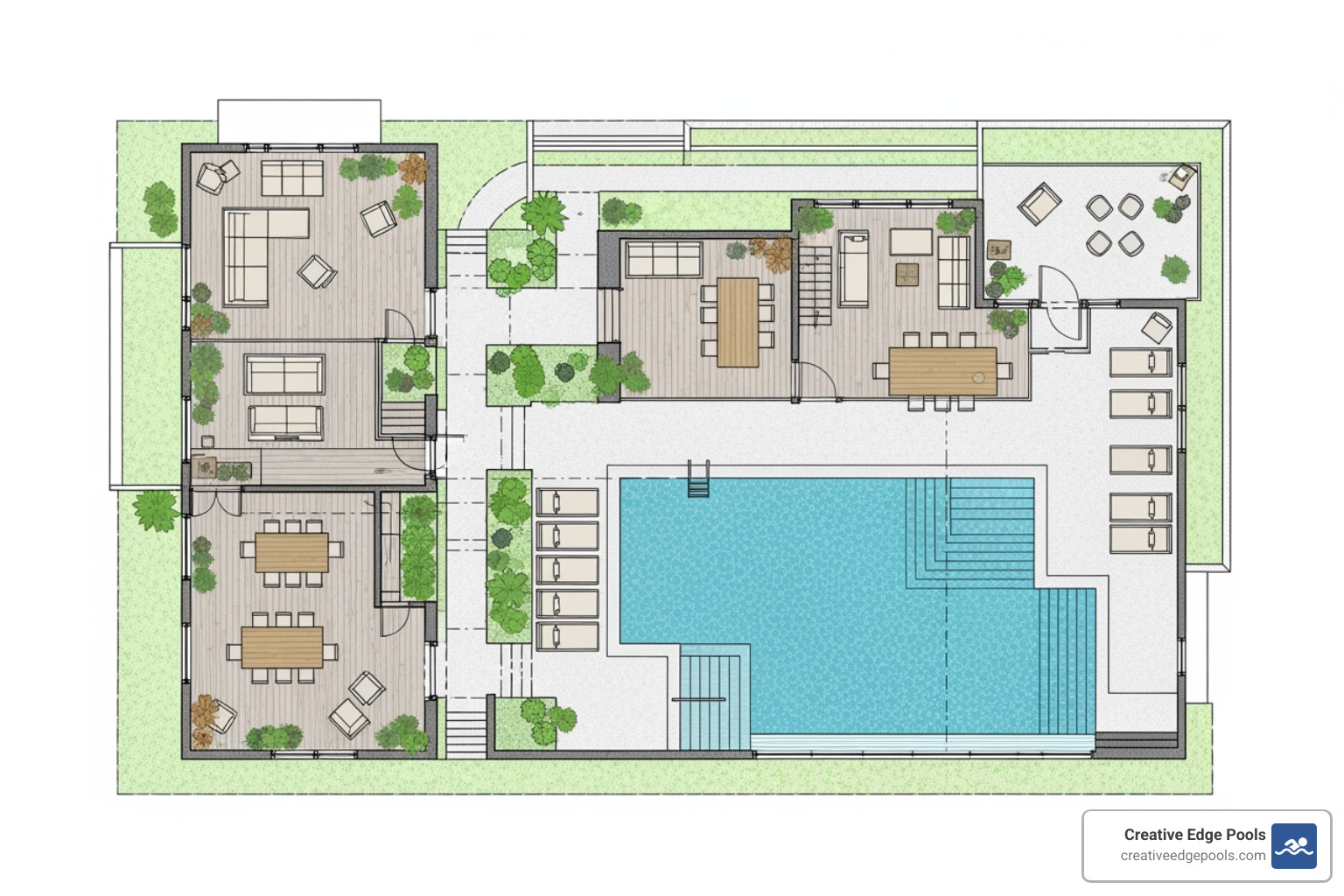
Sizing and layout: what we plan before we build
A good layout starts with how you will actually use the space. Beyond the code-driven clearances, we typically map out:
- Primary walk paths: Comfortable routes from the house to the pool entry, and from the pool to seating, dining, and storage.
- Furniture footprints: Loungers, dining tables, umbrellas, and conversation sets each need room plus clearance to move around them.
- Equipment access: A path that allows service access to pumps, filters, and valves without stepping over furniture.
- Entry/exit zones: Extra space at pool steps, benches, and ladders where people gather and where water is most likely to drip.
We generally recommend an 8×12 foot or larger patio area as a baseline for usability, and we adjust upward based on how many seating and entertainment zones you want.
Designing for Seamless Pool Integration
An exceptional patio flows naturally with your pool. Our design approach includes:
- Color Coordination: Matching materials with your home’s exterior and pool finish.
- Material Matching: Ensuring the patio blends beautifully with the pool coping.
- Pool Coping: Using specialized tools to install the pool’s edge for a professional transition.
- Transition Zones: Designing wide, comfortable pathways between the home and pool.
- Landscape Integration: Considering how the patio interacts with gardens and hardscaping. See examples of integrated patio installations.
Essential Safety Features for Poolside Patio Installation
Safety is our priority. Following CDC drowning prevention guidelines, we integrate:
- Slip-Resistant Textures: Selecting materials like textured natural stone or exposed aggregate.
- Fencing and Barriers: Installing 4-foot non-climbable fences with self-latching gates, meeting safety standards.
- Clear Sightlines: Designing layouts that provide unobstructed views of the pool.
- LED Safety Lighting: Installing waterproof pathway and step lights to prevent trips.
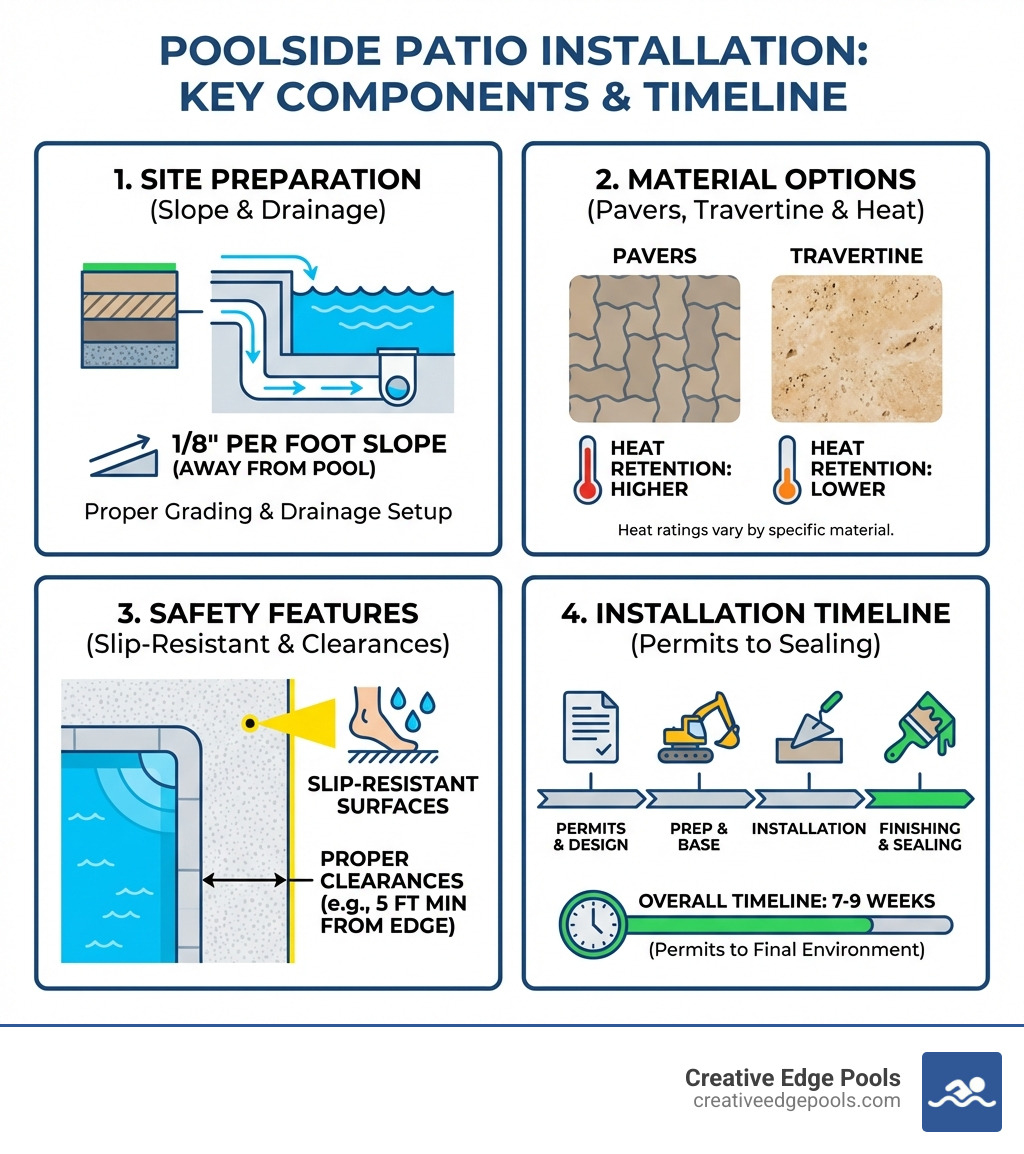
- Designated Clearances: Adhering to the 5-foot clearance rule for safe movement.
Permits, schedules, and coordination
Permitting and sequencing matter because the patio touches multiple systems.
- Municipal permitting and inspections: Requirements vary by town, and timing can affect your start date.
- Coordination with pool construction: Coping, elevations, and drainage details should be finalized so the patio meets the pool edge cleanly.
- Utility planning: If you want lighting, a future outdoor kitchen, or a fire feature, it is far easier (and typically more cost-effective) to plan conduit and stub-outs before the patio is finished.
Careful planning up front helps your poolside patio installation look better, function better, and last longer in Eastern Massachusetts and Southern New Hampshire conditions.
Material Selection: Durability and Safety
In New England, materials must withstand freezing winters and humid summers. We prioritize resilient options that offer both safety and longevity.
- Concrete: A cost-effective, versatile option. Finishes like broom or stamped concrete ensure slip resistance. Basic installations start around $3,000–$5,000.
- Pavers: Concrete, stone, or porcelain pavers offer design flexibility and excellent drainage. They are adaptable to shifting ground and easy to repair.
- Natural Stone: Bluestone and travertine provide timeless beauty. Travertine is ideal for pools as it stays cool underfoot and is naturally slip-resistant.
- Porcelain Tile: Highly durable, water-resistant, and resistant to algae and frost.
- Composite Decking: A low-maintenance, splinter-free alternative for integrated deck areas.
| Material | Pros | Cons | Heat Retention | Slip Resistance | Freeze-Thaw |
|---|---|---|---|---|---|
| Concrete | Affordable, versatile | Can crack, needs curing | Moderate-High | Varies | Moderate |
| Pavers | Flexible, easy repair, great drainage | Higher initial cost, needs joint care | Moderate | Good | Excellent |
| Natural Stone | Neat, stays cool (travertine) | Most expensive, can be porous | Low-Moderate | Good | Excellent |
| Porcelain Tile | Very durable, low maintenance | Requires concrete slab | Moderate | Good | Excellent |
| Composite | Low maintenance, splinter-free | Can be hot in direct sun | Moderate-High | Good | Excellent |
The Technical Process: Drainage and Site Preparation
Proper preparation ensures your patio’s longevity. Our team focuses on critical technical steps:
- Excavation and Grading: We establish a 1/8″ per foot slope to direct water away from the house and pool. Watch this video on backyard drainage.
- Sump Drain Installation: For gunite pools, we install perforated pipes to manage groundwater and prevent hydrostatic pressure. Learn about sump drain importance.
- Sub-Base and Compaction: We use high-performance bedding (HPB) and clear gravel, compacted in layers to create a stable foundation.
- Plumbing Pressure Tests: All lines are tested at 15 PSI for ten minutes before the patio is laid.
- Electrical Conduits: Gas and electrical lines are placed in separate, deep trenches for safety and future access.
Why drainage details matter around pools
Pool decks are almost always wet, and in New England they also deal with spring runoff and freeze-thaw cycles. When drainage is not handled correctly, symptoms can show up quickly:
- Standing water near coping or steps
- Washed-out joint sand and shifting pavers
- Ice buildup in shoulder seasons
- Water directed back toward the house foundation
That is why slope, sub-base quality, and drainage routing are treated as design requirements, not optional upgrades.
What “site preparation” typically includes
While the exact approach varies by material and yard conditions, professional prep generally includes:
- Layout and elevation control: Establishing final grades so the patio meets the pool coping cleanly and drains in the intended direction.
- Base thickness matched to conditions: Adjusting excavation depth and base design based on soil type, groundwater, and anticipated loads (such as furniture groupings or a kitchen zone).
- Edge restraint planning: Ensuring pavers (when used) are properly restrained so the field stays locked and lines remain crisp over time.
- Separation from planting areas: Planning borders and transitions so mulch and soil do not wash onto the deck during storms.
Professional Poolside Patio Installation Timeline
- Permitting (2-3 weeks): We handle all municipal paperwork and coordination.
- Excavation Phase: Grading and sub-base preparation begin.
- Pool Construction: Gunite application and plumbing happen concurrently.
- Patio Installation (7-9 weeks total): Laying materials and integrating coping and steps.
- Finishing: Includes curing for concrete, joint sanding with polymeric sand, and a final walkthrough.
Because outdoor construction is weather-dependent, especially in spring and fall, the schedule can also include short pauses for rain events or temperature windows needed for certain finishes and sealers. Proper timing helps the patio cure, set, and lock in the way it is intended to for long-term durability.
Maintenance and Cost Considerations
Maintenance Requirements:
- Regular Cleaning: Sweeping and occasional power washing.
- Sealing: Periodic sealing (every 2-3 years) protects against UV, stains, and moisture.
- Polymeric Sand: Hardens in joints to lock pavers and prevent weed growth.
- Winterization: Ensuring clear drainage and applying protective coatings for the off-season.
Cost Considerations:
- Complete Environment: Full gunite pool projects, including patio, fencing, and utilities, start at $130,000.
- Basic Patios: Standalone concrete options range from $3,000–$5,000.
- Custom Premiums: Natural stone and custom pavers increase costs but offer superior aesthetics and easier repairs.
- Site Factors: Challenging slopes or poor soil may require additional excavation and base work.
Frequently Asked Questions about Poolside Patios
How big should a patio be around a pool?
Local codes usually require a 5-foot clear space for safety and maintenance. We recommend an 8×12 foot area or larger to accommodate furniture and pathways comfortably.
What is the best material for bare feet in the sun?
Travertine is the top choice for staying cool. Light-colored pavers and specialized “cool deck” coatings also minimize heat absorption.
Do I need a permit for a poolside patio?
Yes. Most Eastern MA and Southern NH towns require permits for pool-related construction. We handle the 2-3 week permitting process for you.
Conclusion
An expertly installed poolside patio is an investment in your lifestyle and property value. At Creative Edge Pools, our family-owned team brings over 100 years of combined experience to every project in Eastern MA and Southern NH. We specialize in gunite pools and full-service backyard development, turning your vision into a durable reality.
