
Average Cost to Resurface a Pool: Top 5 Amazing Tips
The average cost to resurface a pool is a crucial factor for homeowners looking to maintain their backyard oasis. While the national average cost can range from $6,000 to $10,000, the exact amount varies based on several factors, such as pool size, type, and finish. Understanding the resurfacing process and its importance can help maximize your pool’s lifespan and maintain its visual appeal.
Proper pool maintenance, including timely resurfacing, is essential for extending your pool’s life and enhancing its aesthetic charm. Signs indicating the need for resurfacing include flaking plaster and cracks. Resurfacing not only revives the pool’s look but also prevents leaks and damage.
I’m David Brabant, and with 30 years in the swimming pool industry, I’ve guided countless homeowners through understanding the average cost to resurface a pool. Our expertise at Creative Edge Pools ensures homeowners in Eastern Massachusetts and Southern New Hampshire receive quality resurfacing services, enhancing pool longevity and value.
Factors Influencing Pool Resurfacing Costs
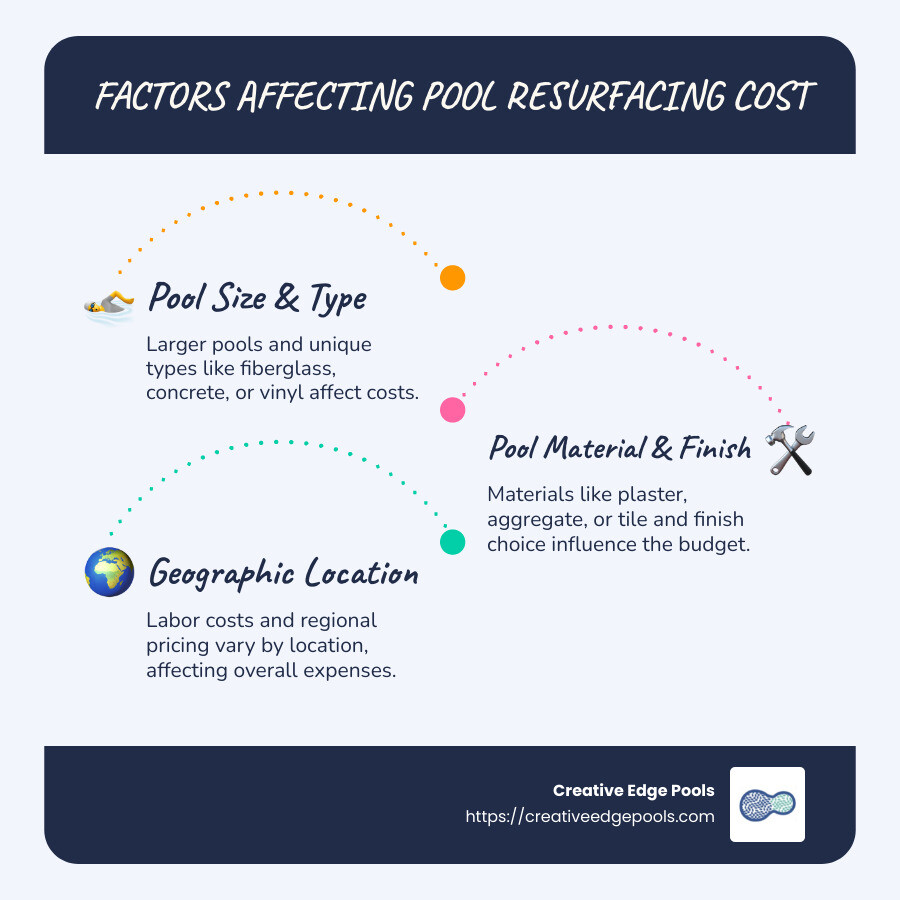
When it comes to resurfacing your pool, several factors come into play that can influence the overall cost. Understanding these can help you plan your budget effectively.
Pool Size and Type
The size and type of your pool are primary cost drivers. Larger pools require more materials and labor, naturally increasing costs. For example, fiberglass pools typically cost around $6,500 per 1,000 square feet to resurface, while concrete or gunite pools have similar costs but offer different finish options. Vinyl pools, on the other hand, involve replacing the liner rather than resurfacing, ranging from $1,000 to $3,500 per 1,000 square feet.
Pool Material
The material used for resurfacing can significantly affect costs. Plaster is a common choice for concrete pools, costing about $3 to $5 per square foot. Aggregate finishes like pebble or quartz are more durable and aesthetically pleasing, with costs starting at $5 per square foot. Tile finishes are the most expensive, averaging $25,000 for a full resurfacing job. Epoxy paint is a budget-friendly option, costing between $3,000 and $5,500 for a typical pool.
Pool Condition
The current condition of your pool also plays a role in determining costs. Pools with cracks, leaks, or rust stains may require additional repairs before resurfacing can begin. Addressing these issues is crucial to prevent further damage and ensure a smooth resurfacing process.
Finish Type
The type of finish you choose affects both the cost and longevity of the resurfacing. Options include paint, plaster, aggregate, and tile. While paint is the least expensive, it requires more frequent maintenance. In contrast, tile and aggregate finishes, although pricier, offer longer-lasting results.
Labor Costs
Labor costs vary based on the complexity of the job and geographic location. In areas with higher living costs, labor rates may be higher. Additionally, the complexity of the resurfacing project, such as intricate designs or difficult-to-access areas, can increase labor costs.
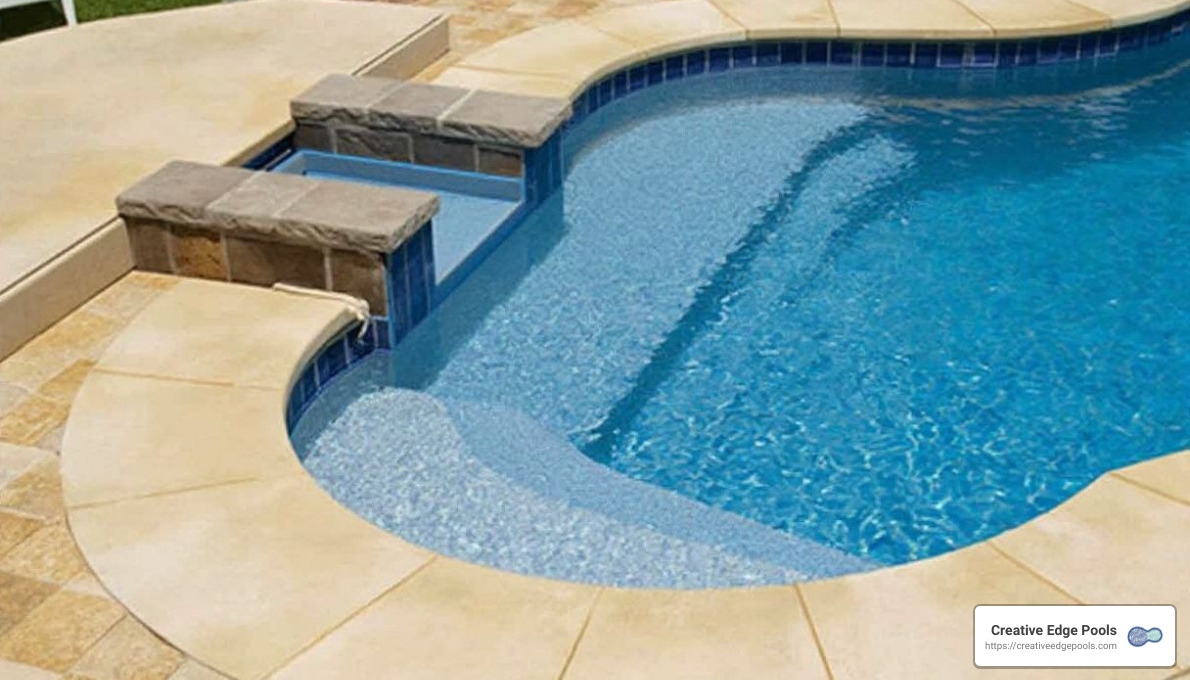
Understanding these factors will help you make informed decisions about your pool resurfacing project, ensuring you get the best value for your investment. Next, we’ll break down the average cost to resurface a pool by pool type and finish type, providing a clearer picture of what you can expect to pay.
Average Cost to Resurface a Pool
When planning to resurface your pool, it’s crucial to understand the costs involved. These can vary widely based on the type of pool and the finish you choose. Let’s break it down.
Cost Breakdown by Pool Type
Fiberglass Pools
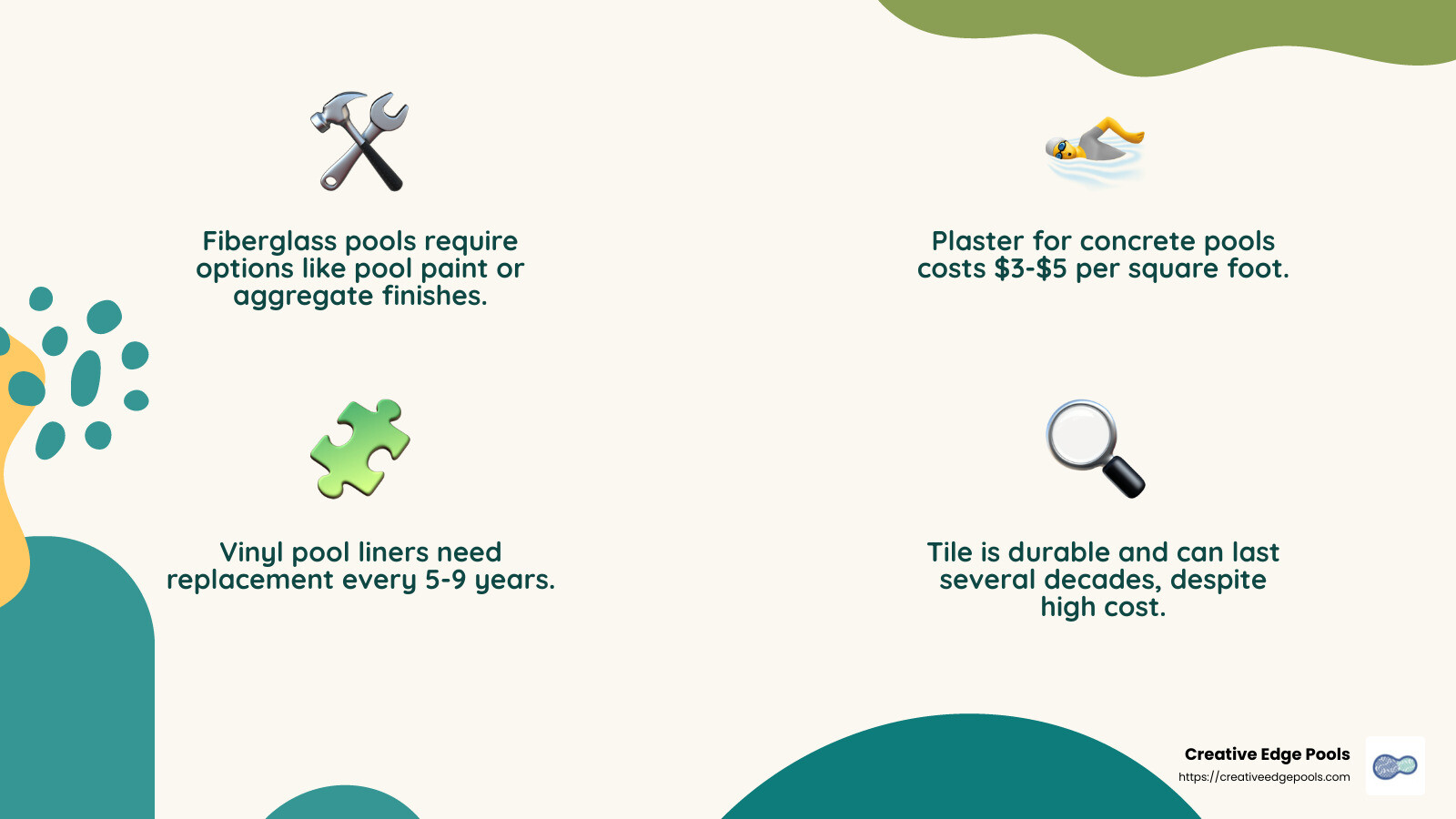
Resurfacing a fiberglass pool typically costs about $6,500 per 1,000 square feet. This includes labor and materials. Fiberglass pools are unique because they can’t be re-coated with gelcoat in a backyard setting. Instead, options like pool paint or aggregate finishes are used.
Concrete or Gunite Pools
For concrete or gunite pools, resurfacing costs are similar to fiberglass pools, at around $6,500 per 1,000 square feet. These pools offer flexibility in finish options. Plaster is a common choice, costing between $3 and $5 per square foot. More durable options like tile or aggregate finishes can increase the cost significantly.
Vinyl Pools
Vinyl pools don’t get resurfaced in the traditional sense. Instead, the vinyl liner is replaced. This costs between $1,000 and $3,500 per 1,000 square feet. While this may seem cheaper, vinyl liners need replacement every 5-9 years, adding up over time.
Cost Breakdown by Finish Type
Paint
Using paint is the most budget-friendly option for resurfacing. It costs around $3,000 to $5,500 for a standard pool. However, paint requires more frequent maintenance compared to other finishes.
Plaster
Plaster is a popular choice for concrete pools. It costs between $3 and $5 per square foot. While it’s more affordable than tile or aggregate, it typically lasts about 10 years before needing resurfacing.
Aggregate
Aggregate finishes, like pebble or quartz, cost around $5 per square foot for materials. A complete resurfacing with aggregate can start at $13,000 for a medium-sized pool. These finishes are more durable and longer-lasting, often exceeding 15 years with proper care.
Tile
Tile is the most expensive option, costing $25,000 or more for a full resurfacing job. Despite the high upfront cost, tile is extremely durable and can last several decades, making it a worthy investment for many pool owners.
Understanding these costs will help you budget effectively for your pool resurfacing project. Whether you choose a cost-effective paint or a long-lasting tile finish, each option has its own benefits and price points. Next, we’ll explore the benefits of pool resurfacing, highlighting why investing in a quality finish is worthwhile.
Benefits of Pool Resurfacing
Resurfacing your pool is more than just a makeover; it’s an investment in durability, aesthetics, and even your home’s value. Here’s why resurfacing is a smart choice.
Durability
Long-lasting Materials
Choosing the right materials can significantly extend your pool’s lifespan. For example, aggregate finishes like pebble or quartz can last over 15 years with proper care. Even plaster, a popular choice, offers a solid 10-year lifespan. This means fewer resurfacing projects over the life of your pool.
Reduced Maintenance
Less Frequent Repairs
A freshly resurfaced pool is less prone to issues like cracks, leaks, and rough textures. This means you won’t spend as much time—or money—on maintenance. Keeping your pool’s surface in top shape can also prevent costly repairs down the road.
Lower Maintenance Costs
With a smooth, new surface, cleaning becomes easier and more efficient. You’ll use fewer chemicals and save on maintenance supplies, reducing your ongoing pool care expenses.
Aesthetic Appeal
Visual Improvement
A resurfaced pool can dramatically improve the look of your backyard. Whether you choose a simple plaster finish or a luxurious tile design, a fresh surface makes your pool inviting and vibrant.
Custom Designs
Resurfacing is an opportunity to update your pool’s look. You can choose from a variety of colors and textures, creating a custom design that reflects your style. This not only improves aesthetics but also makes your pool a standout feature of your home.
Increased Property Value
Home Value
A well-maintained pool can increase your property’s value. According to experts, having a pool can boost your home’s value by up to 8%. This is especially true in warmer climates where pools are highly sought after.
Buyer Appeal
When it comes time to sell, a beautifully resurfaced pool can be a major selling point. Buyers appreciate a pool that’s ready for use, without needing immediate repairs or updates. This can make your home more appealing on the market.
Investing in pool resurfacing offers numerous benefits that go beyond just improving the look of your pool. Up next, we’ll discuss the signs that indicate when it’s time to resurface your pool.
Signs Your Pool Needs Resurfacing
Knowing when your pool needs resurfacing is crucial for maintaining its safety and beauty. Let’s look at the key signs that indicate it’s time for an update.
Flaking or Peeling
If you notice your pool’s plaster flaking or peeling, it’s a clear sign of trouble. This issue, known as spalling, often occurs due to low calcium or improper pH levels in the water. The only effective solution is resurfacing. Ignoring this problem can lead to more severe damage and higher repair costs.
Cracks or Leaks
Cracks and leaks are serious issues that need immediate attention. Cracks can be due to shifting soil or structural problems, while leaks might mean your pool is losing water. Identifying the source of these problems is essential before starting any resurfacing work. Repairing these issues early can prevent further damage and save you money in the long run.
Staining or Discoloration
Stains or discoloration on your pool’s surface can be caused by minerals like salt, copper, and calcium. Rust stains from rebar or tie wire can also appear, and they tend to worsen over time. The best way to achieve a consistent, stain-free look is through resurfacing. This not only restores the pool’s appearance but also extends its lifespan.
Rough Texture
A rough pool surface can be uncomfortable and is often a sign that the plaster is wearing thin. This can happen due to calcium deposits or chemical imbalances in the water. If walking or sitting in your pool feels uncomfortable, it’s time to consider resurfacing. A smooth surface not only improves comfort but also makes cleaning easier and more effective.
Recognizing these signs early helps keep your pool in top condition and prevents costly repairs. Next, we’ll explore the pros and cons of DIY resurfacing versus hiring a professional.
Pool Resurfacing: DIY vs. Hiring a Professional
When it comes to pool resurfacing, the decision between doing it yourself and hiring a professional is significant. Let’s explore the pros and cons of each option.
DIY Kits
DIY resurfacing kits are readily available and might seem like a cost-effective solution. They are best suited for small repairs or compact areas. If your pool only has minor issues, a DIY kit could be a practical choice. However, these kits are not designed for large-scale resurfacing projects.
Professional Expertise
Hiring professionals brings a level of expertise and quality assurance that DIY projects can’t match. Trained technicians have the experience needed to handle complex resurfacing tasks, ensuring the job is done right the first time. This expertise minimizes the risk of errors and ensures a longer-lasting finish.
Cost Comparison
While DIY might save you money on labor costs, it can lead to higher expenses if mistakes occur. Professional resurfacing typically costs between $45 to $65 per hour for labor, but it provides long-term savings by reducing the need for frequent repairs and touch-ups. Additionally, professionals often have access to better materials at more competitive prices.
Potential Mistakes
One of the main risks of DIY resurfacing is application errors. Incorrectly applying resurfacing materials can lead to uneven surfaces, peeling, or even more severe damage. These mistakes could result in additional costs to fix the problems, negating any initial savings.
Choosing between DIY and hiring a professional depends on the scope of your resurfacing project and your confidence in handling the task. For most pool owners, the peace of mind and quality results from hiring a professional outweigh the potential savings of a DIY approach.
Next, we’ll address some frequently asked questions about pool resurfacing to help you make informed decisions.
Frequently Asked Questions about Pool Resurfacing
How much does it cost to resurface a pool deck?
Resurfacing a pool deck can vary based on the type of finish you choose. A concrete overlay is a popular option, costing between $3,000 and $4,000. This method involves applying a new layer of concrete to refresh the deck’s appearance. If you prefer a more decorative look, consider staining or adding decorative options like patterns and textures, which can increase costs to between $5,000 and $6,000.
How often should I replaster my pool?
Typically, a pool should be replastered every 7 to 15 years, depending on the finish and maintenance. Plaster finishes usually last 7 to 12 years, while aggregate finishes can extend up to 15 years. Regular condition assessment and proper maintenance, like balancing water pH, can prolong the lifespan of your pool’s surface. If you notice signs such as flaking, peeling, or discoloration, it might be time for a replastering job.
What happens if I don’t replaster my pool?
Neglecting to replaster your pool can lead to a host of problems. Over time, the surface may develop leaks, allowing water to escape and potentially damage surrounding structures. Additionally, a worn surface can harbor bacteria growth and waterborne diseases, posing health risks. Not to mention, the rough texture can cause injuries to swimmers. Regular maintenance and timely resurfacing are crucial to avoid these issues and keep your pool safe and enjoyable.
Conclusion
Resurfacing your pool is an essential step in maintaining its beauty and functionality. Whether you’re dealing with aging plaster, cracks, or just want a fresh look, resurfacing can breathe new life into your pool. It’s an investment that not only improves your pool’s durability and aesthetic appeal but can also increase your property’s value.
At Creative Edge Pools, we understand the importance of a well-maintained pool and the impact it can have on your home. As a family-owned business in Eastern Massachusetts and Southern New Hampshire, we specialize in designing and installing custom gunite swimming pools, ensuring every project is custom to our client’s vision. Our comprehensive backyard development services, including landscaping and masonry, make us a one-stop shop for all your pool needs.
If you’re considering pool resurfacing or any other pool-related project, we’re here to help. Contact us today to discuss your options and get a personalized quote. Let us help you transform your backyard into a paradise that you and your family will enjoy for years to come.
