Pool Resurfacing Options: Discover 5 Amazing Benefits
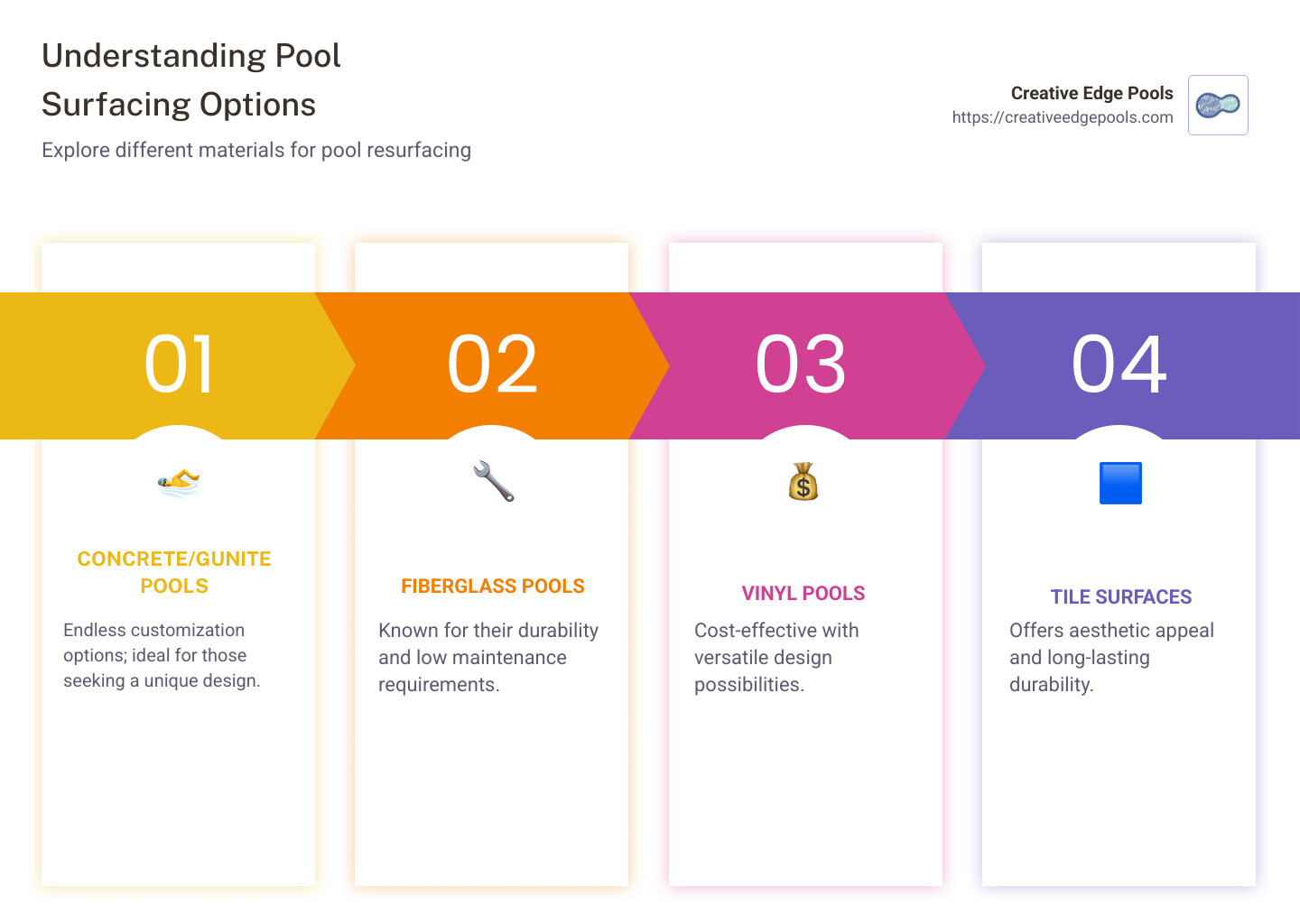
Resurfacing your pool can transform an aging, worn-out swimming area into a sparkling, fresh oasis. If you’re exploring pool resurfacing options, you’re in the right place. Here’s a quick rundown:
- Concrete/Gunite Pools: Offers endless customization.
- Fiberglass Pools: Known for durability and low maintenance.
- Vinyl Pools: Budget-friendly with design flexibility.
- Tile Surfaces: Aesthetic appeal with longevity.
Pool surfaces naturally deteriorate over time due to exposure to the elements, constant chemical treatments, and regular use. Over the years, this wear and tear can result in leaks, cracks, and discoloration. Resurfacing not only improves appearance and safety but also extends the pool’s lifespan significantly, reducing the need for frequent costly repairs.
My name is David Brabant, the owner of Creative Edge Pools. With over thirty years in the swimming pool industry, I have mastered the art and science of understanding the best pool resurfacing options for a variety of settings, ensuring you get the most out of your investment.
Pool resurfacing options terms explained:
– concrete pool deck resurfacing companies near me
– fiberglass pool repair near me
– fiberglass pool resurfacing
Types of Pool Surfaces
When it comes to choosing the right surface for your pool, understanding the different types is key. Each surface type offers unique benefits and challenges. Let’s explore the main types of pool surfaces.
Concrete Pools
Concrete pools, often referred to as gunite or shotcrete pools, provide best customization. These pools are crafted by spraying a mixture of concrete and sand onto a steel frame. Once cured, they can be finished with plaster, Pebble Tec, or tiles, giving you a host of options for personalization.
Pros:
– Highly customizable in terms of shape, size, and features.
– Durable and long-lasting.
Cons:
– Requires more maintenance compared to other surfaces.
– Can be costly to install and resurface.
Fiberglass Pools
Fiberglass pools are pre-fabricated shells made from fiberglass-reinforced plastic. They are delivered to your site and installed into a pre-dug hole.
Pros:
– Smooth, non-porous surface that’s resistant to algae.
– Quick installation and low maintenance.
Cons:
– Limited in terms of shape and size options.
– Initial cost can be higher than vinyl pools.
Vinyl Pools
Vinyl pools feature a flexible liner placed over a frame made of steel, aluminum, or wood. They are a popular choice due to their affordability and ease of installation.
Pros:
– Budget-friendly with a variety of design options.
– Smooth surface that is easy on the feet.
Cons:
– Liners can puncture or tear, requiring replacements.
– Less durable compared to concrete or fiberglass.
Tile Surfaces
Tile surfaces offer a luxurious and neat appearance. They are often used in conjunction with concrete pools to create intricate designs and patterns.
Pros:
– Extremely durable and can last for decades.
– Offers a wide range of aesthetic options.
Cons:
– High initial cost.
– Requires skilled labor for installation.
Choosing the right pool surface depends on your budget, maintenance preferences, and aesthetic desires. Whether you’re drawn to the durability of fiberglass or the customizability of concrete, each option has its own set of advantages.
Next, we’ll explore pool resurfacing options to help you make an informed decision about updating your pool’s surface.
Pool Resurfacing Options
When your pool starts showing signs of wear, resurfacing is a great way to refresh its look and extend its life. Here are the pool resurfacing options to consider:
Plaster
Plaster is one of the most common resurfacing materials due to its cost-effectiveness. It’s made from a mixture of cement and marble dust, offering a smooth and classic finish.
Pros:
– Affordable and easy to apply.
– Can last up to 10 years with proper maintenance.
Cons:
– More prone to staining and requires regular upkeep.
– Not as durable as other options like Pebble Tec.
Pebble Tec
Pebble Tec is a premium option that provides a natural, textured finish. This material is a mix of small pebbles and cement, offering both beauty and durability.
Pros:
– Highly durable and stain-resistant.
– Provides a natural look and feel, mimicking a stream or lagoon.
Cons:
– More expensive than traditional plaster.
– The texture can be rough, although skilled application can mitigate this.
Tile
Tile resurfacing offers a luxurious and customizable appearance. It allows for intricate designs and is often used for waterline accents or complete pool finishes.
Pros:
– Extremely durable and long-lasting.
– Wide range of colors and patterns for customization.
Cons:
– High initial cost.
– Requires expert installation to ensure proper sealing and longevity.
Fiberglass
Fiberglass resurfacing involves applying a fiberglass coating over the existing pool surface. This option is known for its smooth finish and resistance to algae.
Pros:
– Smooth and non-porous, reducing algae growth.
– Low maintenance and quick installation.
Cons:
– Limited color and texture options compared to tiles or Pebble Tec.
– Initial costs can be high.
Pool Paint
If you’re looking for the most budget-friendly option, pool paint is worth considering. It’s a simple way to give your pool a fresh look without breaking the bank.
Pros:
– Very affordable, with costs ranging from $1-$2 per square foot.
– Easy to apply for DIY enthusiasts.
Cons:
– Least durable, with a lifespan of only 2-5 years.
– Requires frequent reapplication and maintenance.
Each resurfacing option offers its own set of benefits and challenges. Your choice will depend on your budget, desired aesthetics, and how much maintenance you’re willing to undertake. Next, we’ll look into the cost considerations associated with each resurfacing option.
Cost Considerations
When planning for a pool resurfacing project, understanding the costs involved is crucial. The total expense can vary greatly based on the materials you choose, the labor required, and any additional expenses that may arise.
Material Costs
The cost of materials is typically calculated on a per square foot basis. Here’s a quick rundown of what you might expect to pay for some popular pool resurfacing options:
- Plaster: $7-$8 per square foot. Plaster is the most budget-friendly choice but may require more frequent maintenance.
- Pebble Tec: $11-$19 per square foot. This premium option offers exceptional durability and a natural look, but at a higher price point.
- Tile: $8-$32 per square foot. Tile is a high-end option that allows for customization and offers great longevity.
- Fiberglass: $10-$30 per square foot. Known for its smooth finish and low maintenance, fiberglass can be a great investment.
- Pool Paint: $1-$2 per square foot. While very affordable, it’s also the least durable, requiring more frequent reapplication.
Labor Costs
Labor costs can fluctuate depending on the complexity of the project and the expertise required. For example, installing tiles or Pebble Tec might demand more skilled labor compared to applying plaster or paint. It’s important to get quotes from different contractors to ensure you’re getting a fair price.
Additional Expenses
Beyond materials and labor, other costs can add up:
- Surface Preparation: Removing old surfaces, like plaster or gelcoat, is essential and can involve additional costs, especially if special equipment like Dustless Blasting is used.
- Repairs: Addressing structural issues, such as cracks or leaks, before resurfacing is crucial to ensure longevity and can increase costs.
- Post-Installation Maintenance: Some materials, like plaster, may require regular upkeep to maintain their appearance and durability.
Understanding these cost factors will help you budget effectively and make informed decisions about your pool resurfacing project. Up next, we’ll explore the benefits of pool resurfacing and why it might be a worthwhile investment.
Benefits of Pool Resurfacing
Resurfacing your pool offers a multitude of benefits that go beyond just a fresh look. Let’s explore why investing in pool resurfacing options can be a game-changer for your backyard oasis.
Improved Aesthetics
A new surface can transform your pool into a stunning centerpiece. Whether you opt for the classic elegance of plaster, the textured beauty of Pebble Tec, or the vibrant hues of tile, resurfacing breathes new life into your pool’s appearance. Imagine your pool as a canvas, with endless possibilities for colors and patterns that can complement your outdoor space. A visually appealing pool isn’t just for show; it improves your overall outdoor experience.
Improved Durability
Resurfacing doesn’t just make your pool look better; it makes it stronger. High-quality materials like Pebble Tec and fiberglass offer improved durability, resisting wear, chemicals, and UV damage. This means fewer repairs and a longer lifespan for your pool surface. By choosing durable materials, you can enjoy peace of mind knowing your pool is built to last.
Increased Safety
Safety is a top priority for any pool owner. Resurfacing can address structural issues like cracks and leaks, reducing the risk of accidents. Plus, certain finishes, such as textured Pebble Tec, provide a slip-resistant surface, enhancing grip and safety for swimmers. A well-maintained pool surface ensures a safer environment for family and friends.
Property Value
Resurfacing your pool can also boost your property’s value. A beautifully resurfaced pool adds curb appeal and can make your home more attractive to potential buyers. Consider it an investment in your home’s future value, as a well-maintained pool can set your property apart in the real estate market.
Resurfacing is more than just a cosmetic upgrade. It’s an investment in aesthetics, durability, safety, and property value that can pay off in more ways than one. Up next, we’ll tackle some frequently asked questions about pool resurfacing options to help you make informed decisions.
Frequently Asked Questions about Pool Resurfacing Options
When planning to resurface your pool, you might have several questions about the best approach, costs, and maintenance. Let’s address some common queries to help you steer your choices.
What type of pool resurfacing is best?
Choosing the best resurfacing option depends on your priorities, whether it’s durability, aesthetics, or budget.
Plaster is a popular choice for its affordability and classic look. It’s easy to repair and can last around 10 years if maintained well. However, it may require more frequent resurfacing compared to other materials.
Pebble Tec is favored for its durability and natural appearance. It’s a mix of pebbles and plaster, offering a textured surface that is both stain-resistant and visually appealing. This option is more expensive than plaster but can last 15-20 years, making it a great long-term investment.
What is the cheapest way to resurface a pool?
If budget is a concern, pool paint is the most economical option. It costs about $1-$2 per square foot but only lasts 2-5 years. While it’s affordable, keep in mind the frequent need for reapplication.
For vinyl pools, replacing the entire liner every 5-9 years is necessary. This costs between $1-$3.5 per square foot, offering a balance between cost and longevity.
How often should a pool be resurfaced?
The frequency of resurfacing depends on the material used and how well the pool is maintained. Here’s a quick guide:
- Plaster: Typically lasts 7-10 years. Regular maintenance, like balancing water chemistry, can extend its lifespan.
- Pebble Tec: Can last 15-20 years with proper care, making it a durable choice.
- Vinyl Liners: Need replacement every 5-9 years, depending on usage and maintenance.
Regular maintenance impacts how often resurfacing is needed. Keeping your pool clean and chemically balanced can prolong the life of any surface.
Understanding these pool resurfacing options helps in selecting the right material for your needs. Next, we’ll explore the costs associated with each option to better align your choices with your budget.
Conclusion
At Creative Edge Pools, we believe your pool should be a reflection of your style and needs. With our expertise in custom gunite pool designs and comprehensive backyard development services, we transform ordinary spaces into extraordinary retreats.
Our family-owned business takes pride in offering personalized solutions. We work closely with you to create a backyard oasis that complements your home and lifestyle. Whether it’s a sleek modern design or a classic look, our team is dedicated to bringing your vision to life.
Our comprehensive service goes beyond just pool installation. We handle everything from landscaping and masonry to pool maintenance, ensuring your outdoor space is both beautiful and functional. This means you can enjoy a seamless experience from start to finish.
Choosing the right pool resurfacing option is crucial for enhancing the longevity and aesthetics of your pool. With options like plaster, Pebble Tec, and fiberglass, we provide durable and visually appealing solutions that suit your preferences and budget.
For more information on how we can help with your pool resurfacing and backyard change, visit our Gunite Pool Remodeling service page. Let us help you create a backyard paradise you and your family will love for years to come.