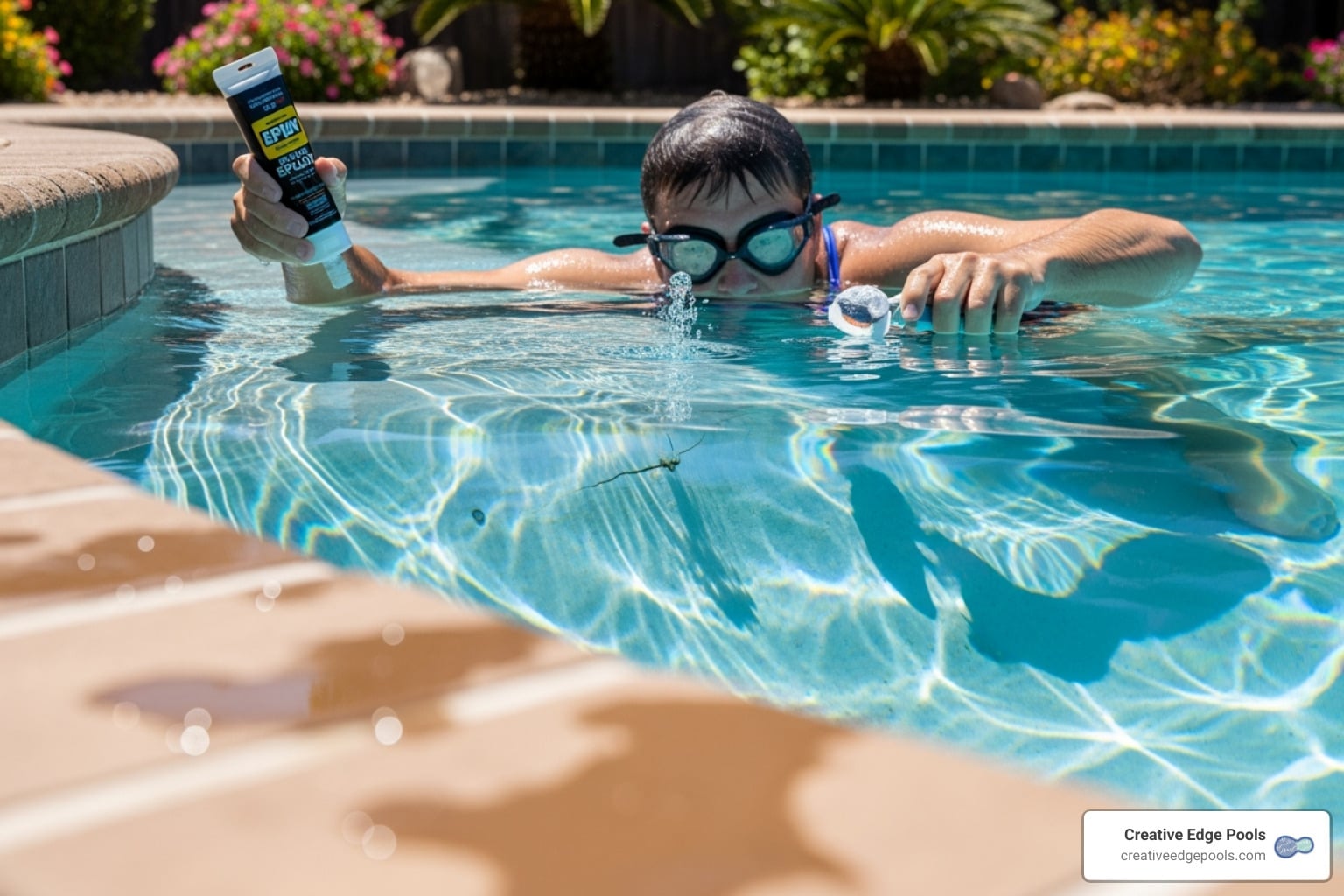
Pool Liner Leak Repair: Easy 3-Step Fix
Why Quick Pool Liner Leak Repair Saves Your Summer (and Your Wallet)
Pool liner leak repair is a frustrating problem that can turn your backyard oasis into a constant headache. When your pool loses more water than normal evaporation (about ¼ to ½ inch per day), you’re likely dealing with a leak that needs immediate attention.
Quick Solutions for Pool Liner Leak Repair:
- Confirm the leak – Use the bucket test to rule out normal evaporation
- Locate the tear – Apply leak detection dye around fittings and seams
- Clean the area – Remove debris around the damaged spot
- Apply the patch – Use an underwater vinyl patch kit with proper adhesive
- Allow proper curing – Wait 24-48 hours before disturbing the repair
When to call professionals: Tears larger than 6 inches, multiple leaks, or if you suspect structural damage.
Ignoring a leak can be costly. A pool losing 2-4 inches of water daily wastes thousands of liters and can lead to soil erosion, deck instability, and expensive structural damage. The good news? Most small vinyl liner tears can be fixed underwater without draining your pool, getting you back to swimming within 48 hours.
I’m David Brabant, owner of Creative Edge Pools. With over thirty years of experience helping Massachusetts and New Hampshire homeowners, I’ve seen how quick action on small leaks prevents major headaches. From simple pool liner leak repair patches to complete backyard changes, we’ve helped solve every pool problem imaginable.
Pool liner leak repair terms to know:
Your Step-by-Step Guide to Pool Liner Leak Repair
When your pool water level drops, don’t panic. This guide will walk you through identifying the problem and applying a DIY fix for your leaking vinyl liner.
Step 1: Confirming and Locating the Leak
First, confirm you have a leak, not just evaporation. Pools can lose up to an inch of water daily on hot or windy days. Losing more than an inch a day, or 2-4 inches in 24 hours, signals a significant leak.
Common signs of a pool liner leak include:
- Excessive Water Loss: Adding water more than once a week.
- Soggy Spots: Wet areas around the pool or a shifting/sinking deck.
- Air in Plumbing: Air bubbles from return jets or a pump struggling to prime.
- Debris from Returns/Drains: Sand or dirt from returns, indicating a plumbing issue.
- Algae Growth: Persistent algae despite proper chemical treatment due to fresh water dilution.
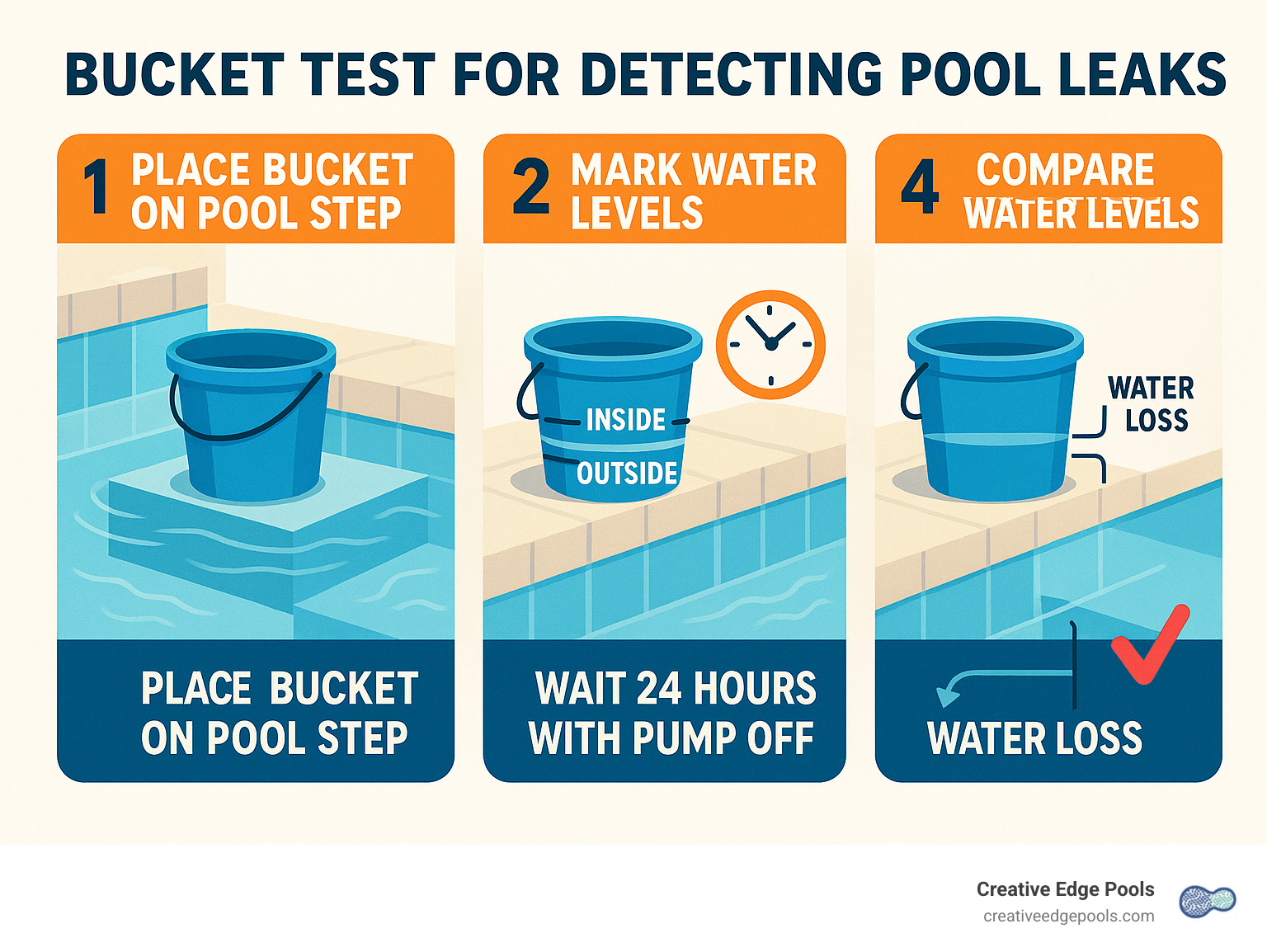
The ‘bucket test’ is the best way to confirm a leak:
- Place a weighted 5-gallon bucket on a pool step.
- Fill it with pool water to match the pool’s water level. Mark both levels with tape or a marker.
- Turn off the pump and leave it undisturbed for 24 hours.
- After 24 hours, compare the water levels. If the pool’s water level has dropped more than the bucket’s, you have a leak. If they drop equally, it’s just evaporation.
- Pro Tip: Restart the test if it rains or the pool is used.
Once a leak is confirmed, you need to find it. Common leak sources are small punctures in the vinyl or issues around fittings like skimmers, returns, and lights. To narrow it down, repeat the bucket test with the pump off and lines plugged. If water loss stops, the leak is in the plumbing. If it continues, it’s in the pool structure (liner, steps).
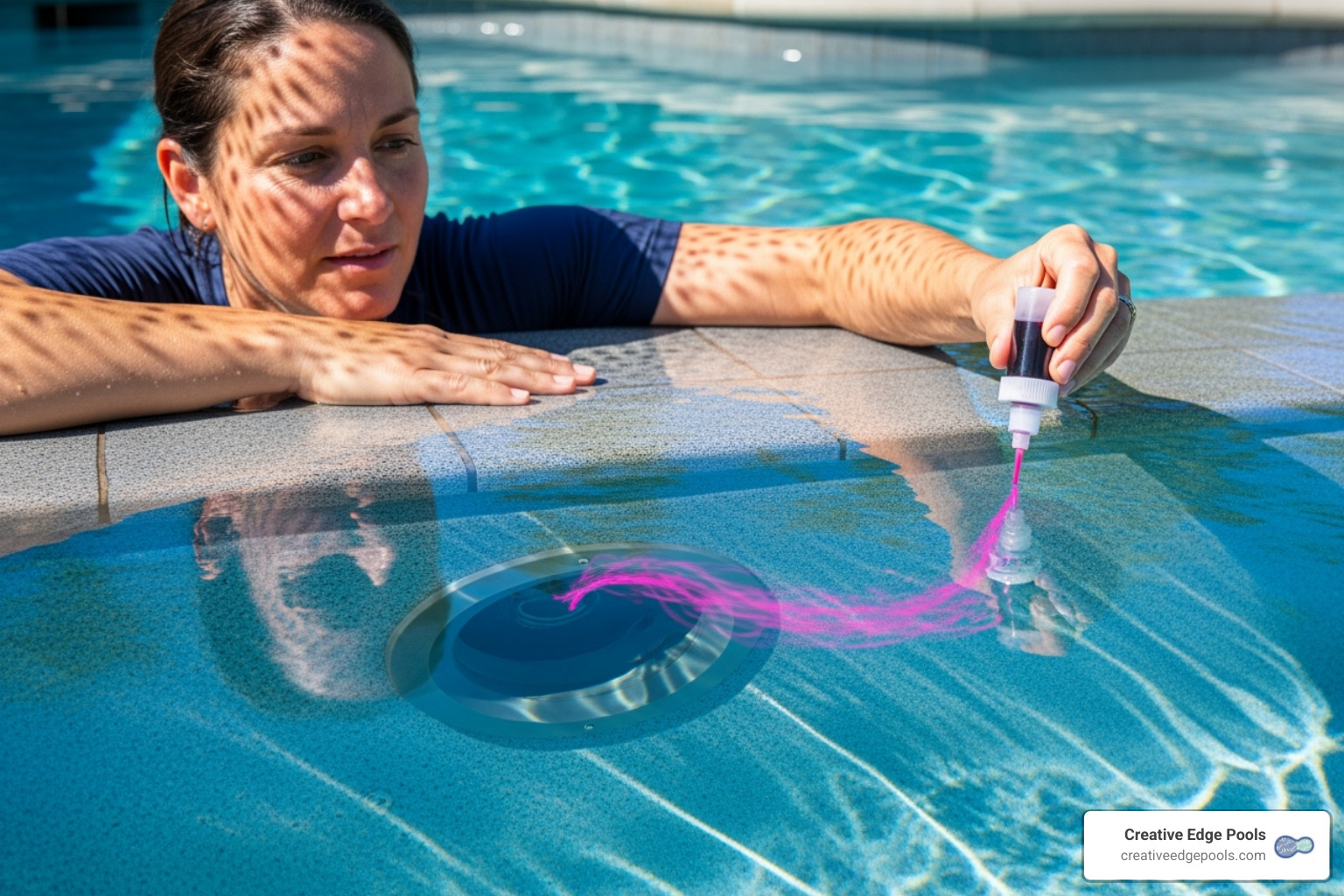
To pinpoint tears in the liner, use a pool dye tester. With the pump off, gently squirt dye near suspected areas like seams, corners, and fittings. The dye will be drawn into the tear, revealing its exact location.
Step 2: Gathering Your DIY Repair Supplies
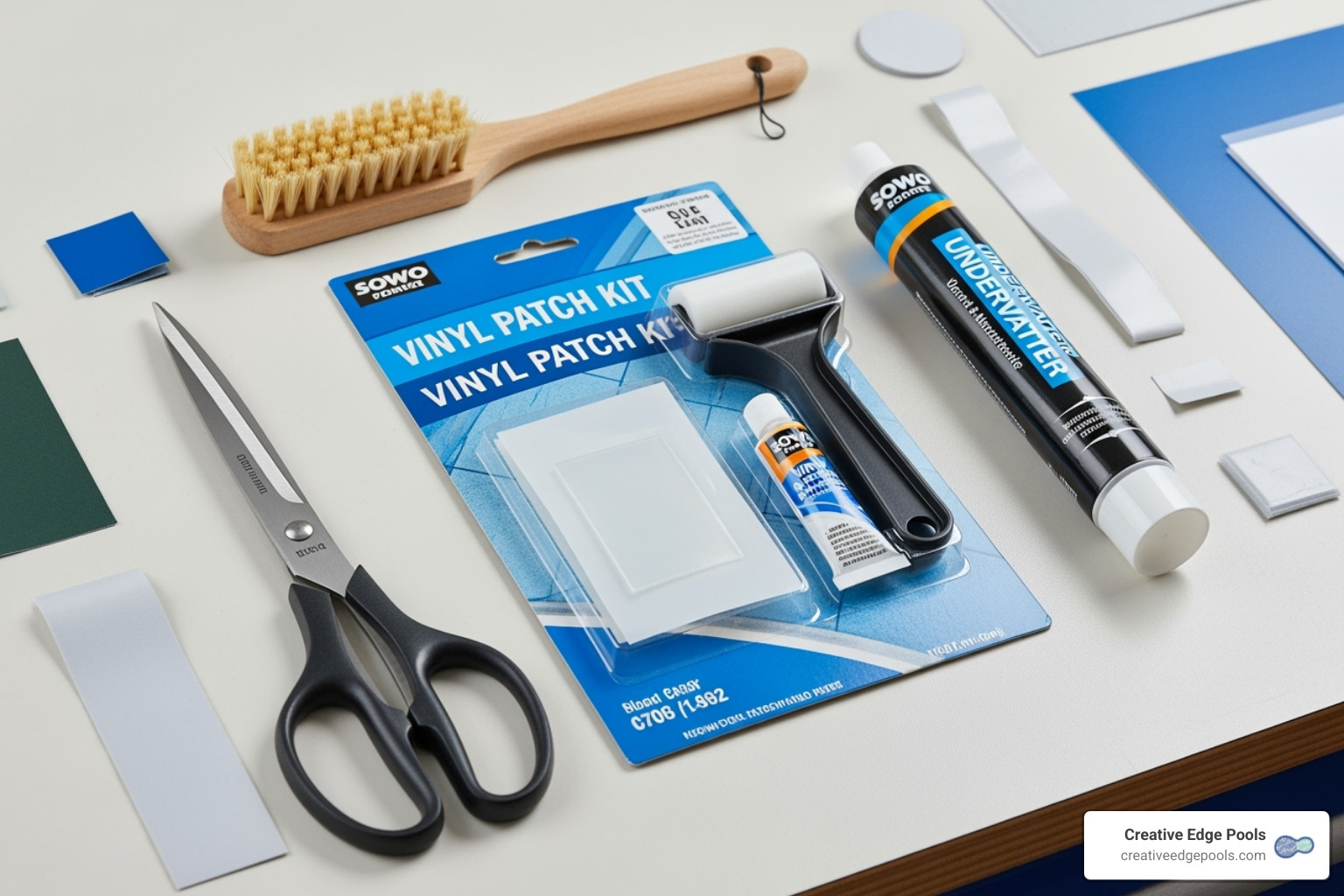
Now that you’ve found the leak, it’s time to gather your supplies. Most small tears can be fixed with a simple vinyl repair kit.
Here’s what you’ll need:
- Vinyl Repair Kit: Usually contains waterproof glue and patch material. If you saved leftover liner from your pool’s installation, that’s a perfect match.
- Waterproof Tape or Peel-and-Stick Patches: Quick solutions for small, simple tears.
- Scissors: For cutting a clean, rounded patch.
- Goggles: Essential for underwater visibility.
- Non-Abrasive Cleaning Pad or Brush: To clean the area for proper adhesion.
- Heavy, Flat Object (Optional): A towel-wrapped brick can apply pressure to floor patches.
Always use supplies designed for pools; household tapes won’t last. We’ve got you covered with the right stuff:
Step 3: How to Perform a DIY Pool Liner Leak Repair
Most vinyl liner repairs can and should be done underwater. Draining an inground pool can cause the liner to shrink or even damage the pool’s structure, and repair materials are designed to work in water.
Here’s our step-by-step guide for a DIY pool liner leak repair:
- Clean the Area: Gently scrub the area around the tear with a non-abrasive pad. A clean surface is crucial for the patch to stick.
- Cut Your Patch: Cut a piece of vinyl patch material at least 2 to 4 inches larger than the tear. Critically, round the corners of your patch to prevent it from peeling up over time.
- Apply Adhesive (if using a kit): Apply a generous, even coat of adhesive to the entire back of the patch.
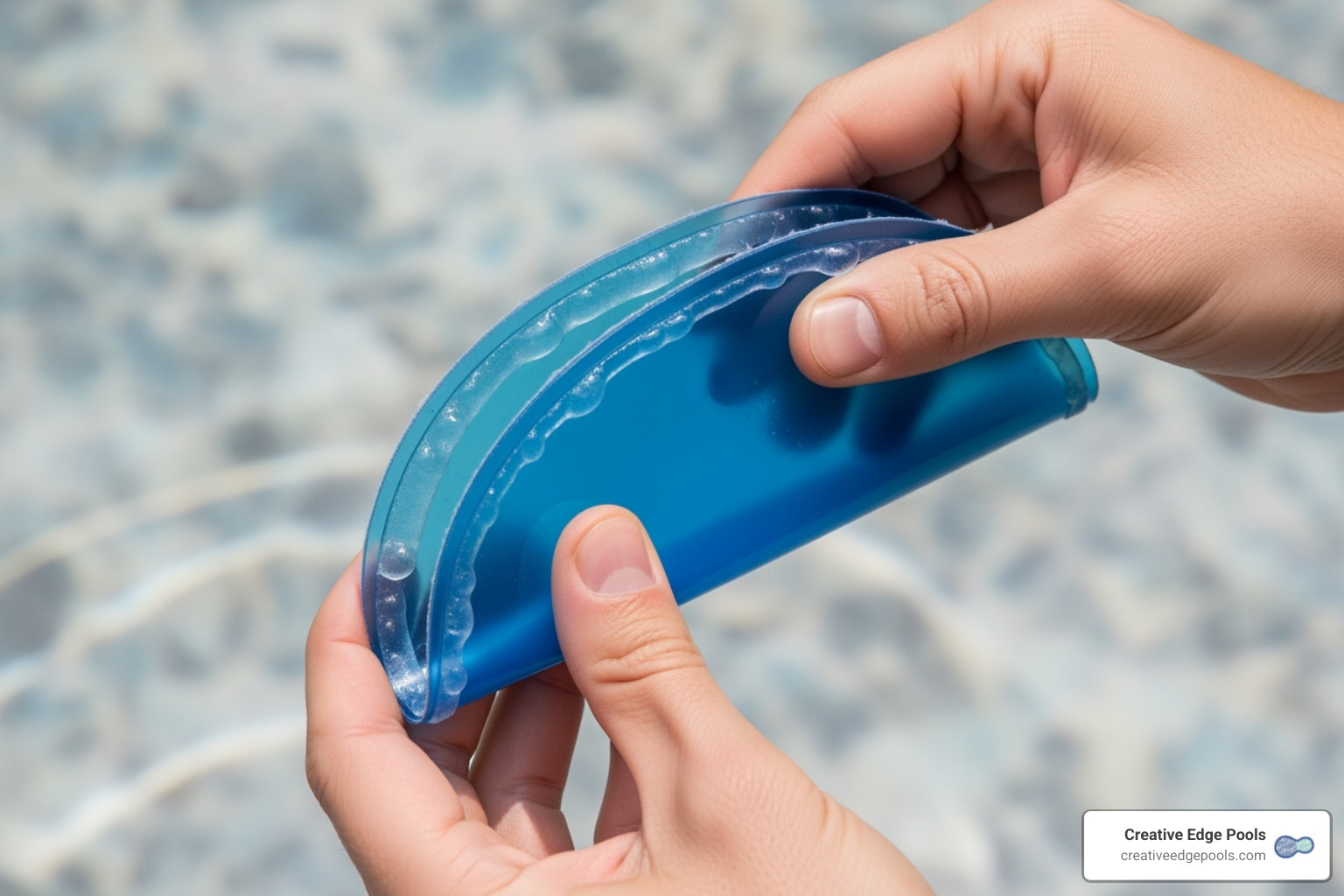
- The “Taco Method” for Underwater Application: To protect the adhesive, fold the patch in half (sticky side in) like a taco. Swim to the leak, unfold the patch, and immediately apply it over the tear.
- Apply Pressure and Smooth: Press firmly from the center outwards to squeeze out any water bubbles. Hold for at least two minutes. For floor patches, place a heavy object (like a towel-wrapped brick) on top to maintain pressure.
- Curing Time: Do not disturb the patch for at least 48 hours for underwater repairs (24 hours for dry repairs). Avoid aggressive brushing or vacuuming near the patch for a week as it fully cures.
- Consider a Double Patch: For extra security on larger tears, you can apply a second, larger patch over the first after it has had some time to set.
When DIY Isn’t Enough: Professional Solutions & Prevention
While many small tears are DIY-friendly, some situations require professional expertise to save time and prevent further damage to your pool’s structure.
Professional pool liner leak repair is necessary for tears larger than 6 inches, multiple recurring leaks, or when you simply can’t locate the source. If your bucket test indicated the leak stops when the pump is off, you’re likely looking at plumbing issues that require specialized equipment. Other red flags include water appearing under your liner, a shifting pool deck, or soggy areas far from your pool, which can point to more serious underground problems.
Advanced Professional Leak Detection Methods
Professionals use advanced technology that goes far beyond a simple dye test. Electronic leak detection systems use a small electrical current to find invisible pinholes in the vinyl. SCUBA-certified technicians can perform precise underwater repairs without draining your pool. For suspected plumbing problems, pressure testing isolates leaky pipes, while geosonic locating and hydrophones can actually hear the sound of water escaping underground. Pipe camera inspections give us a direct look inside your plumbing to find cracks or breaks.
Professional Pool Liner Leak Repair vs. Full Replacement
A key question every pool owner faces is whether to repair the liner again or replace it entirely. The answer depends on several factors.
| Criteria | Opt for Repair | Consider Replacement |
|---|---|---|
| Liner Age | Newer liner (typically less than 5-9 years old). | Older liner (typically 9-15 years old or more, nearing its 15-year lifespan). |
| Tear Size | Small, isolated tears (e.g., less than 2-6 inches). | Large tears (e.g., over 6 inches), or multiple significant tears. |
| Number of Leaks | One or two isolated leaks. | Numerous leaks appearing frequently. |
| Liner Condition | Liner is still supple, vibrant, and free from excessive wrinkles or fading. | Liner is brittle, faded, showing significant wrinkles, sagging, or bulges. |
| Structural Integrity | Pool structure is sound, no signs of major shifting or damage. | Signs of water under the liner, shifting deck, or other structural concerns. |
| Aesthetics | Liner still looks good, minor repairs won’t detract from appearance. | Liner is discolored, outdated, or extensively patched, affecting pool’s look. |
| Cost | DIY repairs ($20-$50). Professional repairs ($200-$1,000+). | Average total cost to replace: $4,500 (can range from $1,000-$6,500). |
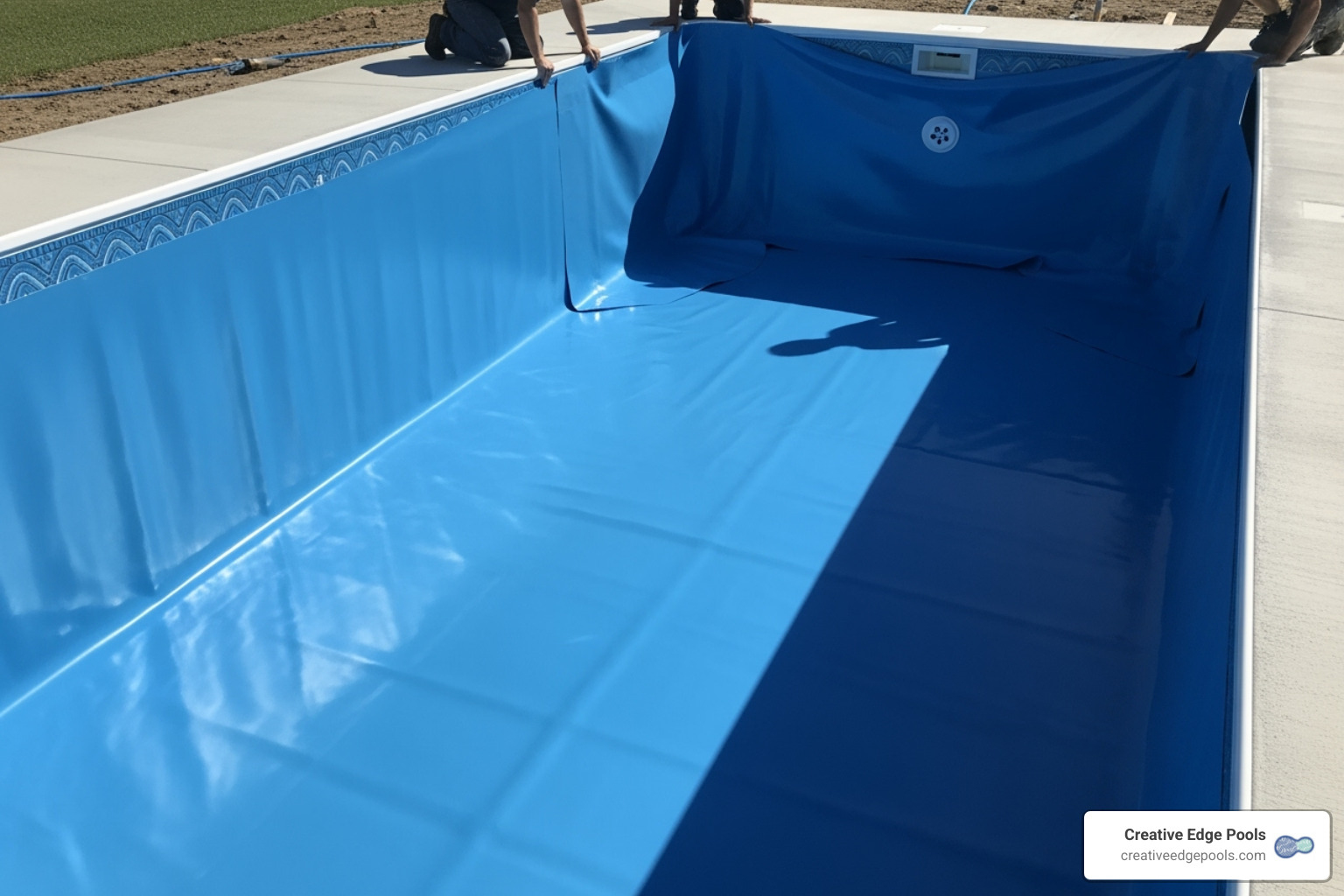
Liner age is a major factor. A vinyl liner’s lifespan is typically 5-15 years. If your liner is old, brittle, faded, or has frequent new tears, replacement is often more cost-effective than constant patching. The average total cost to replace a vinyl liner is around $4,500, but it provides a fresh start and years of worry-free swimming.
Pool Liner Replacement Cost
Replacing Inground Pool Liner
Your Next Steps and Long-Term Pool Care
After your repair, focus on prevention to extend your liner’s life. Simple maintenance habits can add years to your liner’s life and are always cheaper than repairs.
- Regular Inspections: During weekly cleaning, check the liner for small tears and the pool area for any wetness.
- Balanced Water Chemistry: Unbalanced water, especially high chlorine or extreme pH, makes vinyl brittle and prone to tears.
- Avoid Sharp Objects: Keep sharp pool toys, pet claws, and rough vacuum heads away from the liner.
- Address Small Problems Immediately: A tiny tear is much easier to patch now than a large rip later.
- Use a Pool Cover & Winterize Properly: A cover reduces evaporation, and proper winterization prevents freeze damage.
At Creative Edge Pools, we understand that your pool is the heart of your backyard oasis. As a family-owned business serving Eastern Massachusetts and Southern New Hampshire, we’ve built our reputation on providing comprehensive solutions, from the smallest pool liner leak repair to complete custom gunite pool installations and backyard renovations.
Whether you need advanced leak detection, a full liner replacement, or you’re ready to upgrade to a custom gunite pool with integrated landscaping and masonry, our team brings decades of experience to every project. We believe your pool should be a source of joy, not frustration.
For comprehensive solutions from minor repairs to full backyard renovations, contact our team of experts. Let us help you maintain the pool of your dreams, ensuring it’s always ready for that perfect summer day.
Like us on Facebook!