
Why Pool Repair Problems Don’t Fix Themselves (And What to Do About It)
Pool repair is one of the most common — and most stressful — challenges homeowners face once their backyard oasis starts showing its age. Whether you’re dealing with a mysterious drop in water level, a pump that sounds like it’s giving up, or a surface so rough it’s scratching your feet, the problems rarely stop on their own.
Here’s a quick overview of the five most common pool repair issues and what they typically involve:
| Problem | Common Cause | Typical First Step |
|---|---|---|
| Water loss | Shell crack or plumbing leak | Bucket test or dye test |
| Cloudy or green water | Poor circulation or chemistry | Check pump and filter |
| Rough or stained surface | Aged or deteriorated plaster | Consider resurfacing |
| Noisy or weak pump | Worn seals or impeller | Inspect and test pump |
| High energy bills | Outdated single-speed pump | Upgrade to variable-speed |
The stakes are real. A single crack as small as 1/8 of an inch in a pool shell can leak more than 100 gallons of water per day — and that’s before accounting for chemical loss and structural damage that compounds over time.
For homeowners in Eastern Massachusetts and Southern New Hampshire, the challenge is even greater. Freeze-thaw cycles, hard water, and a short swim season mean that small problems left unaddressed can turn into expensive repairs by spring. That’s why having a clear, practical plan matters.
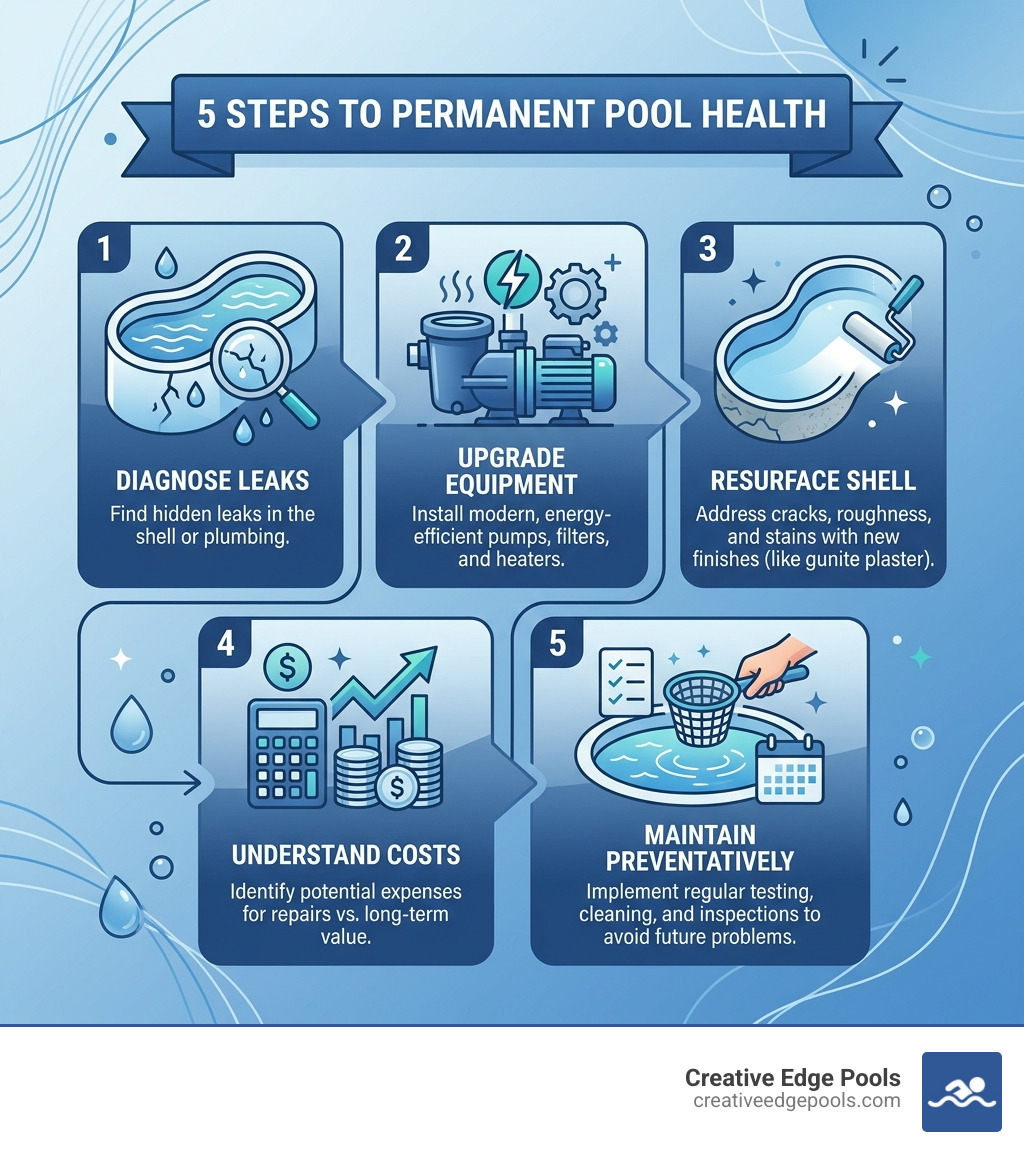
This guide from Creative Edge Pools — a company specializing in gunite pool installations, pool renovations, and custom pool design in Massachusetts and New Hampshire — walks you through five practical ways to diagnose, fix, and prevent pool problems for good.
Diagnosing Common Issues and Detecting Leaks
The first step to any successful pool repair is accurate diagnosis. You can’t fix what you haven’t found, and in swimming pools, the most expensive problems are often the ones you can’t see.
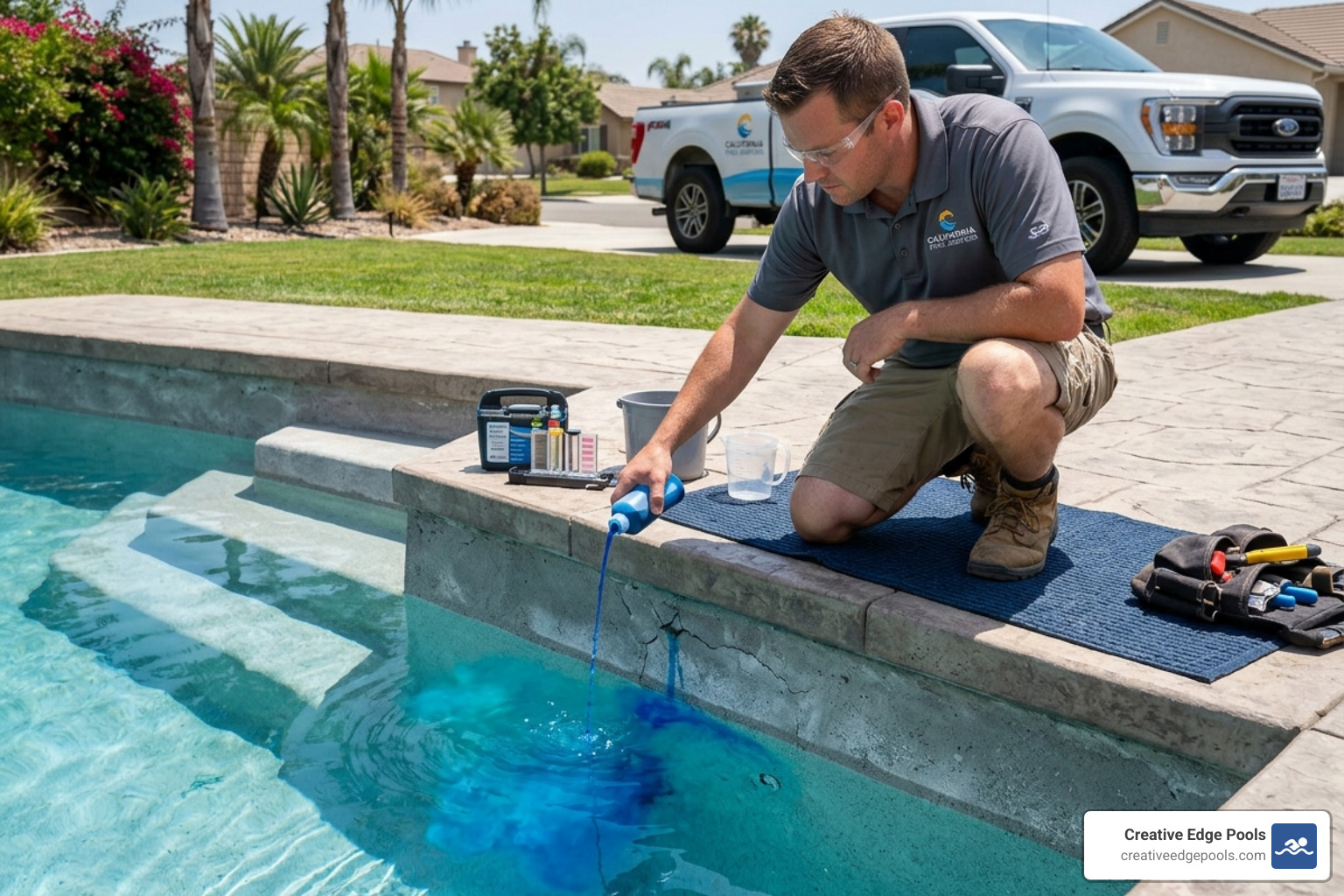
If you notice your water level dropping faster than usual, you might be dealing with a leak rather than simple evaporation. Before panic sets in, we recommend the “bucket test.” Place a bucket on the pool step and fill it with water to match the pool’s level. After 24 hours, if the pool water has dropped significantly more than the water in the bucket, you have a leak.
As mentioned in the Pool Repair Guide, even a tiny 1/8-inch crack in a pool shell can result in the loss of over 100 gallons of water per day. This doesn’t just waste water; it washes away expensive chemicals and can eventually undermine the structural integrity of your pool deck.
Troubleshooting Basic Pool Repair Needs
Not every issue requires a full-scale excavation. Sometimes, your pool is just trying to tell you it needs a little TLC.
- Cloudy Water: This is often a sign of hydraulic deficiency—meaning your water isn’t turning over fast enough—rather than just a chemical imbalance.
- Low Pressure: If your “return” jets feel weak, check your filter. A clogged filter or a worn-out pump seal can restrict flow.
- Unusual Noises: A screeching or grinding sound from your equipment pad usually points to a failing motor bearing or a clogged impeller.
Knowing Is Your Pool Equipment On The Fritz When To Fix It And When To Buy New can save you from spending money on a “band-aid” fix for a machine that is past its prime.
When to Choose Professional Pool Repair Over DIY
While we love a proactive homeowner, some pool repair tasks carry significant risks. Structural cracks in a gunite shell, for instance, require professional injection or “stapling” to prevent them from widening.
Furthermore, repairs involving gas heaters or electrical components are strictly regulated. In Massachusetts and New Hampshire, combustion-related repairs on gas heaters often require licensed contractors to comply with local gas codes. Additionally, NEC Article 680 governs the bonding and grounding of pool electrical installations. If your pool light is flickering or your heater won’t ignite, it’s time to call in the experts to ensure your backyard remains a safe environment.
Upgrading Equipment for Long-Term Efficiency
If your pool equipment was installed before 2015, it’s likely costing you significantly more to run than modern alternatives. Upgrading isn’t just about fixing a broken part; it’s about transforming the “ecosystem” of your backyard.
According to data from Dunk & Bubble, moving toward modern sanitation and circulation systems can drastically reduce the time you spend scrubbing and the money you spend on electricity.
Maximizing the Backyard Ecosystem
Your pool’s health depends on the “hydraulic circuit”—the path water takes from the pool, through the filter/heater, and back again. If this circuit is inefficient, you’ll struggle with chronic algae even if your chlorine levels are high.
By Upgrading Your Pool Equipment, you can introduce smart controls that allow you to manage your heater, lighting, and filtration cycles from your phone. This ensures your pool is only running when it needs to, maximizing turnover while minimizing wear and tear.
Reliable Brands and Lifespans
In the harsh New England climate, equipment tends to have a lifespan of 8 to 12 years. We generally recommend sticking with industry leaders like Pentair, Jandy, and Hayward. These brands offer the most reliable replacement parts and are well-supported by local technicians.
One of the biggest culprits for equipment failure in our region is hard water. High calcium levels can lead to scaling inside heaters, causing them to work harder and fail sooner. Upgrading to a variable-speed pump can cut energy costs by 60–90% while providing a much quieter swimming environment.
Mastering Pool Resurfacing and Shell Integrity
For a gunite pool, the interior finish is more than just a pretty color; it is the waterproof seal that protects the structural shell. When that finish begins to fail, the pool repair becomes a matter of structural survival.
If you see “delamination” (plaster peeling away in sheets) or “bond beam” cracks near the tile line, it’s time to consult a specialist. Our Beginners Guide To Pool Resurfacing explains that waiting too long can allow water to seep into the gunite shell, leading to much more expensive structural repairs.
Comparing Interior Finishes
Choosing the right finish depends on your budget and how long you plan to stay in your home.
| Finish Type | Lifespan | Characteristics |
|---|---|---|
| Standard Plaster | 5–7 Years | Most affordable; prone to staining and rough texture over time. |
| Quartz | 10–12 Years | Higher durability; resists chemical staining better than plaster. |
| Pebble (e.g., Pebble Tec) | 15–20+ Years | Most durable; natural look; highly resistant to hard water scaling. |
After a new finish is applied, the first 28 days are critical. The cement-based material must cure underwater, requiring daily brushing and careful chemical balancing to ensure the finish stays smooth. For more on maintaining safety during this process, see our tips on how to Stop The Slips With These Resurfacing Tips.
Regional Climate Challenges
In Massachusetts and New Hampshire, we face the “freeze-thaw” cycle. When water enters small cracks in your pool deck or tile line and freezes, it expands, turning tiny fissures into major gaps. This is why we emphasize sealing deck cracks before the winter hits.
Furthermore, hard water in areas like Andover or Nashua can lead to calcium deposits that make pool surfaces feel like sandpaper. Keeping your calcium levels in check is the best way to ensure your resurfacing job lasts as long as possible. For more localized advice, check out Expert Resurfacing Tips For Newton And Beyond.
Understanding the Costs and Timelines of Professional Pool Repair
When planning a pool repair, it helps to have a realistic idea of the investment required. Based on internet data averages, costs can vary wildly depending on the size of your pool and the materials chosen.
Average Investment Ranges
- Pool Resurfacing: Typically ranges from $6,500 to $150,000. While a standard plaster job on a small pool might be on the lower end, high-end pebble finishes on large, custom-shaped pools can reach significant figures.
- Full Pool Remodel: Can range from $15,000 to $650,000+. This often includes new tile, coping, decking, and updated equipment.
- Equipment Replacement: A new variable-speed pump or high-efficiency heater usually ranges from $1,500 to $10,000 including installation.
One pro tip: bundling your repairs can save you thousands. If you’re already draining the pool for resurfacing, that is the perfect time to replace underwater lights or fix plumbing leaks, as it avoids multiple “mobilization” costs for the crew. You can learn more about budgeting in The Price Of Paradise Unpacking Your Pool Renovation Budget.
Standard Warranties and Safety Compliance
Most reputable companies offer a 1-year workmanship warranty on their repairs, while equipment like pumps and heaters carry manufacturer warranties ranging from 1 to 3 years.
Safety is also a legal requirement. All pool repair projects must comply with the Virginia Graeme Baker (VGB) Pool and Spa Safety Act, which mandates anti-entrapment drain covers to prevent drowning hazards. We ensure every renovation meets these federal standards to keep your family safe.
Preventative Maintenance: The Ultimate Solution
The best way to solve pool repair problems for good is to stop them before they start. Routine care is the “insurance policy” for your backyard investment.
Consistent chemical balancing prevents the acidic water that eats away at plaster and the scale-heavy water that ruins heaters. Regular filter cleaning (at least every six months) ensures your pump doesn’t have to work overtime to move water.
Seasonal Care for Longevity
In New England, the most critical maintenance happens when the pool is not in use.
- Winterization: Properly blowing out plumbing lines and adding antifreeze prevents pipes from bursting during a Massachusetts freeze.
- Safety Covers: Using a taut, anchored safety cover prevents debris from entering the pool and, more importantly, prevents accidental falls.
- Summerizing: A professional opening ensures your equipment is primed and your chemistry is balanced before the first swim.
For more inspiration on keeping your pool in top shape, explore 10 Reasons Why You Will Love Swimming Pool Renovation Companies and Custom Pool Remodeling Inspiration For Your Home.
Frequently Asked Questions about Pool Repair
How can I tell if my pool is leaking or just evaporating?
Use the “bucket test.” Fill a bucket with water and place it on a pool step, marking the water level inside the bucket and the pool level outside the bucket. If the pool level drops significantly more than the bucket level over 24 hours, you likely have a leak.
Should I repair or replace my aging pool pump?
If your pump is more than 8-10 years old and needs a major repair (like a motor replacement), it is usually more cost-effective to replace it with a modern variable-speed model. The energy savings alone often pay for the new pump within two to three seasons.
How long does a typical resurfacing project take?
The on-site work for resurfacing usually takes 5 to 10 days. However, you must factor in the 28-day curing period afterward, during which you must carefully manage water chemistry and brush the surface daily before the pool is fully “ready” for heavy use.
Conclusion
Don’t let a small leak or a noisy motor steal your summer. By diagnosing issues early, upgrading to efficient equipment, and maintaining a consistent service schedule, you can enjoy a worry-free swim season year after year.
Creative Edge Pools is a company specializing in gunite pool installations, pool renovations, and custom pool design in Massachusetts and New Hampshire. As a family-owned business with over 100 years of combined experience, we are dedicated to bringing your backyard vision to life with craftsmanship you can trust.
Whether you are in Boston, Nashua, or anywhere in between, we are here to help. Schedule Your Gunite Pool Renovation Today and let us help you solve your pool problems for good.
