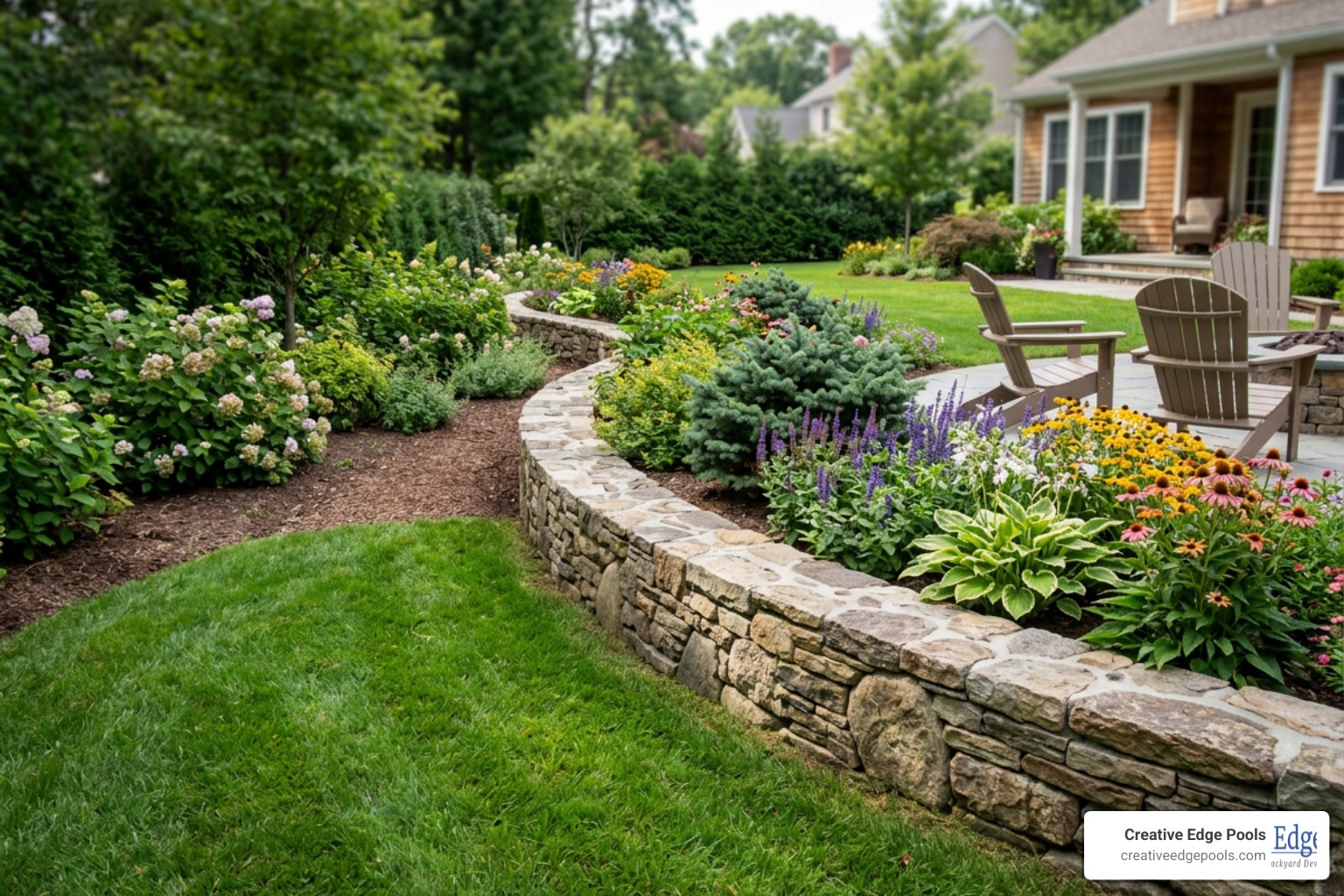
Why a 2 Ft Retaining Wall Is Worth Getting Right
A 2 ft retaining wall is one of the most practical hardscaping projects you can add to your backyard — but only if it’s built correctly.
Quick answers for homeowners:
- Does it need a footing? Usually a 4–6 inch compacted gravel base is enough, but clay soils or cold climates like those in Andover, MA or Exeter, NH may require more.
- What materials work best? Interlocking concrete blocks, pressure-treated timber, or natural stone are all solid choices.
- Does it need drainage? Yes — always. Trapped water is the leading cause of retaining wall failure.
- Do you need a permit? Walls under 4 feet are often exempt, but always check local codes first.
- Should you DIY or hire a pro? For most homeowners, hiring a professional hardscaper delivers a safer, longer-lasting result.
At just two feet tall, this type of wall looks simple. It controls erosion, manages elevation changes, and creates clean boundaries around garden beds or pool areas. Many homeowners in Eastern Massachusetts and Southern New Hampshire tackle it as a weekend project.
But here’s the thing: a short wall still holds back a significant amount of soil and water pressure. Without proper drainage and a stable base, even a 2-foot wall can bulge, crack, or collapse within a few seasons — especially in the freeze-thaw climate of New England.
This guide covers everything you need to know — from planning and materials to drainage and when to call in the professionals at Creative Edge Pools.
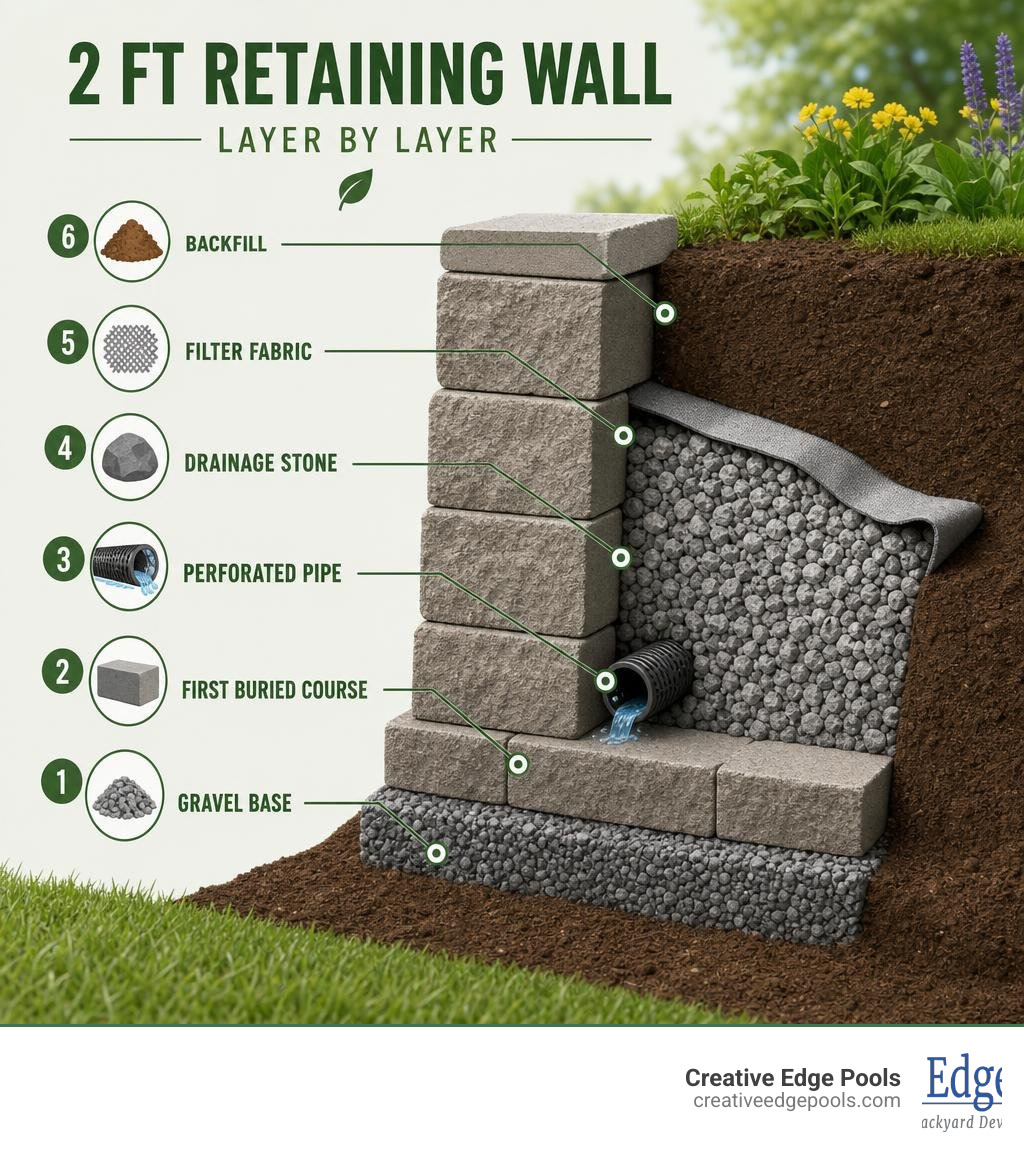
Simple 2 ft retaining wall glossary:
Planning and Engineering a 2 Ft Retaining Wall
Before moving a single shovelful of dirt, you must understand the forces acting upon any outdoor wall. Even a modest 2 ft retaining wall is a structural barrier that must withstand constant lateral soil pressure and hydrostatic water pressure.
When rain falls or snow melts, water seeps into the soil behind the wall. Saturated soil can weigh up to 40% more than dry soil, and the resulting water pressure can easily push a poorly constructed wall out of alignment. Proper planning ensures your structure stands firm against these elements.
Does a 2 Ft Retaining Wall Need a Footing?
Yes, every 2 ft retaining wall requires a solid foundation to prevent shifting, leaning, and settling. However, the type of footing depends heavily on the materials you use.
For lightweight, interlocking segmental concrete block systems or timber walls, a concrete footing is generally not required. Instead, these gravity-based systems rely on a meticulously prepared, compacted gravel base (often called a road base or “crush and run”). This gravel base distributes the weight of the wall evenly and allows for minor soil movements without cracking.
Conversely, if you are building a rigid masonry wall using cinder blocks, mortar, or poured concrete, a poured concrete footing that extends below the local frost line is absolutely essential to prevent cracking. To understand the structural differences in footing designs, you can explore the guide on Does a 2-Foot Retaining Wall Need a Footing? to see how different materials dictate your foundation requirements. For pool environments where ground movement can damage surrounding decking, integrating professional pool area hardscaping ensures the wall and pool structure remain perfectly stable over time.
Soil Conditions and Frost Lines in Massachusetts and New Hampshire
In our region, local climate and soil composition play a massive role in hardscape engineering. Homeowners in towns like Andover, MA, Wilmington, MA, and Exeter, NH frequently deal with heavy clay soils. Clay retains water far longer than sandy soils, expanding significantly when wet and putting immense lateral pressure on your wall.
Additionally, New England winters bring deep frost cycles. When water trapped in the soil freezes, it expands and causes “frost heave.” If your wall’s base is shallow or lacks proper drainage, frost heave will slowly lift and tilt the structure, leading to unsightly cracking or complete collapse. To combat this, the foundation trench must be dug deep enough to accommodate a thick gravel base, and the first course of your wall material must be partially buried to anchor the system below the shifting surface soil.
Materials, Costs, and Construction Steps
Selecting the right material for your 2 ft retaining wall determines its visual appeal, longevity, and overall project budget. Below is an overview comparing the three most common hardscaping materials used in Massachusetts and New Hampshire.
| Material Type | Average Lifespan | Pros | Cons |
|---|---|---|---|
| Interlocking Concrete Blocks | 50+ Years | Highly durable, easy to stack, excellent built-in drainage lip, no mortar required. | Can look industrial; limited color palettes. |
| Pressure-Treated Timber | 15–20 Years | Natural aesthetic, cost-effective, relatively quick to assemble. | Subject to eventual rot; requires chemical treatments. |
| Natural Stone | 100+ Years | Timeless luxury, highly durable, blends perfectly with New England landscapes. | Extremely heavy; requires advanced masonry skills. |
Choosing the Right Materials for a 2 Ft Retaining Wall
If you prefer a warm, rustic appearance, pressure-treated timber is a popular choice. When building a wood-based system, it is crucial to use heavy-duty 6×6 or 8×8 timbers rated for ground contact (UC4A or UC4B standards). You can read about the specific structural techniques for timber in the guide on How to Build a 2-ft Tall Timber Retaining Wall, which details how to pin the timbers with rebar and secure them with galvanized fasteners.
For maximum durability with minimal maintenance, interlocking concrete blocks are the industry standard. These blocks feature a rear lip or pin system that automatically creates a slight backward slope (setback) as you stack them, which significantly increases the wall’s resistance to soil pressure. Natural stone remains the gold standard for high-end residential properties, though it requires meticulous sorting, shaping, and placing to ensure structural stability.
Estimated Costs of Construction
When budgeting for a 2 ft retaining wall, overall costs can vary widely depending on the chosen material, site accessibility, soil conditions, and professional labor.
Note: All prices mentioned below are average costs sourced from publicly available internet data and are not the actual prices of Creative Edge Pools. These figures do not reflect our rates or guarantees.
According to general industry averages, a professionally installed 2-foot retaining wall typically ranges from $1,500 to $30,000 for a standard residential yard, depending on the length of the wall, selected premium materials, and the complexity of the excavation. Opting for high-end natural stone or integrated pool-side masonry will naturally place the project on the higher end of this spectrum. To explore how these structures fit into a broader landscape design, check out our professional hardscaping services.
High-Level Step-by-Step Construction and Drainage Requirements
While we strongly recommend hiring a professional team to handle the heavy lifting, understanding the high-level construction steps can help you oversee your backyard transformation:
- Excavation: Dig a trench approximately 12 to 18 inches wide and 8 to 12 inches deep. This allows room for both the gravel base and the buried first course of material.
- Base Preparation: Add 4 to 6 inches of clean, crushed stone (such as No. 57 stone) to the trench. Compact the base thoroughly using a mechanical plate compactor or heavy hand tamper.
- Laying the First Course: Position the first row of blocks or timbers. This course must be perfectly level from side to side and front to back, as any minor slope will multiply as you stack higher. At least half of this first course should sit below ground level.
- Installing Drainage: Place a 3-inch or 4-inch perforated drain pipe (facing downward) directly behind the first course. This pipe must slope slightly to outlet water away from the wall.
- Backfilling and Filter Fabric: Wrap the drainage area in non-woven landscape filter fabric to prevent soil from clogging the gravel. Backfill behind the wall with clean, free-draining crushed stone, compacting it in shallow 6-inch layers (lifts) as you build upward.
Why Professional Hardscaping Outperforms DIY
Although a 2 ft retaining wall is often marketed as a simple weekend project, the physical labor and engineering precision required are frequently underestimated. Miscalculating soil pressure or skipping critical steps can quickly turn a DIY project into an expensive failure.
Structural Integrity and Long-Term Durability
The most common DIY mistakes involve inadequate soil compaction and poor drainage installation. Without proper compaction, the soil behind the wall will settle unevenly, causing the wall to warp, bulge, or lean outward.
Furthermore, if the drainage pipe is placed incorrectly or if native soil is used for backfill instead of clean crushed stone, water will pool behind the structure. During freezing winter nights in Massachusetts and New Hampshire, this trapped water expands, cracking concrete blocks and shifting heavy timbers out of place. Professional hardscaping companies utilize heavy commercial machinery and specialized engineering techniques to ensure your wall remains plumb and structural for decades.
When to Hire a Professional Hardscaper
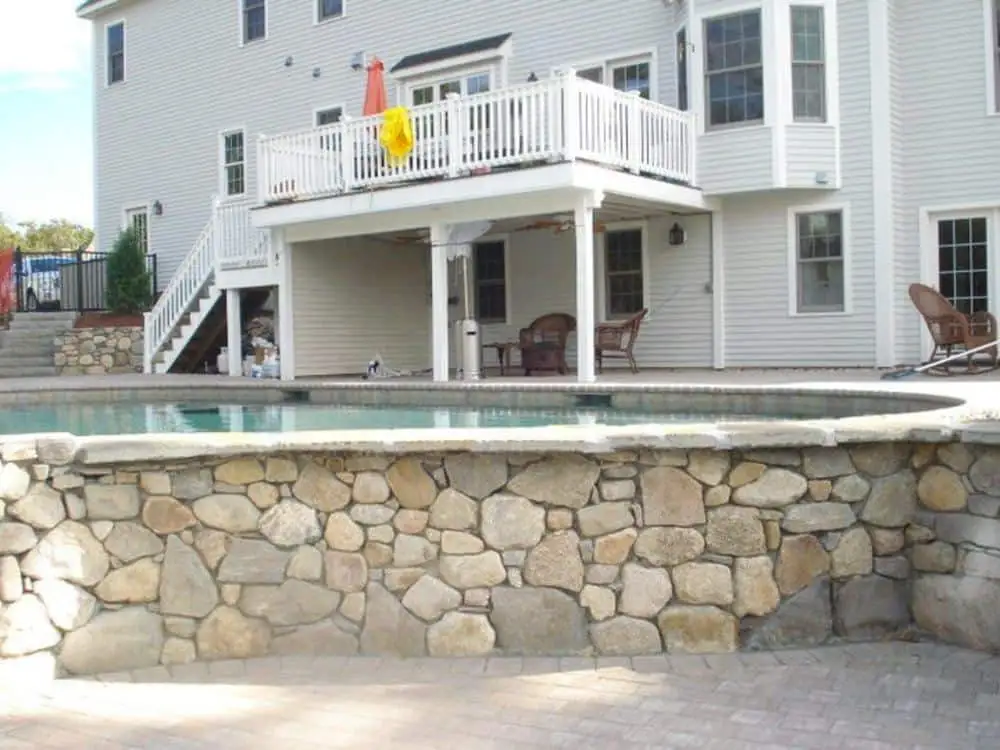
If your wall is located near a driveway, supporting a steep slope, or integrated into a pool deck, you should always consult a professional. Homeowners in Hampton, NH or Tewksbury, MA often require integrated backyard designs where retaining walls transition directly into patios, outdoor kitchens, or pool copings.
Building a wall adjacent to a swimming pool requires specialized knowledge of gunite structures, hydrostatic valves, and strict safety codes. At Creative Edge Pools, we specialize in designing and installing custom concrete pool retaining walls that perfectly complement your outdoor living space while providing robust structural support.
Frequently Asked Questions about Short Retaining Walls
Do local building codes or permits apply to a 2-foot retaining wall in MA or NH?
In most Massachusetts and New Hampshire municipalities, retaining walls under 4 feet in height do not require a formal building permit. However, local zoning laws, setback requirements from property lines, and environmental regulations near wetlands (especially in coastal or lake regions) still apply. Always check with your local building department before starting excavation.
Can I use regular bricks to build a 2-foot retaining wall?
No. Standard clay bricks are designed for vertical loads (like home walls) and lack the structural weight and lateral resistance required to hold back soil. If you love the look of brick, the best approach is to build a structural concrete block wall and apply a thin brick veneer over the face.
How deep should the footing or base be for a 2-foot retaining wall?
For a standard 2 ft retaining wall, you should excavate a trench that is at least 8 to 12 inches deep. This allows you to place a 4-to-6-inch compacted gravel base and bury at least half of the first course of block or timber (about 3 to 4 inches) below the finished grade for vital sliding resistance.
Conclusion
A 2 ft retaining wall is a highly effective way to maximize your usable yard space, prevent soil erosion, and elevate your home’s curb appeal. However, ensuring its survival through harsh New England winters requires meticulous planning, deep excavation, and flawless drainage design.
At Creative Edge Pools, we are a family-owned business with over 100 years of combined experience in complete backyard transformations across Eastern Massachusetts and Southern New Hampshire. Whether you are looking to install a beautiful stone border or require a structural retaining wall for pool integration, our expert team is here to bring your vision to life.
Ready to transform your backyard? Contact Creative Edge Pools today or visit our website to Get a Quote and schedule your professional design consultation.