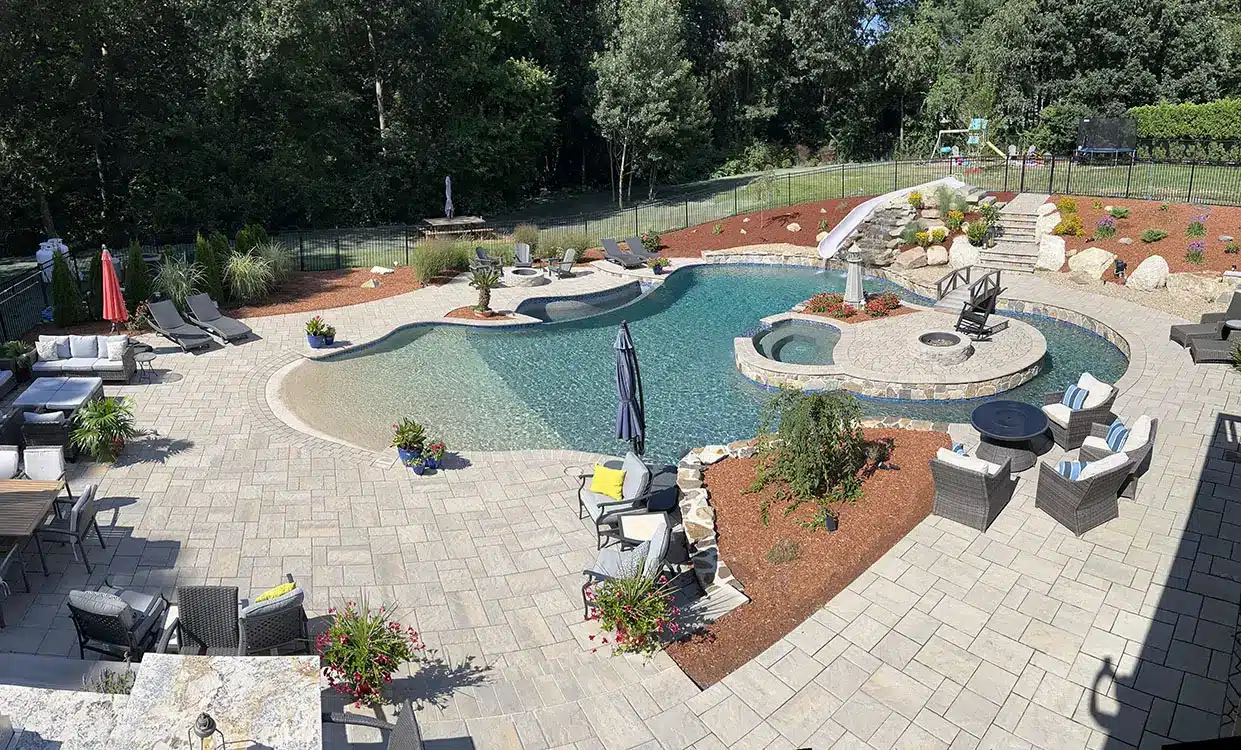
Why Custom Gunite Pools Are the Gold Standard for Backyard Luxury
Custom gunite pools are inground swimming pools built by spraying a dry concrete-and-sand mix onto a steel rebar framework, then shaping it into virtually any design you can imagine — from sleek geometric laps pools to sweeping freeform lagoons.
Here’s a quick snapshot of what makes them stand out:
| Feature | What You Get |
|---|---|
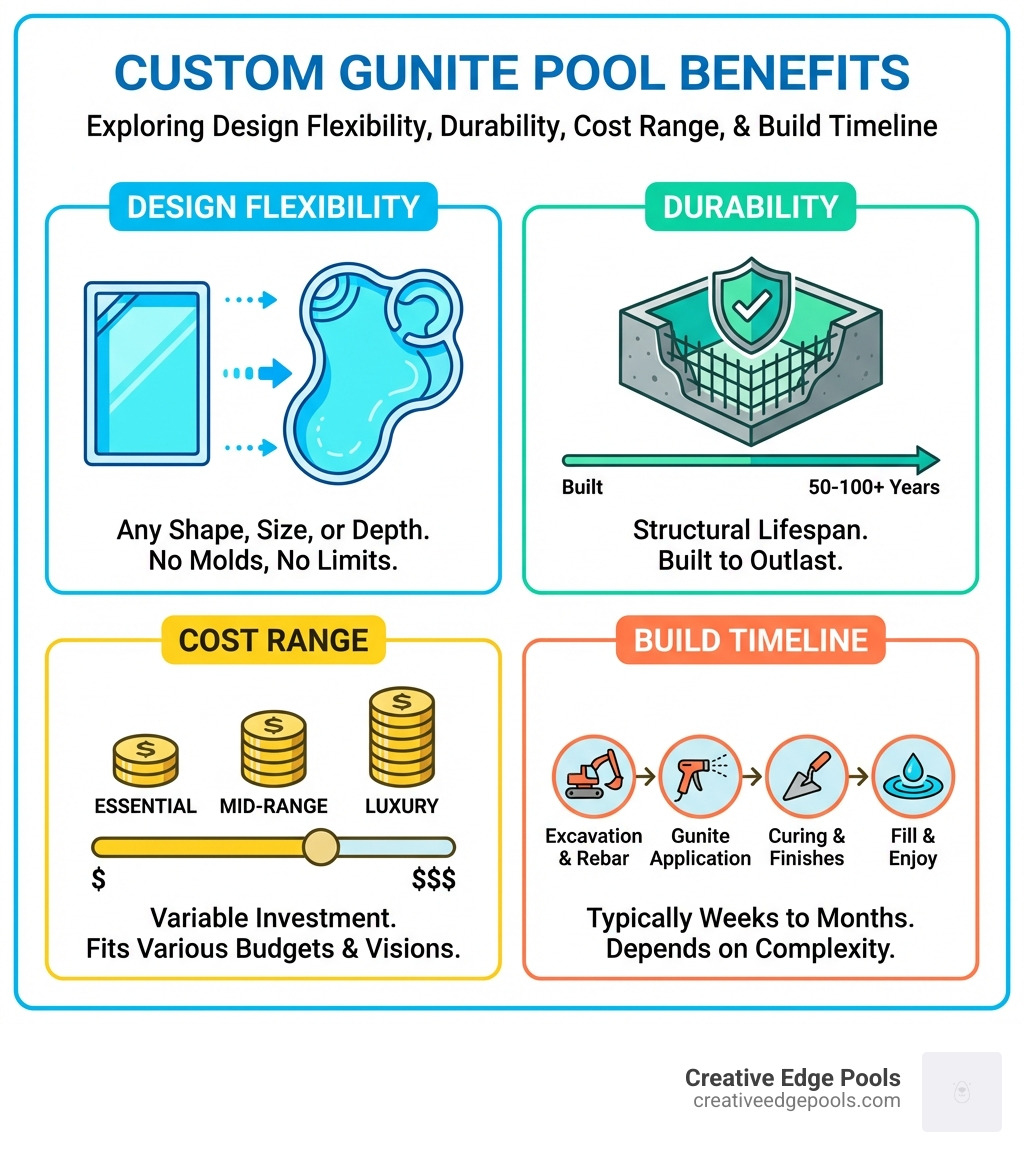
| Design freedom | Any shape, size, or depth — no molds, no limits |
| Durability | Structural lifespan of 50–100+ years with proper care |
| Customization | Infinity edges, spas, waterfalls, tanning ledges, and more |
| Home value | A meaningful boost to property value and curb appeal |
| Finishes | Plaster, pebble, glass tile — you choose the look |
For homeowners in Eastern MA and Southern NH, a custom gunite pool isn’t just a backyard upgrade. It’s a long-term investment in how your family lives, relaxes, and entertains — designed specifically around your yard and your vision.
Unlike fiberglass pools that arrive in a fixed shell, or vinyl liner pools that wear out and need replacing, gunite is built on-site from scratch. That means no compromises on shape, depth, or features. Your pool is engineered to fit your property — not the other way around.
And they last. Early concrete pools from the 1920s are still in use today. With the right builder and proper care, a gunite pool can outlast the house it sits beside.
This guide covers everything you need to know — from how gunite pools are built and what they cost, to design options, maintenance, and how to choose a builder you can trust.
What is a Gunite Pool? Understanding the Material and Method
To understand why custom gunite pools are so highly regarded, you first have to understand the material itself. Gunite is a specialized form of concrete, but the way it is applied is what makes it ideal for pool design.
In a standard concrete project, like a sidewalk, the wet concrete is poured into wooden forms and leveled. Gunite flips this process on its head. It is a “dry-mix” concrete consisting of cement, sand, and small aggregate. This dry mixture is loaded into a hopper and pushed through a hose using high-pressure air.
The magic happens at the nozzle. As the dry mix exits the hose, the operator adds water right at the tip. This creates a high-velocity spray that “blasts” onto the pool’s steel skeleton. Because it is applied at such high pressure, the material is incredibly dense and lacks the air pockets often found in poured concrete. This density is what gives gunite pools their legendary strength.
When you are comparing the cost of gunite inground pools to other types of pools, it is important to remember that you aren’t just buying a “pool shell”—you are essentially building a reinforced fortress in your backyard.
Gunite vs. Shotcrete and Traditional Concrete
You might hear the terms “gunite” and “shotcrete” used interchangeably, but there is a subtle difference in how they arrive at your home.
- Gunite (Dry-mix): The water is added at the nozzle. This gives the builder maximum control over the consistency. If a wall is particularly steep or a curve is tight, the nozzleman can adjust the water flow on the fly to ensure the material sticks perfectly without sagging.
- Shotcrete (Wet-mix): This arrives pre-mixed in a concrete truck (like the ones you see at construction sites). It is already wet and is pumped through a hose.
Both methods create a seamless shell with no joints, which is a massive advantage over traditional poured concrete. Poured concrete requires “cold joints” or seams where one pour ends and another begins, which can become weak points over time. With gunite, the entire structure is one continuous, rock-solid piece. This shotcrete pool cost guide explains how these methods compare in terms of investment.
The Benefits of Choosing Custom Gunite Pools
Why do so many homeowners in Massachusetts and New Hampshire choose gunite over fiberglass or vinyl? It usually comes down to three things: beauty, brawn, and bank.
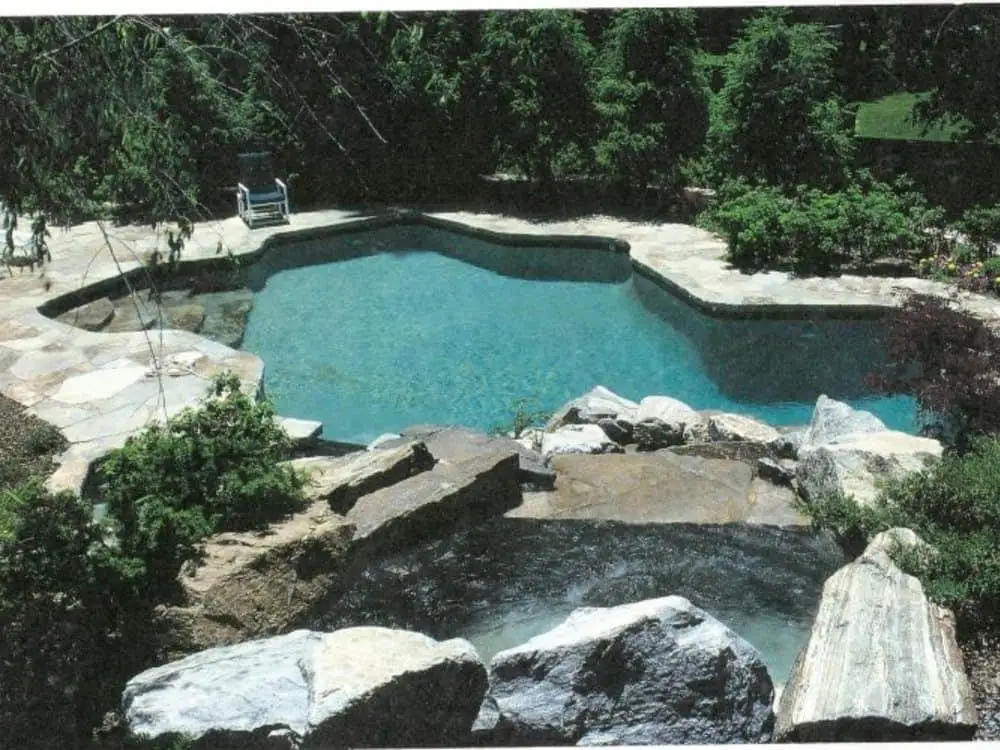
First, the beauty. Because gunite is sprayed, we aren’t limited by factory molds. If you have a sloped yard in Andover or a tight space in Boston, we can sculpt the pool to fit the land. Second, the brawn. Gunite is essentially a house foundation in the ground. It doesn’t “pop” out of the ground if the water table rises, and it won’t tear if a dog jumps in with sharp claws.
Finally, the bank. A well-built gunite pool adds significant value to a property. In the real estate world, a gunite pool is viewed as a permanent home improvement, much like an addition or a finished basement. You can read more about the value of a gunite inground pool return on investment and home value to see how it stacks up as a financial move.
Limitless Design with Custom Gunite Pools
If you can dream it, we can build it with gunite. This is where gunite pool design plans truly shine. Some of our favorite features include:
- Freeform Shapes: Mimic a natural lagoon or a mountain pond with soft, organic curves.
- Infinity Edges: Perfect for properties with a view, creating the illusion that the water flows over the horizon.
- Tanning Ledges (Sun Shelves): Shallow areas (usually 6-12 inches deep) where you can place lounge chairs and stay cool while soaking up the sun.
- Beach Entries: A gradual slope into the water, just like walking into the ocean—no stairs required.
Unmatched Durability in New England Climates
In places like Lowell, MA, or Nashua, NH, our pools have to survive brutal winters. The freeze-thaw cycle can be devastating to lesser materials. However, custom gunite pools are built with a heavy-duty rebar framework—a “skeleton” of steel that allows the pool to flex slightly with the earth’s movement without losing its structural integrity.
When homeowners ask, “How long do gunite pools last?”, the answer is often “longer than the mortgage.” With a 100-year structural potential, these pools are the definition of a legacy purchase.
The Step-by-Step Construction Process
Building a gunite swimming pool is a multi-phase engineering project. It isn’t just “digging a hole and filling it with water.” Here is how we build a gunite pool from start to finish:
- Design & Permitting: We map out the pool and get the necessary nods from your local building department.
- Excavation: The big machines arrive. We dig the shape of your pool, leaving room for the plumbing and the thick gunite shell.
- Steel Reinforcement (Rebar): We weave a cage of steel rebar throughout the hole. This is the “bones” of your pool.
- Plumbing & Electrical: Before the concrete goes in, we run all the pipes for the filters, heaters, and pool and spa installation features.
- Gunite Application: The big day! Our crew sprays the gunite, hand-sculpting the steps, benches, and walls.
- Curing: The shell needs time to reach its full strength.
- Tile & Coping: We add the decorative waterline tile and the “lip” around the edge of the pool (coping).
- Interior Finish: The final layer—plaster, pebble, or tile—that makes the pool waterproof and beautiful.
From Spraying to Curing: The Custom Gunite Pools Timeline
Patience is a virtue when it comes to a new gunite pool installation. Once the gunite is sprayed, it undergoes a 28-day curing process. During the first 7 to 10 days, you will likely need to hose down the shell with water to keep it moist; this prevents the concrete from drying too fast and cracking.
Under normal weather conditions, a typical residential build takes about 8 to 12 weeks from the day we break ground. However, factors like extreme heat and humidity or the complexity of the design can shift this timeline.
Finishing Touches and Interior Surfaces
The interior finish is what gives the water its color.
- Plaster: The classic choice. It’s smooth and cost-effective, but it usually needs a refresh every 7–15 years.
- Pebble Finishes: Using brands like PebbleSheen, a pebble pool finish installation uses tiny, smooth river stones. It’s incredibly durable and gives the pool a high-end, natural look.
- Glass Tile: The ultimate luxury option. It’s stunningly beautiful but comes with a higher price tag.
Don’t forget the “transition” zone. Coping—the material that caps the pool wall—can be made of natural stone, pavers, or brick, tying the pool into your hardscaping services and deck.
Investment and Maintenance: What to Expect
Let’s talk numbers. A custom gunite pool is a premium product. In today’s market, a turnkey installation often starts at $100,000 and goes up based on size and features. The average price for gunite pool builds typically includes $70,000 to $90,000 in materials, with labor adding another $5,000 to $30,000.
For a more detailed look at the numbers, you can browse our guide on gunite pool prices.
Long-Term Care and Resurfacing
Owning a pool is a bit like owning a car; you have to change the oil. For a pool, that “oil change” is water chemistry. Regularly testing pH, chlorine, and alkalinity prevents algae and protects the pool surface.
Over time, even the best plaster will show its age. You might wonder, “How often does a gunite pool need to be resurfaced?”. Generally, you’re looking at every 10 to 15 years for plaster, though pebble finishes can last much longer. Budgeting for this is part of smart pool ownership, as 10-year maintenance costs (including chemicals and electricity) can total $27,000 or more.
Frequently Asked Questions about Custom Gunite Pools
How much does a custom gunite pool cost in Massachusetts?
The inground pool cost in Mass is influenced by our unique geography. Dealing with rocky New England soil or high water tables can add to the excavation costs. On average, most homeowners in the Eastern MA and Southern NH areas should expect to invest between $100,000 and $150,000 for a fully customized backyard oasis including the pool, patio, and basic landscaping.
Are gunite pools prone to cracking?
This is a common myth. While all concrete can develop minor surface “crazing” (tiny hairline cracks), structural cracks are rare if the pool is engineered correctly. By using a heavy rebar cage and allowing for a proper 28-day cure, we ensure the shell is strong enough to handle soil movement. In fact, gunite is so strong it is often used as a retaining wall for sloped properties!
How long does the installation process take?
The “active” construction—from the first scoop of dirt to the first swim—is usually 3 to 6 months. However, the “pre-game” matters too. Permitting in towns like Lexington or Concord can take several weeks. We always recommend starting the design process in the fall or winter so you are ready to break ground as soon as the spring thaw hits.
Conclusion
At Creative Edge Pools, we don’t just build pools; we build the centerpiece of your home’s outdoor life. As a family-owned business with over 100 years of combined experience, we’ve seen every type of backyard challenge Eastern MA and Southern NH can throw at us.
Whether you are in Worcester, MA, or Portsmouth, NH, our goal is to bring your specific vision to life with the craftsmanship and integrity you expect. From the initial gunite pool design plans to the final pebble pool finish installation, we are with you every step of the way.
Ready to start your journey? Explore our hardscaping services to see how we can transform your entire backyard, or contact us today to discuss your dream custom gunite pool.