
Why the Right Pool Decking Transforms Your Backyard — and Your Home’s Value
Pool decking is one of the most important decisions you’ll make for your outdoor space. It affects safety, comfort, curb appeal, and how much you’ll spend on upkeep for decades to come.
If you’re looking for a quick answer, here’s what you need to know:
Best pool decking materials at a glance:
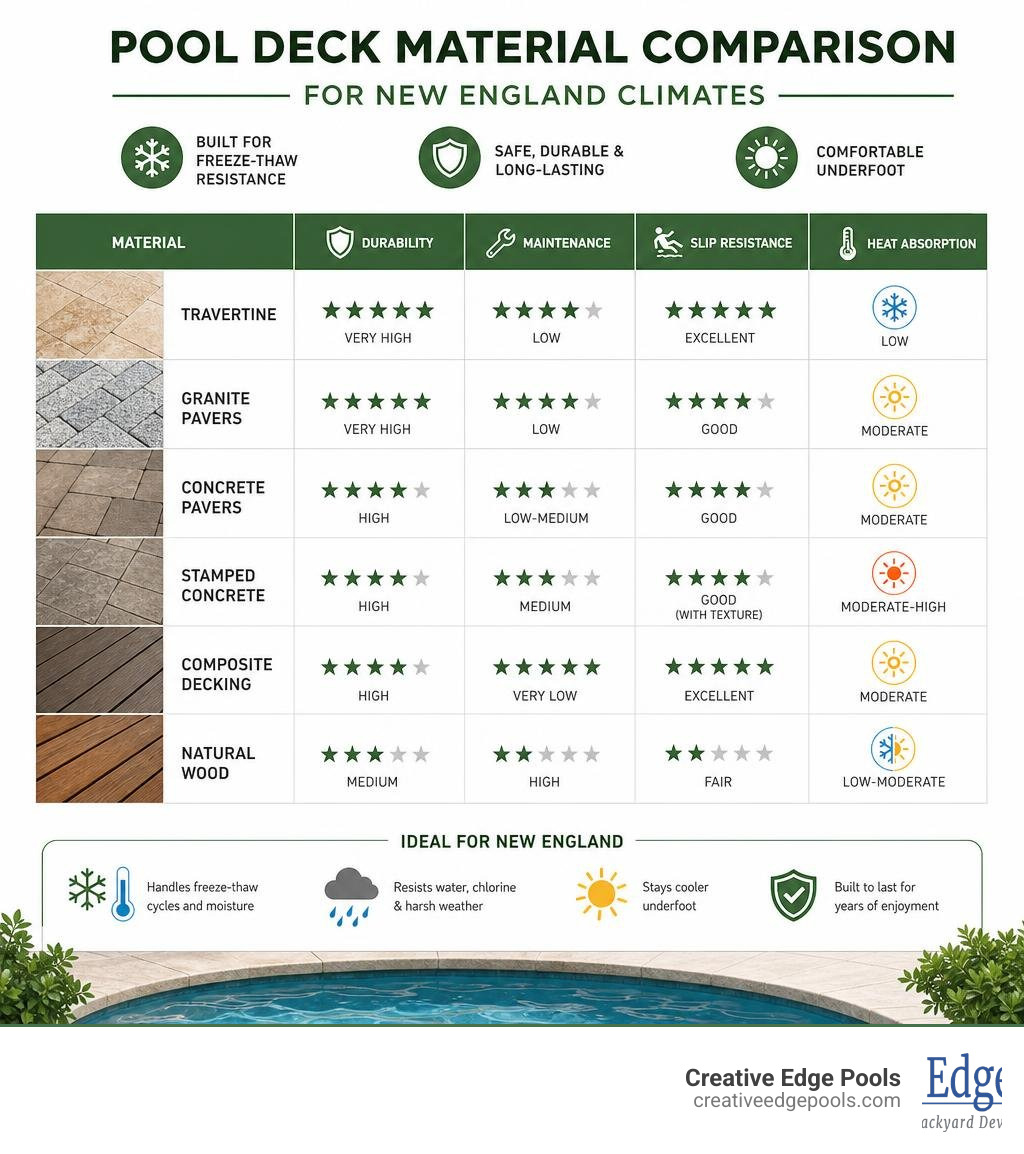
| Material | Durability | Maintenance | Slip Resistance | Heat Absorption |
|---|---|---|---|---|
| Travertine | Very High | Low | Excellent | Low |
| Granite Pavers | Very High | Low | Good | Moderate |
| Concrete Pavers | High | Low-Medium | Good | Moderate |
| Stamped Concrete | High | Medium | Good (with texture) | Moderate-High |
| Composite Decking | High | Very Low | Excellent | Moderate |
| Natural Wood | Medium | High | Fair | Low-Moderate |
The short answer: For homeowners in Eastern Massachusetts and Southern New Hampshire, natural stone and concrete pavers are the most popular choices — they handle freeze-thaw cycles well, look stunning, and stay manageable year after year with the right sealer.
The area surrounding your pool takes a beating. It faces constant water exposure, chlorine splashes, intense summer sun, and — in towns like Portsmouth, NH and Andover, MA — brutal winter freeze-thaw cycles that can crack and heave lesser materials within just a few seasons.
Choosing the wrong surface doesn’t just hurt the look of your backyard. It creates real safety risks, drives up long-term costs, and can complicate the structure of the pool itself.
This guide covers everything: materials, design, safety codes, coatings, costs, and maintenance — so you can make a confident decision and get it right the first time.
Comparing Premium Pool Decking Materials
When evaluating pool decking options, we must balance visual appeal with absolute performance. In New England, a material that looks gorgeous in July must also withstand the relentless freeze-thaw cycle of January. Let’s look at how the top premium materials perform across key criteria.
Choosing between Stone Pool Decks and concrete finishes comes down to your aesthetic goals, budget, and long-term maintenance expectations. While wood and composite have their place, masonry and stone offer unmatched longevity and structural integration with high-end gunite pools.
For example, high-quality composite options like Pool Decking in Composite — Anti-Slip | CDECK® carry Class 3 slip-resistance ratings and warranties up to 25 years. However, for a seamless, high-end look that perfectly frames a custom gunite pool, most New England homeowners lean toward natural stone or concrete pavers.
Natural Stone and Concrete Pavers for Pool Decking
Natural stone stands as the gold standard for luxury pool surrounds. Travertine is exceptionally popular because of its unique physical properties: it remains remarkably cool underfoot even in direct summer sunlight, and its natural porosity provides built-in slip resistance when wet. Granite pavers offer unmatched density and strength, easily resisting the moisture and salt or chlorine exposure common to pool coping areas.
For homeowners in Portsmouth, NH and Andover, MA, utilizing natural stone or high-grade concrete pavers ensures that the hardscape can shift slightly with the ground during winter frosts without cracking. To understand the complete layout and installation methodology of these premium materials, read A Comprehensive Guide to Poolside Patio Installation.
For those seeking regional inspiration, viewing historic stone masonry designs, such as those found in Pool Decks in Arlington, MA – D Pacheco Masonry, highlights how natural stone harmonizes with traditional New England architecture.
Stamped and Textured Concrete Pool Decking
Stamped concrete is a highly versatile and cost-effective alternative to natural stone. By pouring concrete and pressing detailed patterns into it before it cures, we can replicate the look of slate, flagstone, brick, or even wood planks.
The key to a successful stamped concrete deck in northern climates is slip resistance and durability. We always incorporate non-slip additives into the final sealer coat to prevent slick surfaces. Furthermore, proper joint placement is critical to control where the concrete will naturally expand and contract during seasonal temperature swings.
If you want to explore how custom concrete finishes can elevate your backyard, check out these Concrete Pool Deck Options to Make Your Neighbors Jealous. You can also see excellent regional examples executed by a Stamped Concrete Pool Deck Contractor in Milford New Hampshire.
Design and Structural Considerations for In-Ground Pools
Designing a pool deck is much more than choosing a material; it requires careful structural planning to ensure the deck integrates flawlessly with your gunite pool shell.
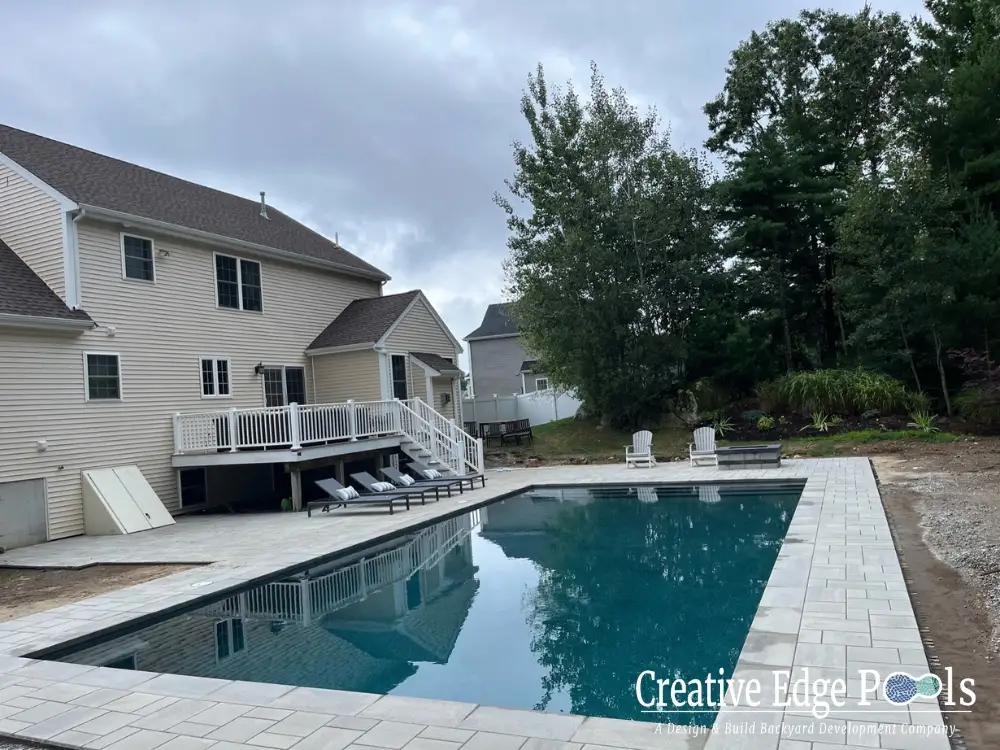
The layout must account for the transition between the pool coping (the immediate edge of the pool) and the surrounding deck. Because a gunite pool shell is incredibly heavy and anchored deep in the earth, it moves independently from the surrounding patio.
To prevent cracking and structural damage, we must install a dedicated expansion joint between the pool coping and the deck. This allows both structures to shift without pressing against one another. Additionally, the entire deck must slope away from the pool at a minimum of 1/8-inch per foot to ensure proper drainage and prevent dirty runoff water from spilling back into your clean pool.
These design principles are strictly implemented across our service areas, from Wilmington, MA to Milford, NH, ensuring that local soil conditions and frost depths are fully accounted for during the excavation and site-prep phases.
Safety Barriers, Gates, and Electrical Codes
Safety is our absolute priority. When designing and building a pool deck, we must strictly adhere to local building codes and national safety standards, including the International Swimming Pool and Spa Code (ISPSC §305), the International Residential Code (IRC R507), and the National Electrical Code (NEC 680).
Key safety requirements include:
- The 48-Inch Barrier: Most municipalities require a continuous safety barrier or fence at least 48 inches tall surrounding the pool area.
- Self-Closing, Self-Latching Gates: All access gates must open outward (away from the pool) and be equipped with self-closing and self-latching hardware.
- Electrical Safety (NEC 680): Any electrical outlets, lighting, or pool equipment receptacles must be GFCI-protected and placed at safe, code-compliant distances (typically 6 to 20 feet) from the water’s edge.
For those interested in how these safety and structural codes translate to different pool configurations, you can read about general layout standards in How to Design and Build an Above-Ground Pool Deck – iGarden Store or review manufactured deck safety features like the 5’X13.5′ Resin Pool Fan Deck With In-Pool & Ground to Deck Steps – The Pool Factory.
Pool Deck Coatings, Sealers, and Temperature Control
If you have an existing concrete deck that is structurally sound but gets too hot or looks dated, specialized coatings and sealers are highly effective solutions.
Modern cool-deck coatings work by absorbing less solar radiation and dissipating heat back into the soil or air, reducing surface temperatures by up to 38% compared to standard concrete. High-quality acrylic sealers, when mixed with slip-resistant aggregates, provide excellent traction, UV resistance, and protection against harsh pool chemicals like chlorine and salt.
For a deeper dive into how different finishes alter the performance and style of your pool surround, explore our guide on Concrete Pool Deck Options to Make Your Neighbors Jealous. For specific DIY or commercial-grade sealer bases, products like the DYCO POOL DECK™ Base – Pro Solutions Direct demonstrate the chemical technology used to protect concrete from heavy foot traffic and chemical wear.
Resurfacing and Restoring Existing Concrete Decks
You don’t always need to completely tear out an old concrete deck to achieve a premium look. Concrete resurfacing can completely transform your pool area at a fraction of the cost of a full replacement.
Resurfacing methods include:
- Stamped Concrete Overlays: A thin layer of polymer-modified concrete is applied over the existing slab and stamped with your choice of pattern.
- Knockdown Texture: A textured acrylic spray is applied and troweled flat, creating a slip-resistant, cool-to-the-touch surface.
- Engineered Stone Resurfacing: Specialized systems can engrave and color existing concrete to look like natural flagstone or tile.
Homeowners throughout Eastern Massachusetts have used these advanced restoration methods to revitalize their backyards. You can learn more about local concrete restoration projects in Concrete Pool Deck Resurfacing in Acton MA – RenuKrete, Pool Deck Resurfacing in North Andover MA – RenuKrete, Pool Deck Resurfacing in Amesbury MA – RenuKrete, Concrete Pool Deck Resurfacing in Amherst MA, and Pool Deck Resurfacing in Ashburnham MA | RenuKrete.
Cost Analysis and Professional Installation Timelines
When budgeting for a pool deck installation, it is important to understand the variables that drive the total cost. These include site accessibility, excavation requirements, material selection, and the complexity of the masonry work.
Disclaimer: Please note that all prices mentioned in this article are average costs sourced from publicly available internet data and are not the actual prices or rates of Creative Edge Pools. These figures are provided for general educational purposes only.
According to online data and industry averages, standard pool deck installations typically range from $25 to $50 per square foot. However, to account for high-end materials, complex site preparation, custom masonry, and regional labor variations in New England, a realistic and comprehensive price range is $50 to $250+ per square foot. Depending on the scale of your project, site conditions, and premium material choices, the total project cost can range from $10,000 to $100,000+.
A professional installation typically takes 1 to 3 weeks to complete, depending on the size of the deck and the complexity of the masonry. This timeline includes excavation, grading, setting footings, pouring concrete or laying stone, and applying final sealers.
To estimate your base costs or explore professional hardscaping options further, you can utilize online tools like the Concrete Pool Deck Cost Calculator | Pool Deck Price Estimator, read comprehensive cost breakdowns in How Much Does a Pool Deck Cost? (2026), or learn more about our professional Hardscape Installation Services and Hardscaping Masonry capabilities.
Budgeting for Premium Finishes and Hardscaping
If you are planning a complete backyard transformation, budgeting should extend beyond the immediate pool surround. Integrating retaining walls, custom steps, cabana pads, and proper drainage systems ensures a cohesive and long-lasting design.
For instance, wet-set stone installation (where pavers are mortared to a poured concrete slab) offers superior durability but requires a higher upfront investment in labor and materials compared to dry-set installations (where pavers are laid over compacted gravel and sand). Retaining walls may also be necessary if your yard has a slope steeper than 10%, adding to the initial excavation and structural engineering costs.
Maintenance and Longevity of Pool Decks
To protect your investment and ensure your pool deck remains safe and beautiful for decades, a consistent maintenance routine is essential.
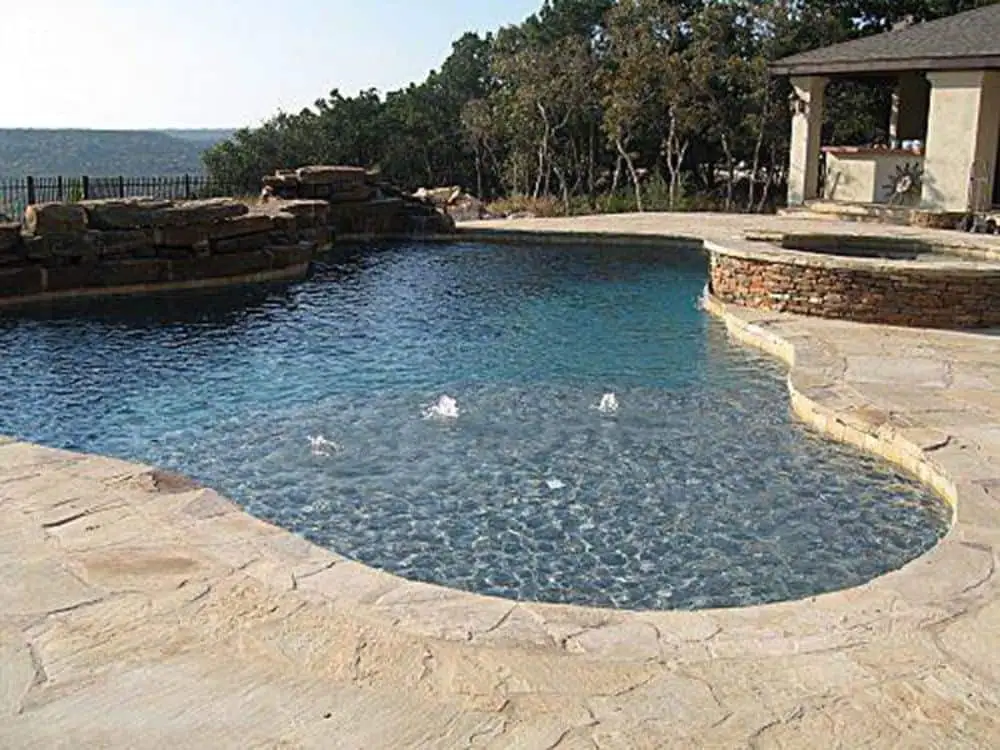
New England winters are notoriously harsh on outdoor masonry. Water can seep into unsealed stone or concrete, freeze, expand, and cause hairline cracks to widen into major structural issues.
To prevent this:
- Seal Regularly: Stamped concrete should be resealed every 2 to 3 years to protect its color and maintain slip resistance. Natural stone may require sealing every 3 to 5 years depending on the porosity of the stone.
- Annual Pressure Washing: Clean the deck at least once a year using a wide-angle fan nozzle at a safe distance (at least 12 inches from the surface) to remove dirt, algae, and chlorine residue without damaging the stone or joint sand.
- Address Settling Early: If a section of your deck settles or shifts over time, professional concrete leveling or polyurethane foam injection can restore the surface to flush, preventing dangerous tripping hazards.
For detailed advice on preserving your patio, explore our professional Hardscape Maintenance Service.
Winterization and Damage Prevention
Winterization is the single most important step in extending the lifespan of your pool deck. Before the first freeze, clear the deck of all furniture, clean the expansion joints, and ensure that all drainage pathways are entirely free of debris.
If your deck has suffered significant cracking or shifting over the years, it may be time to consider a replacement rather than temporary repairs. To help you evaluate the state of your current pool surround, read our comprehensive Pool Deck Replacement Guide 2025.
Frequently Asked Questions about Pool Decks
What is the coolest material for a pool deck underfoot?
Travertine is widely considered the coolest natural stone for pool decks. Its light color reflects solar energy, and its unique cellular structure dissipates heat rapidly. Light-colored concrete pavers and specialized cool-deck acrylic coatings are also excellent choices for minimizing heat retention.
How often should a pool deck be sealed or resurfaced?
Stamped concrete typically requires resealing every 2 to 3 years to maintain its color and protective barrier. Premium natural stone pavers should be sealed every 3 to 5 years. A complete resurfacing or overlay is generally needed every 10 to 15 years, depending on wear and maintenance.
Why is professional installation recommended over DIY for pool decks?
Pool decks require precise grading, heavy excavation, knowledge of local building and safety codes, and expert masonry skills to handle freeze-thaw cycles. A professional installation ensures proper drainage, frost-line footing compliance, and structural integration with your gunite pool shell, saving you from incredibly costly structural failures down the road.
Conclusion
Your pool deck is the bridge between your home and your pool — it is where family memories are made, summer barbecues are hosted, and quiet mornings are enjoyed. Investing in the right materials and professional craftsmanship ensures that this space remains safe, beautiful, and structurally sound for decades to come.
At Creative Edge Pools, we are a family-owned business with over 100 years of combined experience. We specialize in designing, installing, and renovating custom gunite pools, spas, and complete backyard developments throughout Eastern Massachusetts and Southern New Hampshire.
Let us help you bring your backyard vision to life with expert stonework and seamless pool integration.
Ready to transform your outdoor oasis? Contact our expert team today:
- Phone: +978-203-0406
- Request a Consultation: Get a Free Quote
- Explore Our Hardscaping Services: Pool Area Hardscaping
