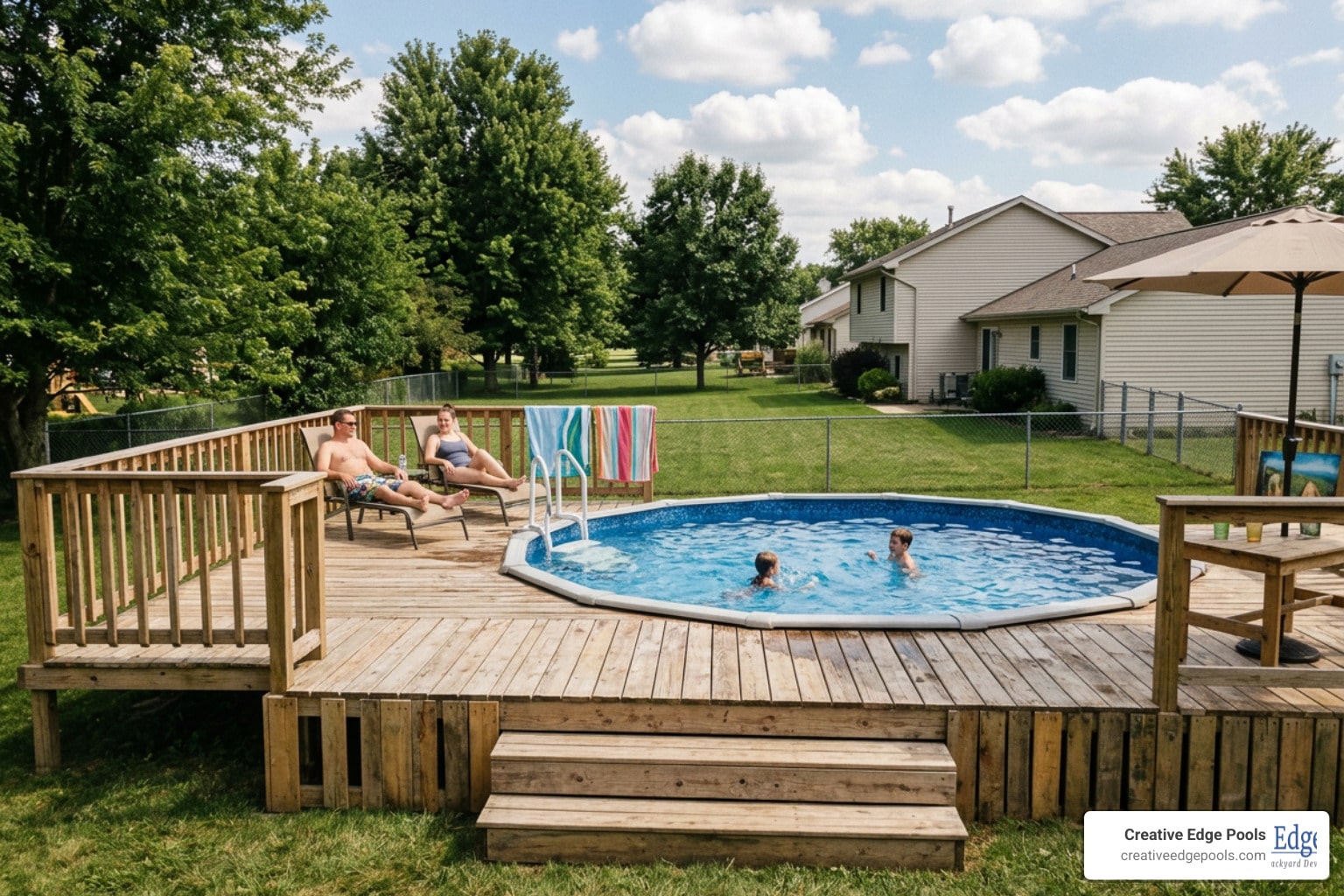
A Cheap Pool Deck That Actually Works? Here’s What You Need to Know
An above ground pool pallet deck is one of the most budget-friendly ways to turn a bare backyard pool setup into something that actually feels like a backyard oasis — and it’s caught on fast with DIY homeowners across Eastern Massachusetts and Southern New Hampshire.
Quick answer: How to build an above ground pool pallet deck
- Collect heat-treated (HT-stamped) wood pallets — free or very low cost
- Clear and level the ground, then lay landscape fabric
- Place concrete deck blocks as a base to keep wood off damp soil
- Build a rigid outer frame using 2×4 or 2×6 lumber
- Secure pallets to the frame with exterior deck screws
- Sand all surfaces smooth and apply a UV-resistant waterproof sealant
Estimated cost: Under $100 using recycled pallets | Time: 1-2 weekends
Here’s the appeal: a standard above-ground pool deck built by a professional can run anywhere from $3,000 to $12,000 on average, according to publicly available industry data. A pallet deck? Potentially under $100 if you source recycled materials.
That gap is huge — and it’s exactly why this DIY trend has exploded.
But before you start stacking pallets, there are real questions worth answering. Are pallets actually safe around a pool? Do you need a permit in Massachusetts or New Hampshire? How long will it last before it rots? And at what point does it make more sense to invest in professional hardscaping instead?
This guide covers all of it — from choosing the right pallets to finishing the surface for barefoot safety.
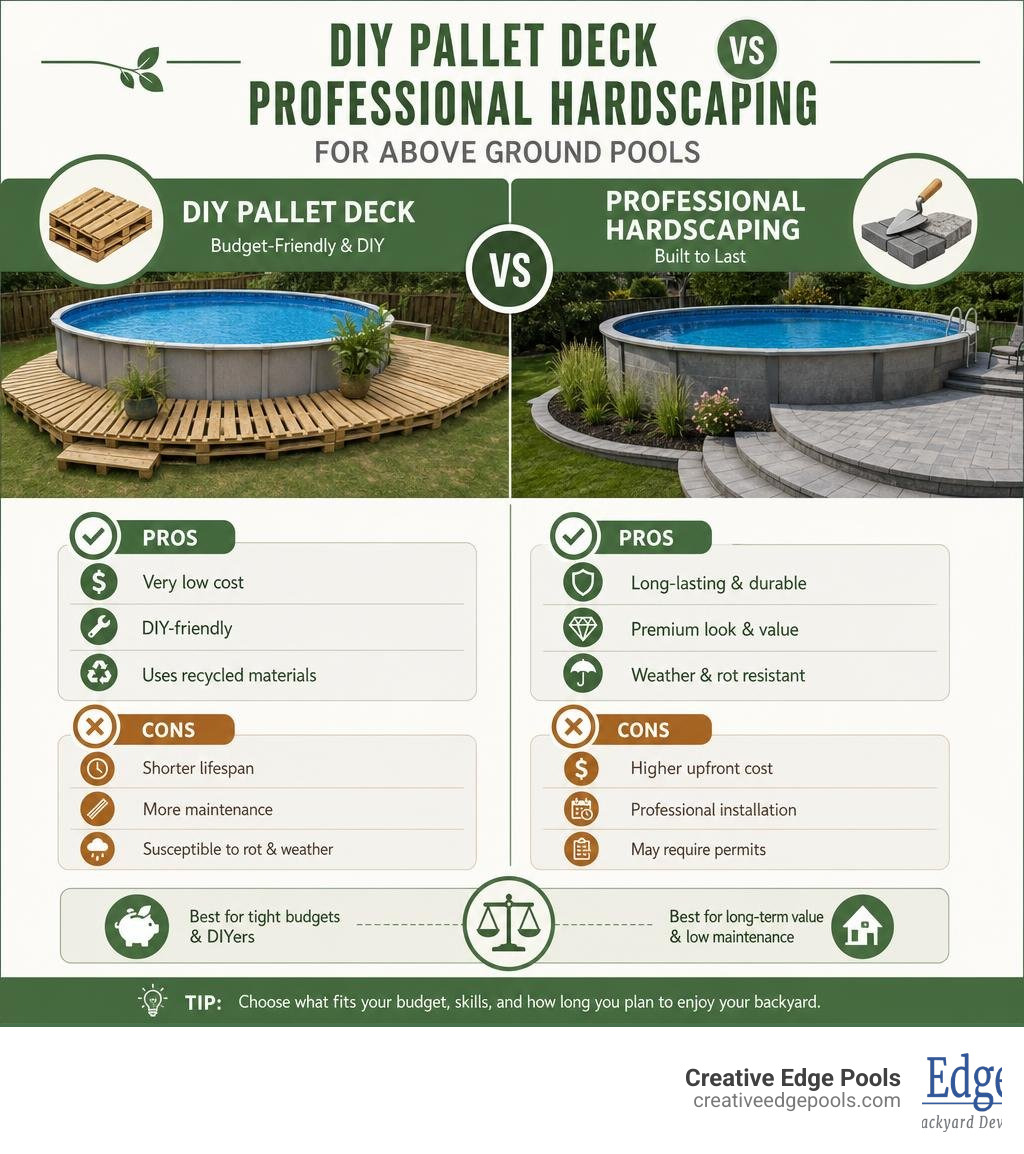
Simple above ground pool pallet deck word guide:
Planning Your Above Ground Pool Pallet Deck: Safety, Codes, and Costs
When you start planning a pool deck, it is easy to get caught up in the aesthetics. You might picture lounge chairs, potted plants, and warm wood tones. However, building any structure next to thousands of gallons of water requires serious planning. Safety, local building codes, and structural stability must always come first.
Whether you live in Andover, MA, Wilmington, MA, or Portsmouth, NH, local municipalities have strict regulations regarding structures built around swimming pools. Even a seemingly temporary structure like an above ground pool pallet deck can fall under local building inspector scrutiny.
Before clearing any grass, you must understand how your deck will function, how much it will actually cost, and whether your local zoning board requires a permit.
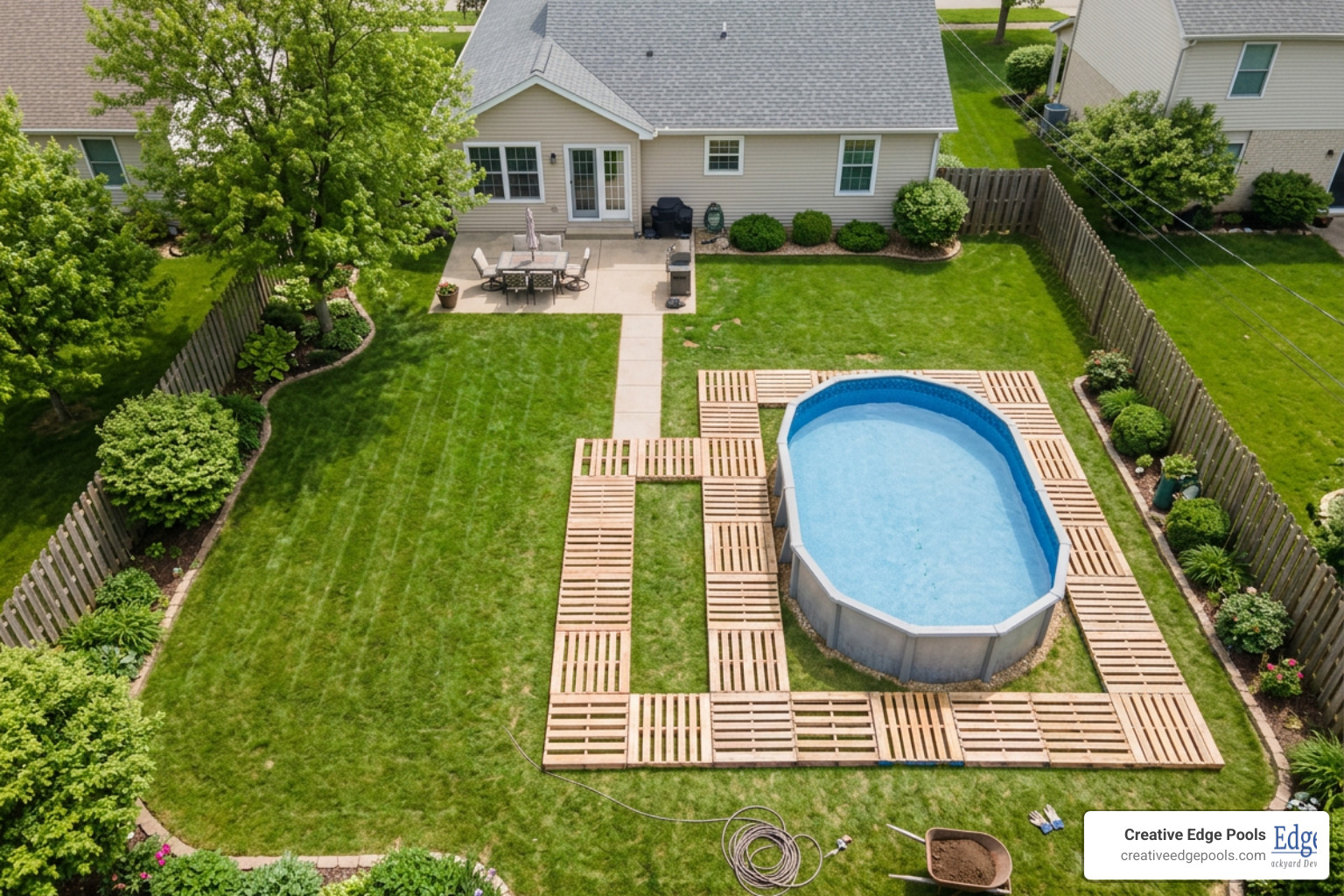
Why an Above Ground Pool Pallet Deck is a Popular DIY Trend
The rise of the pallet deck is no accident. With the cost of traditional building materials fluctuating, homeowners are looking for smart, sustainable, and budget-friendly alternatives.
- Upcycled Wood: Reusing wooden shipping pallets prevents perfectly good lumber from ending up in landfills. It is an eco-friendly approach to backyard design that appeals to modern, environmentally conscious homeowners.
- Cost Efficiency: Building a traditional wood or composite deck is a major financial commitment. Many homeowners look to Above Ground Pool With DIY Pallet Deck ideas as a way to enjoy a comfortable, clean landing area without a massive upfront investment.
- Temporary Nature: In many jurisdictions, a deck built on top of deck blocks without poured concrete footings is considered a temporary, freestanding structure. This can sometimes simplify the planning process compared to permanent, attached structures.
- Incredible Versatility: From a simple single-level platform to a floating deck around above ground pool setup, the design options are vast. You can find inspiration across platforms like 25 Pallet Pool Deck Ideas for Above Ground Swimming Pools and Pallet Deck for Above Ground Pool – Pinterest to match your specific pool shape and yard layout.
However, while these decks are popular, they are not a permanent substitute for professional construction. They are best viewed as a short-to-medium-term budget hack rather than a lifetime backyard fixture.
Real-World Costs vs. Professional Hardscaping
Let’s talk numbers. It is important to separate DIY hype from realistic construction costs. While a basic pallet deck can be assembled for very little money using recycled materials, a high-quality, long-lasting pool deck is a completely different investment.
Based on publicly available internet data, the average cost to build a standard, professionally installed above-ground pool deck typically ranges from $3,000 to $12,000, with a national average of around $5,000. However, when you factor in premium materials, proper safety railings, excavation, and structural engineering to ensure the deck lasts for decades, real-world professional pricing is higher.
To account for industry variability, site preparation, and high-quality materials, a professionally installed pool deck or premium hardscaping project typically ranges from $10,000 to $25,000 (please note: these are average industry costs sourced from public internet data and do not reflect the specific pricing of Creative Edge Pools).
If you are trying to decide between a temporary DIY wooden structure and a permanent backyard upgrade, here is how the two approaches compare:
| Feature | DIY Pallet Pool Deck | Professional Hardscaping & Decking |
|---|---|---|
| Average Cost Range | $100 – $500 (DIY) | $10,000 – $25,000 (Professional Average) |
| Primary Materials | Recycled wood pallets, deck blocks | Masonry, natural stone, pavers, structural timber |
| Lifespan | 1 to 3 years (without heavy maintenance) | Lifetime (with minimal maintenance) |
| Permit Ease | Often bypasses permanent codes (but still risky) | Fully code-compliant, engineered, and permitted |
| Safety Level | Moderate (requires frequent splinter/rot checks) | Maximum (built to strict structural & safety codes) |
| Property Value | Does not add appraisal value | Significantly increases home resale value |
| Maintenance | High (annual sanding, staining, board replacement) | Low (occasional washing or sealing) |
For homeowners who want a flawless, permanent solution that integrates seamlessly with their landscape, investing in a professional hardscaping service or premium hardscape installation services is the gold standard. But if you are determined to take the DIY route for a temporary pool setup, doing it safely is paramount.
Selecting and Preparing Safe Pallet Materials
If you are going to build a deck out of pallets, you cannot just grab the first few wooden crates you see behind a local grocery store in Exeter, NH. Shipping pallets are exposed to harsh environments, heavy loads, chemicals, and biological contaminants during their lifespans.
Using the wrong pallets can introduce dangerous toxins to your backyard or result in a deck that collapses under foot.
Heat-Treated vs. Chemically Treated Pallets
Every international shipping pallet is stamped with an International Plant Protection Convention (IPPC) logo and a code that tells you exactly how the wood was treated. This is the most critical safety step in your entire project.
- Look for the “HT” Stamp: This stands for Heat Treated. These pallets were placed in a kiln to kill pests without the use of dangerous chemicals. HT pallets are completely safe to use for your pool deck, garden beds, or outdoor furniture.
- Avoid the “MB” Stamp: This stands for Methyl Bromide. Methyl bromide is a highly toxic chemical pesticide. Pallets stamped with MB should never be brought onto your property, burned, or used for any DIY project.
- Avoid Unmarked Pallets: If a pallet does not have an IPPC stamp, do not use it. It may have been treated with chemicals domestically, or it may have been exposed to chemical spills during transport.
- Inspect the Wood Quality: Look for pallets made from hardwoods rather than softwoods. Avoid pallets with heavy oil stains, strange odors, or visible mold. Your pool deck will be walked on with bare feet, so starting with clean, structurally sound wood is non-negotiable.
Essential Tools and Hardware
To build a pallet deck that won’t wobble or warp, you need the right tools and hardware. Do not rely on standard nails, which will easily back out over time as the wood swells and shrinks from pool water exposure.
- High-Quality Deck Screws: Use 2.5-inch or 3-inch exterior-grade deck screws. Coated structural screws or stainless steel fasteners are ideal because they resist rust and won’t corrode when exposed to pool chemicals.
- Heavy-Duty Landscape Fabric: This is laid beneath the deck to prevent weeds, grass, and vines from growing up through the gaps in your pallet wood.
- Concrete Deck Blocks or Pavers: These act as the foundation, keeping the wood pallets elevated and off the damp soil.
- Safety Gear: Heavy-duty work gloves, safety glasses, and a high-quality dust mask for sanding are essential.
- Power Tools: A circular saw or miter saw, a high-torque drill/driver, and a belt sander or random orbital sander will save you hours of manual labor.
For those looking to maximize their backyard efficiency, you can even incorporate specialized pallet storage projects, such as a Combo Above-ground Pool Deck & Supplies Caddy • 1001 Pallets, which helps keep your pool chemicals, filters, and toys organized right next to the water.
When executing a DIY project, following a structured plan like the one detailed in How to Build a Pallet Deck for Above Ground Pool in 9 Easy Steps will help keep your build organized and secure.
How to Build a Stable and Level Foundation
The secret to any long-lasting structure is the foundation. If you place wood pallets directly onto bare grass or uneven dirt, they will warp, sink, and rot within a single season. Water splashes over the side of the pool constantly, meaning the ground beneath the deck will be perpetually damp.
To prevent this, you must treat your pallet deck foundation with the same care as a traditional deck. If this step feels too labor-intensive or complex, it is highly recommended to reach out to professional hardscape services near me to ensure your backyard has proper drainage and structural support.
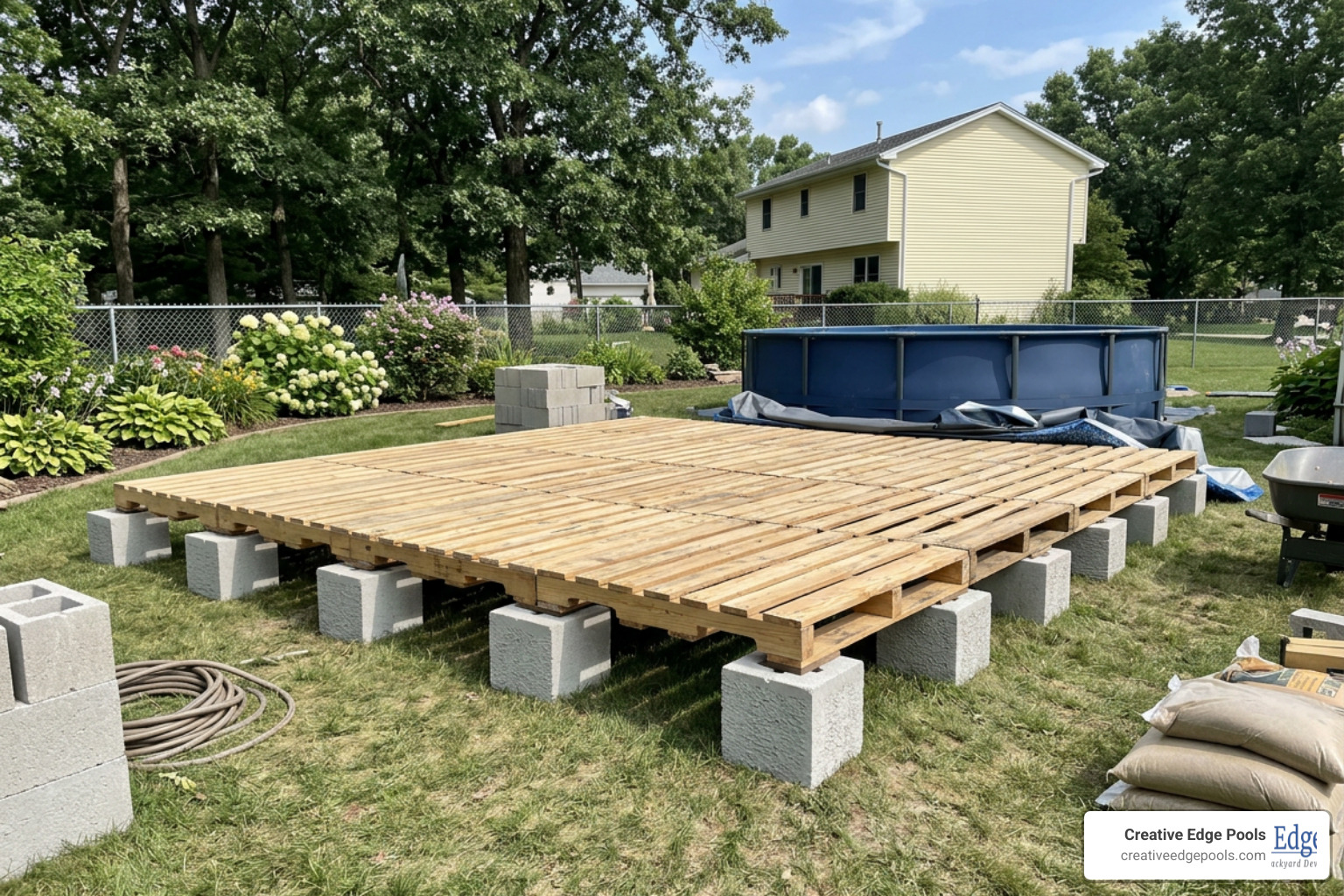
Step-by-Step Guide to Building a Safe Above Ground Pool Pallet Deck
If you are ready to tackle the construction, follow these high-level steps to ensure a stable build:
Step 1: Site Clearing and Excavation
Mark out the exact footprint of your deck. Remove all grass, sod, weeds, and rocks from the area. Dig down about 2 to 3 inches to create a flat, clean subgrade.
Step 2: Laying the Weed Barrier
Roll out heavy-duty landscape fabric over the excavated area. Overlap the seams by at least 6 inches and secure the fabric with landscape staples. This step prevents unsightly weeds from growing through your deck boards.
Step 3: Placing the Base Blocks
Position concrete deck blocks or solid concrete pavers where the corners and joints of your pallets will sit. Space them evenly so that every pallet is supported at its corners and center.
Step 4: Leveling the Foundation
Use a long spirit level (or a laser level) to ensure every single block is perfectly level with its neighbors. Use leveling sand or gravel beneath the blocks to make micro-adjustments. If the foundation is even slightly unlevel, the entire deck will feel unstable.
Step 5: Building a Rigid Outer Frame
Instead of simply laying pallets next to each other, build a rigid outer frame using pressure-treated 2×4 or 2×6 lumber. Secure this frame to your deck blocks.
Step 6: Securing the Pallets
Place your prepared, heat-treated pallets inside or on top of the frame. Secure them to the framing lumber and to each other using heavy-duty exterior deck screws and metal joist hangers. This prevents individual pallets from shifting or lifting. You can watch visual guides on structural assembly, such as How to Build a Pallet Deck for Above Ground Pool – YouTube, to better understand the framing process.
Ensuring Structural Integrity and Drainage
Water is the ultimate enemy of wood. Because this deck sits directly adjacent to an above-ground pool, it will experience constant cycles of wetting and drying.
First, your deck must be completely freestanding. Never attach the framing of your pallet deck directly to the wall of your above-ground pool. Above-ground pool walls are engineered to hold the outward pressure of water; they are not designed to support lateral loads or vertical weight from a wooden deck. Attaching a deck directly to the pool can puncture the liner, warp the pool frame, or cause a catastrophic pool failure.
Second, ensure proper drainage. The ground beneath the deck should slope slightly away from the pool to allow splashed water to run off rather than pool under the wood. If water collects under the deck, it will cause rapid wood rot, mold growth, and soil erosion, making the deck highly unstable.
If you are dealing with a sloped yard or complex drainage issues, consulting with certified hardscape companies near me is the safest way to avoid structural failures.
Customizing and Finishing Your Pallet Deck
Once the structural work is complete, it is time to focus on safety and aesthetics. Raw pallet wood is notorious for being rough, uneven, and prone to splintering. Since you and your family will be walking on this deck with wet, bare feet, you must spend extra time preparing the surface.
If you want your backyard to have a cohesive, high-end look, you can design your deck to coordinate with other backyard features. For instance, pairing a clean wooden deck with a nearby outdoor kitchen and deck space creates the ultimate summer entertaining hub.
Sanding, Staining, and Weatherproofing
To make the wood safe for bare skin, you must follow a rigorous finishing process:
- Thorough Sanding: Start with a coarse 60-grit or 80-grit sandpaper on a belt sander to level out uneven board joints and remove major rough spots. Follow up with a medium 120-grit and a fine 220-grit sandpaper to create a completely smooth surface. Pay extra attention to the edges of the boards where splinters are most common.
- Countersink All Screws: Ensure every single screw head is driven slightly below the surface of the wood. A protruding screw head can cause painful cuts to wet feet.
- Apply a High-Quality Stain or Sealant: Standard wood pallets are not naturally weather-resistant. You must apply a premium, UV-resistant, waterproof deck stain or exterior sealant. Clear sealants preserve the rustic look of the wood, while solid color stains can make the pallets look like expensive, uniform decking boards.
- Add Non-Slip Additives: Wet wood is incredibly slippery. When applying your final topcoat of sealer or paint, mix in a non-slip textured additive (like pumice or fine silica sand) to provide extra traction for wet feet.
For homeowners who prefer a more permanent, elegant look underfoot, exploring stone pool decks is an incredible alternative that offers natural slip resistance and unmatched durability.
Adding Built-In Seating, Lighting, and Storage
Once the surface is sealed, you can customize your pallet deck to fit your lifestyle:
- Built-In Benches: Use leftover pallet wood to build integrated bench seating along the outer edges of the deck. This provides a place to lounge and acts as a natural barrier to prevent falls.
- Low-Voltage LED Lighting: Install solar-powered post cap lights or low-voltage LED strip lights along the edges and steps of the deck. This makes the pool area safe to use after the sun goes down and creates a beautiful evening ambiance.
- Privacy Screens: If your backyard is close to neighbors in Derry, NH, you can stand pallets vertically along one side of the deck, sand them, and use them as privacy screens or living green walls filled with climbing plants.
- In-Pool Seating: To elevate the resort-like feel of your pool area, consider adding stylish pool stools inside the pool adjacent to your new deck, creating a perfect swim-up bar experience.
Frequently Asked Questions About Pallet Pool Decks
How long does a pallet pool deck last?
A pallet pool deck built with standard, untreated shipping pallets typically lasts 1 to 3 years before wood rot and weather damage make it unsafe. Because pallet wood is thin and highly porous, constant exposure to pool water, splashing, and New England winter snow will cause rapid deterioration.
To maximize its lifespan, you must sand, stain, and seal the deck every single year. If you want a pool deck that lasts for decades without the heavy annual maintenance, investing in professional brick pool decks or stone hardscaping is a much more durable, long-term option.
Can you attach a pallet deck directly to an above-ground pool?
No. You should never attach any deck framing directly to the frame or walls of an above-ground pool. Above-ground pools are freestanding structures designed to hold the weight of water, not the weight of people walking on an attached platform.
Attaching a deck directly to the pool can cause the pool walls to buckle, tear the vinyl liner, and create severe safety hazards. Your deck must be entirely freestanding, supported by its own independent posts, beams, and deck blocks.
Do I need a permit for a pallet pool deck in Massachusetts or New Hampshire?
In almost all cases, yes. Even though a pallet deck is budget-friendly and often built without pouring concrete footings, most towns in Massachusetts (like Andover, MA) and New Hampshire (like Portsmouth, NH) require a building permit for any structure built around a swimming pool.
Local building codes and the International Swimming Pool and Spa Code (ISPSC) require specific barrier heights, self-closing safety gates, and slip-resistant surfaces to prevent accidental drownings. Building a deck without a permit can result in heavy fines, and you may be forced to tear the structure down. Always check with your local building department before starting any construction.
Conclusion
While a DIY above ground pool pallet deck is an incredibly cheap and creative way to solve the problem of muddy feet around a temporary pool, it comes with real limitations in terms of lifespan, structural safety, and local building code compliance. If you are looking for a short-term, budget-friendly fix for the summer, a carefully constructed, heat-treated pallet deck can do the trick.
However, if you want to transform your backyard into a stunning, permanent resort that adds real value to your home, a temporary wooden pallet deck won’t cut it.
At Creative Edge Pools, we are a family-owned business with over 100 years of combined experience bringing homeowner visions to life. We specialize in professional gunite pool design, installation, and full-service backyard development — including gorgeous, custom-engineered pool area hardscaping throughout Eastern Massachusetts and Southern New Hampshire.
Let us help you build a backyard oasis that is safe, code-compliant, and built to last a lifetime.
Ready to elevate your backyard?
- Call us today: +978-203-0406
- Request a custom consultation: Get a Free Quote Online