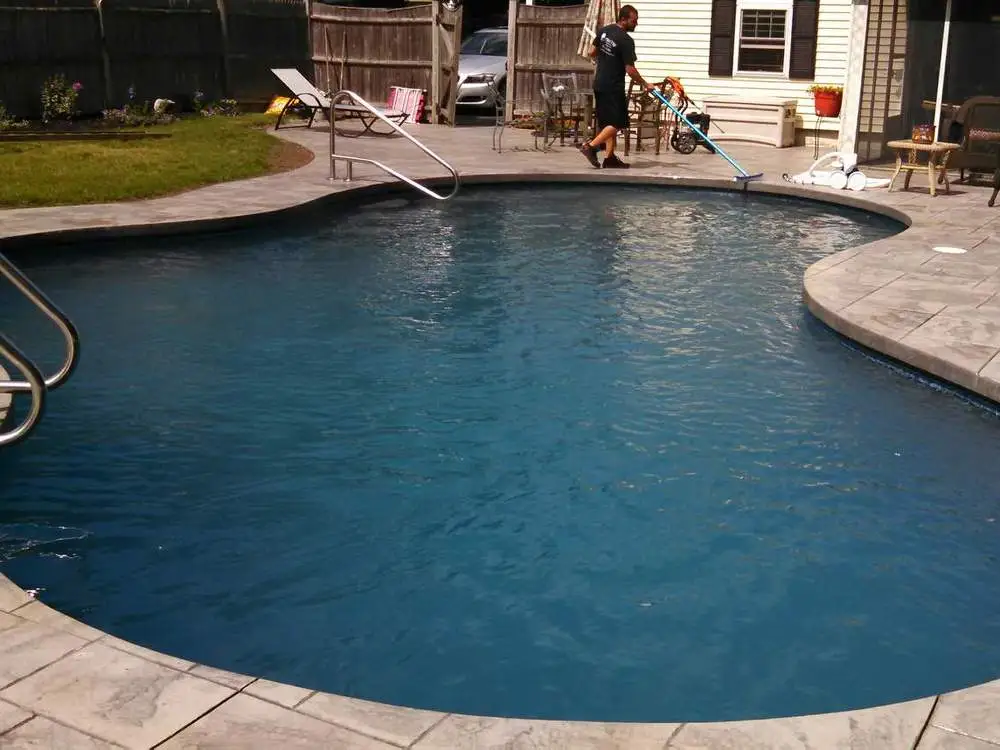
What Does Marcite Pool Resurfacing Cost in New England?
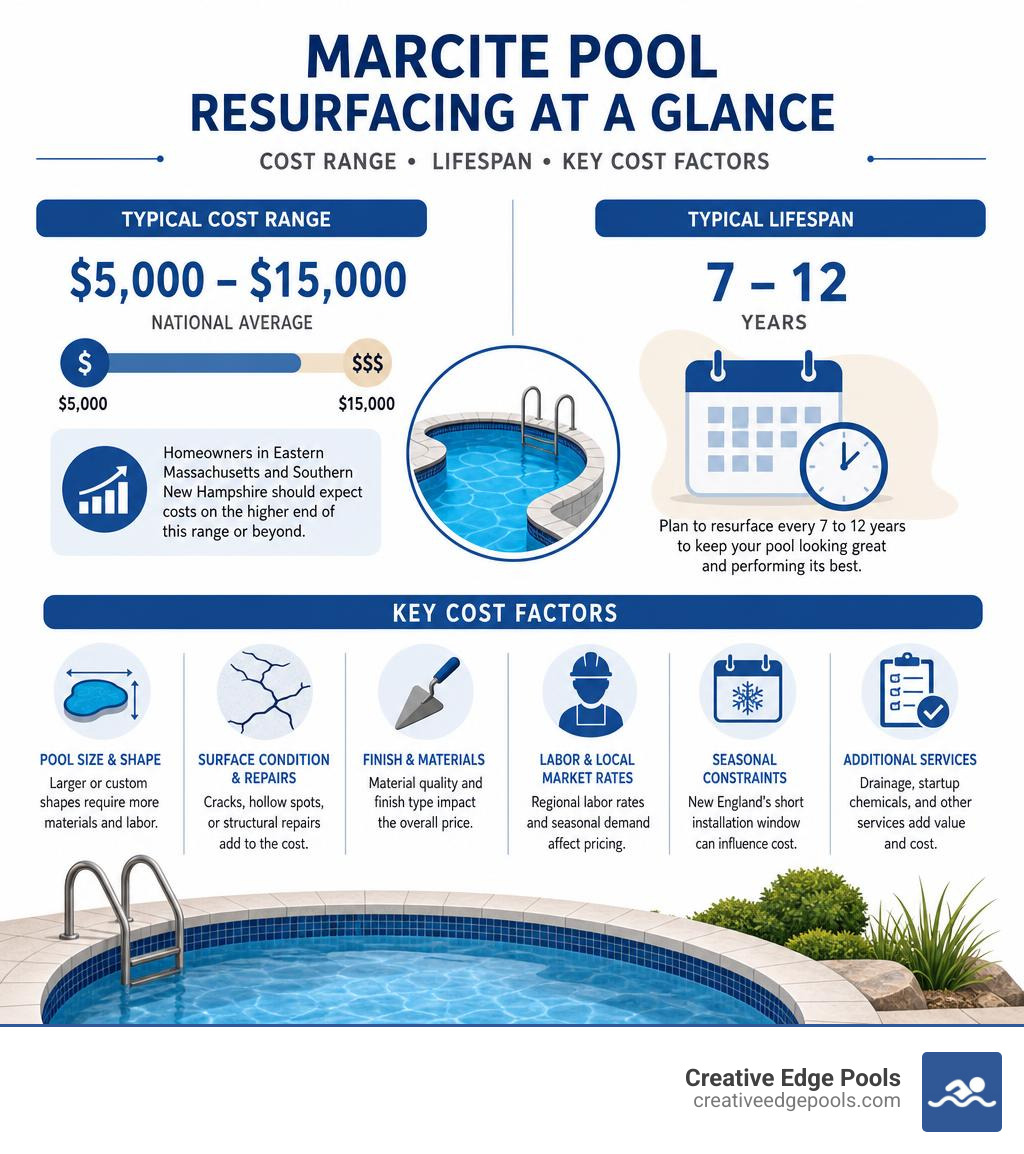
Marcite pool resurfacing cost typically falls between $5,000 and $15,000 nationally — but homeowners in Eastern Massachusetts and Southern New Hampshire should expect to budget on the higher end of that range, or beyond it, due to regional labor rates, seasonal constraints, and the demands of New England’s climate.
Here’s a quick snapshot of what you’re looking at:
| Finish Type | Typical Cost Range (National Avg.) |
|---|---|
| Marcite / White Plaster | $5,000 – $8,000 |
| Quartz Plaster | $7,000 – $10,000 |
| Pebble / Aggregate | $7,000 – $15,000 |
| Tile | $8,000 – $30,000+ |
| Pool Paint | $1,000 – $2,000 |
All price ranges above reflect industry averages sourced from publicly available online data. They are not the actual rates of Creative Edge Pools. Your real cost will depend on pool size, condition, finish type, and local labor in your area.
Marcite — a smooth blend of white cement and marble dust — has been the go-to pool finish for decades. It’s affordable, attractive, and time-tested. But like all good things, it doesn’t last forever. Most marcite finishes need resurfacing every 7 to 12 years, and when that time comes, the project involves more than just slapping on new plaster.
Draining, surface prep, structural repairs, chemical startup — the costs add up fast. And if you’re in towns like Andover, MA or Exeter, NH, regional pricing and shorter installation windows mean you need a realistic budget before you call a contractor.
This guide breaks it all down: what drives the cost, what’s often left off the quote, and how to plan smart.
Understanding the Marcite Pool Resurfacing Cost
When evaluating the marcite pool resurfacing cost, it is helpful to first look at broader industry baselines. Across the United States, online data indicates that the national average to replaster or resurface a pool hovers around $11,000. However, in our experience renovating high-end gunite pools in Eastern Massachusetts and Southern New Hampshire, local market conditions and structural demands can shift these numbers significantly.
To account for extreme industry variability, size differences, and regional labor requirements, a more realistic, comprehensive cost range for a full-scale professional pool resurfacing project can span from $22,000 to $55,000 or more.
These average figures are compiled from publicly available internet sources like How Much Does Pool Resurfacing Cost? [2026 Data] and are not representative of specific Creative Edge Pools pricing. However, they serve as an excellent starting point for understanding your initial budget.
For a deeper dive into the basic steps of this major home upgrade, check out our Beginners Guide to Pool Resurfacing.
The Balance of Labor and Materials
A significant portion of your investment goes directly toward skilled labor. Unlike installing a pre-fabricated vinyl liner, applying a marcite finish is a highly specialized craft.
- Labor Rates: Professional pool plasterers typically charge between $45 and $65 per hour, though in high-demand areas in Eastern MA and Southern NH, rates can climb to $110 per hour. Labor often accounts for 45% to 70% of the total project invoice.
- Material Costs: Standard white marcite plaster is generally the most cost-effective cement-based finish, averaging $4 to $8 per square foot in material costs.
For homeowners in communities like Andover, MA or Exeter, NH, the regional cost of living and the limited pool construction season (which runs strictly from late spring to late autumn) naturally place our local market on the higher end of these national estimates.
Factors That Influence Your Marcite Pool Resurfacing Cost
No two backyards are identical, and several key variables will dictate where your final estimate lands.
- Pool Size (Surface Area): Resurfacing costs are calculated by the total square footage of the pool’s interior surface, not just its length and width. A standard 16×32-foot pool has roughly 1,000 square feet of interior surface area. Larger residential pools or those with deep ends require significantly more material and hours of hand-troweling.
- Pool Shape and Complexity: Rectangular pools are straightforward to prep and plaster. Freeform pools, kidney shapes, or those featuring built-in steps, benches, love seats, and attached spas require meticulous, detailed handwork. The tighter curves increase the labor hours required to achieve a flawless, smooth finish.
- Surface Preparation and Stripping: You cannot simply plaster over a failing, peeling, or hollow old surface. The old finish must be prepared. This usually involves chipping out the old plaster around the tile line and fittings, or completely sandblasting, hydro-blasting, or acid-washing the entire shell to create a rough, solid substrate for the new marcite bond coat. If the old surface is severely delaminated, a complete chip-out is required, which can add thousands to the preparation labor.
To learn more about how plaster preparation impacts your overall project budget, read our detailed breakdown on Plaster Pool Resurfacing Cost. For additional context on how marcite measures up against premium alternatives, you can also review How Much Does It Cost to Resurface a Marcite Pool Finish?.
Hidden Fees in a Marcite Pool Resurfacing Cost
When reviewing a contractor’s bid, it is crucial to ensure you are comparing “apples to apples.” Some lower bids may omit essential phases of the project that you will ultimately have to pay for. Here are the most common “hidden” fees to watch out for:
1. Draining and Refilling the Pool
Before any work can begin, the pool must be completely emptied. Draining a pool safely requires commercial submersible pumps and proper water runoff management to avoid flooding your yard or a neighbor’s property.
- Draining & Cleanout: Typically costs between $175 and $650 depending on the pool’s volume and the amount of organic debris at the bottom.
- Refilling: Refilling a 20,000-gallon pool using a standard garden hose can take 24 to 48 hours and typically costs $40 to $400 on your municipal water bill. In some municipal areas or rural properties with well water, you may need to pay for bulk water delivery via tanker trucks, which can cost $400 to $2,000.
2. Chemical Startup and Balancing
Once the pool is refilled, you cannot simply jump in. New marcite is a cement-based product that undergoes a critical 28-day curing process underwater. The water chemistry must be monitored daily and adjusted carefully to prevent the curing plaster from leaching calcium, which causes scaling, rough spots, or permanent staining.
- Startup Chemicals: Expect to spend $150 to $500 on specialized startup chemicals, acid treatments, and professional water balancing services during the first month.
3. Structural Shell Repairs
Once the pool is drained and the old plaster is stripped, we occasionally find underlying structural issues that were hidden beneath the old finish. Structural cracks in the gunite shell, degraded bond beams, or rusted rebar must be repaired before the new marcite is applied.
- Crack Injection & Repair: Minor crack repairs can cost $200 to $1,200, while major structural stabilization can run much higher.
4. Waterline Tile and Coping Replacement
The waterline tile and coping stones hold the plaster edge in place. If your tile is cracked, missing, or has failing grout, it is highly recommended to replace it at the same time as the resurfacing. Plastering up to old, crumbling tile will compromise the watertight seal and aesthetic of your new finish.
- Waterline Tile Replacement: Standard tile replacement ranges from $3,000 to $5,000 depending on the perimeter of the pool.
To understand why addressing these underlying concrete issues is so critical to the longevity of your pool, read our guide on Concrete Pool Replastering.
How Marcite Compares to Other Pool Finishes
While marcite remains a popular and highly economical choice, it is only one of several options available for a Resurface Swimming Pool project. Understanding how it compares to alternative finishes in terms of upfront investment, maintenance, and lifespan will help you make the best decision for your home.
| Finish Type | Average Lifespan | Upfront Cost Level | Pros | Cons |
|---|---|---|---|---|
| Marcite (White Plaster) | 7 – 12 Years | Economical | Smooth texture, classic look, lowest upfront cost | Susceptible to staining, sensitive to chemical imbalances |
| Quartz Plaster | 10 – 15 Years | Moderate | Enhanced stain resistance, subtle sparkle, harder surface | Slightly rougher than marcite, higher cost |
| Pebble / Aggregate | 15 – 25+ Years | Premium | Extremely durable, hides dirt, beautiful natural aesthetic | Rough texture underfoot, significantly higher upfront cost |
| All-Tile Interior | 20 – 50+ Years | Ultra-Premium | Ultimate luxury look, highly durable, easiest to clean | Extremely labor-intensive, very high initial investment |
| Pool Paint (Epoxy) | 2 – 5 Years | Budget | Lowest entry price, wide color selection | Shortest lifespan, prone to chalking and peeling |
For a comprehensive comparison of all the materials you can choose for your gunite pool, check out our resources on Pool Resurfacing Options and Resurface Gunite Pool Options.
Lifespan and Signs Your Pool Needs Resurfacing
A standard marcite finish typically lasts 7 to 12 years. However, its actual lifespan is heavily dictated by two primary factors: water chemistry maintenance and local climate.
The Impact of New England Winters
In Southern New Hampshire towns like Rye, NH and Massachusetts communities like Tewksbury, MA, our pools endure extreme temperature swings. The harsh freeze-thaw cycles of New England winters place immense stress on concrete structures.
If water penetrates behind the plaster through minor cracks and then freezes, it expands, causing the plaster to pop off or delaminate from the underlying gunite shell. Consistent, proper winterization and maintaining balanced water chemistry during the swimming season are essential to reaching the double-digit lifespan mark.
For more information on how long you can expect your finish to last under various conditions, see How Long Does Pool Plaster Last and explore How Often Do Gunite Pools Need to Be Resurfaced.
Signs It is Time to Resurface Your Pool
If your pool is exhibiting any of the following symptoms, it is likely ready for a professional evaluation:
- Rough Texture: If the pool floor feels like coarse sandpaper and is scraping the bottom of swimmers’ feet, the smooth marble dust has worn away, leaving the rough sand and cement aggregate exposed.
- Delamination (Peeling Plaster): If you notice thin layers of plaster flaking off the pool floor or walls (a process known as “spalling”), the bond between the plaster and the gunite shell has failed.
- Stubborn Staining: Mineral deposits, metal scaling, and organic debris can cause deep, unsightly brown, blue-gray, or rust-colored stains that cannot be removed by acid washing or scrubbing.
- Spiderweb Cracking (Crazing): Fine hairline cracks across the surface indicate that the plaster is aging and drying out.
- Unexplained Water Loss: While some evaporation is normal, persistent water level drops can indicate structural cracks in the plaster or shell that require immediate repair.
The Professional Marcite Resurfacing Process
Resurfacing a gunite pool is a complex, multi-stage construction project that requires specialized machinery, precise chemical knowledge, and experienced hand-craftsmanship.
Here is what you can expect when you partner with a professional team:
- Draining and Site Setup: The pool is safely drained using commercial pumps, and the surrounding deck is protected. Hydrostatic relief valves are checked to ensure ground water pressure doesn’t lift the pool shell.
- Surface Preparation: Technicians chip away the old plaster beneath the tile line and around all return jets, drains, and lights. The entire surface is acid-etched or sandblasted to remove algae, mineral scale, and loose plaster, creating a rough, clean substrate.
- Applying the Bond Coat: A specialized, high-strength adhesive bond coat is rolled or sprayed onto the clean concrete shell. This step is critical; without a proper bond coat, the new plaster will eventually peel and fail.
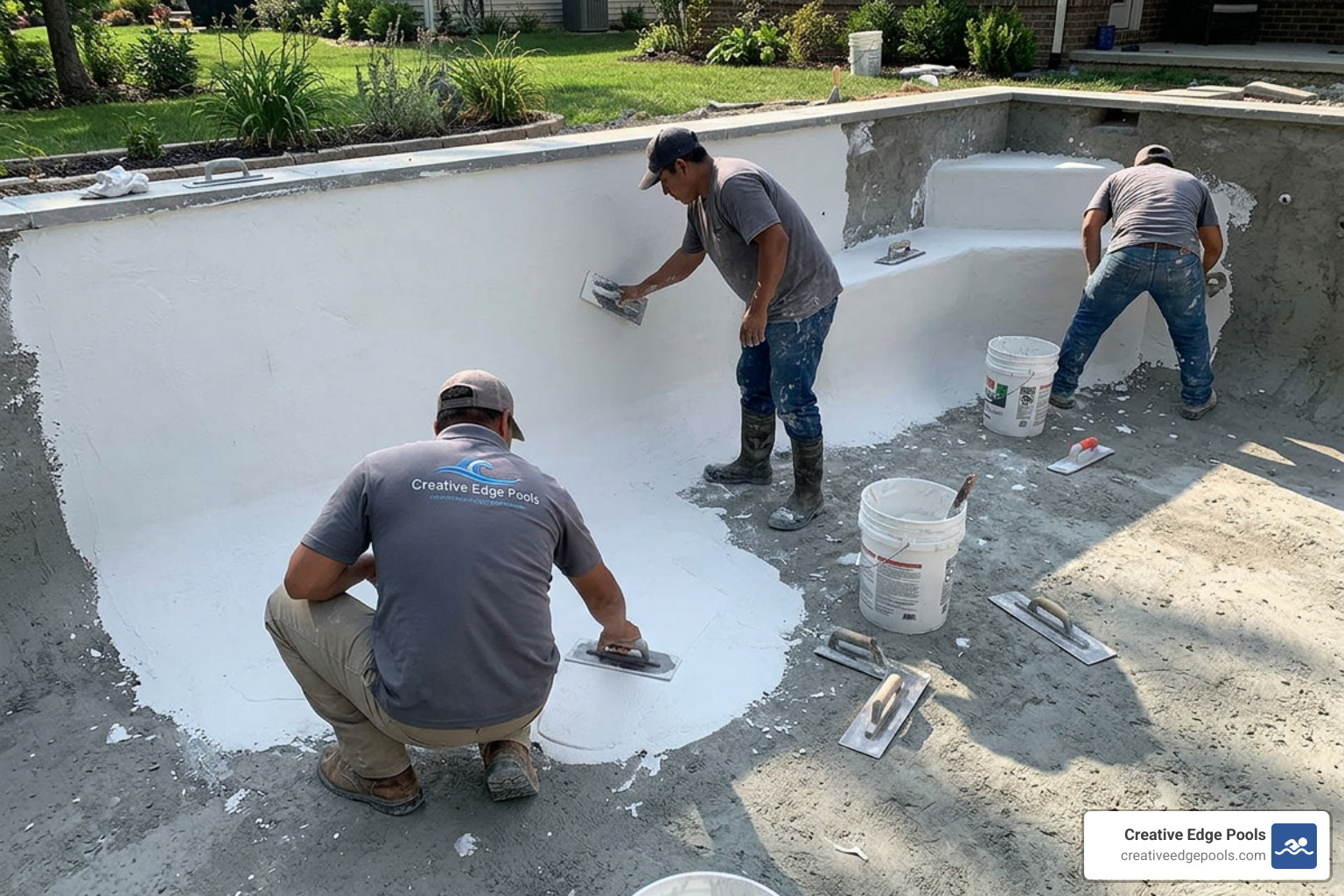
- Pneumatic Plaster Application: The marcite mixture is pumped into the pool and sprayed onto the walls and floor. A team of skilled plasterers immediately begins hand-troweling the material to create a dense, smooth, and watertight seal.
- The Curing Phase (The First 28 Days): As soon as the plaster is finished, the pool is immediately refilled with water. Cement-based plaster must cure underwater to prevent cracking. During the first 28 days, the water chemistry must be carefully balanced daily, and the pool must be brushed twice a day to remove loose plaster dust.
To read a detailed, step-by-step breakdown of how this process is executed from start to finish, see our guide on How to Resurface a Gunite Pool.
Frequently Asked Questions About Pool Resurfacing
Can you patch or sand damaged marcite instead of a full resurface?
While it is technically possible to perform minor spot repairs or patch small chips, it is rarely a viable long-term solution for widespread wear. New plaster patches will rarely match the color or texture of your existing, weathered pool surface, resulting in an unsightly, patchy appearance.
Sanding can occasionally smooth out minor rough spots or remove shallow scaling, but it must be done with extreme care. For a complete look at underwater maintenance and surface prep, you can review our articles on Sanding Pool Plaster and Sanding Pool Plaster Underwater. If your marcite is structurally failing, a full resurfacing is the only way to restore the watertight integrity and beauty of your pool.
What is the best time of year to resurface a pool in New England?
In New England, the ideal windows for pool resurfacing are late spring (late April through June) and early autumn (September through October).
Plaster is a cement-based material that requires moderate temperatures to cure properly. If it is too hot and dry, the plaster can dry out too quickly, leading to shrinkage cracks. Conversely, freezing temperatures will ruin the plaster before it has a chance to set.
Scheduling your resurfacing in a community like Hampton, NH during the shoulder seasons ensures optimal curing conditions and avoids disrupting your summer swimming season.
Does resurfacing a gunite pool increase home value?
Yes. A well-maintained, modern gunite pool is a highly desirable feature for buyers in Eastern Massachusetts and Southern New Hampshire.
According to real estate industry data, a pool in excellent condition can increase your home’s overall value by 5% to 8%. Conversely, a pool with cracked, stained, or peeling plaster is viewed by buyers as a major financial liability, often leading to lower offers or prolonged time on the market. Resurfacing your pool protects your structural investment and restores its backyard curb appeal.
To learn more about budgeting for comprehensive backyard transformations, read our guide on the Cost to Remodel a Swimming Pool.
Conclusion
Investing in your pool’s interior finish is the single best way to protect its structural integrity and keep your backyard looking like a private resort. While managing the marcite pool resurfacing cost requires careful planning, partnering with an experienced, reputable team ensures that your investment will last for a decade or more.
At Creative Edge Pools, we are a family-owned business with over 100 years of combined experience in designing, installing, and renovating premium gunite pools and spas. We specialize in bringing homeowner visions to life throughout Eastern Massachusetts and Southern New Hampshire, including communities surrounding Wilmington, MA and Portsmouth, NH.
Whether your pool needs a simple marcite refresh, a premium pebble finish upgrade, or a complete backyard hardscape renovation, we are here to deliver exceptional craftsmanship and personalized service.
Ready to transform your pool?
Don’t wait until the swimming season is here. Contact our team today at +978-203-0406 or fill out our online contact form to schedule a professional, on-site consultation.
You can also explore our full range of restoration and replastering options by visiting our Pool Resurfacing Service Page. Let us help you bring beauty, durability, and value back to your backyard oasis!