Inground pool surface repair: Top 5 Easy Fixes
Why Your Pool Surface Matters More Than You Think
Inground pool surface repair is essential for your pool’s safety, appearance, and value. A damaged surface is more than a cosmetic issue; it’s a protective barrier failure that can lead to water loss, higher chemical costs, and safety hazards for swimmers.
Common Pool Surface Problems:
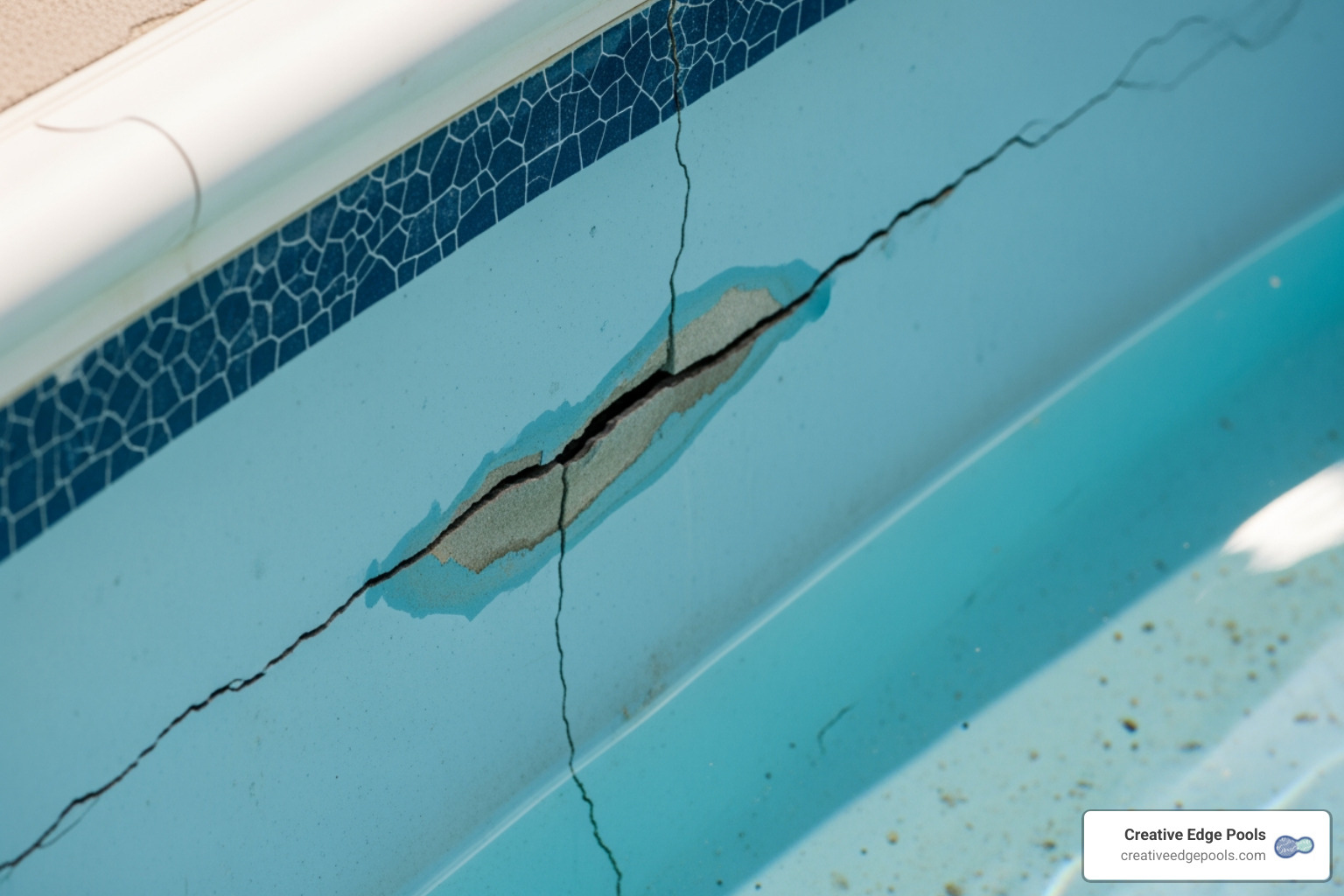
- Cracks – Allow water loss and can worsen over time
- Stains – From metal impurities, algae, or improper chemical balance
- Rough texture – Caused by etching or plaster degradation
- Peeling or flaking – Indicates delamination or surface failure
- Leaks – Lead to water waste and structural damage
Quick Repair Overview by Pool Type:
- Concrete/Gunite – Patch with plaster mix or epoxy putty
- Fiberglass – Use gel coat and fiberglass cloth
- Vinyl Liner – Apply vinyl patch kits with waterproof glue
The good news is that many minor repairs are DIY-friendly, with materials costing $50 to $300. However, extensive damage like widespread cracking or delamination requires professional help, which can range from $2,000 to $10,000 or more. Addressing issues early is key; a small crack that costs $100 to patch today could become a $5,000 resurfacing job if ignored.
As David Brabant, owner of Creative Edge Pools with over thirty years in the business, I’ve seen how proper inground pool surface repair can extend a pool’s life by decades. This guide will help you assess, repair, and maintain your pool surface, whether you’re doing it yourself or calling in the pros.
A Step-by-Step Guide to Inground Pool Surface Repair
Understanding how to perform inground pool surface repair can save you thousands of dollars and extend your pool’s life. This guide covers everything from identifying your pool type to making the fix, whether you’re a DIYer or hiring a pro.
Identifying Your Pool Surface and Common Problems
Before you can fix anything, you need to know what you’re working with, as each material has its own typical trouble spots.
Here’s a quick look at the three main types of inground pool surfaces:
| Pool Surface Type | Surface Texture | Typical Lifespan | Common Issues | Typical Repair Method |
|---|---|---|---|---|
| Concrete/Gunite (Plaster) | Smooth to slightly textured | 10-15 years (plaster) | Cracks, hollow spots, chipping, etching, scaling, spalling, delamination, stains. | Patching with plaster mix or epoxy, full replastering. |
| Fiberglass | Very smooth | 25-30+ years | Spider cracks, osmotic blistering, gel coat fading, staining. | Sanding, gel coat repair kits, professional resurfacing. |
| Vinyl Liner | Smooth, flexible | 10-15 years | Rips, tears, punctures, fading, stretching, leaks at seams. | Patch kits, full liner replacement. |
As a family-owned business specializing in custom Gunite Pools, we know that the plaster finish is the waterproofing membrane. When it fails, you’re looking at potential water loss and structural concerns.
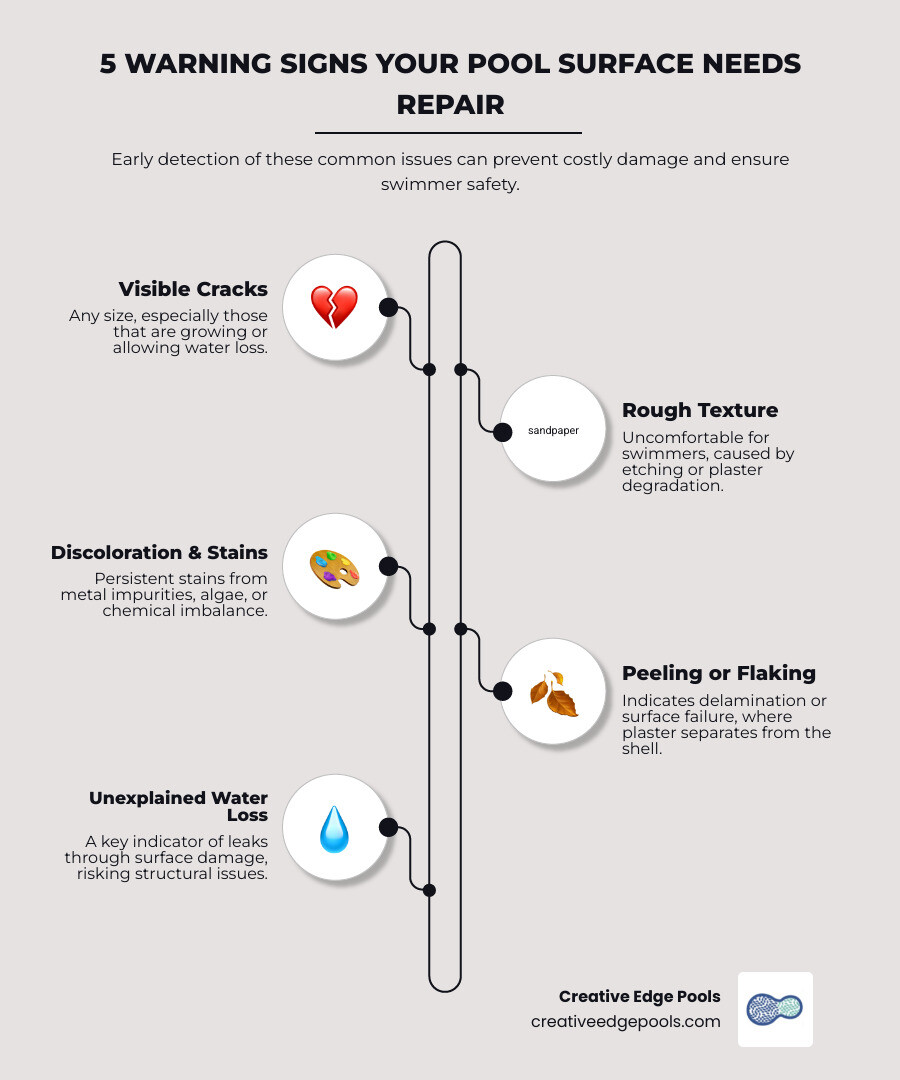
Watch for these warning signs:
- Visible cracks of any size.
- Rough or abrasive texture that feels like sandpaper.
- Persistent stains that won’t brush away.
- Peeling, flaking, or delamination where the surface is separating.
- Unexplained water loss beyond normal evaporation.
Catching these issues early makes all the difference and many problems are manageable with the right approach.
How to Repair a Concrete or Gunite Pool Surface
Concrete and gunite pools are durable, but their plaster finish needs attention. Here’s how to approach common repairs.
Repairing Plaster Cracks: For cracks in a drained pool, use a grinder to create a “Vee cut” to help the patch grip. Clean the area, then fill with a plaster patch mix. For underwater repairs, clean the crack thoroughly and apply a 2-part epoxy pool putty. That underwater patches are often temporary fixes. For a permanent solution, see our in-depth guide to underwater gunite repairs.
Fixing Chips and Hollow Spots: For chips or hollow “pop-offs,” chip away any loose plaster with a hammer and chisel. Create small divots in the underlying concrete to give the new plaster something to grab onto. Apply a plaster patch and smooth the edges.
Freeze-Thaw Cycle Damage: In colder climates like ours in Eastern Massachusetts and Southern New Hampshire, water freezing in cracks can cause significant damage. Proper winterization is your best defense.
Full Plaster Replacement (Resurfacing): When the entire surface is rough, cracked, or stained, a full plaster replacement is needed. This is a complex job for professionals, involving chipping away old plaster, acid washing, and applying a new coat.
How to Repair a Fiberglass or Vinyl Liner Pool
Many repairs for fiberglass and vinyl liner pools are manageable for homeowners.
Fiberglass Pool Repairs: These typically involve spider cracks or osmotic blisters. The process includes sanding the area, cleaning it with acetone, and applying a gel coat repair kit. Be aware that achieving a perfect color match is difficult; a full professional resurfacing is the best way to ensure a uniform appearance.
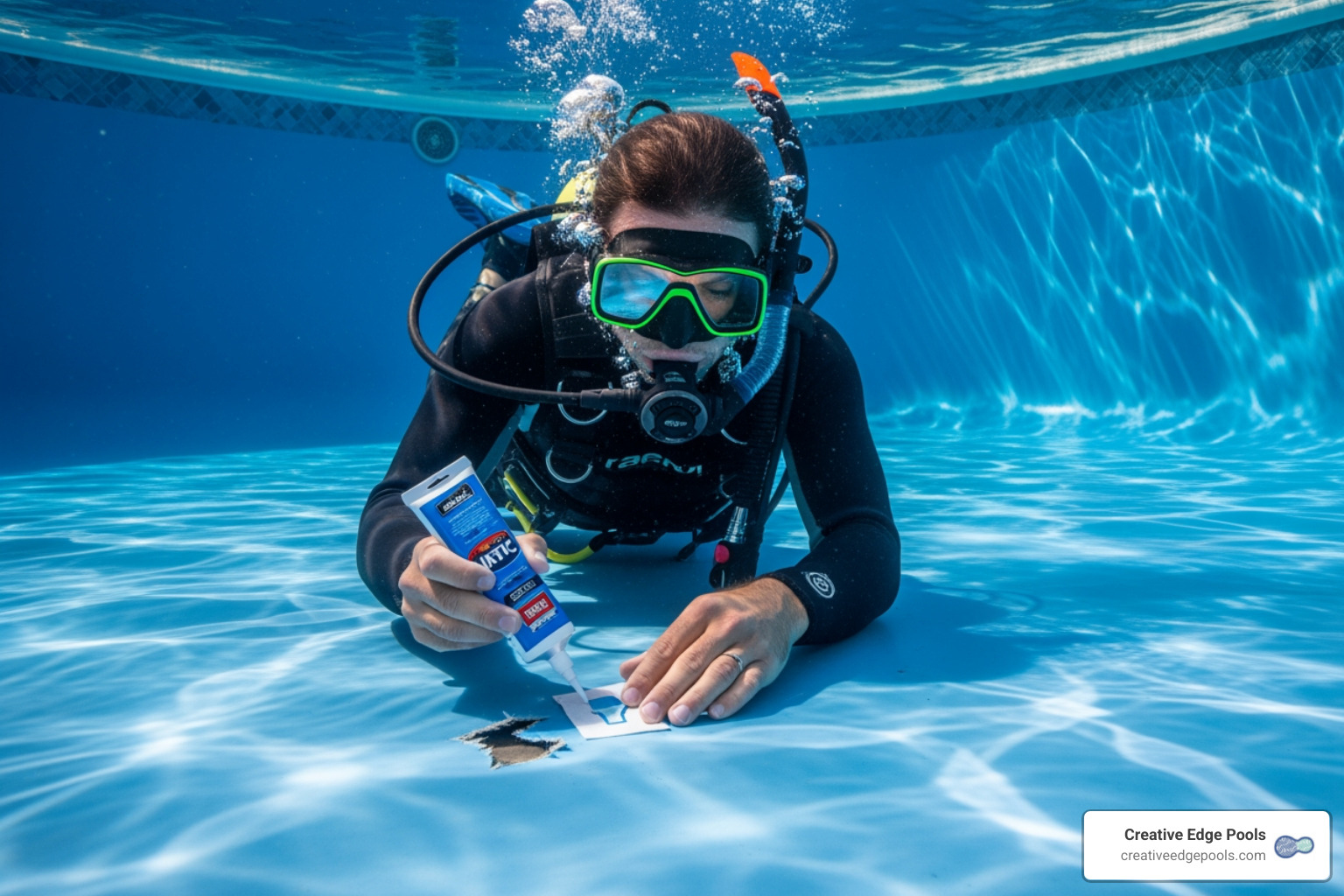
Vinyl Liner Pool Repairs: Patching vinyl liner tears is a common DIY task. Use a vinyl patch kit, cutting a circular patch about 1 inch larger than the hole. Apply waterproof glue (some work underwater) and press the patch firmly, smoothing out all air bubbles, especially at the edges. Full liner replacement is a meticulous but manageable DIY project for some homeowners, requiring careful measurement, preparation, and installation with a specialized vacuum.
Essential Tools and Materials for Inground Pool Surface Repair
Having the right tools and materials is crucial for a lasting repair.
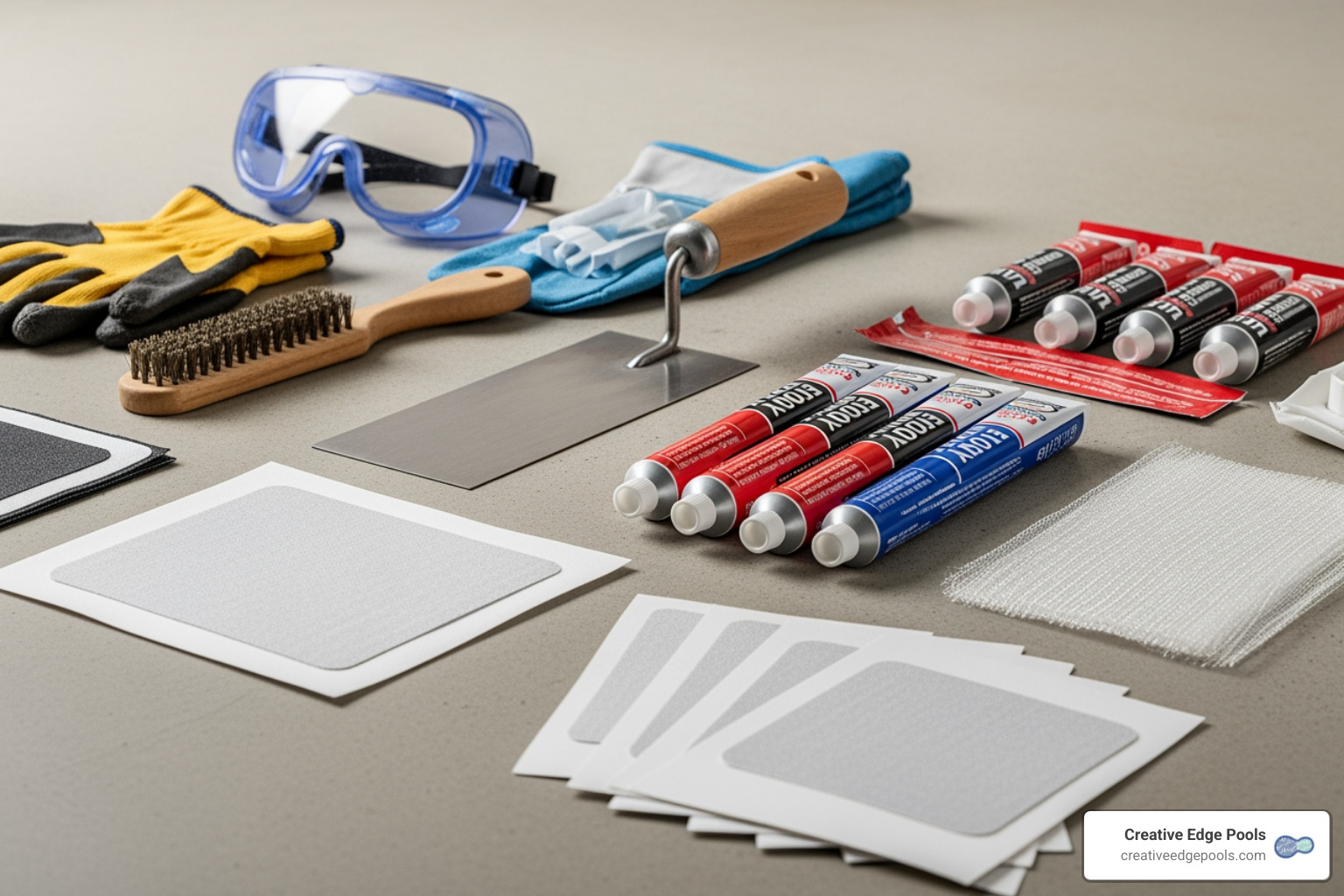
Safety first: Always wear goggles, heavy-duty gloves, and protective clothing. Ensure adequate ventilation when working with chemicals, adhesives, or solvents.
General Repair Tools & Materials:
- Wire brush
- Putty knife or trowel
- Buckets & sponges
- Utility knife
- For Concrete/Gunite: Plaster patch mix, 2-part epoxy pool putty, bonding additive, muriatic acid (handle with extreme care).
- For Fiberglass: Fiberglass repair kit (resin, hardener, cloth, gel coat), acetone, polyester putty.
- For Vinyl Liner: Vinyl patch kit with waterproof glue, wall foam, liner lock.
DIY vs. Professional Inground Pool Surface Repair
Deciding whether to DIY or hire a pro depends on the problem, your skills, and your time.
- DIY Repair: The main advantage is cost savings, with materials for small patches costing $50-$300. The downside is that complex repairs require expertise, there’s no warranty, and there are safety risks.
- Professional Repair: Professionals bring years of experience, use industrial-grade materials, and offer a warranty for peace of mind. The downside is higher cost. Concrete pool repairs can range from $500-$3,000, while a full resurfacing can cost $2,000-$10,000+.
When to call a professional:
- Extensive, deep, or widespread cracking
- Delamination (large sections of plaster separating)
- Structural shifting or bulging walls
- Persistent leaks you can’t locate
- Full resurfacing of any pool type
While a small repair might be a few hundred dollars, a professional resurfacing is a larger investment. You can learn more about the Average Cost to Resurface a Gunite Pool and explore Pool Resurfacing Options on our site.

Conclusion: Protecting Your Pool and Property
Timely inground pool surface repair and proactive maintenance are your best defense against problems that start small and grow expensive.
Your top priority should be balancing your water chemistry. Improper pH, alkalinity, or calcium levels can cause etching, scaling, and other damage. Regular brushing and cleaning will also prevent stains and wear.
Resurfacing an older pool is far less expensive than a full replacement. A new surface can last another 10-15 years, refresh your pool’s look with modern finishes, and increase your home’s value. Standard plaster is economical, while aggregate finishes like pebble or quartz offer superior durability and a unique look.
Whether you choose a DIY patch or a professional renovation, addressing surface issues promptly ensures your pool remains a source of joy. As a family-owned business serving Eastern Massachusetts and Southern New Hampshire, Creative Edge Pools specializes in custom gunite pools and spas. If you’re ready to give your pool the professional care it deserves, explore our gunite pool renovations. To see our latest projects, stay connected with us on Facebook.