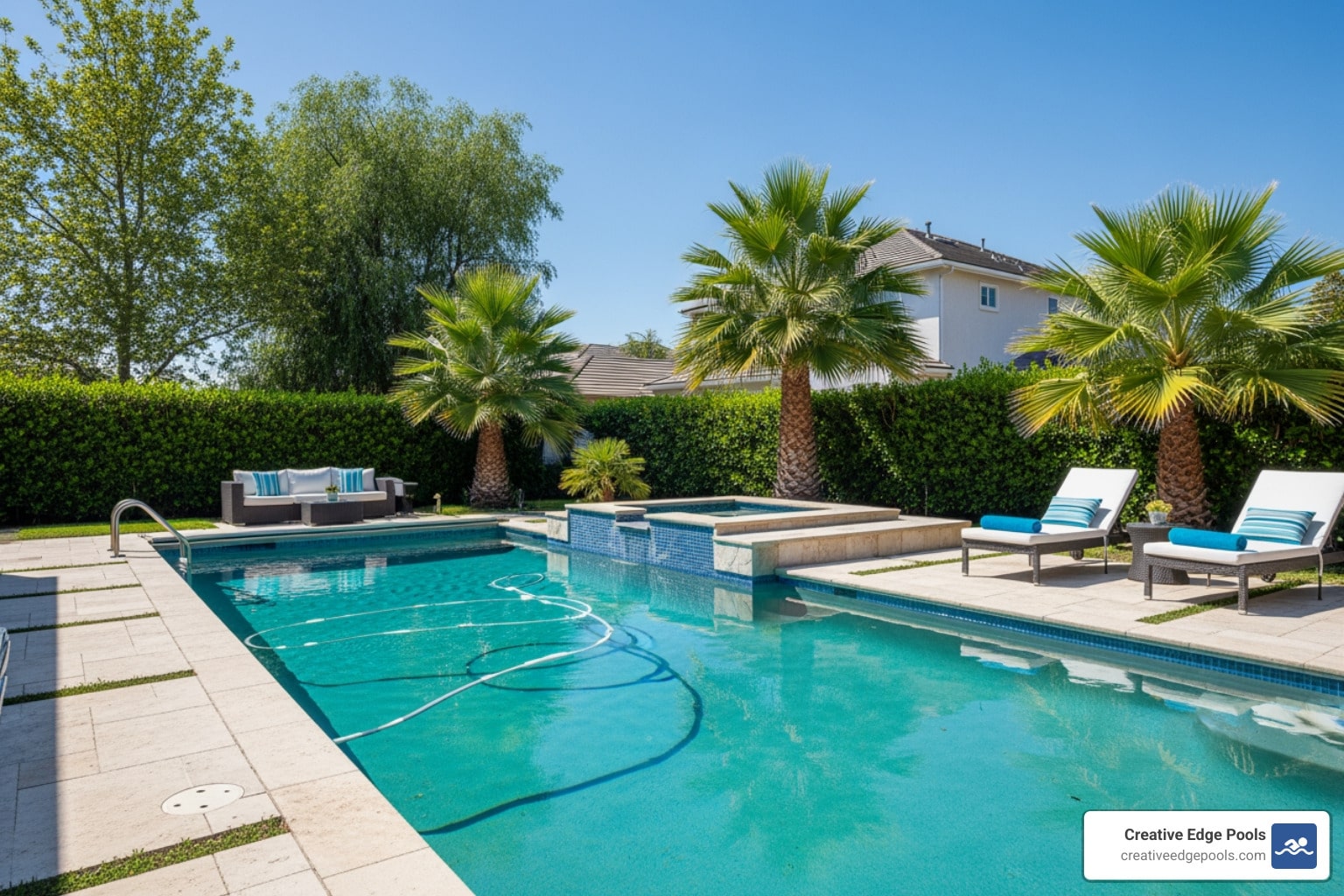
Selecting Pool Types and Materials
Choosing the right pool type is the most significant decision you’ll make in your backyard pool design journey. In New England, where we face dramatic temperature swings and rocky soil, the material you choose dictates not just the look, but the longevity of your investment.
While there are several options on the market, they aren’t created equal. Above-ground pools are the most economical, ranging from a few hundred dollars to about $8,000 for high-end models. They can be installed in a day, but they lack the “wow factor” and permanent value of an in-ground structure.
For those seeking a permanent backyard transformation, in-ground pools are the standard. Here is how the three main types compare:
| Feature | Gunite (Concrete) | Fiberglass | Vinyl Liner |
|---|---|---|---|
| Customization | Infinite shapes & sizes | Pre-molded shapes | Limited shapes |
| Durability | Extremely high | High (but can crack) | Low (liner tears) |
| Initial Cost | $50,000 – $100,000+ | $40,000 – $85,000 | $35,000 – $65,000 |
| Lifespan | Lifetime (with care) | 25+ years | 10-15 years (structure) |
| Maintenance | Moderate | Low | Moderate (liner swaps) |
At Creative Edge Pools, we specialize in Gunite Pools because they offer the structural strength required for the freeze-thaw cycles of Massachusetts and New Hampshire. Gunite is a mixture of sand and cement sprayed onto a steel-reinforced frame, creating a monolithic structure that won’t “pop” out of the ground when the water table rises.
Beyond standard swimming pools, many homeowners are opting for specialty designs:
- Lap Pools: Long and narrow (often as narrow as 8 feet), these are perfect for fitness enthusiasts with limited yard width.
- Swim Spas: A hybrid between a pool and a hot tub, using jets to create a current for stationary swimming.
- Spools: A “spa-pool” hybrid. These are oversized spas or tiny pools (often 10×15 feet) equipped with powerful heaters and LED-illuminated rain curtains. They are perfect for smaller lots in places like Cambridge or Somerville.
For a deeper dive into the technical side of these setups, check out our guide on pool and spa installation.
Determining Size and Shape for Your Backyard Pool Design
One of the most common mistakes in backyard pool design is ignoring the “yard-to-pool ratio.” You don’t want a pool that swallows your entire property, leaving no room for a patio or a spot for the dog to run. Conversely, a tiny pool in a massive field can look like a puddle.
When deciding on a shape, consider your home’s architecture:
- Rectangular/Geometric: These offer a modern, clean look. They are the best choice for lap swimming and usually accommodate automatic safety covers more easily.
- Freeform: These mimic natural bodies of water with curves and flowing lines. They are ideal for “lagoon” themes and work well in yards with irregular boundaries.
We always recommend doing a “hose layout.” Take a long garden hose and lay it on the grass in the shape and size you’re considering. It’s a low-tech but highly effective way to visualize the spatial impact. For more tips, see our article on how to design the perfect gunite pool for your backyard.
Material Longevity and Construction Techniques
In our region, construction techniques must account for the earth moving. A vinyl liner might be the cheapest entry point, but those liners typically need replacing every 6 to 10 years at a cost of several thousand dollars.
Gunite pools offer superior longevity through their interior finishes. Traditional plaster finishes last 10 to 15 years, while newer cement-coated products like Pebble Tec are designed to last a lifetime. These finishes use tiny pebbles or glass beads to create a slip-resistant, stain-resistant surface that looks stunning under water.
The timeline for an in-ground project is a marathon, not a sprint. While an above-ground pool takes a day, a custom gunite environment typically takes 7 to 9 weeks of active construction, plus 2 to 3 weeks for permitting and design.
Innovative Features and Modern Backyard Pool Design Trends

Modern backyard pool design has evolved far beyond a simple hole in the ground filled with water. Today, we focus on creating an “experience.”
One of the most sought-after trends is the tanning ledge (also called a sun shelf or Baja step). This is a shallow area, usually 6 to 12 inches deep, where you can place waterproof lounge chairs. It’s the perfect spot for toddlers to splash safely or for adults to stay cool while reading a book.
Other popular features include:
- Infinity Edges: Perfect for properties with a slope or a view (like the rolling hills of Amherst or the coast in Gloucester), creating the illusion that the water extends to the horizon.
- Water Features: From simple deck jets to dramatic waterfalls built with natural stone. These don’t just look good; the sound of falling water provides excellent acoustic privacy from neighbors.
- LED Lighting: Smart lighting allows you to change the color of your pool with a smartphone app, setting the mood for a quiet evening or a vibrant party.
To see how these elements come together, explore the top accessories to enhance your gunite pool experience and our gallery of fire and water features.
Visualizing Your Backyard Pool Design with Modern Apps
Deciding on tiles and finishes can be overwhelming. To help our clients, we often recommend tools like the NPT Backyard App. This app uses Augmented Reality (AR) to let you “place” a virtual pool in your actual backyard.
You can swap out different NPT product catalogs materials—like glass tile or stone coping—and even simulate how the pool will look at different times of day. Seeing how a “Blue Granite” finish reflects the morning sun versus the evening LED lights can make your decision-making process much smoother.
Landscaping, Safety, and Climate Integration
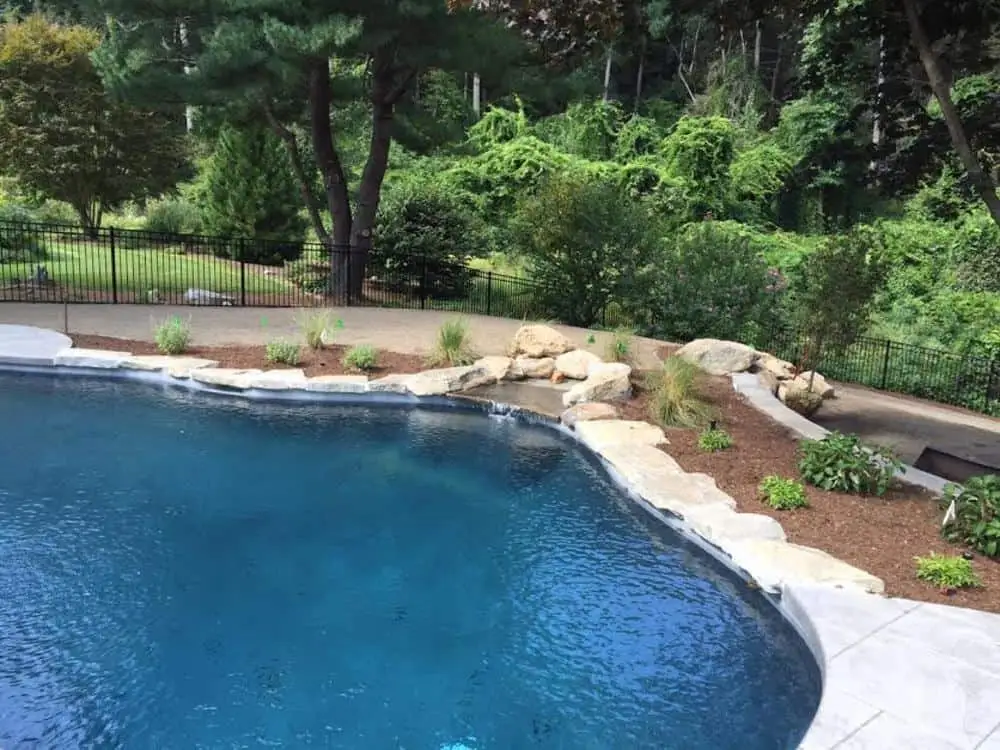
A pool without landscaping is like a diamond without a setting. In New England, your backyard pool design must balance aesthetics with the reality of our winters.
Hardscaping is the backbone of the pool area. We often use inground pool landscaping around pool with rocks to create a natural, rugged look that blends into the local environment. Using native stone like granite or fieldstone ensures the materials won’t crack during a deep freeze.
If you’re dreaming of a tropical oasis, it is possible—even in Manchester, NH! While you can’t plant palm trees in the ground permanently, we often use potted palms that can be moved indoors for the winter, combined with hardy perennials like hibiscus and ferns that provide a lush look during the swimming season.
Essential Safety and Year-Round Use
Safety is non-negotiable. In Massachusetts and New Hampshire, local building codes generally require a fence at least 48 to 54 inches high with self-closing, self-latching gates.
Beyond fencing, consider:
- Safety Covers: Solid or mesh covers that can support the weight of an adult, essential for the off-season.
- Pool Alarms: These alert you if something (or someone) enters the water unexpectedly.
- Enclosures: For those who want to swim in January, enclosed outdoor swimming pools or indoor installations are the answer, though they require significant HVAC planning to manage humidity.
The Financial Reality of Pool Ownership
Let’s talk numbers. A pool is a significant investment. For a complete gunite environment—including the pool, a paver patio, fencing, and basic utilities—you should expect a starting budget of around $130,000 in the current New England market.
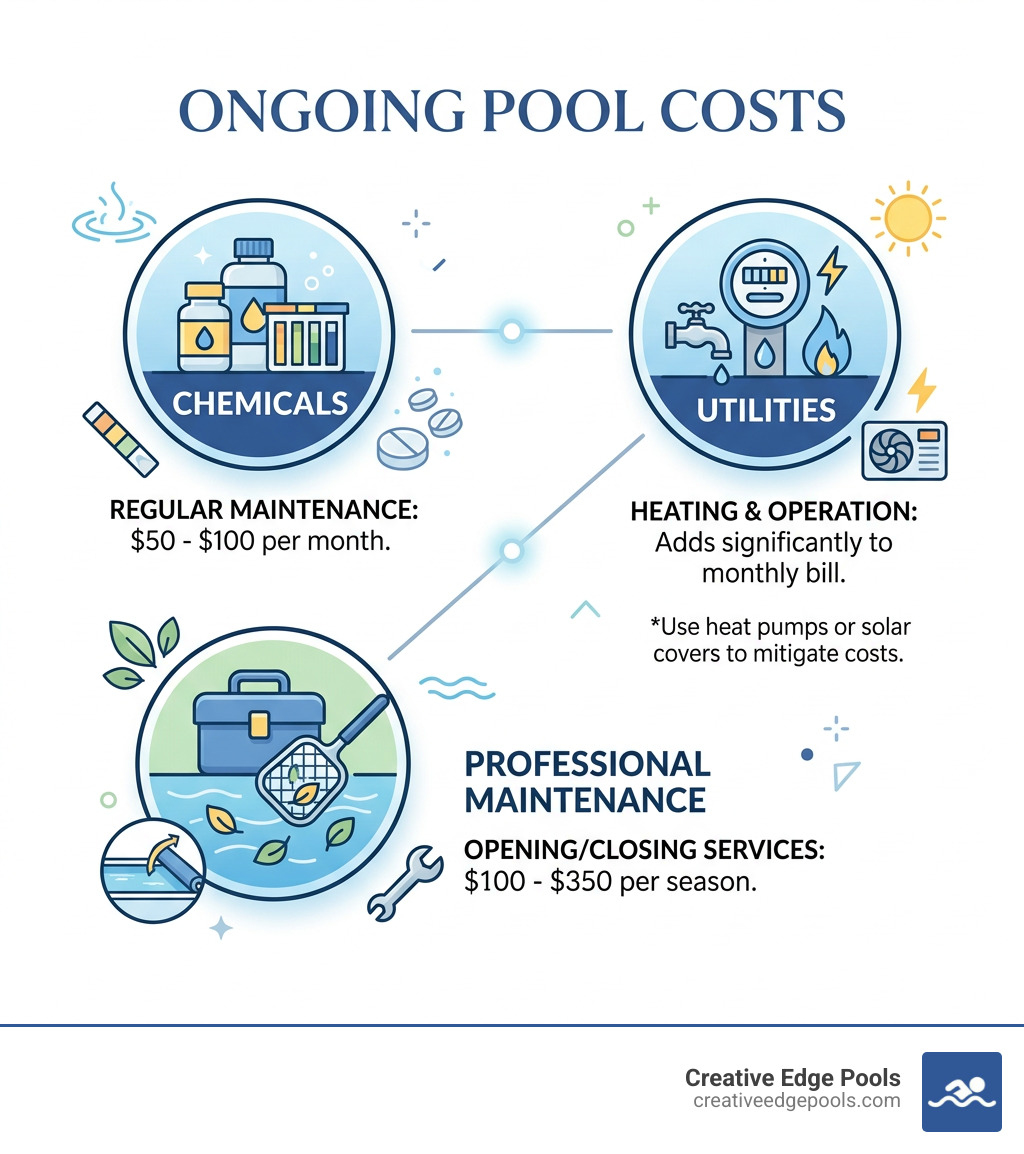
The costs don’t end at installation. Ongoing expenses include:
- Chemicals: $50 – $100 per month.
- Utilities: Heating a pool with a gas heater can add significantly to your monthly bill, though heat pumps and solar covers can help mitigate this.
- Opening/Closing: Professional services typically cost $100 – $350 per season.
However, the return on investment (ROI) isn’t just measured in dollars. In hot New England summers, a pool makes your home the “place to be,” and it can increase your home’s resale value, especially in higher-end markets. For a detailed breakdown, read about the value of a gunite inground pool: return on investment and home value.
Frequently Asked Questions about Backyard Pool Design
How much does it cost to build an in-ground pool?
In our service area (MA and NH), a basic in-ground pool setup starts around $20,000 for vinyl, but a high-quality, custom gunite pool environment typically starts at $130,000. Factors like yard slope, soil conditions (especially if we hit New England ledge/rock), and luxury features will influence the final price.
How long does the pool construction process take?
For a custom gunite pool, expect 7 to 9 weeks for the actual build. However, you must also factor in 2 to 3 weeks for design and the permitting process, which varies by town. Total time from contract to first splash is usually 3 to 4 months.
Does a swimming pool add value to my home?
Yes, particularly in the suburbs of Boston and Southern NH. While you may not recoup 100% of the construction cost in equity, a well-designed gunite pool makes your home much more attractive to buyers and can significantly increase the speed of a sale.
Conclusion
At Creative Edge Pools, we understand that backyard pool design is about more than just water—it’s about creating a space where your family will make memories for decades. As a family-owned business with over 100 years of combined experience, we take pride in navigating the unique challenges of New England landscapes to bring your vision to life.
Whether you are in Andover, MA, or Nashua, NH, we are ready to help you build your dream retreat. Start your backyard pool design journey today and let us turn your yard into an oasis.