
Why a Poolside Fire Pit Transforms Your Backyard Into a Year-Round Retreat
A poolside fire pit is an outdoor fire feature — bowl, table, or built-in pit — placed near a swimming pool to add warmth, ambiance, and a natural gathering spot for family and friends.
Quick answers for poolside fire pits:
- Best fuel types: Propane and natural gas are safest and most convenient near pools
- Safe distance: Keep at least 7 feet of clearance around the fire pit from the pool edge and any structures
- Best materials: Noncombustible surfaces like pavers, flagstone, or concrete work best
- Typical cost: Fire bowls start around $2,500; professional installation runs $5,000–$8,000
- Popular styles: Fire bowls, fire tables, integrated deck pits, and linear fire strips
There is something almost magnetic about fire near water. The flicker of flames reflecting off a pool’s surface creates a contrast that is hard to beat in outdoor design. It is no surprise that fire features are one of the fastest-growing additions to residential backyards today.
But adding a fire pit near your pool is not as simple as dropping a bowl on the deck and lighting it up. The right placement, materials, and fuel type all matter — both for safety and for getting the most out of your outdoor space.
Whether you want a resort-style escape for summer nights or a cozy spot to extend your pool season well into fall, a well-planned poolside fire pit can make your backyard work harder for you all year long.
Choosing the Perfect Poolside Fire Pit for Your Backyard
When we help homeowners in Massachusetts and New Hampshire design their dream backyards, the first question is usually: “What kind of fire pit should we get?” The answer depends on how you plan to use it and how much maintenance you’re willing to do.
Wood-Burning Fire Pits
For those who love the classic campfire experience, wood-burning pits provide that nostalgic smell and the crackle of logs. However, they require more work. You have to source wood, manage the ash, and—most importantly—deal with smoke and embers. In a pool environment, embers can be a safety concern for pool covers and swimmers.
Propane Fire Pits
Propane is incredibly popular for poolside use because it’s clean-burning and easy to use. You don’t need to run a gas line if you use a portable tank, though many high-end designs hide the tank inside a decorative enclosure or a “fire table.” They offer an instant flame with the turn of a knob.
Natural Gas Fire Pits
If you’re looking for a permanent, “set it and forget it” solution, natural gas is the way to go. It requires a professional to run a gas line from your home to the pool area, but once it’s done, you’ll never run out of fuel. It’s environmentally friendly and creates a beautiful, steady flame.
Gel Fuel Fire Pits
For smaller spaces or tabletop accents, gel fuel canisters are a smokeless, easy option. While they don’t put out as much heat as gas or wood, they are perfect for creating a “modern NY backyard vibe” with minimal setup.
Fuel Type Comparison Table
| Fuel Type | Heat Output (BTU) | Smoke Level | Maintenance | Best For |
|---|---|---|---|---|
| Wood | Variable (High) | High | High | Classic campfire feel |
| Propane | 30,000 – 100,000+ | None | Low | Convenience & portability |
| Natural Gas | 50,000 – 150,000+ | None | Very Low | Permanent luxury installs |
| Gel Fuel | Low | None | Low | Tabletop ambiance |
Create memories with family and friends
Enhancing Your Poolside Fire Pit with Premium Accessories
To truly make your poolside fire pit stand out, the “fill” matters just as much as the frame.
- Lava Rocks: These are classic for a reason. They distribute heat effectively and have a rugged, natural look.
- Glass Beads: Available in stunning colors like turquoise, cobalt, and amber, fire glass adds a modern sparkle that reflects the pool water beautifully.
- Spark Screens: Essential for wood-burning pits to keep popping embers away from your pool liner or guests.
- Ceramic Fire Balls: A trendy alternative to logs, these provide a clean, geometric aesthetic.
Looking for ways to use your fire feature? Check out these Fire Pit Recipes for some poolside snacking inspiration.
Why a Poolside Fire Pit is the Ultimate Backyard Upgrade
Beyond just looking great, these features add real value to your home.
- Property Value: Appraisers and buyers often view a custom-integrated fire feature as a “bonus” luxury item.
- Extended Season: In New England, our swim season can feel short. A fire pit allows you to enjoy the patio even when the air gets crisp in September or October.
- Social Focal Point: It creates a natural “dry zone” for people to gather while others are still in the water.
- Resort-Style Ambiance: There’s a reason high-end hotels in places like Boston or Portsmouth use fire bowls—they instantly elevate the mood.
Essential Safety and Placement Guidelines
Safety is our top priority at Creative Edge Pools. When we design a poolside fire pit, we adhere to strict guidelines to ensure your relaxation isn’t interrupted by a hazard.
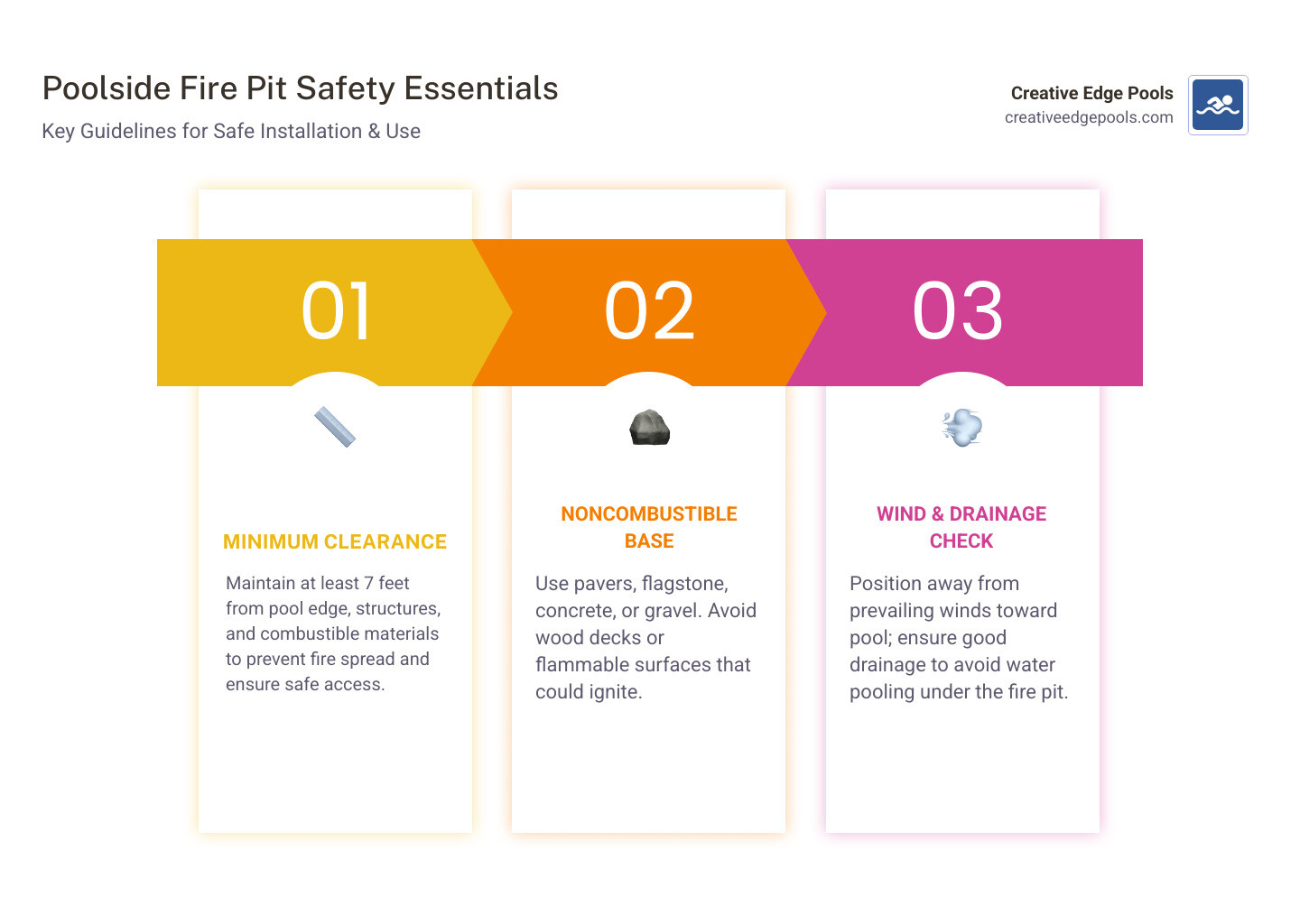
- 7-Foot Clearance: You should always maintain a minimum of seven feet of clearance around the fire pit. This allows for comfortable seating (like Adirondack chairs) and prevents people from being trapped between the heat and the water’s edge.
- Noncombustible Materials: Never place a fire pit directly on a wooden deck. Stick to noncombustible hardscapes like pavers, flagstone, slate, or poured concrete.
- Pavers vs. Brick: We often recommend pavers over traditional clay bricks. Clay bricks can sometimes crack under extreme heat, whereas high-quality concrete pavers are designed for durability.
- Wind Direction: Consider the prevailing winds in your yard. You don’t want smoke blowing directly into your house or across the pool where people are swimming.
- Drainage: Ensure the area around your fire pit has proper drainage so water from the pool doesn’t pool around your gas lines or wood storage.
Want to learn more about the best materials? Check out our hardscaping services for expert advice on durable outdoor surfaces.
Optimal Layout Ideas
Integrating a fire pit into your pool deck is an art form. Here are a few ways we love to do it:
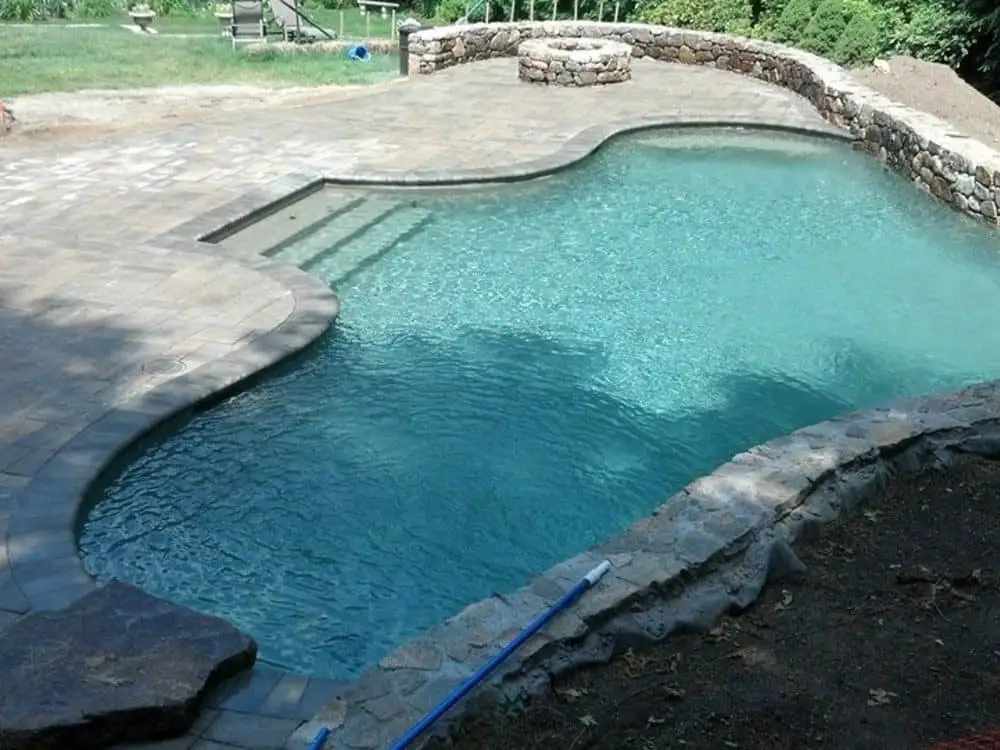
- Sunken Social Spaces: By lowering the fire pit area slightly below the pool deck level, you create an intimate “conversation pit” that doesn’t block the view of the water.
- Seat Walls: Built-in stone benches can serve as both a boundary and permanent seating, matching the stone of your pool’s coping.
- Corner Placement: Placing fire bowls at the corners of a rectangular pool adds a dramatic, architectural feel.
- Pathways: Use lighted stone pathways to lead guests from the pool house to the fire area.
For more inspiration, explore our pool hardscape ideas.
Design Inspiration: Integrating Fire and Water
The most stunning backyards we’ve built in towns like Andover and Windham often feature a seamless blend of fire and water.
- GFRC Concrete: Glass Fiber Reinforced Concrete is a favorite for modern fire bowls. It’s lighter than traditional concrete but incredibly strong and weather-resistant.
- Hammered Copper: For a Mediterranean or rustic look, copper bowls develop a beautiful patina over time and glow brilliantly against blue pool water.
- Linear Fire Strips: These are long, narrow gas burners integrated into a wall or the edge of a raised spa. They create a “wall of fire” effect that is pure luxury.
- LED Accent Lighting: Don’t forget the light! Adding LEDs under the lip of a fire pit or within the surrounding gardens enhances the “modern NY backyard” vibe and keeps the area safe after dark.
Maintenance and Installation Costs
While a DIY fire pit kit from a home improvement store can cost under $1,000, a custom-integrated poolside fire pit is a different investment.
- DIY vs. Professional: DIY kits are great for basic patios, but for anything near a pool—especially if it involves gas lines—professional installation is a must. You need to ensure proper ventilation and gas line plumbing to meet local building codes in MA and NH.
- Cost Estimates: A high-quality fire bowl typically starts around $2,500. Total professional installation, including gas lines and matching masonry, usually ranges between $5,000 and $8,000.
- Permits: Most towns require a permit for permanent gas fire features. We handle the technical details to ensure everything is up to code.
- Maintenance:
- Oxalic Acid: For wooden furniture near your fire pit, a wash with soap and water followed by an oxalic acid treatment can reverse “graying” and restore the wood’s natural color.
- Protective Covers: Always use a weather-resistant cover when the pit is not in use to protect the burner from rain and debris.
- Cleaning: Regularly clear out ash (for wood) or debris from lava rocks to keep the gas flow clear.
Frequently Asked Questions
How much does it cost to add a fire bowl to a pool?
Starting costs for the bowl itself are around $2,500, but with professional plumbing and masonry to match your pool, you should budget between $5,000 and $8,000 per bowl.
Can you add a fire pit to an existing pool area?
Absolutely! While it is easier to plan during a new build, we frequently renovate existing pool decks to add gas fire features and updated hardscaping.
Are fire pits safe to use near swimming pools?
Yes, provided they are installed on noncombustible surfaces with at least 7 feet of clearance. Gas-powered pits are generally safer than wood-burning ones near pools because they don’t produce unpredictable sparks or embers.
Conclusion
At Creative Edge Pools, we specialize in bringing these luxurious visions to life. As a family-owned business with over 100 years of combined experience, we understand the unique climate and lifestyle needs of homeowners in Eastern Massachusetts and Southern New Hampshire. From the initial design to the final gas line connection, we are dedicated to creating a backyard that your family will enjoy for decades.
Ready to light up your nights? Transform your backyard with professional pool landscaping and let us help you design the perfect fire feature for your home.
