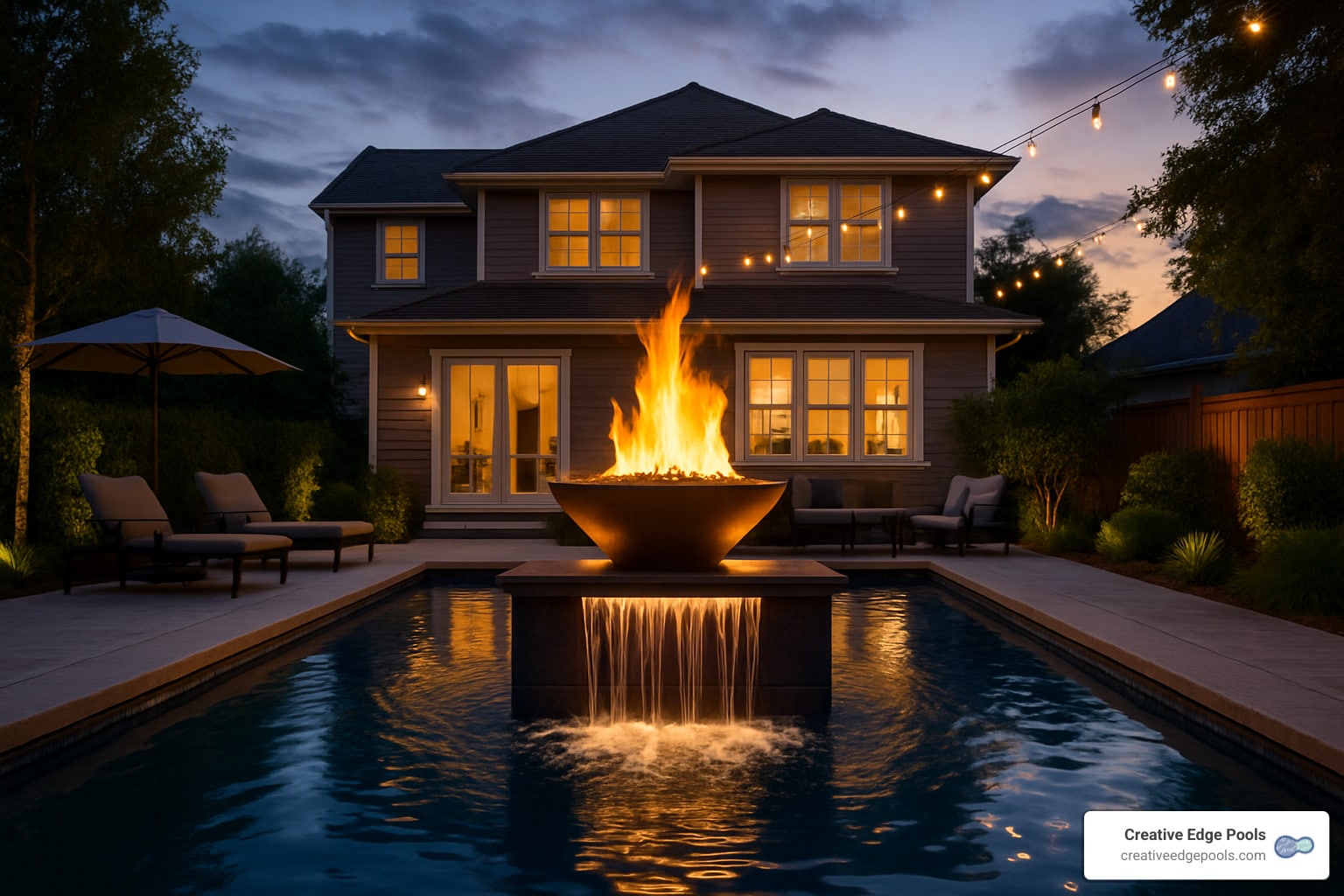
Fire and Water Features: 5 Stunning Pool Ideas for 2025
Transform Your Backyard Into a Luxury Resort with Fire and Water Features
Fire and water features create the perfect balance of warmth and tranquility in your outdoor space. These stunning installations combine the mesmerizing dance of flames with the soothing sounds of flowing water to transform any backyard into a resort-style oasis.
Quick Answer: What Are Fire and Water Features?
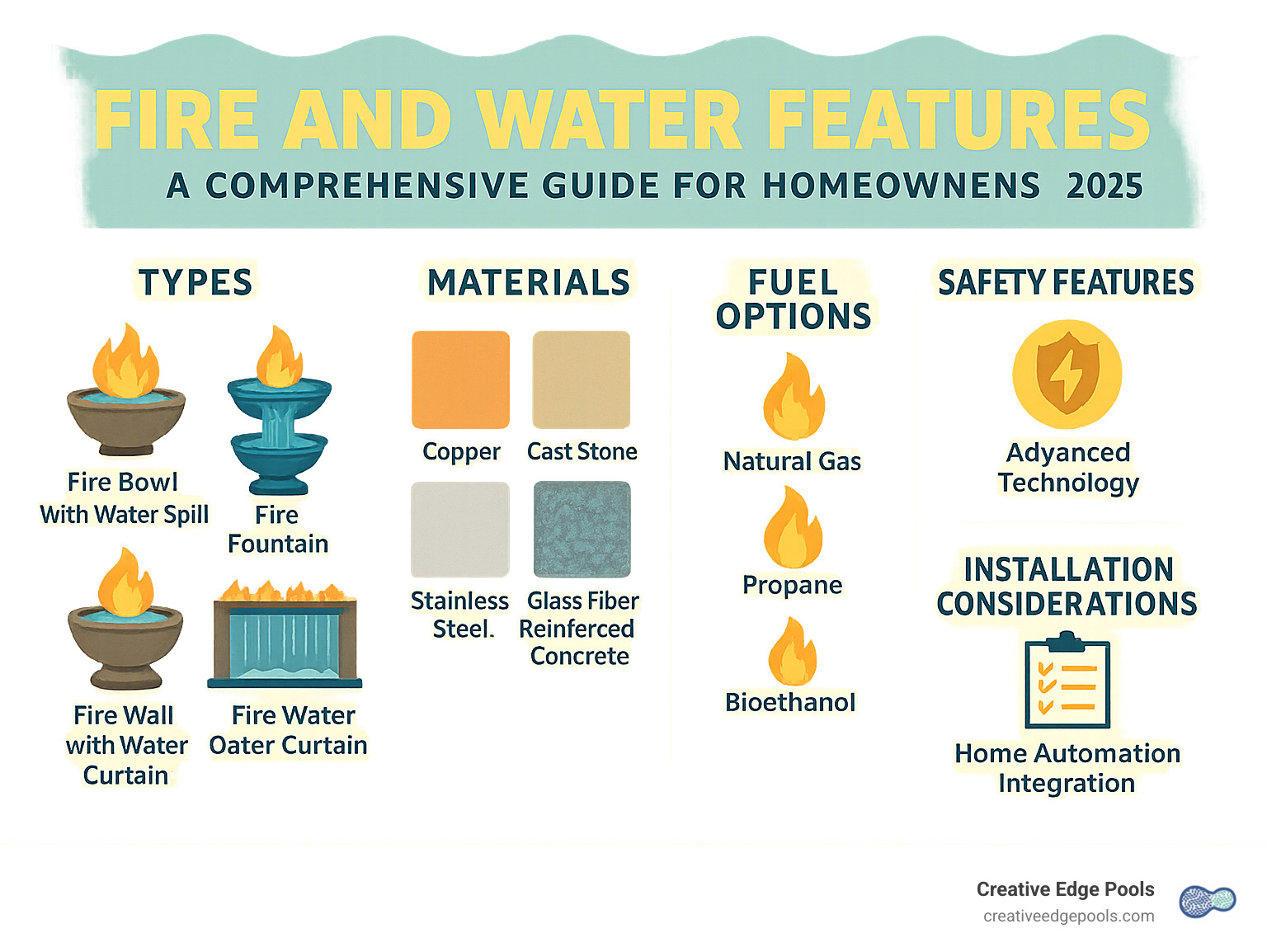
– Fire bowls with water spill – Single units that produce flames while water cascades over the edges
– Fire fountains – Traditional fountain designs with flames dancing above water tiers
– Self-contained units – Complete bowl, basin, and pump systems for easy installation
– Fire walls with water curtains – Dramatic vertical features combining flame and flowing water
– Available materials – Copper, cast stone, stainless steel, and glass fiber reinforced concrete
– Fuel options – Natural gas, propane, or bioethanol for different installation needs
Fire and water naturally complement each other, creating what landscape experts call “the perfect pair” of contrasting elements. The warmth of fire paired with the cooling mist and sound of water engages all your senses while extending your outdoor season well into cooler evenings.
Modern fire and water features come with advanced safety technology like SmartSense failsafe systems that automatically relight flames or shut off if unsuccessful. Many can integrate with home automation systems, letting you control your backyard ambiance with the touch of a button.
I’m David Brabant, owner of Creative Edge Pools, and over my thirty years in the swimming pool and site development business, I’ve seen how fire and water features can lift a nice landscape to an elite level regardless of cost. My hands-on experience installing these dramatic elements has shown me that when properly constructed, they become the centerpiece that transforms ordinary backyards into extraordinary outdoor living spaces.
How Fire Meets Water: Anatomy of a Fiery Waterfall
Ever wondered how flames can dance safely above flowing water without getting snuffed out? The magic behind fire and water features comes down to clever engineering that brings these two opposing forces together in perfect harmony.
At the core of every quality fire and water feature sits a CSA-certified burner system. These aren’t your backyard barbecue burners – they’re specifically designed to handle the unique challenges of operating near water. The flames emerge from precisely positioned ports that keep the fire well above the water flow, creating that dramatic visual effect without safety concerns.
The hydraulics work through a closed-loop system. Water gets pulled from a hidden reservoir by circulation pumps, travels up through the feature, spills over the carefully designed spillways, and returns to the basin below. You’re not constantly adding fresh water – the same water just keeps making this scenic journey over and over.
Modern ignition systems have come a long way from the old “light it with a match” days. Most quality features now use electronic ignition that you can fire up with a smartphone app. Picture this: you’re inside prepping dinner, and with a quick tap on your phone, your backyard transforms into an neat evening setting before your guests even arrive.
The real game-changer is SmartSense technology. This smart system acts like a vigilant guardian for your feature. If wind or rain extinguishes the flames, it automatically tries to relight them. After several failed attempts, it safely shuts off the gas supply. It’s like having a responsible friend watching over your fire feature all evening.
The vapor cooling effect creates a gentle cooling mist that actually makes the area around the feature more comfortable. Even on warm summer nights, you can sit close to enjoy the ambiance without feeling overheated.
The Science Behind Fire and Water Features
The thermodynamics happening in fire and water features create their own little weather system. As water flows over the heated bowl surface, it absorbs heat and creates gentle air currents through natural convection. This water sheer cooling effect distributes warmth evenly around the feature.
Flame reflection on the water surface is where the real magic happens visually. The dancing flames create ever-changing patterns on the moving water, while the water’s movement makes the reflected flames shimmer and dance in ways that mesmerize viewers.
Turbulence control requires careful engineering to get right. The water flow needs to be strong enough to create that beautiful cascade effect, but not so turbulent that it splashes up and douses the flames.
Poolside Showstoppers: Top Fire and Water Features to Buy in 2024
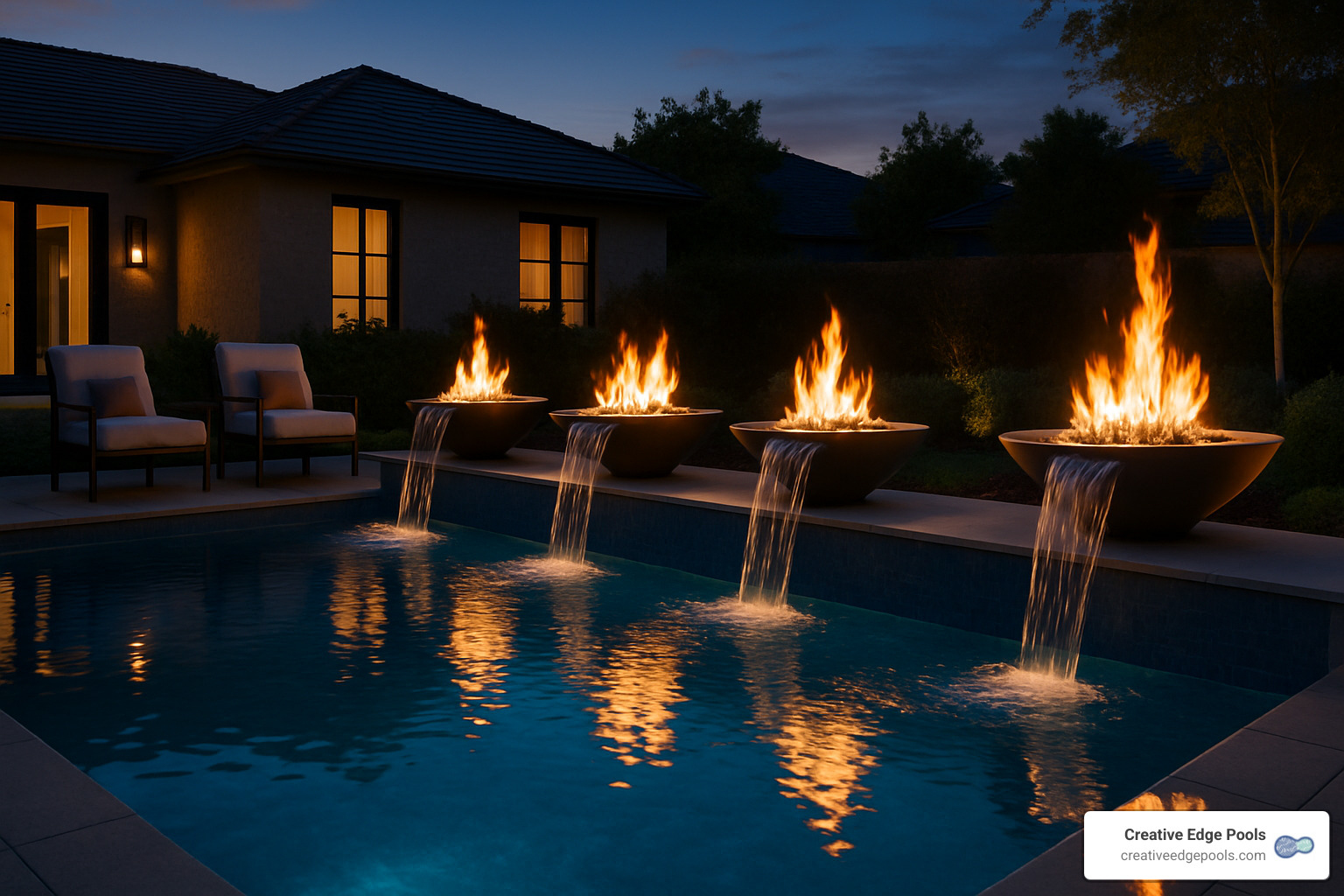
Shopping for fire and water features in 2024 feels like being a kid in a candy store—there are more options than ever. The undeniable stars are still fire bowls, ranging from compact 24-inch pieces for patios to dramatic 72-inch linear troughs that anchor large poolscapes. Fountains that blend flame with tiered water and scuppers upgraded with fire offer neat, contemporary alternatives.
Self-contained units deserve special mention because they make retrofits almost plug-and-play—you get the bowl, basin, pump, and burner in one box and can be enjoying it the same day it arrives.
Roundup of 5 Must-Have Fire and Water Features
- 360-degree spill bowls – water forms a seamless curtain around central flames.
- 4-way spill bowls – channel water toward seating areas while keeping deck space dryer.
- H2OnFire floating flame – an optical illusion makes the fire appear to hover on water.
- Fire walls with rain curtains – vertical showpieces that double as striking backdrops.
- Fire-table waterfalls – usable tabletop stays cool while water sheets down the sides.
Styling Up Your Fire and Water Features
- Lava rock for organic texture and steady heat.
- Reflective fire glass (clear, bronze, cobalt, emerald) to double the sparkle.
- Accent LED lighting under the waterline for a nighttime glow.
- Planter combinations with heat-tolerant or water-loving plants that soften hard edges. For more ideas, visit our Backyard Pool Landscaping Ideas.
Materials & Fuel: Picking the Perfect Build
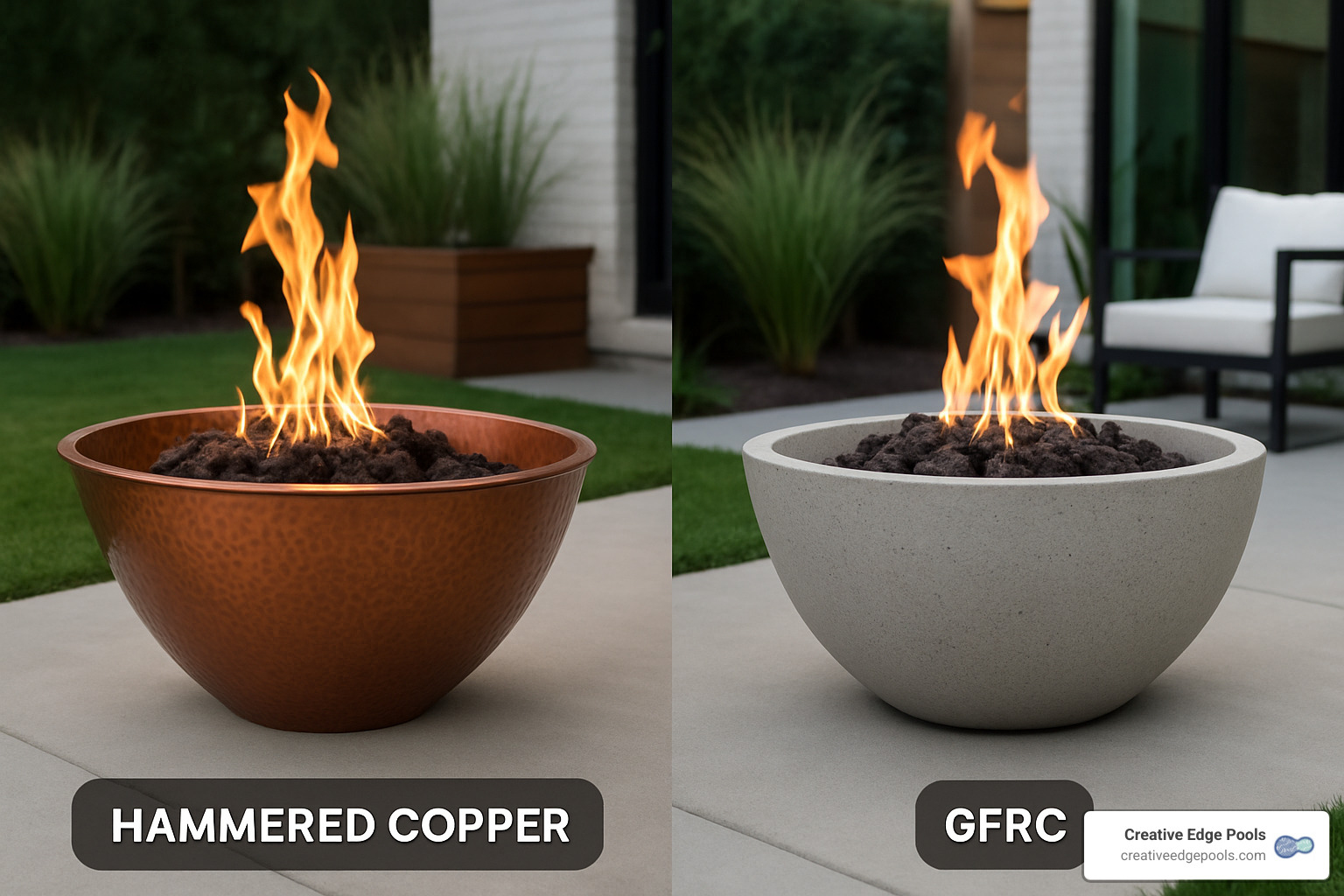
Selecting the right materials and fuel for your fire and water features is like choosing the foundation for your dream backyard oasis. Over my thirty years installing these features, I’ve learned that the material you choose today determines how your feature will look and perform for decades to come.
Let’s talk about the materials that have proven themselves in New England’s challenging weather. Copper remains my top recommendation for homeowners who want something truly special. Hammered copper features develop a gorgeous patina over time that actually protects the metal from corrosion. Each piece has its own unique character from the handcrafting process, and copper’s excellent heat conductivity means your flames will burn evenly and beautifully.
Glass Fiber Reinforced Concrete (GFRC) has completely changed the game for concrete features. Unlike the heavy, thick-walled concrete bowls of the past, GFRC allows us to create intricate designs that are surprisingly lightweight. The color goes all the way through the material, so minor chips won’t show, and it can be molded into virtually any shape your imagination dreams up.
Stainless steel brings that clean, contemporary look that complements modern homes perfectly. Marine-grade 316 stainless steel handles our harsh winters and salty coastal air beautifully, though it does require regular cleaning to keep that mirror finish looking sharp.
For homeowners seeking the look of natural stone with modern reliability, cast stone offers the best of both worlds. Available in eight different colors with natural pigments mixed throughout, cast stone provides excellent stability and weather resistance. The substantial weight means it stays put during our notorious nor’easters.
Powder-coated metal gives you the broadest color palette at the most budget-friendly price point. Modern powder coating technology has come a long way in durability, though any chips in the coating need attention to prevent rust from taking hold.
| Material | Durability | Weight | Maintenance | Cost | Aging Look |
|---|---|---|---|---|---|
| Copper | Excellent | Heavy | Low | High | Beautiful patina |
| GFRC | Very Good | Light | Very Low | Medium | Consistent |
| Stainless Steel | Excellent | Medium | Medium | High | Stays new |
| Cast Stone | Excellent | Very Heavy | Low | Medium-High | Natural weathering |
| Powder-Coated Metal | Good | Light | Medium | Low | Depends on coating |
Pros & Cons of Popular Materials
Copper wins hearts with its natural beauty and incredible longevity. The patina that develops over time isn’t just gorgeous – it’s nature’s own protective coating. The thermal properties make flames dance beautifully, and copper’s antimicrobial qualities mean cleaner water circulation. The trade-offs? You’ll pay more upfront, and if you prefer that bright penny shine, you’ll need to polish occasionally.
GFRC impresses with its versatility and low maintenance needs. Being lightweight makes installation easier and less expensive, while the integral color means scratches barely show. The limitation is that if it does get damaged, repairs can be tricky, and extreme freeze-thaw cycles can occasionally cause issues.
Stainless steel delivers that sleek, professional look that photographs beautifully and complements contemporary architecture. It’s easy to clean and practically indestructible. The downside? Water spots show easily, and some folks find the look a bit cold for cozy backyard settings.
Choosing the Best Fuel for Fire and Water Features
When it comes to fuel choices for fire and water features, think of it as picking the energy source that best fits your lifestyle and installation situation. Natural gas is the gold standard for most installations, especially if you’re planning to use fire glass. It burns cleaner than propane, produces less soot, and connects directly to your home’s gas supply for unlimited runtime.
Propane offers fantastic flexibility, particularly for installations where running a gas line isn’t practical. The BTU output is actually higher than natural gas, giving you more dramatic flames. You can hide propane tanks in decorative enclosures or even bury them underground. The trade-off is higher operating costs and the need to monitor tank levels.
Bioethanol appeals to environmentally conscious homeowners who want clean-burning flames without gas lines or tanks. It’s perfect for intimate settings, though the flames aren’t as dramatic as gas options. Manual refueling and limited automation compatibility make it better suited for occasional use rather than daily enjoyment.
For fire glass compatibility, natural gas is strongly preferred. It burns cleaner and won’t cloud your beautiful fire glass with soot buildup over time. While propane can work with fire glass, you’ll find yourself cleaning it more frequently to maintain those brilliant reflections that make fire glass so captivating.
The sustainability factor increasingly influences fuel choices. Natural gas produces fewer emissions than propane, while bioethanol offers carbon-neutral burning. Consider your environmental priorities alongside practical factors like supply line availability and automation integration when making your decision.
Installation, Safety & Automation
Professional installation of fire and water features ensures both safety and optimal performance. Code compliance varies by location, but most areas require permits for gas line installation and electrical work. Setback clearances from structures, property lines, and combustible materials are typically specified in local fire codes.
Foundation requirements depend on the feature’s size and weight. Self-contained units may only need a level, non-flammable base, while larger installations require concrete pads with proper drainage. Gas line sizing is critical for proper flame performance, and GFCI protection is required for all electrical components.
Flame sensors and remote shutoff capabilities are becoming standard safety features. These systems can detect when flames are extinguished and automatically shut off gas flow, preventing dangerous gas accumulation.
Fire and Water Features & Pool Automation
Modern fire and water features integrate seamlessly with pool automation systems, allowing you to control your entire backyard ambiance from a single interface. Systems like Jandy AquaLink can manage your fire features alongside pool lighting, water features, and heating systems.
Scene presets let you create custom ambiance settings for different occasions. A “Party Mode” might activate all fire features, turn on accent lighting, and start water circulation, while a “Quiet Evening” scene might light only select features with dimmed lighting.
Fail-safe relight systems continuously monitor flame status and attempt automatic relighting if flames are extinguished. If multiple relight attempts fail, the system shuts off gas flow and can send alerts to your smartphone.
App control capabilities let you adjust your fire and water features from anywhere. For detailed information about pool automation options, you can explore Scientific research on pool automation to understand the latest technologies available.
Placement Tips for Maximum Impact
Strategic placement maximizes both the visual impact and functional benefits of your fire and water features. Wind direction plays a crucial role in flame stability and safety. Sight lines from your home’s interior spaces ensure you can enjoy your features year-round.
The noise-masking properties of water features can be strategically used to create privacy from neighboring properties or busy streets. Consider the feature’s impact at different times of day – morning coffee might be improved by the gentle sound of flowing water, while evening gatherings benefit more from the warmth and light of fire elements.
For comprehensive guidance on hardscaping placement and design, visit our Pool Area Hardscaping resource page.
Care, Cost & ROI
Looking after your fire and water features is simple when you follow a routine.
Keep water circulating, balance basic chemistry, and give fire glass or lava rock a quick rinse each month to remove soot. In cold climates, drain all plumbing before the first hard freeze, and schedule an annual gas-line inspection by a qualified technician.
Costs range from $2,000–$4,000 for entry-level self-contained units to $8,000–$25,000 for fully customized, automated builds. Real-estate studies suggest these focal points can boost resale value by 5 – 15 %, while offering daily enjoyment. Learn more about their sensory benefits in this Scientific research on sensory landscaping.
Maintenance Checklist for Fire and Water Features
Monthly
– Clean fire media
– Verify water level and pump operation
– Test ignition system
Seasonal
– Deep-clean bowls, basins, and filters
– Inspect gas fittings and automation functions
– Trim surrounding vegetation
Annual (professional)
– Gas-line pressure and leak test
– Pump service
– Electrical safety check
Budgeting & Warranty Considerations
Automation add-ons raise the upfront investment but deliver hands-free convenience. Most manufacturers offer one- to three-year warranties, with longer coverage on premium lines. Professional installation and documented upkeep keep that warranty intact.
Frequently Asked Questions about Fire and Water Features
What makes fire and water features safe around pools and wood decks?
Safety is the number one concern when homeowners first consider adding fire and water features to their outdoor spaces, and rightfully so. The good news is that modern fire and water installations are engineered with multiple layers of protection that make them perfectly safe around pools and even on wooden decking.
The secret lies in the engineering of the bases. Quality fire bowls are designed so their bases stay cool during operation – you can literally touch the bottom of most units while flames are dancing above. This cool-base technology allows safe installation directly on combustible surfaces like wood decks without any special heat shields or protection.
CSA-certified burner systems are the gold standard for safety. These systems include automatic shutoff mechanisms that immediately stop gas flow if something goes wrong. Think of it as having a vigilant safety guard that never takes a break.
The SmartSense technology I mentioned earlier really shines here. It’s constantly monitoring your flames and will attempt to relight them if they get blown out by wind. But here’s the crucial part – if the relighting attempts fail, the system automatically shuts off the gas supply completely. No dangerous gas buildup, no worries about forgetting to turn things off.
The water component actually adds another layer of safety. The flowing water creates a cooling effect around the fire element and adds moisture to the air, which helps moderate temperatures in the immediate area. Plus, there’s something psychologically comforting about having water right there next to the fire – it just feels safer.
How much do fire and water features cost to run monthly?
This is probably the question I get asked most often, and I understand why. Nobody wants a beautiful feature that breaks the bank to operate. The reality is that fire and water features are surprisingly affordable to run, especially when you consider the hours of enjoyment they provide.
For natural gas features, you’re looking at roughly $15 to $40 per month if you’re using them for a couple hours each evening. That’s less than most families spend on streaming services! Natural gas is incredibly efficient, and modern burner systems are designed to maximize flame impact while minimizing fuel consumption.
Propane does cost more – typically two to three times the price of natural gas. But even then, we’re talking about reasonable costs for the ambiance and entertainment value you get. Many of my clients with propane features use them more selectively for special occasions and find the costs very manageable.
The water circulation adds very little to your electric bill – usually just $5 to $15 per month depending on your pump size and local rates. The beauty of the closed-loop system is that you’re not constantly adding fresh water. Once it’s filled, the same water just keeps circulating.
Bioethanol features cost the most per hour to operate – around $8 to $15 per hour – but they have zero standby costs since there’s no pilot light or gas line. For occasional use, they can actually be quite economical.
Can I retrofit fire and water features into an existing pool?
Absolutely! This is one of my favorite types of projects because the change is so dramatic. You can take a pool that’s been the same for years and suddenly make it feel like a completely new outdoor space.
Self-contained units are the easiest retrofit option. These complete systems need minimal changes to your existing setup – often just a level spot, access to gas, and a standard electrical outlet. We can usually have these installed and running in a single day.
Pool edge mounting requires a bit more planning but is definitely doable in most situations. We might need to modify some coping stones or adjust decking, but the results are stunning. The fire bowls appear to float right at the water’s edge, creating that resort-style look that makes your neighbors wonder when you remodeled your entire backyard.
Scupper-style water features can be integrated into existing pool walls, though this typically happens during larger renovation projects. The work is more involved, but the finished result looks like it was always part of the original design.
The key is working with contractors who understand both pool systems and fire features. At Creative Edge Pools, we’ve been retrofitting these features for years, and we know how to integrate them without compromising your pool’s structure or existing equipment. Every pool is different, but there’s almost always a way to add the drama and ambiance of fire and water features to your existing setup.
Conclusion
When you’re ready to take your backyard from ordinary to extraordinary, fire and water features offer the perfect solution. These stunning installations don’t just add beauty to your outdoor space – they transform it into a year-round retreat that feels like your own private resort.
The magic happens when fire’s dancing warmth meets water’s gentle sounds. This combination creates something special that single-element features simply can’t match. Your guests will naturally gravitate toward these mesmerizing focal points, whether it’s for summer evening gatherings or cozy winter nights under the stars.
What makes today’s fire and water features so appealing is how user-friendly they’ve become. Gone are the days of worrying about safety or complicated operation. Modern systems light themselves, monitor their own flames, and can be controlled from your phone while you’re still inside getting ready for guests. The technology takes care of itself, so you can focus on enjoying your outdoor oasis.
The beauty of these features lies in their incredible versatility. Need mood lighting for a dinner party? Check. Want to extend your patio season into the cooler months? Done. Looking for a peaceful spot to unwind after a long day? Perfect. It’s like getting multiple outdoor improvements rolled into one investment.
Your backyard should reflect your personality and improve your lifestyle. Fire and water features do exactly that, creating a space where memories are made and stress melts away. Whether you choose a simple bowl design or go all-out with a dramatic fire wall installation, you’re investing in years of enjoyment and significantly boosting your property’s appeal.
At Creative Edge Pools, we’ve spent over thirty years helping families in Eastern Massachusetts and Southern New Hampshire create their dream outdoor spaces. We understand that your backyard isn’t just about the pool – it’s about creating a complete environment where you love to spend time. That’s why we take a comprehensive approach, seamlessly blending fire and water features with your pool design, landscaping, and overall vision.
Ready to transform your backyard into the luxury retreat you’ve always wanted? Our Hardscaping Service team can help you design and install the perfect fire and water features for your space. Let’s work together to create something truly spectacular right outside your door.