How much does pool demolition cost: Real Costs 2025
Understanding the Costs of Pool Demolition
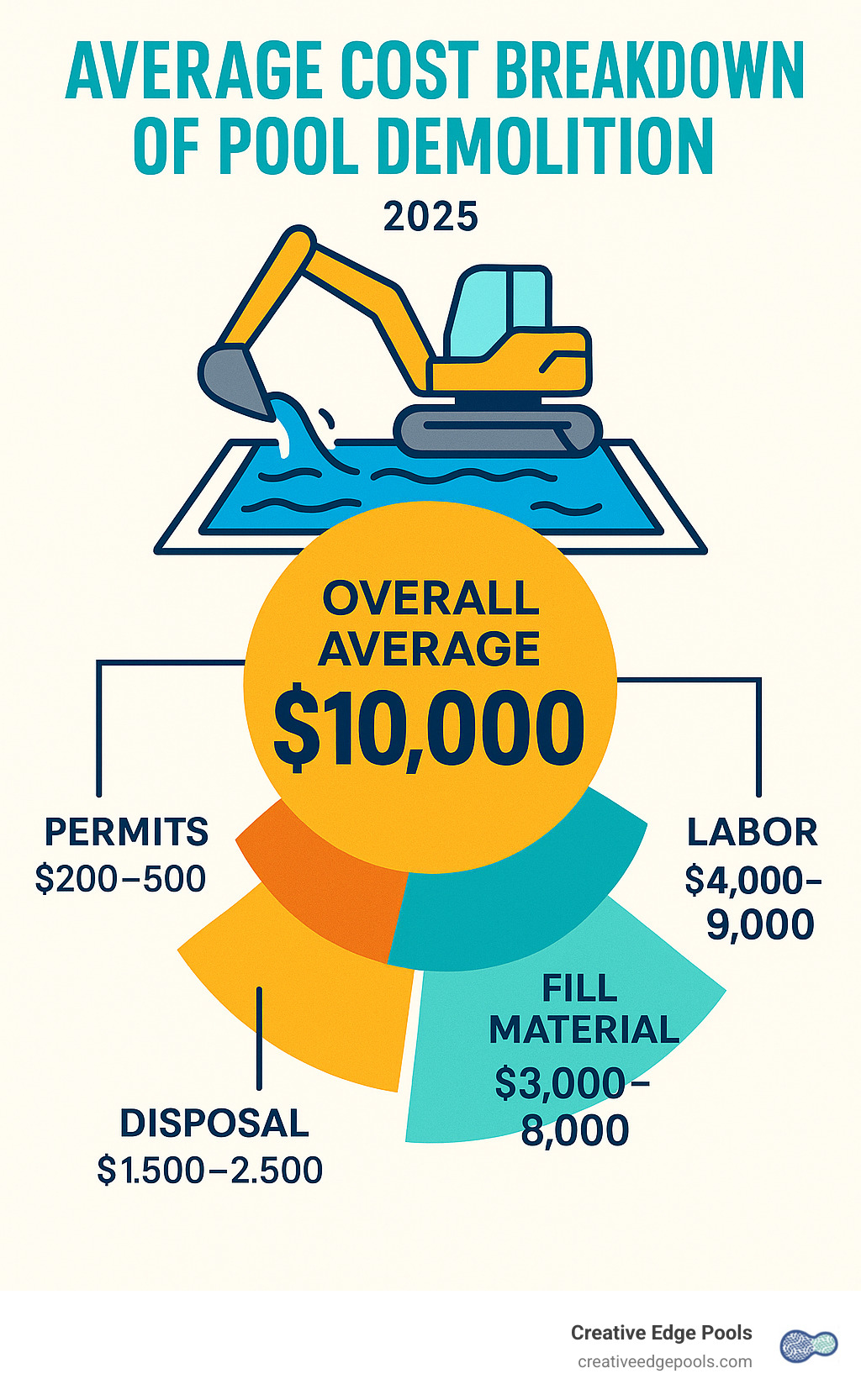
Knowing how much does pool demolition cost is the first step to reclaiming your yard. This project can vary widely in price, depending on your pool’s type, size, and the method of removal you choose.
Here’s a quick look at typical costs:
- Overall Average: Around $10,000, with prices ranging from $3,000 to $20,000.
- Inground Pool Removal:
- Partial Removal (filling in): $4,000 to $10,000
- Full Removal: $7,000 to $16,000
- Above-Ground Pool Removal:
- Pool only: $400 to $900
- With a deck: $1,000 to $7,000
- Inground Pool Material Costs:
- Concrete: $4,000 to $16,000
- Fiberglass: $6,000 to $16,000
- Vinyl Liner: $4,000 to $11,000
- Other Common Costs:
- Permits: $200 to $400
- Fill Material: $3,000 to $10,000
- Labor: $4,000 to $17,000 (depending on removal method)
Whether you’re looking to reclaim space, address safety concerns, or boost your property value, pool removal is a big project. It needs careful planning and budgeting. This guide will walk you through all the details.
I’m David Brabant, owner of Creative Edge Pools. With over thirty years in the pool and site development business, I’ve seen what goes into understanding how much does pool demolition cost for homeowners. I’m here to share what I’ve learned to help you make informed decisions.
How Much Does Pool Demolition Cost?
Removing a swimming pool is a big decision, often driven by a desire for more yard space, less maintenance, or improved safety. The main question is, how much does pool demolition cost? The price varies based on your pool’s size, material, and the removal method. This guide will clarify the financial aspects to help you budget effectively.
Key Factors That Determine Your Final Price
Several key factors determine your final estimate, including the complexity of the job, the equipment needed, and the time required.
Pool Size and Material:
The pool’s size and material are major cost drivers. A larger pool requires more labor and fill material. The material determines the difficulty of the demolition:
- Concrete Pools: Typically the most expensive to remove due to their strong build, requiring powerful equipment and more time. Costs range from $4,000 to $16,000.
- Fiberglass Pools: Removed in large sections, often requiring special equipment for lifting and hauling. Costs range from $6,000 to $16,000.
- Vinyl Liner Pools: The most affordable to remove. The liner is simple to take out, and the underlying structure is less dense. Costs range from $4,000 to $11,000.
Accessibility:
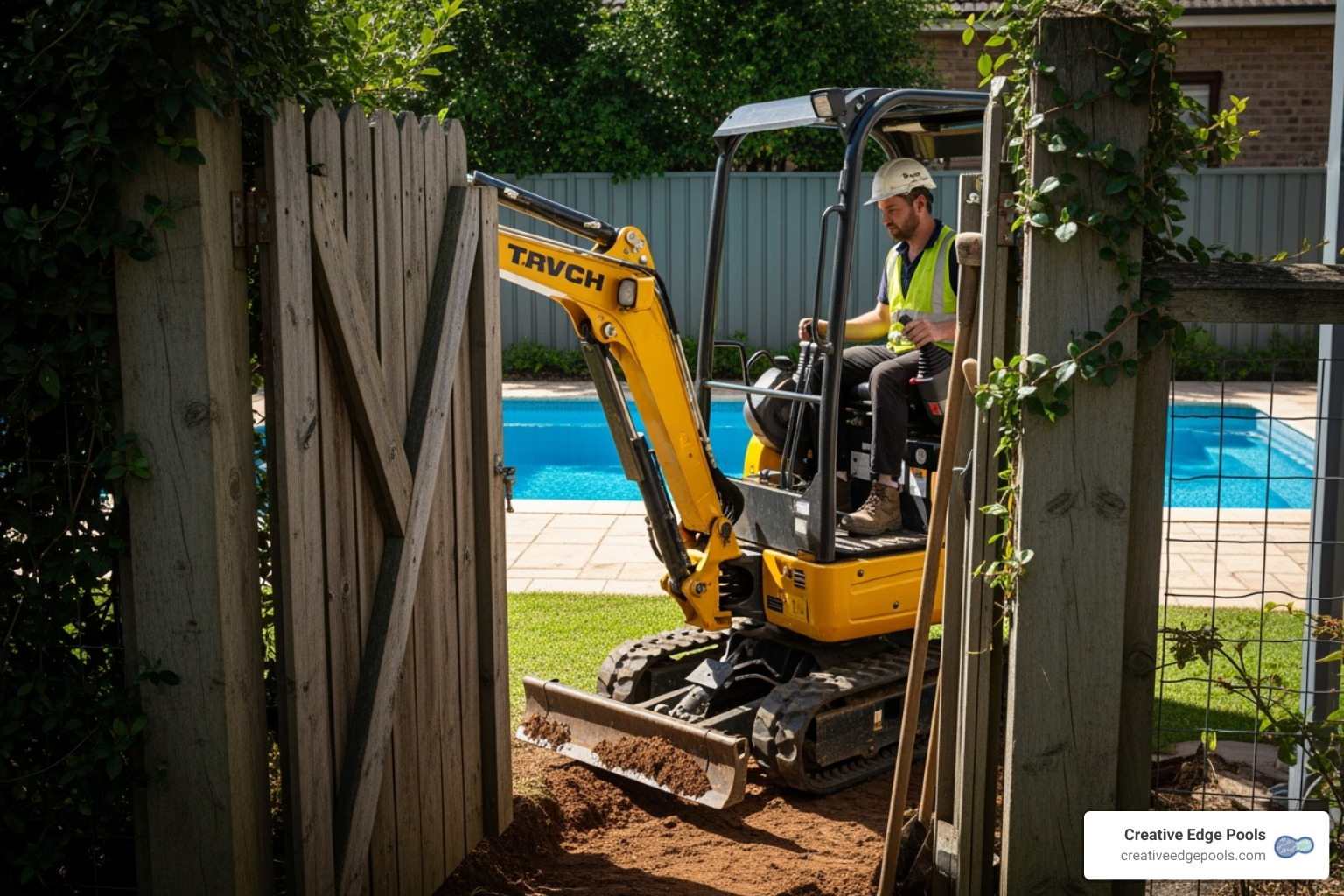
Limited access for heavy machinery due to tight gates, narrow paths, or slopes increases costs. If excavators can’t reach the pool, the job requires more manual labor or smaller equipment, which adds to the final price.
Location:
Your location affects the price due to regional labor costs, disposal fees, and local regulations. Costs in areas like Eastern Massachusetts and Southern New Hampshire can be on the higher end of the national average. For Swimming Pool Removal Boston MA, expect prices to reflect regional costs.
Labor Costs:
Labor is a significant portion of the bill, covering skilled equipment operators and the crew for demolition, debris management, and backfilling. Labor for a full demolition can range from $5,000 to $17,000, while partial removal labor is typically $4,000 to $8,000.
Partial vs. Full Removal: A Cost and Consequence Comparison
Choosing between a “partial” or “full” removal is a critical decision that affects both the immediate cost and the future use of your property.
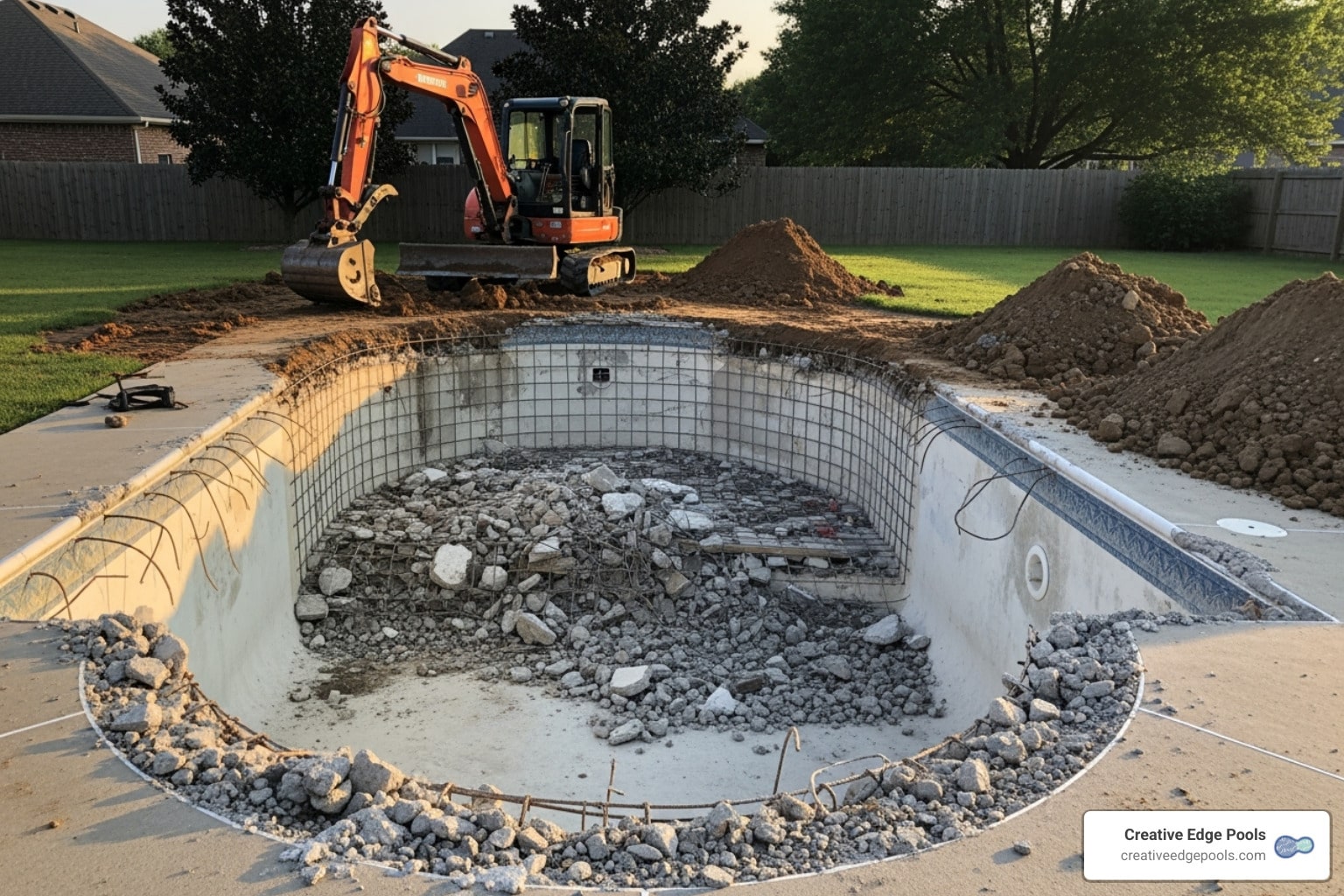
Partial Pool Removal (Fill-in): This method involves draining the pool, punching holes in the bottom for drainage, breaking down the top portion of the walls, and filling the shell with the debris and soil. It’s a faster, less expensive option, costing $4,000 to $10,000.
Full Pool Removal (Complete Demolition): This involves demolishing the entire pool structure, hauling away all debris, and backfilling the area with clean, compacted fill. While more expensive at $7,000 and $16,000, it offers significant long-term advantages.
Here’s a quick look at how the two methods stack up:
| Feature | Partial Pool Removal (Fill-in) | Full Pool Removal (Complete Demolition) |
|---|---|---|
| Cost | Lower: $4,000 – $10,000 | Higher: $7,000 – $16,000 |
| Timeline | Shorter: 1-3 days | Longer: 3-7 days |
| Pros | Less expensive upfront; Quicker process | Eliminates future structural issues; Area is buildable; Often increases property value; No disclosure required for future buyers (in many areas) |
| Cons | Area is non-buildable; Risk of sinkage/drainage issues; Must be disclosed to future buyers; May decrease property value; Not legal in some areas | Higher upfront cost; Longer process |
| Future Land Use | Cannot build permanent structures (e.g., additions, new foundations) over the filled area due to potential sinkage. Can be used for landscaping, gardens, or patios. | Area is suitable for any future construction, including homes, garages, or new pools, provided proper compaction is verified by an engineer. |
Key Considerations:
- Future Land Use: A partial removal leaves the area “non-buildable,” meaning no permanent structures can be built on it. Full removal restores the land, making it suitable for future construction.
- Property Value & Disclosure: Partial removals must be disclosed to future buyers and can lower property value due to risks of sinkage and drainage issues. A full removal eliminates these concerns and disclosure requirements in most areas.
For projects like In Ground Pool Removal Massachusetts, we help homeowners choose the best method based on their long-term plans, avoiding the future headaches a cheap partial removal can cause.
An Itemized Look at Your Pool Removal Invoice
We provide a transparent, itemized estimate so you know exactly where your money is going.
1. Permits: Required by your city or town, permits ensure the work is done to code. Fees typically range from $200 to $400. We handle the application process for you.
2. Draining: The pool must be drained according to local environmental regulations, which often requires dechlorination. This cost is usually included in the overall labor fee.
3. Fill Materials: The cost to fill the excavated area ranges from $3,000 to $10,000, depending on pool size. We use a mix of materials like gravel ($6-$10/cubic yard) and clean dirt ($10-$15/cubic yard) to ensure proper compaction and stability.
4. Labor Costs: This covers the skilled crew operating heavy machinery, performing the demolition, managing debris, and backfilling the site. It’s a major component of the total cost.
5. Debris Disposal: This includes dumpster rental ($300-$700/week) and hauling away the demolished material ($500-$1,500). We recycle materials whenever possible to reduce waste and potentially lower costs.
6. Structural Engineer (Optional): For full removals where future construction is planned, an engineer can verify proper compaction for $500 to $1,500. This is a wise investment for ensuring ground stability and is sometimes required by local code.
7. Landscaping Restoration: Basic restoration, like grading and seeding, starts around $500. More extensive landscaping, such as new patios or gardens, will be an additional cost based on your design.
For a full rundown of the entire process, you can check out our detailed guide on How To Remove A Swimming Pool.
Making the Right Choice: DIY vs. Pro and Final Considerations
This section guides you through the decision of a DIY approach versus professional services and explores the long-term impacts of pool removal.
The DIY Dilemma: Potential Savings vs. Significant Risks
Homeowners often ask about DIY pool removal to save money. However, it’s crucial to weigh the potential savings against the significant risks involved. While DIY costs of $1,000 to $4,000 for equipment rental and dumping fees seem low, pool demolition is a complex project.
DIY Costs & Effort:
- Equipment Rental: An excavator can cost $200-$500 per day, plus costs for jackhammers and trucks.
- Dumping Fees: Expect to pay $300-$600 to dispose of debris.
- Time Commitment: A DIY removal is not a weekend project. It requires 3-5 days or more of intense physical labor and the skill to operate heavy machinery safely.
Significant Risks:
The risks of DIY pool removal are substantial:
- Structural Risks: You risk damaging your home’s foundation, utility lines (gas, water), or retaining walls, leading to costly repairs.
- Environmental Regulations: Improperly draining chlorinated water can lead to fines and environmental damage.
- Improper Backfilling: This is the biggest long-term risk. Without proper compaction, the area can sink, cause drainage problems, and become unstable, leading to expensive future repairs. The complexities of DIY pool removal often outweigh the savings.
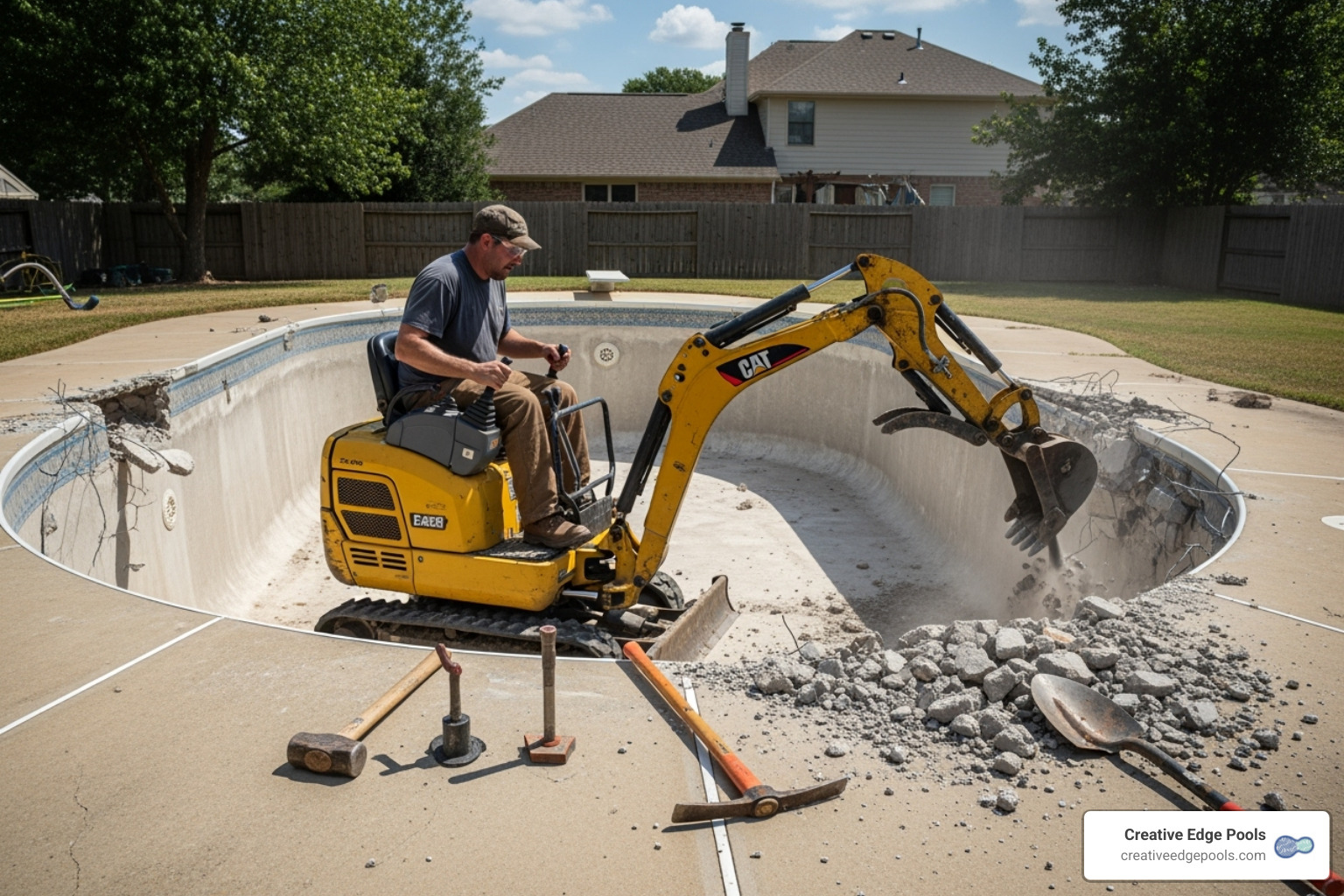
The hidden costs of potential damage, fines, and future repairs often make professional removal the safer, more cost-effective choice. A professional crew has the right equipment, experience, and knowledge of local regulations to do the job right.
Beyond the Backyard: Property Value and Project Timeline
It’s important to consider the project’s impact on your property value and the timeline.
Can Removing a Pool Increase or Decrease Property Value?
- Increase in Value: Removing an old, high-maintenance, or space-consuming pool can increase property value. It appeals to a wider range of buyers by creating a “blank canvas” for a lawn or garden, free from the liability and upkeep of a pool.
- Decrease in Value: In hot climates or luxury neighborhoods where pools are standard, removing a well-maintained pool could decrease its appeal to some buyers. However, for most homes with aging pools, the benefits of removal usually outweigh this risk.
How Long Does the Pool Removal Process Typically Take?
The project timeline depends on the pool type, size, and removal method.
- Above-Ground Pool Timeline: This is the quickest, taking a few hours to one day. If a deck is involved, it may take 1-2 days. Learn more about Above Ground Pool Removal Near Me.
- Inground Pool Timeline:
- Partial Removal (Fill-in): This faster method typically takes 1 to 3 days.
- Full Removal: This more extensive process usually takes 3 to 7 days.
We work efficiently to complete the project quickly and safely, minimizing disruption to your family.
Smart Ways to Save on Your Pool Removal Project
While pool demolition is a significant investment, there are several ways to manage and potentially reduce the cost.
- Get Multiple Estimates: Obtain at least three detailed quotes from reputable, licensed, and insured contractors. Compare the scope of work and pricing, not just the bottom line.
- Schedule in the Off-Season: Plan your project for the late fall, winter, or early spring when contractor demand is lower, which may result in better pricing.
- Handle Small Prep Tasks: You can save on labor by removing non-structural items like pumps, filters, ladders, or fencing yourself before the crew arrives, as long as you can do so safely.
- Salvage and Recycle: Sell usable equipment like pumps and filters. We recycle materials like metal whenever possible, which can reduce disposal fees.
- Drain the Pool Yourself: If local regulations permit, draining the pool yourself (after proper dechlorination) can save on labor costs.
- Discuss Fill Material Options: Talk to your contractor about your plans for the space. Using a mix of soil and suitable, recycled rubble from the demolition (if permitted) can be cheaper than importing all new fill material.
At Creative Edge Pools, we specialize in comprehensive backyard development, from custom pools to landscaping, masonry, and professional Pool Removal Service. As a family-owned business in Eastern Massachusetts and Southern New Hampshire, we’re committed to making your pool removal process smooth and cost-effective.
If you’re ready to reclaim your backyard, learn more about our pool removal cost and get a professional estimate to turn your outdoor vision into a reality.