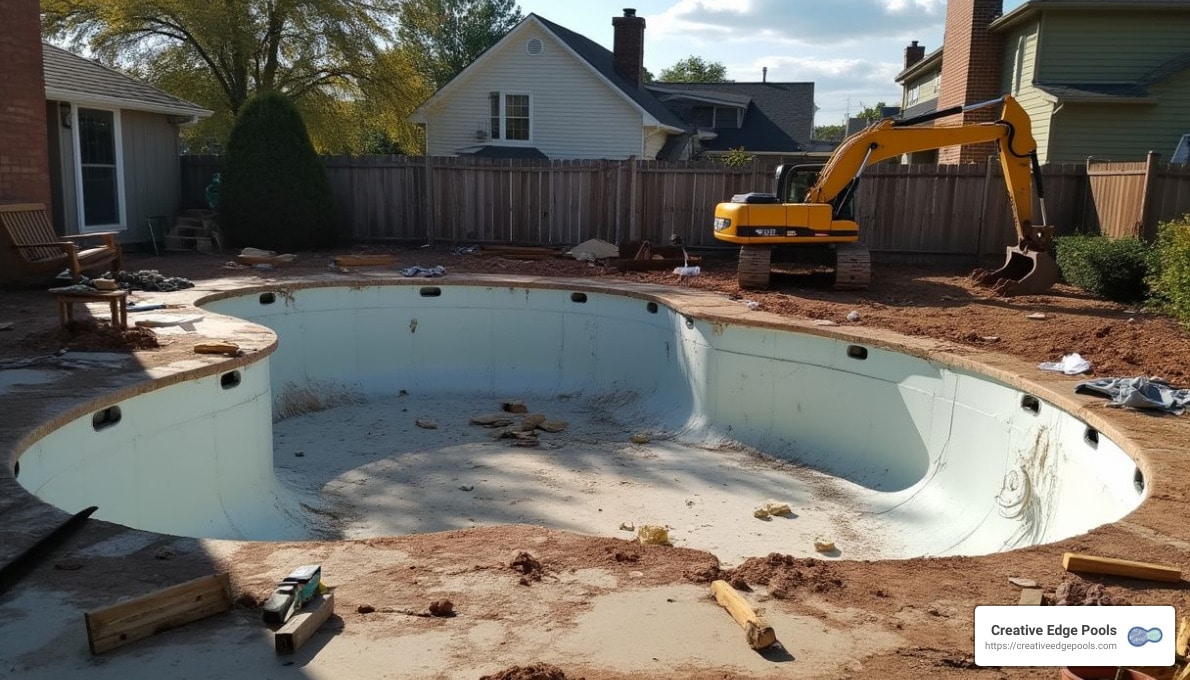
Pool Removal Cost: Top 5 Shocking Facts in 2024
Pool removal cost can be a significant consideration for homeowners looking to reclaim their outdoor space. Whether you’re planning to replace your aging pool with a new feature or simply want more usable land, understanding the expenses involved is crucial for budget planning. Generally, removing a pool can cost between $3,000 and $30,000, depending on various factors such as the type of removal—partial or full—the pool’s size, its location, and any accessibility challenges.
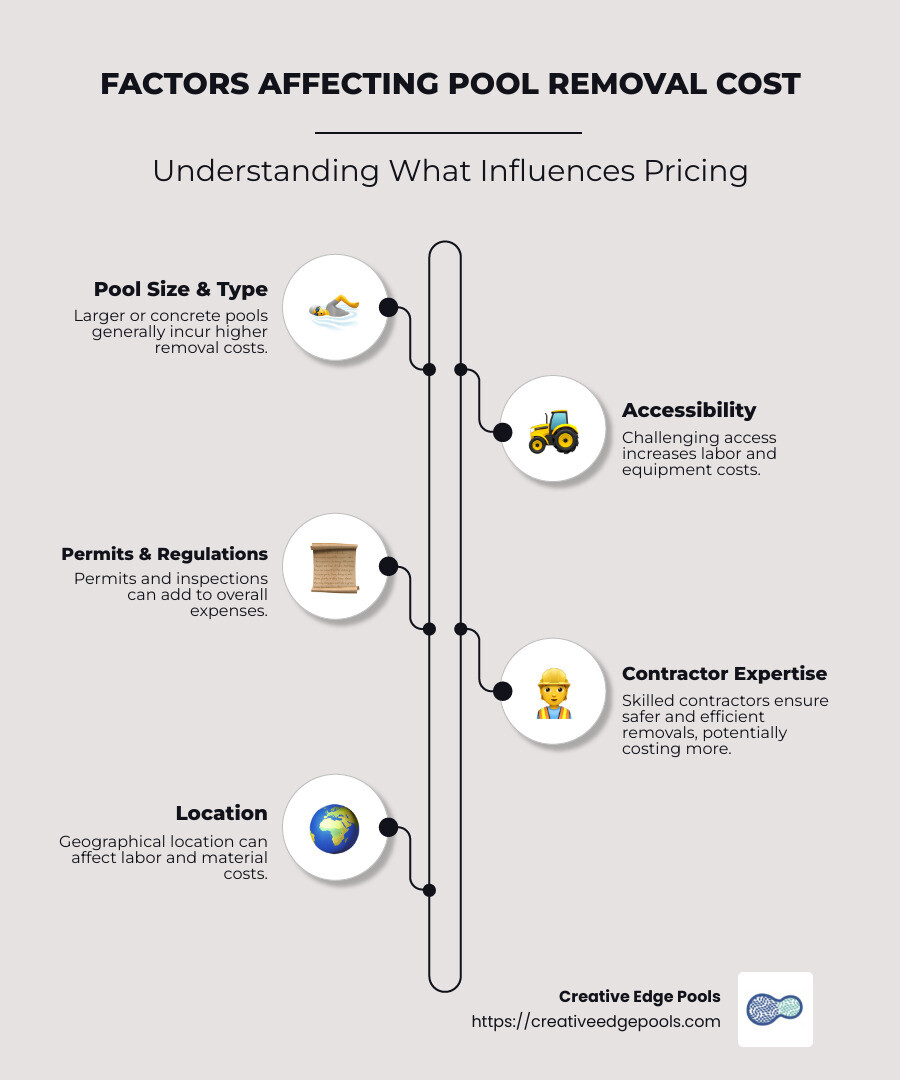
Factors influencing pool removal cost include:
- Pool size and type: Larger pools or those made with sturdier materials like concrete may cost more to remove.
- Accessibility: If heavy equipment cannot easily reach the pool, removal costs can increase due to additional labor or equipment needs.
- Permits and regulations: Your local laws may require specific permits and inspections, which add to overall expenses.
- Contractor expertise: Experienced contractors might charge more, but their expertise can ensure safer and more efficient removal.
I’m David Brabant, owner of Creative Edge Pools, with over three decades in the swimming pool and site development industry. My extensive experience with pool removal cost allows me to guide homeowners through the intricacies of such projects, offering insight into choosing the best options for efficient and cost-effective removals. Let’s dig deeper into the factors and methods that influence these costs and ensure your project is a success.
Pool removal cost terms to know:
– cost of removing a pool
– inground pool removal
– pool demolition
Understanding Pool Removal Methods
When it comes to removing a swimming pool, homeowners have two main options: partial removal and full removal. Each method has its own process, benefits, and drawbacks. Understanding these can help you make an informed decision that fits your needs and budget.
Partial Pool Removal
A partial pool removal involves taking out only part of the pool structure. Typically, the top third is removed, holes are drilled for drainage, and the remaining structure is backfilled with debris from the demolition. This method is often quicker and less expensive.
Pros:
– Cost-effective: Partial removal is generally about 30% cheaper than full removal.
– Faster process: Less work means the job can be completed more quickly.
Cons:
– Limited use of land: The area cannot be used for building structures, which may affect future property value.
– Potential legal restrictions: Some local regulations may not allow partial removals.
– Possible drainage issues: Without complete removal, water can pool and cause underground issues.
Full Pool Removal
In a full pool removal, the entire pool structure is demolished and removed. The resulting hole is filled with dirt or gravel and compacted.
Pros:
– More versatile land use: The land can be built upon or landscaped without restrictions, possibly increasing property value.
– Fewer long-term issues: Eliminates concerns about drainage and structural integrity.
Cons:
– Higher cost: Full removal is more expensive, with costs ranging from $6,000 to $30,000.
– Longer process: More work is involved, which can extend the timeline.
Demolition Process
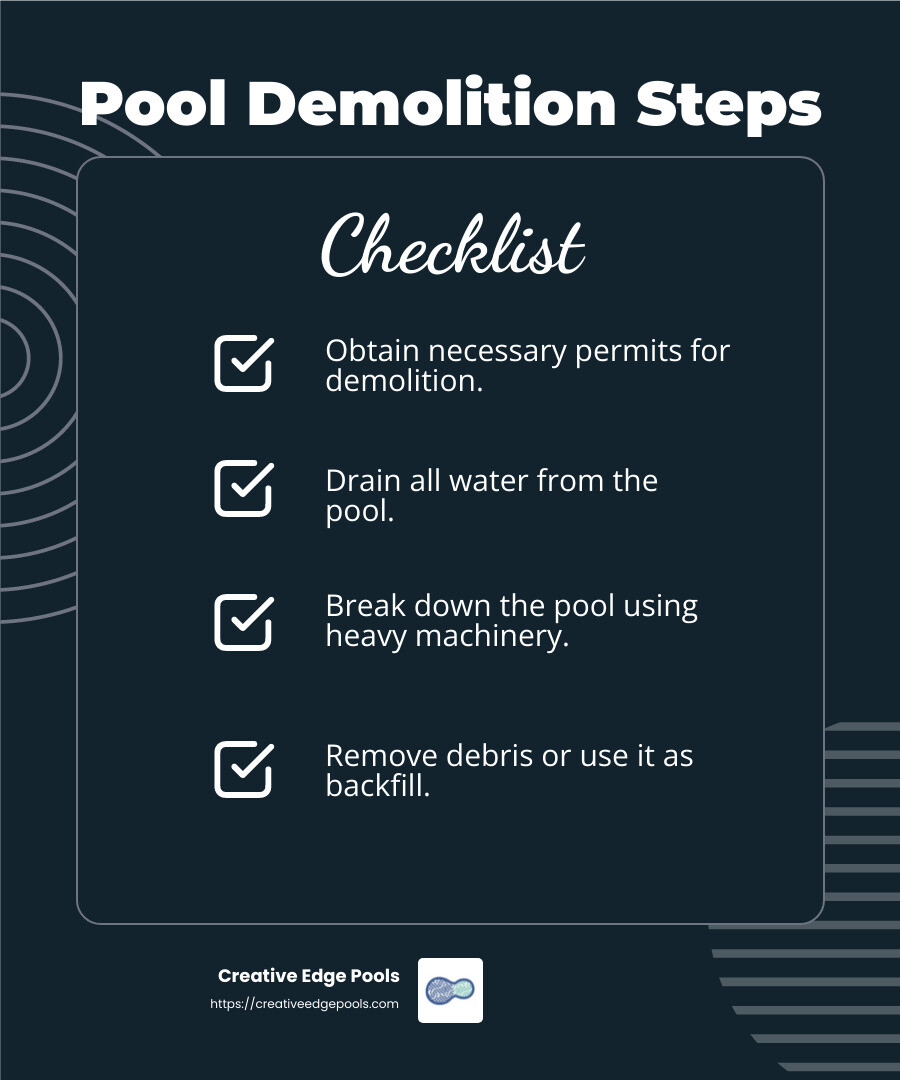
Regardless of the method, the demolition process involves several key steps:
- Permits and preparation: Obtain necessary permits and prepare the site for demolition.
- Water drainage: Remove all water from the pool.
- Demolition: Use heavy machinery to break down the pool structure.
- Debris removal: Haul away debris (full removal) or use it as backfill (partial removal).
- Compaction and landscaping: Fill the area with soil or gravel and compact it to prevent settling.
Choosing between partial and full pool removal depends on your budget, future plans for the space, and local regulations. Understanding the pool removal cost associated with each option will help you make the best decision for your property.
Pool Removal Cost Factors
When planning to remove a swimming pool, it’s crucial to understand the factors that influence the pool removal cost. These factors can significantly impact the overall expense, so being informed will help you budget effectively.
Pool Size
The size of your pool is one of the most significant cost drivers. Larger pools require more labor, materials, and time to remove. This means that a bigger pool will generally cost more to demolish than a smaller one. More fill material is needed whether you’re opting for partial or full removal.
Accessibility
Accessibility plays a crucial role in determining the cost of pool removal. If the pool is easily accessible for heavy machinery, the job will likely be quicker and less costly. However, if your pool is in a tight spot behind your home, additional labor and equipment may be required, increasing the cost.
Material Type
The type of material your pool is made of can also affect the cost. Fiberglass and vinyl pools are typically less expensive to remove because they are lighter and easier to cut and dismantle. On the other hand, concrete and gunite pools are heavier and require more effort to break apart and remove, resulting in higher costs.
Contractor Expertise
The expertise and reputation of the contractor you choose can also influence the price. More experienced and reputable contractors might charge higher rates, but they often provide better quality work and peace of mind. It’s essential to weigh the benefits of hiring a seasoned professional against the potential savings of choosing a less experienced contractor.
Permits
Before you begin the pool removal process, you’ll need to check if permits are required in your area. Permit costs can range from $50 to $250. While some contractors can handle permits on your behalf, you should include these costs in your budget. Ensuring all legal requirements are met is crucial to avoid fines or complications later on.
Understanding these factors will give you a clearer picture of what to expect when planning your pool removal project. By considering the pool size, accessibility, material type, contractor expertise, and required permits, you can better estimate the overall pool removal cost and make informed decisions.
Pool Removal Cost
When it comes to pool removal, understanding the costs involved is key to making an informed decision. Whether you’re looking to reclaim yard space or address safety concerns, knowing the average pool removal cost can help you budget effectively.
Average Cost
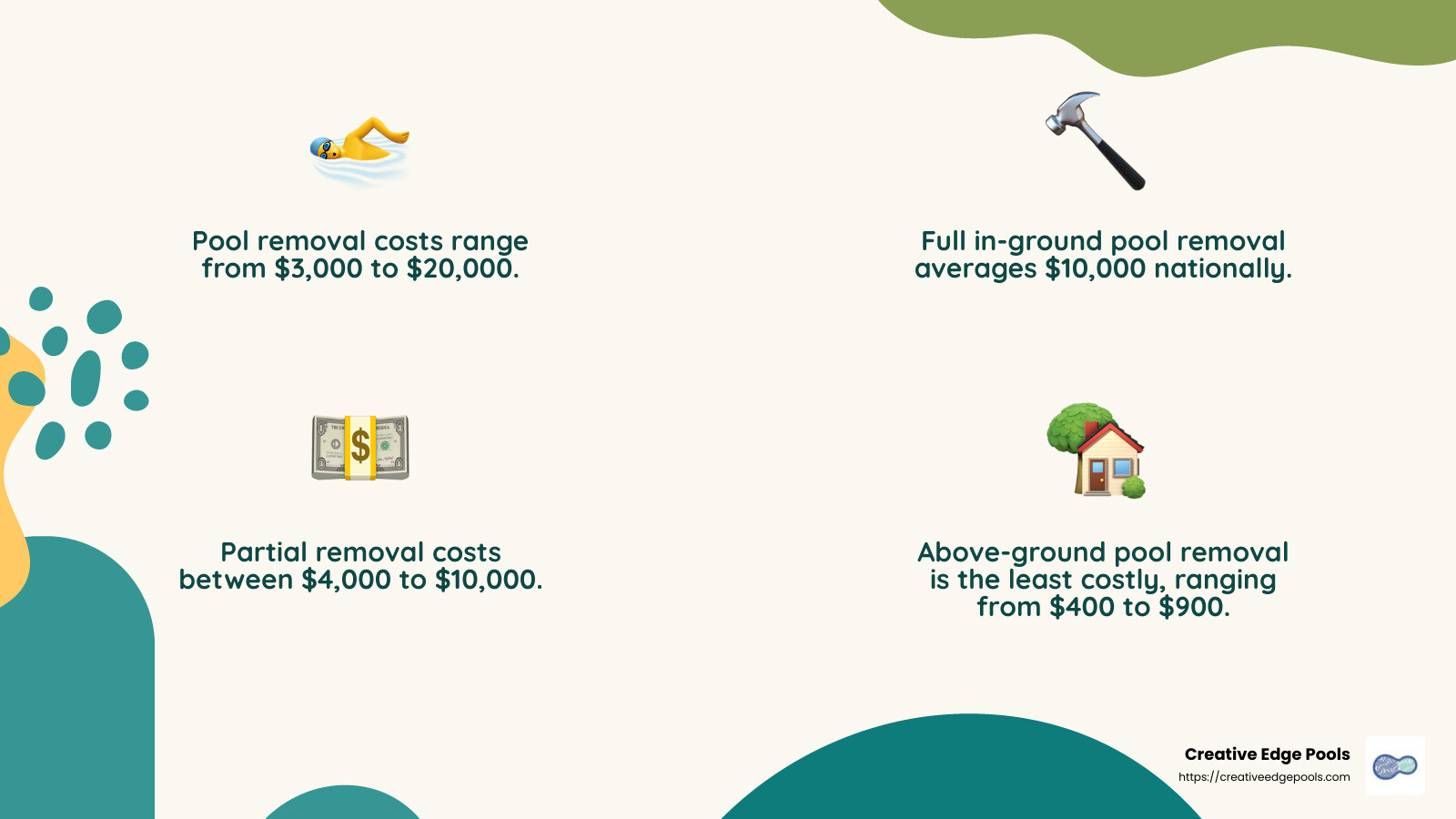
The average cost of pool removal varies widely depending on several factors. On a national scale, the cost typically falls between $3,000 and $20,000. This range accounts for different types of pools and removal methods, as well as regional variations in labor and disposal fees.
National Average
For a more specific figure, the national average cost for a full pool removal is approximately $10,000. This figure provides a benchmark for homeowners to gauge their potential expenses. However, remember that actual costs can differ based on individual circumstances.
Cost Range
The cost range for pool removal is influenced by the method chosen—partial or full removal—and the type of pool. Here’s a quick breakdown:
- Partial In-ground Pool Removal: Typically ranges from $4,000 to $10,000. This method involves demolishing part of the pool and using the debris as backfill, making it a less expensive and quicker option.
- Full In-ground Pool Removal: Costs range from $7,000 to $16,000. This comprehensive method involves complete demolition and removal, requiring engineered backfill and more labor.
- Above-Ground Pool Removal: Generally costs between $400 and $900. If a deck or backfill is involved, expenses can rise to $1,000 to $7,000.
- Fiberglass Pool Removal: Falls within $6,000 to $16,000. The cost depends on the condition of the fiberglass shell and whether it can be removed in one piece.
- Vinyl Liner Pool Removal: Averages between $4,000 and $11,000. Like fiberglass pools, these require complete removal.
- Concrete Pool Removal: The most expensive, ranging from $4,000 to $16,000 for partial removal. Full removal costs more due to the effort needed to break apart and haul away the debris.
Understanding these costs and ranges can help you plan your pool removal project effectively. By factoring in the type of pool and removal method, you can better anticipate the expenses and make decisions that align with your budget and goals.
Pros and Cons of Pool Removal
Removing a pool can transform your backyard, but it comes with both benefits and drawbacks. Here’s a look at the key considerations:
Yard Space
Pros: Reclaiming yard space is a major advantage of pool removal. Without a pool, you can enjoy a larger lawn, create a garden, or even add a play area for kids. The freed-up space allows for more versatile outdoor living.
Cons: However, removing a pool means losing a potential entertainment spot. If you frequently host pool parties or enjoy swimming, the loss of a pool might be a downside.
Property Value
Pros: In some cases, removing a pool can increase your property value. This is especially true if the pool is old, requires significant maintenance, or is not appealing to potential buyers. A well-landscaped backyard without a pool can be a selling point.
Cons: On the flip side, if pools are highly sought after in your area, removing one might decrease your home’s value. It’s important to research local market conditions and consult real estate experts before making a decision.
Buildable Land
Pros: A full pool removal makes the land buildable. This means you can use the space for new structures like a guest house, garage, or home extension. This flexibility can add significant value to your property.
Cons: A partial pool removal does not provide buildable land. The area where the pool was located may have limitations on construction, which could restrict future projects.
Drainage Issues
Pros: Full pool removal eliminates concerns about drainage issues. With proper backfilling and compaction, you won’t have to worry about water pooling or sinkage, which can affect landscaping.
Cons: Partial pool removal might lead to drainage problems. The remaining pool structure can cause water to collect, leading to potential sinkholes or damage to your yard. This risk can incur additional repair costs in the future.
Weighing these pros and cons is essential to deciding whether pool removal aligns with your goals and circumstances. Consider how each factor impacts your lifestyle and property to make the best choice for your home.
Frequently Asked Questions about Pool Removal Cost
Is it worth getting rid of the pool?
Removing a pool can offer several benefits, especially if you’re looking to reclaim yard space or reduce maintenance hassles. Yard space is a big consideration. Without a pool, you can use the area for gardens, play spaces, or outdoor gatherings. This change can make your yard more versatile and enjoyable.
However, consider the hazards and upkeep of retaining the pool. Pools require regular cleaning and can pose safety risks, especially for young children or pets. If these concerns outweigh the joy of having a pool, it might be worth removing it.
When thinking about potential buyers, not everyone wants a pool. Some people see pools as a burden due to maintenance costs and safety issues. Removing a pool can make your property more attractive to a wider audience, especially if pools are not in high demand in your area.
Does removing a pool decrease home value?
The impact on property value varies based on several factors. In some neighborhoods, pools are a luxury that boosts home value. But in others, especially where pools are not common or desired, removing one might actually increase value.
Market conditions play a crucial role. If homes with pools are rare and sought after in your area, removing the pool might decrease your home’s value. On the other hand, if many buyers prefer homes without pools, especially older or less maintained ones, pool removal can be beneficial.
Consider the pool condition too. An outdated or damaged pool can detract from your home’s appeal. In such cases, removal could be a smart move.
How hard is it to remove an inground pool?
Removing an inground pool is a complex task that typically requires professional help. While some homeowners might consider a DIY approach, it comes with significant challenges. The process involves heavy machinery, specialized knowledge, and permits, making it difficult and potentially dangerous for non-professionals.
Professional advice is highly recommended to ensure the job is done safely and correctly. Experts can handle the demolition, debris removal, and backfilling, which reduces the risk of safety concerns like sinkholes or structural issues in your yard.
In summary, while removing an inground pool involves upfront costs and planning, it can lead to long-term benefits in terms of safety, yard usability, and property value.
Conclusion
At Creative Edge Pools, we understand that deciding to remove a pool is a significant decision for any homeowner. Our family-owned business, operating in Eastern Massachusetts and Southern New Hampshire, is dedicated to making this process as smooth and efficient as possible.
We offer a comprehensive service that goes beyond just pool removal. Our expertise in backyard development allows us to transform your outdoor space into something beautiful and functional. Whether you’re looking to create a new garden, install a patio, or design a custom outdoor entertainment area, our team is equipped to bring your vision to life.
Removing a pool can open up your yard for countless possibilities. It can improve your property’s appeal and make it more attractive to potential buyers. With our professional guidance, you can ensure a seamless transition from an old pool to a new, versatile space.
If you’re considering pool removal, trust the experts at Creative Edge Pools. We are committed to delivering quality results custom to your needs. Contact us today to explore how we can help you reimagine your backyard.