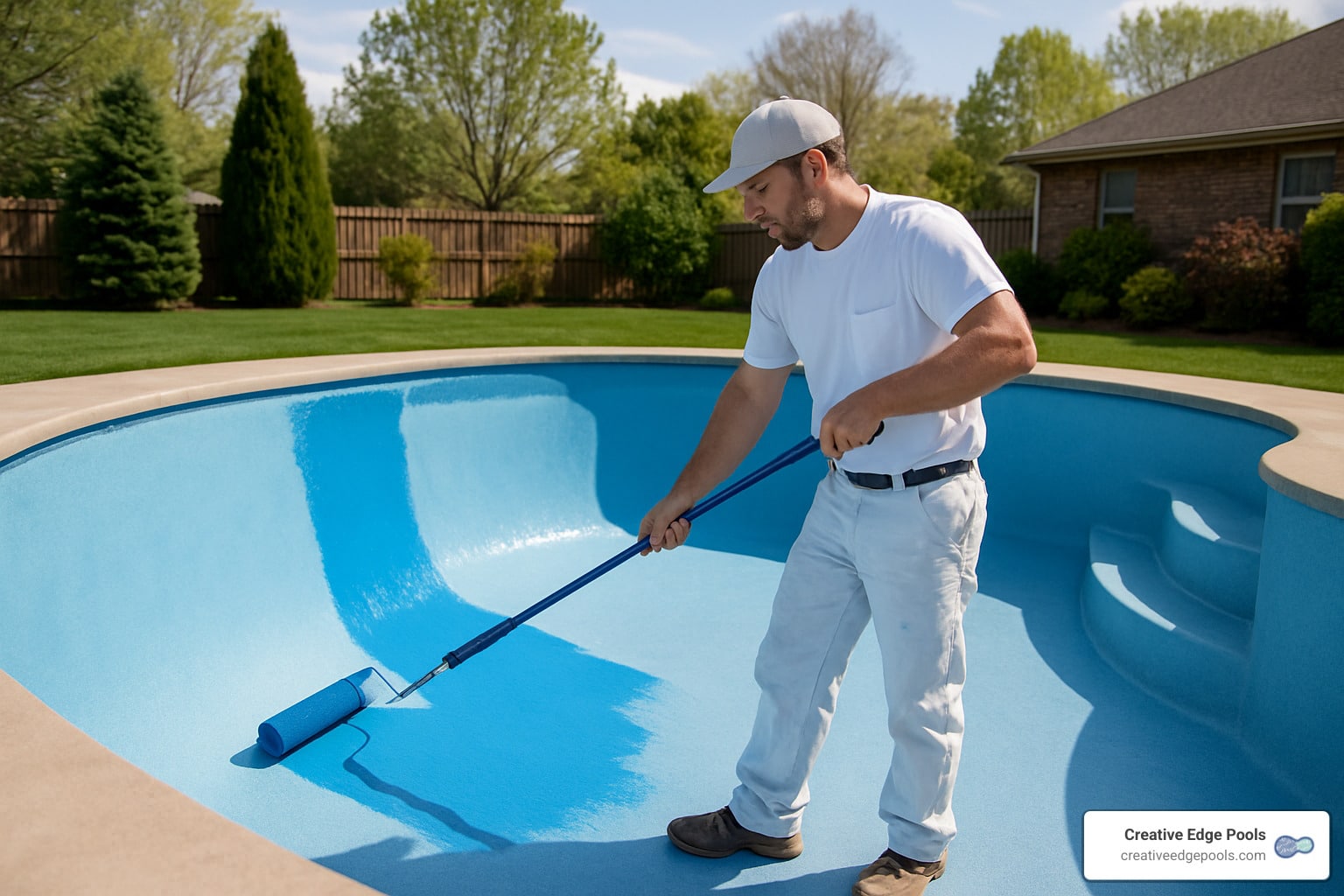
Gunite Pool Painting Cost 2025: Top 5 Powerful Savings
Understanding Gunite Pool Painting Costs in 2025
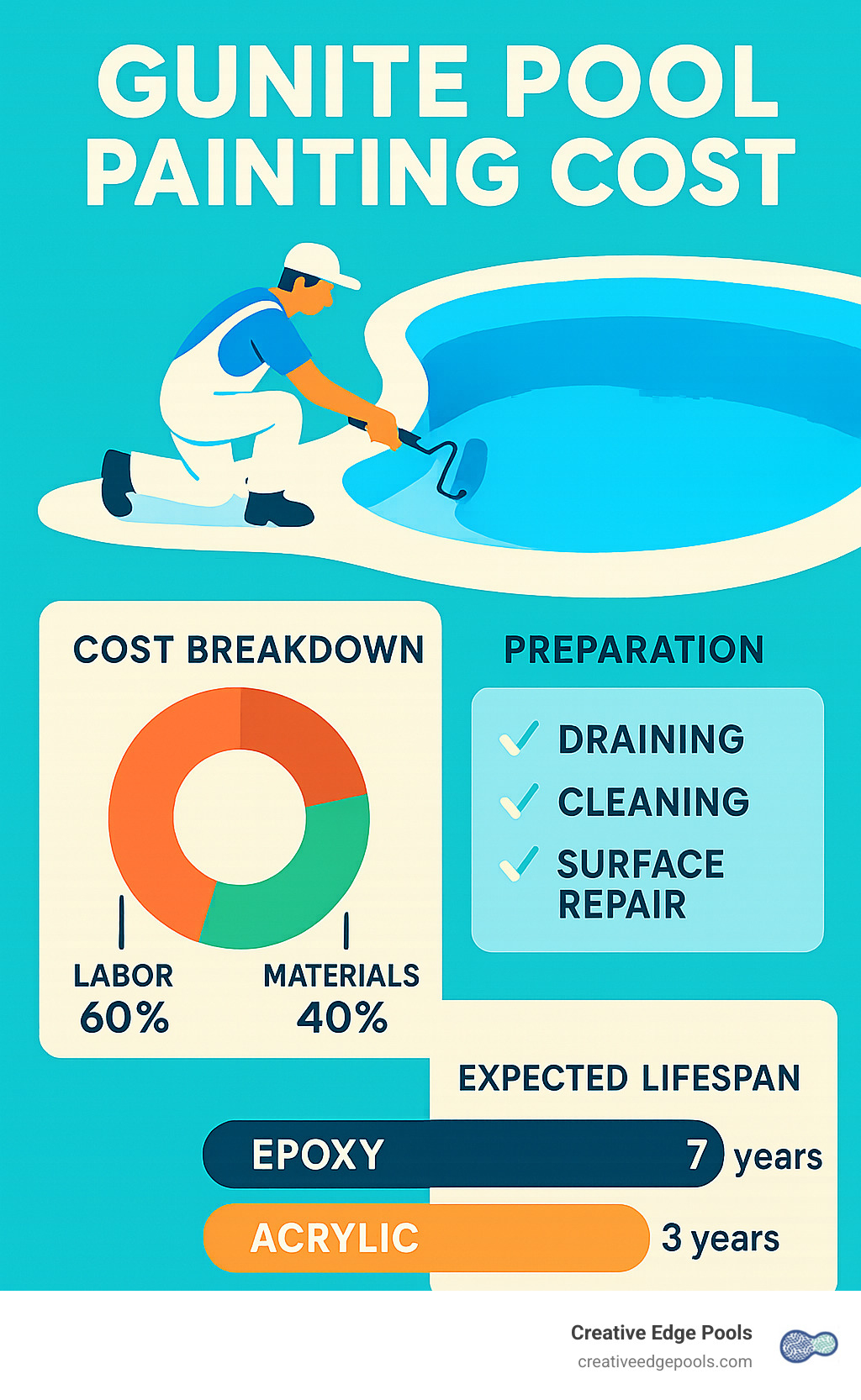
Gunite pool painting cost typically ranges from $1,000 to $2,000 for an average-sized pool (15′ x 30′), with most homeowners paying around $1,500 total. Here’s a quick breakdown:
- Cost per square foot: $1 to $2
- Labor rates: $45 to $65 per hour
- Paint materials: $100 to $200 per gallon (covering ~150 sq ft)
- Average project duration: 2-3 days
- Expected lifespan: 3-7 years (depending on paint type)
When your gunite pool’s surface begins showing signs of wear, fading, or rough patches, a fresh coat of paint can be the most budget-friendly rejuvenation option. While replastering or applying aggregate finishes offer longer-lasting solutions, painting provides an immediate aesthetic upgrade without breaking the bank.
The actual cost of your gunite pool painting project will depend on several factors including pool size, surface condition, paint type, preparation requirements, and your location. Eastern Massachusetts and Southern New Hampshire homeowners often see prices at the higher end of the national range due to our region’s higher labor costs and shorter outdoor work season.
I’m David Brabant, owner of Creative Edge Pools with over thirty years of experience in the swimming pool industry, and I’ve overseen hundreds of gunite pool painting cost estimates and projects throughout Massachusetts and New Hampshire, helping homeowners transform their backyard pools while respecting their budgets.
Gunite pool painting cost terms you need:
– 15×30 gunite pool cost
– convert liner pool to gunite cost
– gunite pool crack repair cost
Breaking Down Gunite Pool Painting Cost in 2025
Let’s talk dollars and cents for your pool project. As of early 2025, the gunite pool painting cost now sits between $1.84 and $2.17 per square foot—a modest bump from previous years thanks to inflation and those ever-rising material costs we’re all feeling.
For most of my customers here in Eastern Massachusetts and Southern New Hampshire, the total bill typically lands around $1,500, though I’ve seen projects range from $1,000 to $2,000 depending on your specific situation. About 60-70% of this goes toward labor, with professional pool painters (like our experienced team) charging between $45 and $65 per hour.
Living in New England definitely impacts your gunite pool painting cost. Our shorter outdoor work season and higher regional cost of living push prices toward the upper end of the national average. That said, quality work and durable materials are worth the investment—especially when you’re diving into that beautifully refreshed pool on a hot summer day!
Want a more personalized estimate? The Homewyse pool paint cost calculator is a handy tool that factors in your zip code and specific project details.
Average Gunite Pool Painting Cost by Pool Size
The size of your backyard oasis plays a major role in your budget planning. Here’s what you can expect based on common pool dimensions:
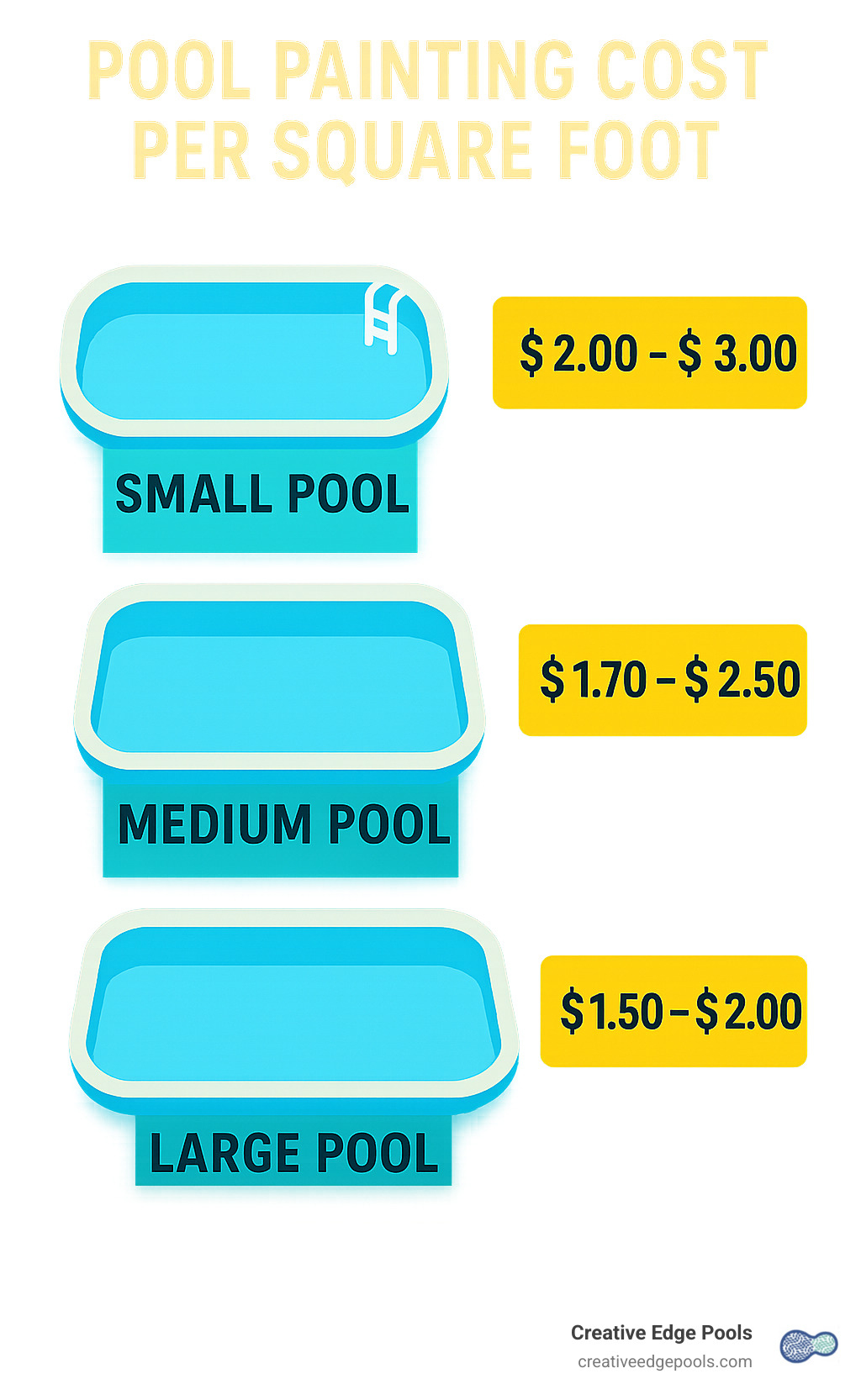
For a small pool (12′ × 24′ = 288 sq ft), you’re looking at about 400-450 square feet of total surface area when you include the walls. This typically requires 3-4 gallons of paint and costs between $800-$1,200 all-in.
A medium pool (15′ × 30′ = 450 sq ft) jumps to around 600-700 square feet of paintable surface. You’ll need 4-5 gallons of paint, with total costs ranging from $1,200-$1,800.
If you’ve got a large pool (20′ × 40′ = 800 sq ft), expect about 1,000-1,200 square feet of surface area, requiring 7-8 gallons of paint. These projects typically run $1,800-$2,500.
These estimates include both materials and labor for standard preparation. If your pool has seen better days with extensive damage or multiple layers of old paint, additional prep work might bump up your costs.
Gunite Pool Painting Cost per Square Foot
Most professionals (myself included) calculate gunite pool painting cost using a per-square-foot model. This approach—called the Unit Cost Method—keeps everything transparent so you know exactly what you’re paying for.
In 2025, expect to invest between $1 and $2 per square foot for standard gunite pool painting. This typically breaks down into about $0.60-$1.30 for labor, $0.40-$0.70 for materials, and $0.10-$0.20 for equipment.
For premium finishes or challenging conditions (like difficult access or extensive repairs), costs might climb to $2.50-$3.00 per square foot. When comparing quotes, make sure contractors are using similar calculation methods and including all necessary preparation work—that’s where hidden costs often lurk!
Cost Drivers & What’s Included in Your Estimate
When you receive a quote for your pool painting project, it helps to know exactly what you’re paying for. Let’s break down what should be included in a thorough gunite pool painting cost estimate so you can compare apples to apples.
A good estimate isn’t just a bottom-line number—it should detail all the elements that contribute to your project’s success. The biggest portion typically covers surface preparation—that critical first step where we drain your pool, clean everything thoroughly, perform an acid wash to help the new paint stick, and repair any cracks or damage. This prep work usually makes up about 30-40% of your total cost, but it’s worth every penny since it determines how long your new finish will last.
Your estimate should also include the contractor’s travel time and equipment setup (what we call mobilization), all necessary materials like primer and paint, the actual labor for applying those materials, and proper cleanup afterward. Depending on where you live, your quote might also factor in local permit requirements, though most towns don’t require permits just for painting.
| Cost Component | Percentage of Total | Average Cost |
|---|---|---|
| Labor (prep, application, cleanup) | 60-70% | $900-$1,400 |
| Materials (paint, primer, supplies) | 25-35% | $375-$700 |
| Equipment & Miscellaneous | 5-10% | $75-$200 |
Hidden or Additional Gunite Pool Painting Cost Factors
Beyond the basics, several “hidden” factors might affect your final gunite pool painting cost. For instance, after we finish painting, you’ll need to refill your pool—which can cost anywhere from $40 to $400 depending on your local water rates and pool size. If you’re in a hurry to swim again, water delivery services can fill your pool in hours rather than days, but expect to pay $400-$2,000 for this convenience.
Don’t forget about waste disposal either. Properly disposing of old paint chips and cleaning chemicals sometimes incurs extra fees, especially if they contain hazardous substances. And if your pool painting is part of a larger backyard renovation managed by a general contractor, they’ll typically add a 13-22% markup to cover their coordination services.
Timing matters too. Here in New England, we have a shorter outdoor work season than warmer regions. While spring and fall are ideal for pool painting, scheduling during peak summer might come with premium pricing. Conversely, off-season work might save you money but risks weather-related delays or complications.
Even for small pools, be aware that most professionals (including us at Creative Edge) have minimum labor charges—typically at least 2 hours—which can make very small projects relatively more expensive per square foot.
Preparation’s Impact on Cost and Longevity
I can’t stress this enough: proper preparation is not where you want to cut corners! The prep phase directly impacts both your immediate gunite pool painting cost and how long that new paint job will last.
Good preparation starts with thoroughly cleaning the surface—either through sandblasting or power washing with equipment that delivers at least 3,000 PSI. Renting this equipment yourself runs about $75-$150 daily, or you’ll pay for your professional’s equipment use as part of their labor costs.
Choosing the right primer is equally important, as it creates the crucial bond between your pool surface and the new paint. This is especially true for gunite pools with previous paint layers, where compatibility testing prevents expensive adhesion issues down the road.
Different surfaces require specific preparation techniques too. A gunite pool previously coated with epoxy needs different preparation than one with chlorinated rubber paint. Getting this wrong can lead to bubbling, peeling, and premature failure.
In my 30+ years in the pool business, I’ve seen countless examples where inadequate preparation led to paint failure within months instead of years. Investing an extra $200-$400 in thorough preparation can extend your paint job’s life by 2-3 years—dramatically reducing your long-term cost per season.
For more detailed information on maintaining your gunite pool surface between paintings, check out our Gunite Pool Care page, where we share professional tips to maximize the lifespan of your pool’s finish.
Paint Types, Durability & Lifespan Explained
Choosing the right paint for your gunite pool isn’t just about color – it’s an investment decision that affects both your immediate wallet and long-term satisfaction. After helping hundreds of Massachusetts and New Hampshire homeowners through this decision, I’ve seen how paint selection impacts the overall gunite pool painting cost and enjoyment.
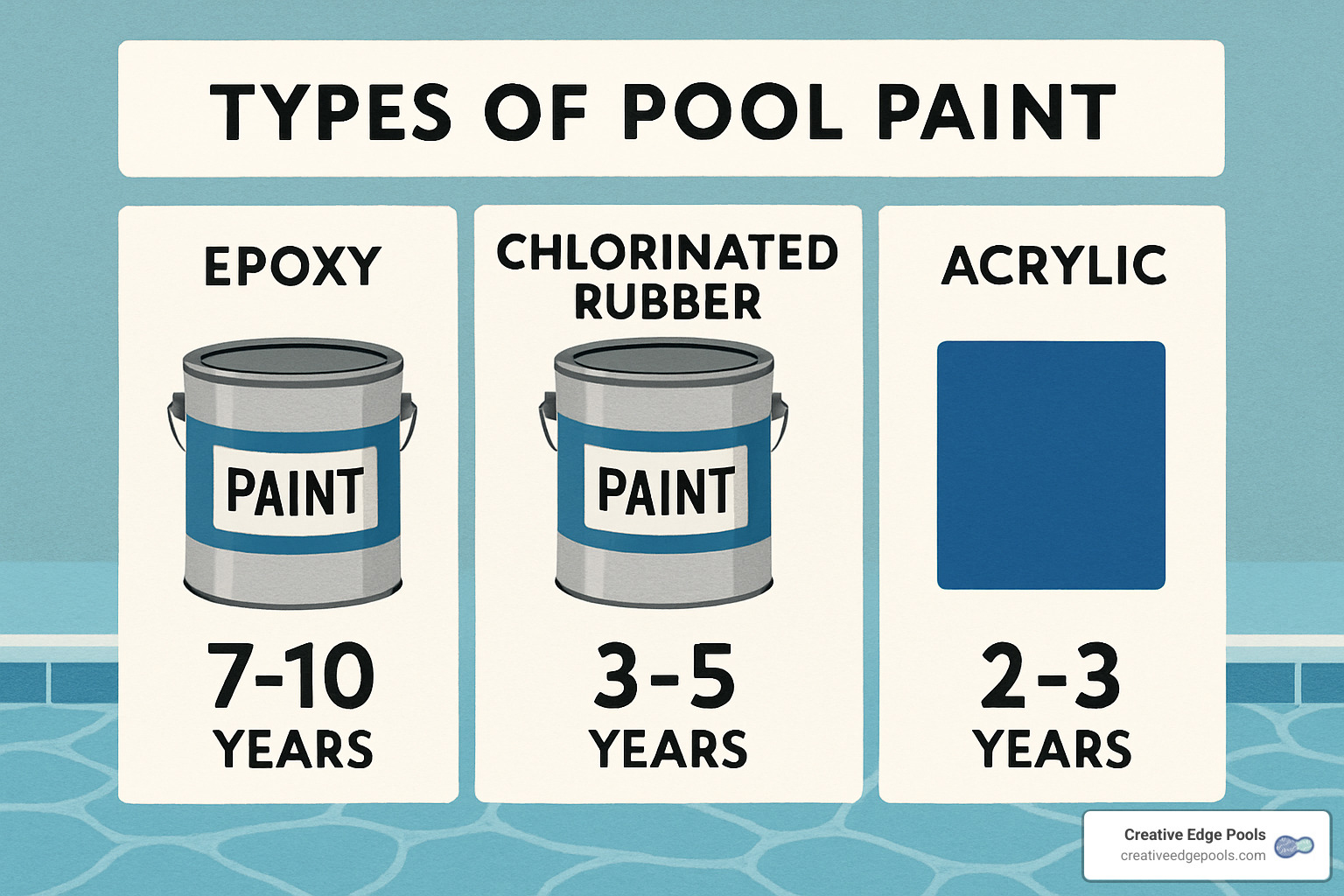
Epoxy paint stands as the champion of durability, lasting a solid 5-7 years when properly maintained. It creates a tough, chemical-resistant shell that stands up to heavy use and harsh New England winters. At $70-$120 per gallon (covering 125-150 square feet), it’s pricier upfront but often the better value over time. Just know that epoxy demands the most thorough preparation – there’s no cutting corners here.
Many pool owners still ask about chlorinated rubber paint, which was once the industry standard. While it offers good flexibility and 3-5 years of service at a moderate price ($50-$80 per gallon covering 150-175 square feet), environmental regulations have made it less common. If you’re environmentally conscious, you might want to consider other options.
For the budget-conscious or DIY enthusiast, acrylic paint offers the easiest application experience. At $30-$60 per gallon (covering a generous 200-250 square feet), it’s gentle on the wallet. The trade-off? You’ll be repainting sooner, typically within 2-4 years. I often recommend this to clients who are planning a more comprehensive renovation down the road.
Water-based epoxy has emerged as an excellent middle-ground option in recent years. Priced at $60-$100 per gallon (covering 150-200 square feet), it combines easier application than traditional epoxy with better durability than acrylic, typically lasting 4-6 years.
Here’s something crucial many homeowners find the hard way: compatibility matters tremendously. Applying epoxy over chlorinated rubber is like trying to mix oil and water – you’ll end up with peeling and frustration. When in doubt, have a professional conduct a simple compatibility test on a small section of your pool. This small step can save thousands in premature repainting costs.
Price & Performance Comparison: Paint vs Plaster vs Aggregate
While we’re focusing on gunite pool painting cost, it helps to understand how painting compares to other resurfacing options to make an informed decision.
Painting your pool costs between $1-$2 per square foot and gives you 2-7 years of service depending on the type you choose. It’s the budget-friendly champion with the quickest application time – typically just 2-3 days plus curing. The downside? You’ll be repeating the process more frequently, and your texture options remain limited.
Plaster takes the middle position at $4-$7 per square foot, lasting 7-12 years before needing replacement. It offers that classic smooth finish many pool owners love, but can develop staining over time, especially with our region’s seasonal temperature fluctuations.
For those seeking the premium option, aggregate finishes run $8-$15 per square foot but reward you with impressive 15-20+ year lifespans. These decorative, slip-resistant surfaces look stunning but require the highest upfront investment and installation time.
For perspective, let’s break down the annual cost for a typical 15′ × 30′ pool with about 650 square feet of surface area:
– Paint: $130-$260 per year ($650-$1,300 every 5 years)
– Plaster: $260-$455 per year ($2,600-$4,550 every 10 years)
– Aggregate: $347-$650 per year ($5,200-$9,750 every 15 years)
When viewed through this lens, the higher upfront costs of more permanent solutions start to make mathematical sense for some homeowners, while painting remains the smart choice for others.
Pros and Cons of Painting a Gunite Pool
Before you decide to paint your gunite pool, let’s have an honest conversation about what you’re signing up for.
On the bright side, painting offers the lowest upfront gunite pool painting cost of all resurfacing options – a real blessing if you’re working with a tight budget. The quick turnaround is another major advantage; most of our painting projects are completed and ready for refilling within a week, including curing time. Love changing your style? Paint gives you the flexibility to switch colors whenever you repaint. It’s also the most DIY-friendly of all resurfacing methods, though I’ve seen enough DIY-gone-wrong situations to suggest caution here. Finally, painting works wonderfully as a temporary solution while saving for a more comprehensive renovation.
Now for the reality check. Paint simply doesn’t last as long as plaster or aggregate finishes – you’ll be revisiting this project more frequently. There’s also the risk of peeling, flaking, or chalking if the application isn’t perfect (especially important in our New England climate with its freeze-thaw cycles). Your texture options remain limited compared to other finishes. And with each repainting, you’re potentially building up layers that might eventually require complete removal – a labor-intensive process.
For many of our Massachusetts and New Hampshire clients, painting serves as an excellent interim solution that buys time while planning for a more permanent investment. It’s all about matching the solution to your timeline and budget.
DIY Gunite Pool Painting Cost vs Hiring a Pro
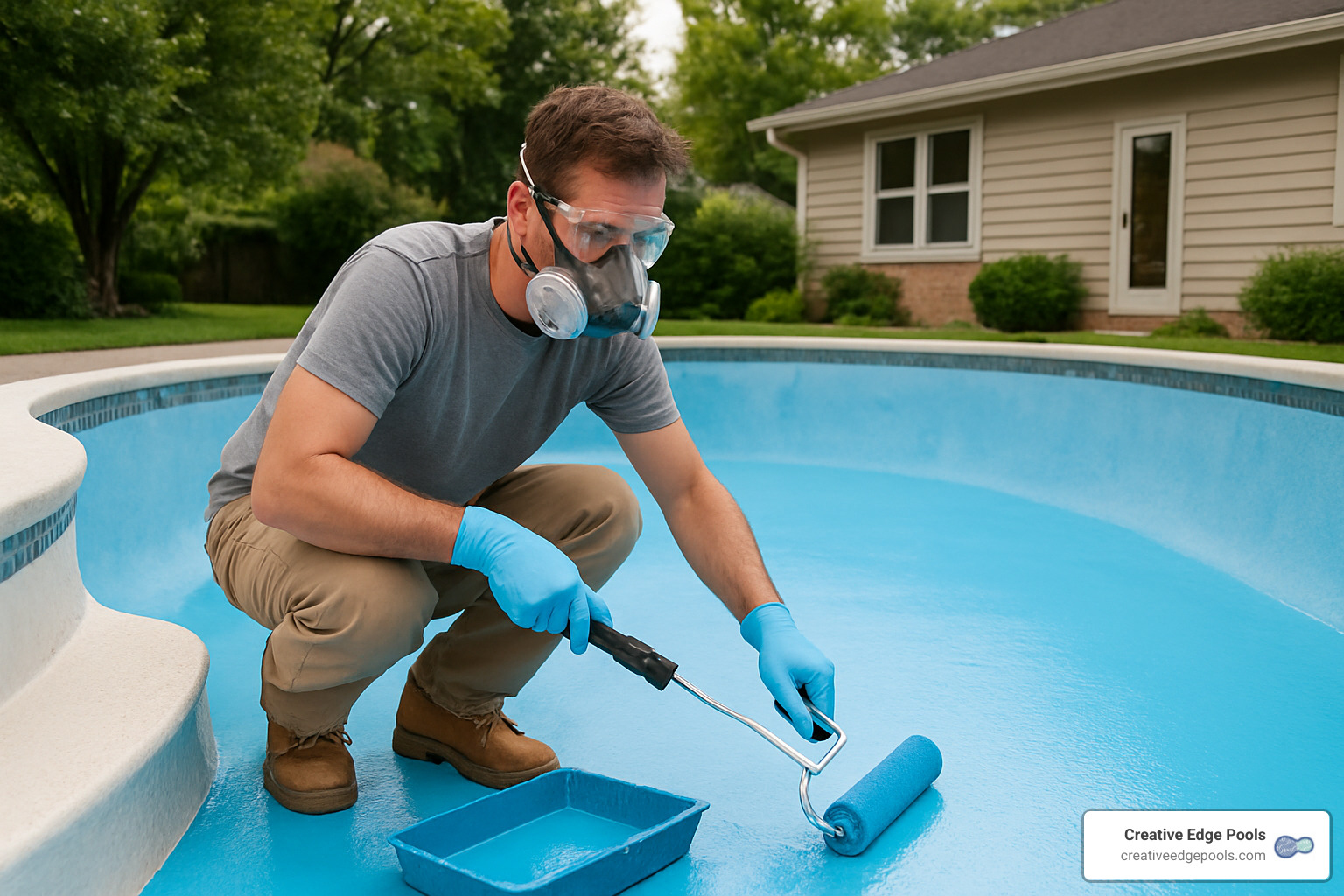
Let’s talk about the DIY approach to pool painting – it’s definitely tempting when you see that labor makes up 60-70% of your total gunite pool painting cost. Many of our customers ask if they can tackle this project themselves, and honestly, it depends on your comfort level with home improvement projects and how much time you have to spare.
If you’re considering the DIY route, you’re looking at materials costing between $700-$1,400 total. The biggest expense will be the paint itself, running $400-$800 depending on your pool size and the type of paint you choose. You’ll also need to budget for surface preparation supplies ($100-$200), equipment rentals like a power washer ($150-$300), and proper safety gear ($50-$100).
Compare that to hiring our team or another professional service at $1,500-$2,500, and yes – the potential savings jump right out at you. But here’s what I always tell homeowners: be realistic about the time commitment. This isn’t a weekend project. Most DIYers spend at least 40 hours spread across 1-2 weeks to complete the job properly.
What you won’t get with DIY is a warranty. When we paint your pool, that work is guaranteed. If something goes wrong with the application, we’ll make it right. With DIY, any issues that pop up are yours to handle – and trust me, proper surface preparation makes all the difference between a paint job that lasts 5+ years and one that starts peeling after a single season.
Step-by-Step DIY Overview
If you’re still thinking DIY is the way to go (and for some of our more handy homeowners, it absolutely can be), here’s what the process looks like:
First, you’ll need to completely drain your pool and let it dry thoroughly – this usually takes 2-3 days of good weather. Don’t rush this step! Paint applied to damp surfaces is doomed from the start.
Next comes the cleaning phase. Grab some trisodium phosphate (TSP) and give that surface a serious scrubbing to remove oils, dirt, and anything else that might prevent good adhesion. While you’re at it, take time to patch any cracks with an epoxy compound specifically designed for pools.
The acid etching step is where many DIYers get nervous – and rightfully so. You’ll need to carefully apply a muriatic acid solution (following the manufacturer’s dilution instructions) to create a slightly rough surface that paint can grip onto. Afterward, neutralize with TSP. This step requires proper safety gear and careful handling.
If your chosen paint system recommends a primer, apply that next. Then comes the main event: applying at least two coats of pool paint, with appropriate drying time between each coat as specified by the manufacturer.
Finally – and this is crucial – allow the paint to fully cure before refilling. This typically takes 5-7 days in good weather. I’ve seen impatient homeowners refill too early and ruin their hard work.
Throughout this process, paint fumes in an enclosed pool area can be hazardous. Always ensure proper ventilation and wear appropriate safety equipment.
When to Call a Specialist
While I respect the DIY spirit, there are definitely situations where calling us at Creative Edge Pools makes more sense than going it alone:
Complex repairs should give you pause. If your pool has significant cracks, delamination, or structural issues, these require expert assessment before painting. Getting these wrong can lead to bigger problems down the road.
Moisture issues are another red flag. If you’ve had trouble getting your pool surface completely dry, or there seems to be persistent dampness in the gunite substrate, a professional can identify and address the underlying problems.
Time constraints matter too. If you need your pool operational for an upcoming event or you’re preparing to sell your home, the professional route will be significantly faster.
Some homeowner’s insurance policies have specific requirements about professional maintenance of pool structures – worth checking before you dive into DIY work.
And if you’ve experienced previous paint failures, that’s a strong indication there might be underlying issues a professional needs to diagnose. Sometimes what seems like a simple paint job is actually masking more complex problems.
We’re always happy to provide a professional assessment to help you determine whether DIY painting makes sense for your specific situation. For more extensive renovation needs beyond painting, check out our gunite pool renovations page to explore your options.
Money-Saving Tips & Long-Term Value
Let’s face it – everyone loves saving money, especially on home improvement projects. Even if you’re hiring professionals like us to handle your pool painting, there are several smart strategies to reduce your gunite pool painting cost while getting the most bang for your buck.
One of my favorite recommendations for budget-conscious homeowners is to bundle multiple services together. If your pool needs other repairs or maintenance, combining these with your painting project can significantly reduce mobilization costs. We often offer package discounts when clients book multiple services at once – just ask!
Timing matters too. In our New England climate, scheduling your pool painting during shoulder seasons (early spring or late fall) can lead to noticeable savings. Demand is lower during these periods, and many contractors (including us at Creative Edge) offer more competitive rates to keep our teams busy.
Proper water chemistry is perhaps the most overlooked money-saving strategy. I’ve seen countless beautiful paint jobs deteriorate prematurely due to poor chemical maintenance. Keeping your pH balanced between 7.2 and 7.8 can add years to your paint’s lifespan – that’s money in your pocket!
For larger pools or neighborhood projects, consider buying paint in bulk. We can often secure better per-gallon pricing when purchasing larger quantities, and those savings get passed directly to you. I’ve worked with several neighborhood associations who coordinated their pool maintenance schedules to take advantage of these bulk discounts.
Always get at least three detailed quotes from reputable contractors. But remember – the lowest price isn’t always the best value. Look beyond the bottom line to understand exactly what preparation steps are included, as thorough prep work is essential for a lasting finish.
Sometimes spending a bit more upfront can actually save you money in the long run. Premium epoxy paints might cost more initially, but when they extend your repaint cycle by 2-3 years, the math works strongly in your favor. Think of it as an investment rather than an expense.
From a property value perspective, a freshly painted pool can significantly boost your home’s curb appeal. In Massachusetts and New Hampshire’s competitive real estate markets, an attractive pool can be a major selling point, potentially recouping 40-80% of your investment when it’s time to sell.
For homeowners planning to stay put for the long haul, consider how your painting decision fits into your overall pool maintenance strategy. While painting is cost-effective now, you might eventually want to explore more permanent solutions. Our Gunite Pool Resurfacing Options page provides information on longer-term alternatives when painting is no longer sufficient.
Frequently Asked Questions about Gunite Pool Painting Cost
How often will my gunite pool need repainting?
Let’s talk about the elephant in the pool – how long will your fresh paint job actually last? The truth is, it depends on what type of paint you choose:
Epoxy paint tends to be the marathon runner, lasting 5-7 years before needing a refresh. Water-based epoxy comes in a close second at 4-6 years, while chlorinated rubber typically gives you 3-5 years of service. Acrylic paint is more of a sprinter, usually needing replacement after just 2-4 years.
Here in New England, where our pools endure everything from scorching summer days to freezing winters, paint jobs often trend toward the shorter end of these ranges. Our seasonal temperature swings can be tough on pool surfaces!
Your maintenance habits make a huge difference too. Keeping your water chemistry balanced is like giving your paint job a daily vitamin – it extends its life significantly. On the flip side, neglecting chemical balance, overusing your pool, or dealing with extreme weather can all send your paint job to an early retirement.
I always recommend my clients do a quick annual inspection of their pool surface. This helps you spot early warning signs and plan your repainting before your pool starts looking like it belongs in a horror movie.
Does painting a gunite pool increase home value?
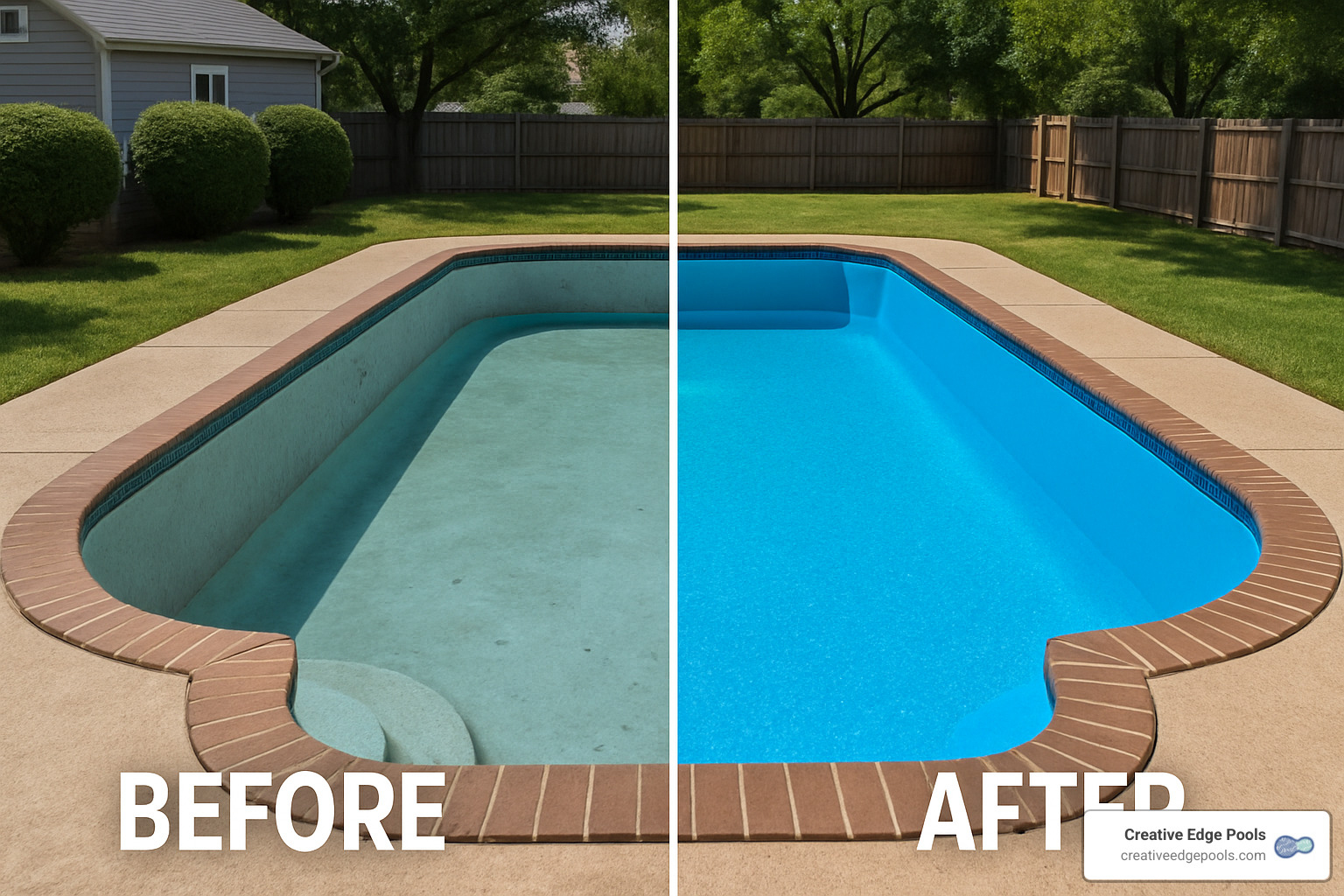
A freshly painted pool can absolutely boost your home’s curb appeal – there’s nothing like that “wow” factor when potential buyers see a sparkling blue pool instead of a faded, stained eyesore.
In terms of dollars and cents, well-maintained pools typically recoup about 40-80% of their maintenance costs in added home value. That percentage varies based on your local real estate market and the overall condition of your property.
Here in Eastern Massachusetts and Southern New Hampshire, where our outdoor seasons have a definite expiration date, a move-in ready pool can be particularly attractive. Buyers love knowing they can dive right in without tackling a renovation project first.
If you’re painting specifically with selling in mind, I’d recommend sticking with neutral, timeless colors. That bold purple might be your personal favorite, but it could limit your buyer pool (pun intended!).
Just keep in mind that savvy buyers and home inspectors will recognize that a painted pool, while beautiful, will require more frequent maintenance than one with premium plaster or aggregate finishes. The gunite pool painting cost might be lower upfront, but the maintenance schedule is more demanding.
Can I switch from paint to plaster later on?
Yes, you absolutely can transition from paint to plaster or aggregate finishes down the road! It’s like upgrading from a starter home to your dream house – there’s just some work involved in the transition.
The key challenge is that all existing paint must be completely removed before applying new plaster. This typically involves sandblasting or other mechanical removal methods, which adds about $1,000-$2,000 to your standard replastering costs. It’s a bit like prepping walls in your home – if you don’t remove the old wallpaper completely, the new paint won’t adhere properly.
If you’re considering this transition for the future, here’s my advice based on decades in the pool business:
First, keep detailed records of what paint types have been used on your pool. This information is gold for whoever handles your future conversion.
Second, have a professional evaluate your specific pool before making decisions. Some paint histories are easier to convert than others.
Finally, budget realistically. The extra preparation costs are unavoidable, but many of my clients find the long-term benefits of plaster or aggregate finishes worth the investment.
At Creative Edge Pools, we’re happy to assess your current pool surface and help you map out the most cost-effective path forward, whether that’s another round of painting or making the leap to a more permanent finish. The gunite pool painting cost might be lower in the short term, but sometimes investing in a longer-lasting solution makes more sense for your specific situation.
Conclusion
Understanding the full scope of gunite pool painting cost allows you to make informed decisions about maintaining your backyard oasis. While painting offers the most budget-friendly option for refreshing your pool’s appearance—typically $1,000 to $2,000 for an average pool—it’s important to consider both immediate expenses and long-term maintenance requirements.
For many homeowners in Eastern Massachusetts and Southern New Hampshire, pool painting provides an excellent interim solution while planning for more permanent resurfacing options in the future. The key to maximizing your investment lies in proper preparation, selecting the right paint type for your specific conditions, and maintaining appropriate water chemistry after painting.
At Creative Edge Pools, we bring decades of experience to every project, whether you’re looking for a simple paint refresh or considering a complete pool renovation. As a family-owned business specializing in gunite pools throughout Eastern Massachusetts and Southern New Hampshire, we understand the unique challenges our regional climate presents for pool surfaces.
Our comprehensive approach to backyard development means we can handle not just your pool painting needs, but also any related landscaping or masonry work that might improve your overall outdoor living space. We pride ourselves on delivering customized solutions that align with both your aesthetic vision and budget requirements.
To learn more about our gunite pool services or to schedule a consultation about your pool painting project, visit our gunite pool installation page or contact us directly. Let us help you transform your backyard paradise with a fresh, vibrant pool finish that will provide years of enjoyment.