What You Need to Know About Gunite Swimming Pool Repair
Gunite swimming pool repair is the process of fixing damage to the concrete shell, plaster finish, or structural components of a gunite pool — and knowing where to start can feel overwhelming.
Here’s a quick overview of the most common repairs and what they involve:
| Issue | Severity | Typical Fix |
|---|---|---|
| Hairline surface cracks | Cosmetic | Plaster patch or pool putty |
| Cracks wider than 1/8 inch | Structural | Professional crack injection + resurfacing |
| Flaking or rough plaster | Cosmetic/wear | Replastering or resurfacing |
| Hollow spots / delamination | Moderate–Structural | Full resurfacing |
| Pop-ups (pool lifting) | Structural | Hydrostatic relief valve + professional repair |
| Plumbing leaks | Varies | Professional leak detection + line replacement |
Gunite pools are built by pneumatically spraying a dry mixture of sand and cement onto a steel rebar frame — then adding water at the nozzle. The result is a dense, custom-shaped concrete shell that can be formed into almost any design. That’s one of the big reasons gunite pools are so popular with homeowners who want something unique.
But here’s the catch: gunite itself is porous. It relies on a layer of plaster or an aggregate finish to hold water and protect the shell. Over time, that finish wears down, cracks, or separates — and the underlying shell can develop problems of its own.
As of April 2026, gunite pools remain the dominant choice for custom in-ground pools across the Northeast, including in Massachusetts and New Hampshire, where Creative Edge Pools specializes in gunite pool installations, renovations, and custom pool design. And with that popularity comes the reality that every gunite pool will eventually need some form of repair.
The good news? Many issues are very fixable — some even by a handy homeowner. The key is knowing what you’re actually looking at before you reach for a bag of hydraulic cement.
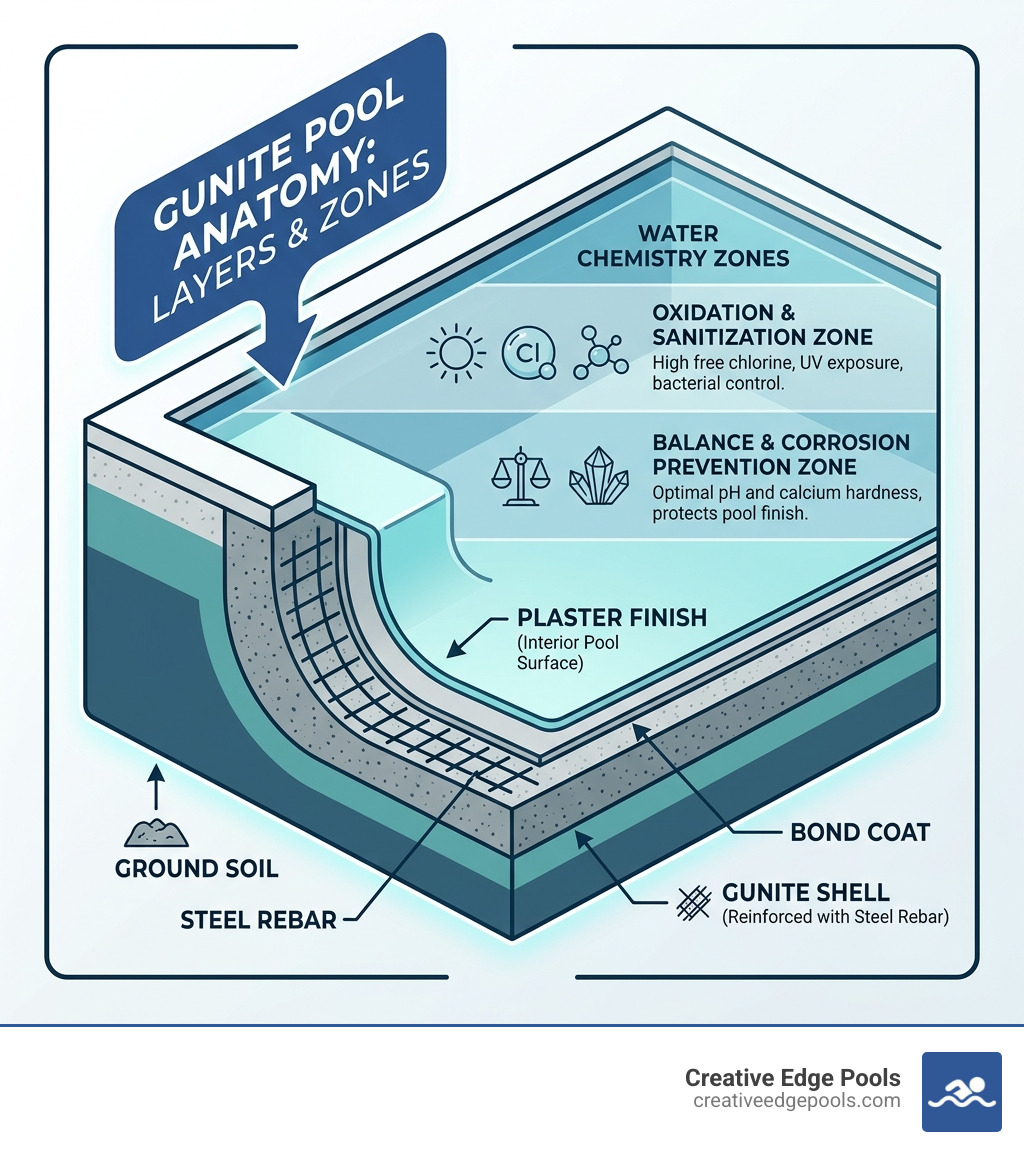
Easy gunite swimming pool repair glossary:
Identifying Common Issues in Gunite Swimming Pool Repair
When we walk the pool decks of homes from Andover, MA to Nashua, NH, we see a wide variety of “character marks” on aging pools. Not all of them are emergencies, but ignoring them can lead to a much larger bill down the road.
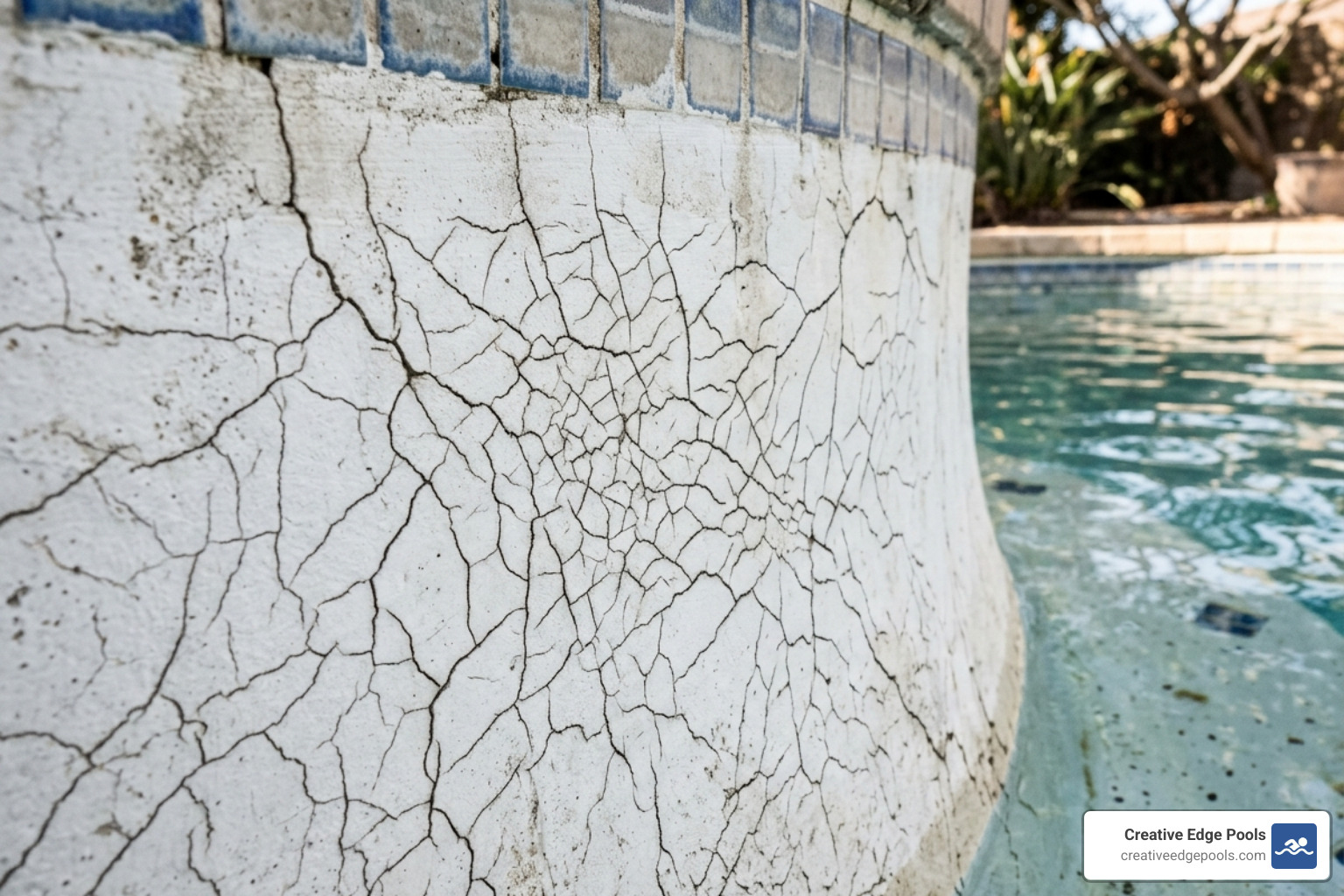
Common surface issues include:
- Surface Craze: These are tiny, shallow hairline cracks that look like a spiderweb. They are usually just in the plaster layer and are often caused by the pool being left empty for too long or improper curing.
- Spider Cracks: Similar to crazing but slightly more pronounced, these often radiate from a single point.
- Spalling and Flaking: This is when the top layer of your plaster starts to peel away, much like a sunburned shoulder. It’s often a sign of aggressive water chemistry or poor application during the last renovation.
- Hollow Spots: Also known as delamination, this happens when the plaster finish separates from the gunite shell. You might notice a slight bulge or a “drum-like” sound when you tap the area.
- Discoloration: While often just an aesthetic nuisance, deep staining can sometimes indicate metal imbalances or organic matter that has etched into the finish.
For more detailed information on identifying these issues, check out this Gunite Pool Owner’s Guide to Swimming Pool Repairs and our own more info about gunite pool maintenance.
Distinguishing Cosmetic vs. Structural Cracks
The million-dollar question every homeowner asks us is: “Is my pool falling apart, or just getting old?”
The “1/8 inch rule” is a standard guideline in the industry. According to Florida Building Code (FBC) standards—which are often used as a benchmark nationwide—cracks wider than 1/8 inch are generally classified as structural. If a crack is wider than a nickel, it likely penetrates the gunite shell itself.
Structural cracks are often caused by:
- Ground Movement: Shifting soil, especially in areas with high clay content or during New England’s freeze-thaw cycles.
- Hydrostatic Pressure: This is the pressure exerted by groundwater against the outside of your pool shell.
- Poor Design: Inadequate rebar reinforcement or thin shell sections (typical shells should be 6 to 12 inches thick).
If you see rust stains coming out of a crack, that is a major red flag. It means the water has reached the steel rebar, causing it to corrode and expand, which will eventually pop the concrete right off. For a deeper technical dive, see these Procedures for Minor Gunite or Shotcrete Repair in Swimming Pools.
The Impact of Water Chemistry on Gunite Swimming Pool Repair
Believe it or not, the number one reason gunite pools need to be replastered earlier than expected isn’t age—it’s water chemistry.
If your pH levels aren’t balanced (ideally between 7.2 and 7.8), your pool water becomes “hungry.” Low pH or low calcium hardness makes the water acidic, and it will literally eat the calcium right out of your plaster to balance itself. This leads to etching and pitting, making the surface feel like sandpaper.
On the flip side, high pH leads to scaling, which creates rough, white calcium deposits that are difficult to remove. We use the Langelier Saturation Index (LSI) to determine if your water is perfectly balanced. Keeping your LSI within ±0.3 is the best way to prevent premature wear. If you’re wondering about the timing of your next project, read more on how often do gunite pools need to be resurfaced.
DIY vs. Professional Gunite Swimming Pool Repair
We love a good DIY project as much as anyone, but when it comes to gunite swimming pool repair, there is a very fine line between “saving money” and “causing a disaster.”
| Task | DIY Friendly? | Tools/Materials Needed |
|---|---|---|
| Patching small chips | Yes | Pool plaster patch kit, putty knife |
| Sealing a hairline leak | Yes | Underwater epoxy or pool putty |
| Resetting a loose tile | Yes | Waterproof tile adhesive, grout |
| Fixing a structural crack | No | Grinder, structural staples, epoxy injection |
| Full Resurfacing | No | Hydroblaster, pneumatic sprayers, trowels |
| Plumbing replacement | No | Leak detection gear, saws, PVC expertise |
For those small, manageable tasks, you can find great Tips for Repairing a Gunite Swimming Pool.
Step-by-Step Guide for Minor Gunite Swimming Pool Repair
If you’ve found a small, non-structural crack or a chip in the plaster, here is how we recommend handling it:
- Clean the Area: Use a stiff brush or a light acid wash to remove algae and loose debris.
- Grind the Crack: If the pool is drained, use a grinder with a diamond blade to widen the crack slightly into a “V” or “U” shape. This gives the repair material more surface area to bond to.
- Wet the Substrate: Gunite is like a sponge. If you apply dry cement to dry gunite, it will suck the moisture out of your patch, causing it to shrink and fail. Dampen the area first.
- Mix Your Material: Use a high-quality hydraulic cement or a pool-specific plaster patch. It should be the consistency of peanut butter.
- Apply and Smooth: Press the material firmly into the crack with a trowel or putty knife. Smooth the edges so they are flush with the existing plaster.
- Cure: Follow the manufacturer’s instructions for curing times before refilling.
If the job feels a bit too big, don’t hesitate to search for pool repairs near me.
When to Call the Experts
Some things are just beyond the reach of a Saturday afternoon DIY session. You should call a professional like Creative Edge Pools if you encounter:
- Major Water Loss: If you’re losing more than a quarter-inch of water a day, you have a serious leak.
- Visible Rebar: Rust spots mean the structural integrity is being compromised.
- Large Hollow Spots: If large sections of plaster are “bubbling” up, the whole surface needs to be stripped.
- Plumbing Failures: Leaks under the concrete deck require specialized listening equipment and pressure testing to find without tearing up your whole yard.
When these issues arise, you need experienced gunite pool renovators who understand the unique soil and climate conditions of Massachusetts and New Hampshire.
Professional Resurfacing and Structural Fixes
When we take on a professional gunite swimming pool repair project, we follow a rigorous process to ensure the new finish lasts for decades.
The professional process typically includes:
- Dewatering: Ensuring the groundwater around the pool is managed so the shell doesn’t move when emptied.
- Surface Prep: We use hydroblasting or mechanical chipping to remove the old, worn-out finish and reach a sound substrate.
- Bond Coat: A specialized cementitious bonding agent is applied to ensure the new plaster sticks to the old gunite.
- Finish Application: This is where you choose your look. From traditional white plaster to high-end pool plaster finish options like quartz or pebble.
- The 28-Day Curing Cycle: New plaster takes 28 days to fully cure. During this time, water chemistry is absolutely critical to prevent staining and etching.
Understanding Pop-ups and Hollow Spots in Gunite Pools
One of the scariest things a pool owner can hear is that their pool has “popped.” This happens due to hydrostatic lift. If the groundwater table is high (common in coastal NH or marshy areas of MA) and the pool is emptied without opening the hydrostatic pressure relief valve, the pool can literally float out of the ground like a boat. This usually results in catastrophic structural failure.
Hollow spots, on the other hand, are less dramatic but still serious. They occur when the “bond” between the finish and the gunite fails. This is often caused by shifting backfill or improper application of the bond coat during a previous repair. If you suspect your pool is separating, it’s time to learn when to resurface gunite pool.
Advanced Repair Materials and Products
Modern technology has given us some incredible tools for permanent gunite swimming pool repair.
- Structural Staples: These are “stitches” made of high-strength steel or carbon fiber that are embedded across a crack to keep it from widening.
- Carbon Fiber Grids: Used to reinforce large areas of the shell that have weakened.
- Polyurethane Foam Injection: This material expands up to 25 times its volume to fill voids behind the pool wall and stop active leaks.
- Torque Lock Staples: A specialized mechanical stitch that applies compression to the crack, effectively “pulling” the two sides back together.
- AquaBond Adhesives: High-performance epoxies that can often be used underwater for minor repairs.
If you’re looking for a top-tier finish during your repair, you might search for Diamond Brite pool resurfacing near me to find authorized applicators of these durable quartz finishes.
Estimated Costs for Gunite Pool Restoration
Please note: The following figures are average costs based on internet data. Actual project costs can vary significantly based on pool size, regional labor rates in MA and NH, and the specific condition of your pool shell.
When budgeting for your pool’s “facelift,” it’s helpful to see the wide range of possibilities.
- Standard Resurfacing: Average internet data suggests a range of $6,000 to $150,000. While a standard backyard pool might sit at the lower end, massive custom estates with premium pebble or glass bead finishes can easily reach the high end.
- Structural Crack Repair: This is typically priced by the linear foot. You might see estimates from $70 to $7,000 per linear foot, depending on whether you’re just injecting epoxy or installing heavy-duty torque lock staples and carbon fiber reinforcement.
- Hollow Spot Repair: Fixing localized delamination can range from $1,000 to $15,000. If the hollow spots are widespread, it usually triggers a full resurfacing project.
For more detailed breakdowns, see our guides on the average cost to resurface a gunite pool and the overall cost to redo pool.
Frequently Asked Questions about Gunite Pool Repair
How often should a gunite pool be replastered?
Most gunite pools need to be replastered every 10 to 25 years. Standard white plaster usually leans toward the 10-15 year mark, while high-end finishes like quartz or pebble can easily last 20-25 years with proper maintenance. Your water chemistry history is the biggest factor here—balanced water equals a longer-lasting finish. Learn more about concrete pool replastering.
Can I repair a gunite pool without draining it?
Yes! For minor issues like small cracks or a few loose tiles, we use underwater epoxies and sealant kits. These products are designed to mix, apply, and cure while submerged. However, for structural repairs or full resurfacing, the pool must be drained. We always recommend professional leak detection first to ensure you’re targeting the right spot. Check out our gunite swimming pool maintenance tips for more “no-drain” advice.
What are the signs that my pool shell is failing?
Watch out for “The Big Three”:
- Rapid Water Loss: Losing an inch or more of water a day (not due to evaporation).
- Wide, Growing Cracks: Any crack wider than 1/8 inch or one that visibly shifts between seasons.
- Rust Spots: This indicates the structural steel is corroding. If you notice these, you should ask yourself, are gunite pools good? The answer is yes—but only if the structural skeleton remains healthy.
Conclusion
Your pool is the heart of your backyard, especially during those beautiful New England summers. Whether you’re in the middle of a minor DIY patch or planning a major structural overhaul, understanding the fundamentals of gunite swimming pool repair is the first step to a successful project.
At Creative Edge Pools, we bring over 100 years of combined experience to every backyard we touch. As a family-owned business serving Massachusetts and New Hampshire, we don’t just fix pools—we bring homeowner visions to life. From the initial custom pool design to complex gunite pool renovations, we are here to ensure your “gunite gem” stays sparkling for another generation.
If you’ve noticed a crack, a hollow spot, or just think your pool is looking a little tired, give us a call. We’d love to help you plan your next backyard oasis.