Fix Pool Deck Cracks: 3 Simple Steps, 2025
Why Pool Deck Cracks Demand Immediate Attention
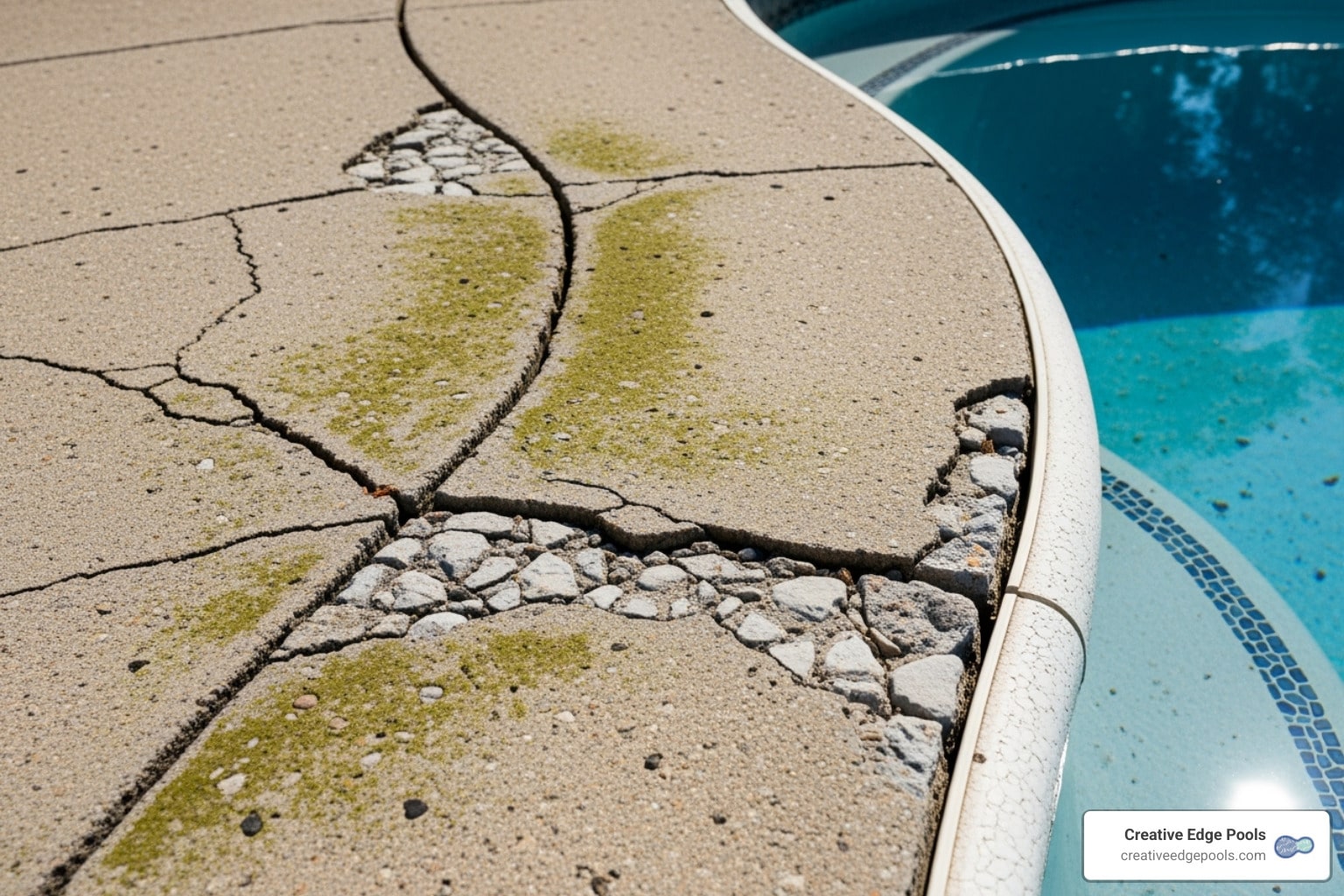
When you need to fix pool deck cracks, understanding the urgency and proper repair methods is crucial for safety and property value. Pool deck cracks aren’t just cosmetic issues – they can become serious safety hazards and lead to costly structural damage if left untreated.
Quick Solutions to Fix Pool Deck Cracks:
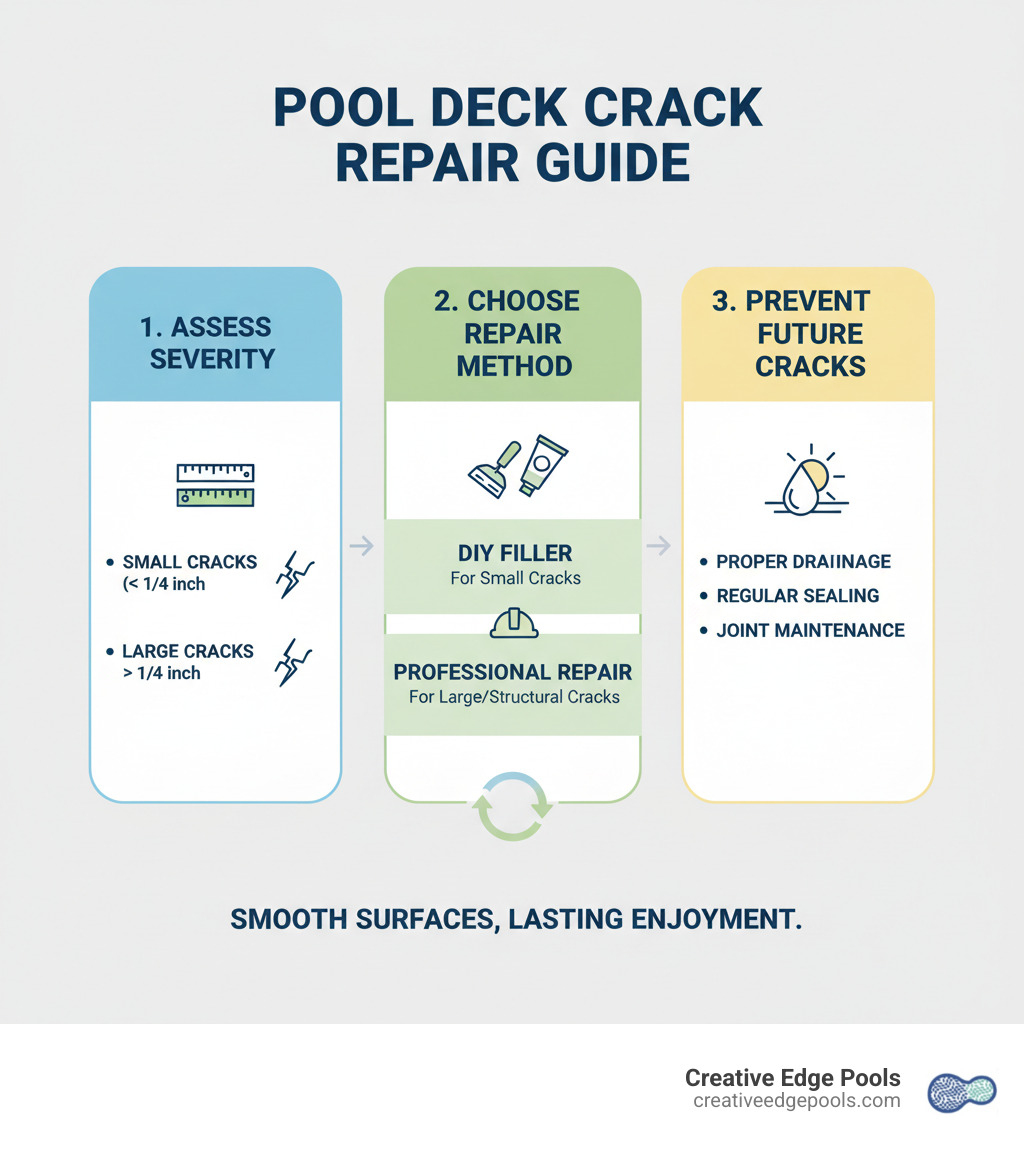
- Small cracks (less than 1/4 inch) – Use concrete crack filler or epoxy-based sealant
- Large cracks (over 1/4 inch) – Requires professional assessment and repair
- Structural cracks – Professional epoxy injection or concrete patching needed
- Widespread damage – Consider complete pool deck resurfacing
Pool deck cracks develop from multiple causes including soil settlement, freeze-thaw cycles, temperature fluctuations, and chemical exposure from pool water. Research shows that ignoring these cracks can increase repair costs by up to 50% compared to early intervention. The cost to repair a cracked pool deck typically ranges from $500 to $3,000, depending on the extent of damage and repair method used.
Types of cracks you might encounter:
- Hairline cracks – Often cosmetic but can allow water infiltration
- Active cracks – Wider than 1/4 inch, indicating structural issues
- Settlement cracks – Caused by shifting soil beneath the concrete
As David Brabant, owner of Creative Edge Pools with over thirty years in the swimming pool industry, I’ve helped countless homeowners fix pool deck cracks and restore their outdoor spaces to safe, beautiful conditions. My hands-on experience has taught me that addressing cracks early saves both money and prevents serious safety hazards down the road.
Understanding Pool Deck Cracks: Causes and Identification
Even the strongest concrete can develop cracks. Understanding the cause helps you find the right solution. Common culprits include:
- Soil Settlement: When the ground beneath the deck wasn’t properly compacted or erodes, the concrete slab can sink and crack.
- Freeze-Thaw Cycles: In areas like Eastern Massachusetts, water seeps into pores, freezes, expands, and widens small cracks over the winter.
- Poor Construction: An improper concrete mix, lack of reinforcement, or missing control joints can lead to premature cracking.
- Temperature Fluctuations: Concrete naturally expands and contracts with temperature changes. Without proper joints, this stress causes cracks.
- Chemical Exposure: Pool chemicals and cleaners can gradually weaken the concrete surface over time.
Signs of Structural vs. Cosmetic Cracks
Learning to identify the type of crack is key to determining the right repair.
- Cosmetic Cracks: Hairline and shrinkage cracks are typically less than 1/4 inch wide. While not structurally dangerous, they should be sealed to prevent water from getting in and causing bigger problems.
- Structural Cracks: These demand immediate attention. Look for cracks wider than 1/4 inch, uneven surfaces where one side is higher than the other, or stair-step patterns. Any water leakage through a crack is also a sign of a deeper issue.
A professional inspection is the best way to assess crack severity. An expert can determine if a crack threatens your deck’s integrity, helping you protect your investment. A well-maintained pool deck lifespan can exceed 20 years, and proper evaluation is crucial.
The Dangers of Ignoring Cracked Concrete
Delaying repairs might seem to save money, but it often leads to more expensive and dangerous problems. Ignoring cracks can result in:
- Increased Repair Costs: A small DIY fix can turn into a major professional repair as water and ice expand the damage. Delaying repairs can increase final costs by up to 50%.
- Safety Hazards: Uneven surfaces create serious tripping hazards, posing a risk to family and guests.
- Further Damage: Water seeping through cracks erodes the soil below, worsening settlement and potentially harming your pool’s foundation or plumbing.
- Pest Infestation: Cracks and voids create ideal nesting spots for ants and other pests.
- Decreased Property Value: A damaged pool deck is a major red flag for potential home buyers.
The importance of timely pool deck repair and restoration can’t be overstated. Addressing problems early protects your family’s safety and your property’s value.
How to Fix Pool Deck Cracks: DIY vs. Professional Solutions
Once you’ve identified the cracks, you must decide whether to fix them yourself or call an expert. The size and severity of the damage will guide your choice.
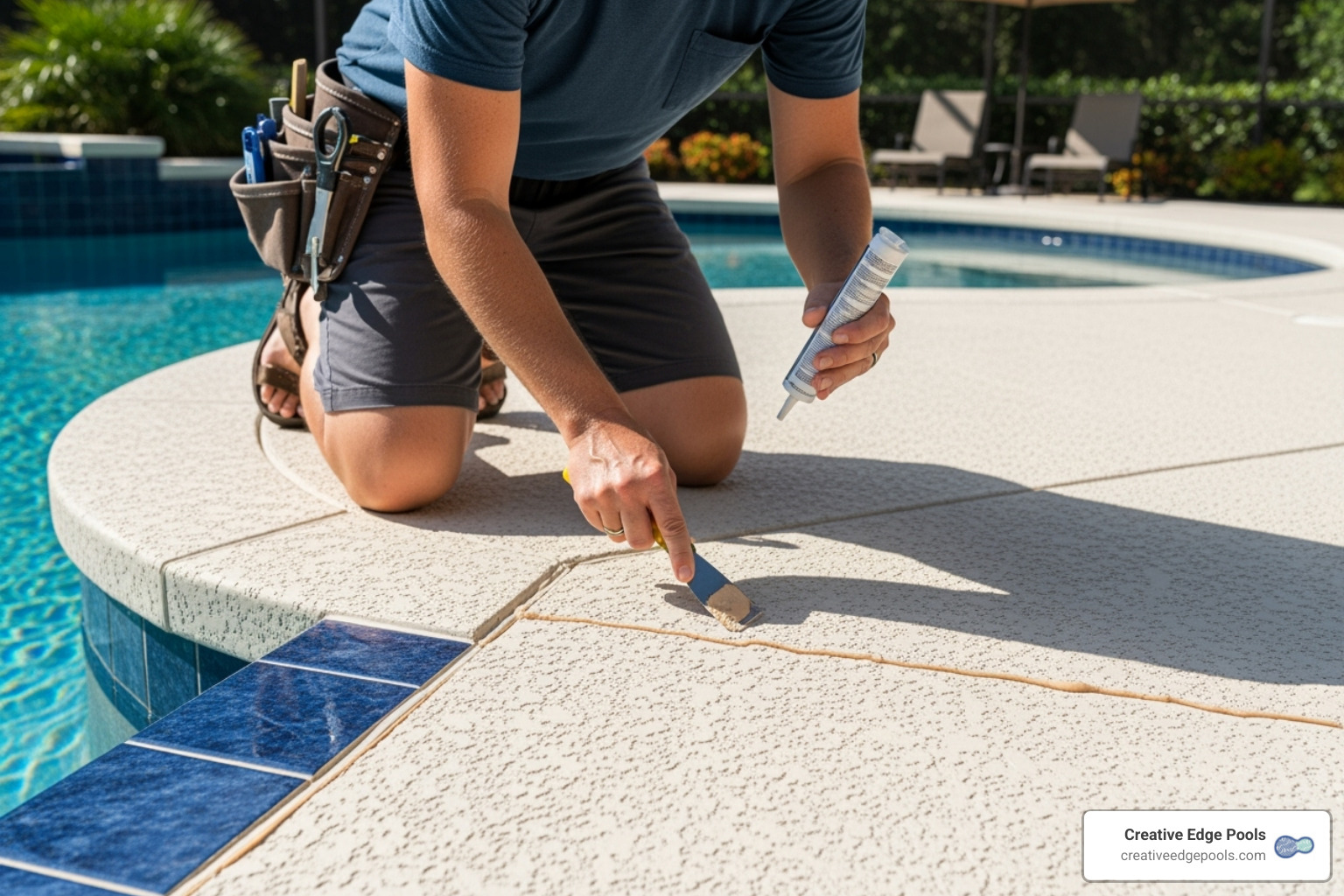
A DIY approach can work for small, hairline cracks, saving you money on materials that cost $20-$100. However, for structural issues or widespread damage, professional expertise is essential for safety and long-term results. A failed DIY fix can lead to thousands in future repairs, whereas professional solutions ($500-$3,000) address the root cause. At Creative Edge Pools, our concrete pool deck resurfacing services provide durable, long-term solutions.
DIY Methods to Fix Pool Deck Cracks
For minor cracks less than 1/4 inch wide, a DIY repair can be effective.
- Preparation: Use a wire brush to clean all debris from the crack. A chisel can help widen very thin cracks into a V-shape, allowing the filler to bond better.
- Choose a Filler: Concrete crack filler is a user-friendly option. For more strength, use an epoxy-based filler. For flexibility against temperature changes, choose a polyurethane-based filler.
- Application: Apply the filler into the crack, slightly overfilling it. Use a putty knife to smooth the surface.
- Curing: Allow 24-48 hours for the filler to cure completely before allowing foot traffic or water exposure. Rushing this step can cause the repair to fail.
Professional Methods to Fix Pool Deck Cracks
For cracks wider than 1/4 inch or for structural concerns, it’s time to call a professional. We use specialized techniques to address the root cause of the problem.
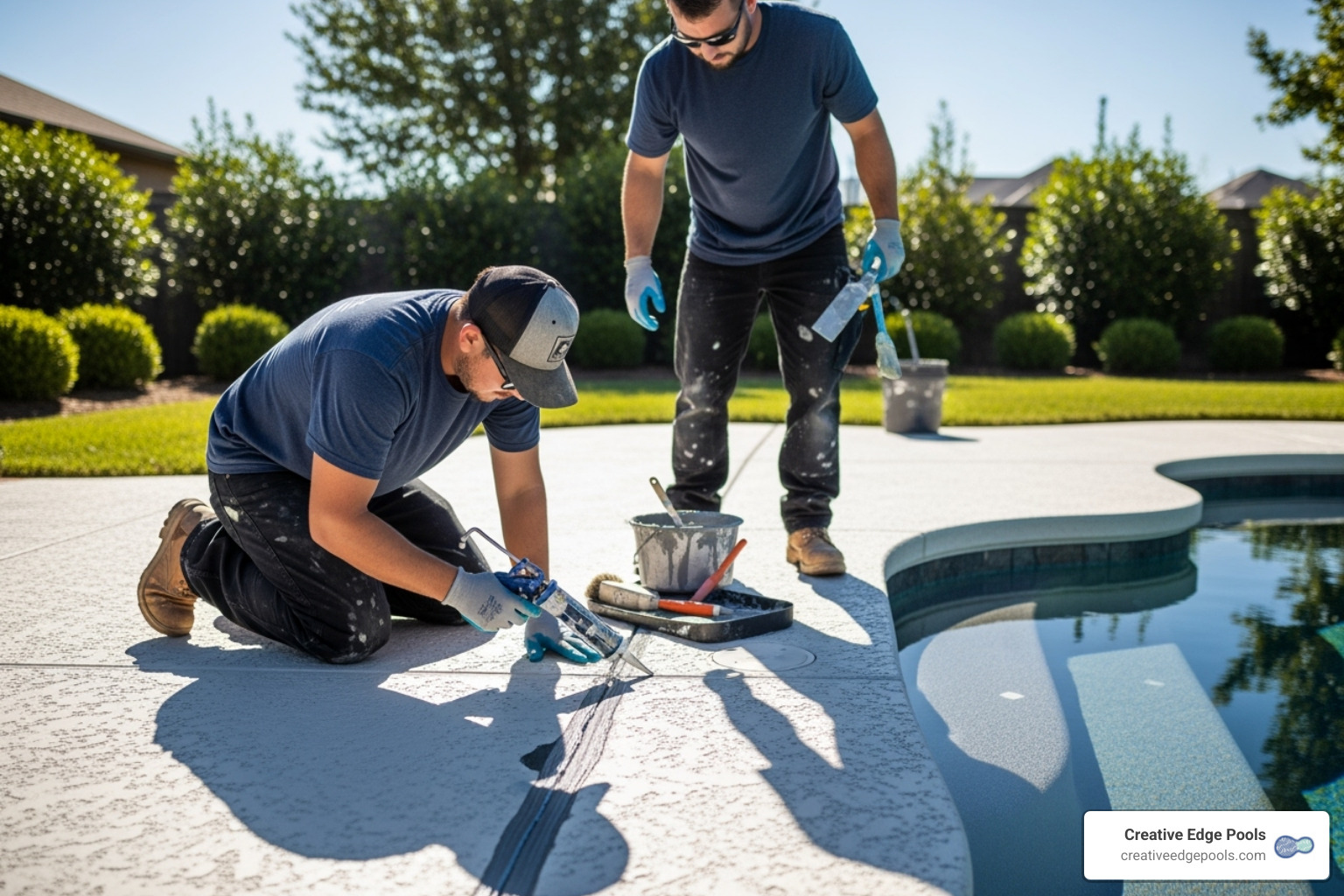
- Epoxy Injection: We inject high-strength epoxy resin under pressure to weld the concrete back together, a method far more robust than store-bought caulk.
- Concrete Patching: For larger damaged areas, we remove compromised material and apply professional-grade patching compounds, blending them seamlessly with the existing deck.
- Pool Deck Resurfacing: When damage is widespread, pool deck resurfacing options are most cost-effective. We apply a new overlay that fixes all issues at once and provides a fresh, uniform look.
Professionals can diagnose underlying issues, provide custom finishes with color matching, and ensure long-term durability.
Preventing Future Cracks in Your Pool Deck
Prevention is the best way to save money and avoid future headaches.
- Proper Drainage: Ensure your deck slopes away from the pool and your home to prevent water from pooling and seeping underneath.
- Regular Maintenance: Periodically inspect your deck for new cracks, especially after harsh weather. Catching problems early saves money.
- Sealing and Waterproofing: Seal your deck every few years to create a protective barrier against water, chemicals, and UV damage.
- Avoid Harsh Chemicals: Clean up pool chemical spills quickly and use concrete-friendly cleaners.
- Control Joints & Landscaping: Properly placed control joints allow concrete to expand and contract safely. When landscaping, avoid planting trees with aggressive root systems near the deck.
- Professional Installation: A new deck’s longevity starts with proper installation, including soil compaction, reinforcement, and a correct concrete mix.
Planning Your Repair and Ensuring Long-Term Value
Taking action to fix pool deck cracks is a smart investment, and proper planning ensures a lasting solution. A strategic approach addresses root causes, preventing future headaches and maximizing the value of your repair.
Budgeting for Repairs and Understanding Costs
Repair costs vary based on the damage and method. Understanding the potential expenses helps you make an informed decision.
- DIY Repairs: Cost $10-$50 for fillers, suitable for minor hairline cracks.
- Professional Repairs: Range from $500-$3,000, addressing more significant damage.
- Concrete Resurfacing: Costs $5-$15 per square foot, ideal for widespread cracking or a full aesthetic update.
- Polyurethane Foam Injection: Typically $500-$2,000 for lifting sunken slabs, this method corrects underlying settlement issues.
Final costs are influenced by the crack’s severity, repair method, and the size of the affected area. Getting a detailed estimate is crucial. If your pool needs other work, consider related costs like Gunite Pool Plaster Cost or Gunite Pool Painting Cost. We offer Gunite Pool Financing to make essential repairs more manageable.
Ensure Longevity with Professional Hardscaping and Maintenance
A well-maintained pool deck can last 20 years or more. The key is proactive care, not just reactive fixes. Regular cleaning, periodic sealing, and annual professional inspections can prevent small issues from becoming major expenses.
Surrounding hardscaping is also vital for preventing cracks. Our Hardscape Services and Hardscape Services Near Me focus on creating durable, beautiful Pool Hardscapes with proper drainage and soil stabilization to protect your deck.
As a family-owned business in Eastern Massachusetts and Southern New Hampshire with over 30 years of experience, we don’t just fix pool deck cracks. We provide comprehensive solutions that protect your entire backyard investment.
Don’t let a cracked deck compromise your family’s safety and enjoyment. If you’re ready for a smooth, safe, and stunning surface, Contact us today for a consultation. We’ll create a custom plan to restore your outdoor oasis.
For more pool design and maintenance tips, follow us on Facebook.