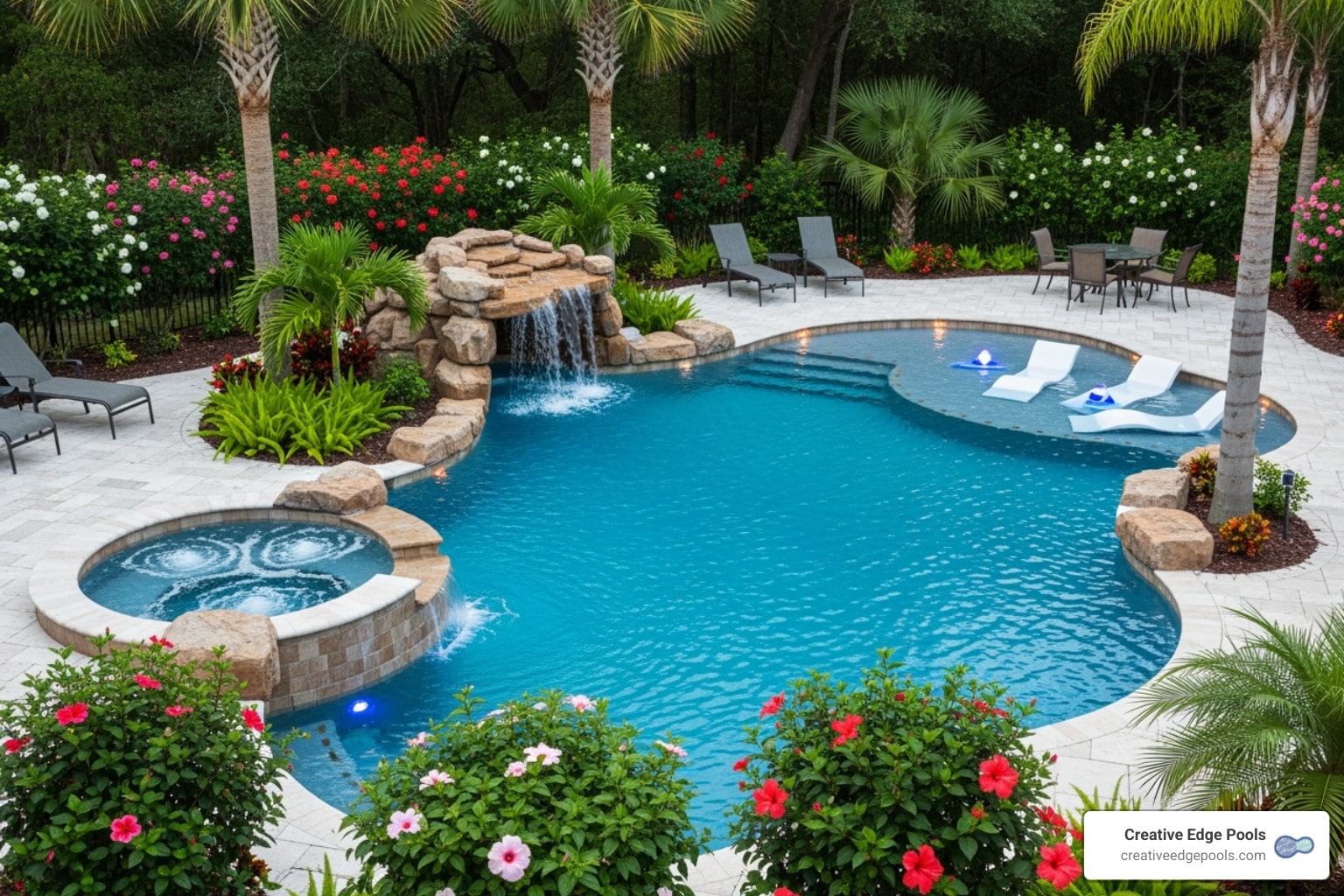
Swimming Pool Interior Finishes: 3 Ultimate Picks
The Soul of Your Swimming Pool
Swimming pool interior finishes are the materials applied to your pool’s surface, defining its appearance, texture, and durability. They create the water color and protect the pool’s structure.
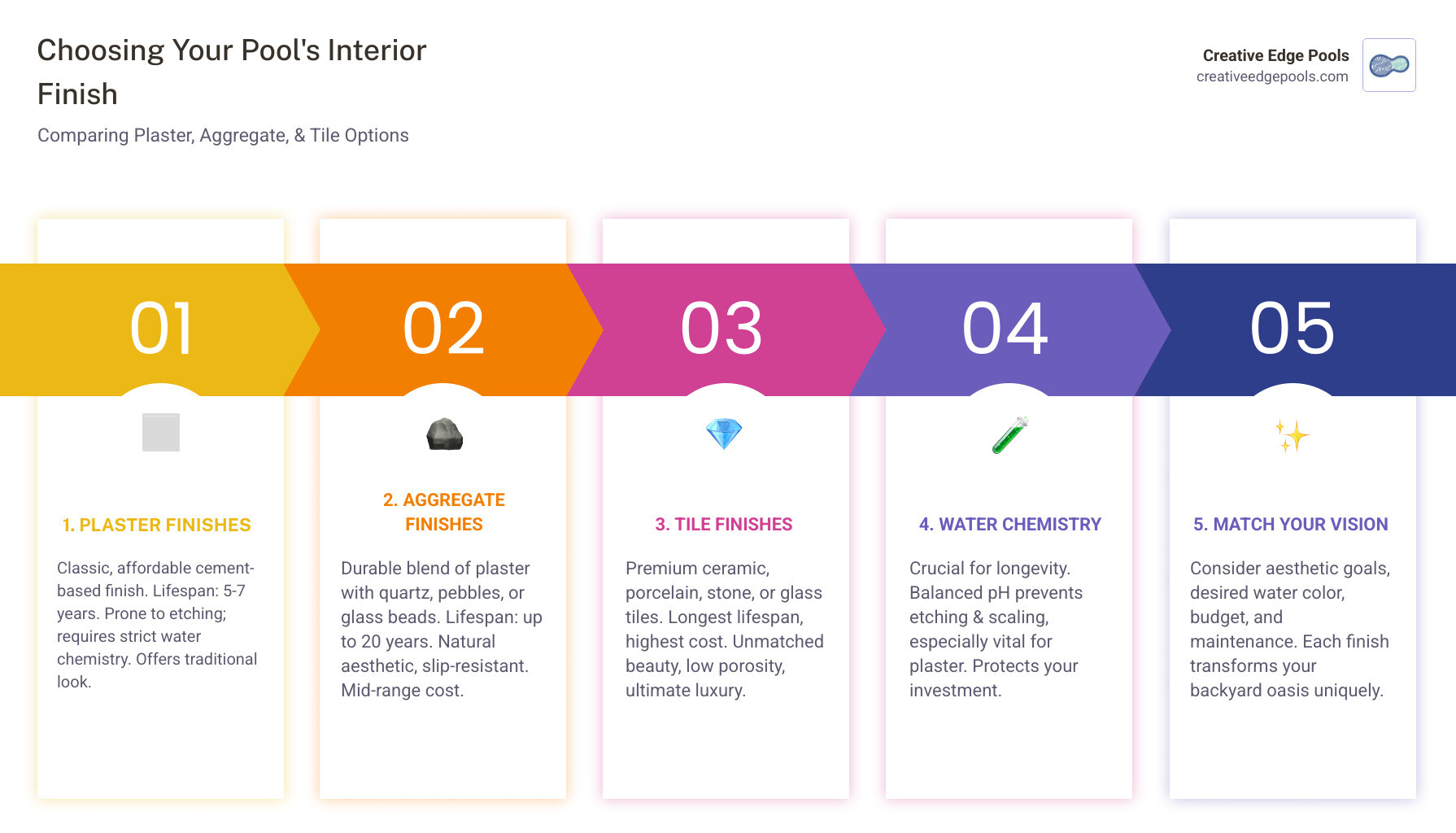
The three main types of swimming pool interior finishes are:
- Plaster – Traditional white or colored cement-based finish (5-7 year lifespan)
- Aggregate – Durable mix of plaster with quartz, pebbles, or glass beads (up to 20 years)
- Tile – Premium ceramic, porcelain, stone, or glass tiles (longest lasting)
Your choice of finish transforms a simple pool into a stunning centerpiece. It dictates the water color—from brilliant blue to deep, natural tones—and influences future maintenance needs.
Water chemistry plays a crucial role in finish longevity. Improper pH can cause etching and deterioration, especially in plaster. Maintaining balanced water chemistry extends your finish’s life and preserves its beauty.
As David Brabant, owner of Creative Edge Pools, my thirty years of experience have shown me how the right swimming pool interior finishes can transform a backyard. My hands-on knowledge of installing and repairing every finish type provides unique insight into what works best for New England pools.
A Deep Dive into Swimming Pool Interior Finishes
The magical shimmer and stunning water color of your dream pool come down to one key element: the swimming pool interior finishes.
For gunite pools, the gold standard in custom construction, the interior finish is where artistry meets engineering. Gunite’s strength and flexibility provide the perfect canvas for any finish. Its slightly porous surface bonds beautifully with all finish materials, protecting the pool’s shell while creating the aesthetic magic. At Creative Edge Pools, we know that a professional gunite pool installation is the first step to your backyard paradise.
The interplay between light, water depth, and your chosen finish creates the gorgeous water colors, from brilliant Caribbean blue to a mysterious deep lagoon green. Your pool finish is the final brushstroke that turns a simple body of water into the heart of your outdoor living space.
The Classic Choice: Plaster Finishes
A timeless and popular choice, plaster is a simple mix of Portland cement with marble dust or silica sand, creating the classic smooth surface many recognize.
The main draw is affordability. Plaster delivers a clean, traditional look and the brilliant light-blue water color associated with classic swimming pools. When properly maintained, it feels wonderfully smooth underfoot. Plus, colored plaster offers more design possibilities, with medium grey creating a deeper blue and darker shades giving a natural pond feel.
However, plaster has its challenges. The primary one is its shorter lifespan of five to seven years, requiring more frequent resurfacing. Plaster is also sensitive to water chemistry. Improper pH or alkalinity can cause etching and chipping as aggressive water dissolves the cement compounds, leading to premature wear. While stunning, colored plaster is also more prone to mottling, or uneven color variations, which are a normal part of the material’s character.
The Durable Upgrade: Aggregate Swimming Pool Interior Finishes
Aggregate finishes are a modern upgrade, boosting traditional plaster with hard materials like quartz, pebbles, or glass beads for improved durability and natural beauty.
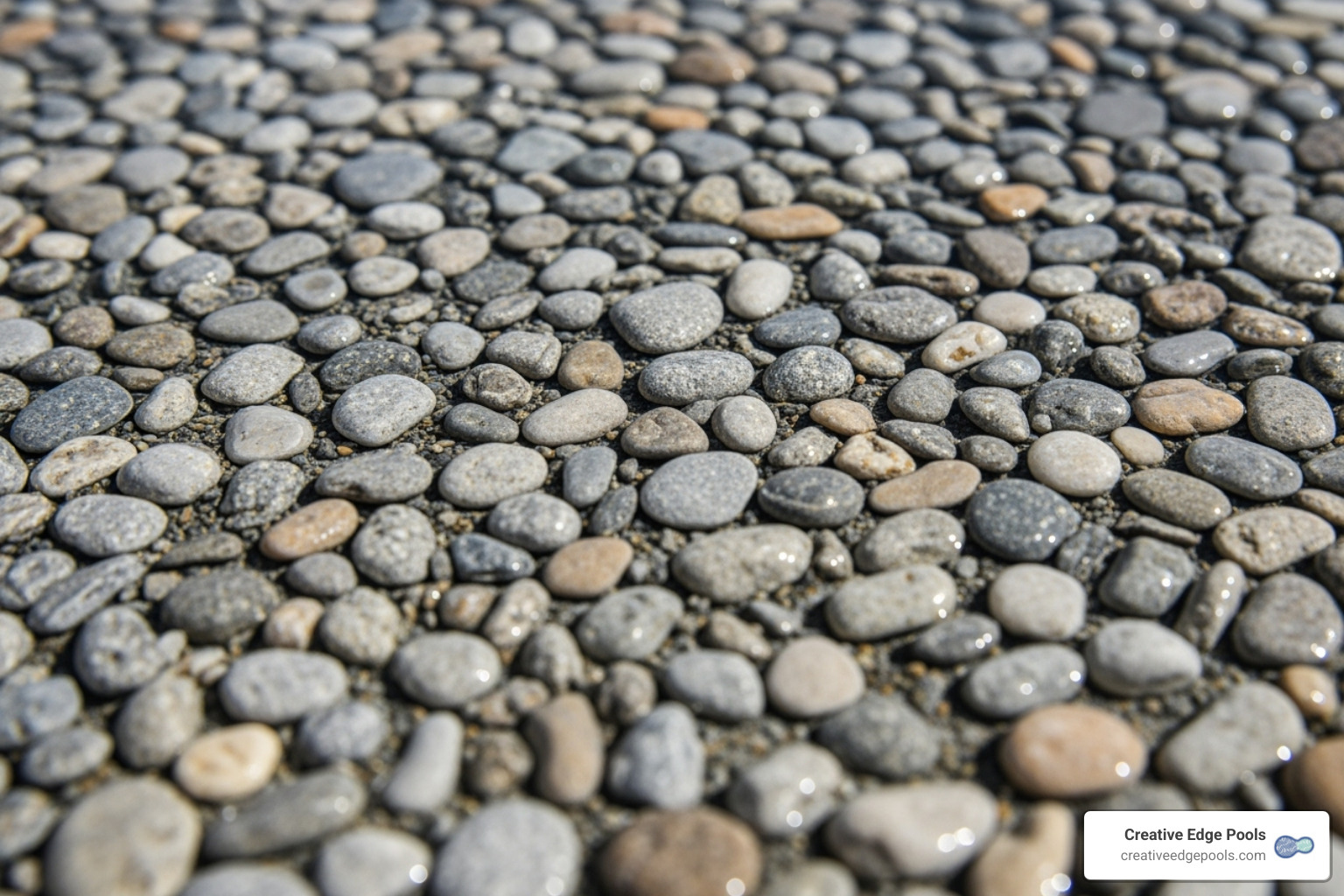
Aggregates solve plaster’s main weakness. The embedded material creates a surface resistant to chemical etching and staining, lasting up to 20 years with proper care. The slightly textured surface also provides excellent slip resistance, and the way light plays across it creates mesmerizing water colors.
- Exposed aggregate finishes reveal the embedded stones or crystals by washing away the top cement layer, creating a natural, riverbed-like texture that is comfortable underfoot.
- Polished aggregate finishes use the same durable mix but are polished to a smooth, marble-like feel, combining durability with a silky texture.
- Glass bead finishes embed tiny glass beads that reflect light like underwater jewels, creating a stunning shimmer effect, especially with LED lighting.
The choice between pebble and glass often comes down to style. Pebble finishes create a natural, organic feel, while glass beads deliver contemporary glamour. Both offer incredible durability, and you can see examples in our portfolio.
The Ultimate in Luxury: Tile Finishes
For the pinnacle of beauty and durability in swimming pool interior finishes, tile is in a class of its own. While it’s the largest upfront investment, it offers best customization and longevity.
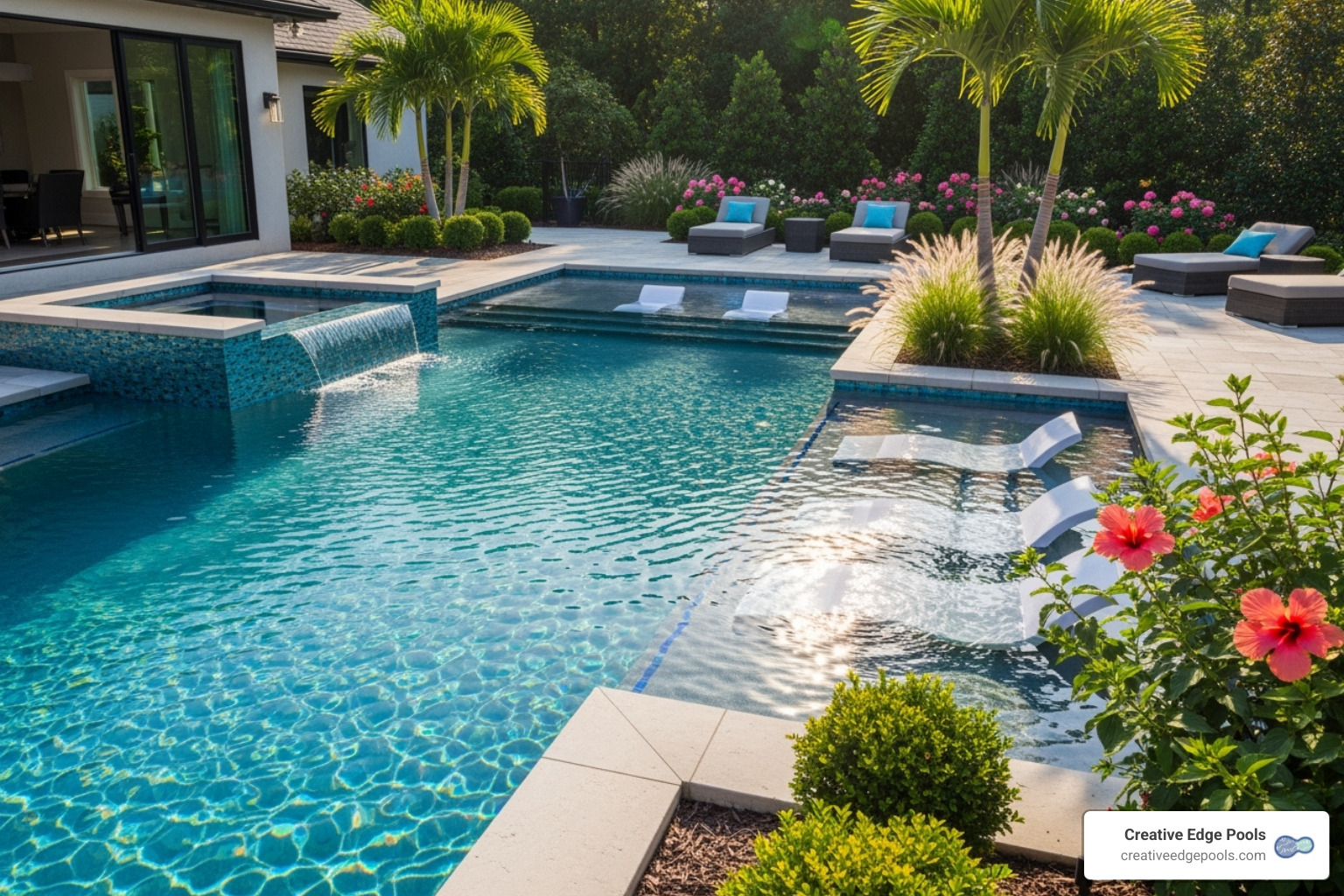
Tile’s durability is unbeatable; with proper installation, it can last the lifetime of the pool. It resists chemical imbalances, staining, and fading. Aesthetically, tile offers unlimited creative freedom for intricate mosaics, patterns, and custom designs. Because most tiles are non-porous, they resist algae growth and are easy to clean.
- Ceramic and Porcelain Tile: These offer incredible versatility, durability, and chemical resistance. Porcelain is even denser, making it ideal for the New England climate’s freeze-thaw cycles.
- Stone Tile: Materials like travertine or granite offer natural elegance that pairs well with landscaping and hardscaping and masonry elements.
- Glass Tile: The ultimate in luxury, glass manipulates light for a magical, three-dimensional sparkle. It’s non-porous and resilient, making it both stunning and practical.
The main trade-offs are the higher initial investment and longer installation time. However, for clients wanting a one-of-a-kind pool that maintains its beauty for decades, tile is the ultimate expression of pool artistry.
Key Factors in Selecting Your Perfect Pool Finish
Choosing the right swimming pool interior finishes doesn’t have to be overwhelming. It’s about matching the look to your vision, lifestyle, and budget.
Matching the Finish to Your Vision and Budget
Your pool finish defines the personality of your backyard oasis. Start by envisioning your ideal aesthetic: crystal-clear blue water or the mysterious allure of a dark, reflective pool?
- Aesthetic Goals: A classic white plaster creates a bright blue, while an exposed pebble aggregate can mimic a hidden mountain lake. Shimmering glass tiles offer pure luxury.
- Water Color: Light finishes create brilliant blues by reflecting light, while dark finishes absorb light for deep, sophisticated tones. The material also plays a role; quartz can yield a Caribbean aqua, while natural pebbles create softer, natural hues.
- Backyard Theme: Your finish should feel like a natural extension of your home’s style. A rustic home pairs well with aggregate, while a modern home may call for glass tile.
- Budget and Timeline: Consider long-term value. Plaster has the lowest initial cost, but a durable aggregate finish can save on future refinishing. Installation time also varies, from a few days for plaster to weeks for intricate tile work.
Understanding Longevity and Maintenance for Swimming Pool Interior Finishes
Understanding the maintenance commitment for each finish can save you frustration and expense down the road.
| Finish Type | Typical Lifespan | Initial Cost | Maintenance Level |
|---|---|---|---|
| Plaster | 5-7 years | Lowest | Moderate to High |
| Aggregate | Up to 20 years | Medium | Low to Moderate |
| Tile | 20+ years (indefinite) | Highest | Low |
The single biggest factor in your finish’s lifespan is water chemistry. Unbalanced water can be “hungry” (acidic or low in calcium), which will “eat” the finish by pulling calcium from the surface. This causes roughness, staining, and a chalky residue.
Aggressive, corrosive water (low pH or calcium) is the enemy of your finish. Following established industry guidelines on maintaining proper water balance is the best way to prevent this damage. Conversely, oversaturated water causes scaling—rough calcium deposits that ruin a smooth surface.
The Saturation Index is a key measurement for water balance. Keeping it between 0.0 and +0.3 ensures the water is stable and won’t damage your finish.
In terms of maintenance, plaster requires the most attention, including frequent water testing and refinishing within a decade. Aggregates are more forgiving and resist chemical damage. Tile is the easiest, needing only regular cleaning and occasional grout care.
Creating Your Dream Oasis
Choosing your swimming pool interior finishes is the final, crucial step. Your decision between the classic reliability of plaster, the durability of aggregates, or the luxury of tile will define your pool experience.
Modern finishes offer incredible variety, from natural pebble looks to jewel-like glass tiles, allowing you to create a pool that perfectly matches your vision.
At Creative Edge Pools, a family-owned business serving Eastern Massachusetts and Southern New Hampshire, we help families make these choices. Our comprehensive approach ensures your finish complements your entire backyard design, from hardscaping elements to the surrounding landscape.
The right finish lets you focus on enjoyment, not maintenance. You’ll simply appreciate the beautiful water, the comfortable surface, and how perfectly the pool fits your home’s style. Your pool should reflect who you are and how you want to live.
Ready to explore which finish will bring your vision to life? Contact us to start your project and let’s create something beautiful together.
For inspiration and glimpses of our latest projects, follow us on Facebook where we share the stunning changes happening in backyards just like yours.