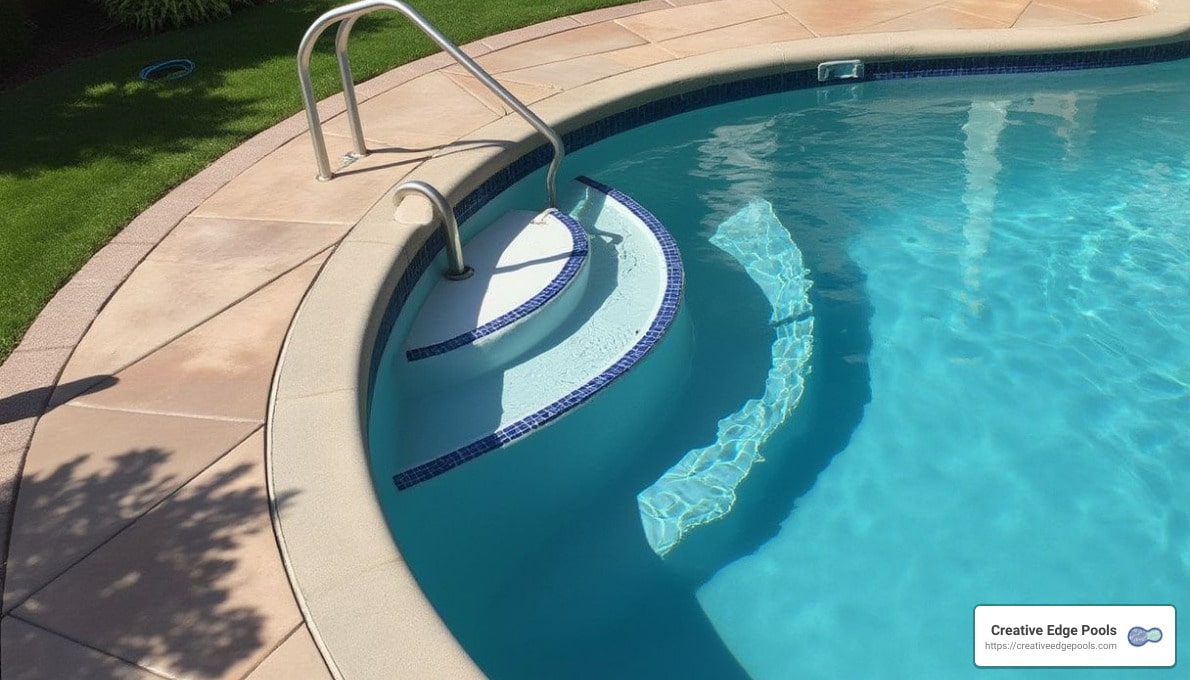
Resurfacing Gunite Pool Cost: Top 5 Essential Facts
Resurfacing gunite pool cost is a key consideration for homeowners looking to extend the life and improve the beauty of their swimming pools. The expense can differ widely based on factors like the size of your pool, the condition it’s in, and the type of finish you choose. To give you a quick overview:
- Average Cost: Typically ranges from $6,000 to $15,000
- Factors Influencing Cost: Include pool size, finish type (plaster, aggregate, tile), and location
- Longevity: Proper resurfacing can extend pool life by 7-15 years
Gunite pools are renowned for their durability and luxurious finish, making them a popular choice for backyard oases. However, regular maintenance is crucial to ensure their longevity and aesthetic appeal. Investing in resurfacing not only preserves the pool’s structural integrity but also improves its value and enjoyment for years to come.
As someone who’s been deeply involved in every aspect of pool construction and renovation, I’m David Brabant. With over thirty years in the business, I’m committed to helping you steer the complexities of resurfacing gunite pool cost while ensuring the highest quality craftsmanship for your dream pool. Let’s dive deeper into understanding the specifics.
Resurfacing gunite pool cost terms at a glance:
– Gunite Pool Remodeling
– how often does a gunite pool need to be resurfaced
– when to resurface gunite pool
Understanding Gunite Pool Resurfacing
Gunite pools are a popular choice due to their durability and ability to be customized with various finishes. However, like any pool, they require maintenance to keep them looking and functioning at their best. This is where resurfacing and replastering come into play. Let’s break down what these terms mean and how they differ, along with the options available for pool finishes and their lifespan.
Resurfacing vs. Replastering
Resurfacing a pool involves removing the old surface layer and applying a new one. This can include a variety of materials, such as plaster, aggregate, or tile, depending on your preference and budget. Resurfacing is a broader term that encompasses different types of finishes and materials.
Replastering, on the other hand, is a specific type of resurfacing. It involves applying a new layer of plaster to the pool’s surface. Plaster is a traditional choice for gunite pools, offering a smooth finish that is both functional and aesthetically pleasing.
Pool Finishes
When it comes to pool finishes, you have several options:
- Plaster: A classic choice, plaster provides a smooth, white finish. It’s cost-effective but requires regular maintenance and may need replacing every 7-12 years.
- Aggregate: This finish combines cement with pebbles, quartz, or glass beads. It’s more durable than plaster and can last 15 years or more. It offers a unique, textured appearance that many pool owners find appealing.
- Tile: Known for its durability and luxurious look, tile finishes can last even longer than aggregate. They offer a wide range of design possibilities but come at a higher cost.
- Epoxy Paint: While not as long-lasting as other finishes, epoxy paint can be a budget-friendly option. It’s suitable for covering bare surfaces and offers a smooth finish, but it typically lasts only about five years.
Lifespan
The lifespan of your pool’s surface depends on the type of finish you choose and how well you maintain it. Regular maintenance, such as keeping the water’s pH balanced and cleaning the pool, can extend the life of your pool’s finish. For instance, plaster may need to be replaced every 7-12 years, while aggregate and tile finishes can last 15 years or more with proper care.
Resurfacing your gunite pool not only revitalizes its appearance but also helps prevent structural issues, such as cracks and leaks. This investment can significantly improve the pool’s longevity, ensuring you continue to enjoy your backyard oasis for many years.
Factors Affecting Resurfacing Gunite Pool Cost
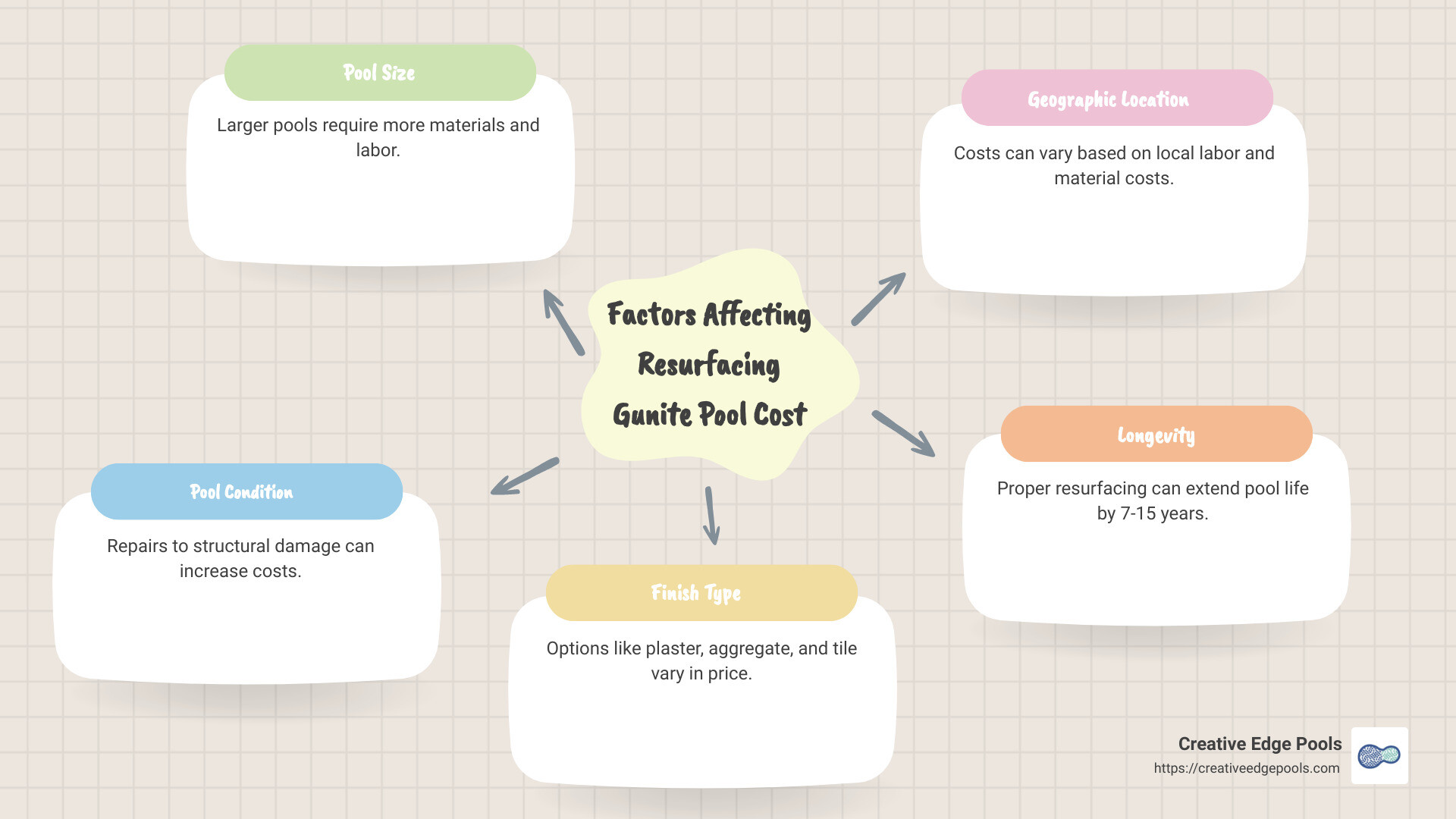
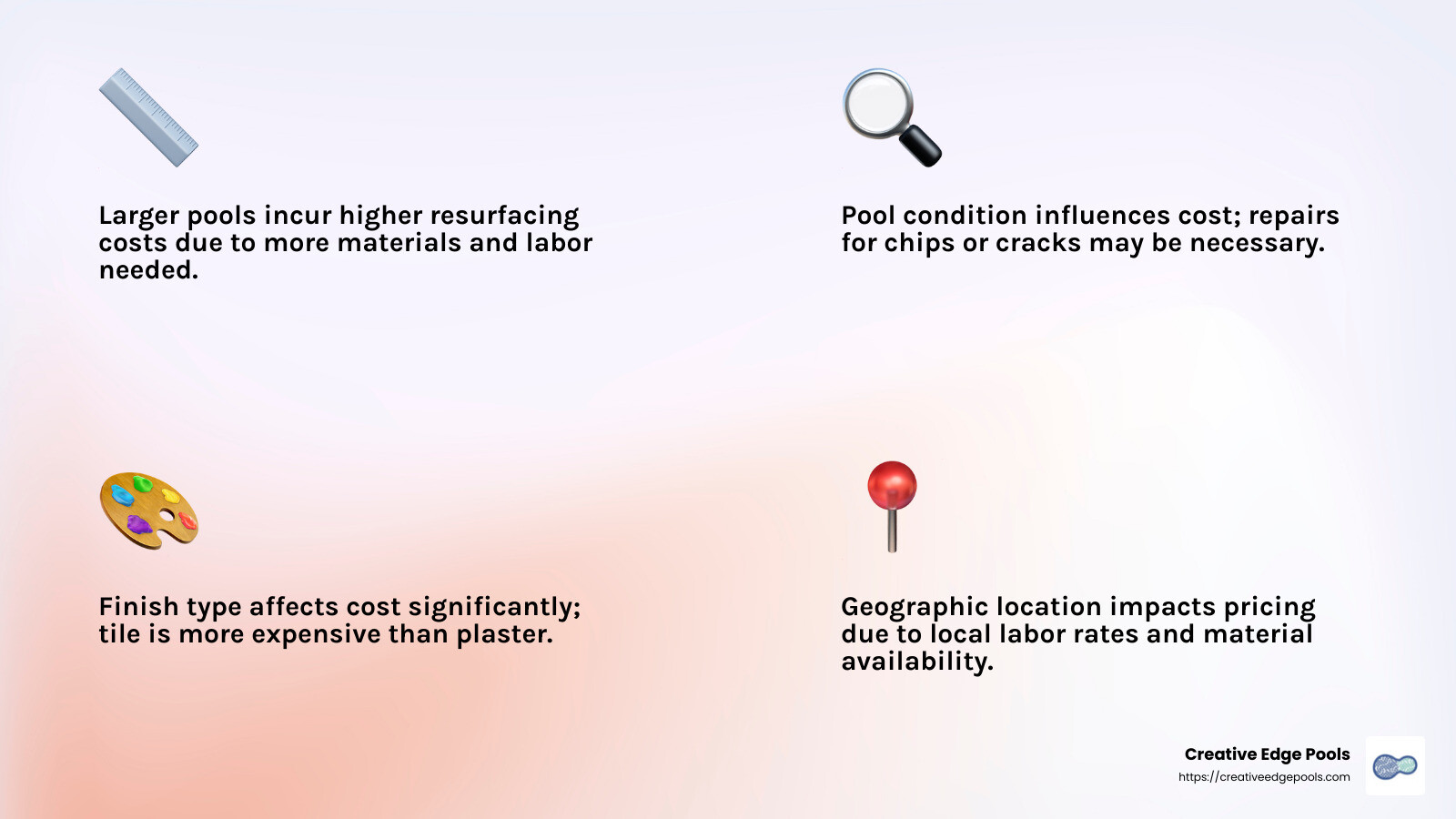
When considering resurfacing gunite pool cost, several factors come into play. Understanding these can help you plan your budget effectively and ensure you make the most informed decision for your pool.
Pool Size
Size matters when it comes to resurfacing costs. The larger the pool, the more materials and labor will be needed. Generally, costs are calculated per square foot, so a bigger pool will naturally incur higher expenses. For example, resurfacing a 1,000 square foot pool can cost around $6,500, but this can vary based on the type of finish chosen.
Pool Condition
The current state of your pool can also affect the cost. If your pool has chips, cracks, or visible leaks, these issues must be repaired before resurfacing can begin. Such repairs can add to the overall cost. Pools in good condition will likely require less preparation work, potentially lowering expenses.
Finish Type
The choice of finish has a significant impact on cost. Here’s a quick overview of some common options:
- Plaster: This traditional finish is cost-effective, ranging from $3 to $5 per square foot. It requires regular maintenance and typically lasts 7-12 years.
- Aggregate: Combining cement with pebbles or quartz, this option is more durable and aesthetically pleasing. Expect to pay around $5 per square foot for materials alone, with total costs for a medium-sized pool starting at $13,000.
- Tile: Known for its longevity and luxury appeal, tile finishes can cost up to $30 per square foot, with total resurfacing costs often exceeding $25,000.
- Epoxy Paint: A budget-friendly option, costing about $1,500 for a small to medium-sized pool. It offers a smooth finish but lasts only about five years.
Geographic Location
Where you live can influence resurfacing costs. Labor rates, material availability, and local demand can vary significantly by region. For instance, areas with a high concentration of pools might have more competitive pricing due to increased competition among contractors.
In summary, the cost of resurfacing a gunite pool is influenced by the pool’s size, condition, chosen finish, and geographic location. By understanding these factors, you can better estimate the potential expenses and plan accordingly for your pool renovation project.
Cost Breakdown of Gunite Pool Resurfacing
When planning for resurfacing gunite pool cost, it’s important to know what to expect. Let’s explore the details to help you budget effectively.
National Average
The average cost of resurfacing a gunite pool hovers around $6,500 for a 1,000 square foot area. However, this is just a ballpark figure. Actual costs can vary based on several factors, which we’ll explore further.
Cost Per Square Foot
Understanding the cost per square foot is crucial. Here’s a quick look at some common options:
- Plaster: The most affordable choice, ranging from $3 to $5 per square foot. It’s a classic option but requires more frequent maintenance.
- Aggregate: Offers a more textured look with pebbles or quartz, costing roughly $5 per square foot for materials. Total costs for a medium-sized pool can start at $13,000.
- Tile: The premium option, costing up to $30 per square foot. It’s durable and visually appealing, with total expenses often exceeding $25,000.
- Epoxy Paint: A budget-friendly choice at about $1,500 for a small to medium pool, though it needs more frequent touch-ups.
Additional Costs
Resurfacing isn’t just about the main material cost. Here are some additional expenses to consider:
- Repairs: Fixing chips, cracks, or leaks before resurfacing can add to the total cost.
- Labor: Typically ranges from $45 to $65 per hour, depending on your location and the complexity of the job.
- Pool Draining and Cleaning: Draining can add $175 to $225, while cleaning might cost around $250.
- Refilling: Refilling your pool with water after resurfacing costs about $55 per 5,000 gallons.
- Extras: Adding features like lighting or a complete pool makeover can significantly increase costs.
By breaking down these costs, you can get a clearer picture of what to expect when resurfacing your gunite pool. Understanding these elements will help you make informed decisions and plan your budget effectively.
Resurfacing Options for Gunite Pools
When it comes to resurfacing a gunite pool, there are several options to consider. Each has its own set of benefits and costs, so let’s explore these choices to help you decide which is best for your pool.
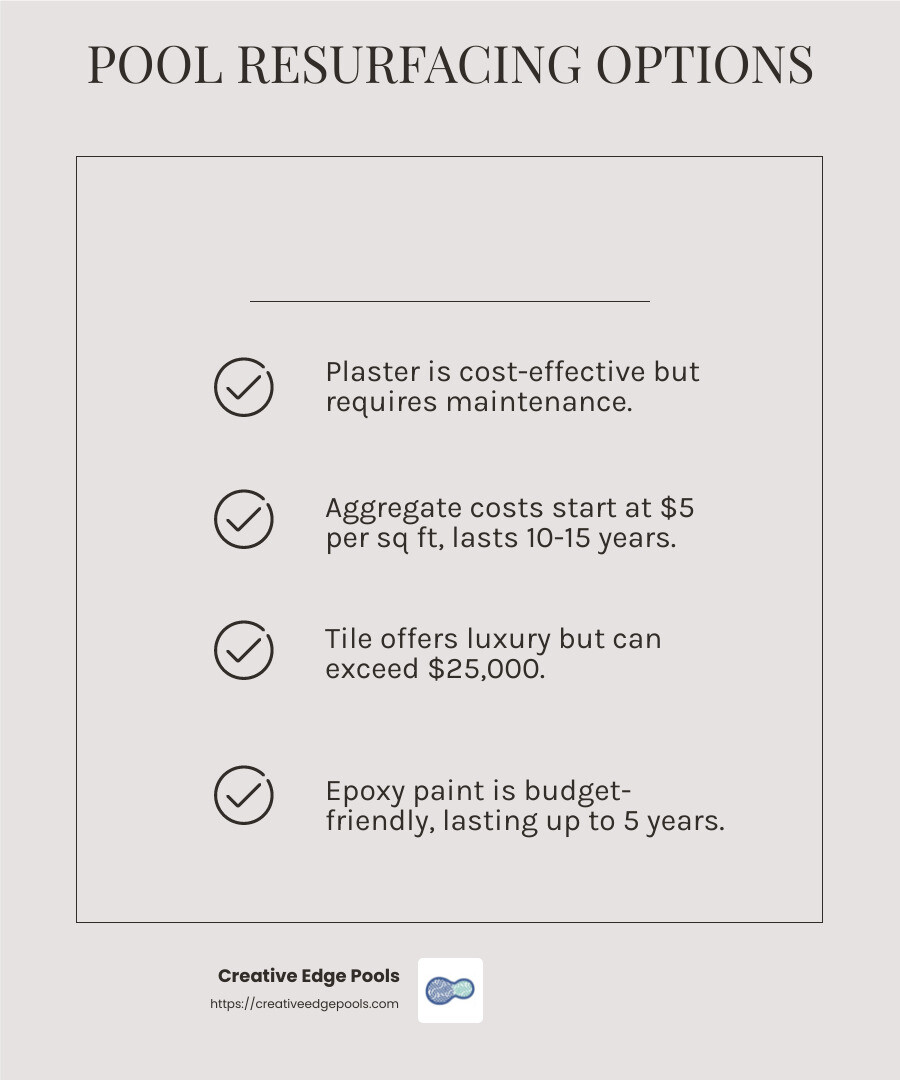
Plaster
Plaster is the most traditional and affordable option for resurfacing gunite pools. It’s made from a mixture of white cement, sand, and water, providing a smooth, classic finish.
- Cost: Plaster resurfacing generally costs between $3 to $5 per square foot.
- Lifespan: Expect it to last 7 to 12 years with proper maintenance.
- Pros: It’s cost-effective and easy to apply.
- Cons: It requires regular maintenance, such as acid washing every few years, and can become rough over time.
Aggregate
Aggregate finishes incorporate small pebbles, stones, or quartz into the plaster, creating a more textured and visually appealing surface.
- Cost: Prices start at $5 per square foot, with total costs for a medium-sized pool beginning around $13,000.
- Lifespan: These finishes can last 10 to 15 years, or even longer.
- Pros: Offers a more durable and slip-resistant surface. The textured finish is also more aesthetically pleasing.
- Cons: It can feel rough on the feet compared to smoother finishes.
Tile
Tile is the high-end option, offering a luxurious look and feel. It’s available in various materials, including porcelain, ceramic, and glass.
- Cost: Resurfacing with tile can be expensive, ranging up to $30 per square foot. Total expenses may exceed $25,000.
- Lifespan: With proper care, tile finishes can last 20 years or more.
- Pros: Extremely durable and easy to clean. Damaged tiles can be replaced individually.
- Cons: The initial cost is high, and installation is labor-intensive.
Epoxy Paint
Epoxy paint is a budget-friendly resurfacing option that provides a smooth and vibrant finish. This solvent-based paint is suitable for both fiberglass and concrete pools.
- Cost: Around $1,500 for a small to medium-sized pool.
- Lifespan: Typically lasts up to 5 years before needing a recoat.
- Pros: It’s affordable and easy to apply. Epoxy paint comes in various colors.
- Cons: It requires a bare surface to adhere properly and can take up to two weeks to cure.
By understanding these resurfacing options, you can choose the best finish for your gunite pool based on your budget, aesthetic preferences, and maintenance expectations. Next, let’s dig into some frequently asked questions about gunite pool resurfacing.
Frequently Asked Questions about Gunite Pool Resurfacing
How often should you resurface a gunite pool?
The frequency of resurfacing a gunite pool largely depends on the type of finish you choose. Plaster finishes typically last 7 to 12 years, while aggregate finishes can last 10 to 15 years or more. Tile finishes are the most durable, often lasting 20 years or more with proper care. Regular maintenance, such as balancing the water’s pH and cleaning, can extend the lifespan of your pool’s surface. Keep an eye out for signs like flaking plaster or rough textures, which indicate it’s time for resurfacing.
Is it worth resurfacing a pool?
Absolutely! Resurfacing your pool not only improves its aesthetic appeal but also extends its lifespan. A well-maintained pool can increase your property value and make the pool safer and more enjoyable to use. Ignoring the need for resurfacing can lead to more significant problems, such as leaks or structural damage, resulting in costly repairs. Resurfacing is an investment in both your pool’s longevity and your home’s value.
What’s the difference between resurfacing and replastering a pool?
Resurfacing refers to the overall process of renewing the pool’s surface, which can involve various materials like plaster, aggregate, or tile. It’s a comprehensive approach that addresses the pool’s entire finish.
Replastering, on the other hand, is a specific type of resurfacing that involves applying a new layer of plaster over the existing surface. It’s the most common and cost-effective method but requires more frequent maintenance compared to other materials.
In summary, replastering is a subset of resurfacing, focusing solely on using plaster as the finish material.
Conclusion
At Creative Edge Pools, we understand that every homeowner has a unique vision for their backyard oasis. Our family-owned business, based in Eastern Massachusetts and Southern New Hampshire, specializes in creating custom gunite swimming pools that perfectly align with your dreams.
Why Choose Us?
Our comprehensive service goes beyond just installing pools. We provide a full range of backyard development services, including landscaping and masonry, to ensure your entire outdoor space is as beautiful and functional as possible. Whether you want a simple pool or a luxurious backyard retreat, we tailor our services to meet your needs.
Resurfacing your gunite pool is a crucial part of maintaining its beauty and functionality. With options ranging from plaster to aggregate and tile, you can choose the finish that best suits your style and budget. Our expert team is here to guide you through the process, ensuring you make the best choice for your pool’s longevity and appearance.
Investing in pool resurfacing not only improves the aesthetic appeal of your pool but also adds value to your property. A well-maintained pool is safer, more enjoyable, and a beautiful focal point for your home.
Ready to transform your backyard into a paradise? Contact Creative Edge Pools today for a custom solution that brings your vision to life. Let us handle the details while you enjoy the results.