
Why Pool Equipment Upgrades Matter for Modern Pool Owners
Pool equipment upgrades can transform an outdated, energy-draining pool into an efficient, easy-to-maintain backyard retreat. If you’re planning equipment upgrades, here’s what matters most:
- Variable-speed pumps reduce energy costs by up to 90% compared to single-speed models
- Automated systems cut weekly maintenance from 4.7 hours to just 30 minutes
- Smart controls let you manage your pool remotely via smartphone
- Saltwater chlorine generators slash chemical costs by 40-50%
- LED lighting provides vibrant colors while using minimal electricity
- Robotic cleaners handle vacuuming and scrubbing automatically
Modern pool equipment isn’t just about new technology—it’s about getting back the time and money you’ve been losing to outdated systems.
The pool pump that runs all day at full power? It’s likely the second-largest electricity user in your home. Those weekly hours spent balancing chemicals and cleaning? They can drop to minutes with the right automation. The chlorine tablets you’re constantly buying? A salt system generates chlorine automatically for pennies on the dollar.
Most pools operate with equipment that’s 10-20 years behind current standards. A well-maintained pool shouldn’t feel like a second job, and it certainly shouldn’t cost as much as one. Upgrading key components delivers measurable improvements: lower utility bills, clearer water, reduced maintenance time, and better overall performance.
The best part? You don’t need to replace everything at once. Strategic upgrades to your pump, filtration, heating, and control systems can modernize your pool in phases, with each improvement paying dividends immediately.
The Core of Efficiency: Variable-Speed Pool Equipment Upgrades
Variable-speed pool pumps (VSPs) are the undisputed champions of modern pool equipment upgrades. For homeowners in Eastern Massachusetts and Southern New Hampshire, the pump is often the largest energy consumer. Traditional single-speed pumps run at full throttle (3,450 RPM) regardless of the task, which is both noisy and inefficient.
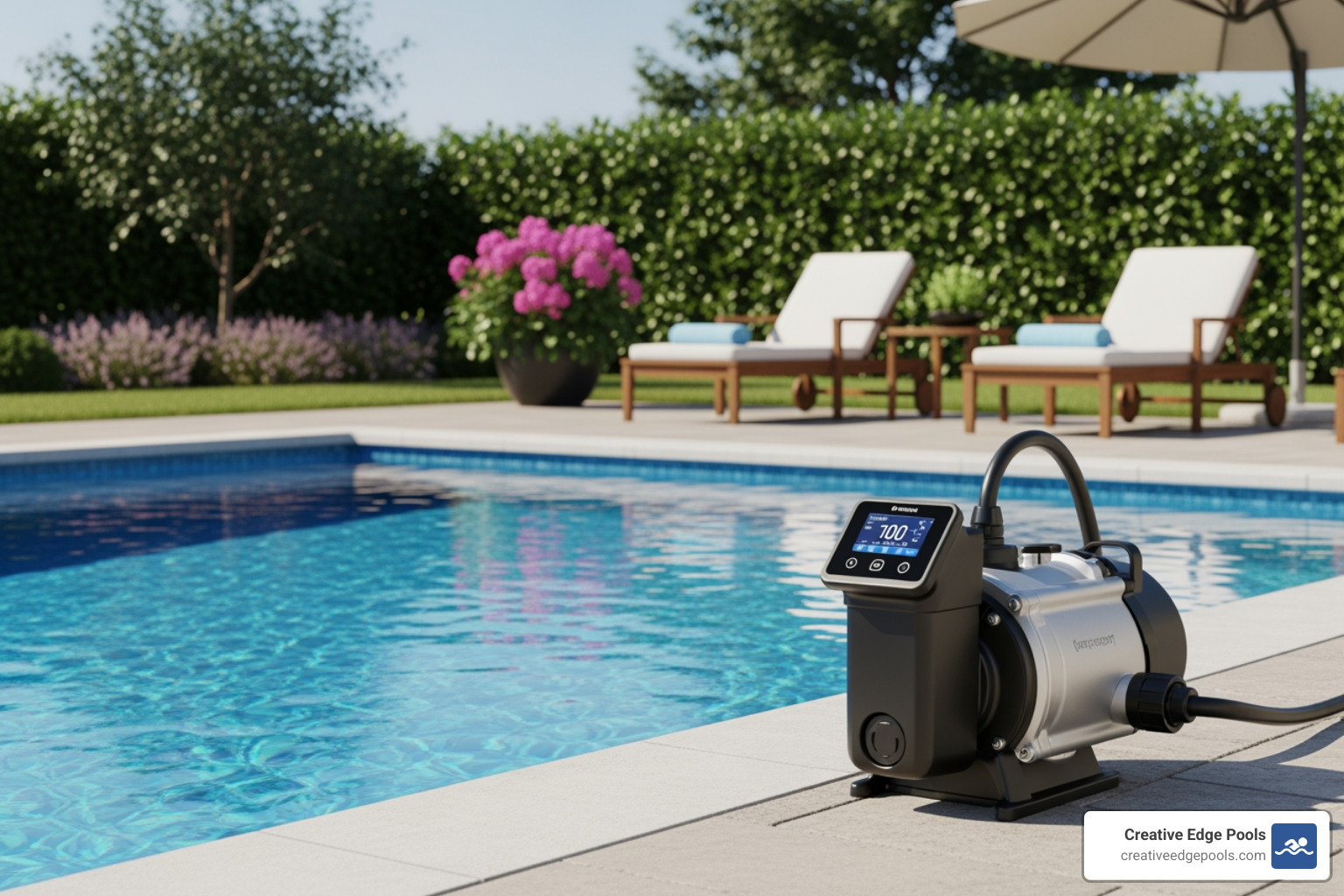
Variable-speed pumps allow you to adjust the flow rate to match specific needs. By running at lower speeds for longer periods, they provide superior filtration while reducing energy usage by 80% to 90%. This translates to hundreds of dollars in annual savings. Beyond efficiency, VSPs offer quieter operation, improved filtration, and a longer equipment lifespan due to reduced motor stress. To learn more about selecting efficient pumps, the Department of Energy offers guidance: Choosing, Installing, and Operating an Efficient Swimming Pool Pump.
Comparing Filtration Systems for Water Clarity
Your filtration system is crucial for water quality. The three main types offer different levels of efficiency and maintenance:
- Sand Filters: Simple and low-cost, trapping particles down to 20-40 microns. They require regular backwashing.
- Cartridge Filters: Trap debris down to 10-20 microns. They don’t require backwashing, saving hundreds of gallons of water annually.
- Diatomaceous Earth (DE) Filters: The gold standard for clarity, filtering down to 1-5 microns. They require more intensive maintenance, including backwashing and recharging with DE powder.
| Filter Type | Efficiency (Microns) | Maintenance | Water Clarity |
|---|---|---|---|
| Sand | 20-40 | Easy (backwash) | Good |
| Cartridge | 10-20 | Moderate (rinse) | Very Good |
| DE | 1-5 | High (backwash) | Excellent |
Energy-Efficient Heating Options for Your Pool
Extending your swim season in New England requires efficient heating. Modern pool equipment upgrades offer several solutions:
- Heat Pumps: Highly efficient in our climate, transferring heat from the air to the water. They are up to 400% more efficient than gas heaters.
- Solar Heaters: Use solar collectors to capture free energy from the sun, offering the lowest operational costs.
- Gas Heaters: Best for rapid heating of spas or pools on demand, though operational costs are higher.
Pairing your heater with an automatic pool cover can reduce overnight heat loss by 50% or more. For more insights, see this guide: Pool Equipment Upgrades: What to Consider.
Smart Technology and Automation Systems
Modern pool equipment upgrades featuring smart technology can reduce weekly maintenance from nearly five hours to just 30 minutes. Automation systems act as the brain of your pool, connecting pumps, heaters, lighting, and chemical feeders to a single interface accessible via smartphone or voice commands.
Chemical automation is particularly impactful. Intelligent sensors monitor pH and sanitizer levels, automatically dosing the precise amount of chemicals needed. This maintains perfectly balanced water and reduces chemical expenses by 30-40% annually. Scheduling features also allow you to run pumps during off-peak electricity hours, further optimizing your savings.
Essential Components of a Smart Pool Equipment Upgrade
- Smart Control System: Centralized hubs from brands like Pentair or Hayward provide app control and real-time monitoring.
- Automated Chemical Dosing: Sensors for ORP and pH ensure consistent water health and prevent equipment corrosion.
- Smart LED Lighting: Offers energy-efficient, color-changing themes manageable from your phone.
- Variable-Speed Pump Integration: Allows for precise flow adjustments and automated filtration cycles.
- Mobile Alerts: Real-time notifications for low chemical levels or equipment malfunctions prevent costly repairs.
Simplifying Maintenance with Robotic Cleaners
Robotic pool cleaners are independent units with internal filtration systems. They vacuum and scrub floors, walls, and waterlines without taxing your main pump. Investing in a robotic cleaner can save up to 52 hours of manual maintenance annually. While suction-side and pressure-side cleaners exist, robotic models are generally more effective and energy-efficient, making them a top choice for modernizing your pool maintenance routine.
Advanced Sanitation and Safety Improvements
Modern pool equipment upgrades offer advanced solutions for water quality and safety. A saltwater chlorine generator (SWCG) is a popular choice, using salt to continuously produce chlorine. This results in softer water that is gentler on skin and eyes while reducing chemical handling and costs by 40-50%.
For improved sanitation, UV and Ozone systems serve as secondary sanitizers. UV systems destroy microorganisms using ultraviolet light, while Ozone generators oxidize organic contaminants. These systems can reduce overall chlorine demand by 60-90%, leading to healthier water.
The Role of Automatic Covers in Water Conservation
An automatic pool cover is a vital investment for safety and efficiency. These covers prevent up to 95% of evaporation and act as a thermal blanket, reducing overnight heat loss from 10°F to just 3-4°F. Beyond energy and water savings, they provide a robust safety barrier for families with children or pets.
Enhancing Ambiance with LED Pool Equipment Upgrades
Upgrading to LED lighting is a visually impactful way to transform your backyard. LED lights are more energy-efficient and longer-lasting than traditional bulbs. They offer color-changing capabilities and programmable themes, allowing you to set the perfect mood for evening swims while improving safety around the pool deck and entry points.
Planning Your Upgrade: Costs and Considerations
Starting on pool equipment upgrades is an exciting journey that promises significant returns in efficiency, enjoyment, and savings. However, like any major home improvement, careful planning and consideration are key.
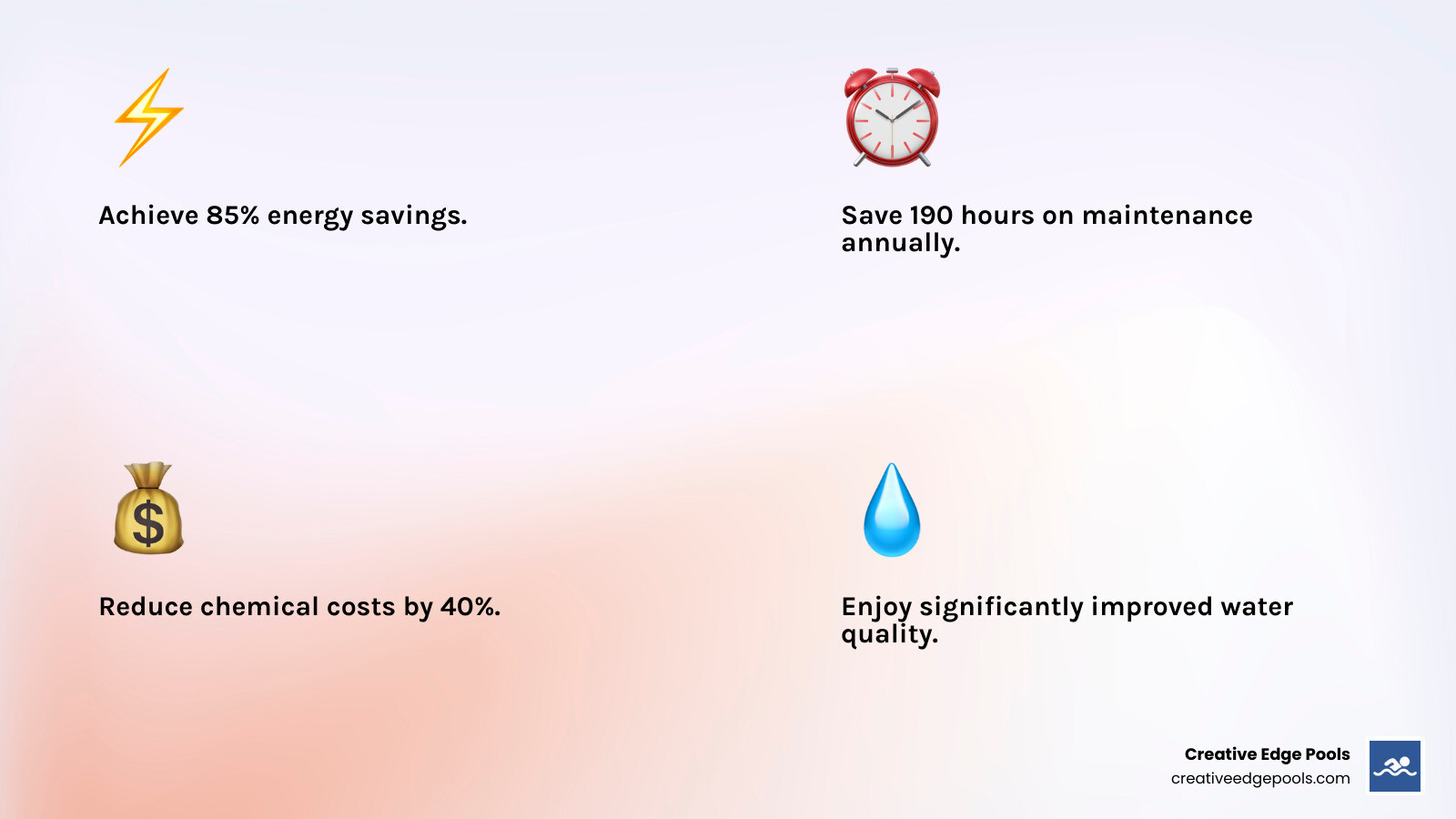
- Return on Investment (ROI) Analysis: While there’s an upfront cost, many upgrades offer a strong ROI through reduced operating expenses. For instance, a variable-speed pump can pay for itself in energy savings before its warranty expires. Chemical automation can cut chemical expenses by 30-40% annually. Modernized pool systems can offer up to 85% lower energy use and save up to 190 hours annually in maintenance time. We can help you analyze the long-term savings to make informed decisions.
- Equipment Lifespan: Consider the expected lifespan of new equipment. High-quality components, while potentially costing more initially, often last longer and require less frequent repairs, providing better value over time. For example, fiberglass resurfacing for gunite pools can have a lifespan of 30 to 50 years.
- Professional Installation: This is paramount. Complex pool equipment upgrades, especially those involving electrical work, plumbing, and smart system integration, should always be handled by experienced professionals. Our team at Creative Edge Pools brings over 100 years of combined experience to every project, ensuring your upgrades are installed correctly, safely, and optimized for peak performance in your Eastern MA or Southern NH home. Proper installation prevents costly mistakes and ensures your warranties remain valid.
- Local Regulations and Permits: Depending on the nature of your upgrades, local building codes and permits in Eastern MA and Southern NH may apply. We are well-versed in these requirements and will ensure all work complies with local health and safety standards and energy-efficiency ratings.
- Energy Rebates and Incentives: While not always available, it’s worth exploring if any local utility companies or state programs offer rebates for energy-efficient pool equipment, such as ENERGY STAR certified pumps. These incentives can help offset the initial investment.
When planning your pool equipment upgrades, it’s crucial to consider your current equipment’s condition, your pool’s specific needs, and your desired level of automation and efficiency. Don’t hesitate to consult with us to discuss the best options for your unique backyard oasis. For more ideas on modernizing your pool, explore guides like Top 5 Upgrades for a Modern Swimming Pool.
Frequently Asked Questions about Pool Upgrades
How much can I save by switching to a variable-speed pump?
Variable-speed pumps can reduce energy usage by up to 90% compared to single-speed models. This often results in hundreds of dollars in annual savings, allowing the pump to pay for itself well before the warranty expires.
Is a saltwater system better than traditional chlorine?
Many owners prefer saltwater systems because they provide softer water, require less chemical handling, and prevent cyanuric acid (CYA) buildup. While there is an upfront cost, they typically reduce annual chemical expenses by 40-50%.
What pool upgrades should generally be avoided?
Based on our experience in Eastern MA and Southern NH, some features may not be worth the investment:
- Diving Boards and Slides: These can increase insurance rates and require specific pool depths and deck space.
- Integrated Spillover Spas: These can be less efficient to heat and more difficult to maintain in cold New England winters compared to detached spas.
When planning pool equipment upgrades, we recommend consulting with professionals to ensure the choices align with your lifestyle and long-term goals.
Conclusion
Bringing your pool “from old to gold” through strategic pool equipment upgrades is about more than just new technology; it’s about reclaiming your time, saving money, and enhancing your enjoyment. From the quiet efficiency of a variable-speed pump to the effortless clarity provided by automated chemical systems and robotic cleaners, and the sheer beauty of smart LED lighting, modern innovations have truly transformed what it means to own a pool.
Here at Creative Edge Pools, we understand the unique needs of homeowners in Eastern Massachusetts and Southern New Hampshire. As a family-owned business with over 100 years of combined experience, we specialize in designing, installing, and renovating gunite pools and spas. Our passion is bringing your backyard vision to life, ensuring your pool is not just a place to swim, but a source of relaxation, fun, and pride for years to come.
Ready to transform your backyard and experience the ultimate in modern pool ownership? Let us guide you through the exciting possibilities of pool equipment upgrades.
