
Inground vinyl pool prices installed: Save in 2025
Why Understanding Inground Vinyl Pool Prices Installed Matters for Your Investment
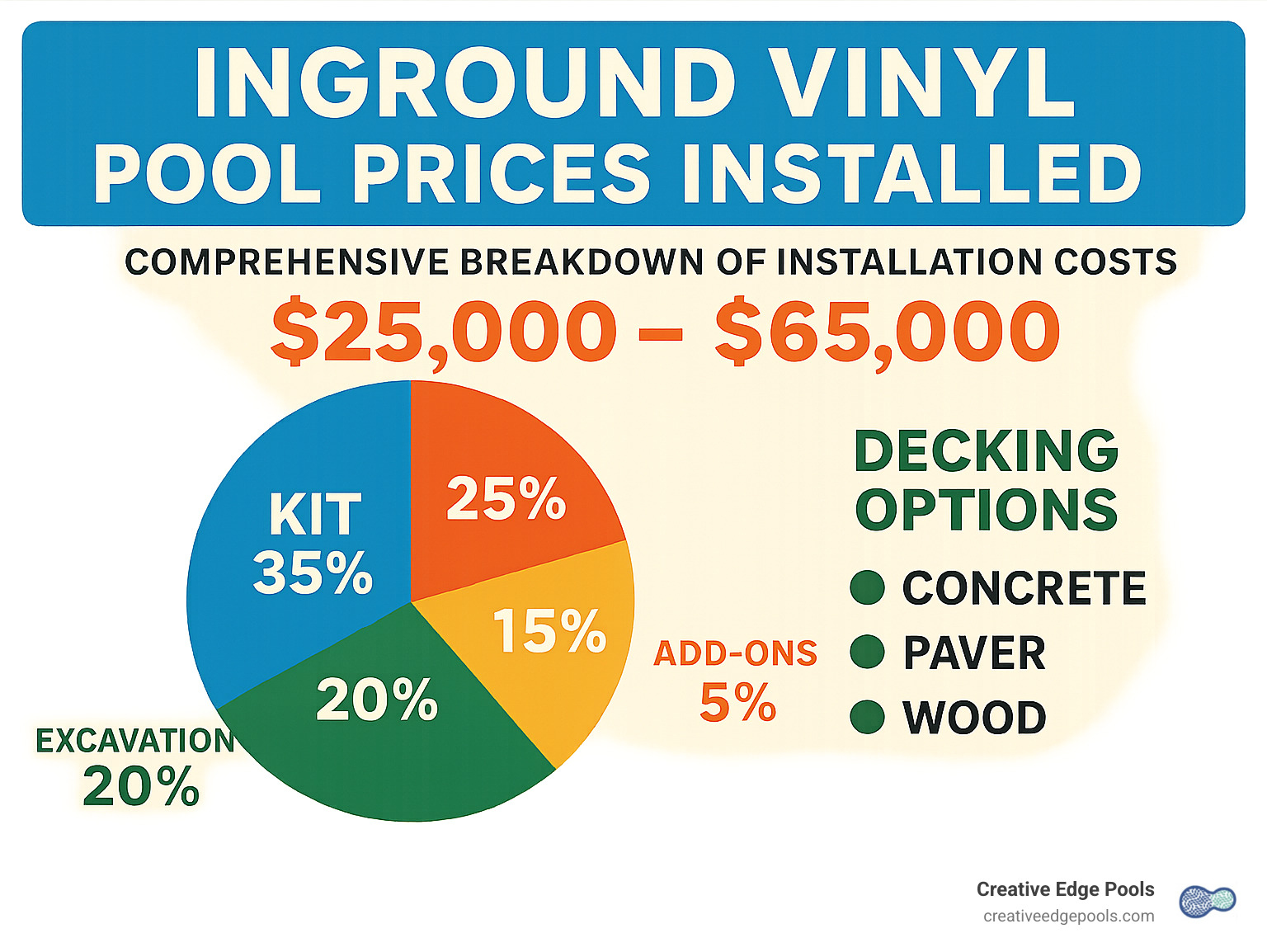
Inground vinyl pool prices installed usually fall between $25,000 and $65,000 for a complete, ready-to-swim project.
Quick Cost Breakdown:
- 10′ x 20′ pool: $24,400 – $45,000
- 12′ x 24′ pool: $35,000 – $65,000
- 20′ x 40′ pool: $97,600 – $180,000
- Base installation includes: Pool kit, excavation, basic equipment, liner
- Additional costs: Decking ($2–$25/sq ft), fencing ($15–$25/linear ft), electrical work
Vinyl pools have the lowest upfront price among inground options, but your final number depends on pool size, site conditions, and the extras you choose. A clear understanding of those variables keeps your budget realistic and prevents surprises.
I’m David Brabant, owner of Creative Edge Pools. After three decades in the industry, I’ve learned that transparent pricing and proper planning turn backyard dreams into lasting investments.
Must-know inground vinyl pool prices installed terms:
- cost to install pool liner
- inground pool liner replacement cost
- 16×32 inground pool liner replacement cost
Breaking Down Inground Vinyl Pool Prices Installed
When dreaming of a backyard oasis, understanding inground vinyl pool prices installed is key. A ballpark figure for an inground vinyl liner pool is around $25,000 to $65,000, though your actual investment depends on several key factors.
This price is a starting point. A base package typically includes the vinyl pool kit, excavation, a basic filtration system, and professional installation labor, getting you from dirt to swimming in a few weeks.
Vinyl pools are affordable compared to other inground options like concrete or fiberglass, which can cost $70,000 or more.
Vinyl Pool Costs: What to Expect Over Time
When budgeting for inground vinyl pool prices installed, smart homeowners think beyond the initial installation cost. Your pool investment spans decades, and understanding the full financial picture helps you make confident decisions today.
The beauty of vinyl pools lies in their predictable cost structure. Unlike other pool types that might surprise you with unexpected repairs, vinyl pools follow a fairly straightforward ownership pattern. You’ll have your upfront installation, regular maintenance expenses, and periodic liner replacement – but no major structural surprises.
Initial investment vs. lifetime cost tells an interesting story. While vinyl pools cost less upfront, they require liner replacement every 5-15 years. This might seem like a drawback, but it’s actually an advantage. Think of it as getting a brand-new pool surface every decade or so, complete with updated colors and patterns.
Durability considerations work in your favor with proper care. The pool structure itself – those sturdy walls and foundation – can last 50+ years with minimal maintenance. It’s really just the liner that needs attention over time, and that’s a manageable, predictable expense.
The customization potential of vinyl pools keeps giving value year after year. Unlike pre-formed options, your vinyl pool can accommodate future changes. Want to add a spa later? No problem. Thinking about a waterfall feature? Your vinyl pool can handle it.
Vinyl Liner Pools
Here’s what makes vinyl liner pools such a smart choice for cost-conscious families: they offer the lowest upfront cost among inground options without sacrificing quality or enjoyment. You’re not getting a “budget” pool – you’re getting smart engineering that delivers maximum value.
The smooth surface feels amazing under your feet and creates a comfortable swimming experience. No rough concrete or potential fiberglass splinters – just a silky-smooth surface that’s gentle on skin and swimwear. Kids especially love how comfortable it feels during those long summer pool days.
Customizable shape means your pool fits your life, not the other way around. Whether you need an L-shape to work around your patio, a kidney shape for aesthetic appeal, or a simple rectangle for serious swimming, vinyl construction adapts to your vision.
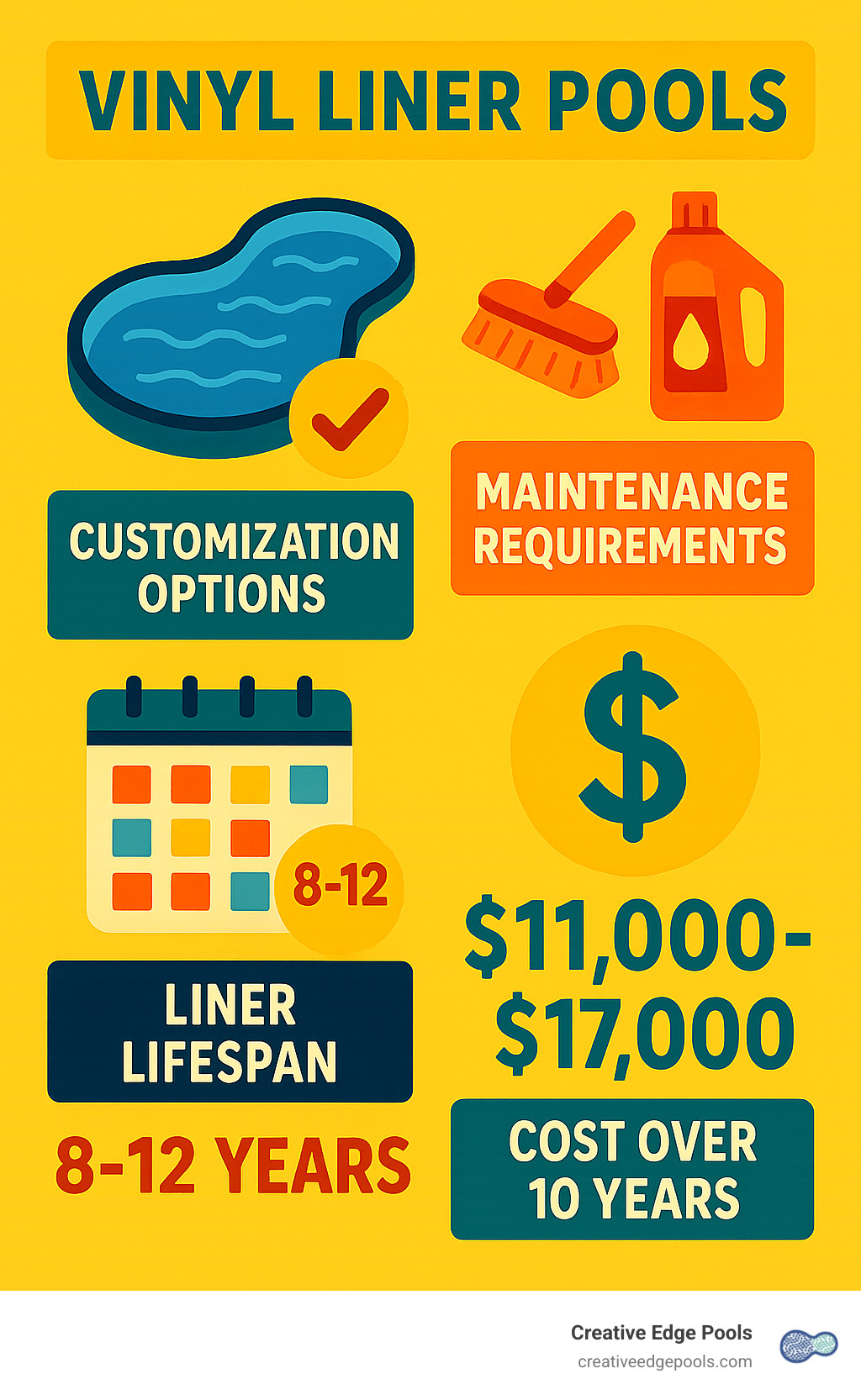
Liner replacement cost represents your biggest long-term expense, but it’s also an opportunity. When replacement time comes (typically every 8-12 years), you can completely refresh your pool’s appearance. New patterns, updated colors, even different textures – it’s like getting a pool makeover at a fraction of renovation costs.
The numbers tell the story clearly: Average 10-year maintenance cost of $11,000 to $17,000 covers your routine care but excludes liner replacement. When you factor in one liner replacement during that decade, you’re still looking at exceptional value compared to other pool types.
Professional installation matters for liner replacement. While some handy homeowners consider DIY liner installation, professional installation ensures proper fit, prevents wrinkles, and maintains your warranty coverage. It’s worth the investment for peace of mind.
Beyond Installation: Long-Term Ownership Costs
Smart pool owners know that understanding inground vinyl pool prices installed means looking beyond the initial investment. Your pool’s true cost includes the ongoing expenses that keep your backyard oasis sparkling and safe for years to come.
Most vinyl pool owners spend between $1,000 to $2,000 annually on routine maintenance and operating costs. This might sound like a lot, but when you break it down monthly, it’s often less than a family’s dining out budget – and you get year-round enjoyment from your investment.
Chemical costs typically run $300-$600 per year, depending on your pool size and how much you use it. If you’re the type who throws pool parties every weekend, expect to be on the higher end. For families who enjoy quiet evening swims, the lower range is more realistic.
Electricity usage adds another $400-$800 to your yearly expenses. Your pump, heater, and lighting all need power to keep things running smoothly. Energy-efficient equipment costs more upfront but pays for itself through lower monthly bills.
Opening and closing costs vary significantly based on whether you tackle the job yourself or hire professionals. Professional services charge $300-$600 for spring opening and $200-$400 for winterizing. Many homeowners start with professional service to learn the process, then transition to DIY approaches as they gain confidence.
How often does a vinyl pool liner need to be replaced, and what is the cost?
Here’s the reality every vinyl pool owner needs to know: your liner will need replacement every 5-9 years under normal conditions. With exceptional care and a bit of luck, some liners stretch to 12-15 years, but planning for the shorter timeframe keeps you financially prepared.
UV damage from sunlight is your liner’s biggest enemy. Those beautiful sunny days we love for swimming gradually break down the vinyl material. Pools with limited shade or homeowners who skip pool covers face faster deterioration.
Chemical balance makes or breaks liner longevity. Too much chlorine burns the material, while improper pH levels cause premature aging. It’s like Goldilocks – everything needs to be just right to maximize your liner’s lifespan.
Water care practices separate smart pool owners from those facing early replacement costs. Regular cleaning, maintaining proper chemical levels, and keeping sharp objects away from the liner aren’t just good habits – they’re money-saving strategies.
When replacement time comes, expect to invest $3,000-$7,500 for materials and professional installation. While this represents a significant expense, spreading it over 8-10 years makes it manageable when you plan ahead.
Professional installation ensures your new liner fits perfectly and lasts as long as possible. DIY replacement is technically possible, but the complexity and potential for costly mistakes make professional installation a smart investment for most homeowners.
Ongoing Maintenance and Repairs
Weekly cleaning becomes part of your routine once you own a pool. Plan on spending 2-4 hours each week skimming debris, vacuuming the bottom, and cleaning the waterline. Many owners find this time relaxing – it’s a chance to enjoy your backyard while keeping it beautiful.
Water testing should happen 2-3 times weekly during swimming season. Proper pH, chlorine, and alkalinity levels protect both your family’s health and your pool equipment. A quality test kit costs $20-$50 and provides hundreds of tests – much cheaper than dealing with problems later.
Filter maintenance varies by system type but generally requires weekly attention. Cartridge filters need replacement every 4-6 weeks during peak season, while sand filters require annual sand replacement. Stay on top of this, and your water stays crystal clear.
Pump and heater repairs represent occasional but potentially expensive maintenance items. Quality equipment with proper installation typically provides 8-15 years of reliable service, but smart owners budget for eventual repairs or replacements over time.
Potential leak detection becomes more important as your pool ages. Small leaks often develop around fittings, steps, or through minor liner damage. Early detection and repair prevent costly water loss and more serious structural damage down the road.
Customizing Your Vinyl Pool: Add-Ons and Upgrades
The real magic happens when you transform your basic pool into a backyard resort. While inground vinyl pool prices installed start with the essentials, the features you add create memories that last a lifetime.
Think of your pool installation as building a foundation for years of enjoyment. You don’t need everything at once – many smart homeowners start with the basics and add features as their budget allows. The key is planning ahead so you’re not tearing up finished work later.
Factoring upgrades into your budget from the beginning often saves thousands compared to retrofitting. Installing electrical conduit for future lighting, plumbing rough-ins for water features, and structural supports during initial construction costs a fraction of adding them afterward.
The beauty of vinyl pools lies in their flexibility. Unlike pre-manufactured options, you can customize virtually every aspect to match your family’s lifestyle and preferences.
Heating and Saltwater Systems
Extending your swimming season makes every dollar of your pool investment work harder. In our New England climate, heating systems can add months to your swimming enjoyment.
Gas heaters heat water quickly and work great for weekend warriors who want instant warmth. They cost $2,000-$4,000 installed but have higher operating costs than other options.
Heat pump systems ($3,000-$6,000 installed) operate efficiently when maintaining temperature rather than rapidly heating cold water. They work best in moderate climates and can cut heating costs by 50-70% compared to gas.
Solar heating systems require the biggest upfront investment ($8,000-$15,000) but provide virtually free operation afterward. They work beautifully in sunny locations with adequate roof space for collector panels.
Saltwater chlorine generators transform regular salt into chlorine, creating gentler water that’s easier on skin and eyes. The conversion costs $1,500-$3,000 including equipment and installation.
The benefits of saltwater include reduced chemical handling, softer-feeling water, and lower long-term chemical costs. Your family will notice the difference immediately – no more red eyes or dry skin after swimming. However, salt systems require compatible equipment and slightly more maintenance knowledge.
Popular Features and Accessories
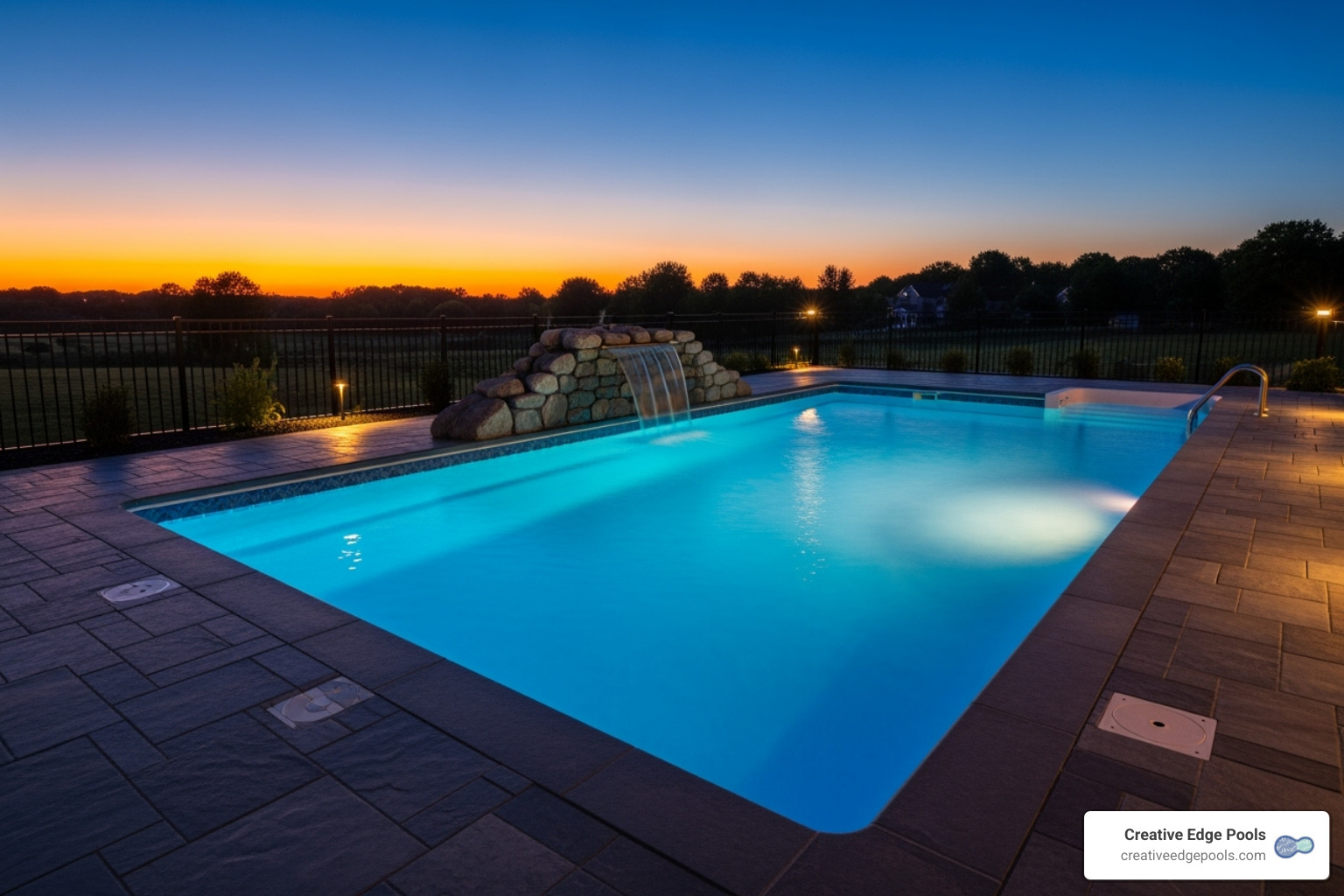
Water features add both visual drama and soothing sounds to your backyard oasis. Waterfalls create stunning focal points while providing the relaxing sound of flowing water. Simple spillovers start around $1,500, while elaborate rock formations can exceed $15,000.
Deck jets shoot graceful streams of water across your pool surface, creating playful arcs that children absolutely love. These relatively affordable features ($300-$800 each) add significant entertainment value without breaking the budget.
Bubblers in shallow areas or tanning ledges provide spa-like relaxation. There’s something magical about gentle bubbles massaging your back while you lounge in warm water.
Incorporating waterfalls, infinity edges, or pool lighting can transform your pool area from purely functional to absolutely spectacular.
LED lighting systems illuminate your pool for evening enjoyment and safety. Modern systems offer color-changing capabilities and smartphone control for $800-$2,500 installed. Imagine hosting evening pool parties with lights that dance to music or change with the seasons.
Pool slides and diving boards require adequate depth and space, but they’re worth every penny for active families. Simple slides start around $1,000, while elaborate slide systems can exceed $10,000. Diving boards need minimum 8-foot depth and sufficient overhead clearance.
Tanning ledges provide shallow areas perfect for lounging with a book or supervising children. These popular features integrate beautifully with vinyl pool designs and typically add $2,000-$5,000 to installation costs.
Built-in benches offer convenient seating and rest areas within your pool. Vinyl-over-bench construction provides comfortable, attractive seating that integrates seamlessly with your pool design – perfect for conversation areas or simply catching your breath.
Safety Features and Covers
Local fencing requirements vary by municipality but typically mandate 4-6 foot barriers around pool perimeters. Fencing costs average around $15 to $25 per linear foot for standard chain-link or aluminum options. Decorative wrought iron or glass panels cost more but create beautiful boundaries that improve rather than detract from your landscape.
Manual safety covers provide protection when your pool isn’t in use. These covers prevent accidental falls while reducing evaporation and chemical loss. Quality manual covers cost $1,000-$3,600 depending on pool size and cover material.
An automatic pool cover costs $8,000 to $20,000 installed but provides ultimate convenience and safety. These systems open and close at the touch of a button while providing superior protection. Many homeowners find the peace of mind worth every penny.
Solar covers reduce heating costs by capturing and retaining solar energy. These affordable covers ($100-$400) can raise water temperature 8-15 degrees while reducing evaporation by up to 95%. They’re especially valuable in our climate where every degree counts.
Winter covers protect your pool during off-season months. Quality winter covers cost $200-$600 and prevent debris accumulation while protecting your liner and equipment from freeze damage. Think of them as insurance for your investment.
Is a Vinyl Pool Right for You? Pros, Cons, and Money-Saving Tips
Deciding whether a vinyl pool fits your family’s needs requires honest consideration of both the advantages and challenges. After three decades in the pool industry, I’ve seen how the right choice transforms backyards into family gathering spaces, while the wrong decision leads to frustration and unexpected expenses.
Inground vinyl pool prices installed represent the most accessible entry point into pool ownership, but affordability shouldn’t be your only consideration. Your lifestyle, maintenance preferences, and long-term plans all play crucial roles in determining whether vinyl pools deliver the backyard oasis you’re envisioning.
The return on investment varies significantly based on your local market and installation quality. An in-ground pool can boost your home’s value by around 7 percent, though this depends heavily on neighborhood standards and how well your pool integrates with your property’s overall appeal.
Pros and Cons of Vinyl Liner Pools
Understanding vinyl pools’ strengths helps you appreciate why they’ve become so popular among budget-conscious families. The lower initial cost compared to concrete or fiberglass alternatives makes pool ownership possible for households that might otherwise wait years to afford a backyard pool.
The smooth, non-porous surface feels wonderful underfoot and resists algae growth better than concrete alternatives. Children love the comfortable texture, and adults appreciate how easy it is to clean and maintain throughout the swimming season.
Customizable shape and size options mean your pool can fit virtually any backyard configuration. Whether you’re working with a narrow lot, unusual terrain, or specific design vision, vinyl construction adapts to your space rather than forcing compromises on your dream pool.
Quick installation typically takes just 2-5 weeks from excavation to first swim. This speed advantage means less disruption to your daily routine and faster enjoyment of your investment compared to concrete pools that can take months to complete.
However, vinyl pools do come with some important limitations to consider. Liner replacement every 5-15 years represents a significant ongoing expense that concrete pool owners don’t face. While this cost is predictable and manageable with proper planning, it does add to your long-term ownership investment.
The less durable surface can be punctured by sharp objects, pet claws, or rough play. While quality liners resist most damage, they’re not indestructible like concrete surfaces. This means being more mindful about pool toys, furniture, and activities.
Lower perceived home value compared to concrete pools might matter if you’re considering your pool as a real estate investment. While vinyl pools certainly add value, potential buyers often view concrete pools as more premium installations.
How Can I Save Money on Inground Vinyl Pool Prices Installed?
Smart planning and strategic decisions can significantly reduce your pool investment without sacrificing quality or enjoyment. The key is understanding where to spend wisely and where savings opportunities exist.
DIY pool kits offer substantial savings for handy homeowners willing to tackle excavation and installation themselves. Quality kits range from $25,000-$40,000, but success requires significant time, skill, and equipment investment. Most families find professional installation worth the additional cost for peace of mind and warranty protection.
Choosing a smaller, standard-shaped pool dramatically reduces costs while still providing excellent swimming enjoyment. A simple rectangular design costs 20-40% less than custom shapes and offers easier maintenance and liner replacement down the road.
Opting for minimal patios initially allows you to spread costs over time. Installing a basic concrete pad during construction gives you immediate pool access, while upgrading to decorative materials later helps manage cash flow during those first expensive ownership years.
Installing during off-season months from fall through early spring often provides contractor discounts and better scheduling flexibility. Many contractors offer 10-20% savings for off-peak installations when their schedules are less demanding.
Phasing your project lets you start with basic installation and add features over time as budget allows. Installing electrical conduit and plumbing rough-ins during construction makes future upgrades like lighting, water features, or heating systems much more affordable.
Sourcing some materials yourself can provide savings opportunities, though this requires careful coordination with your contractor. Items like decking materials, lighting fixtures, or landscaping supplies offer potential cost reductions without compromising installation quality.
For homeowners in Eastern Massachusetts and Southern New Hampshire seeking ultimate design flexibility and long-term durability, a gunite pool may be the ideal investment. At Creative Edge Pools, we specialize in designing and building these custom, high-end poolscapes that provide decades of enjoyment with minimal ongoing maintenance concerns.
Frequently Asked Questions about Inground Vinyl Pool Costs
What is included in a basic inground vinyl pool package?
When you’re shopping for inground vinyl pool prices installed, understanding what’s included in a basic package helps you compare quotes accurately. Most standard packages cover the essentials you need for a functional swimming pool.
The core components include your pool kit with walls, liner, and coping materials. You’ll also get excavation services, a standard filtration system with pump and filter, plus the necessary skimmer and return fittings. Basic maintenance equipment like a vacuum and test kit are typically thrown in too.
Your liner comes in standard thickness – usually 20-27 mils – with basic pattern options that still look great. Most contractors include permits, basic electrical connections to get your equipment running, and startup chemicals to get your water balanced right from day one.
Here’s what you’ll likely pay extra for: decking beyond a small concrete collar around the pool edge, fencing to meet local safety codes, upgraded lighting systems, any heating equipment, and landscaping to make your backyard beautiful. These additions can easily double your total investment, so factor them into your planning early.
Can I finance an inground vinyl pool?
Absolutely! Most families finance their pool installation rather than paying cash upfront. You’ve got several solid options to make inground vinyl pool prices installed fit your budget.
Home equity loans and HELOCs usually offer the best interest rates since your home secures the loan. If you’ve built up equity in your property, these options can save you thousands in interest compared to unsecured loans.
Personal loans work well if you need faster approval or don’t want to use your home as collateral. The rates run higher, but you can often get approved within days and start your project sooner.
Many pool contractors partner with lending institutions to offer financing programs directly. These sometimes feature promotional rates or deferred payment options that make pool ownership more accessible. Just remember to read the fine print – promotional rates often jump up significantly after the initial period.
Important cost consideration: A $50,000 pool financed at 6% over 10 years actually costs about $55,500 total. That extra $5,500 in interest should factor into your budget planning from the start.
How long does it take to install an inground vinyl pool?
The beauty of vinyl pools is their relatively quick installation compared to concrete alternatives. Once you’ve got permits in hand and decent weather, most vinyl pool installations take 2-5 weeks from first dig to first swim.
Here’s how the process typically unfolds: excavation happens first and usually takes 1-3 days depending on your soil conditions and any surprises underground. Wall installation follows quickly – usually just 1-2 days for most pool sizes.
The middle phase involves plumbing and electrical rough-in work, which takes 2-3 days as crews install all the underground systems. Then comes backfill and grading for another 1-2 days to get everything level and properly supported.
Liner installation is surprisingly quick – typically just one day for experienced crews. Equipment startup and water filling happen next, followed by final inspections and water balancing.
Reality check: Weather delays, permit processing hiccups, and inspection scheduling can stretch this timeline. Complex installations with extensive decking, water features, or challenging site conditions may need additional weeks to complete properly.
The good news? Even with delays, you’re still looking at much faster installation than concrete pools, which often take 8-12 weeks or longer. That means you’ll be enjoying your new pool much sooner!
Conclusion
Understanding inground vinyl pool prices installed puts you in control of one of your family’s biggest backyard investments. With complete installations typically running $25,000 to $65,000, vinyl pools open the door to pool ownership without the sticker shock of other inground options.
Your total investment picture includes that initial installation cost, plus annual maintenance expenses of $1,000-$2,000, and liner replacement every 8-12 years at $3,000-$7,500. When you plan smartly and maintain properly, vinyl pools deliver decades of family memories at a fraction of what concrete pools cost.
The key is balancing upfront price with long-term value based on your family’s real needs. Do you want a simple place to cool off and let the kids play? Or are you dreaming of elaborate water features and year-round entertaining? Vinyl pools shine for families who want affordable pool ownership with plenty of customization options and manageable maintenance.
A vinyl pool represents an affordable entry into pool ownership that can completely transform your backyard into the neighborhood gathering spot. The combination of lower initial costs, shape flexibility, and predictable upkeep makes vinyl pools a smart choice for many homeowners who want to dive into pool ownership without diving too deep into debt.
For homeowners in Eastern Massachusetts and Southern New Hampshire seeking a fully custom, high-end backyard change with ultimate design flexibility, a gunite pool may be the ideal investment. Creative Edge Pools specializes in designing and building these unique, durable poolscapes that serve as the centerpiece of comprehensive backyard development including landscaping and masonry work custom to your vision.
Whether you choose vinyl for its affordability or gunite for its limitless possibilities, the most important thing is creating a backyard space where your family will make memories for years to come.
