
inground pool in massachusetts: 7 Powerful Costly Truths 2025
The Real Cost of Owning an Inground Pool in Massachusetts
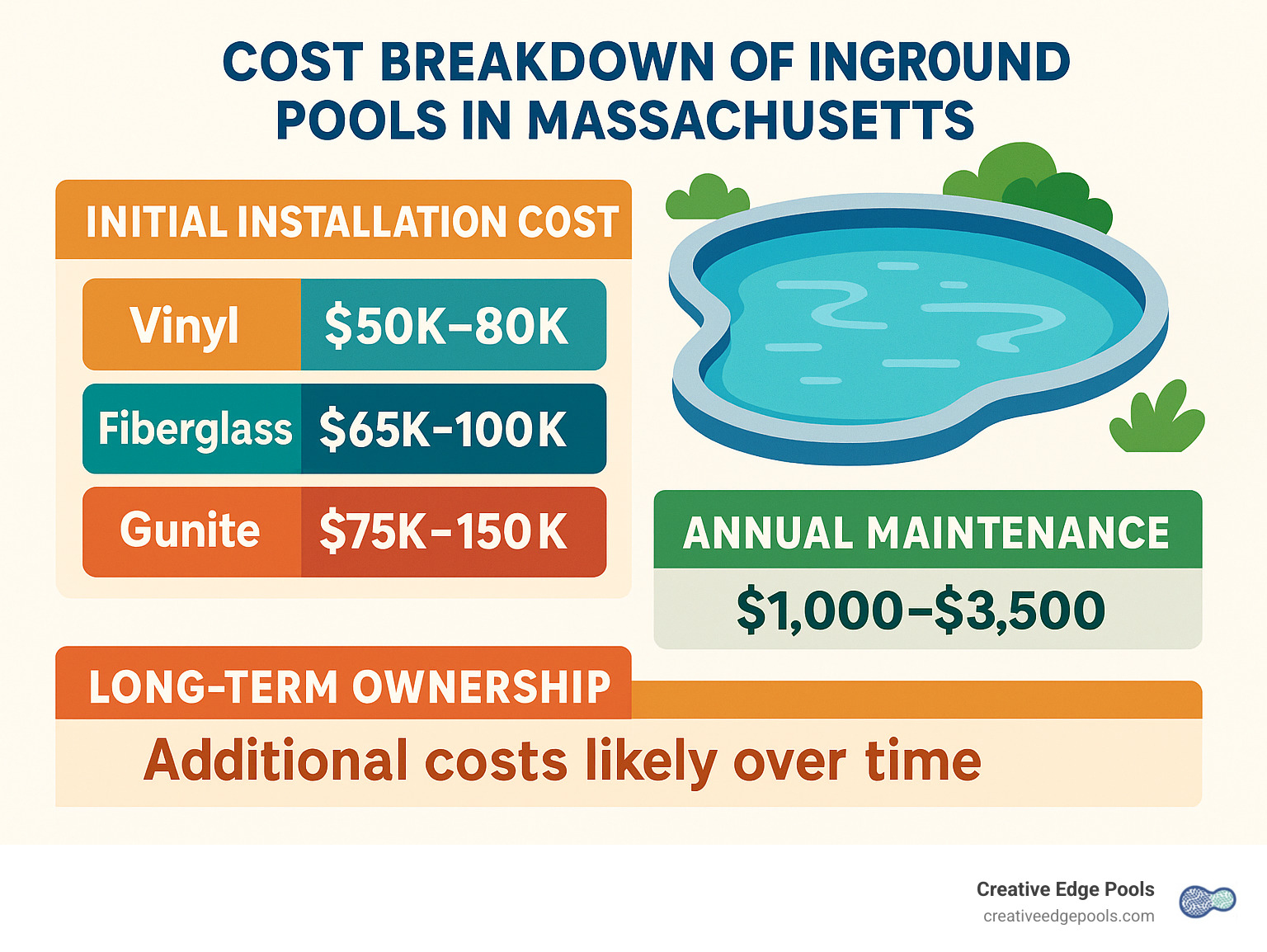
Inground pool in Massachusetts costs typically range from $50,000 to $150,000+ depending on the type, size, and features. Here’s what you need to know:
- Vinyl liner pools: $50,000-$80,000 (most affordable option)
- Fiberglass pools: $65,000-$100,000 (mid-range option)
- Gunite/concrete pools: $75,000-$150,000+ (premium option)
- Additional costs: $15,000-$40,000 for decking, fencing, equipment, and landscaping
- Annual maintenance: $1,000-$3,500 for chemicals, electricity, and seasonal service
Dreaming of changing your backyard into a personal oasis? You’re not alone. Every year, hundreds of Massachusetts homeowners invest in inground pools to create memories that last a lifetime. But before diving into this significant investment, understanding the full picture of costs, requirements, and options is essential.
The Massachusetts climate presents unique challenges and opportunities for pool owners. With our distinct four seasons, you’ll need to consider not just installation costs but also seasonal maintenance, heating options, and winterization procedures that protect your investment during our harsh New England winters.
Beyond the basic pool shell, your total project cost will include essential elements like decking, fencing (required by Massachusetts law), equipment, and landscaping integration. These components often add $15,000-$40,000 to your base pool price but are crucial for both functionality and aesthetics.
I’m David Brabant, owner of Creative Edge Pools, and with over thirty years in the swimming pool and site development business throughout Massachusetts, I’ve designed and installed hundreds of inground pools in Massachusetts that withstand our unique climate while providing decades of enjoyment for families.
Inground pool in massachusetts further reading:
– semi inground pools massachusetts
– small inground pools massachusetts
– gunite pool cost massachusetts
Why This Guide Matters
If you’ve ever typed “how much does an inground pool in Massachusetts cost?” into a search engine, you’ve likely encountered a wide range of figures that leave you more confused than informed. Our goal with this comprehensive guide is to provide clarity on not just the initial price tag, but the complete financial picture of pool ownership in the Bay State.
Understanding pool costs goes beyond the sticker price. Many homeowners we’ve worked with in Essex County and beyond tell us they wish they’d had a clearer picture of both upfront and ongoing expenses before beginning their project. This guide addresses that need, helping you make an informed decision that aligns with your budget, lifestyle, and long-term plans.
Pool Economics: Upfront & Lifetime Costs + Financing
Thinking about adding an inground pool in Massachusetts to your backyard? Let’s talk dollars and cents – not just what you’ll pay on installation day, but what pool ownership really costs over the decades you’ll enjoy it.
Pool Types and Their Cost Implications
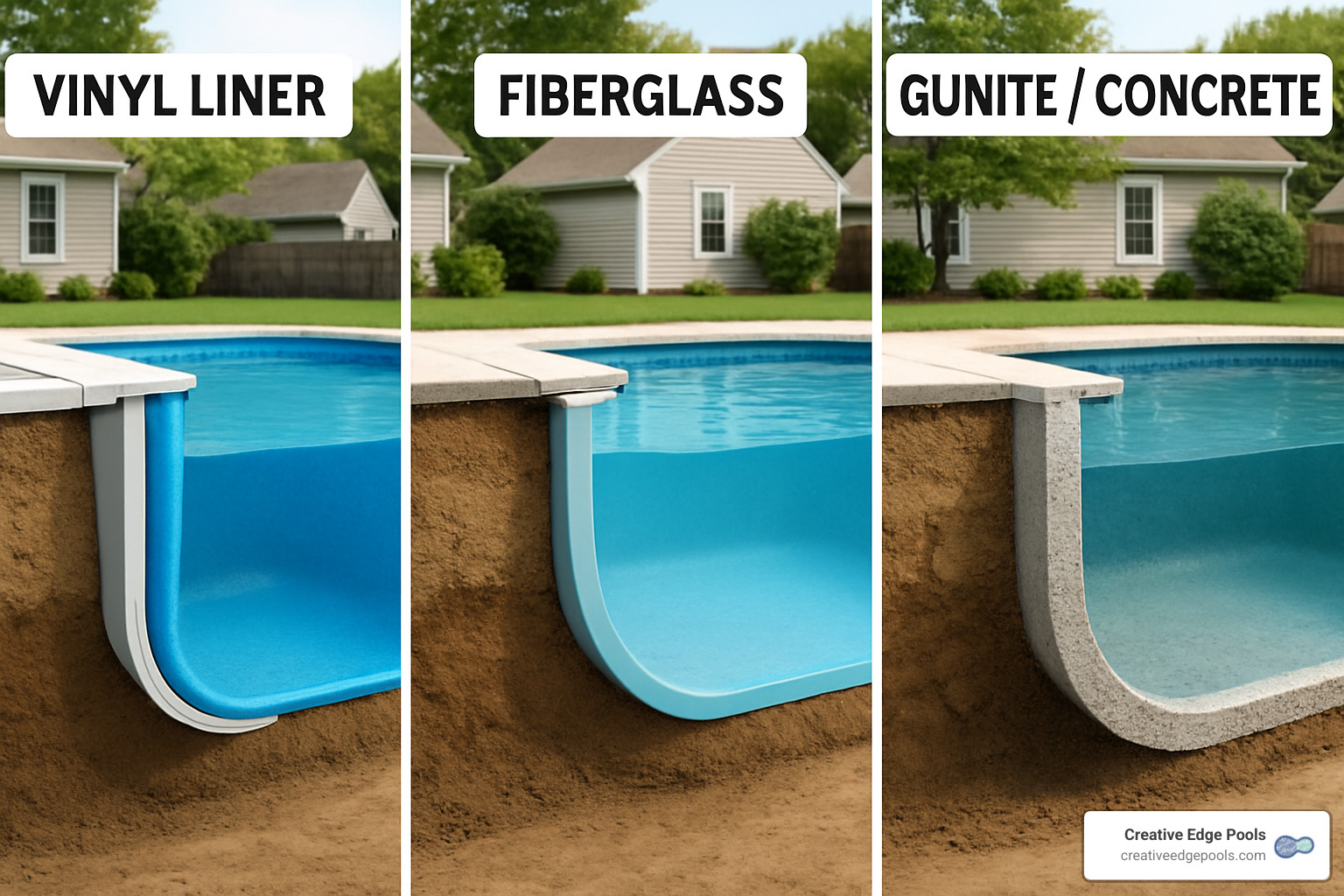
When Massachusetts families ask me about pool options, I always walk them through the three main types, each with their own financial footprint:
Vinyl liner pools ($50,000-$80,000) offer the most budget-friendly entry point. They’re wonderfully customizable and feel soft underfoot – a plus for families with small children. The trade-off? You’ll need to replace that liner every 8-12 years at a cost of $5,000-$7,000. These pools typically serve families well for 15-20 years with proper care.
Fiberglass pools ($65,000-$100,000) hit the middle of the price range and offer the fastest installation – often just 3-4 weeks from dig day to first splash. Their non-porous surface means you’ll spend less on chemicals over time, and they’re naturally resistant to algae. The catch is that since they arrive pre-manufactured, your size and shape options are limited to what can travel on Massachusetts roadways. With minimal maintenance, these pools often last 25+ years.
Gunite/concrete pools ($75,000-$150,000+) represent the premium option. As David Brabant of Creative Edge Pools often tells clients: “When we build a gunite pool, we’re creating something that will likely outlast your mortgage.” These pools offer unlimited customization and best durability, often serving families for 50+ years. The higher upfront investment comes with periodic resurfacing costs ($10,000-$20,000 every 10-15 years), but many Massachusetts homeowners find the longevity makes them more economical for those planning to stay put.
Installation Price Breakdown
The sticker price of your inground pool in Massachusetts covers more than just the hole in the ground. Here’s what goes into that initial investment:
Starting with site preparation ($3,000-$10,000), Massachusetts presents unique challenges with our rocky New England soil. Excavation typically runs $3,000-$5,000, but factors like tight access, drainage needs, and unexpected ledge can add to this figure.
The pool structure itself ($25,000-$100,000) varies dramatically based on your chosen material. This includes everything from the structural elements to the interior finish that you’ll see and touch every time you swim.
Don’t forget about the systems and mechanicals ($7,000-$15,000) that keep your pool functioning. This covers plumbing, filtration, pump systems, and basic equipment. Adding luxuries like heating ($4,000-$8,000), salt chlorination ($2,000-$3,000), or automation systems ($1,500-$4,000) will increase this budget line.
The surroundings ($10,000-$25,000) often surprise first-time pool owners. Basic concrete decking runs $6-$10 per square foot, while upscale options like natural stone can reach $15-$30 per square foot. Don’t forget the fencing required by Massachusetts law ($3,000-$10,000) and landscape integration.
Finally, permits and compliance ($500-$2,000) ensure your project meets all local requirements – a necessity, not an option, in Massachusetts communities.
As one Middleton homeowner told me: “We initially focused just on the pool itself when budgeting. When the total came in at nearly double our estimate after adding the stone patio and required fencing, it was quite a shock. I wish we’d understood the full scope from day one.”
Long-Term Ownership Costs
Owning an inground pool in Massachusetts means budgeting for ongoing expenses that continue long after the construction crew leaves:
Annual maintenance will run approximately $1,000-$3,500 per year. This includes chemicals ($500-$1,000), electricity for running equipment ($500-$1,500), optional heating costs ($500-$2,500 per season), and professional opening/closing services ($500-$1,000). Many of our clients in towns like Andover and Boxford choose to handle some maintenance themselves to reduce these costs.
Every pool type also has its periodic major expenses. Vinyl liner owners will face replacement costs of $5,000-$7,000 every 8-12 years. Gunite pool owners budget for resurfacing every 10-15 years at $10,000-$20,000. All pool types require equipment replacement every 7-10 years ($1,000-$3,000) and safety cover replacement every 5-7 years ($1,500-$3,000).
Your homeowner’s insurance will likely increase by $200-$400 annually, and some insurance companies require additional liability coverage for pool owners.
Smart Massachusetts homeowners can reduce these long-term costs significantly. As David Brabant notes: “Investing in energy-efficient equipment pays dividends every month. Variable-speed pumps might cost more upfront but can slash electricity usage by up to 70% compared to old-school single-speed pumps.”
Looking to schedule your pool opening services for the upcoming season? Book early to secure your preferred date.
Financing Your Inground Pool in Massachusetts
Few Massachusetts families write a check for their entire pool project. Here are the smartest ways to finance your backyard dream:
Home equity loans or lines of credit typically offer the lowest interest rates (currently 5-8%) and the potential tax advantage of deductible interest. With terms ranging from 5-20 years, these loans leverage your home’s equity but provide flexibility in repayment.
Unsecured personal loans require no collateral but come with higher interest rates (7-15%) and shorter terms (usually 2-7 years). The advantage is a typically faster approval process and no lien against your property.
Pool company financing offers convenience as a one-stop solution. Many Massachusetts pool builders have relationships with lenders offering rates between 5-12% depending on your credit, sometimes with promotional periods featuring deferred interest.
Massachusetts homeowners should also explore specific incentives like Mass Save rebates for energy-efficient pool equipment and federal tax credits for solar heating systems, which can offset some costs.
One client from Essex County shared their experience: “We financed our gunite pool through a home equity line of credit. The tax-deductible interest and the flexibility to pay extra when we could made our $120,000 dream backyard manageable within our monthly budget.”
According to scientific research on home-value impact, well-designed pools can recover a significant portion of their cost in home value appreciation, especially in higher-end neighborhoods throughout Massachusetts.
Planning & Approvals: Process, Timeline, Regulations
So, you’ve decided to take the plunge and install an inground pool in Massachusetts? Fantastic! But before you can enjoy those refreshing summer swims, you’ll need to steer the sometimes choppy waters of permits, approvals, and regulations. Don’t worry—I’ll be your guide through this process so you can avoid unexpected delays and ensure your pool meets all safety requirements.
The Massachusetts Permitting Landscape
The permit process in Massachusetts isn’t just a formality—it’s an essential step that ensures your pool is safe, properly installed, and compliant with local laws.
Every Massachusetts town requires a building permit ($200-$1,000) before you can break ground. You’ll need detailed site plans showing exactly where your pool will sit, how far it’ll be from your property lines, where equipment will be located, and your fencing details. Think of these plans as the blueprint for your backyard change.
If your property is near wetlands or in a resource area (which is common in many Massachusetts communities), you’ll need Conservation Commission approval. This might require filing a Notice of Intent, and honestly, it can add 1-3 months to your timeline. Mother Nature gets special protection here in the Bay State!
Zoning compliance is another hurdle to clear. Most towns require pools to maintain setbacks of 10-20 feet from property lines, and there may be limits on how much of your lot can be developed. And if you’re in one of our charming historic districts? Expect additional scrutiny.
Don’t forget about electrical permits! Your pool equipment, lighting, and bonding must be installed by a licensed electrician and properly permitted.
“We’ve found that towns in Massachusetts vary significantly in their permitting processes,” explains David Brabant. “For example, coastal communities often have stricter conservation requirements, while historic districts may have architectural review boards that need to approve visible elements of your pool area.”
Construction Timeline—Permit to Pool Party
From the moment you decide on a pool until that first cannonball splash, here’s what the journey typically looks like:
During the design phase (2-4 weeks), we’ll meet for an initial consultation and site evaluation, develop your custom design, select materials, and finalize your proposal. This is the fun part where your vision starts taking shape!
Next comes the permitting phase (2-8 weeks), which involves preparing and submitting applications, waiting for review (this varies dramatically by town), making any required revisions, and finally receiving approval. In some towns like Andover or Winchester, this process moves quickly. In others… well, patience becomes a virtue.
The construction phase timeline depends on your pool type:
For gunite pools (8-12 weeks total), we start with excavation (1-2 days), then install steel and rough-in plumbing (1 week). After applying gunite (1-2 days), we allow for a crucial curing period (1-2 weeks). Then comes tile and coping installation (1 week), interior finish application (2-3 days), decking installation (1-2 weeks), and finally equipment installation and startup (2-3 days).
Fiberglass pools move faster (3-5 weeks total), with excavation (1-2 days), base preparation (1-2 days), shell delivery and placement (1 day), backfilling and plumbing (3-5 days), decking installation (1-2 weeks), and equipment setup (2-3 days).
Vinyl liner pools fall in the middle (4-6 weeks total), following a similar sequence with wall panel installation, plumbing, vermiculite bottom, liner installation, and finishing touches.
“The best time to start planning your pool is actually in the fall or winter before you want to swim,” advises David. “Many homeowners call on May 1st wanting their pools installed by Memorial Day, but the reality is that the best builders are often booked months in advance, and the permitting process alone can take 4-8 weeks in many Massachusetts towns.”
Local Safety Code Essentials
Massachusetts takes pool safety seriously, and for good reason. Our safety codes are designed to protect everyone, especially children, from accidental drownings.
Your pool must have proper barriers around it. This means fencing at least 4 feet high with no openings greater than 4 inches. Gates must be self-closing and self-latching, opening outward with latches at least 54 inches above the ground. These requirements might sound strict, but they’ve been proven to save lives.
Beyond fencing, you’ll need additional safety measures like door alarms if your house forms part of the barrier. If you’re using a pool cover as a safety barrier, it must meet ASTM standards. Some towns get even more specific, requiring pool alarms or other safety features.
Don’t forget to notify your insurance company! Most insurance considerations include required notification when installing a pool, possibly increased liability coverage, and sometimes discounts for additional safety features.
“Safety compliance isn’t just about avoiding fines—it’s about protecting your family and neighbors,” emphasizes David. “We’ve found that integrating safety features like decorative fencing and automatic covers into the overall design creates both a beautiful and secure environment.”
At Creative Edge Pools, we don’t just help you steer these regulations—we make them an integral part of creating your perfect backyard oasis. After all, the best pool is one that brings joy without worry, season after season.
Weatherproof Ownership: Climate Considerations & Seasonal Care for an Inground Pool in Massachusetts
Owning an inground pool in Massachusetts means embracing our region’s distinct personality—those magical summer days, colorful falls, and yes, those challenging New England winters. Unlike our friends in Florida or Arizona, we can’t simply set and forget our pools year-round. But that seasonal rhythm is part of what makes pool ownership here special.
The Massachusetts Climate Challenge
When I talk with homeowners in Andover or Marblehead about their pools, the weather is always part of the conversation. Our unique climate creates both challenges and opportunities:
Those freeze-thaw cycles we experience each winter? They’re not just uncomfortable for us—they create ground movement that can stress pool structures if not properly built. That’s why proper engineering isn’t a luxury for Massachusetts pools—it’s essential.
“We build pools in Massachusetts differently than they would in Florida or California,” explains David Brabant. “Our gunite pools feature deeper steel reinforcement and special concrete formulations to withstand the freeze-thaw cycles. We also pay special attention to drainage around the pool to manage spring runoff and groundwater pressure.”
Our traditional swimming season typically runs from Memorial Day to Labor Day—about 3-4 months. Without heating, you might only have truly comfortable water temperatures for 8-12 weeks. But with the right heating solution, you can extend your season significantly, sometimes enjoying your pool from April through October.
Many Massachusetts areas, especially near the coast, have high water tables that require special consideration. This might mean incorporating hydrostatic relief valves and specific construction techniques to prevent your beautiful new pool from trying to float like a boat during spring thaws!
How Climate Drives Material Choice for an inground pool in massachusetts
The material you choose for your inground pool in Massachusetts isn’t just about aesthetics—it’s about how that material will perform through our challenging seasons.
Fiberglass pools offer some natural advantages in our climate. Their somewhat flexible nature allows them to move slightly with ground freezing without damage. The non-porous surface resists freeze damage, and because they’re manufactured in controlled factory conditions, installation weather becomes less critical. The main limitation? Massachusetts road regulations restrict the size options due to transportation requirements.
For generations, gunite pools have proven their exceptional strength and durability through countless New England freeze-thaw cycles. They can be specifically engineered for areas with high water tables, like parts of Essex County. While the construction season is somewhat limited by temperature requirements for gunite application, a properly installed concrete pool can truly last generations in Massachusetts conditions.
Vinyl liner pools require special attention in our climate. They’re more susceptible to liner damage from ice expansion, so careful winterization becomes absolutely essential. The good news? If damage does occur, replacement is more affordable than major repairs to other pool types. Modern winter covers also provide excellent protection against our harsh elements.
“For clients in areas with high water tables like parts of Essex County, we often recommend gunite pools with properly designed hydrostatic relief systems,” notes David. “The solid concrete structure provides superior resistance to groundwater pressure that can damage or even float other pool types.”
Step-by-Step Winterization for an inground pool in massachusetts
Ask any experienced Massachusetts pool owner about winterization, and they’ll tell you: this isn’t an optional process. Proper winterization protects your investment through the harshest months and sets you up for a smoother opening when spring finally arrives.
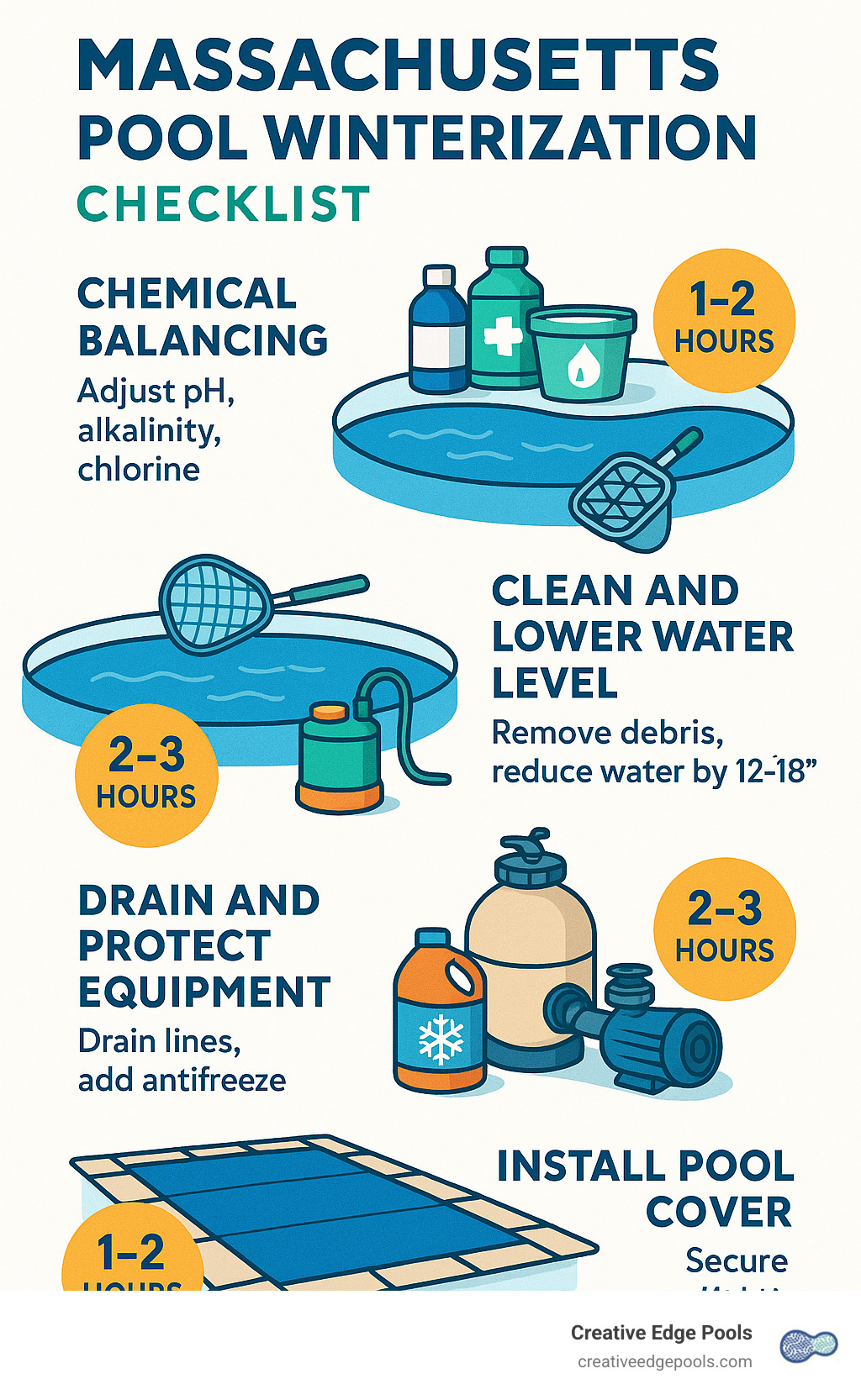
Timing is everything when it comes to winterizing your inground pool in Massachusetts. The sweet spot typically falls between late September and mid-October. You want to wait until water temperatures consistently fall below 65°F, but complete the process before the first hard freeze. And a word to the wise: schedule your professional service well in advance—this is the busiest season for pool companies across the state.
Chemical preparation should begin 1-2 weeks before closing. This isn’t just about dumping in some chemicals and calling it a day. You’ll need to carefully balance water chemistry (including pH, alkalinity, and calcium hardness), perform a shock treatment to eliminate bacteria, and add a specialized winterizing algaecide to prevent green surprises in spring.
Equipment protection becomes critical as temperatures drop. All water must be drained from your pump, filter, heater, and chlorinator. Lines need to be blown out with an air compressor, and pool antifreeze should be added to plumbing lines. Don’t forget to remove drain plugs from equipment and give your filter a thorough cleaning.
Water level management varies by pool type. For vinyl and fiberglass pools, lower water 12-18 inches below the skimmer. Gunite pools require less lowering—usually 4-6 inches below the skimmer is sufficient. One universal rule: never drain completely, as this can cause serious structural damage.
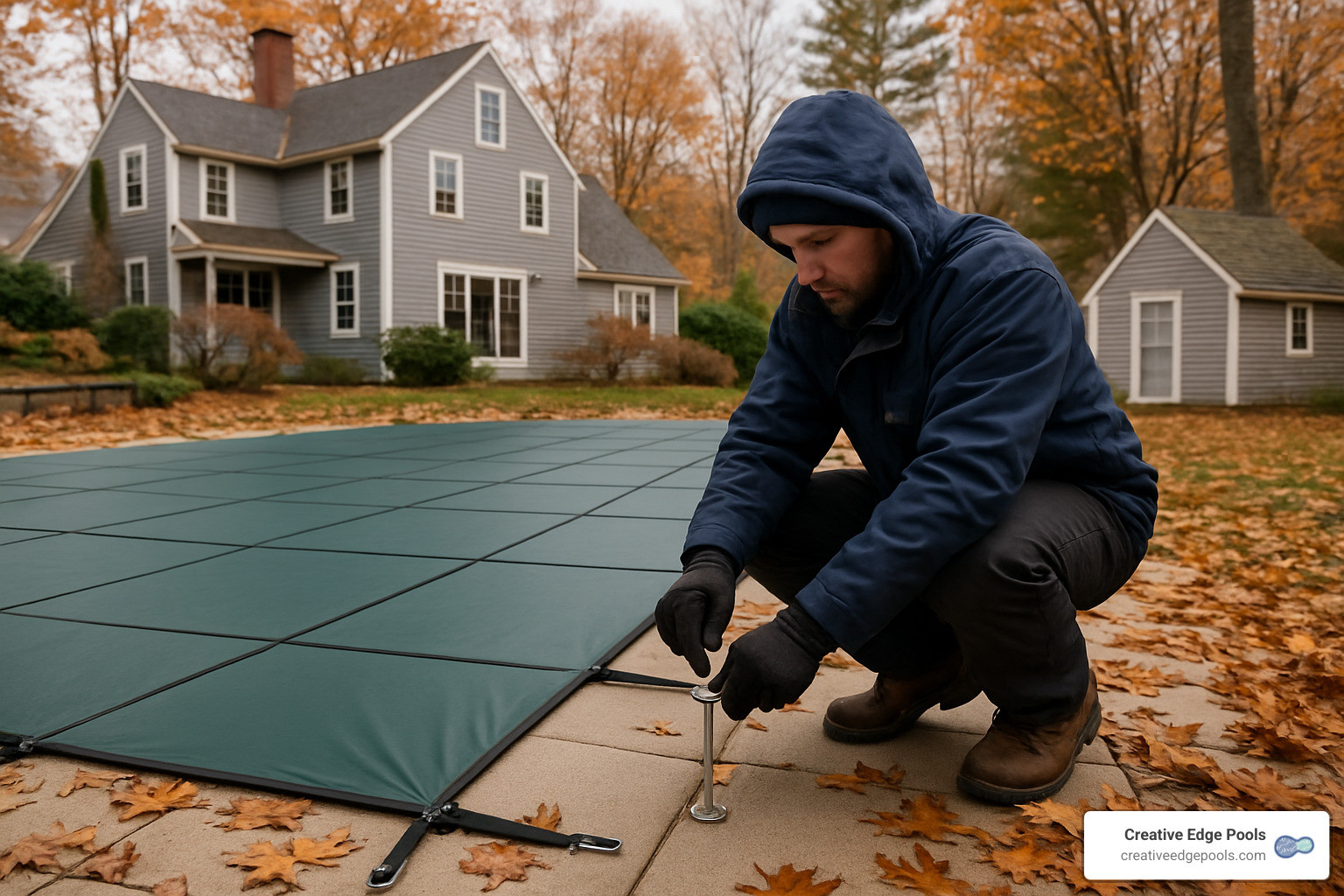
Cover installation provides your pool’s winter blanket. Safety covers are strongly recommended and must be securely anchored to the deck. If using solid covers, secure them with water bags or weights (never bricks). Ensure a tight fit to prevent debris entry, and consider a leaf net for early fall if your property has many trees.
Mid-winter monitoring shouldn’t be overlooked. Check your cover after heavy snowfall (removing excess with a roof rake), monitor water levels if visible, and take advantage of winter thaws to inspect for any issues.
“A properly winterized pool is much easier and less expensive to open in the spring,” advises David. “We’ve seen homeowners try to save money by skipping professional winterization, only to face thousands in repair costs from freeze damage to equipment and plumbing.”
The seasonal rhythm of opening and closing your inground pool in Massachusetts becomes a cherished tradition for many families—marking the beginning and end of our precious New England summers. With proper care and preparation, your pool will be ready to welcome you back when those warm days finally return. For professional assistance with pool openings, our appointment request form makes scheduling simple.
Beyond the Basics: Features, Customizations & Builder Selection
Creating the perfect inground pool in Massachusetts goes beyond just the basic shell. Today’s homeowners are looking for complete outdoor living environments that extend the usefulness and enjoyment of their investment.
Trending Add-Ons That Boost Enjoyment & Value
Modern pool projects often include features that improve both functionality and aesthetics:
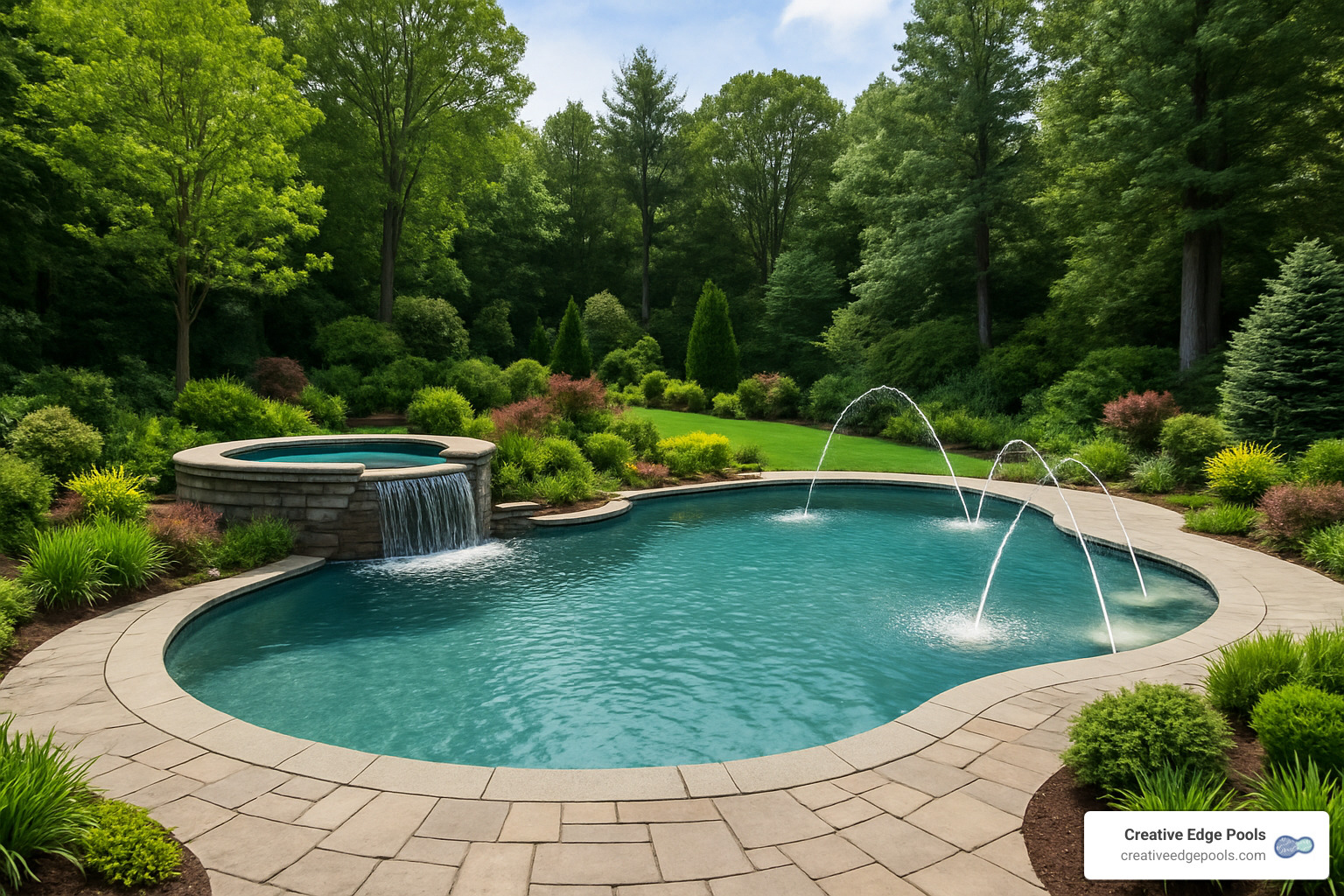
Water Features ($2,000-$15,000)
– Waterfalls and cascades
– Laminar jets and deck jets
– Rain curtains
– Grottos and rock features
Integrated Spas ($15,000-$25,000)
– Spillover design
– Separate heating systems
– Therapeutic jets
– Year-round usability
Lighting Systems ($1,500-$5,000)
– LED color-changing options
– Fiber optic lighting
– Smart control integration
– Landscape lighting coordination
Automation and Convenience ($1,500-$4,000)
– Smartphone control of all pool functions
– Automatic chemical monitoring and dispensing
– Voice control integration
– Remote monitoring and alerts
Heating Options ($4,000-$15,000)
– Gas heaters (fastest heating, highest operating cost)
– Heat pumps (efficient, slower heating)
– Solar heating (eco-friendly, weather-dependent)
– Combination systems for optimal efficiency
“The most popular addition we’re seeing is integrated automation systems,” notes David. “Massachusetts homeowners appreciate being able to heat their pool remotely before arriving home or check chemical levels from their phone. These systems typically add $2,000-$4,000 to a project but dramatically improve the ownership experience.”
Selecting the Right Builder & Spotting Red Flags
Choosing the right pool builder is perhaps the most critical decision in your pool journey. Here’s what to look for:
Qualifications to Verify
– Massachusetts Home Improvement Contractor (HIC) registration
– Proper insurance (liability and workers’ compensation)
– Specialized pool builder certifications
– Membership in industry associations (NESPA, APSP)
– References from recent local projects
Red Flags to Watch For
– Unusually low bids (often lead to change orders later)
– Requesting large deposits (over 30% is concerning)
– No written warranty
– Vague contracts missing specifications
– Poor online reviews or BBB complaints
– Subcontracting major portions of work
Questions to Ask Potential Builders
– How many pools have you built in Massachusetts specifically?
– Who will supervise my project day-to-day?
– What parts of the construction do you subcontract?
– Can I visit current projects and speak with recent customers?
– How do you handle warranty claims?
– What is your typical timeline from contract to completion?
“When evaluating builders, ask to see pools they built 5-10 years ago, not just recent projects,” suggests David. “This gives you insight into how their work holds up over time in our Massachusetts climate. At Creative Edge Pools, we’re proud to show clients both our newest installations and pools we built a decade ago that still look beautiful.”
Common Mistakes MA Homeowners Should Avoid
After building hundreds of pools throughout Massachusetts, we’ve observed some common pitfalls:
1. Underbudgeting for the Complete Project
– Forgetting to include decking, fencing, and landscaping
– Not allocating contingency funds (10-15% recommended)
– Focusing only on initial cost, not lifetime value
2. Poor Site Planning
– Ignoring sun exposure and prevailing winds
– Not considering views from inside the home
– Failing to account for existing trees and root systems
– Overlooking drainage patterns
3. Ignoring Long-Term Maintenance Needs
– Choosing materials that require excessive upkeep
– Not planning for equipment access
– Selecting inefficient systems that increase operating costs
4. Rushing the Process
– Not allowing adequate time for permitting
– Starting too late in the season
– Skipping important research and planning steps
“One of the biggest mistakes we see is homeowners choosing a pool location based solely on convenience of construction, rather than optimizing for sun exposure and integration with their living spaces,” observes David. “A pool that gets morning shade and afternoon sun will be much more enjoyable than one that’s shaded during prime swimming hours.”
Conclusion & FAQs
Bringing an inground pool in Massachusetts to life is more than just a purchase—it’s creating a backyard sanctuary that will serve as the backdrop for countless family memories for decades to come. After guiding hundreds of Massachusetts families through this journey, I’ve seen how a thoughtfully planned pool transforms not just properties, but lifestyles.
The investment you make today—whether in a vinyl, fiberglass, or gunite pool—will shape your summers for years to come. By understanding both the upfront costs and the long-term maintenance requirements, you’re setting yourself up for a smoother ownership experience that aligns with your budget and expectations.
At Creative Edge Pools, we believe in building relationships, not just pools. Our approach focuses on creating integrated outdoor living spaces where your pool works in harmony with your landscape, your home, and most importantly, your family’s lifestyle. We take pride in designing pools that not only withstand our challenging New England climate but actually accept it, providing the perfect cooling escape during those humid July afternoons and a stunning visual centerpiece even during the winter months.
Ready to transform your backyard into the private retreat you’ve been dreaming of? Let’s start a conversation about how a custom gunite pool could improve your Massachusetts property. Our team is ready to guide you through every decision, from initial design concepts to your first cannonball splash.
Frequently Asked Questions about Inground Pools in MA
How much does the average 16’×32′ fiberglass pool cost in Massachusetts?
A standard 16’×32′ fiberglass pool typically runs between $65,000 and $85,000 for a basic installation here in Massachusetts. This ballpark figure includes your shell, installation labor, standard equipment package, and simple concrete decking around the perimeter.
When homeowners opt for upgrades—perhaps stone decking instead of concrete, water features like cascading waterfalls, or comfort improvements like heating systems—that price range shifts upward to $90,000-$120,000. That your property itself can significantly impact your bottom line. Rocky New England soil (which we encounter frequently), limited access for equipment, or high water tables might necessitate additional site work that affects your final investment.
How long will my pool stay open each year?
Without heating, most of my Massachusetts clients enjoy their pools comfortably from about mid-June through early September—roughly a 3-month window when our weather cooperates. Adding a quality heater extends this significantly, typically allowing for swimming from early May through mid-October (5-6 months of splashing).
Heat pumps have become particularly popular among our Massachusetts customers because they efficiently maintain comfortable water temperatures during those mild spring and fall days without breaking the bank. I’ve also noticed more families incorporating spas into their pool designs, allowing them to enjoy at least a portion of their investment year-round while the main pool rests for the winter.
Do I need a separate permit for a pool heater?
Yes, you will. Most Massachusetts towns and cities require separate permits for pool heaters—typically both building and gas permits for natural gas or propane heaters, while heat pumps generally need electrical permits. These extra steps ensure your heating system meets Massachusetts building and safety codes, with inspections covering gas lines, electrical connections, and proper ventilation.
A reputable pool builder (like us at Creative Edge Pools) will handle these permits as part of your overall project management. That said, it’s always wise to verify this coverage in your contract before signing. We’ve seen too many homeowners face unexpected delays when permit details fall through the cracks, so we make it a point to manage this entire process seamlessly for our clients.
More info about pool opening services
