
How to Renovate a Gunite Pool: Top Tips for 2024
How to renovate a gunite pool is a common question for many homeowners, especially those whose pools are starting to show signs of age. To get started, consider these essential renovation steps:
- Resurface to improve durability and appearance.
- Repaint or Replaster for a refreshed finish.
- Replace Tiles for a modern look.
- Repair Coping to ensure safety.
A well-maintained pool not only boosts your home’s value but also extends the life of your backyard oasis.
Renovating a gunite pool can be a transformative process, bringing new life to your outdoor living space. Resurfacing options like marcite, quartz aggregate, and mini pebble can offer durability and aesthetics that are suited to your style. Meanwhile, replacing outdated tiles and repairing pool coping can allow for both improved safety and visual appeal. Benefits of these renovations include increased longevity, improved safety standards, and an updated look that improves your overall property value.
As the owner of Creative Edge Pools, I have over three decades of hands-on experience in the swimming pool industry. My team and I specialize in offering top-tier gunite pool renovations, ensuring your pool meets your design and durability expectations. Let’s explore the next steps to help you transform your pool.
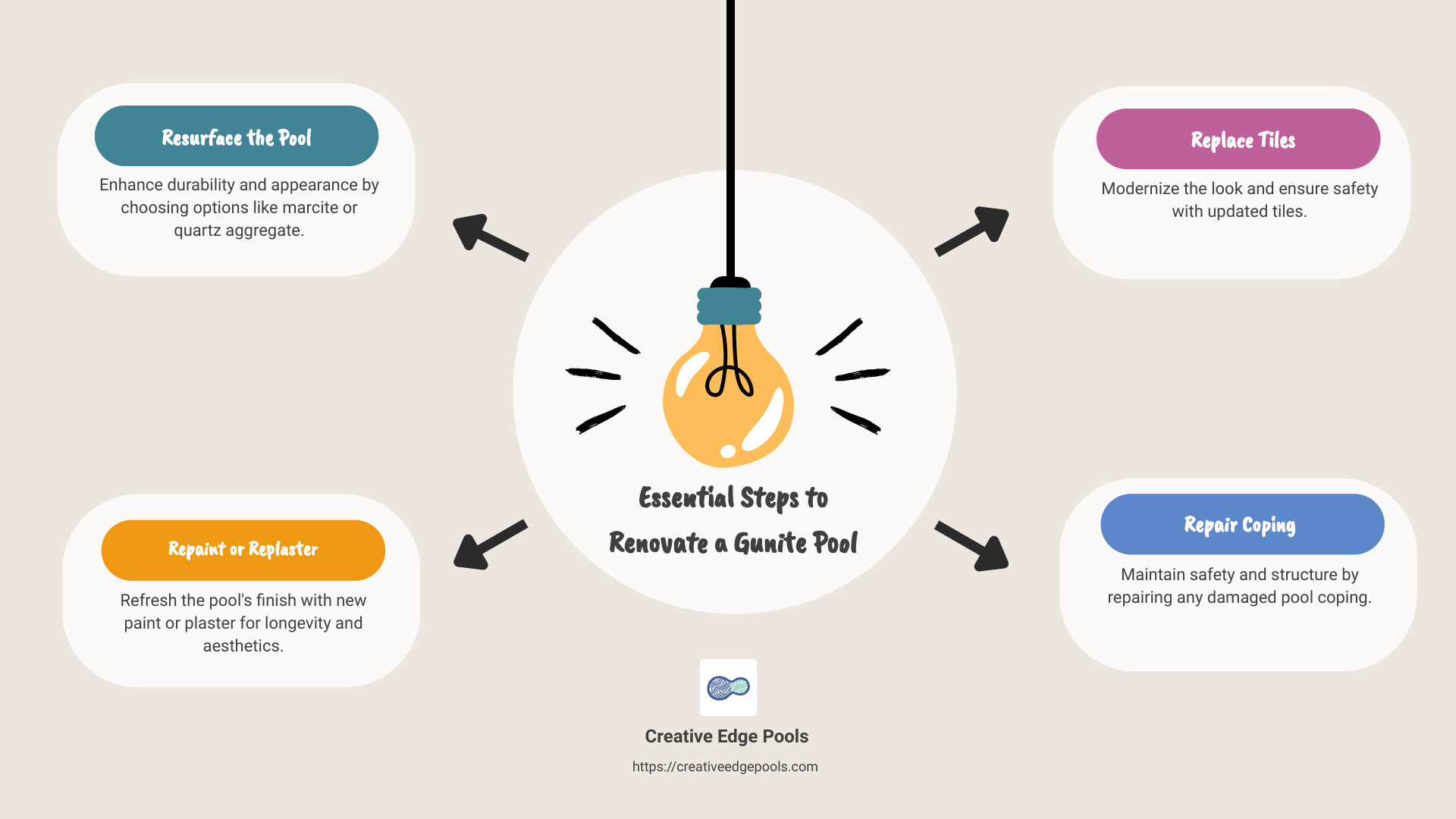
Simple how to renovate a gunite pool word guide:
How to Renovate a Gunite Pool
Gunite Pool Resurfacing
Resurfacing is a key step in revitalizing your gunite pool. It involves applying a new layer of material over the existing pool surface. This not only improves durability but also refreshes the look of your pool. Common resurfacing materials include marcite, quartz aggregate, and mini pebble. Each offers unique benefits in terms of appearance and longevity.
- Process: Resurfacing typically takes a few days. The old surface is prepped, and the new material is applied and cured.
- Cost: Expect to pay between $1,000 and $3,000, depending on your location and pool size.
Repainting a Gunite Pool
For a quick aesthetic update, repainting is a viable option. This involves using specialized pool paints like epoxy or acrylic.
- Preparation: Start by thoroughly cleaning the pool surface. Any existing paint must be removed for a smooth finish.
- Application: Apply the paint evenly, allowing adequate drying time between coats. Epoxy offers a durable finish, while acrylic is easier to apply but may require more frequent touch-ups.
Replastering a Gunite Pool
Replastering involves adding a fresh plaster layer to your pool’s interior, which can significantly improve its appearance and longevity.
- Plaster Types: Options include traditional marcite, DiamondBrite, and Hydrazzo. Each type varies in texture and durability.
- Process: Similar to resurfacing, the old plaster is removed, and the new layer is applied. This usually takes about a week to complete.
- Longevity: With proper care, replastered surfaces can last over a decade.
Tile Replacement
Replacing tiles can modernize your pool’s look and address any damage.
- Checking for Hollow Spots: Tap tiles to identify any hollow sounds, which indicate loose tiles needing replacement.
- Re-tiling Process: Remove old tiles, prepare the surface, and apply a new thinset before placing new tiles.
Coping Repair
Coping is the edge around your pool, and repairing it is crucial for both safety and aesthetics.
- Importance: Damaged coping can lead to safety hazards and water leakage issues.
- Methods: Repair methods vary based on material, including stone, concrete, or brick.
- Materials: Choose durable materials that match your pool’s design for a cohesive look.
Renovating your gunite pool with these steps can greatly improve its appearance and functionality. Whether you choose to resurface, repaint, replaster, replace tiles, or repair coping, each step plays a vital role in maintaining your pool’s charm and safety.
Signs Your Gunite Pool Needs Renovation
Even the most well-maintained gunite pool will show signs of wear over time. Recognizing these signs early can help you decide when it’s time for renovation.
Stains
Causes: Stains can be caused by a variety of factors, including chemical imbalances, algae growth, and natural debris like leaves and dirt. Over time, these stains can become more than just an eyesore—they can damage the pool surface.
Cleaning: Regular cleaning and proper chemical balance can prevent some stains. However, stubborn stains may require professional intervention.
Resurfacing: If stains persist despite cleaning efforts, resurfacing with a stain-resistant material might be necessary. This can restore your pool’s appearance and prevent future discoloration.
Rough Texture
Causes: A rough texture on your pool’s surface often indicates significant wear. This can be due to unbalanced pH levels, which accelerate surface deterioration.
Resurfacing: Applying a new surface layer can smooth out rough textures, making your pool more comfortable and inviting.
Maintenance: Regularly checking and balancing your pool’s pH levels can prevent rough textures from forming in the first place.
Leaks
Detection: A noticeable drop in water levels could indicate a leak. Leaks not only increase water bills but can also lead to more severe structural issues if left unaddressed.
Repair: Early detection is key. Small leaks can often be repaired without extensive renovations. However, significant leaks might necessitate resurfacing to prevent further damage.
Resurfacing: In cases of severe leakage, resurfacing can provide a watertight seal, protecting the underlying gunite.
Chalky Residue
Causes: A chalky residue on your pool surface is often a sign of calcium buildup, resulting from imbalanced water chemistry.
Solutions: Regular brushing and balancing water chemistry can help manage calcium deposits.
Maintenance: Consistent maintenance is crucial to prevent chalky residues. If the problem persists, it may be time for a professional assessment to determine if resurfacing is needed.
Recognizing these signs early can save you time and money in the long run. A proactive approach to pool maintenance and renovation ensures your gunite pool remains a beautiful and functional feature of your home.
Gunite Pool Resurfacing Options
When it comes to refreshing your gunite pool, choosing the right resurfacing material is key. Each option offers unique benefits and aesthetics, so let’s explore what might work best for your pool.
Marcite
Marcite is a classic choice for pool resurfacing. Composed of cement, water, and marble dust or silica sand, this material provides a smooth and traditional appearance. Many pool owners appreciate marcite for its luminous blue effect that improves the water’s appearance. Despite its visual appeal, it’s important to note that marcite may require more frequent maintenance compared to other options due to its susceptibility to wear over time.
Quartz Aggregate
For those seeking durability and visual flair, quartz aggregate is an excellent choice. This material combines plaster with small pieces of quartz, glass beads, or river stones. The result is a finish that is not only resistant to staining and wear but also offers a wide range of custom blending options. This allows you to create a unique and luxurious pool surface that reflects your personal style. Quartz aggregate’s robust nature makes it ideal for pools with high usage or those requiring minimal upkeep.
Mini Pebble
Mini pebble finishes are gaining popularity due to their textured appearance and improved durability. This option involves blending plaster with tiny pebbles, resulting in a surface that is both slip-resistant and visually appealing. The color options available with mini pebble finishes can transform your pool into a vibrant oasis. It’s a great choice if you desire a natural, earthy look combined with long-lasting performance.
Glass Bead
For a truly luxurious finish, consider glass bead resurfacing. This high-end option uses smooth glass beads to create a sparkling, eye-catching effect. While the initial cost may be higher, the neat appearance and reflective qualities of glass bead finishes can dramatically lift your pool’s aesthetic. It’s an investment in beauty and sophistication, perfect for those looking to make a statement with their pool.
Choosing the right resurfacing option depends on your budget, aesthetic preferences, and maintenance expectations. Each material offers distinct advantages, so take the time to consider which will best meet your needs.
Frequently Asked Questions about Gunite Pool Renovation
How long does gunite pool resurfacing take?
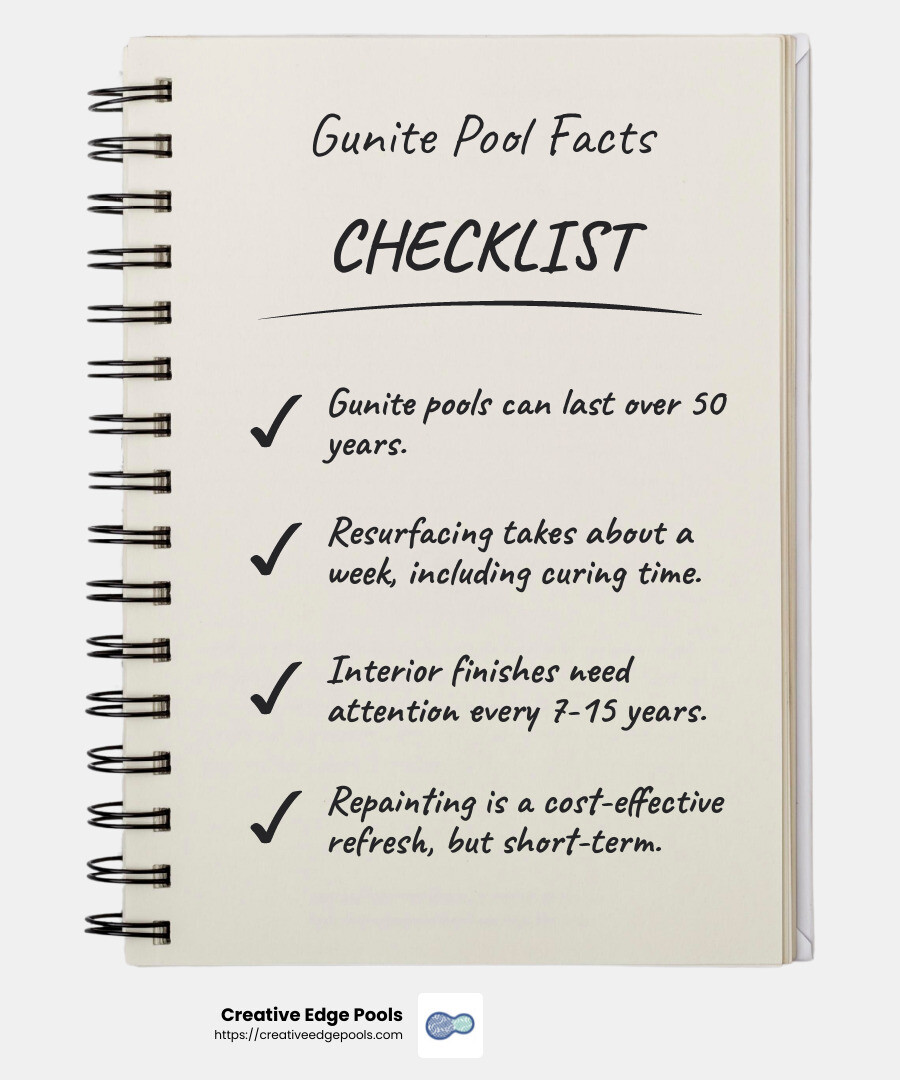
Gunite pool resurfacing is a relatively quick process. Typically, it takes only a few days to complete. However, you should plan for your pool to be out of commission for about a week. This accounts for preparation, application, and curing time. Weather conditions and the complexity of your pool design can also affect the timeline.
What is the average life of a gunite pool?
A well-maintained gunite pool can serve you for decades. The gunite shell itself is incredibly durable and can last 50 years or more. However, the interior finish, such as plaster or aggregate, may require attention every 7 to 15 years. Regular maintenance and prompt repairs can extend the life of your pool’s surface.
Can you repaint a gunite pool?
Yes, repainting a gunite pool is possible and can be a cost-effective way to refresh its appearance. Epoxy and acrylic paints are popular choices for this task. Proper surface preparation is crucial for a successful paint job. This includes thoroughly cleaning the surface and ensuring it’s dry before application. Repainting can extend the life of your pool’s finish and offer a fresh, vibrant look. However, it’s typically a short-term solution compared to resurfacing.
Conclusion
Renovating your gunite pool can transform your backyard into a stunning oasis. Whether you’re resurfacing, repainting, or replastering, each step improves the pool’s beauty and longevity. Addressing issues like stains, rough textures, or leaks promptly can prevent costly repairs down the line.
At Creative Edge Pools, we take pride in our comprehensive approach to pool renovation. Our family-owned business has been serving Eastern Massachusetts and Southern New Hampshire, offering customized solutions that align with your vision. We handle everything from gunite pool remodeling to complete backyard changes, ensuring your outdoor space is as functional as it is beautiful.
Ready to give your pool the makeover it deserves? Contact us today to discuss your renovation needs. Our team of experts is here to guide you every step of the way, providing quality service and expert advice.
Transform your gunite pool with Creative Edge Pools. Let us help you create the backyard of your dreams.
