Gunite Repair: Top 3 Expert Tips for Lasting Pools
Gunite repair is an essential consideration for homeowners who cherish their durable and versatile gunite swimming pools. These pools are renowned for their longevity and creative design options, making them a popular choice in Massachusetts and New Hampshire. However, like any other swimming pool, gunite pools can experience wear and tear over time, manifesting as cracks, leaks, or surface deterioration. For a quick guide to understanding gunite repair, consider these key points:
- Gunite pools are long-lasting but can develop cracks due to ground settling or temperature changes.
- Regular maintenance is crucial for preventing extensive damage.
- Professional repairs ensure a higher chance of a long-lasting fix.
- DIY repairs can be cost-effective for minor issues but may require specialized tools and expertise.
I’m David Brabant, owner of Creative Edge Pools. With over thirty years in the swimming pool industry, I’ve worn many hats, from hands-on work to overseeing complex projects. My experience in gunite repair ensures we provide top-notch service and expertise to our clients.
Gunite repair terms to know:
– gunite pool renovation cost
– gunite pool resurfacing options
– pool refinishers near me
Common Issues with Gunite Pools
Gunite pools are known for their durability, but they aren’t immune to problems. Let’s explore the most common issues you might encounter with these pools.
Cracks
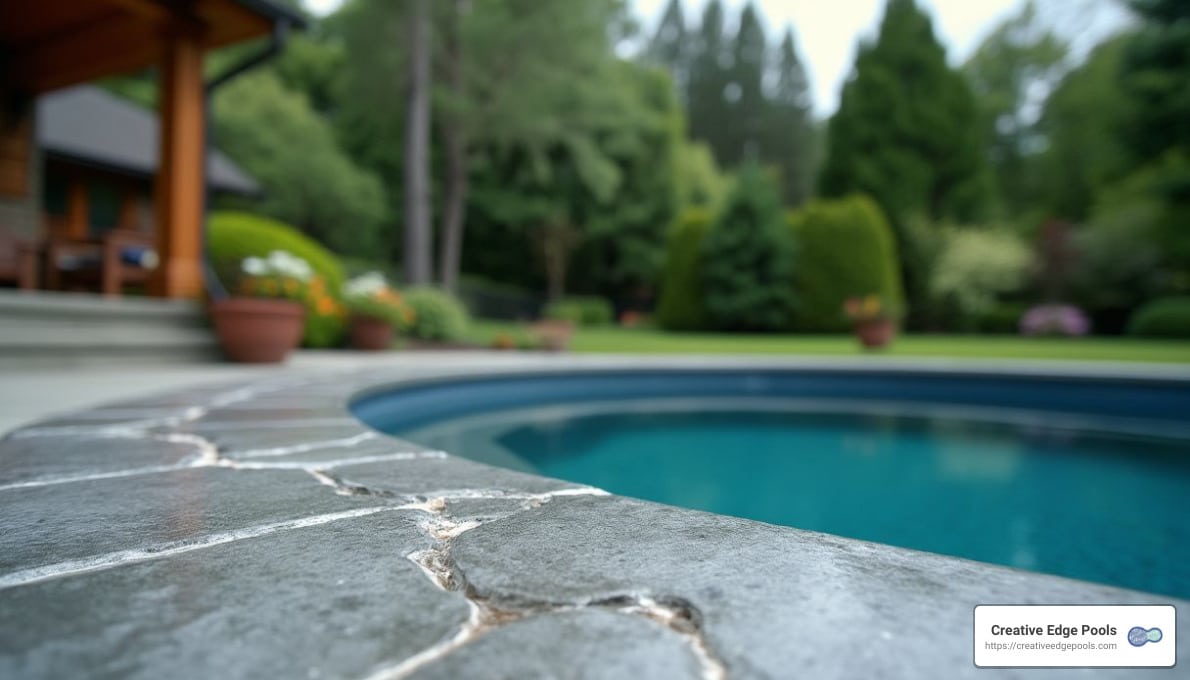
Cracks can appear in gunite pools for several reasons. Ground settling is a major factor. As the earth beneath your pool shifts, it can cause the structure to crack. Temperature changes also play a role. The expansion and contraction of materials due to heat and cold can lead to cracking over time.
Improper installation is another culprit. If the pool wasn’t built correctly, cracks can develop more easily. These aren’t just cosmetic issues—they can lead to leaks and further damage if not addressed.
Leaks
Leaks in gunite pools often start small but can escalate quickly. Cracks are a common source, but leaks can also occur due to poor plumbing connections or damage to the pool’s surface.
Detecting a leak early is crucial. If you notice a drop in water levels or damp areas around your pool, it’s time to investigate. Ignoring leaks can lead to higher water bills and more serious structural issues.
Surface Deterioration
Over time, the surface of a gunite pool can deteriorate. This might show up as rough patches or flaking. The pool’s plaster finish can wear down due to chemicals in the water, frequent use, and exposure to the elements.
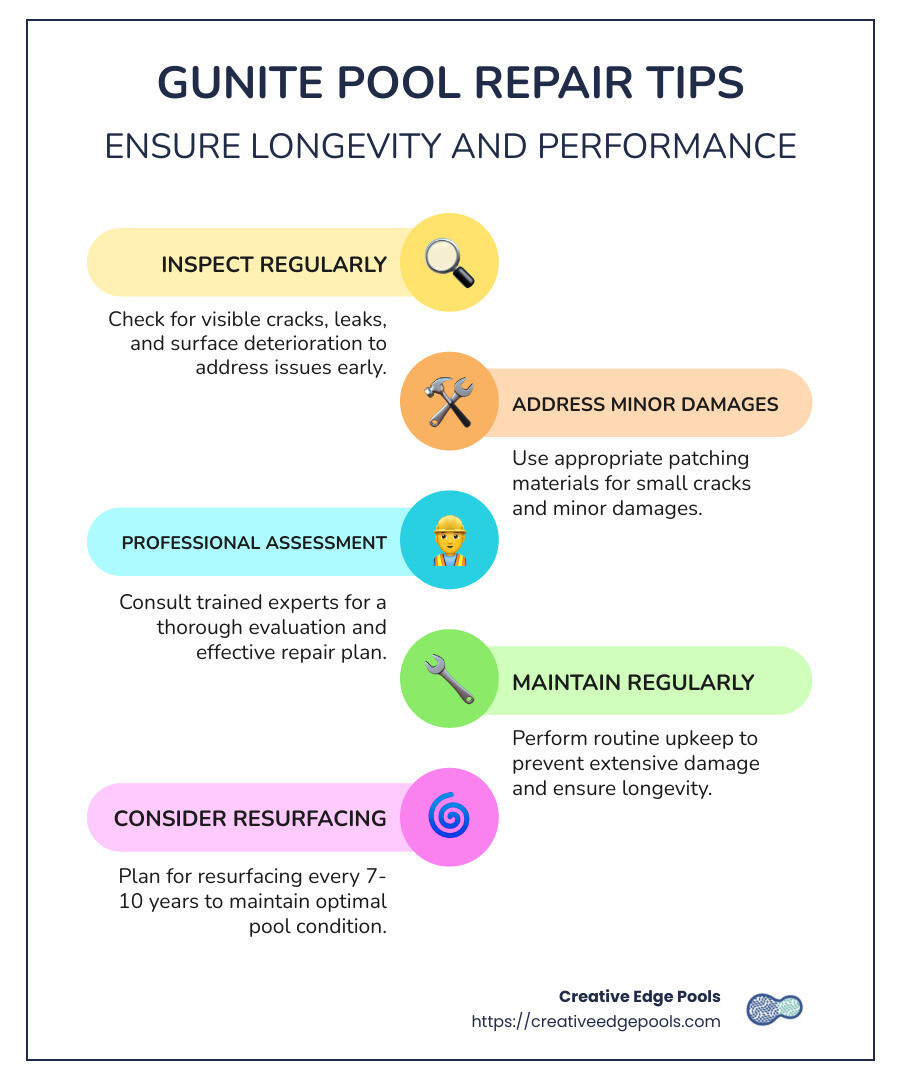
Regular maintenance, like resurfacing every 7 to 10 years, can help keep your pool looking fresh and prevent further surface damage.
Ground Settling
Ground settling is a natural process that can affect any pool, but gunite pools are particularly susceptible. As the soil beneath the pool compacts or shifts, it can create uneven pressure on the pool structure. This might lead to cracks or misaligned tiles.
Keeping an eye on the landscape around your pool can help you spot signs of settling early. Addressing these issues promptly can prevent major damage.
Temperature Changes
Temperature fluctuations can be tough on gunite pools. Hot summers and cold winters cause the materials in your pool to expand and contract. Over time, this can lead to cracking and other structural issues.
To mitigate this, regular inspections and maintenance are key. Catching small issues before they become big problems can save you time and money.
Improper Installation
A poorly installed gunite pool is a ticking time bomb. Common installation errors include inadequate reinforcement, incorrect application of materials, and poor plumbing setups. These can lead to a host of problems, from leaks to structural failure.
Choosing a reputable company for your pool installation is crucial. Look for professionals with experience and positive customer reviews to ensure your pool is built to last.
Understanding these common issues helps in maintaining your gunite pool effectively. Regular inspections and prompt repairs are your best defense against these problems. Next, we’ll explore the benefits and considerations of professional gunite pool repair services.
Professional Gunite Pool Repair Services
When it comes to gunite repair, hiring trained experts is often the best decision. These professionals bring a wealth of knowledge and the right equipment to handle complex pool issues effectively.
Why Choose Professional Services?
Expertise and Equipment
Trained professionals have the expertise to diagnose and fix a wide range of problems, from minor cracks to major structural issues. They use specialized equipment like lightweight pneumatic jackhammers, which are essential for removing unsatisfactory shotcrete without damaging the pool’s structural shell. This ensures that repairs are done accurately and efficiently.
Effective Repairs
Professional repair services offer a level of precision that DIY efforts might lack. They can address underlying issues that are not immediately visible, preventing future problems. For instance, they know how to properly bond new materials to existing structures, ensuring long-lasting repairs.
Customer Reviews and Testimonials
Choosing the right repair service can be daunting, but customer reviews and testimonials are invaluable resources. Positive feedback from past clients can give you confidence in the quality of work you can expect. Look for companies with a track record of satisfied customers and successful repairs.
Case Study: Successful Gunite Pool Repair
Consider a scenario where a homeowner noticed significant water loss in their gunite pool. Suspecting a leak, they hired a professional repair service. The experts used advanced detection equipment to pinpoint the leak, which was due to a crack caused by ground settling.
The repair team efficiently fixed the crack using AquaBond’s Polyurethane Foam Crack Injection Kit. This low-pressure injection method expanded to fill the crack completely, ensuring a permanent seal. The homeowner was impressed with the quick turnaround and the pool’s restored functionality.
The Importance of Professional Help
While DIY repairs can be tempting due to cost savings, they often lack the thoroughness and expertise of professional services. Incorrect repairs can lead to more significant issues down the line, costing more in the long run. Professionals not only fix the problem but also provide valuable advice on maintaining your pool to prevent future issues.
Choosing professional gunite pool repair services ensures your pool is in capable hands. With the right experts, you can enjoy peace of mind knowing that your pool is safe and sound. Next, we’ll weigh the pros and cons of a DIY approach to gunite pool repair.
DIY Gunite Pool Repair – Pros and Cons
Taking on gunite repair yourself can be a tempting option, especially if you’re looking to save some money. But before you dive in, let’s weigh the pros and cons.
Pros of DIY Gunite Pool Repair
Cost-Saving
One of the biggest advantages of DIY repairs is the potential to save money. By handling minor repairs yourself, you can avoid the labor costs associated with hiring professionals.
Learning Opportunity
Tackling repairs on your own can be a great way to learn more about your pool and its maintenance needs. Over time, this knowledge can empower you to handle minor issues as they arise.
Immediate Action
With DIY, you can address minor problems as soon as you notice them, without waiting for a professional to be available. This can be crucial in preventing small issues from escalating.
Cons of DIY Gunite Pool Repair
Tools and Equipment
DIY repairs often require specialized tools that you may not have at home. For example, lightweight pneumatic jackhammers are essential for safely removing unsatisfactory shotcrete. Purchasing or renting such equipment can be costly and inconvenient.
Time and Effort
Repairing a gunite pool is not a quick task. It requires time, effort, and patience. If you’re not familiar with the process, it can take much longer than expected, potentially leading to frustration.
Know-How and Expertise
While minor repairs might seem straightforward, they often require a certain level of expertise to ensure they’re done correctly. Without proper knowledge, you risk making mistakes that could lead to more significant issues down the line.
Potential Drawbacks
Risk of Improper Repairs
Improper repairs can lead to further damage, resulting in more costly fixes in the future. For example, failing to properly bond new materials to the existing structure can cause delamination.
Safety Concerns
Working with pool repair materials and equipment can pose safety risks, particularly if you’re not experienced. Professionals are trained to handle these challenges, reducing the risk of injury or damage.
Conclusion
While DIY gunite pool repair offers potential cost savings and learning opportunities, it’s important to consider the drawbacks. Lack of tools, time, and expertise can lead to more problems than solutions. Weighing these factors carefully can help you decide whether to tackle repairs yourself or call in the experts.
Next, we’ll explore preventative maintenance strategies to keep your gunite pool in top condition for years to come.
Procedures for Minor Gunite or Shotcrete Repair
When it comes to gunite repair, addressing minor issues promptly is key to maintaining the integrity of your pool. Let’s walk through the steps for repairing common problems like voids, low-density areas, and weak concrete.
Identifying the Problem
Voids and Low-Density Areas
These issues often arise from improper application or mixing of shotcrete. Voids can lead to leaks, while low-density areas may weaken the pool’s structure. You can spot these defects visually or by sounding the surface. A dull thud instead of a sharp ring when tapped indicates a problem area.
Rebound Material
Rebound consists of larger particles that ricochet during application. It lacks the cement and water needed for strength, making it unsuitable for use. Rebound often shows up on horizontal surfaces like pool floors and steps. If left untreated, it can delaminate over time.
Repair Process
Remove Unsatisfactory Material
Use lightweight pneumatic jackhammers to safely remove weak or unsuitable shotcrete. These tools are effective in eliminating defective material without damaging the structural shell. Think of it as a dentist removing decayed sections of a tooth.
Prepare the Surface for Bonding
1. Clean and Sound: Ensure surfaces are free of defects and bond-inhibiting materials.
2. Roughen the Surface: Chip or roughen the area to open the pore structure, enhancing adhesion.
3. Water Blasting: Clean the area thoroughly to remove debris.
Ensure Proper Bonding
- Maintain a saturated surface dry condition to prevent the bonding paste from drying prematurely.
- Expose any reinforcement fully, with at least one inch of clearance, to ensure it is properly encased in the repair material.
- For small repairs, use dry pack mortar over a bonding agent like cement paste. Apply before the bonding agent sets to ensure a strong connection.
Materials and Techniques
In some cases, using pre-packaged products like Rapid-Set Mortar Mix can simplify the process. These products are designed for quick setting and low shrinkage, making them ideal for minor repairs.
By following these steps, you can effectively address minor issues in your gunite pool, ensuring its longevity and functionality. Next, we’ll discuss preventative maintenance strategies to help you avoid extensive repairs in the future.
Preventative Maintenance for Long-Lasting Gunite Pools
Taking care of your gunite pool involves more than just enjoying a swim. Regular upkeep is crucial for keeping it in great shape and avoiding costly repairs.
Regular Upkeep
Routine maintenance is the key to a long-lasting pool. This includes:
- Weekly Cleaning: Regularly vacuum, brush, and skim your pool. This prevents debris buildup and keeps the water clean.
- Water Quality Testing: Test your pool water frequently. Balanced pH levels prevent surface damage and algae growth.
- Equipment Checks: Inspect pumps, filters, and heaters to ensure they function properly. Malfunctioning equipment can lead to bigger issues.
Addressing Minor Issues Promptly
Don’t ignore small cracks or leaks. Addressing these minor issues early can prevent them from becoming major repairs. For instance, patching a small crack is much simpler and cheaper than fixing a large one.
Cost Prevention
Preventative maintenance isn’t just about keeping your pool looking good; it’s also a smart financial move. By investing time and effort into regular maintenance, you can avoid extensive repairs that can be costly. For example, keeping your water chemistry balanced can prevent the need for frequent resurfacing, which typically costs thousands of dollars.
Seasonal Maintenance
As the seasons change, so should your maintenance routine. In the spring, prepare your pool for use by removing covers and checking all systems. In the fall, properly close your pool to protect it from cold weather damage.
Professional Help
While many maintenance tasks can be handled on your own, don’t hesitate to call in professionals when necessary. They can provide services like deep cleaning, equipment inspection, and repairs that require specialized knowledge.
By following these preventative maintenance strategies, your gunite pool will deliver years of enjoyment with fewer interruptions for repairs. Next, we’ll tackle some frequently asked questions about gunite repair to further improve your pool care knowledge.
Frequently Asked Questions about Gunite Repair
Can a gunite pool be patched?
Yes, gunite pools can be patched, especially when dealing with small cracks or minor damages. For these types of repairs, you can use appropriate pool patching materials like A+B putty or specialized compounds designed for underwater repairs. However, for larger cracks or structural issues, it’s often best to consult a professional. Experts have the tools and experience to ensure a lasting repair, preventing further damage.
What is the life expectancy of a gunite pool?
A well-maintained gunite pool can last between 30 to 50 years, or even longer. The key to maximizing the lifespan of your pool lies in proper maintenance. This includes regular cleaning, balanced water chemistry, and timely repairs. Additionally, resurfacing your pool every 7 to 15 years can help maintain its integrity and appearance, ensuring that it remains a valuable part of your home for decades.
How do you fix a crack in the bottom of a gunite pool?
Fixing a crack in the bottom of a gunite pool involves several steps. First, the area around the crack should be cut and cleaned to remove any loose material. This ensures a good bonding surface for the patch. Next, an appropriate pool patching compound is applied to fill the crack. It’s crucial to follow the manufacturer’s instructions for the best results. For larger or more complex cracks, seeking professional repair services is recommended to ensure structural integrity and prevent leaks.
Conclusion
In summary, gunite pools are a fantastic choice for those seeking durability and versatility. While they are built to last, like all pools, they do experience wear and tear over time. Common issues such as cracks, leaks, and surface deterioration can arise, but with the right approach, these can be effectively managed.
Professional services are highly recommended when it comes to addressing significant repairs. Trained experts bring the knowledge and equipment needed to ensure effective and lasting solutions. They can handle everything from major structural repairs to detailed surface refinishing, ensuring your pool remains a safe and enjoyable space.
For the DIY enthusiasts, minor repairs can be tackled with the right tools and materials. However, it’s important to weigh the benefits and drawbacks. While DIY repairs can save money, they may not always provide the permanence or quality of professional work.
Preventative maintenance is the key to a long-lasting gunite pool. Regular cleaning, timely repairs, and maintaining balanced water chemistry can prevent extensive damage and costly repairs. A well-maintained pool can last 30 to 50 years or more!
At Creative Edge Pools, we pride ourselves on offering comprehensive services custom to your vision. From design and installation to maintenance and repair, our family-owned business is committed to changing your backyard into a personal paradise.
For more information on how we can assist with your gunite pool needs, visit our Gunite Pool Remodeling page. Let us help you keep your pool in top condition for years to come!