
What You Need to Know About Gunite Swimming Pools
A gunite swimming pool is an in-ground pool built by spraying a dry mix of sand and cement onto a steel rebar frame, then adding water at the nozzle to form a rock-hard concrete shell. It’s one of the most popular and durable pool types available today.
Quick facts:
- What it is: A concrete pool built on-site using a pneumatic spray process
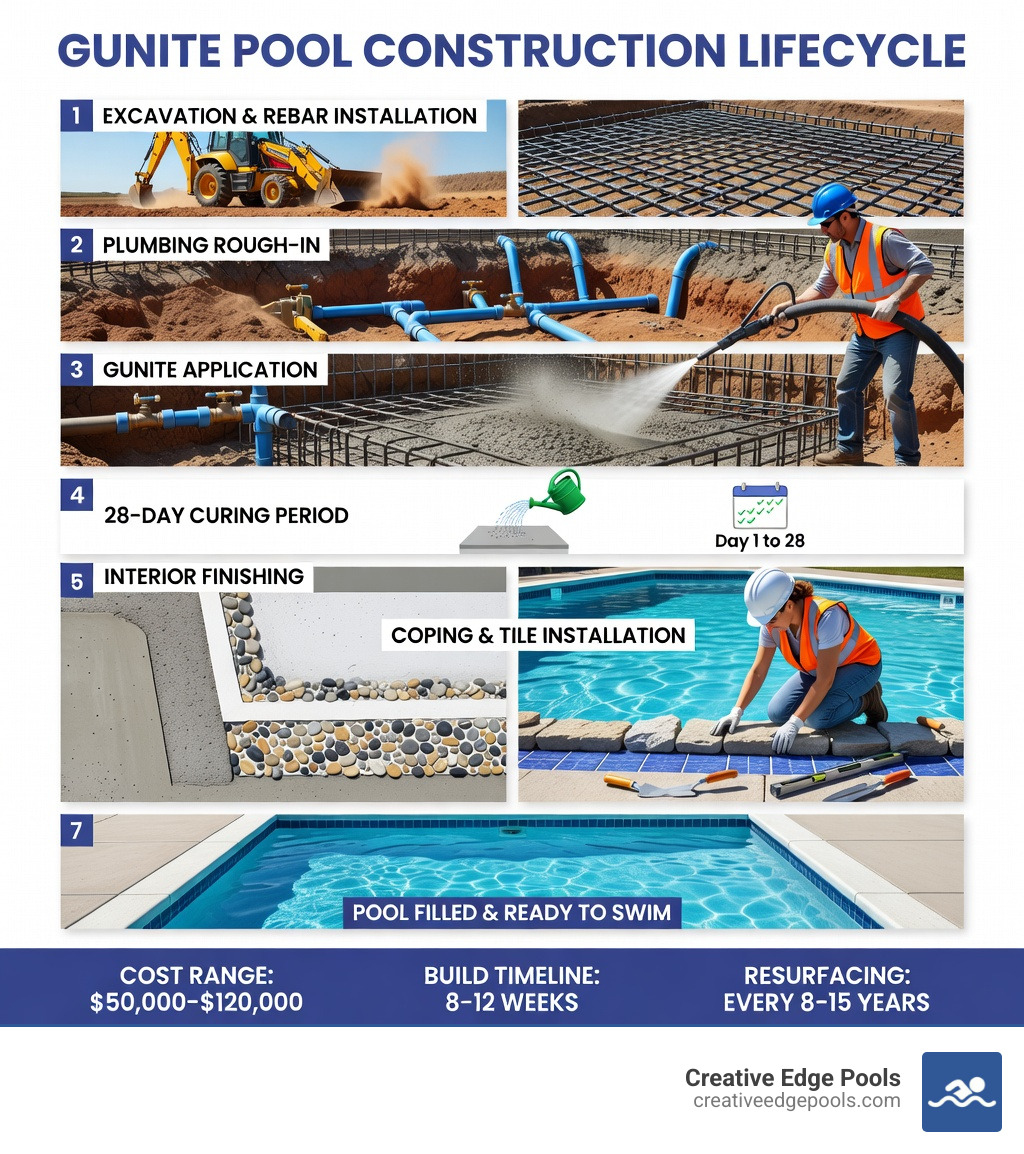
- How long it takes to build: 8 to 12 weeks (plus a 28-day curing period)
- How much it costs: $50,000 to $120,000 for a fully installed pool
- How long it lasts: Decades, with resurfacing needed every 8 to 15 years
- Biggest advantages: Unlimited design flexibility, exceptional durability, permanent structure
- Main drawbacks: Higher upfront cost, longer build time, more maintenance than fiberglass
If you’re a homeowner weighing your pool options, gunite stands out for one reason above all others: you’re not limited by a pre-made shape or size. Every gunite pool is built from scratch, on your property, to fit your exact vision.
That flexibility comes with real trade-offs, though. Gunite pools cost more upfront, take longer to build, and require consistent maintenance to stay in great shape.
This guide walks you through everything — how gunite pools are made, what construction looks like, what they cost, and how to keep one looking its best for years to come.
Essential gunite swimming pool terms:
What is a Gunite Swimming Pool?
When we talk about a gunite swimming pool, we are talking about a specific method of applying concrete. While “concrete pool” is the broad category, gunite is the material and process that makes those high-end, custom-shaped pools possible.
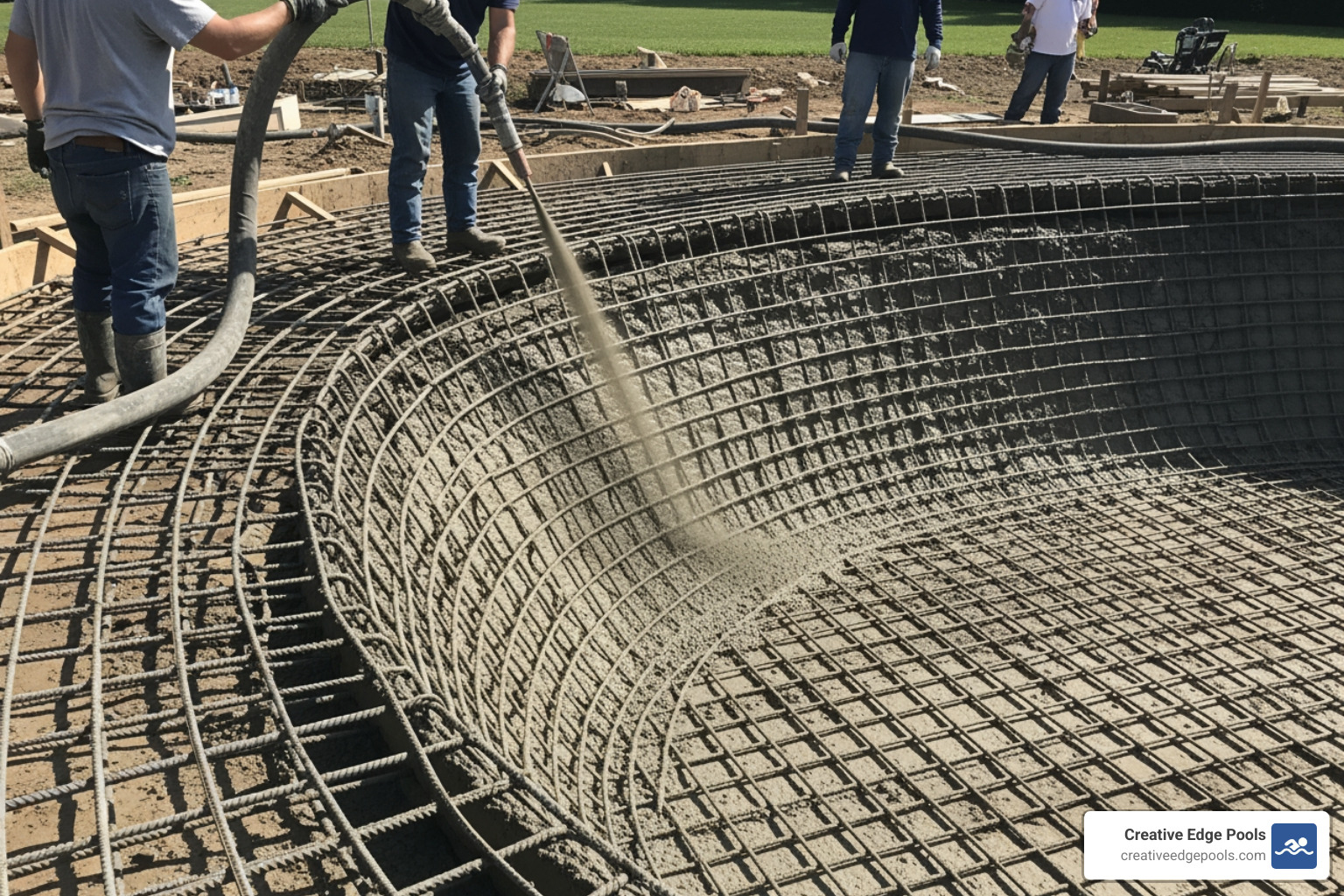
So, What is a Gunite Pool Made Of? It is a mixture of cement and sand (the aggregate) that is blasted through a high-pressure hose. Unlike traditional poured concrete that uses large gravel and is delivered wet in a revolving truck, gunite is a “dry-mix” process.
The magic happens at the nozzle. The dry sand and cement travel through the hose, and water is added by the operator right as the mixture exits. This pneumatic application creates a dense, rock-hard shell with incredible tensile strength. Because it is sprayed onto a heavy-duty rebar framework, the Gunite Pool becomes a monolithic, permanent structure that can withstand the shifting soils of Eastern MA and Southern NH.
Gunite vs. Shotcrete: Understanding the Mix
You will often hear the terms shotcrete and gunite used interchangeably, but there is a technical Gunite vs Shotcrete difference you should know.
- Shotcrete is a “wet-mix.” It arrives at your home already mixed with water in a truck.
- Gunite is a “dry-mix.” The water is added at the nozzle.
Why do we often prefer gunite for custom residential pools? It comes down to control. Because the water is added on-site, the nozzleman can make instant adjustments to the mix. This allows for higher structural density and prevents “cold joints”—seams that occur when one batch of wet concrete begins to set before the next arrives. This precision makes gunite the gold standard for complex, detailed pool designs.
The Benefits of Choosing Gunite
Choosing a Gunite Pool is an investment in your home’s long-term value and your family’s lifestyle. Here is why so many homeowners in our region choose it:
- Unlimited Shapes: If you can dream it, we can build it. From sleek modern rectangles to winding, naturalistic lagoons.
- Extreme Durability: Gunite is built to last for decades. Its high-pressure application makes it incredibly dense and resistant to the freeze-thaw cycles common in New England.
- High-End Aesthetics: Gunite allows for luxury finishes like glass tile, pebble, and natural stone coping that you simply can’t achieve with vinyl liners.
- Permanent Structure: Unlike fiberglass shells that can “pop” or vinyl liners that can tear, a gunite pool is a permanent part of your landscape.
Why Gunite is the Standard for Custom Design
If you want a backyard that looks like a five-star resort, you want a Gunite Pool. Because we build the pool shell on-site using a flexible steel rebar cage, we aren’t limited by factory molds.
This flexibility allows us to integrate high-end features seamlessly, such as:
- Vanishing Edges (Infinity Edges): Creating a stunning visual where water seems to drop off into the horizon.
- Tanning Ledges: Shallow areas (also called “Baja shelves”) for lounging in a few inches of water.
- Elevated Spas: Spas that sit above the pool level with water cascading over a stone spillway.
- Beach Entries: A sloped entry that mimics the natural walk into the ocean.
The Step-by-Step Gunite Pool Construction Process
Building a gunite swimming pool is a fascinating engineering feat. It isn’t just “digging a hole”; it’s a multi-stage Gunite Swimming Pool Construction project that requires precision at every turn.
- Excavation: We dig the pool to the exact specifications of your design.
- Plumbing and Steel: We install the heavy-duty plumbing lines and then weave a “cage” of steel rebar. This rebar provides the tensile strength that keeps the pool from cracking.
- Gunite Application: This is the most exciting day! A large truck delivers the dry mix, which is fed into an auger and shot through a high-pressure hose. Skilled craftsmen hand-shape the walls and floors as the gunite is applied.
- Curing: The shell must sit and “cure” to reach maximum strength.
- Tile and Coping: We install the decorative tile line and the stone or concrete “lip” around the pool edge.
- Interior Finish: The final step is applying the plaster or pebble finish that makes the pool waterproof and beautiful.
For a deeper dive into the technical details, check out our guide on Gunite Pool Installation.
The Critical 28-Day Curing Period
One of the most important parts of Gunite Pool Care happens right after the shell is sprayed. Gunite doesn’t just “dry”—it cures through a chemical process called hydration.
For the first 7 to 10 days, you (the homeowner) will usually be asked to spray the shell with water several times a day. This moisture control prevents the concrete from drying too fast, which helps avoid structural cracks. While the pool might look “done,” it takes a full 28-day timeline for the concrete to reach its full structural bonding and design strength.
Finishing Your Gunite Swimming Pool
The gunite shell itself is actually porous; it’s the interior finish that makes it waterproof. This is where you can truly customize the look of your Gunite Pool Resurface project.
- Standard Plaster: A smooth, classic white finish that gives the water a bright blue look.
- Colored Quartz: A blend of plaster and hard quartz aggregates that adds durability and a “speckled” color.
- Pebble Finishes: These are the most durable and offer a natural, textured feel underfoot.
- Glass Tile: Often used for the waterline or to cover the entire pool for a shimmering, ultra-luxury effect.
Understanding Gunite Pool Characteristics
While gunite is the premier choice for many, it’s important to understand the full picture before you dive in.
Potential Drawbacks to Consider
We believe in being transparent with our clients. There are a few things to keep in mind regarding Gunite Pool Maintenance and ownership:
- Higher Upfront Cost: Because they are built entirely on-site with high-quality materials, they are more expensive than vinyl or fiberglass.
- Longer Construction Timeline: You can’t install a gunite pool in a week. Between excavation, curing, and finishing, expect a 3-to-6-month window from start to finish.
- Porous Surface: Concrete is naturally porous. This means it can be more prone to algae if the water chemistry isn’t balanced, leading to a higher chemical demand.
- Rougher Texture: Traditional plaster can be a bit abrasive on sensitive feet compared to the smooth surface of a fiberglass pool.
Investment and Maintenance: What to Expect
When considering the Gunite Pool Cost, it is best to think of it as a long-term investment. Unlike a car that depreciates, a well-built gunite pool can increase your home’s value by 5% to 15%.
The Gunite Pool Price Per Square Foot typically ranges from $100 to $280. For a turnkey installation in the Massachusetts or New Hampshire area, you should expect to spend between $55,000 and $100,000+, with most luxury custom projects landing on the higher end of that scale. To get a better idea of the numbers, see our breakdown on How Much Does a Gunite Pool Cost.
Long-Term Care for Your Gunite Swimming Pool
To protect your investment, Gunite Swimming Pool Maintenance is non-negotiable.
- Brushing: You should brush the walls at least once a week to prevent algae from taking hold in the porous surface.
- Water Chemistry: Maintaining proper pH and alkalinity is crucial. If the water becomes too acidic, it can actually eat away at the plaster finish.
- Resurfacing: No finish lasts forever. Depending on the material you choose, you will need to resurface the pool every 8 to 15 years.
When to Schedule Gunite Pool Renovations
Even the sturdiest pools eventually need a facelift. We specialize in Gunite Pool Renovations for older pools in the New England area. You might need a renovation if you notice:
- Surface Flaking: Also known as “spalling,” where the top layer of plaster starts to peel.
- Structural Cracks: If the pool is losing water, it may have a crack in the shell that needs professional repair.
- Hollow Spots: Areas where the plaster has detached from the gunite shell underneath.
- Outdated Aesthetics: Sometimes, you just want to replace old white plaster with a modern pebble finish or upgrade your tile to something more contemporary.
Frequently Asked Questions about Gunite Pools
How long does it take to build a gunite pool?
The typical Gunite Swimming Pool Construction timeline is 8 to 12 weeks of active work. However, when you factor in the time for permitting, the 28-day curing period, and landscaping, most homeowners should plan for a 3-to-6-month project. Weather in New England can also play a role!
How much does a gunite pool cost on average?
As mentioned, the average Gunite Swimming Pool Cost is between $50,000 and $120,000. Factors that influence this include the size of the pool, the complexity of the shape, soil conditions (hitting New England ledge/rock can add cost), and the luxury features you choose to add.
How often do gunite pools need to be resurfaced?
For a standard plaster finish, you are looking at 8 to 12 years. If you opt for a high-end pebble finish, you can often go 15 to 20 years before a Gunite Pool Resurface is necessary.
Conclusion
A gunite swimming pool is more than just a place to swim; it’s a centerpiece for your home and a legacy for your family. While the process is more involved than other pool types, the result is a custom-crafted masterpiece that will last for decades.
At Creative Edge Pools, we bring over 100 years of combined experience to every project. As a family-owned business serving Eastern MA and Southern NH, we take pride in helping our neighbors bring their backyard visions to life. From the first scoop of dirt to the final splash, we are with you every step of the way.
Ready to start your journey? Whether you are in Andover, MA, or Nashua, NH, we can help you find the right path forward.
- How to Find Gunite Pool Installers
- Gunite Pool Builders
- Gunite Pool Installers in Massachusetts
- Explore our gallery of Gunite Pools to get inspired!
