Concrete pool replastering: 1 Ultimate Smooth Finish
Understanding Your Pool’s Surface
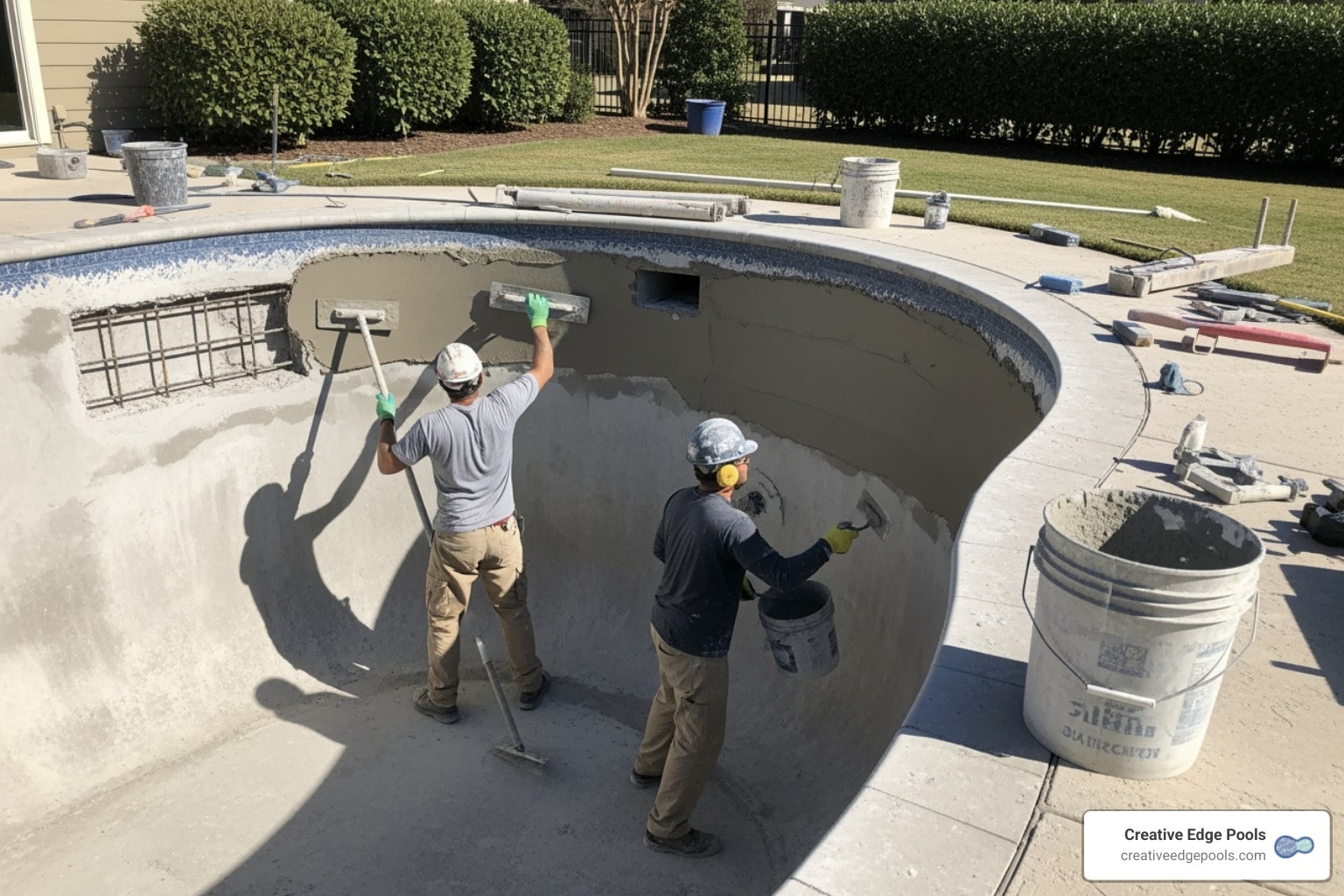
Concrete pool replastering is the process of applying a fresh layer of plaster to a gunite pool’s interior when the existing finish deteriorates. This essential maintenance restores the pool’s waterproof seal, smooth texture, and beautiful appearance.
Key Facts About Concrete Pool Replastering:
- Frequency: Every 8-12 years for standard plaster, 10+ years for quartz, 15+ years for pebble
- Cost Range: $6,500 – $30,000 depending on pool size and finish type
- Timeline: 4-7 days from start to refill
- Process: Drain → Prep → Bond coat → New plaster → Cure underwater
- Materials: White plaster, quartz aggregate, or pebble finishes available
A gunite pool shell is strong and durable, but the plaster finish is what makes it a swimming pool. This final layer acts as both a waterproof barrier and the smooth, attractive surface you see and feel. Over time, water chemistry and regular use erode the plaster, leading to roughness, stains, and cracks.
With over thirty years of experience in swimming pool construction and renovation at Creative Edge Pools, I’ve guided countless homeowners through the concrete pool replastering process, ensuring they understand every step.
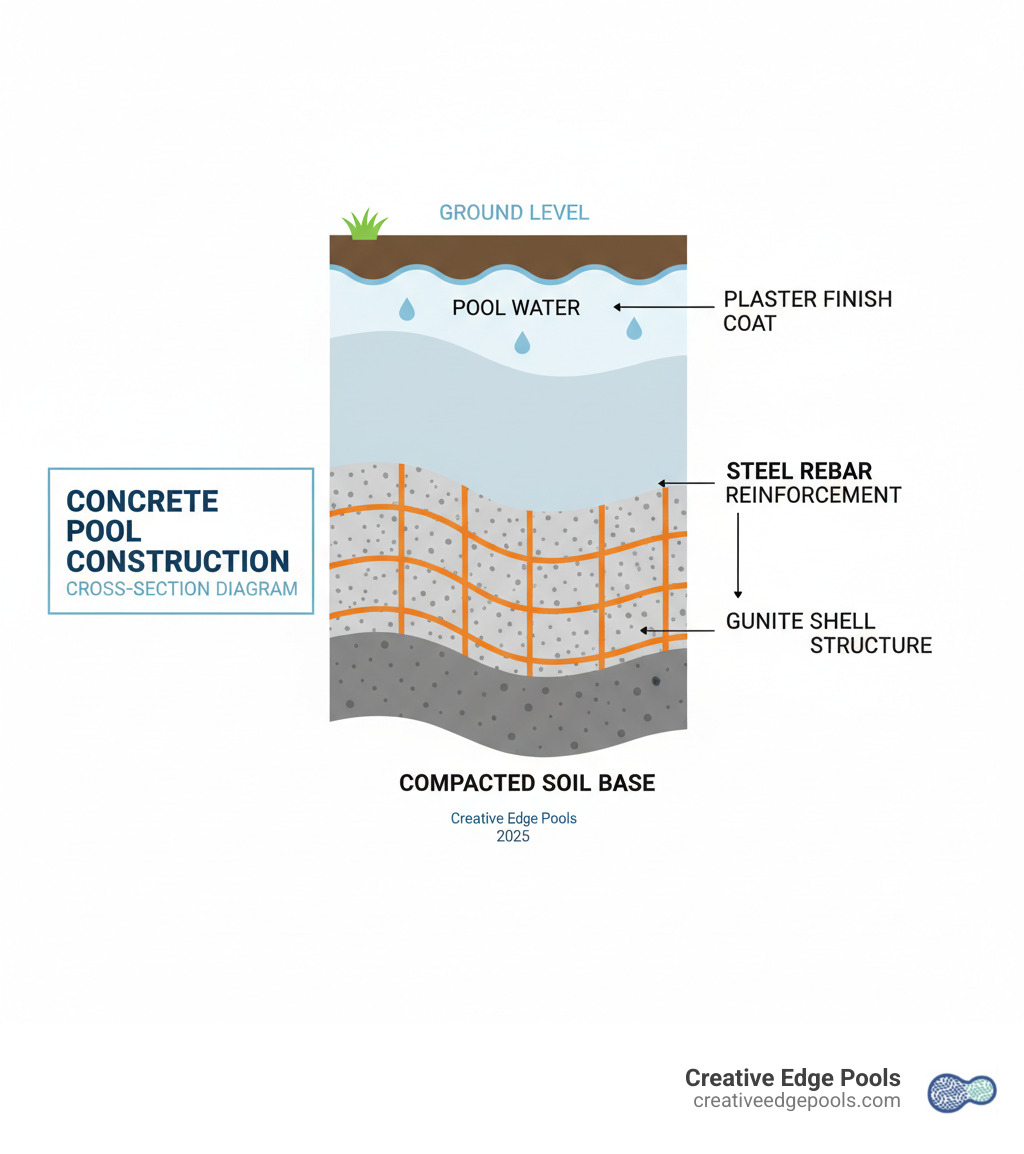
A gunite pool is formed by spraying a concrete mixture (shotcrete) over a steel rebar framework, creating a durable shell. The plaster is the final coating applied inside this shell. It seals the porous gunite, preventing leaks and providing a comfortable swimming surface.
While the terms are often used interchangeably, “replastering” specifically means renewing the plaster layer. “Resurfacing” is a broader term that can include replastering or applying other finishes like aggregate or tile. For a concrete pool, replastering is a common form of resurfacing focused on restoring the plaster finish.
The Complete Guide to Concrete Pool Replastering
When to Replaster: Telltale Signs of a Failing Surface
Catching problems early can save you thousands on future repairs. Your pool will show clear warning signs when it’s time for concrete pool replastering.
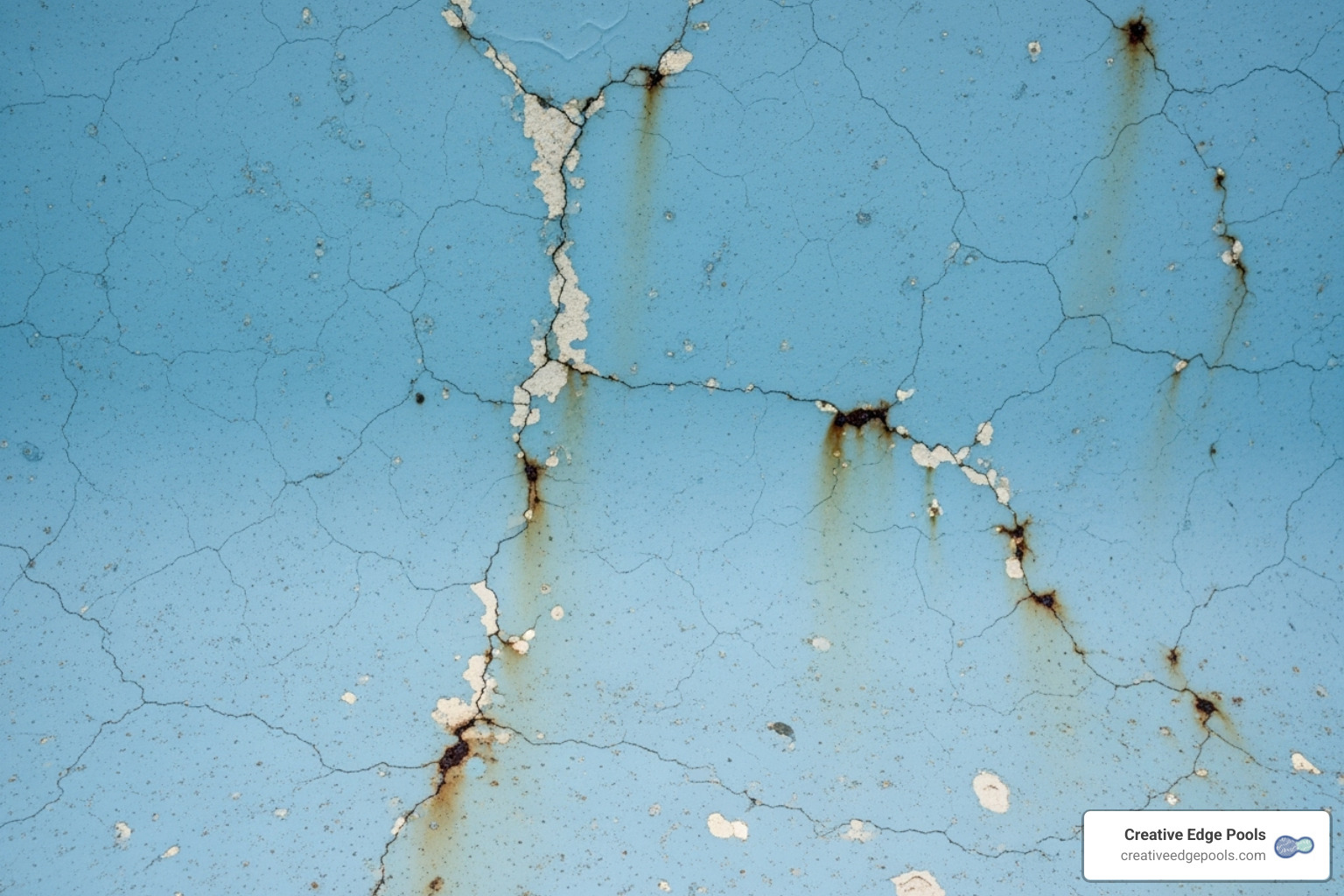
Look for these common issues:
- Roughness: If the surface feels like sandpaper, the cement has worn away, exposing the rough sand beneath. This is uncomfortable for swimmers and encourages algae growth.
- Persistent Stains: When stains from minerals or organic material no longer come off with an acid wash, the plaster has become too porous to clean effectively.
- Discoloration: Widespread color loss from years of chemical exposure or poor water balance that can’t be restored indicates the plaster is at the end of its life.
- Cracks: Small, web-like “crazing” cracks are often cosmetic. However, larger structural cracks require immediate professional inspection.
- Peeling or Flaking: Also known as “spalling,” this means the plaster is losing its bond with the pool’s shell and will continue to worsen.
- Water Loss: A sudden increase in water loss could signal leaks through the failing plaster, potentially damaging the pool’s structure.
- Age: Standard white plaster has a typical lifespan of 8-12 years. If your pool is in this age range, it’s wise to consider proactive replastering.
Addressing these signs early prevents more extensive damage. If you’re noticing any of these warnings, you can learn how often a gunite pool needs resurfacing to help plan your next steps.
Choosing Your Finish: Types of Pool Plaster
Choosing a new finish is an opportunity to upgrade your pool’s look and durability. The right choice balances aesthetics, longevity, and your budget.
| Finish Type | Cost (Relative) | Lifespan (Years) | Texture | Stain Resistance | Notes |
|---|---|---|---|---|---|
| Standard White Plaster (Marcite) | $ | 5-15 | Smooth | Moderate | Traditional, most affordable. Can be etched by aggressive water chemistry. |
| Quartz Aggregate | $$ | 10+ | Slightly textured | Good | Durable, vibrant colors, resistant to staining and etching. |
| Exposed Pebble | $$$ | 15+ | Textured | Excellent | Natural look, highly durable, extremely resistant to chemical corrosion and stains. |
| Polished Finishes | $$$$ | 5-15 | Ultra-smooth | Good | Luxurious, often made from finely ground aggregates. Requires specialized application and maintenance. |
Standard white plaster (marcite) is the classic, most affordable option, creating an iconic light-blue water color. It offers a smooth surface but requires diligent water chemistry maintenance to reach its full 5-15 year lifespan.
Quartz aggregate finishes add crushed quartz to the plaster for improved durability and stain resistance. Available in various colors, these finishes provide a great balance of beauty and longevity, often lasting 10+ years.
Exposed pebble finishes are the most durable choice. Small, smooth river pebbles are mixed into the cement and exposed to create a natural, textured look that is extremely resistant to chemicals and stains. They can last 15 years or more, making them a great long-term investment.
Polished finishes offer a luxurious, ultra-smooth surface by polishing finely ground aggregates. They provide a high-end look but require specialized application and care.
The best finish depends on your priorities for cost, appearance, and long-term maintenance. You can explore your pool plaster finish options in more detail on our website to help guide your decision.
The Step-by-Step Concrete Pool Replastering Process
Concrete pool replastering is a precise, multi-day process that requires a professional team and specialized equipment. Each step is crucial for a durable, beautiful finish. The entire process typically takes 4-7 days.
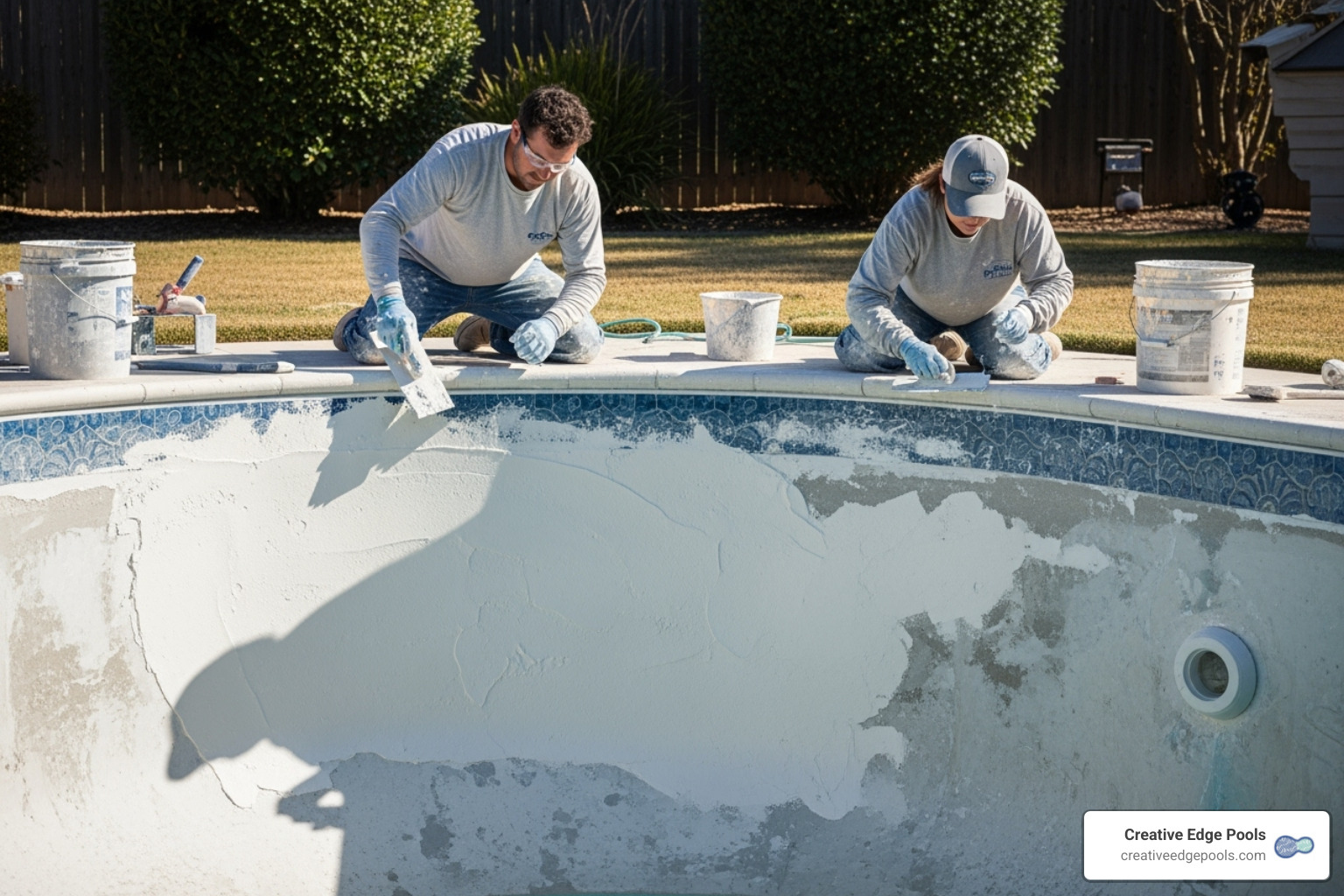
- Draining the Pool: The pool is carefully drained while managing hydrostatic pressure (groundwater) with relief valves to prevent the pool shell from lifting or cracking.
- Surface Preparation: This is the most critical phase. Old, loose plaster is chipped away. We undercut all fittings (lights, drains, jets) to ensure a clean seal. For extensive damage, sandblasting may be used to create an ideal surface for bonding.
- Washing and Bond Coat: The prepared surface is acid washed to remove contaminants and create a porous profile for the new plaster to grip. A specialized bond coat is then applied to ensure a strong, lasting adhesion between the old shell and the new finish.
- Applying New Plaster: Our skilled team mixes your chosen material and applies it by hand with trowels to a uniform thickness (around half an inch), creating a smooth, consistent surface.
- Immediate Water Filling: As soon as the plaster is applied, the pool must be filled with water immediately and without interruption. This underwater “pond curing” process is essential for the plaster to harden correctly and prevent cracking.
Experience is key to executing this process flawlessly. You can see our resurfacing process and what sets our approach apart.
Understanding the Costs and Longevity
Concrete pool replastering is a significant investment in your property’s value and your family’s enjoyment. Costs typically range from $6,500 to $30,000, or about $10 to $12 per square foot of the pool’s interior surface.
Several factors influence the final price:
- Pool Size and Shape: Larger or more complex pools require more material and labor.
- Finish Type: Standard plaster is the most economical, while quartz, pebble, and polished finishes increase in cost.
- Extent of Repairs: Addressing underlying damage to the pool shell will add to the project scope and cost.
- Location and Access: Difficult site access can increase labor time.
In terms of longevity, your investment pays off over time, especially with premium finishes.
- White Plaster: 5-15 years, highly dependent on water chemistry maintenance.
- Quartz Finishes: 10+ years, offering greater durability.
- Pebble Finishes: 15+ years, the most durable and long-lasting option.
- Polished Finishes: 5-15 years, requiring careful maintenance.
A newly replastered pool not only looks better but is also safer, easier to maintain, and prevents costly structural damage. While premium finishes have a higher upfront cost, their extended lifespan often provides better long-term value. To get a better sense of what your project might involve, you can get an idea of the average cost to resurface on our website.
Aftercare: Protecting Your New Pool Surface
The first 30 days after concrete pool replastering are critical for the plaster to cure properly and achieve maximum durability. This initial care ensures a long-lasting, beautiful finish.
The First 30 Days: Crucial New Plaster Curing
Follow these essential steps for the first month after your pool is refilled:
- Fill Immediately: The pool must be filled with water without interruption as soon as the plastering is complete.
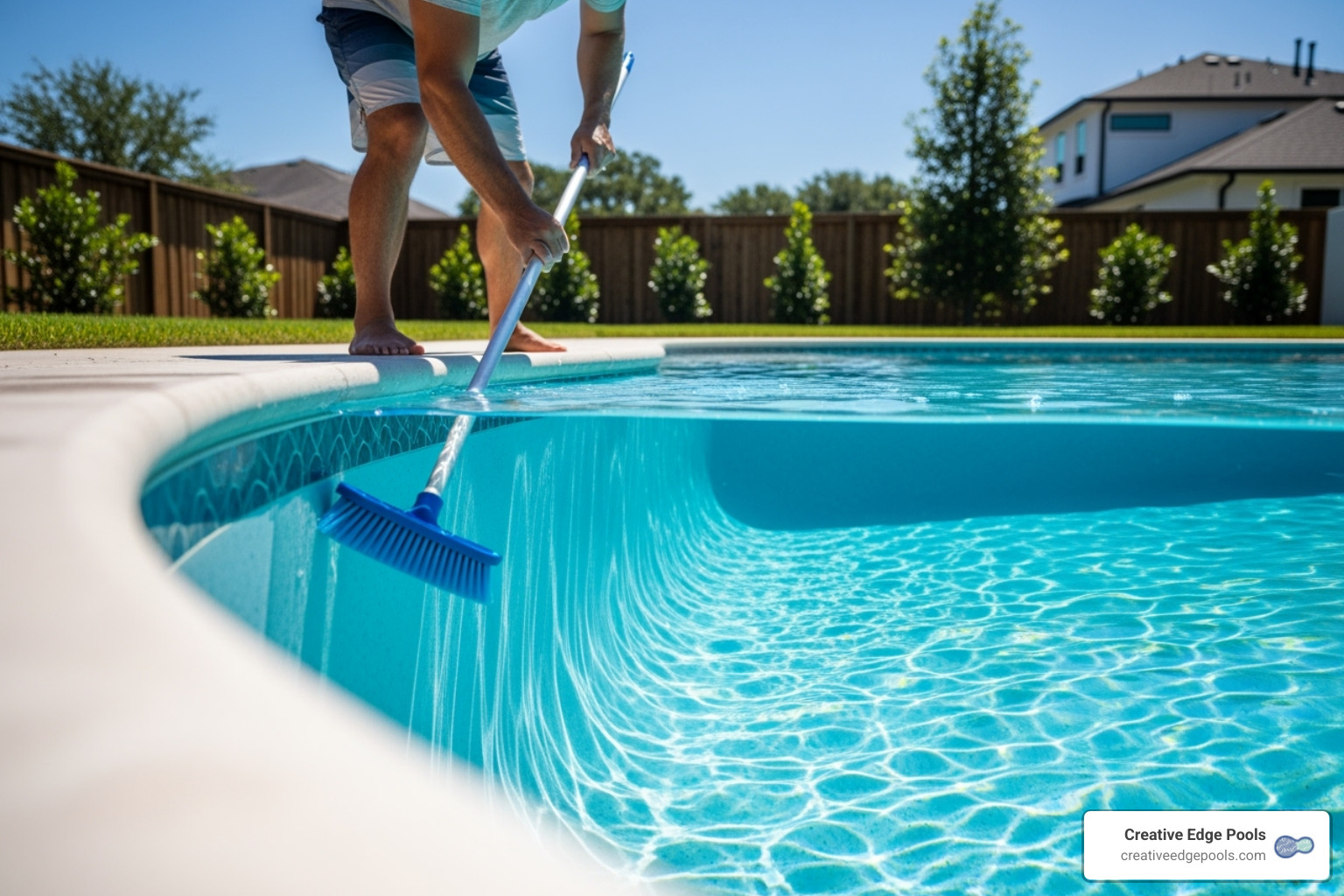
- Brush Daily: Brush the entire pool surface twice daily for the first week, then once daily for the next few weeks. This removes fine “plaster dust” and helps the surface cure smoothly.
- Run the Filter: Operate the pool filter continuously for the first week to clear the water and aid circulation.
- Balance Water Chemistry: This is paramount. New plaster will raise the pH of the water. Test daily and add acid as needed to keep the pH between 7.2 and 7.8. Maintain proper total alkalinity and calcium hardness levels.
- Delay Chemicals and Equipment:
- Do not add chlorine until the third day.
- Do not use a pool heater for at least two weeks.
- Do not use a salt chlorine generator or automatic pool cleaners for at least 30 days.
This intensive start-up process is the best way to protect your investment and ensure your new plaster looks great for years.
Long-Term Maintenance and Getting Professional Help
After the first month, good maintenance is key to maximizing your plaster’s lifespan.
Best Practices for Plaster Care:
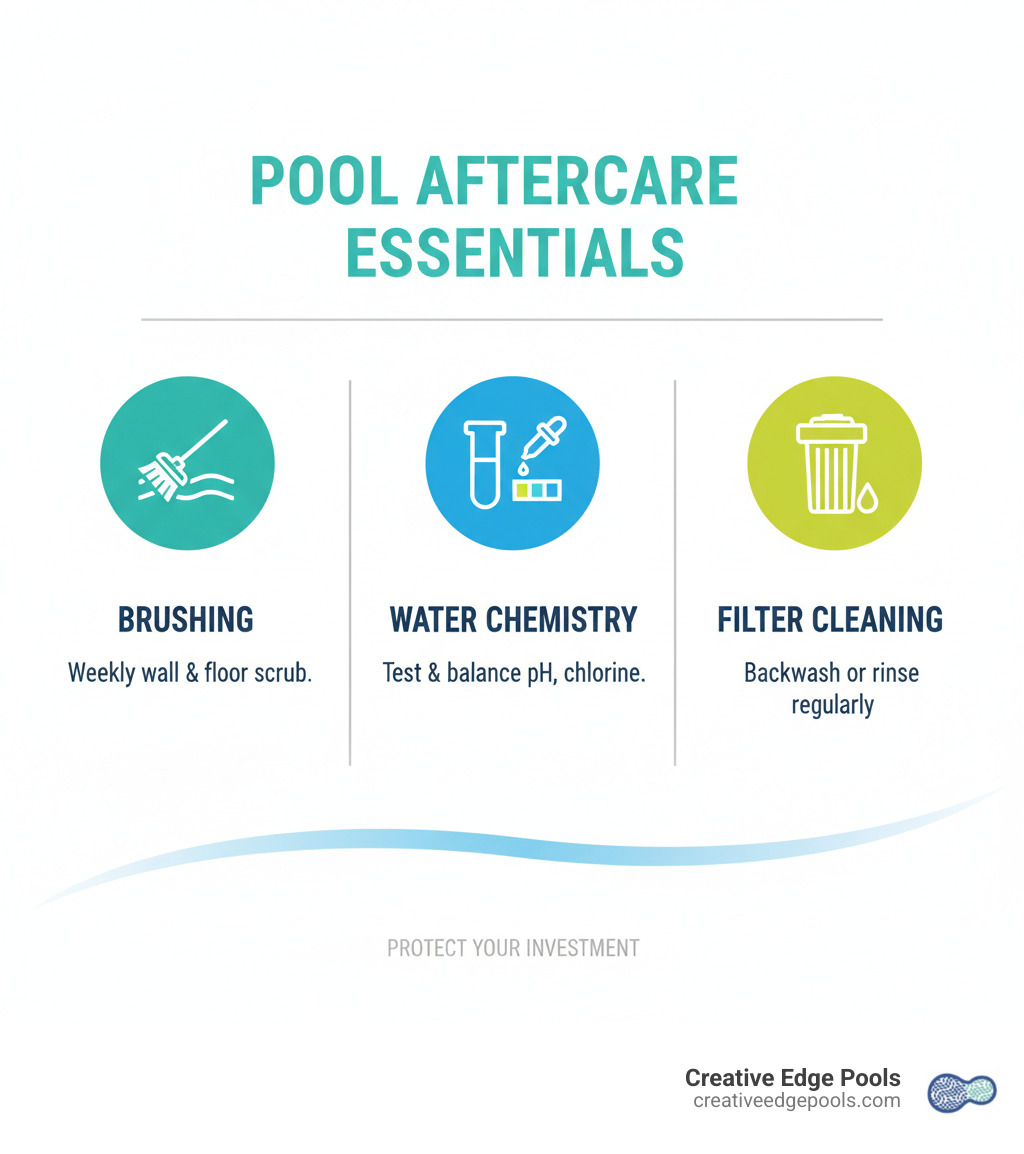
- Consistent Chemical Balance: This is the most critical factor. Regularly test and maintain water to prevent etching or scaling.
- pH: 7.4 – 7.6
- Total Alkalinity: 80 – 120 ppm
- Calcium Hardness: 200 – 400 ppm
- Chlorine: 1 – 3 ppm
- Regular Cleaning: Brush the pool weekly and remove debris promptly to prevent staining and algae growth.
- Professional Help: Choosing an experienced company mitigates risks like poor adhesion, inconsistent finish, or cracking. An expert crew ensures proper surface preparation and application, which are vital for a long-lasting result.
At Creative Edge Pools, we have decades of experience in gunite pool renovations across Eastern Massachusetts and Southern New Hampshire. We specialize in comprehensive backyard projects, from replastering to landscaping and masonry. We manage the entire process to ensure a flawless finish that stands the test of time.
Ready to restore your pool’s beauty? For a flawless finish with our gunite pool resurfacing services, visit our dedicated page: Get a flawless finish with our gunite pool resurfacing services. For more pool tips and to see our work, Follow us on Facebook for more pool tips!