
What to Expect From Inground Pool Construction
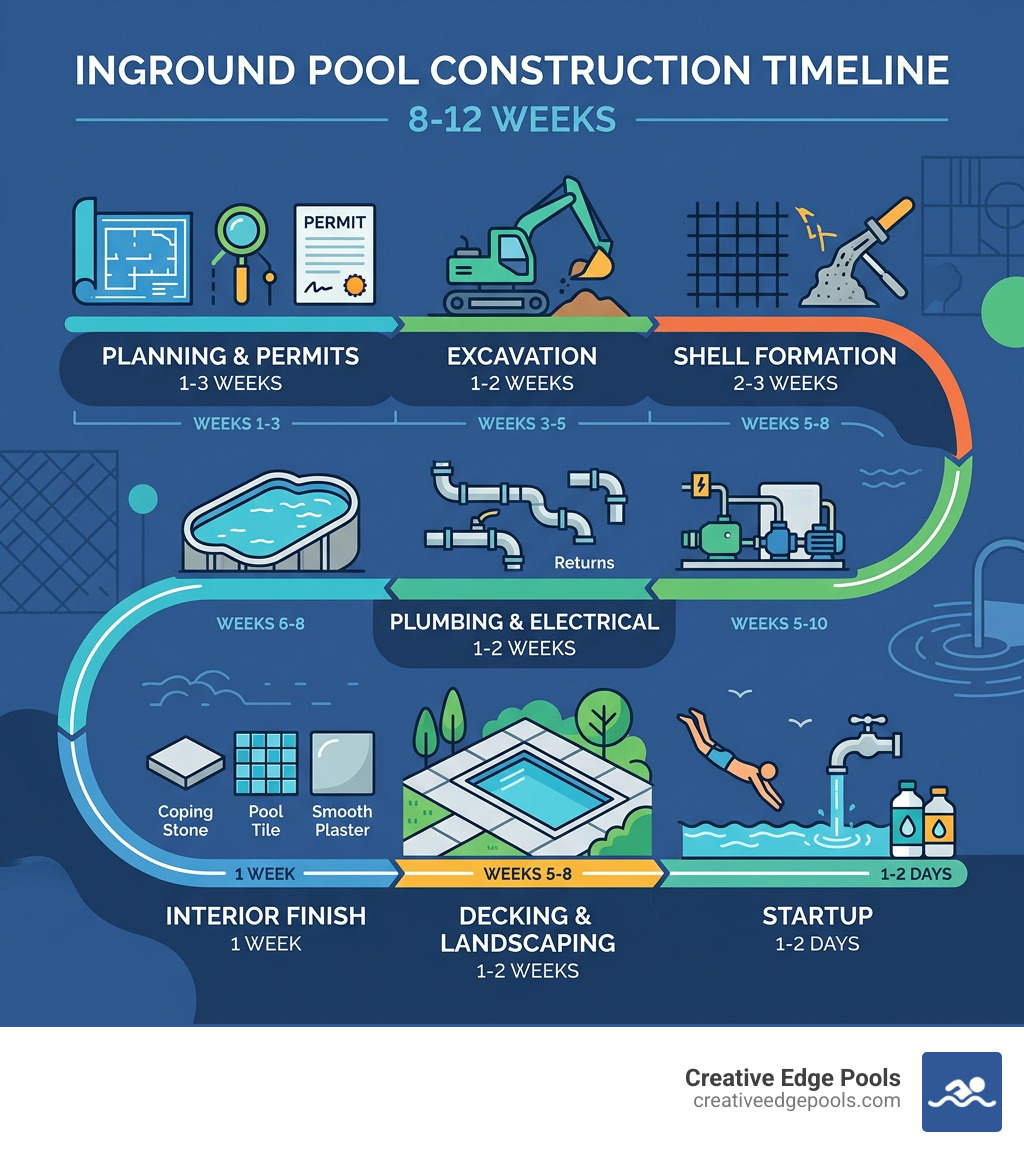
Inground pool construction is a multi-stage process that typically takes 8 to 12 weeks from the first dig to your first dip.
Here’s a quick overview of the main stages:
- Planning and permits – site assessment, design, zoning approvals
- Excavation – heavy machinery digs to precise depths
- Shell formation – rebar framework, then gunite or shotcrete application
- Plumbing and electrical – pipes, returns, skimmers, bonding, equipment pad
- Interior finish – plaster, tile, coping
- Decking and landscaping – concrete, pavers, or natural stone surrounds
- Startup – fill, chemical balance, equipment commissioning
Costs range from around $30,000 for a basic pool to well over $100,000 for a fully custom luxury build with high-end finishes and features.
Building a pool is one of the biggest backyard investments you’ll make. It’s exciting — but it can also feel overwhelming when you don’t know what’s coming next.
Will the excavator wreck my lawn? How long will my yard look like a construction site? What happens if they hit rock?
These are real questions, and you deserve straight answers.
This guide walks you through every stage of the inground pool construction process — from the first shovel in the ground to the moment you jump in. Whether you’re still in the dreaming phase or already talking to contractors, you’ll finish this article knowing exactly what to expect.
Planning and Permits: The Foundation of Inground Pool Construction
Before we ever fire up a backhoe in your backyard in Andover, MA, or Nashua, NH, a massive amount of “invisible” work happens. Think of this as the blueprint phase. We don’t just start digging; we perform a meticulous site assessment to ensure your pool lasts for decades.
Site Assessment and Design
First, we look at the logistics. Where does the sun hit your yard most of the day? Positioning your pool in a sunny spot isn’t just about the tan; it helps naturally warm the water, potentially saving you a fortune on heating costs. We also evaluate drainage. New England weather can be unpredictable, and we need to ensure rainwater flows away from the pool, not into it.
We also have to play “detective” with underground utilities. Striking a gas line or a septic field is a nightmare we avoid through thorough site surveys and marking. During this phase, we help you finalize the pool design and construction details, choosing a shape and depth (typically ranging from 3 to 8 feet) that fits your lifestyle.
Navigating the Legal Waters
In Eastern MA and Southern NH, residential building permits are mandatory. This isn’t just red tape; it’s about safety. Most local municipalities require:
- Zoning Law Compliance: Ensuring the pool is a safe distance (often 10 feet or more) from your home and property lines.
- Safety Regulations: Most towns require a permanent fence at least 48 inches high with self-closing, self-latching gates.
- Electrical and Plumbing Permits: To ensure all bonding and filtration systems meet strict building codes.
Choosing Your Inground Pool Type: The Gunite Advantage
When you invest in an inground swimming pool, you have choices: vinyl, fiberglass, or concrete. At Creative Edge Pools, we specialize in the concrete swimming pool—specifically, gunite.
Why gunite? While vinyl liners are budget-friendly initially, they often need replacement every 5 to 9 years due to tearing or fading. Fiberglass is quick to install but limits you to pre-made factory shapes. Gunite pools offer “infinite” design flexibility. If you can dream of a vanishing edge, a built-in tanning ledge, or a custom spa, gunite can make it happen.
Long-Term Value and Maintenance
A gunite shell is incredibly durable, backed by a lifetime structural warranty in many cases. While the initial cost is higher—often starting around $130,000 for a complete “environment” (pool, patio, and fencing)—the long-term value is unmatched. You will need to resurface the interior every 10 to 15 years, but the structure itself is built to withstand the harsh New England freeze-thaw cycles better than any other material.
The Step-by-Step Inground Pool Construction Process
Once the permits are in hand, it’s time for inground swimming pool construction to begin. This is the “messy” phase where your backyard transforms from a lawn into a workspace.
Excavation and Steel Phase of Inground Pool Construction
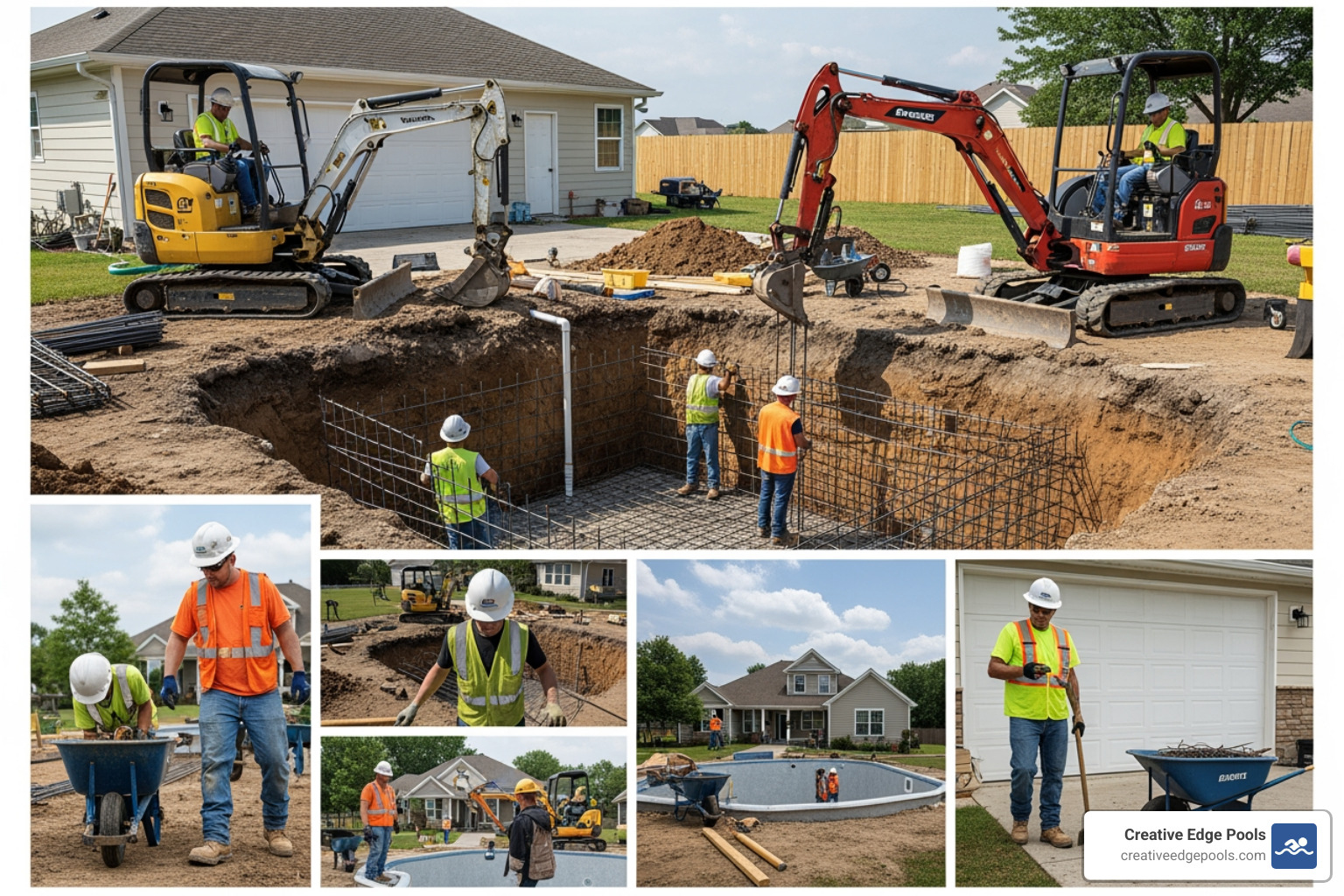
The “Big Dig” is usually the loudest and dirtiest part of the job. We use heavy machinery to excavate the area, typically digging about 6 inches deeper and wider than the finished pool size (known as “over-dig”) to allow room for the forms and plumbing.
- Precision Leveling: We use a transit or laser level to ensure the floor and walls are perfectly balanced.
- The Rebar Skeleton: After the hole is shaped, we install a thick web of steel rebar. This is the “bones” of your pool. This framework provides the structural stabilization needed to hold thousands of gallons of water.
- Soil Considerations: If we encounter unstable soil or heavy clay, we add extra reinforcement to prevent the shell from shifting.
Learning how to build a gunite pool correctly means never cutting corners on the steel phase. In our region, the ground moves as it freezes; a strong steel cage ensures your pool moves with the earth, not against it.
Plumbing, Electric, and Finishing Your Inground Pool Construction
With the steel in place, we run the “veins” of the pool. This includes:
- Plumbing: Installing the main drains, skimmers, and return lines. We use rigid PVC and pressure-test everything before the concrete is poured.
- Electrical: A licensed electrician performs “bonding,” which connects all metal components to a grounding wire to ensure the pool is 100% electrically safe.
Next comes the gunite pool installation itself. Gunite is a mixture of cement and sand sprayed through a high-pressure hose onto the rebar. It creates a seamless, monolithic shell. Once the gunite is sprayed, it needs to “cure” for about 7 to 10 days, during which time you might even help by lightly hosing it down with water!
The Finishing Touches
After curing, we apply the “jewelry”:
- Tile and Coping: We install the tile insets along the waterline and the coping stones (the “cap” on the pool edge).
- Decking: Whether it’s pavers, stamped concrete, or natural stone, the deck ties the pool to your home.
- Interior Finish: Finally, we apply the plaster or pebble finish. This is the waterproof layer that gives the water its color.
Costs, Timelines, and Common Challenges
Let’s talk numbers. While a basic 16×32 vinyl pool might have a base price in the $20,000-$40,000 range (excluding decks and extras), a custom gunite pool in Massachusetts or New Hampshire typically falls between $50,000 and $100,000+.
Factors Affecting Your Budget:
- Excavation Fees: Standard digs cost $1,500 – $5,000, but “surprises” can change that.
- Rocky Soil: New England is famous for its granite. If we hit a ledge, we may need to use a hydraulic hammer or even blasting, which adds to the cost.
- Finishes: Glass tile or high-end pebble finishes can add several thousand dollars.
- Equipment: Heat pumps, salt chlorine generators, and automation systems are popular add-ons.
Common Challenges
The biggest hurdle is often the weather. Heavy rain can delay excavation or prevent gunite from being sprayed. We also have to account for “groundwater.” If we dig and find a high water table, we install a “sump” system to pump the water away so the shell doesn’t “float.”
Frequently Asked Questions about Inground Pool Construction
How long does it take to build an inground pool?
Typically, the process takes 8 to 12 weeks. This includes 2-3 weeks for plans and permits and 7-9 weeks for actual construction. Factors like design complexity, curing time for the concrete, and local weather can shift this timeline.
What permits are required for pool construction?
You will need a residential building permit, an electrical permit, and a plumbing permit. Most of these are handled by us as your pool contractor, but they require inspections at various stages—like after the rebar is set and before the deck is poured—to ensure everything is up to code.
How do you handle rocky soil during excavation?
If we hit rock, we have three main options:
- Hammering: Using a large hydraulic hammer attached to an excavator.
- Blasting: For massive ledges that can’t be hammered.
- Pool Elevation: Sometimes we can “raise” the pool slightly so we don’t have to dig as deep into the rock, creating a beautiful semi-inground look with custom stone tiers.
Conclusion
Building an inground pool is a journey that transforms your home into a personal oasis. While the inground pool construction process has many moving parts, working with an experienced pool builder makes all the difference.
At Creative Edge Pools, we bring over 100 years of combined family experience to every project. We don’t just build pools; we develop full-service backyard environments tailored to your life. From the first bucket of dirt to the final chemical balance, we are there to ensure your vision becomes a reality.
Ready to start your backyard transformation? Contact our gunite pool builders in Andover, MA today for a consultation. Let’s get you from the “dig” to the “dip”!
