
Concrete Pool Plaster Repair: 3 Simple Steps
Is Your Pool Plaster Past Its Prime?
Concrete pool plaster repair becomes necessary when you notice cracks, rough spots, or flaking areas on your pool’s surface. Here’s what you need to know:
Common Repair Types:
- Minor patches – Small cracks and chips (DIY-friendly)
- Spot repairs – Spalling and delamination areas
- Full resurfacing – Extensive damage (professional required)
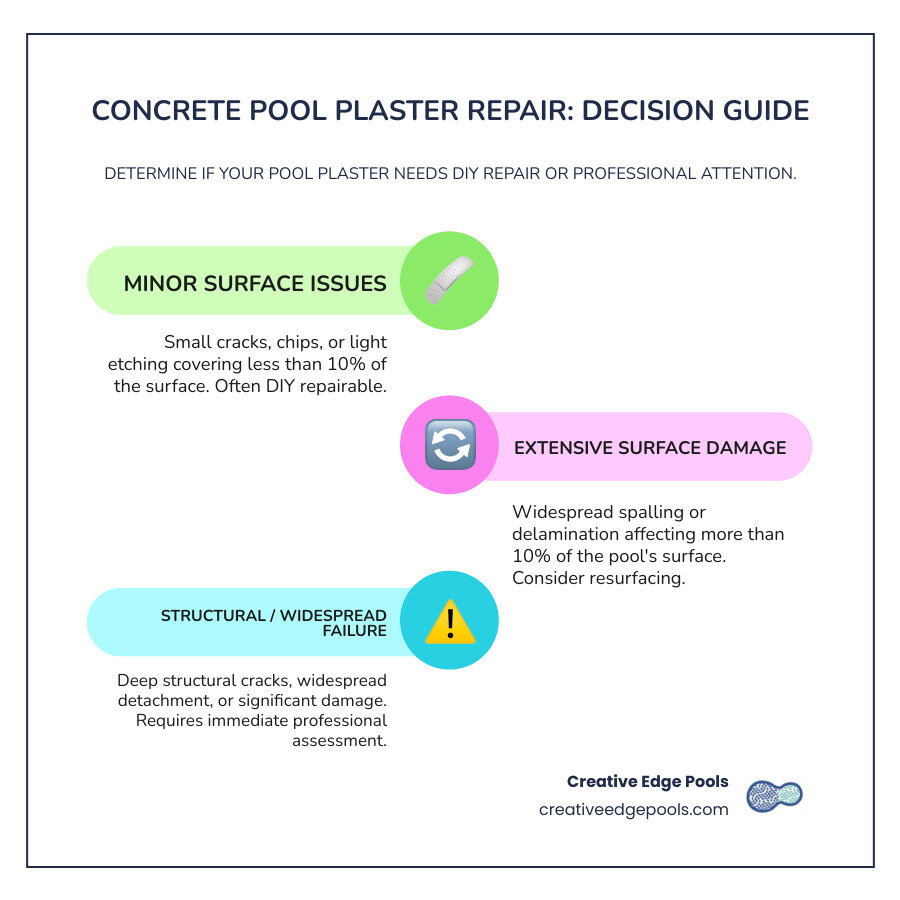
Quick Decision Guide:
- Damage covers less than 10% of surface → Patch it
- Damage covers more than 10% → Consider resurfacing
- Structural cracks or widespread issues → Call professionals
Your pool’s plaster finish typically lasts 5-15 years depending on the type. White plaster averages 5-15 years, while quartz finishes can exceed 10 years, and pebble finishes often last over 15 years.
The good news? Many concrete pool plaster repair jobs are manageable DIY projects if caught early. Small cracks, minor spalling, and surface etching can often be fixed with the right materials and techniques. However, extensive delamination, structural cracks, or damage covering large areas requires professional intervention.
I’m David Brabant, owner of Creative Edge Pools with over thirty years in the swimming pool industry, including experience in concrete pool plaster repair and gunite pool construction. Throughout my career, I’ve seen every type of plaster issue and helped countless homeowners determine when to repair versus when to resurface.
Your How-To Guide for Concrete Pool Plaster Repair
When you’re standing by your pool and notice those telltale signs of wear – a rough patch here, a hairline crack there – it’s natural to feel a bit overwhelmed. But here’s the good news: understanding what’s happening with your pool’s plaster and knowing how to address it doesn’t have to be complicated. With the right knowledge and approach, you can tackle many concrete pool plaster repair projects yourself and know exactly when it’s time to call in the professionals.
First, Diagnose the Damage
Think of yourself as a pool detective for a moment. Before you can fix anything, you need to understand exactly what you’re dealing with. Each type of plaster damage has its own personality, causes, and solutions.
Crazing shows up as those fine, spiderweb-like cracks that seem to appear overnight. While they look concerning, these hairline cracks are usually just cosmetic – they’re caused by the plaster shrinking as it cures. The main worry with crazing is that these tiny cracks can become prime real estate for algae and stains.
Etching is when your pool’s surface starts feeling like sandpaper under your feet. This happens when your water chemistry gets out of balance – specifically when pH, alkalinity, or calcium hardness drops too low. Essentially, your water becomes “hungry” and starts dissolving the plaster to satisfy its mineral needs.
Spalling is more dramatic – you’ll see thin layers of plaster (about 1/16 to 1/8 inch thick) actually flaking or peeling off the surface. This usually traces back to installation issues, where too much water was worked into the surface during the original plastering process, creating a weak top layer that eventually gives up.
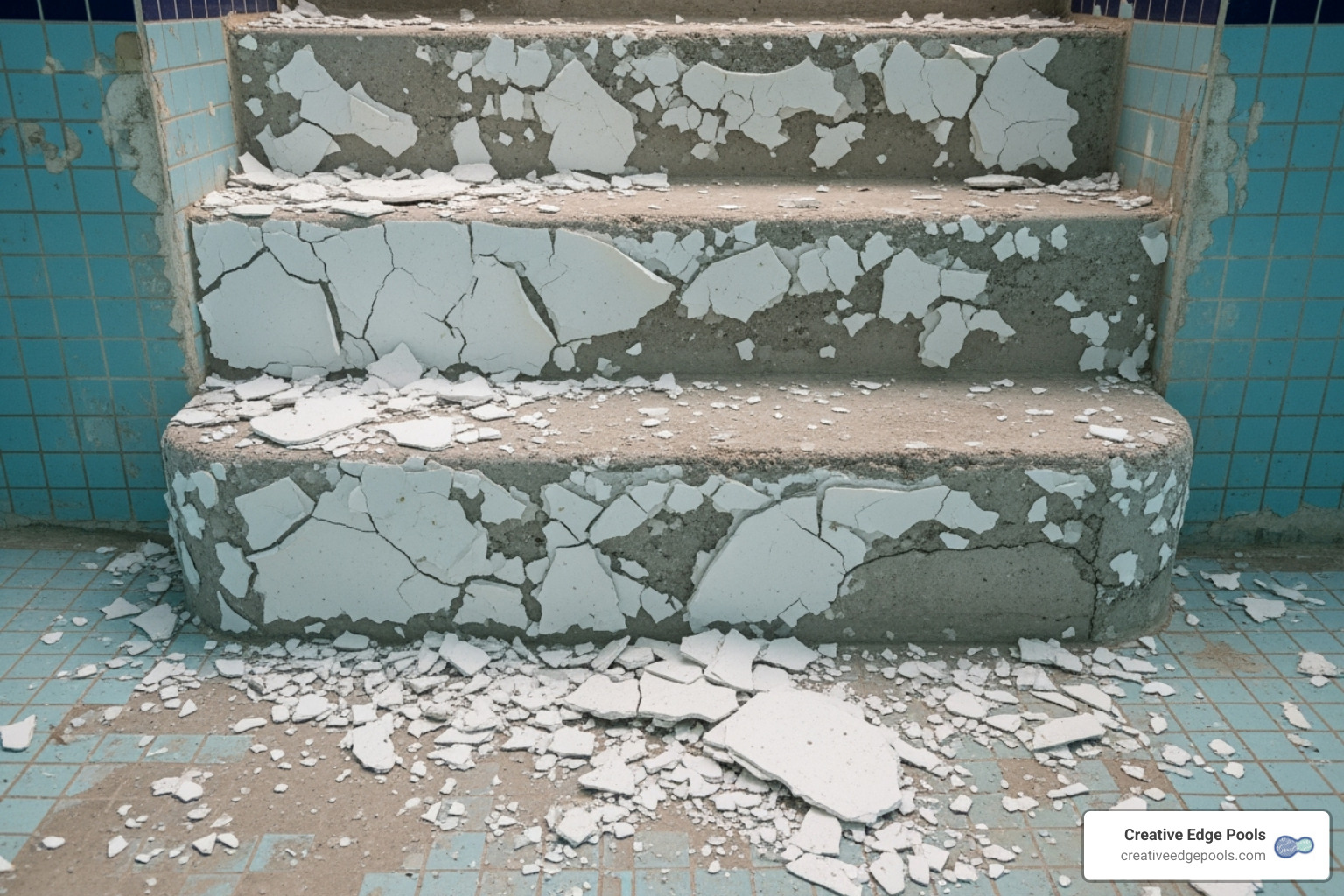
Delamination is the serious cousin of spalling. Here, the plaster completely separates from the concrete shell underneath. You can actually hear it – tap the area with a hammer handle, and it’ll sound hollow. This typically happens when there wasn’t a good bond between the plaster and concrete from the start.
Stains come in two flavors: organic (from leaves, dirt, or algae) and inorganic (from metals like copper or iron). Both can be stubborn, but they respond to different treatments.
The culprits behind these problems usually fall into three categories. Water chemistry imbalances are the biggest troublemaker – consistently wrong pH or mineral levels will eat away at or deposit minerals on your plaster. Poor installation can haunt you for years, with issues like improper surface prep or incorrect plaster ratios eventually showing their faces. And sometimes, it’s simply age and wear – all plaster has a lifespan, and as it ages, the cement washes away, leaving the sand aggregate exposed and rough.
Keep your eyes peeled for warning signs: surfaces that feel rough or abrasive, persistent discoloration that won’t scrub away, any visible cracks (no matter how small), flaking or peeling areas, hollow sounds when you tap the walls, or unexplained leaks. For more complex structural issues, our guide on gunite pool crack repair can help you identify when you’re dealing with something more serious.
Repair or Resurface? Making the Right Call for Your Concrete Pool Plaster Repair
Here’s where we separate the quick fixes from the major renovations. The decision between patching and resurfacing can save you thousands of dollars – or cost you if you choose wrong.
Patching is your go-to for localized problems: small cracks, chips, minor spalling, or small delaminated spots. It’s like putting a band-aid on a cut – quick, affordable, and effective for isolated issues. Resurfacing, on the other hand, is major surgery. You’re removing the entire existing finish and applying a brand new layer to the whole pool.
Here’s our time-tested rule: if damage covers less than 10% of your total pool surface, patching usually makes financial sense. But when damage is widespread, when you’re looking at multiple problem areas, or when you’re dealing with extensive delamination, resurfacing becomes the smarter long-term investment. Think of it this way – patching a pool that’s falling apart everywhere is like painting a house with a rotting foundation.
When you do decide to resurface, you’ve got some exciting options. White plaster is the classic choice – economical and timeless, giving you that brilliant blue water color we all love. It typically lasts 5 to 15 years and runs about $5 per square foot professionally installed.
Quartz finishes step things up a notch. They’re harder and more durable than traditional plaster, offering better resistance to chemical etching and staining. They come in various colors and typically last over 10 years, though they’ll cost you around $10 per square foot.
Pebble finishes are the marathon runners of pool surfaces. These natural stone finishes can last over 15 years and provide a beautiful, slip-resistant texture that feels great underfoot. They’re an investment upfront but pay dividends in longevity.
| Feature | DIY Patching | Professional Resurfacing |
|---|---|---|
| Cost | Low ($25-$180 for materials) | High ($10,000 and up) |
| Time | Hours to a few days | 5-7 days (plan for 14 with weather) |
| Skill Level | Moderate | Expert required |
| Best For | Small cracks, chips, minor issues | Widespread damage, full makeover |
For more detailed guidance on timing your resurface, check out our article on when to resurface your gunite pool.
A Step-by-Step Guide to Minor Concrete Pool Plaster Repair
Roll up your sleeves – it’s time to get your hands dirty! For small cracks, chips, or minor spalling, a well-executed patch can buy you years of continued pool enjoyment.
Safety first – grab your gloves, eye protection, and a dust mask. Pool repair involves chemicals and dust that you don’t want in your lungs or eyes.
Start by partially draining your pool to get the water level below your repair area. If you’re fixing floor damage, you’ll need to drain completely. Here’s a pro tip: if you’re draining entirely and live in an area with high groundwater, remove the hydrostatic relief valve to prevent your pool from literally floating out of the ground.
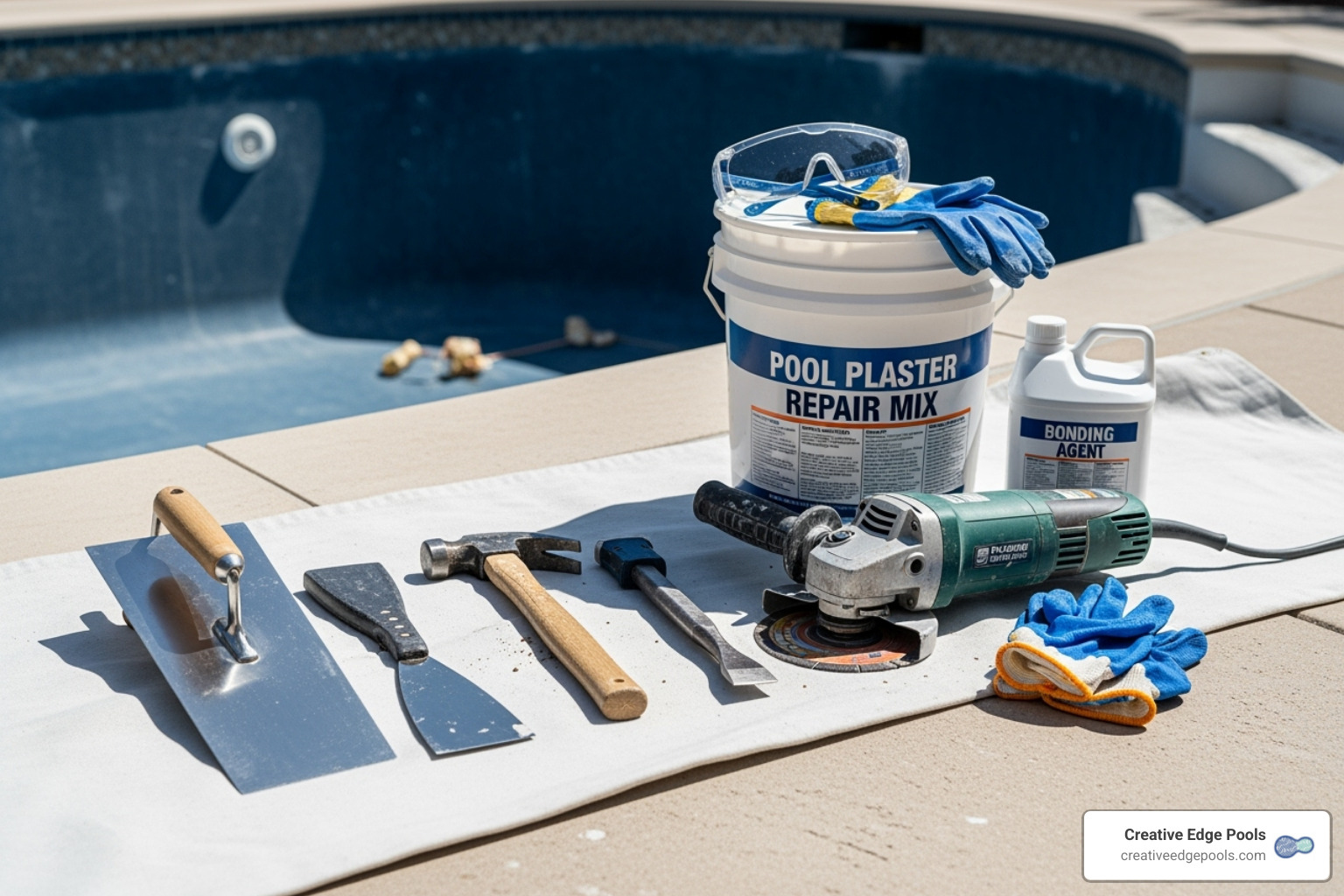
Remove all loose plaster using a hammer and chisel. This step separates the amateurs from the pros – you need to get down to solid, stable material, even if it means making the hole bigger. Start from the center and work outward. For cracks, use an angle grinder to cut a V-groove or undercut the crack. This gives your patch more surface area to grab onto.
Surface preparation is absolutely critical. Rinse everything thoroughly, then consider a localized acid wash. Mix about 1 part muriatic acid to 7-10 parts water (always add acid to water, never the reverse). Let it fizz for about 60 seconds, then rinse thoroughly. Follow up with a TSP (Trisodium Phosphate) rinse to neutralize any remaining acid.
Now for the mixing magic. Many pool plaster patch kits are fantastic for DIY repairs – a 1-pound jar typically covers about 1/3 square foot and some can even be used underwater. The consistency should be like slightly damp sand – not soupy, not crumbly. Always check the product instructions for specific mixing ratios.
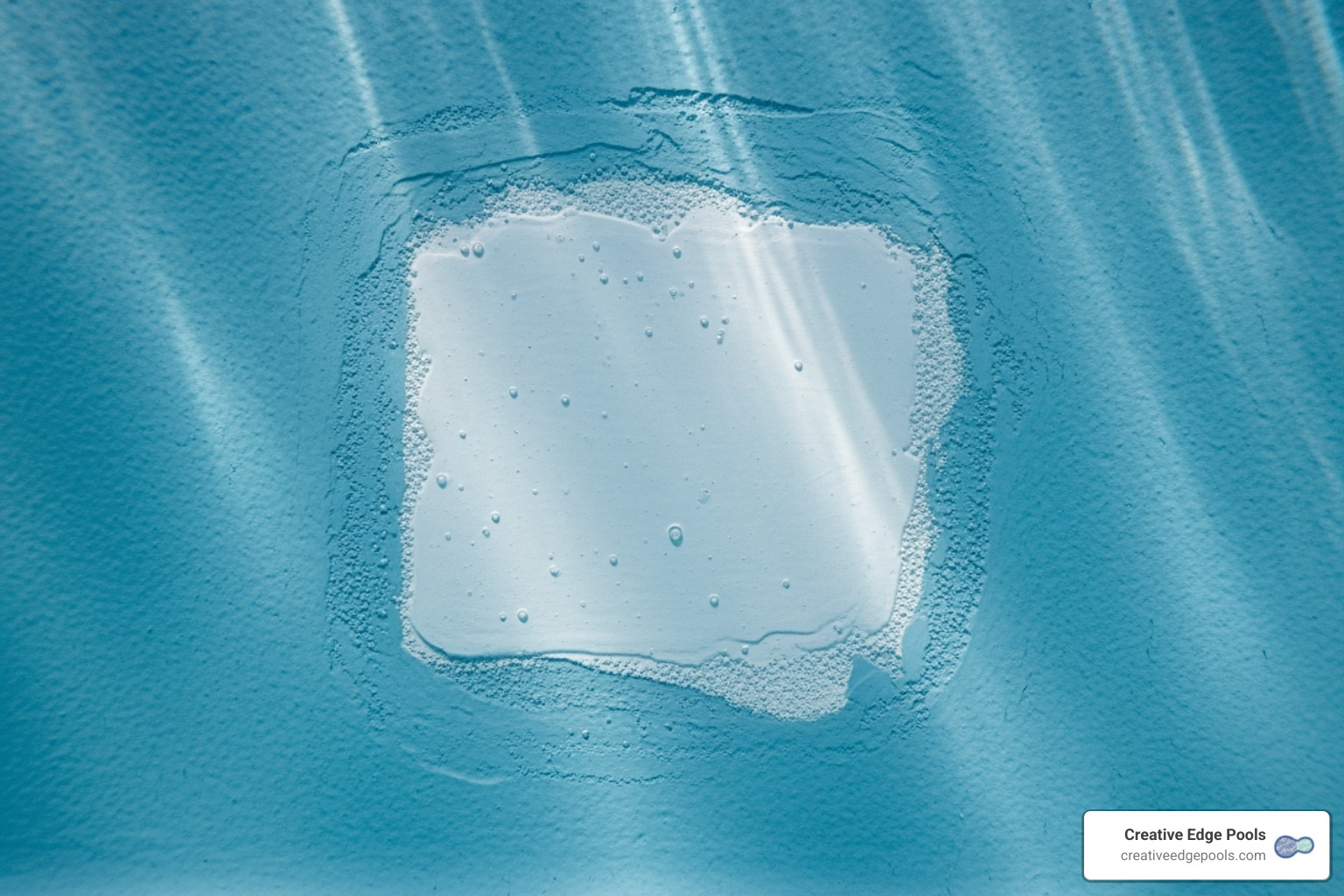
Apply your patch firmly, pressing it into every void and crevice. Work quickly but don’t rush the smoothing process. Use a pool trowel to blend the edges seamlessly with the existing plaster. Limit yourself to two or three trowel passes to avoid bringing too much water to the surface.
Curing is crucial – keep the patch moist during the initial cure by misting it lightly or shading it from direct sun. Once it’s hard to the touch (anywhere from 2 to 12 hours depending on temperature), you can refill your pool. The water actually helps the patch cure properly.
For more comprehensive gunite repairs, our gunite pool repair guide covers additional techniques and considerations.
Pro Tips for a Lasting Patch and Future Prevention
Let’s talk about the reality of concrete pool plaster repair – it’s equal parts art and science, with a healthy dose of acceptance thrown in.
Color matching is probably going to be your biggest frustration. New patches almost always look different from aged plaster – brighter, cleaner, just… different. Some products let you add dyes, but perfect matches are rare. Think of it as giving your pool some character rather than a flaw.
Poor adhesion kills more patches than anything else. This almost always comes down to rushing the preparation phase. Take your time removing loose material, cleaning thoroughly, and properly undercutting cracks. A patch that fails after a few months usually failed in the first few minutes due to poor prep work.
Water chemistry is your plaster’s best friend or worst enemy. Keep your pH between 7.4 and 7.6, your alkalinity between 80-120 ppm, and your calcium hardness between 200-400 ppm. Water that’s out of balance will either eat your plaster (too low) or coat it with scale (too high).
Regular brushing might seem tedious, but it’s like flossing your teeth – a little prevention goes a long way. Brush your pool walls and floor weekly to prevent algae buildup and remove surface deposits before they become permanent stains.
Clean debris promptly – don’t let leaves and dirt throw a party on your pool floor. They’ll leave stains that can become permanent reminders of your procrastination.
When adding chemicals, never pour concentrated chemicals directly onto the plaster. Pre-dilute everything and distribute it evenly. Your plaster will thank you by not developing mysterious burn marks or etch spots.
For ideas on different finishes that might be more durable for your next resurface, explore our pool plaster finish options to see how different materials stack up in terms of longevity and maintenance.
Conclusion: Know When to Call the Professionals
We’ve covered a lot of ground today, from diagnosing common plaster problems to tackling your own concrete pool plaster repair projects. The truth is, many homeowners can successfully handle small chips, hairline cracks, and isolated areas of spalling with the right materials and a bit of patience. These DIY repairs can save you hundreds or even thousands of dollars while giving you a real sense of accomplishment.
But here’s where experience matters most – knowing when to stop and call in the professionals. After three decades in this business, I’ve seen too many well-intentioned homeowners turn small problems into big, expensive ones by pushing beyond their skill level.
When should you definitely call a professional? If you’re dealing with extensive damage covering more than 10% of your pool surface, it’s time to step back. Widespread delamination – where large areas sound hollow when you tap them – requires specialized equipment and techniques that go far beyond a simple patch job. Most importantly, any structural cracks that run deep into the gunite shell or show signs of movement need immediate professional attention. These aren’t cosmetic issues – they’re potential safety hazards.
A full pool resurfacing project is quite an undertaking. It starts with completely draining your pool, then involves aggressive surface preparation using hydroblasting or sandblasting to remove the old finish. Any structural issues get addressed before applying your chosen new finish – whether that’s classic white plaster, durable quartz, or long-lasting pebble. The entire process typically takes 5 to 7 days, though we always recommend planning for up to 14 days in case Mother Nature has other ideas.
Yes, professional resurfacing is a significant investment – typically $10,000 and up depending on your pool size and finish choice. Compare that to a $26 patch kit, and the difference seems dramatic. But when you’re facing recurring problems, multiple patches, or damage that’s just too extensive for DIY fixes, resurfacing becomes the smart financial choice. You get a completely refreshed pool, a new warranty, and years of worry-free swimming.
At Creative Edge Pools, we bring the same attention to detail to pool renovations that we put into our custom gunite installations. We’ve helped countless homeowners in Eastern Massachusetts and Southern New Hampshire transform tired, damaged pools into backyard showpieces. Whether it’s selecting the most durable finish materials or ensuring proper curing for long-term performance, we handle every detail so you can focus on enjoying your pool.
Don’t let plaster problems keep you from enjoying your backyard oasis. If your pool is showing widespread damage or you’re facing issues beyond simple patching, we’re here to help you explore your options.
Ready to dive into your next pool project? For more pool tips, renovation inspiration, and behind-the-scenes looks at our latest projects, follow us on Facebook. We love sharing what we’ve learned over the years – and trust me, we’ve learned a lot!
