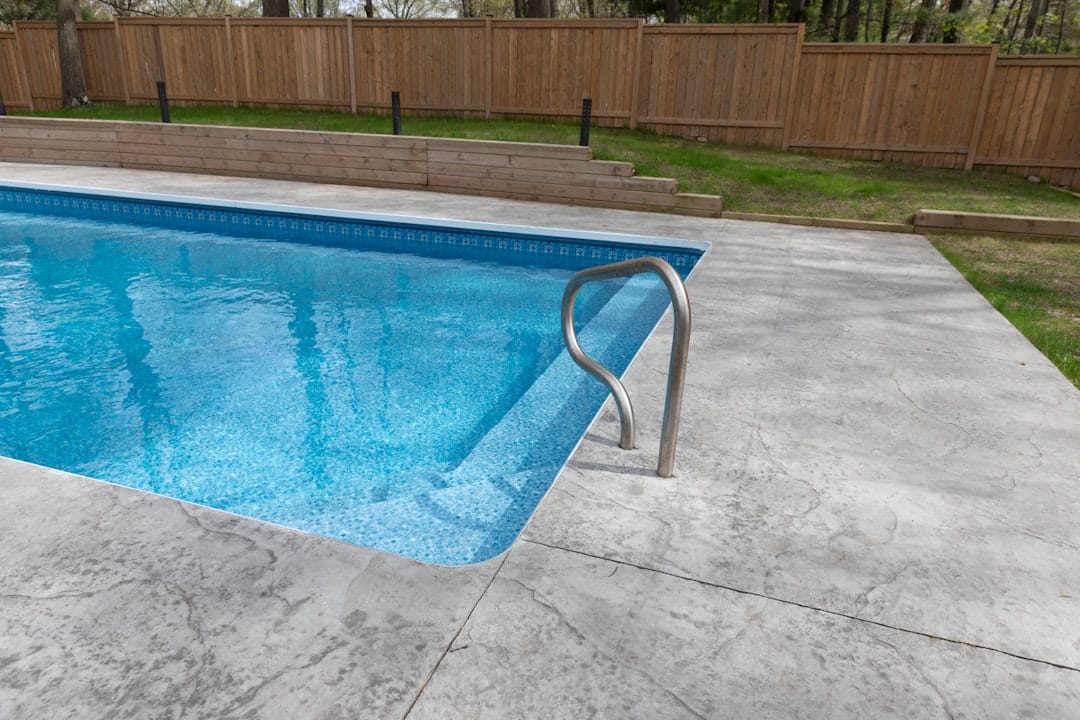
Affordable inground pools Massachusetts: 7 Best Value Picks 2025
Why Massachusetts Homeowners Are Choosing Affordable Pool Options
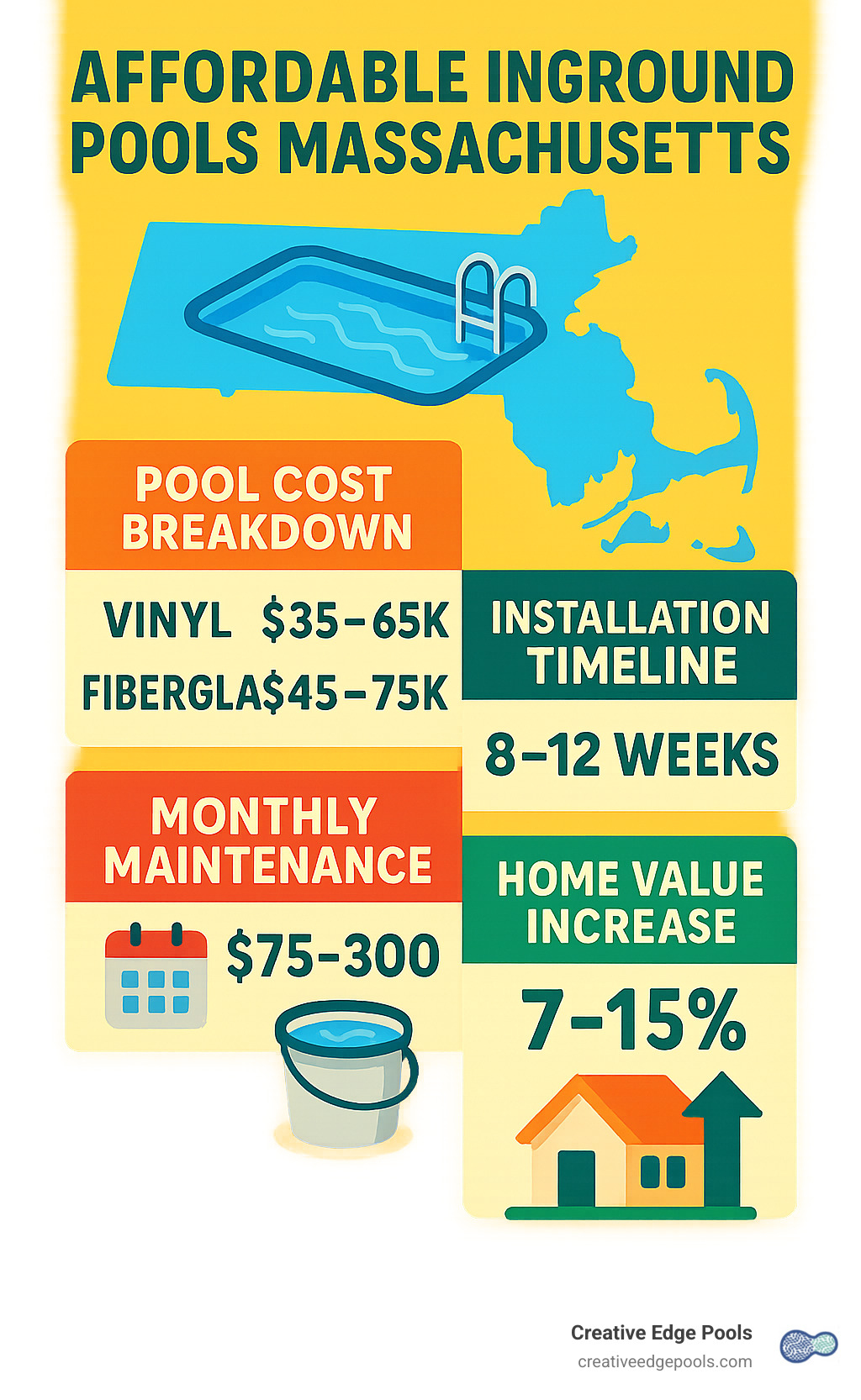
Affordable inground pools Massachusetts homeowners are finding don’t have to break the bank. With vinyl liner pools starting around $35,000 and fiberglass options under $65,000, creating your backyard oasis is more realistic than ever.
Quick Answer for Massachusetts Pool Shoppers:
- Vinyl Liner Pools: $35,000-$65,000 (most budget-friendly)
- Fiberglass Pools: $45,000-$75,000 (low maintenance)
- Basic Gunite Pools: $78,000+ (fully customizable)
- Average Total Cost: $54,000-$73,000 installed
- Best Savings: Off-season contracts (fall/early spring)
The Bay State’s warm summers and growing focus on outdoor living have made pools increasingly popular. Recent data shows Massachusetts ranks in the top 10 states for pool ownership with roughly 228,000 inground pools. Homes with pools see property value increases of 7% to 15%, making this investment both enjoyable and financially smart.
“When considering the inground pool cost in Massachusetts, it’s important to recognize the diverse benefits that come with owning one in this region—from increasing your property’s value to providing a private oasis to escape the summer heat,” notes industry research on regional pool trends.
I’m David Brabant, owner of Creative Edge Pools, and I’ve spent over thirty years helping Massachusetts families find affordable inground pools Massachusetts residents love without sacrificing quality. My hands-on experience from warehouse work to excavation supervision gives me unique insight into where costs can be controlled while maintaining the craftsmanship your family deserves.
Affordable inground pools Massachusetts basics:
– how much does it cost for a pool
– pool cost calculator
Affordable Inground Pools Massachusetts: Top 7 Budget Picks
When Massachusetts families ask me about affordable inground pools Massachusetts homeowners can actually enjoy, I always start with the same question: “What matters most to you—lowest upfront cost, easiest maintenance, or fastest installation?”
After three decades in this business, I’ve seen seven distinct pool types consistently deliver real value without breaking the bank. Each has its sweet spot, and understanding these differences can save you thousands while getting exactly what your family needs.
Why Vinyl Liner Leads the “Affordable inground pools Massachusetts” Conversation
Here’s the honest truth about vinyl liner pools: they win the affordability game hands down. At $35,000 to $65,000, they’re typically $10,000-$20,000 less expensive than other options upfront. That’s real money that can go toward a pool heater, safety cover, or landscaping.
The soft-touch vinyl surface feels great under your feet and stays comfortable even in direct sunlight. Kids love it because there’s no rough concrete to scrape against during pool games. Cleaning is straightforward too—that smooth surface doesn’t harbor algae like textured alternatives.
Now, let’s talk about the elephant in the room: liner replacement. Yes, vinyl liners need replacing every 5-9 years, which costs around $4,000-$6,000. But even factoring in this maintenance, vinyl pools often remain the most economical choice over their 20-year lifespan.
I’ve installed vinyl pools on challenging Massachusetts sites where rocky ledge made excavation expensive. The flexibility of vinyl construction allowed us to create custom shapes that worked with existing trees and slopes, keeping costs reasonable while delivering exactly what the homeowner envisioned.
Fiberglass Models Labeled “Affordable inground pools Massachusetts” by 2024 Buyers
Fiberglass pools have become the darling of Massachusetts homeowners seeking affordable inground pools Massachusetts families can be proud of. The magic happens in the installation speed—these one-piece shells arrive pre-manufactured and can be swimming-ready in just 2-6 weeks.
Think about that timeline difference. While your neighbor’s gunite pool is still curing, you’re already hosting pool parties. The smooth gelcoat surface resists algae growth naturally, cutting your chemical costs and weekly maintenance time significantly.
What really sells Massachusetts homeowners on fiberglass is the freeze-thaw resistance. Our brutal winters can crack concrete pools, but quality fiberglass shells flex with temperature changes. Most come with lifetime shell warranties too—that’s peace of mind you can’t put a price on.
The remaining budget-friendly options each serve specific needs. Small plunge pools work beautifully in compact yards, focusing on cooling off rather than lap swimming. These 12×20 foot gems slash excavation and material costs while still delivering that backyard oasis feeling.
Prefab cocktail pools emphasize socializing over swimming—perfect for entertaining. Their shallow depth reduces heating costs significantly. Semi-inground hybrids combine above-ground affordability with inground looks, especially clever on sloped lots where full excavation gets expensive.
Shipping container pools offer industrial chic style with controlled costs, though Massachusetts permitting can be trickier. Finally, DIY-assisted kits let handy homeowners handle decking and landscaping while we manage the technical excavation and shell work—a smart way to cut labor costs without compromising safety.
2024 Cost Breakdown & Smart Savings Hacks
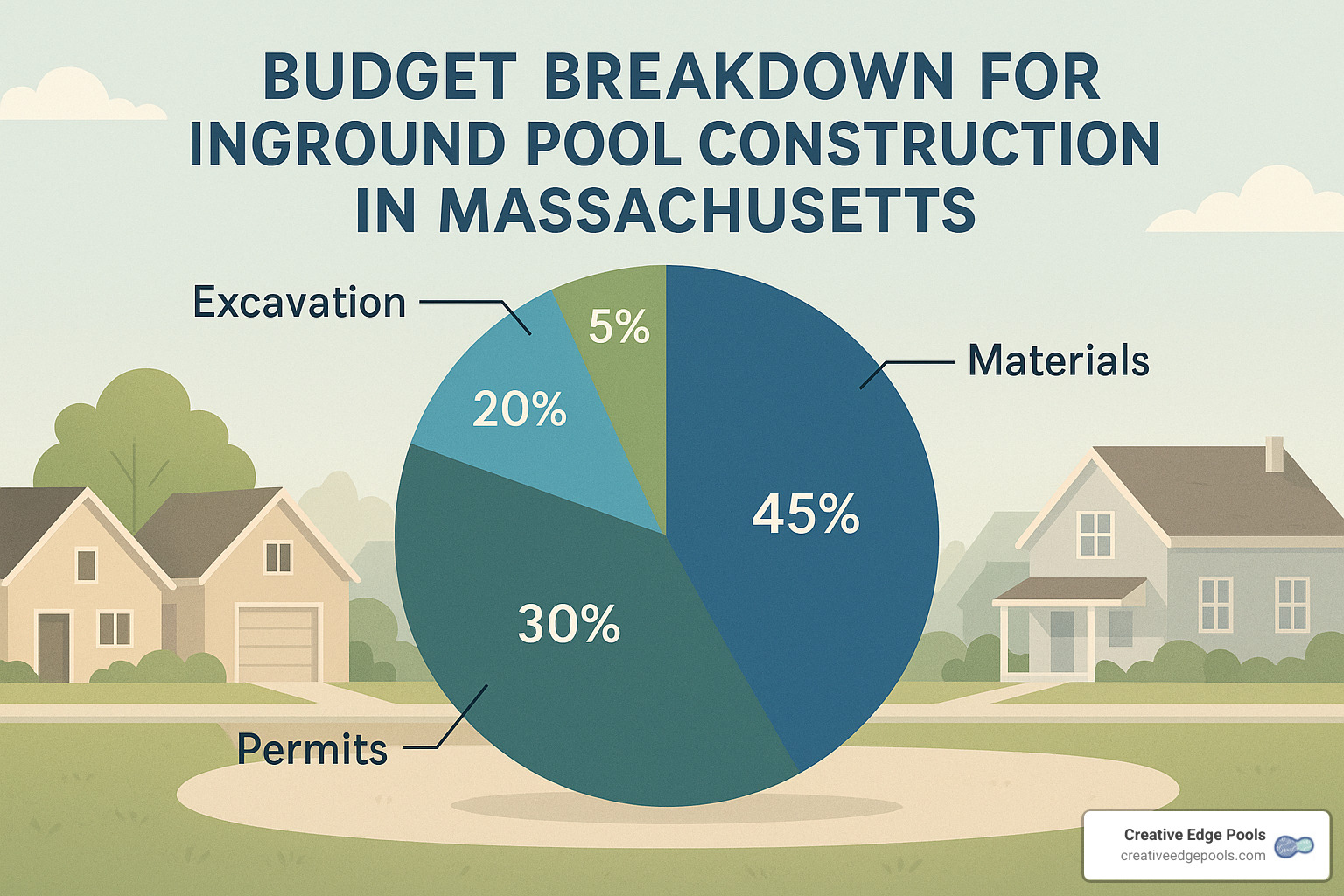
Let’s talk real numbers. After installing hundreds of pools across Massachusetts, I can tell you exactly where your money goes and how to keep more of it in your pocket.
Labor typically eats up about one-third of your total budget. On a $55,000 pool project, you’re looking at roughly $19,000 for the skilled hands that dig, plumb, wire, and finish your pool. This covers everything from the excavation crew to the electrician who connects your filtration system.
Materials claim the biggest slice at 40-45% of your total investment. This includes your pool shell or liner, all the pumps and filters that keep your water crystal clear, and the concrete decking where you’ll spend countless summer evenings.
The remaining 20-25% covers those less glamorous but essential costs like permits and site preparation. Sometimes Mother Nature throws us curveballs that bump this percentage higher, but we’ll talk about avoiding those surprises in just a moment.
| Pool Type | Install Cost | Yearly Maintenance | Expected Lifespan |
|---|---|---|---|
| Vinyl Liner | $35,000-$65,000 | $900-$1,800 | 20+ years (liner: 5-9 years) |
| Fiberglass | $45,000-$75,000 | $600-$1,200 | 25+ years |
| Gunite | $78,000+ | $1,200-$2,400 | 50+ years |
Hidden Fees & How to Avoid Them
I’ve watched too many excited families get blindsided by costs that should have been discussed from day one. Here’s what catches people off guard and how we prevent these unwelcome surprises.
Site preparation can be a budget buster if your yard isn’t pool-ready. That beautiful sloping backyard might need $3,000 to $8,000 worth of grading work. Mature trees that seemed charming during your initial planning suddenly require professional removal. We always walk your property thoroughly before putting pen to paper on any estimate.
Ledge blasting is Massachusetts’ most expensive surprise. Our beautiful New England bedrock doesn’t care about your pool plans. When we hit ledge during excavation, removal costs $15 to $25 per cubic yard. I’ve seen this add $5,000 to $15,000 to a project, which is why we recommend soil testing for affordable inground pools Massachusetts homeowners want to keep truly affordable.
Electrical upgrades catch many homeowners off guard, especially in older homes. Your current electrical panel might not handle the power demands of modern pool equipment. Professional upgrades typically run $1,500 to $4,000, but they’re essential for safety and code compliance.
Permit fees vary wildly across Massachusetts. Boston-area communities often charge $1,000 to $1,500, while rural towns might only require $200 to $500. We handle all permit applications to ensure you get the best possible outcome with local authorities.
Proven Ways to Slice 10-15% Off Your Quote
After three decades of helping families achieve their backyard dreams, I’ve learned exactly where smart savings live. These aren’t corners to cut but strategic choices that preserve quality while protecting your wallet.
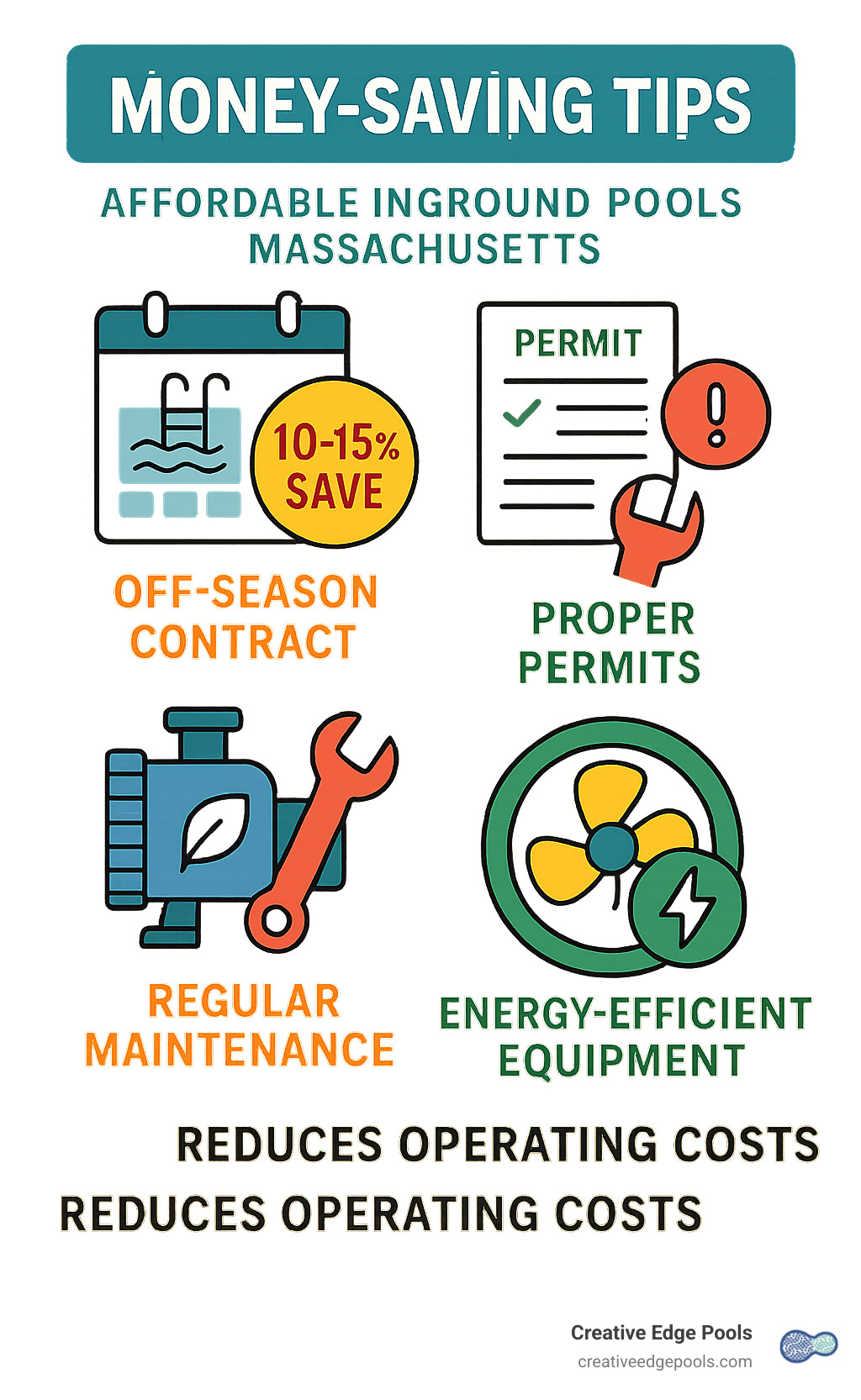
Off-season contracts deliver the most reliable savings. Sign your contract between October and March, and you’ll often save 10-15% compared to peak season pricing. We have more time to focus on your project details, and suppliers offer better pricing during slower months.
Standard shapes like rectangles and kidney designs cost significantly less than complex freeform pools. The math is simple: fewer curves mean less labor, and less labor means more money stays in your pocket. These classic shapes also tend to age better aesthetically.
Bundling landscape work with your pool installation creates surprising efficiencies. When we’re already mobilizing excavation equipment for your pool, adding retaining walls or patio work costs much less than separate projects. The coordination saves time, and time savings translate directly to cost savings.
Energy-efficient equipment costs slightly more upfront but pays dividends for years. Variable-speed pumps and LED lighting systems dramatically reduce operating costs. Swimming pool covers deserve special mention here—Department of Energy research shows they can cut your energy costs by 50-70%. That’s real money back in your pocket every month.
The key to keeping affordable inground pools Massachusetts families love truly affordable is transparency from the start. No surprises, no hidden fees, just honest conversations about what your project really costs and where smart choices can save you money.
Factors Beyond Price: Size, Site & Schedule
Here’s what most homeowners don’t realize about affordable inground pools Massachusetts installations: the “cheapest” pool on paper might end up costing you significantly more if your property throws curveballs during construction.
I’ve seen too many families get excited about a low quote, only to face unexpected costs when we hit ledge at three feet or find their backyard slopes more than initially apparent. Let me walk you through what really drives pool costs beyond the basic price tag.
Your soil tells the whole story before we even break ground. Sandy soils are a pool installer’s dream—they excavate cleanly, drain naturally, and rarely cause surprises. Clay soils need more finesse and often require drainage solutions to prevent future settling issues.
Rocky conditions? That’s where costs can jump dramatically. We’ve had projects where ledge removal added $10,000 to what started as a straightforward installation.
Slope and grading challenges separate simple installations from complex ones. A level backyard means straightforward excavation and standard construction techniques. But when your property slopes toward the house or requires significant grading, we’re looking at retaining walls, additional drainage systems, and creative engineering solutions.
The water table in your area affects both construction methods and long-term pool performance. High water tables require dewatering during construction and might need hydrostatic relief valves to prevent your pool from literally popping out of the ground during wet seasons.
Access for our excavator might seem like a minor detail, but it’s often the difference between a smooth project and a challenging one. Can our equipment reach your backyard without damaging existing landscaping or structures? Tight access means smaller equipment, more hand work, and potentially crane-assisted installation—all adding labor hours to your project.
Typical Timeline for Affordable Installs in Massachusetts
Most homeowners want to know: “When can I be swimming?” Here’s the realistic timeline we’ve developed over hundreds of Massachusetts installations.
Design takes 1-2 weeks when homeowners come prepared with ideas and make decisions efficiently. This phase is where smart choices control costs. We’ll finalize your pool design, select equipment that matches your budget and needs, and plan site logistics to avoid expensive surprises.
Permits require 2-4 weeks and vary dramatically across Massachusetts. Rural communities like those in Western Mass often approve permits within days. Boston-area municipalities might take a month or longer, especially during busy spring months when everyone’s submitting pool applications.
Construction spans 8-12 weeks from excavation to your first swim, depending on pool type and site conditions. Fiberglass pools install fastest since the shell arrives ready to drop in. Vinyl liner pools take a bit longer for the custom framework construction. Weather plays a huge role here—we can’t excavate frozen ground or pour concrete when temperatures drop below freezing.
Spring scheduling fills up fast, so families who plan ahead and sign contracts during fall or winter often get better pricing and preferred scheduling slots.
Ongoing Maintenance Costs by Pool Type
The sticker price is just the beginning. Here’s what affordable inground pools Massachusetts homeowners actually spend to keep their pools running beautifully year after year.
Chemical costs run $75-$300 monthly depending on your pool size, how often it’s used, and how well-balanced your water stays. Fiberglass pools often require fewer chemicals because their smooth, non-porous surface resists algae growth better than other materials.
Winterizing is non-negotiable in Massachusetts and costs $300-$600 annually for professional service. This includes antifreeze for plumbing lines, proper cover installation, and equipment shutdown procedures that prevent expensive freeze damage.
Heating your pool requires serious BTU capacity in our climate. Most Massachusetts pools need 100,000-400,000 BTU heaters to maintain comfortable temperatures. Natural gas heating typically costs $200-$800 monthly during swimming season, depending on your desired temperature and usage patterns.
Pool covers deliver impressive ROI despite their initial cost. Automatic covers run $8,000-$15,000 installed, but they save 50-70% on heating costs while reducing chemical usage by preventing debris and evaporation. Most families see payback within 3-5 years, then enjoy ongoing savings for the cover’s 10-15 year lifespan.
The key is budgeting for these ongoing costs upfront, so your affordable pool stays affordable throughout your ownership.
Rules, Value & Climate-Proof Care
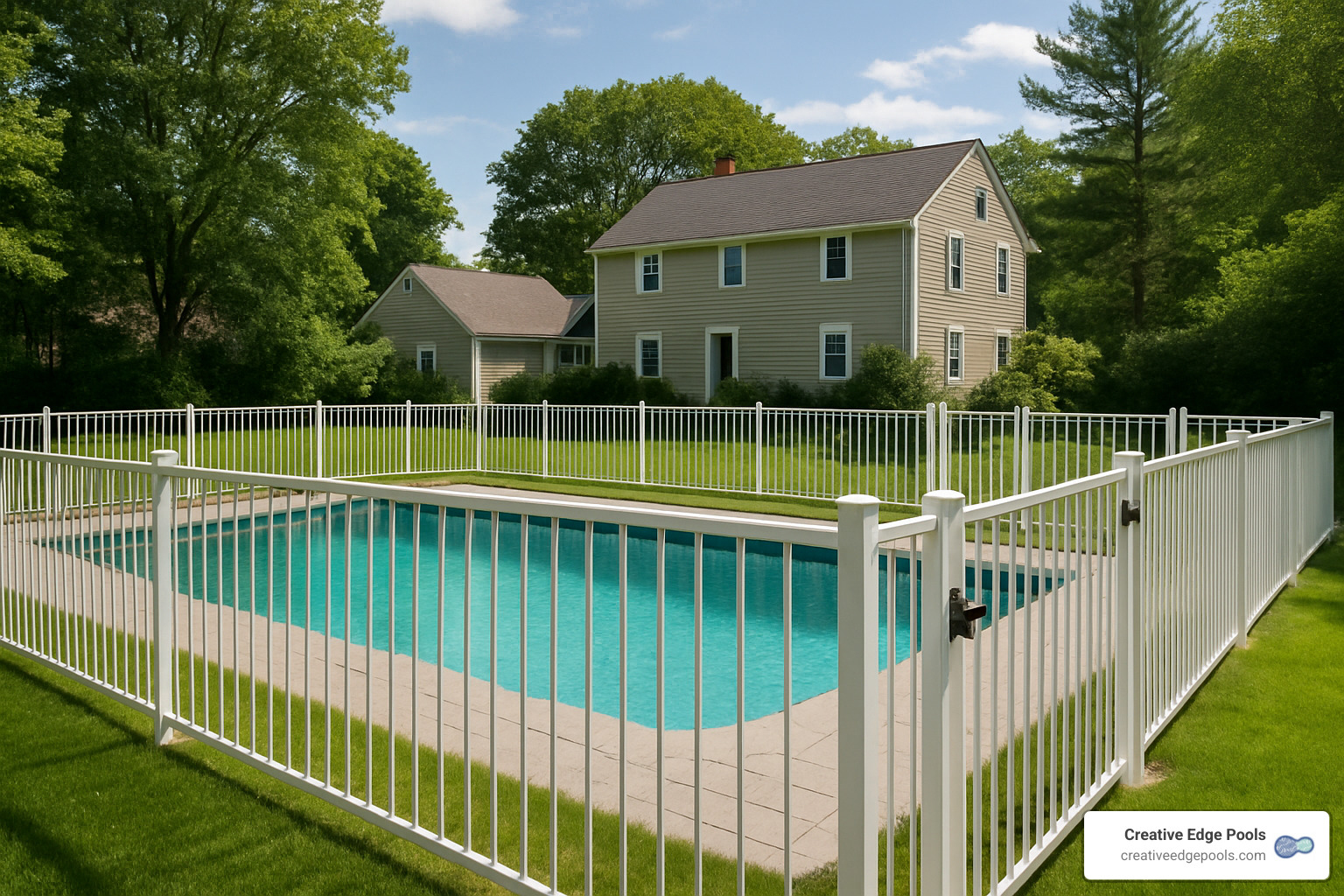
When you’re investing in affordable inground pools Massachusetts families can enjoy safely, understanding the rules upfront saves you from expensive surprises down the road. I’ve seen too many homeowners find compliance issues after installation, turning their dream pool into a costly headache.
Massachusetts takes pool safety seriously, and for good reason. State law requires a 4-foot barrier around all pools, complete with self-closing, self-latching gates. But here’s where it gets tricky – your local community might have stricter requirements. Boston bumps that fence requirement up to 6 feet, while most suburban towns stick with the state minimum.
Setback requirements vary so dramatically across Massachusetts that we always check local codes before breaking ground. In Middleton, your pool needs to sit 12 feet from your house and 20 feet from property lines. Drive into Boston, and you only need 4 feet from lot lines. It’s like each town wrote their own rulebook – because they basically did.
The Massachusetts building code requirements spell out the technical details for safety barriers, electrical work, and structural standards. We handle the paperwork, but understanding these requirements helps you make informed decisions about your pool design.
Your investment pays off beyond just summer fun. With 228,000 pools already installed across Massachusetts, buyers know what to look for. Quality pool installations typically boost home values by 7% to 15%. The exact increase depends on how well your pool integrates with your overall landscape design and matches your home’s quality level.
Best Practices for Cold-Weather Pool Ownership
Massachusetts winters don’t mess around, and neither should your pool care routine. After three decades of helping families through harsh New England seasons, we’ve learned what works and what leads to expensive spring repairs.
Timing your pool closing makes all the difference. We typically close pools between mid-October and early November, watching weather patterns rather than calendar dates. Close too early and you lose precious swimming days. Wait too long and you risk freeze damage that can cost thousands to repair.
Antifreeze protection isn’t optional in our climate. Every single plumbing line must be blown out completely and treated with pool-grade antifreeze. We’ve seen homeowners try to save a few hundred dollars on professional winterization, only to face $3,000+ in burst pipe repairs come spring.
Safety covers need to handle serious snow loads. Most Massachusetts communities see 50-80+ inches of snow annually, which means your cover must be rated for at least 20 pounds per square foot. Skimping on cover quality is like buying a convertible for a blizzard – it’s just not going to end well.
Spring opening requires professional attention to ensure everything starts properly after months of winter storage. This $300-$500 investment prevents equipment damage from improper startup procedures and gets your season off to a trouble-free start.
Common Missteps Massachusetts Homeowners Should Dodge
We’ve guided hundreds of families through pool installations, and certain mistakes pop up repeatedly. Learning from others’ experiences can save you significant money and frustration.
Skipping the soil test is like buying a car without looking under the hood. That $200 test can prevent thousands in unexpected excavation costs. We’ve watched project budgets double when ledge or drainage issues appeared unexpectedly during digging.
Under-sizing your heater seems like smart budgeting until you realize your pool takes three days to warm up after a cool spell. Massachusetts’ short swimming season makes every warm day precious. Properly sized heaters extend your season significantly and bring your pool to comfortable temperatures quickly when you want to swim.
Hiring unlicensed contractors might save money upfront, but it often costs more in the long run. Massachusetts requires pool contractors to carry proper licensing and insurance. Unlicensed work frequently fails inspections, isn’t covered by insurance claims, and may not meet safety standards that protect your family.
Ignoring local requirements trips up even experienced homeowners. What’s perfectly legal in your friend’s town might violate regulations in yours. Each Massachusetts community has specific rules about setbacks, fencing, and permits. We always verify local codes before finalizing any design, because fixing compliance issues after installation costs far more than getting it right the first time.
Frequently Asked Questions about Affordable Backyard Pools
After thirty years of helping Massachusetts families create their dream backyards, I’ve heard just about every question imaginable. Here are the ones that come up most often when families are exploring affordable inground pools Massachusetts homeowners can actually afford.
What financing programs lower upfront costs?
The good news is that pool financing has become much more accessible in recent years. Most Massachusetts homeowners start by exploring home equity loans or lines of credit, which typically offer the best rates at 4-8%. Since your home secures the loan, lenders view these as lower risk, passing those savings on to you.
We’ve partnered with several financing companies that specialize in pool loans and often match traditional lending rates. These programs let qualified homeowners spread costs over 5-15 year terms, making a $55,000 pool cost around $400-600 monthly depending on your down payment and credit profile.
Personal loans work for smaller projects, though rates tend to be higher since they’re unsecured. If you have significant home equity and current mortgage rates are favorable, cash-out refinancing can be an excellent option that wraps your pool cost into your mortgage at today’s rates.
The key is shopping around and understanding all your options before you start construction. We’re happy to discuss what’s worked well for other families in similar situations.
How far must my pool sit from my house in Boston vs Agawam?
This is where Massachusetts gets interesting – every community writes its own rules. Boston requires pools to be at least 4 feet from property lines, which sounds generous until you realize most Boston lots are pretty tight to begin with.
Head west to Agawam or other suburban communities, and you’ll often find requirements for 10-20 feet from rear and side property lines. The trade-off is that western Massachusetts lots tend to be larger, so you’ve got more room to work with.
We’ve seen homeowners fall in love with a pool design only to find it won’t fit their local requirements. That’s why we always verify setback rules with your local building department before finalizing any design. Each community has its own quirks – some measure from the pool coping, others from the water’s edge.
The house setback varies too. Most communities require 8-12 feet from your house, though some allow closer placement with proper safety barriers.
Does a heated spillover spa blow my “affordable” budget?
A spillover spa definitely adds to your initial investment – typically $8,000-$15,000 – but it can transform how you use your pool in Massachusetts. Think about it: you could be relaxing in 100-degree water while snow is falling around you.
For families serious about extending their swimming season, spas often pay for themselves in enjoyment. The spa heats quickly and efficiently, while you can keep the main pool cooler to save on heating costs.
Here’s a budget-friendly approach we often recommend: install the spa plumbing during initial construction but delay the actual spa installation. This preserves your option without the immediate cost impact. You can always add the spa later when your budget allows, and the rough plumbing work is already done.
We’ve found that families who use their pools from April through October often feel the spa investment was worthwhile, while those who swim only in peak summer months sometimes wish they’d put that money toward other features.
Conclusion
Affordable inground pools Massachusetts families love are absolutely achievable with proper planning and realistic expectations. Whether you choose a vinyl liner pool starting around $35,000 or invest in a fiberglass shell with lifetime warranty, the key is understanding total cost of ownership rather than just initial price.
At Creative Edge Pools, we’ve built our reputation on delivering quality affordable inground pools Massachusetts homeowners enjoy for decades. Our comprehensive approach includes not just pool installation, but complete backyard development with landscaping and masonry work that creates cohesive outdoor living spaces.
The most successful pool projects start with honest conversations about budget, timeline, and long-term goals. We encourage homeowners to think beyond the first summer and consider how their pool will serve their family for years to come.
Save Money • Stay Compliant • Swim Happy – that’s our approach to every Massachusetts pool installation. By choosing the right pool type for your budget, following local regulations, and implementing proper maintenance practices, your backyard oasis can provide decades of enjoyment without breaking the bank.
Ready to explore your options? Learn more about custom gunite pools or contact us to discuss how we can create your affordable backyard paradise. With over thirty years of Massachusetts pool installations, we understand how to deliver quality results that fit real family budgets.