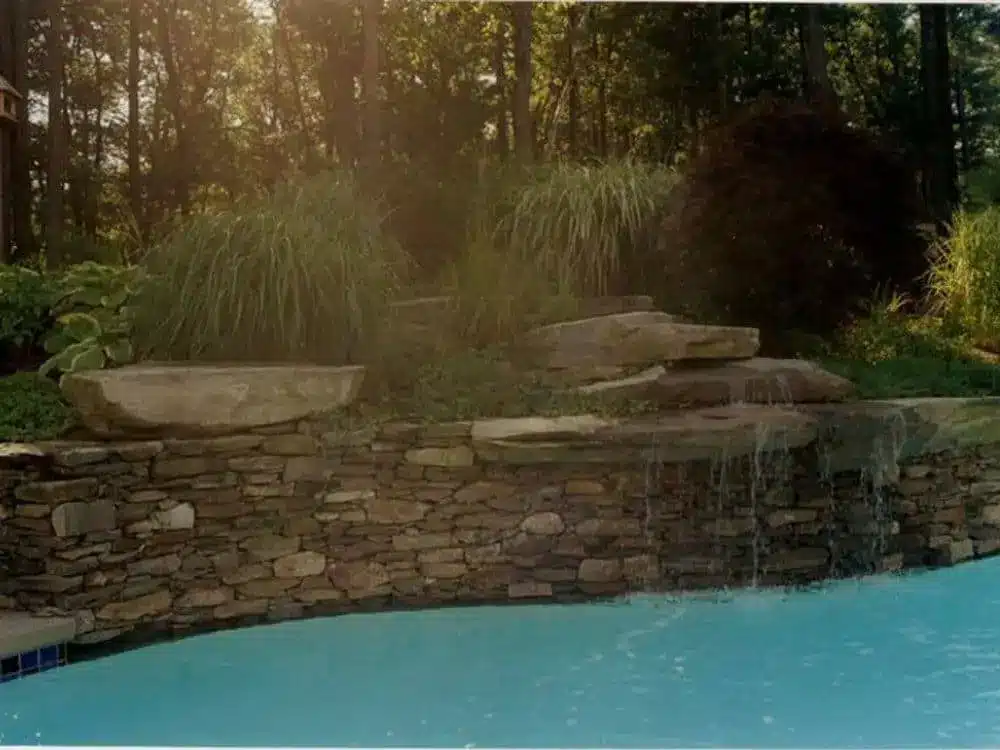
Why Building a Natural Stone Pool Waterfall Transforms Your Backyard
How to build a natural stone pool waterfall in 6 key steps:
- Plan and locate – Choose a visible spot near existing pool plumbing with good drainage
- Gather materials – Collect 25-30 natural stones, a submersible pump, PVC tubing, Type S mortar, and a waterproof liner
- Build the base – Pour a minimum 8-inch concrete pan tied into your pool structure
- Stack and mortar the stones – Layer rocks in staggered rows, sealing all crevices with waterproof mortar
- Install the plumbing – Connect a dedicated waterfall pump with PVC flex pipe, hiding tubing behind rocks
- Test and adjust – Fill the system, check for leaks, and tune the flow rate for a clean cascade
A natural stone waterfall does more than look beautiful. It improves water circulation, adds a relaxing sound to your backyard, and can meaningfully increase your home’s value.
But it’s not a weekend project you want to wing. The materials are heavy, the structural requirements are serious, and a few common mistakes can lead to leaks, algae problems, or even shifting stonework over time.
This guide walks you through everything – from picking the right location to connecting the pump – so you can build a waterfall that looks like it’s always been part of your pool.
Planning and Preparation for Your Waterfall Project
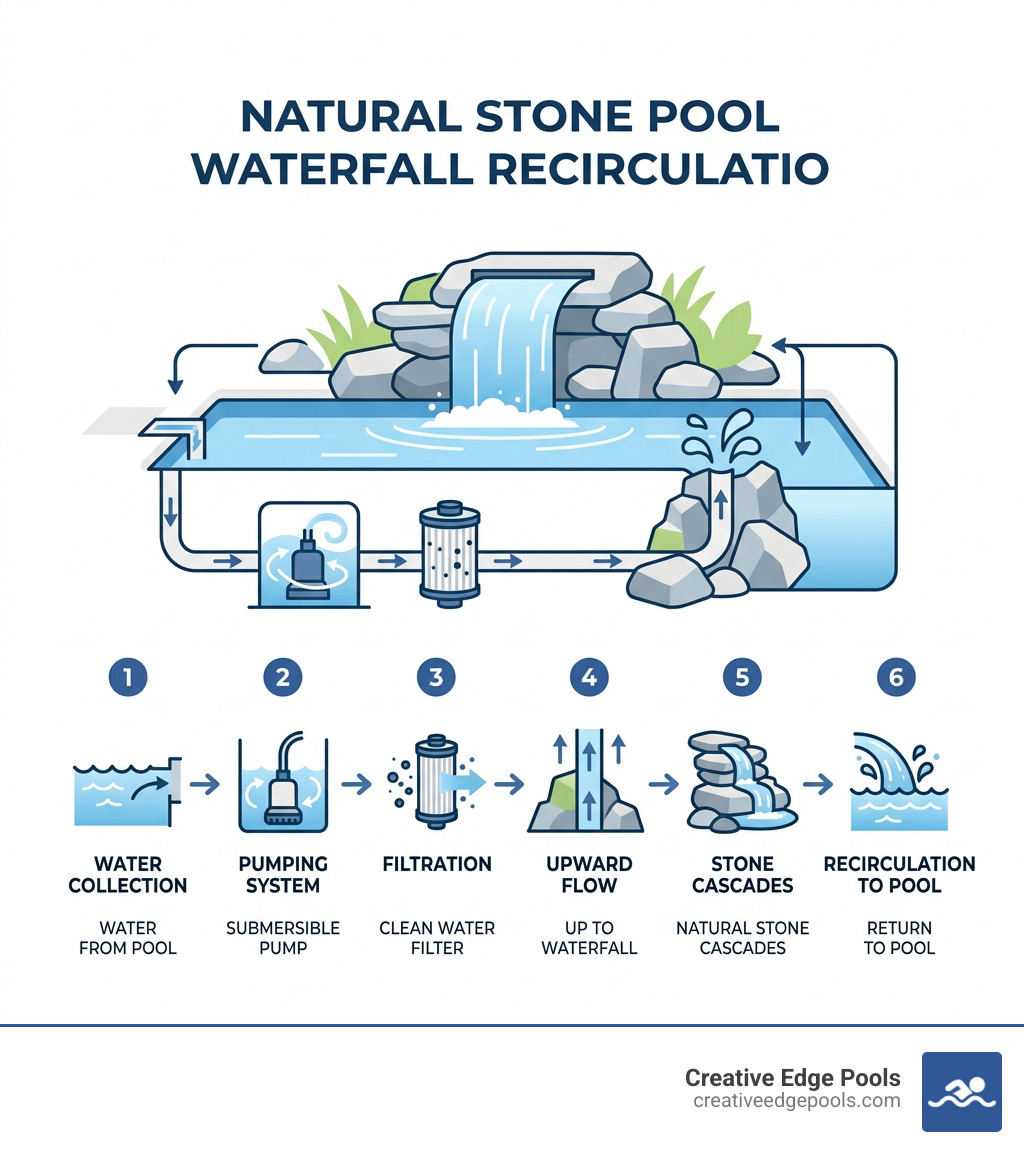
Before you move the first boulder, you need a rock-solid plan. In our experience across Eastern MA and Southern NH, the most successful projects are those that respect the local environment and the existing pool’s hydraulics. Building a waterfall isn’t just about stacking rocks; it’s about creating a recirculating system that integrates seamlessly with your pool.
First, consider sunlight exposure. While a sunny spot makes the water sparkle, it also encourages algae growth on the rocks. We recommend a balanced location that receives some shade or committing to a more rigorous cleaning schedule. You can learn more about the technical side of these features in our guide to pool waterfalls installation.
Safety is paramount. Before any digging begins, call “Dig Safe” (811) to mark underground utility lines. This is a non-negotiable step in Massachusetts and New Hampshire. Additionally, all electrical components, like your pump and any LED lighting, must be connected to a GFCI (Ground Fault Circuit Interrupter) outlet to prevent electrical shocks. Check with your local municipality in towns like Andover, MA, or Nashua, NH, for specific building permits required for water features.
Choosing the Right Location and Design
When deciding how to build a natural stone pool waterfall, location is everything. You want it to be visible from your main patio or even from inside the house through a window. Sound levels also matter—a massive five-foot drop might sound like a jet engine after an hour, whereas a gentle series of cascades provides a soothing background hum.
Consider your pool hardscapes and how the waterfall will sit against them. You should also account for wind patterns; in New England, strong gusts can blow the “spray” from your waterfall right out of the pool, leading to significant water loss over time.
| Feature | DIY Backyard Pond Waterfall | Pool-Integrated Stone Waterfall |
|---|---|---|
| Foundation | Sand or gravel base | 8″ thick reinforced concrete pan |
| Water Source | Independent pond water | Recirculated pool water |
| Chemistry | Natural ecosystem/plants | Balanced pool chemicals (Chlorine/Salt) |
| Weight | Lightweight to medium | Heavy boulders (Requires structural tie-in) |
| Maintenance | Seasonal cleaning | Weekly debris removal & chemical check |
Essential Materials and Tools for a Natural Stone Pool Waterfall
Building with stone requires more than just a strong back. You’ll need a specific set of masonry and plumbing tools to ensure the structure stays put and the water goes where it’s supposed to.
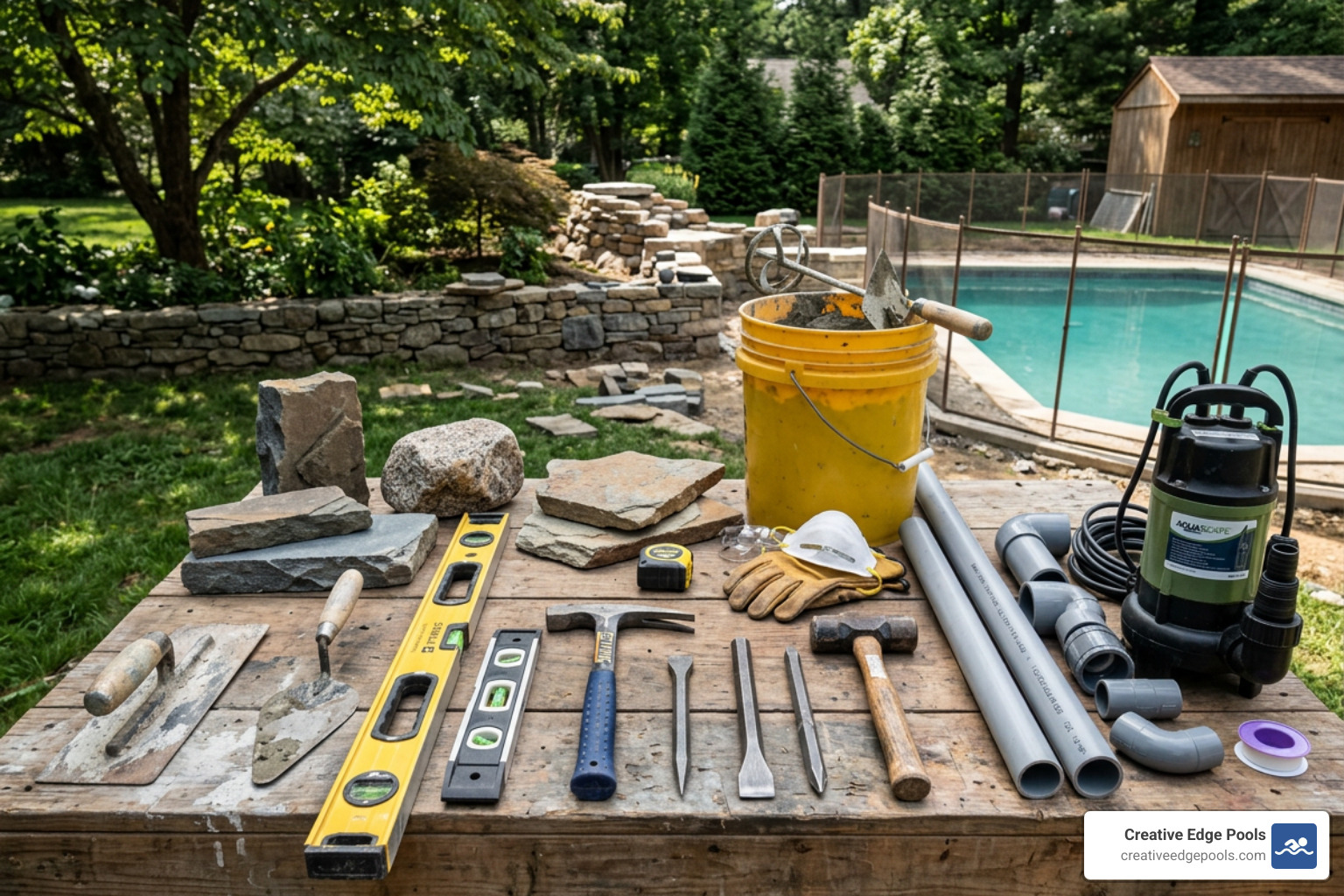
For a small-to-medium waterfall, expect to use 25 to 30 rocks. You will need a mix of large “anchor” boulders for the base, flat “spillway” stones for the water to glide over, and smaller “filler” stones to hide the plumbing. Other essentials include:
- Submersible or Centrifugal Pump: Rated for the specific head height of your waterfall.
- PVC Tubing: 2″ Spa Flex is often preferred for its durability and flexibility.
- Type S Mortar: A high-strength mortar suitable for structural masonry.
- Waterproof Liner: To ensure water doesn’t seep into the ground behind the pool.
For a comprehensive list of hardware, including concrete drill bits and wedge anchors, you can DOWNLOAD GUIDE for Tools and Hardware Required.
Selecting and Preparing Rocks for a Natural Stone Pool Waterfall
The secret to a stunning feature is selecting the right “character” stones. We always suggest choosing a dominant rock type to keep the look cohesive. In our region, granite is a popular and durable choice, but sandstone and limestone also offer beautiful textures.
When selecting spillway rocks, look for flat stones with sharp, squarish edges. This ensures the water “breaks” cleanly off the edge rather than trickling down the face of the rock, which can cause leaks behind the structure. The Tricks to Building a Natural Looking Waterfall involve mimicking nature—using larger rocks at the bottom and tapering the size as you go up. Always scrub your rocks with a stiff brush and water before installation to remove dirt, which ensures the mortar bonds correctly.
How to Build a Natural Stone Pool Waterfall: Step-by-Step
This is where the heavy lifting begins. Because natural stone is incredibly dense, your pool’s edge must be able to support the weight. A standard pool deck isn’t enough; you need a dedicated foundation.
We recommend an 8-inch thick concrete pan minimum. This pan should be tied directly into the main pool structure using rebar. If you are working with a gunite pool, this is the time to ensure the “shelf” is properly integrated. Understanding how to build a gunite pool helps here, as the waterfall should ideally be part of the initial structural design to prevent future shifting. Soil compaction under this pan is critical—if the ground settles, your waterfall will crack.
Constructing the Waterfall Structure and Spillway
Once your foundation is cured, start with your largest “anchor” rocks. Place them in a staggered pattern, similar to how you would lay bricks, to provide maximum stability. Apply a generous layer of waterproof mortar between each stone.
To create the cascade, position your flat spillway rocks with a slight downward pitch toward the pool. You can use small stone shims to adjust the angle. A clever trick is to use an inverted plastic flower pot within the center of the rock pile to create a hollow housing for your tubing. This makes it easier to adjust the spout later.
As you stack, tuck a waterproof liner (like black plastic or EPDM) behind the rocks, ensuring it directs any stray splashes back into the pool. This prevents the soil behind your waterfall from becoming a muddy mess.
Installing the Plumbing and Recirculating Pump
Don’t make the mistake of using your main pool pump for the waterfall. Standard pool pumps are designed for high pressure and lower volume, whereas a waterfall needs high volume and low pressure. A dedicated waterfall pump—ideally a variable speed model—allows you to adjust the “roar” of the water to suit your mood.
Use 2″ PVC flex pipe to connect the pump to the top of the waterfall. Flex pipe is much more forgiving than rigid PVC when weaving through a rock structure. Ensure all joints are primed and glued with PVC cement, holding each joint for at least 10 seconds to set. For more on how these systems integrate with other features, check out our page on pool fountains.
Testing, Maintenance, and Cost Considerations
Before you apply the final decorative mortar, run the pump. This “wet test” allows you to see exactly where the water is flowing. If it’s splashing too much or leaking behind the stones, you can still move rocks or add shims. To ensure a truly watertight seal, we often recommend applying a product like Laticrete HydroBan to the concrete pan before the stones are set.
Maintenance is the key to longevity. You should expect to spend about $500 annually on routine cleaning to prevent algae and debris buildup. In the cold New England winters of places like Manchester, NH, or Lowell, MA, you must winterize the system by blowing out the lines and removing the pump if it’s not submerged below the frost line. This prevents pipes from bursting when the temperature drops. You can find more tips on keeping your pool area looking great on our stone pool decks page.
Common Mistakes and Professional Integration
The most common DIY disaster we see is “pooling basins.” While they look nice, these small pools of water on the waterfall itself lose sanitizer quickly and become breeding grounds for algae. It’s better to design flat, draining surfaces.
Another mistake is neglecting the structural footers. Natural stone is heavy—if you build on uncompacted soil, the waterfall will eventually pull away from the pool, creating a massive leak. If the project involves complex engineering or high-voltage electrical work, it is always worth hiring professionals for hardscaping to ensure the job is done right the first time.
Frequently Asked Questions about Pool Waterfalls
How much does it cost to build a natural stone pool waterfall?
Initial construction costs for a professional-grade pool waterfall typically range from $55 to $130 per square foot. For a DIY project, you might spend between $300 and $1,500 on materials alone, depending on the stone quality and pump size. That replacing a dedicated pool pump can cost approximately $475 if it burns out due to improper installation.
Should I hire a professional for electrical or structural work?
Yes. While stacking rocks is a great DIY task, the plumbing tie-ins and electrical connections are high-stakes. In our service areas like Lexington or Braintree, MA, building codes are strict. Professional integration ensures your gunite bonding is secure and your waterfall won’t shift over time, protecting your long-term investment. Explore our pool area hardscaping services for more professional insights.
What are common mistakes to avoid when building a stone waterfall?
- Undersized Pumps: Your pump flow rate should be at least double the width of the spillway.
- Poor Waterproofing: Failing to use a liner or waterproof mortar leads to “disappearing” pool water.
- Improper Scaling: Using rocks that are too small looks unnatural; always mix in a few large boulders for authenticity.
Conclusion
Building a natural stone pool waterfall is a rewarding way to elevate your backyard into a private resort. Whether you’re in the heart of Boston or the quiet suburbs of Windham, NH, a well-constructed water feature provides endless relaxation and beauty.
At Creative Edge Pools, we bring over 100 years of combined experience to every project across Eastern MA and Southern NH. We specialize in bringing homeowner visions to life with expert craftsmanship and high-quality materials. If the heavy lifting of a stone waterfall feels like more than a weekend task, we’re here to help. Contact us today for professional Pool Waterfall Installation Services and let’s start building your dream oasis.