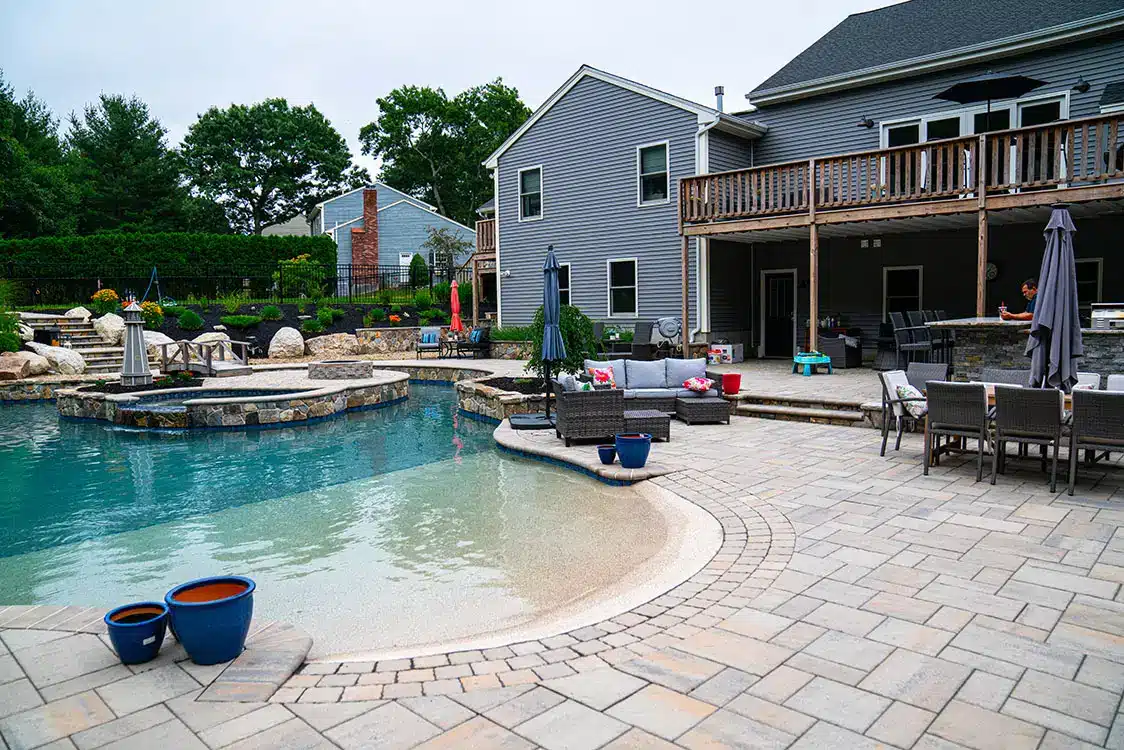
What You Need to Know Before Designing a Pool in 2026
Designing pools is one of the most complex and rewarding home investments you can make — especially in Massachusetts and New Hampshire, where soil conditions, freeze-thaw cycles, and local zoning codes all shape what gets built and how.
Here is a quick overview of the key decisions involved:
| Decision | What to Know |
|---|---|
| Construction type | Gunite (concrete) is the most durable and customizable option for New England climates |
| Shape and size | Rectangular pools suit structured lots; freeform designs work better on sloped or irregular yards |
| Interior finish | Pebble aggregate lasts 15-25 years; standard plaster lasts 7-12 years |
| Deck material | Travertine stays cool underfoot and remains slip-resistant when wet |
| Heating system | Heat pumps use roughly one-fifth the energy of gas heaters under the right conditions |
| Sanitation | Salt water systems are gentler on skin; traditional chlorine is simpler to troubleshoot |
| Permits and safety | All pools require building, electrical, and plumbing permits, plus a 48-inch minimum barrier fence |
| Timeline | Most custom gunite pools take 3 to 6 months from contract to completion |
Most homeowners in towns like Andover, Portsmouth, Wilmington, and Hampton walk into their first pool consultation with only a vague idea of what they want. They end up making six-figure decisions based on brochure photos alone — without understanding how each choice affects the next.
That is exactly what this guide is designed to prevent.
Whether you are starting from scratch or upgrading an existing backyard, understanding the full scope of the design process — from structural engineering and material selection to permits and mechanical systems — puts you in a far stronger position before a single shovel hits the ground.
Ready to talk through your project? Call Creative Edge Pools at +978-203-0406 or request a free quote to get started.
Structural Engineering: The Superiority of Gunite Pool Construction
When it comes to designing pools that withstand the test of time, the method of construction is the single most important decision you will make. While fiberglass shells and vinyl liners exist in the market, gunite (pneumatically applied concrete) is the undisputed gold standard for luxury residential properties.
A gunite pool shell has an incredible structural lifespan, often lasting 50 years or more, with only the interior plaster needing a refresh every 10 to 20 years. In contrast, vinyl liners must be entirely replaced every 8 to 12 years, and fiberglass gel coats typically only last 25 to 30 years before showing wear.
| Construction Metric | Gunite (Concrete) | Fiberglass | Vinyl Liner |
|---|---|---|---|
| Lifespan of Shell | 50+ Years | 25–30 Years | 15–20 Years (Structure) |
| Resurfacing Interval | 10–20 Years | N/A (Gel coat wear) | 8–12 Years (Liner replacement) |
| Customization Options | Unlimited shapes, depths, and features | Pre-formed factory molds only | Limited pre-set shapes |
| Freeze-Thaw Resilience | High (engineered with heavy rebar) | Moderate (susceptible to shifting) | Low (susceptible to tearing/wrinkling) |
| Typical Wall Thickness | 6 to 8 inches of reinforced concrete | Less than 1 inch of fiberglass | Thin vinyl over steel/polymer walls |
Our cold New England climate demands structural durability. The intense freeze-thaw cycles in Massachusetts and Southern New Hampshire cause the ground to expand and shift violently. Gunite pools excel here because they are engineered with heavy rebar reinforcement cages and thick concrete walls (typically 6 inches in stable soil, and up to 8 inches in expansive clay or sloped areas). This creates a monolithic, rigid structure that resists the immense pressure of shifting soils.
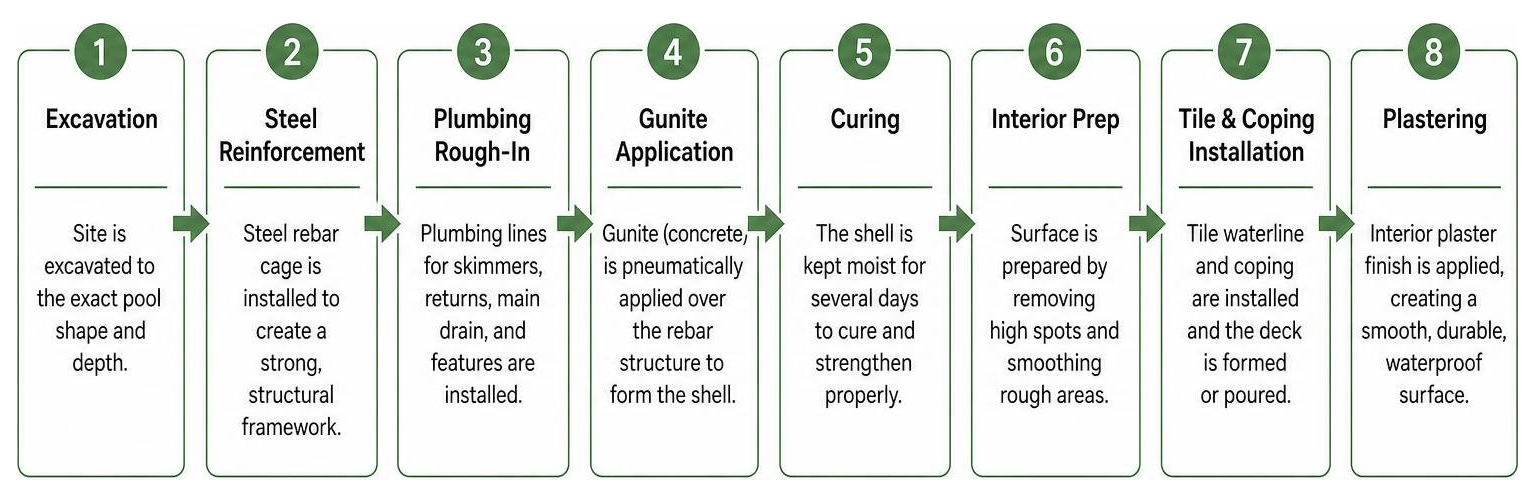
Furthermore, gunite offers unparalleled design flexibility. If you want to learn how to design the perfect gunite pool for your backyard, you are not limited by factory molds. You can seamlessly integrate custom steps, swim-up benches, deep-water diving zones, and tanning ledges. The excavation requirements are precise, allowing us to carve out the exact shape—whether a sleek modern rectangle or an organic freeform oasis—to fit your property’s unique topography.
Architectural Integration: Designing Pools for New England Landscapes
A masterfully designed pool should never look like it was simply dropped into a yard; it must feel like an intentional extension of your home’s architecture and the surrounding landscape. Whether we are building luxury inground pools in the historic neighborhoods of Andover, MA, or crafting a coastal retreat in Portsmouth, NH, architectural integration is key to maximizing both aesthetic beauty and property value.
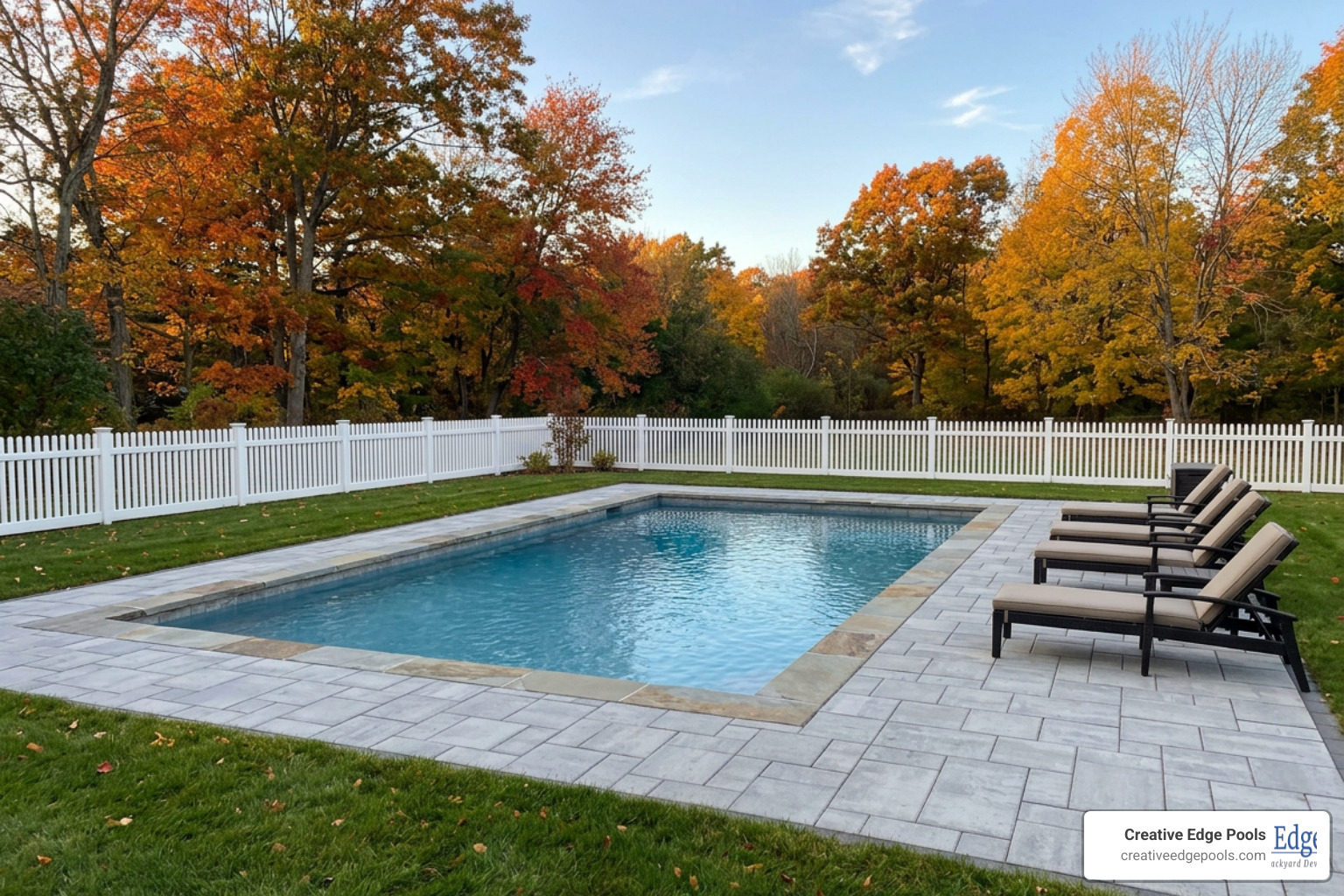
A well-designed pool environment that complements your home’s architecture typically enhances overall property value by 5% to 8%. To achieve this, we coordinate the pool’s geometry with the lines of your home. Linear, modern homes pair beautifully with geometric, rectangular pools, while rustic, traditional, or highly wooded lots often benefit from organic, freeform shapes that mimic natural bodies of water.
New England properties also present unique geographical challenges. Our teams are highly experienced in managing:
- Soil Conditions: From dense clay to ledge rock, we plan excavation around the subterranean realities of Eastern Massachusetts and Southern New Hampshire.
- Slope Management: Many coastal and hillside properties feature dramatic elevation changes. We use these slopes to our advantage, incorporating retaining walls, multi-level patios, or stunning vanishing edges.
- Zoning Laws & Setbacks: Every municipality has strict rules regarding how close a pool can be built to property lines, wetlands, and septic systems.
Key Considerations When Designing Pools in Massachusetts and New Hampshire
Building a pool in our region requires strict adherence to local building codes and environmental regulations. Before any excavation begins, we secure all necessary local building, electrical, and plumbing permits.
Two critical safety standards govern every pool we build:
- Safety Barrier Codes: Local laws require pool areas to be completely enclosed by a safety fence at least 48 inches high, featuring self-closing and self-latching gates that open outward (away from the pool).
- VGB Compliance: Under the federal Virginia Graeme Baker Pool and Spa Safety Act, all pools must feature certified, entrapment-preventing drain covers on all suction outlets to ensure swimmer safety.
By managing the entire pool design and construction process from start to finish, we ensure your pool is beautiful, fully compliant, and built to withstand decades of harsh winters.
Digital Modeling and 3D Software for Designing Pools
To bridge the gap between imagination and reality, we utilize advanced 3D design visualization software. In fact, 48 out of 50 top pool builders nationwide depend on professional 3D design software to plan their projects.
With these digital tools, we can import high-resolution site mapping and precise elevation controls of your actual backyard in towns like Wilmington, MA, or Hampton, NH. This allows you to see exactly how your custom pool, patio, and landscaping will look from your back door before we break ground. You can even visualize the pool at different times of day, showing how the LED lighting and water features will look at dusk. For a closer look at how digital tools assist in the planning phase, you can explore the Pool Designer User Guide or play with a Pool Design Visualizer to test different shapes.
Premium Hardscaping, Masonry, and Water Features
The space surrounding your pool—the “aquascape environment”—is just as important as the water itself. Premium inground pool hardscapes and masonry tie the entire backyard together, creating distinct zones for swimming, sunbathing, dining, and relaxing.
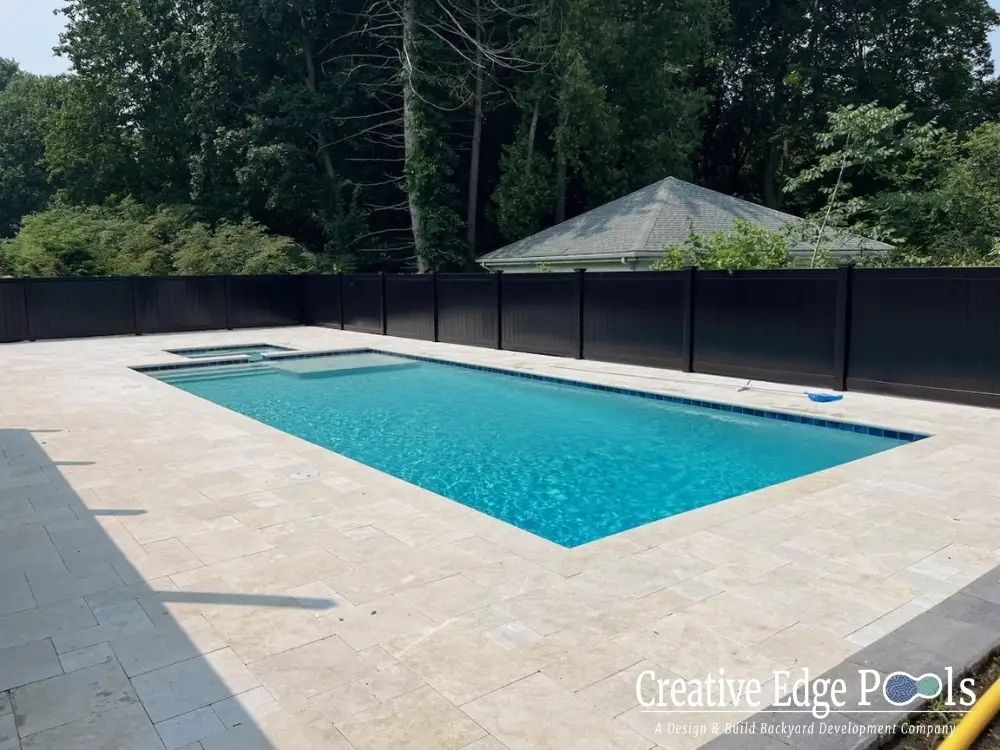
When selecting decking materials, we highly recommend natural travertine or premium stone pavers. Travertine is widely considered the absolute best option for pool decks because of its outstanding slip resistance when wet and its natural ability to remain cool underfoot, even during hot July afternoons.
For the pool itself, the choice of waterline tile and interior finish directly impacts your water’s color and maintenance:
- Waterline Tile: A 6-inch band of ceramic or glass tile at the waterline is essential. It prevents body oils, sunscreen, and calcium scale from staining the pool walls, and it is incredibly easy to wipe clean.
- Pebble Aggregate Finishes: Premium pebble finishes last 15 to 25 years (compared to 7 to 12 years for basic plaster) and offer a textured, slip-resistant surface.
- Water Color Effects: The color of your interior finish dictates the water’s appearance. Lighter finishes create a bright, tropical, light-blue shimmer, while dark blue or charcoal finishes create deep, dramatic, mirror-like reflections that beautifully showcase the New England sky.
To elevate the sensory experience, consider adding dynamic water and fire features. Sheer descent waterfalls create a sleek, glass-like sheet of water that adds a soothing acoustic backdrop to your yard. Integrated spas offer the ultimate in year-round relaxation, while custom-built fire features—such as automated fire bowls or a poolside fire pit—provide warmth and dramatic visual contrast as day turns to night.
Mechanical Systems: Heating, Sanitation, and Automation
A modern pool should be as effortless to run as it is beautiful to look at. By integrating advanced mechanical systems during the initial design phase, we can dramatically reduce your ongoing energy consumption and maintenance chores.
When it comes to heating your pool in New England, you have two primary options:
- Gas Heaters: These run on natural gas or propane. They are incredibly powerful, capable of warming a 20,000-gallon pool by 10 degrees in just 4 to 6 hours. While perfect for rapidly heating a spa or bringing a pool to temperature for a weekend gathering, running them constantly can add $300 to $500 per month to utility bills according to industry data.
- Heat Pumps: These extract heat from the surrounding air. While they heat the water more gradually, a heat pump uses roughly one-fifth the energy of an equivalent gas heater under the right conditions, making them exceptionally cost-effective for maintaining a consistent daily swimming temperature.
For water sanitation, the choice between traditional chlorine and salt water systems comes down to personal preference:
- Salt Water Chlorine Generators: Rather than requiring you to manually add liquid or tablet chlorine, a salt cell uses electrolysis to automatically convert dissolved salt into pure, gentle chlorine. This results in incredibly soft water that is highly gentle on the eyes, skin, and swimsuits. The salt cell typically needs replacement every 3 to 5 years.
- Traditional Chlorine: This system has a lower upfront equipment cost and is highly straightforward to troubleshoot, though it requires more frequent manual chemical balancing to prevent skin and eye irritation.
To tie all these systems together, we highly recommend modern smart automation. With smartphone-controlled automation, you can adjust your pool heating, turn on the spa, activate the waterfalls, and customize your LED light shows from anywhere in the world. When paired with energy-efficient variable-speed pumps, modern pool equipment can reduce your pool’s overall energy consumption by up to 50% compared to traditional single-speed systems. We specialize in seamless pool and spa installation that integrates these smart, eco-friendly technologies from day one.
Frequently Asked Questions about Pool Design
What is the typical timeline for building a custom gunite pool?
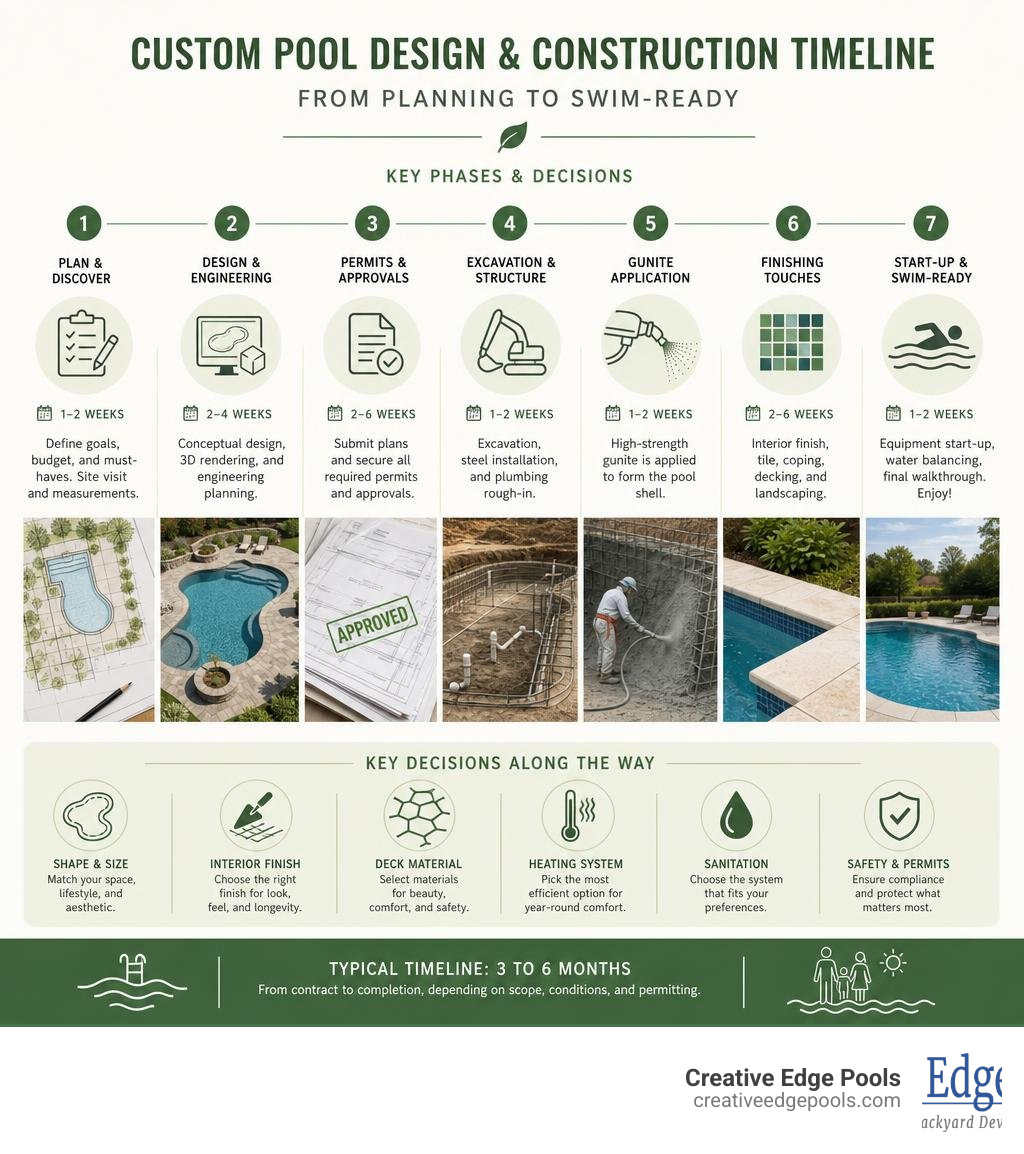
Most custom gunite pools require 8 to 16 weeks from the start of excavation to completion, though complex projects with extensive hardscaping or sloped yards can take 12 to 20 weeks.
The timeline is divided into several distinct phases:
- Permitting & Engineering (4 to 8 weeks): Securing municipal approvals and structural plans.
- Excavation & Steel Rebar Installation (1 to 2 weeks): Shaping the pool and tying the structural steel cage.
- Gunite Application & Curing (4 weeks): The concrete shell is pneumatically applied and must cure for a strict 28-day period, during which it is wet down daily to achieve maximum structural strength.
- Plumbing, Tile, & Coping (2 to 3 weeks): Installing the mechanical lines, waterline tile, and stone coping.
- Patio, Hardscaping, & Plaster (2 to 4 weeks): Building the surrounding deck and applying the final interior finish.
In New England, seasonal constraints play a major role. To ensure your pool is fully swim-ready for the summer, we highly recommend starting the design and permitting phase during the fall or winter so excavation can begin the moment the ground thaws in early spring.
How much does a custom gunite pool environment cost in New England?
When planning your budget, it is important to understand that custom gunite pools represent a premium, lifetime investment. Based on publicly available online data and general industry averages, complete custom pool environments typically range from $100,000 to $600,000+ depending on the size, topography, and selected finishes.
These figures are sourced from broad internet data to show industry variability and do not represent the actual pricing or guarantees of Creative Edge Pools. Because every gunite pool we build is fully customized to your specific landscape and design goals, we provide detailed, itemized estimates tailored precisely to your project after a thorough site evaluation.
What safety codes and fencing regulations are required for New England pools?
Safety is our absolute priority. Both Massachusetts and New Hampshire enforce strict residential pool safety codes, which typically include:
- Barrier Fencing: The pool must be completely enclosed by a fence or barrier at least 48 inches (4 feet) high.
- Gate Requirements: All access gates must be self-closing and self-latching, with the latch release mechanism located on the pool side of the gate, opening outward away from the pool.
- Alarms: Many local municipalities require alarms on any doors or windows of the home that lead directly to the pool area.
- VGB Compliant Drains: Dual main drains with ANSI/APSP-approved, anti-entrapment covers are required to prevent suction hazards.
Our team handles all local municipal approvals and ensures your custom pool design meets or exceeds every local and state safety requirement.
Conclusion
Designing pools is an art form that blends structural engineering, architectural design, and modern technology. By choosing a custom gunite pool, you are investing in a beautiful, permanent addition to your home that will bring your family joy for decades to come.
At Creative Edge Pools, we are a family-owned and operated business with over 100 years of combined team experience. We specialize in gunite pool design, installation, and complete backyard transformations throughout Eastern Massachusetts and Southern New Hampshire. From initial 3D digital modeling to final masonry and smart automation setup, we work closely with you to bring your unique vision to life with single-source reliability.
Ready to transform your backyard into a breathtaking private resort? Contact our expert design team today at +978-203-0406 or schedule your custom design consultation online to start planning your dream pool with Creative Edge Pools.