Why Excavation Services Are the Foundation of Every Great Backyard Project
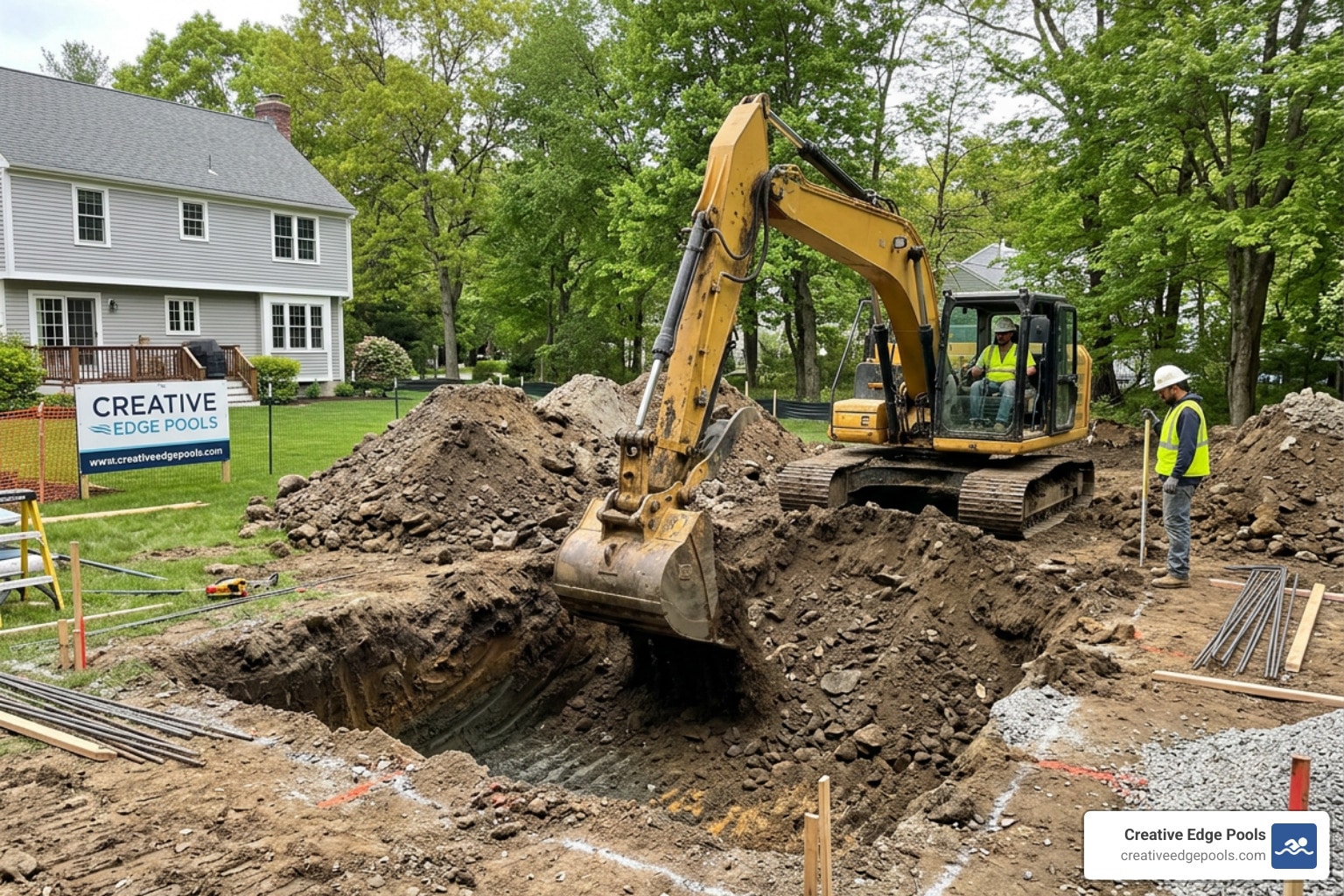
Excavation services are the essential first step in any serious outdoor construction project — from installing a custom gunite pool to reshaping your yard for hardscaping, drainage, or utility work.
Here’s a quick overview of what excavation services include and when you need them:
| Service Type | What It Involves | Common Projects |
|---|---|---|
| Site Preparation | Clearing, grading, and leveling land | New builds, pool installation |
| Pool Excavation | Precision digging for pool shell | Gunite pool installation |
| Utility Trenching | Digging for pipes, conduit, drainage | Plumbing, electrical, septic |
| Hydro Excavation | Non-destructive digging using water pressure | Near existing utilities |
| Grading & Backfilling | Shaping and compacting soil | Drainage, foundations, pads |
Whether you’re in Andover, Wilmington, Billerica, or Portsmouth, NH, the soil conditions, frost lines, and local permitting requirements in Massachusetts and New Hampshire make professional excavation critical — not optional.
Getting excavation right protects your investment. A poorly prepared site leads to drainage problems, unstable foundations, and costly repairs down the road. The global excavation market reflects this demand — valued at roughly $45 billion and growing — because every structure, pool, and patio starts below ground.
At Creative Edge Pools, we handle the full scope of site preparation so your backyard transformation starts on solid ground.
What Are Professional Excavation Services?
When most people think of excavation, they picture a massive yellow digger scooping up dirt. While that is certainly part of it, professional excavation is actually a highly technical engineering discipline. It involves the precise measurement, removal, and relocation of earth, rock, and other materials to prepare a site for construction.
At its core, professional Excavation Services encompass several critical phases of land preparation:
- Site Preparation: Before any construction can begin, the land must be cleared of trees, brush, boulders, and organic debris. This creates a clean slate for the upcoming build.
- Earthmoving: This is the physical relocation of soil and rock from one area of a property to another, or hauling it off-site entirely.
- Grading: Shaping and leveling the ground is crucial to ensure water flows away from structures rather than pooling around them. Grading establishes the exact slope needed for stability.
- Utility Trenching: Safely digging deep, narrow channels to accommodate water lines, electrical conduits, gas pipes, and sewer systems.
Without these foundational steps, any structure built on top — whether it is a retaining wall, a stone patio, or a custom gunite pool — will eventually shift, crack, or suffer from severe water damage.
Core Types of Excavation Services for New England Properties
Different construction projects require different earthmoving approaches. In New England, our diverse landscapes require contractors to adapt quickly to varying conditions.
Residential Excavation
Residential work focuses heavily on preparing home sites, additions, and driveways. In places like Acton, MA, homeowners rely on professional regional experts for residential site work, septic systems, and snow removal. For those closer to Boston, specialists in Arlington, MA provide the tight-access clearing and digging required in historic neighborhoods. Whether you need Excavation Services in Lexington, MA or Excavation Services in Newton, MA, residential excavation ensures your home’s foundation is built on stable, well-compacted soil.
Commercial Excavation
Commercial projects operate on a much larger scale, demanding heavy-duty machinery and strict adherence to tight development schedules. Commercial excavation includes mass grading for office parks, retail centers, and multi-family housing developments. To execute these large-scale operations safely and efficiently, developers partner with established general contracting firms to manage the entire site development lifecycle.
Pool Excavation
Digging a pool is an art form. Unlike digging a standard basement, pool excavation requires carving out precise slopes, deep ends, and shallow shelves to match a highly customized engineering plan. If the excavation is even a few inches off, it can throw off the entire gunite application and plumbing layout.
Traditional vs. Hydro Excavation Methods
In the excavation industry, technology has evolved far beyond the traditional backhoe. Today, contractors choose between traditional mechanical excavation and modern non-destructive methods depending on the safety requirements of the site.
Traditional Mechanical Excavation
This method utilizes standard heavy machinery like excavators, skid steers, and bulldozers to physically dig into the earth. It is highly efficient for bulk earthmoving, mass grading, and open-field digging. However, mechanical buckets carry an inherent risk when digging in high-density areas with buried infrastructure.
Hydro Excavation (Vacuum Excavation)
Hydro excavation is a non-destructive digging method that uses high-pressure water to break up soil while a powerful vacuum system simultaneously sucks the slurry into a debris tank. This method is growing rapidly in popularity, with an industry CAGR of 7.8% projected through 2030.
The primary advantage of hydro excavation is safety. Approximately 60% of excavation-related construction accidents are caused by heavy equipment striking buried utilities. Hydro excavation completely eliminates this risk by gently washing away soil around delicate electrical lines, gas pipes, and fiber optic cables without damaging them. It is the premier choice for utility locating, potholing, and digging in congested urban areas.
Additionally, trenchless excavation and utility installation methods can reduce overall project costs by 30% to 50% compared to traditional open-cut excavation, as they minimize the need to tear up and subsequently rebuild expensive driveways, roads, and manicured lawns.
The Excavation Process: From Assessment to Final Grading
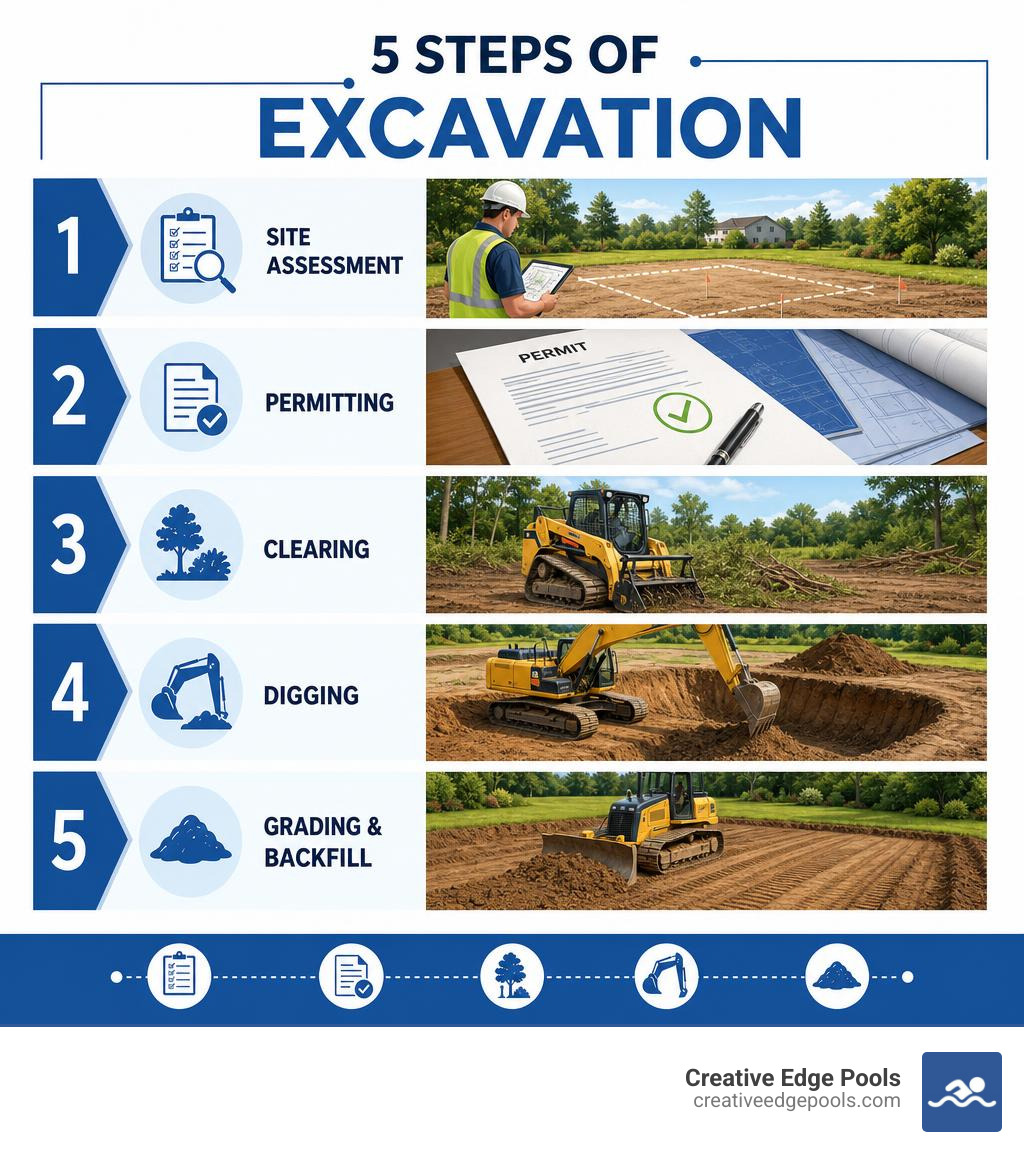
A successful excavation project is never improvised. It follows a highly structured, step-by-step process to ensure safety, structural integrity, and regulatory compliance.
1. Site Assessment and Soil Testing
Before a single piece of equipment rolls onto your property, a thorough assessment is conducted. This includes studying the topography, analyzing soil composition (clay, sand, or ledge rock), and assessing groundwater levels.
2. Permitting and Utility Locating (Dig Safe)
By law, contractors must contact Dig Safe (811) before breaking ground. Utility companies will visit the property to mark the exact locations of buried lines. Simultaneously, local building permits must be secured from your municipality.
3. Clearing and Grubbing
The excavation team removes all surface obstacles, including trees, stumps, rocks, and existing brush, to expose the raw earth.
4. Digging and Subgrade Preparation
Using specialized machinery, operators excavate the soil to the precise depths specified in the engineering plans.
5. Backfilling and Compaction
Once the underground structures or utilities are in place, soil is returned to the excavated areas. This soil must be systematically compacted in layers (lifts) using heavy vibratory rollers to prevent future settling.
6. Final Grading and Drainage Control
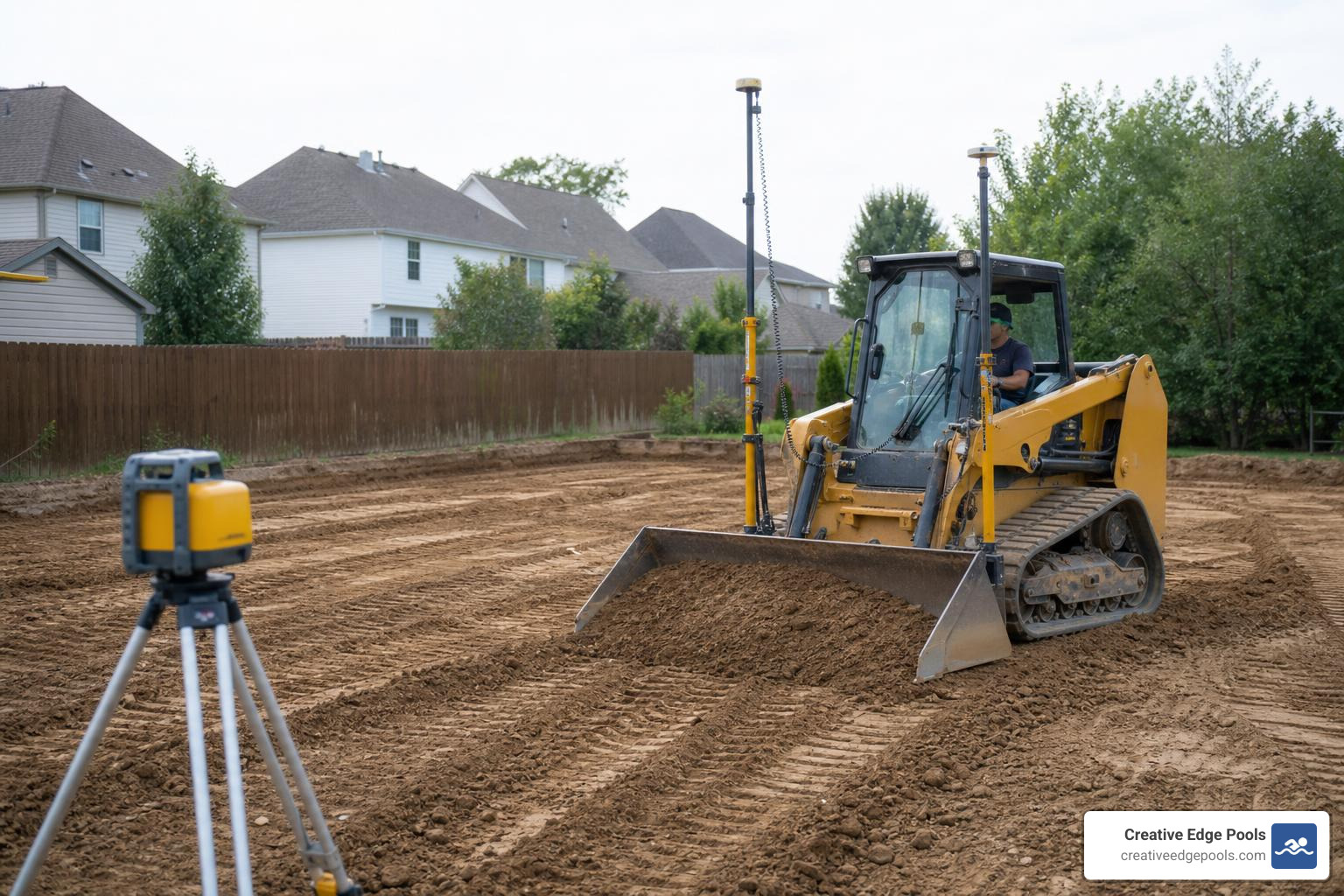
The final step is shaping the top layer of soil to ensure proper drainage. Laser-guided grading equipment is often used to establish precise slopes that direct rainwater away from your home, pool, and patio. For comprehensive site management across Massachusetts and New Hampshire, professional excavation planning is especially important in communities such as Wilmington, MA, Andover, MA, Billerica, MA, and Portsmouth, NH, where soil conditions, drainage requirements, and permitting can vary by municipality.
Integrating Excavation with Pool Installation and Hardscaping
When you are designing a high-end backyard, excavation cannot be treated as an isolated task. It must be seamlessly integrated with the pool installation, masonry work, and overall hardscaping design.
For example, when constructing a custom gunite pool, the excavation team must work hand-in-hand with the pool steel and plumbing crews. The earth must be carved out with exact tolerances to support the heavy gunite shell. If you are also planning a surrounding stone patio, retaining walls, or an outdoor kitchen, the grading must account for the weight of these masonry elements and ensure proper drainage channels are built into the subgrade. Creative Edge Pools supports this type of complete backyard development through excavation, masonry, hardscaping, and pool services tailored to Massachusetts and New Hampshire properties.
On the other hand, if you are looking to reclaim your yard by removing an old, unused pool, proper excavation is just as critical. The process requires careful structural demolition, complete shell removal, and highly controlled backfilling and compaction to ensure the reclaimed land can support future lawns or patios without sinking. To learn more about this specialized process, explore our Pool Removal Services Complete Guide.
For homeowners in communities like North Andover, MA, working with local experts ensures that backyard transformations are handled with care. Similarly, residents in coastal and southern New Hampshire areas can benefit from specialized site preparation to navigate unique coastal soil conditions.
Key Factors Influencing Project Costs and Timelines
No two excavation projects are exactly alike, and several variables can significantly impact how much your project costs and how long it takes to complete.
- Soil and Rock Conditions: Digging through soft, sandy loam is fast and straightforward. However, New England is famous for its rocky soil and subterranean granite ledge. If your contractor hits heavy rock, they may need to bring in specialized hydraulic hammers or blasting equipment, which will increase both the timeline and the budget.
- Frost Lines and Weather: In Massachusetts and New Hampshire, the ground freezes deep in the winter. Excavation is highly seasonal, and digging during the freezing winter months requires specialized equipment and extra labor.
- Project Scope and Accessibility: Digging a wide-open lot in a rural area is much faster than maneuvering compact machinery into a tight backyard in a historic neighborhood with narrow gates and low-hanging trees.
Understanding Excavation Costs
To help you budget for your upcoming outdoor project, we have compiled a table showing average excavation costs based on general industry data.
Please note: All prices mentioned below are average costs sourced from publicly available internet data and are not the actual prices of Creative Edge Pools. To account for regional New England labor rates, soil complexity, and equipment requirements, we have provided a wide price range where the low end represents 2x the standard national average and the high end represents at least 5x the average.
| Project Type | Average National Base Cost | Estimated Regional Price Range (Low End to High End) |
|---|---|---|
| Minor Yard Grading | $1,500 | $3,000 – $7,500+ |
| Utility Trenching (per 100 ft.) | $2,000 | $4,000 – $10,000+ |
| Standard Pool Excavation | $3,500 | $7,000 – $17,500+ |
| Large Site Prep & Land Clearing | $5,000 | $10,000 – $25,000+ |
For complex commercial projects or massive residential earthmoving tasks, working with a well-equipped contractor is essential to keep these variables under control and ensure the project remains on schedule.
Understanding Regional Regulations and Permitting
Excavation is a heavily regulated industry for a simple reason: safety. Digging blindly can disrupt public utilities, damage neighboring properties, or cause environmental damage to local waterways.
Local Building Codes and Zoning
Every town in Massachusetts and New Hampshire has its own set of zoning bylaws and building codes. For example, if you are planning an excavation project in Wilmington, MA, or Andover, MA, you must comply with strict local setback requirements, which dictate how close to your property lines you are allowed to dig.
Environmental Compliance and Wetlands
New England is home to beautiful conservation lands, wetlands, and natural water systems. The Massachusetts Wetlands Protection Act and New Hampshire Department of Environmental Services (NHDES) regulations require strict environmental protections. If your property is within 100 feet of a wetland, pond, or stream, you must secure approval from your local Conservation Commission and implement robust erosion control measures, such as silt fencing and straw wattles, to prevent runoff.
Frequently Asked Questions About Excavation Services
How deep should utility and plumbing trenches be?
In New England, the depth of utility and plumbing trenches is strictly governed by local building codes and the regional frost line. To prevent freezing, residential water lines must be buried between 36 and 48 inches deep. Sewer lines, which rely on gravity to flow properly, are typically buried anywhere from 18 inches to over 6 feet deep, depending on the slope and layout of your property.
What is the difference between grading and excavation?
While they are closely related, excavation is the process of physically removing or moving large quantities of earth to create a hole or cavity (such as for a pool or foundation). Grading is the process of leveling and shaping the top layers of soil to establish a smooth, properly sloped surface for drainage control and construction stability.
Do I need a permit for backyard excavation?
Yes, in almost all cases in Massachusetts and New Hampshire, you will need a permit for any substantial backyard excavation. While minor landscaping may not require paperwork, any project that alters drainage patterns, installs utility lines, or prepares a foundation for a pool, deck, or addition must be permitted through your local municipal building department.
Conclusion
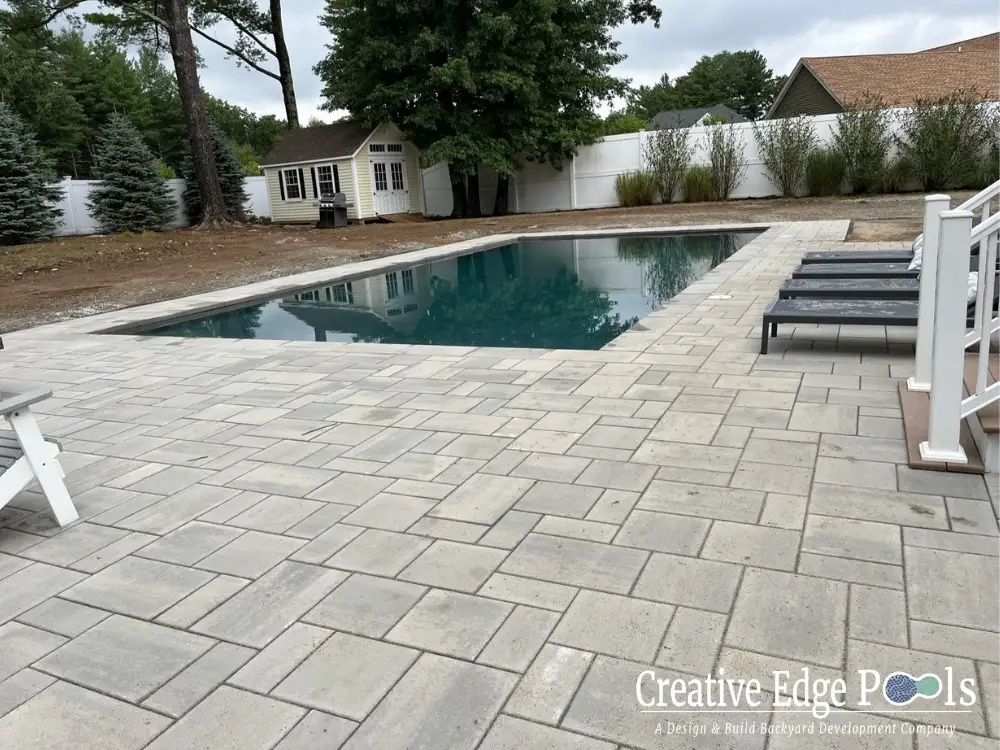
Every breathtaking backyard transformation – from a beautifully graded lawn to a luxurious custom gunite pool – relies on expert excavation. Skipping steps or hiring an uncertified contractor to save a few dollars on dirt work almost always results in structural shifting, settling, and drainage headaches down the road.
At Creative Edge Pools, we are a family-owned business with over 100 years of combined experience. We handle the entire outdoor development process, from initial site clearing and precision excavation to gunite pool installation, masonry, hardscaping, pool renovation, pool removal, and final grading. Serving homeowners throughout Eastern MA and Southern NH, including Wilmington, MA, Andover, MA, Billerica, MA, and Portsmouth, NH, we pride ourselves on bringing your unique backyard vision to life safely, professionally, and beautifully.
Ready to break ground on your dream backyard?
- Call Creative Edge Pools: +978-203-0406
- Request a consultation: Quote Form Button
- Explore our excavation services: creativeedgepools.com/excavation-services/
- Review our pool services: Pool Services