
Your Pool’s First Line of Defense: What to Know About Swimming Pool Liners
Swimming pool liners are the waterproof interior layer that keeps your pool holding water, protects the pool’s structure, and defines the look of your entire backyard space.
Here’s a quick overview of what most homeowners want to know:
| Question | Quick Answer |
|---|---|
| What are pool liners made of? | Primarily vinyl (PVC), available in various thicknesses |
| How long do they last? | Typically 6 to 12 years, depending on care and quality |
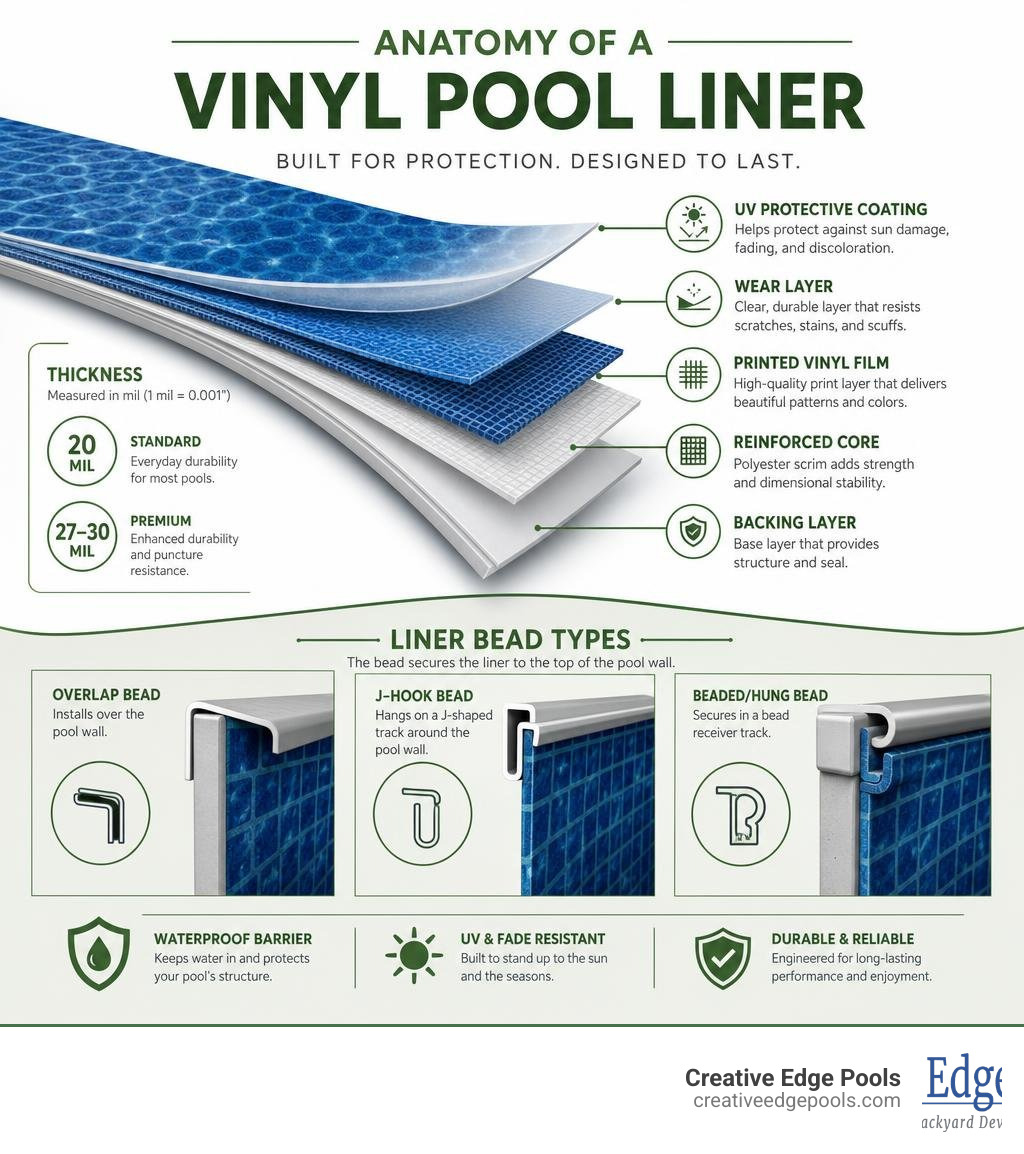
| What thickness should I choose? | 20 mil is standard; 27–30 mil offers extra durability |
| Above-ground or inground? | Each type uses different liner styles and installation methods |
| DIY or professional install? | Professional installation is strongly recommended |
| How much does replacement cost? | Varies widely — always get a custom quote for your pool |
Whether your liner is fading, pulling away at the corners, or simply past its prime, replacing it is one of the most cost-effective ways to refresh your pool. A new liner can transform the look of your backyard almost overnight.
For homeowners across Eastern Massachusetts and Southern New Hampshire — from Andover to Hampton — understanding your liner options before committing to a replacement can save you time, money, and frustration.
This guide covers everything: liner types, materials, thickness, measuring, installation, maintenance, and when to call a professional like the team at Creative Edge Pools (+978-203-0406).
Types of Swimming Pool Liners and How to Choose
Selecting the right replacement liner depends heavily on whether you have an above-ground or an inground pool, as well as the specific attachment mechanism your pool structure uses. Using the wrong type of liner will result in improper tension, leaks, or an impossible installation.
When shopping for high-quality options, looking at trusted manufacturers and vendors like Doheny’s Pool Liners can give you an idea of the vast variety of patterns available today. However, understanding the functional differences between overlap, beaded, and J-hook configurations is the first critical step before worrying about aesthetics. Making the correct choice will directly affect your overall Inground Pool Liner Installation Cost.
Above-Ground vs. Inground Swimming Pool Liners
Above-ground and inground pools are engineered differently, and so are their liners. Above-ground pools generally have flat-bottom structures (though some allow for minor sloped deep ends), whereas inground pools feature complex custom shapes, deep ends, safety ledges, and built-in steps.
For above-ground models, liners are often standardized to fit specific round, oval, or rectangular dimensions. Conversely, inground vinyl liners must be custom-tailored to the exact physical contour of the pool floor and walls. You can explore standard configurations of In-Ground Vinyl Pool Liners to see how they are structured, but keep in mind that a true Pool Liner Inground replacement requires a precise, custom-manufactured fit to prevent structural damage.
Understanding Liner Bead Types
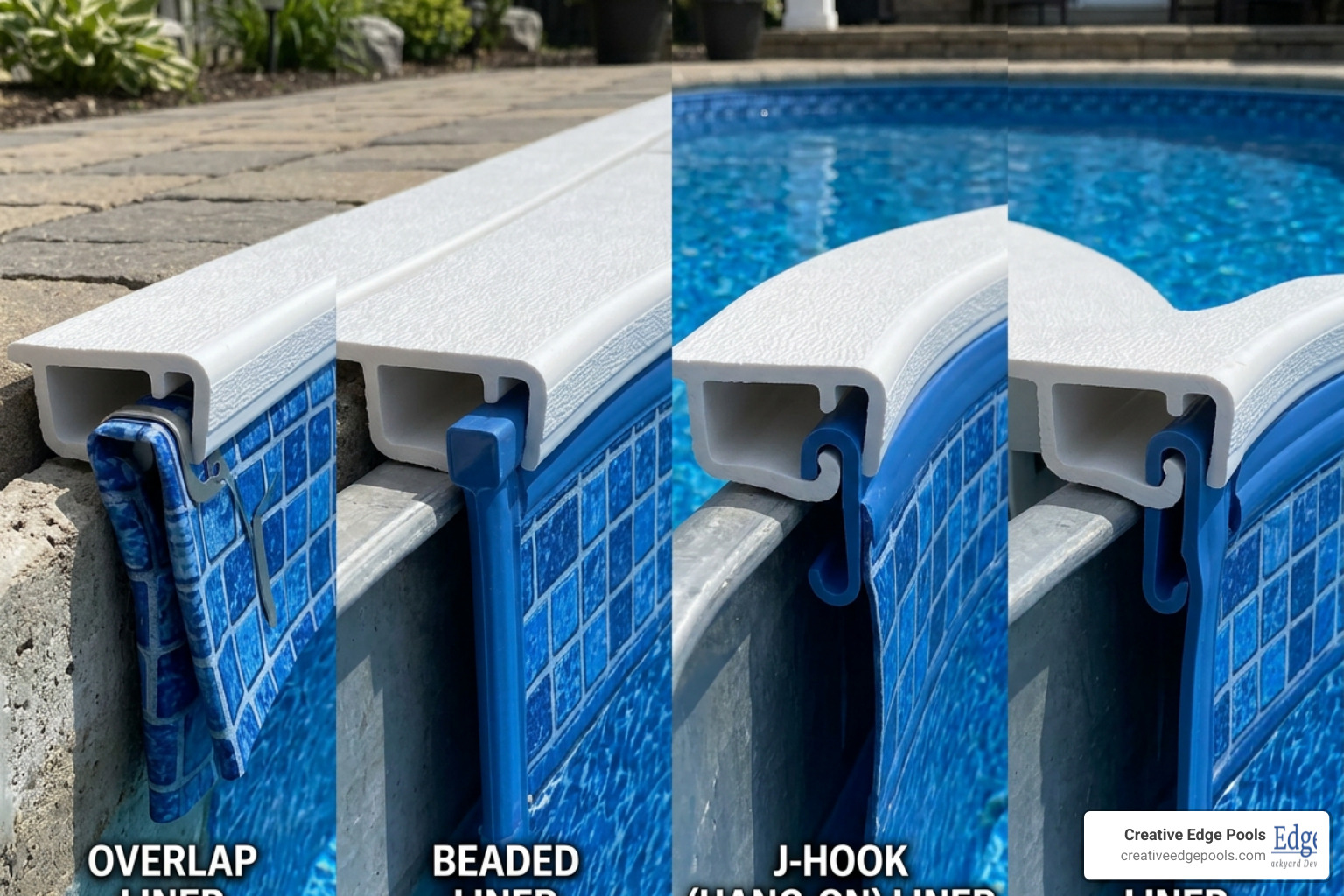
The “bead” refers to the top edge of the liner that secures it to the pool wall. There are several distinct bead styles:
- Overlap Liners: These are the most common and budget-friendly options for above-ground pools. The vinyl hangs over the top of the pool wall and is secured with plastic coping strips before the top rail is bolted down. The excess vinyl on the outside of the pool is then trimmed away.
- Beaded Liners (Standard Bead): These feature a thick, rigid groove along the top edge that snaps directly into a receiver track mounted along the top of the pool wall. This provides a very clean, professional look with no visible vinyl hanging over the outside. Specialty tracks like Wilkes bead or Esther Williams styles are also used in specific pool brands.
- J-Hook / Unibead Liners: This versatile design features a built-in hook shaped like a “J” that hangs directly over the top of the pool wall. Many unibead liners also feature a removable hook, allowing them to convert easily into a standard beaded liner if your pool has a receiver track. A great example of this multi-use design is the Freetime Fun Permalast Pool Liner | 33 Foot Round Pool | 52 inch Wall Height | 20 MIL Virgin American Liner 8 YR Full Warranty | For Overlap or Beaded Style Above Ground Swimming Pools – Walmart.com .
- Expandable Liners: Specifically designed for above-ground pools that feature a dug-out deep end or sloped bottom (typically accommodating depths of 60 to 72 inches). These overlap-style liners are engineered to stretch into the deeper areas without tearing.
Material Thickness, Premium Upgrades, and Lifespan
The durability and lifespan of your pool liner are directly tied to the quality of the vinyl and its thickness. While standard liners perform adequately, premium material innovations offer substantially better resistance to the harsh elements of Eastern Massachusetts and Southern New Hampshire winters.
When planning to Replace Vinyl Pool Liner, it is helpful to compare standard vinyl properties against premium upgrades:
| Feature | Standard Vinyl | Premium Vinyl (e.g., Aqua-Max / Permalast) |
|---|---|---|
| Thickness | 20 mil (standard floor/wall) | 27 mil, 30 mil, or 34 mil |
| Puncture Resistance | Standard | Up to 34% higher (e.g., Paddling Paws) |
| Chemical Resistance | Baseline protection | 25% better resistance to chlorine bleaching |
| UV Resistance | Standard inhibitors | 20% more UV resistance |
| Life Expectancy | 6 to 8 years | 10 to 12+ years |
| Anti-Fungal Protection | Standard | Over twice the anti-fungal/bacterial protection |
Premium Swimming Pool Liners and Material Innovations
If you want to maximize the time between replacements, investing in premium vinyl technology is highly recommended. Standard above-ground liners are often manufactured using recycled materials or cheap fillers that can degrade rapidly, fade in the hot summer sun, and crack during freezing New England winters.
Premium options, such as those utilizing 100% virgin American vinyl, remain soft and flexible for years. Brands like Permalast offer liners that are up to 50% thicker than standard options.
Other notable material innovations include:
- Aqua-Max Technology: This polymer formulation features 50% more protective top coat, providing 25% better resistance to chemical bleaching and 20% more UV resistance than standard vinyl. It also includes over twice the anti-fungal and anti-bacterial protection to prevent mold from growing behind the liner.
- Paddling Paws: Designed specifically for households with dogs, this material is 34% more puncture-resistant than traditional vinyl, protecting your investment from pet claws.
- ReNew Technology: An eco-friendly premium option that incorporates up to 51% certified recycled content without sacrificing strength.
- Tex-Step Textured Vinyl: Standard smooth vinyl can become incredibly slippery on pool steps, benches, and sundecks. Specially textured slip-resistant vinyl (such as Tex-Step) provides much-needed traction for high-traffic entry points.
Measuring, Installation, and Professional Replacement Costs
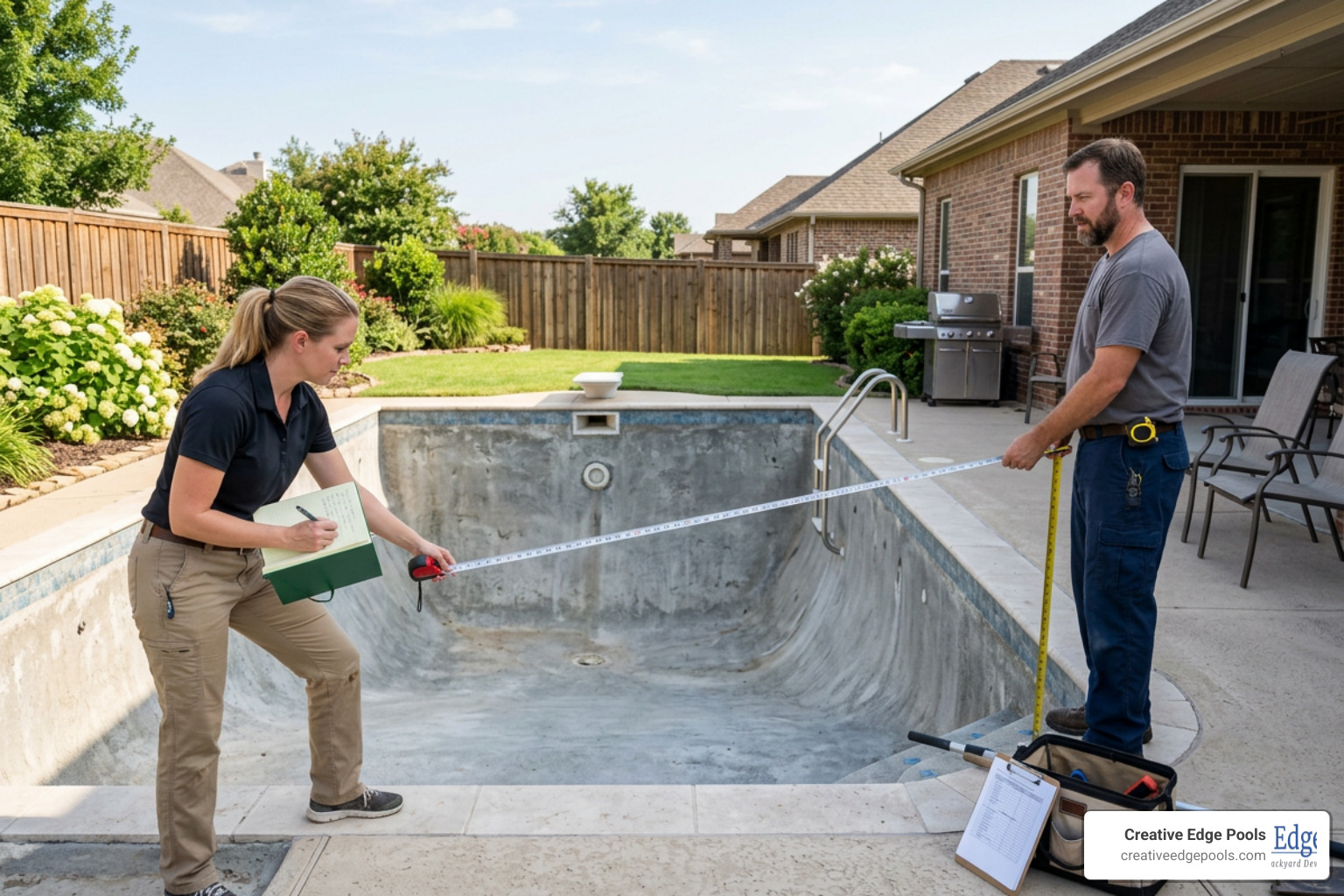
Replacing an inground pool liner is a highly technical process. Unlike above-ground pools, which can occasionally be fitted with pre-made, off-the-shelf liners, inground pools require a completely custom-fit product.
To order a custom liner, such as a Custom Rectangle 20′ x 40′ In Ground Pool Vinyl Liner | 2′ Radius Corners | 42″ Wall | Use with Thermoplastic Outside Step | 65370 or a smaller 12′ x 24′ Rectangle Shape In/On Ground Pool Vinyl Liner , precise measurements must be taken. This includes the exact wall height, corner radius, slope transitions, and deep-end depth.
During the professional Pool Liner Replacement Process, the pool must be fully drained. Once the old liner is removed, technicians inspect the pool walls for rust or bowing and evaluate the floor. Converting an old sand bottom to a solid vermiculite bottom is highly recommended during this stage. Vermiculite prevents footprints, shifting, and washouts, providing a perfectly smooth, permanent foundation for your new Vinyl Liner Installation.
The Cost of Replacing Inground Vinyl Pool Liners
When considering a liner replacement, budget is always a major factor. The actual cost of your project depends heavily on your pool’s size, shape, the condition of the underlying structure, and any upgrades you choose (such as adding walk-in wedding cake steps or transitioning to a vermiculite bottom).
Please note: All prices mentioned below are average costs sourced from publicly available internet data and are not the actual prices of Creative Edge Pools. These figures are provided generally to help you understand the wide variation in the pool industry.
According to national online data, the average cost to replace an inground vinyl pool liner is approximately $4,500. However, when you factor in professional labor, custom shapes, structural wall repairs, and premium materials, the actual price range is much wider. To account for this industry variability:
- Low-End Custom Range: Sourced from general online averages, a basic professional replacement starts at around $9,000 (which is 2x the national average).
- High-End Premium Range: For larger pools with complex configurations, custom-built steps, safety ledges, and structural bottom restorations, the cost can reach $22,500 or more (at least 5x the national average).
For homeowners in towns like Andover, MA or Hampton, NH, obtaining a detailed, on-site quote is the only way to get an accurate price for your specific backyard layout. You can read more about typical cost structures in our guides on the Cost of Replacing Inground Vinyl Pool Liner and general In-Ground Pool Liner Prices.
Maintenance, Warranties, and DIY vs. Professional Service
Once your new liner is installed, protecting your investment should be your top priority. Proper maintenance is the key to pushing your liner’s lifespan past the decade mark.
The most critical factor in vinyl longevity is water chemistry. Improper pH, low calcium hardness, or consistently high chlorine levels will cause the vinyl to become brittle, fade, and eventually crack. High chlorine levels also lead to severe bleaching of the liner’s pattern.
When issues do arise, prompt action is necessary. If you suspect a leak, you should seek professional Pool Liner Leak Repair immediately to prevent water from eroding the sand or vermiculite base beneath the vinyl. For minor issues, you can learn about DIY fixes in our guide on Pool Liner Repair.
Additionally, always read the fine print on your liner’s warranty. While high-quality above-ground and inground liners often advertise warranties of up to 20 years, these are almost always highly prorated. They generally cover manufacturer defects (such as seam separations) during the first year or two, with coverage reducing significantly each subsequent year. Furthermore, warranties can easily be voided by:
- Using improper chemical treatments or throwing chlorine tablets directly onto the vinyl.
- Allowing the water level to drop too low, which causes the vinyl to shrink and pull away from the walls.
- Damage caused by DIY installation mistakes.
Why Professional Installation Outperforms DIY
While some online guides suggest that replacing a pool liner is an easy weekend DIY project that can save you money, the reality is far more challenging. Inground liner replacement requires specialized equipment, including high-volume commercial vacuums to pull the vinyl tight against the walls and floor as the pool fills.
Without professional tools and experience, DIY attempts frequently result in:
- Unsightly Wrinkles: Once a pool is filled with water, the immense pressure makes it impossible to remove wrinkles, which eventually become catchpoints for dirt, algae, and automatic pool cleaners.
- Improper Fit: If the liner is stretched too thin in the corners due to measuring or placement errors, it will tear prematurely.
- Structural Damage: Draining an inground pool without proper hydrostatic pressure relief valves can cause the pool walls to collapse or the entire shell to shift.
For homeowners in Exeter, NH or Reading, MA, hiring a certified professional ensures a wrinkle-free, custom fit that protects your property value. If you are ready to update your backyard, search for a trusted Pool Liner Replacement Near Me to get started.
Frequently Asked Questions about Swimming Pool Liners
How long do vinyl pool liners typically last?
On average, standard vinyl pool liners last between 6 to 8 years. However, with meticulous water chemistry maintenance, prompt winterization, and the use of premium materials (like virgin vinyl with advanced UV coatings), a high-quality liner can easily last up to 12 years.
What factors can void a pool liner warranty?
Liner warranties typically only cover seam failures due to manufacturer defects. A warranty can be completely voided by chemical burning (such as undissolved chlorine sitting on the floor), structural damage from ice, draining the pool below recommended levels, or physical punctures from sharp objects, pets, or improper DIY installation steps.
Can you patch a leaking pool liner?
Yes, minor punctures and small tears can be patched using a specialized underwater vinyl adhesive. While these patches can prevent immediate water loss and protect the pool’s foundation, they are generally considered temporary fixes. If you want to explore how to apply a patch, refer to our Pool Liner Repair Kit Vinyl Guide. For larger tears or older, brittle vinyl, a full replacement is the only reliable solution.
Conclusion
A beautiful, properly installed vinyl liner is essential for the structure, safety, and visual appeal of your swimming pool. From selecting the perfect material thickness and bead style to ensuring precise measurements, every step of the replacement process requires expert care.
At Creative Edge Pools, we bring over 100 years of combined family-owned experience to every backyard project. While we specialize in custom gunite pool design, high-end masonry, excavation, and complete backyard renovations, we are dedicated to helping homeowners across Eastern Massachusetts and Southern New Hampshire — including Portsmouth, NH and Wilmington, MA — achieve their ultimate outdoor vision.
If your pool is ready for a professional makeover, don’t leave the results to chance. Contact our expert team today at +978-203-0406 or fill out our online contact form to request a custom consultation. For more information on budgeting, explore our detailed breakdown of Pool Liner Replacement Cost.
